Which of the following is not a cause of hemorrhagic fever?
All are true about hepatitis viruses EXCEPT?
All of the following statements are true for hepatitis E except:
Which of the following is affected in spinal paralytic polio?
In the heterosexual transmission of HIV, what is the general risk of transmission?
Elevated IgG and IgM antibody titers to parvovirus suggest a diagnosis of which one of the following?
Epstein-Barr virus has been implicated in the following malignancies except?
Which adenovirus types are known causes of infantile diarrhea?
JC virus is known to cause which of the following conditions?
Which of the following clinical specimens is used for the detection of BK polyomavirus by electron microscopy?
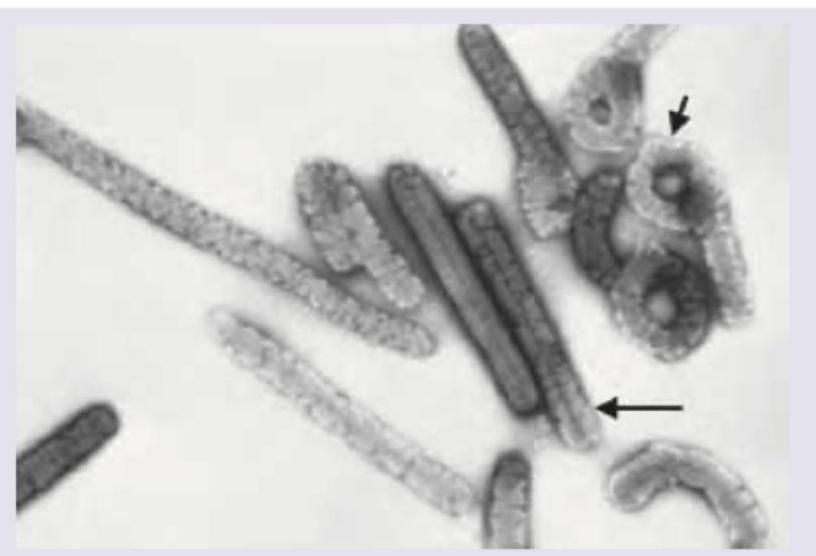
Explanation: **Explanation:** Viral Hemorrhagic Fevers (VHFs) are a group of illnesses caused by several distinct families of RNA viruses that lead to a multisystem syndrome characterized by vascular damage, increased permeability, and coagulation defects. **Why Japanese Encephalitis (JE) is the correct answer:** Japanese Encephalitis is caused by a **Flavivirus** (Group B), but it is primarily a **neurotropic virus**. Its clinical hallmark is severe inflammation of the brain parenchyma (encephalitis), leading to altered sensorium, seizures, and focal neurological deficits. It does not typically cause the systemic vascular leak or bleeding diathesis seen in hemorrhagic fevers. **Analysis of incorrect options:** * **Yellow Fever:** A classic prototype of VHF caused by a Flavivirus. It presents with the triad of jaundice, hematemesis ("black vomit"), and albuminuria. * **Kyasanur Forest Disease (KFD):** Known as "Monkey Fever" in India, this is a tick-borne Flavivirus endemic to Karnataka. It presents with high fever, prostration, and hemorrhagic manifestations (bleeding from gums/GI tract). * **Dengue Fever:** While often self-limiting, it can progress to **Dengue Hemorrhagic Fever (DHF)**, characterized by thrombocytopenia and plasma leakage. **NEET-PG High-Yield Pearls:** * **VHF Families:** Remember the four main families: *Flaviviridae* (Dengue, Yellow Fever, KFD), *Filoviridae* (Ebola, Marburg), *Arenaviridae* (Lassa), and *Bunyaviridae* (Crimean-Congo, Hanta). * **JE Vector:** *Culex tritaeniorhynchus* (breeds in rice fields). * **JE Diagnosis:** IgM ELISA in CSF is the gold standard. * **KFD Vector:** *Haemaphysalis spinigera* (Hard tick).
Explanation: **Explanation:** The correct answer is **Option A**. While Hepatitis A virus (HAV) can occasionally cause fulminant hepatitis (acute liver failure), it is responsible for less than 1% of such cases. Globally, **Hepatitis B virus (HBV)** is the most common cause of fulminant hepatitis, followed by Hepatitis E virus (HEV), particularly in pregnant women. HAV is generally a self-limiting disease and does not progress to chronicity. **Analysis of other options:** * **Option B:** HCV is notorious for its high rate of chronicity. Approximately 75–85% of patients infected with HCV develop **chronic liver disease**, which can progress to cirrhosis and failure. * **Option C:** HAV is primarily transmitted via the **fecal-oral route**, often through contaminated food or water. This is a classic high-yield distinction from HBV and HCV, which are parenterally transmitted. * **Option D:** HBV is a well-established risk factor for **hepatocellular carcinoma (HCC)**. It can cause cancer both through the pathway of chronic cirrhosis and via direct integration of viral DNA into the host genome (insertional mutagenesis). **NEET-PG High-Yield Pearls:** * **Vowels for Bowels:** Hepatitis **A** and **E** are transmitted via the fecal-oral route; neither causes chronic infection. * **Pregnancy Warning:** HEV has a high mortality rate (up to 20%) in pregnant women due to fulminant hepatic failure. * **HCV Screening:** The most sensitive initial test is Anti-HCV antibodies; the gold standard for confirming active infection is HCV-RNA (PCR). * **HBV Marker:** HBsAg is the first marker to appear in serum during an acute infection.
Explanation: **Explanation:** Hepatitis E Virus (HEV) is a non-enveloped RNA virus transmitted primarily via the feco-oral route. Understanding its epidemiological profile is crucial for NEET-PG. **Why Option B is the Correct Answer (The False Statement):** Unlike Hepatitis A, which predominantly affects children, **Hepatitis E primarily affects young adults** (typically aged 15–40 years). In children, HEV infection is often asymptomatic or results in a very mild, anicteric illness that goes clinically unrecognized. Therefore, the statement that it affects children more than adults is incorrect. **Analysis of Other Options:** * **Option A:** HEV is indeed the **most common cause of epidemic (water-borne) hepatitis** in India. Large-scale outbreaks are frequently linked to contaminated water supplies. * **Option C:** While HEV is generally self-limiting, it can progress to **Fulminant Hepatic Failure (FHF)**, especially in patients with pre-existing liver disease or during pregnancy. * **Option D:** This is a classic high-yield fact. HEV infection in **pregnant women** (particularly in the 3rd trimester) is associated with a high risk of fulminant hepatitis and a significantly high mortality rate (up to **20%**). **High-Yield Clinical Pearls for NEET-PG:** * **Family:** *Hepeviridae* (Hepevirus). * **Transmission:** Feco-oral (Water-borne). * **Zoonosis:** HEV Genotypes 3 and 4 are associated with the consumption of undercooked pork/deer meat. * **Chronic Infection:** HEV can cause chronic hepatitis in **immunocompromised** patients (e.g., organ transplant recipients). * **Pregnancy:** Highest mortality among all viral hepatitides.
Explanation: **Explanation:** The Poliovirus is a neurotropic enterovirus that primarily targets the **Anterior Horn Cells (AHCs)** of the spinal cord. In spinal paralytic polio, the virus replicates in the motor neurons of the AHCs, leading to inflammation and neuronal destruction. This results in **Lower Motor Neuron (LMN)** type paralysis, characterized by asymmetrical, flaccid paralysis with absent deep tendon reflexes and muscle atrophy, while sensory functions remain intact. **Analysis of Options:** * **Option A (Correct):** The hallmark of spinal polio is the selective destruction of large motor neurons in the anterior horn of the spinal cord. * **Option B (Incorrect):** The spinothalamic tract carries sensory information (pain and temperature). Polio is a purely motor disease; sensory involvement is typically absent. * **Option C (Incorrect):** While the virus can rarely affect the motor cortex (leading to encephalitic polio), the classic "spinal paralytic" form specifically targets the spinal cord, not the cerebral cortex. * **Option D (Incorrect):** Cranial nerve involvement (specifically CN IX, X, and XII) occurs in **Bulbar Polio**, which affects the brainstem, rather than the spinal paralytic form. **High-Yield Facts for NEET-PG:** * **Transmission:** Fecal-oral route (most common). * **Most common outcome:** Asymptomatic infection (>90% of cases). * **Specimen of choice:** Stool (virus is excreted for weeks). * **Post-Polio Syndrome:** Occurs decades after recovery due to the failure of over-exerted surviving motor neurons. * **Vaccines:** Salk (IPV - Killed) and Sabin (OPV - Live attenuated). Sabin can cause VAPP (Vaccine Associated Paralytic Polio).
Explanation: **Explanation:** The correct answer is **A: There is a greater risk of transmission from man to woman.** **Why it is correct:** In heterosexual transmission, the efficiency of HIV spread is significantly higher from males to females (estimated at approximately 2 to 3 times higher). This is due to several biological factors: 1. **Surface Area:** The vaginal and cervical mucosa provide a much larger surface area for viral exposure compared to the male urethra. 2. **Viral Load:** Semen typically contains a higher concentration of HIV (both free virus and infected cells) than vaginal secretions. 3. **Duration of Contact:** Semen remains in the vaginal vault for a prolonged period post-intercourse, increasing the window for the virus to penetrate the mucosal barrier. **Why the other options are incorrect:** * **Option B & C:** While female-to-male transmission occurs, it is less efficient because the intact skin of the penis is a robust barrier, and the duration of exposure to vaginal fluids is shorter. * **Option D:** Heterosexual contact is globally the most common mode of HIV transmission, accounting for the majority of new infections worldwide. **High-Yield Clinical Pearls for NEET-PG:** * **Most common mode of transmission:** Globally and in India, **heterosexual transmission** is the most common route. * **Highest risk per single act:** **Blood transfusion** carries the highest risk (>90%), followed by receptive anal intercourse and vertical transmission. * **Co-factors:** The presence of **Ulcerative STIs** (like Syphilis or Chancroid) significantly increases the risk of HIV transmission by breaching the mucosal integrity. * **Window Period:** The time between infection and the appearance of detectable antibodies (usually 2-8 weeks); during this time, the patient is highly infectious despite a negative ELISA.
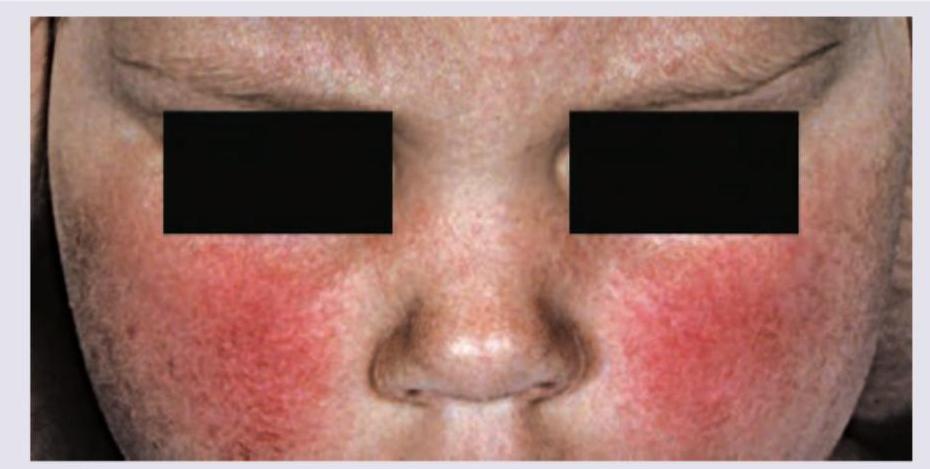
Explanation: **Explanation:** The presence of elevated **IgM and IgG antibodies** to Parvovirus B19 is diagnostic of a recent or ongoing infection. In clinical practice, IgM appears within 10 days of exposure and persists for 2–3 months, indicating an **acute infection**, while IgG appears shortly after and provides lifelong immunity. **Why Fifth Disease is correct:** Parvovirus B19 is the causative agent of **Fifth disease** (Erythema Infectiosum). It typically presents in children with a characteristic "slapped-cheek" rash followed by a reticular (lace-like) rash on the trunk and limbs. The virus targets **erythroid progenitor cells** by binding to the **P-antigen** (globoside) on the cell surface. **Analysis of Incorrect Options:** * **A. Acute Lyme Disease:** Caused by the spirochete *Borrelia burgdorferi*. Diagnosis is based on clinical findings (Erythema migrans) and serology for Borrelia, not Parvovirus. * **C. Hepatitis B Infection:** Caused by the Hepatitis B virus (HBV). Diagnosis relies on markers like HBsAg, anti-HBc IgM, and HBV DNA. * **D. Subacute Sclerosing Panencephalitis (SSPE):** A rare, progressive neurological complication caused by a persistent **Measles virus** infection, characterized by high titers of anti-measles antibodies in the CSF and serum. **High-Yield Clinical Pearls for NEET-PG:** * **Aplastic Crisis:** Parvovirus B19 can cause a transient cessation of erythropoiesis, which is life-threatening in patients with high red cell turnover (e.g., **Sickle Cell Anemia**, Hereditary Spherocytosis). * **Hydrops Fetalis:** Infection during pregnancy can lead to severe fetal anemia, high-output cardiac failure, and fetal death. * **Arthropathy:** In adults, infection often presents as symmetrical small joint arthritis (mimicking Rheumatoid Arthritis). * **Receptor:** The cellular receptor for Parvovirus B19 is the **P-antigen**.
Explanation: **Explanation:** Epstein-Barr Virus (EBV), also known as Human Herpesvirus 4 (HHV-4), is a potent oncogenic virus that primarily infects B-lymphocytes and epithelial cells. It is strongly associated with several lymphoid and epithelial malignancies due to its ability to induce immortalization of B-cells. **Why Multiple Myeloma is the correct answer:** Multiple Myeloma is a plasma cell dyscrasia characterized by the malignant proliferation of plasma cells. Unlike other B-cell malignancies, there is **no established causal link** between EBV infection and the development of Multiple Myeloma. Its pathogenesis is primarily linked to genetic mutations (e.g., MYC, RAS) and bone marrow microenvironment changes rather than viral oncogenesis. **Analysis of Incorrect Options:** * **Hodgkin’s Disease:** EBV is found in approximately 40-50% of cases, particularly the **Mixed Cellularity** subtype. The virus is often detected within the characteristic Reed-Sternberg cells. * **Non-Hodgkin’s Lymphoma (NHL):** EBV is a major driver in several NHLs, most notably **Burkitt Lymphoma** (endemic form), Immunoblastic lymphoma, and Primary CNS Lymphoma (especially in HIV/AIDS patients). * **Nasopharyngeal Carcinoma:** There is a 100% association with the **undifferentiated (Type III)** variant of nasopharyngeal carcinoma, common in Southern China and parts of Africa. **High-Yield Clinical Pearls for NEET-PG:** * **Receptor:** EBV enters B-cells via the **CD21** receptor (also the receptor for C3d complement). * **Diagnosis:** Atypical lymphocytes (Downey cells) on peripheral smear; Monospot test (detects heterophile antibodies). * **Other EBV-associated conditions:** Infectious Mononucleosis (Glandular fever), Oral Hairy Leukoplakia (in HIV), and Gastric Carcinoma (subset of cases). * **Burkitt Lymphoma Translocation:** t(8;14) involving the *c-myc* gene.
Explanation: **Explanation:** Adenoviruses are double-stranded DNA viruses classified into several subgroups (A–G). While most adenoviruses are associated with respiratory or ocular infections, specific types are **enterotropic**. **1. Why Option C is Correct:** Adenovirus **Types 40 and 41** (belonging to **Subgenus F**) are known as the **"Enteric Adenoviruses."** They are a leading cause of acute infantile gastroenteritis worldwide, second only to Rotavirus. Unlike other adenoviruses, types 40 and 41 are difficult to culture in standard cell lines and are primarily diagnosed via stool antigen detection (ELISA) or PCR. **2. Analysis of Incorrect Options:** * **Option A (Types 3, 4, 7):** These are primarily associated with **Acute Respiratory Disease (ARD)** and Pharyngoconjunctival fever. Type 7 is also a common cause of severe pneumonia in children. * **Option B (Types 8, 19, 37):** These are the classic causes of **Epidemic Keratoconjunctivitis (EKC)**, characterized by "shipyard eye" and subepithelial corneal infiltrates. * **Option D (Type 37):** As mentioned above, this is associated with ocular infections and is also a recognized cause of viral urethritis/cervicitis. **High-Yield Clinical Pearls for NEET-PG:** * **Intussusception:** Adenovirus infection can cause mesenteric lymphadenitis, which acts as a lead point for intussusception in children. * **Hemorrhagic Cystitis:** Types **11 and 21** are high-yield causes of acute hemorrhagic cystitis in children. * **Inclusion Bodies:** Look for **"Smudge cells"** (large, intranuclear basophilic inclusions) in histopathology. * **Structure:** They possess a unique **Penton fiber** projecting from the capsid, which acts as a hemagglutinin and mediates cell attachment.
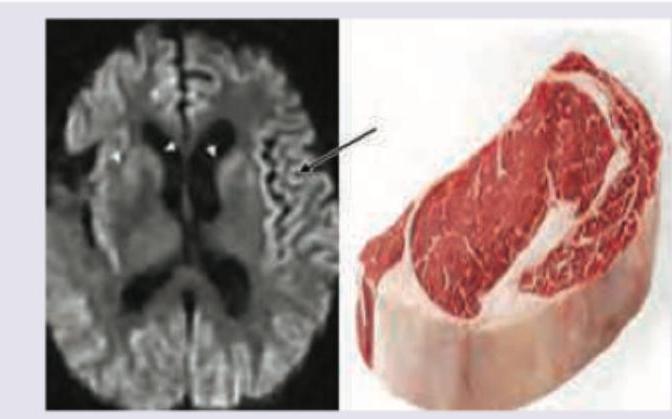
Explanation: **Explanation:** The **JC virus (John Cunningham virus)** is a member of the *Polyomaviridae* family. It is a ubiquitous double-stranded DNA virus that remains latent in the kidneys and lymphoid tissues of healthy individuals. **1. Why Option A is correct:** In states of profound immunosuppression (e.g., AIDS with CD4 <200, hematologic malignancies, or use of monoclonal antibodies like Natalizumab), the JC virus reactivates. It crosses the blood-brain barrier and infects **Oligodendrocytes**, the cells responsible for myelination in the Central Nervous System (CNS). This leads to widespread demyelination, manifesting as **Progressive Multifocal Leukoencephalopathy (PML)**. On MRI, this typically appears as non-enhancing, multifocal white matter lesions without mass effect. **2. Why other options are incorrect:** * **Option B (SSPE):** This is a rare, delayed complication of a defective **Measles virus** infection, occurring years after the initial illness. * **Option C (Subacute Encephalitis):** This is most commonly associated with **HIV** itself (HIV-associated dementia) or Cytomegalovirus (CMV). * **Option D (Tropical Spastic Paraparesis):** This chronic myelopathy is caused by **HTLV-1** (Human T-cell Lymphotropic Virus type 1). **Clinical Pearls for NEET-PG:** * **Target Cell:** JC virus specifically targets **Oligodendrocytes** (causing demyelination). * **Drug Association:** **Natalizumab** (used in Multiple Sclerosis) is a high-yield trigger for JC virus reactivation. * **BK Virus:** A "sibling" polyomavirus that causes hemorrhagic cystitis and nephropathy in transplant patients. * **Diagnosis:** PCR of the CSF for JC virus DNA is the gold standard.
Explanation: **Explanation:** **BK Polyomavirus** is a double-stranded DNA virus that remains latent in the renal tubular cells and uroepithelium after primary infection (usually acquired in childhood). In immunocompromised individuals, particularly **renal transplant recipients**, the virus reactivates, leading to **BK virus-associated nephropathy (BKVAN)** or hemorrhagic cystitis. 1. **Why Urine is correct:** Since the virus replicates within the renal tubules and transitional epithelium, it is shed in high concentrations in the urine. Electron microscopy (EM) of the urine sediment can reveal characteristic **"Decoy cells"** (cells with large intranuclear inclusions) or the virus particles themselves, which typically exhibit a "honeycomb" or icosahedral appearance. While PCR is now the gold standard for quantification, EM of urine remains a classic diagnostic method described in textbooks. 2. **Why other options are incorrect:** * **Brain tissues:** This is the specimen of choice for **JC Virus**, another polyomavirus that causes Progressive Multifocal Leukoencephalopathy (PML). BK virus does not typically target the CNS. * **Blood:** While BK viremia is a marker for systemic reactivation and risk of nephropathy (detected via PCR), the viral load in blood is generally lower than in urine, making EM an inefficient tool for blood specimens compared to urine. **High-Yield Clinical Pearls for NEET-PG:** * **Mnemonic:** **B**K virus affects the **B**ladder and **K**idney; **J**C virus affects the **J**unction (CNS/Brain). * **Decoy Cells:** Found in urine cytology; they mimic carcinoma cells (hence the name) but represent viral cytopathic effects. * **BKVAN:** A major cause of graft rejection in renal transplant patients. * **Morphology:** Polyomaviruses are small, non-enveloped, icosahedral viruses (~45 nm).
Virus Structure and Classification
Practice Questions
Viral Replication
Practice Questions
Pathogenesis of Viral Infections
Practice Questions
DNA Viruses: Herpesviruses
Practice Questions
DNA Viruses: Poxviruses and Adenoviruses
Practice Questions
Hepatitis Viruses
Practice Questions
RNA Viruses: Orthomyxoviruses
Practice Questions
RNA Viruses: Paramyxoviruses
Practice Questions
Enteroviruses and Rhinoviruses
Practice Questions
Arboviruses
Practice Questions
HIV and Retroviruses
Practice Questions
Oncogenic Viruses
Practice Questions
Get full access to all questions, explanations, and performance tracking.
Start For Free