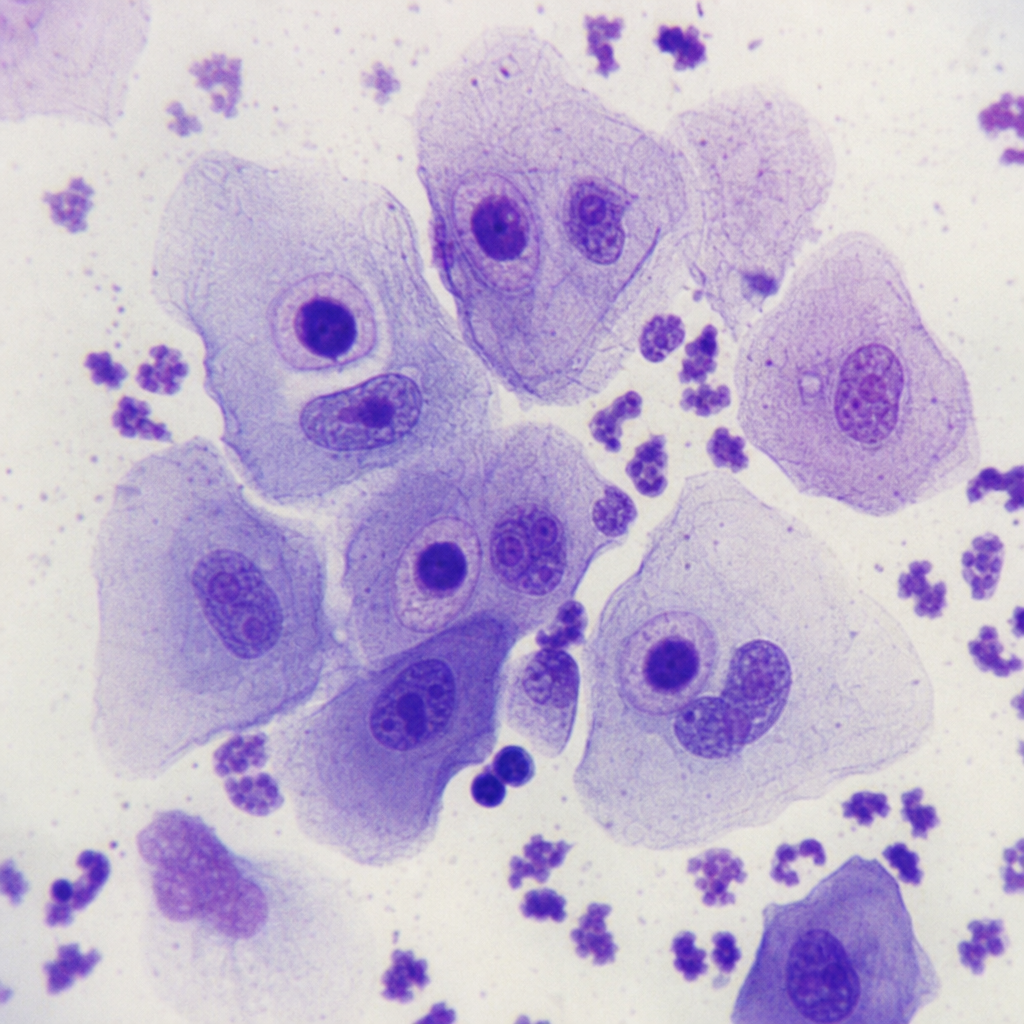
Which of the following is a double-stranded RNA virus?
Which structural component is found in all viruses?
A 30-year-old woman suffers a tonic-clonic seizure and presents with delirium and hydrophobia after being bitten on the hand by a bat approximately one month prior. The patient subsequently dies of respiratory failure. Autopsy reveals viral particles throughout the brainstem and cerebellum. In addition to direct viral cytotoxicity, by which primary mechanism is the necrosis of virally infected neurons mediated in this patient?
The Paul Bunnell test is used to diagnose which of the following conditions?
Which serotypes of Adenovirus are known to cause gastroenteritis?
Intracytoplasmic inclusion bodies are characteristic of which viral infection?
What is a prion?
Which of the following viruses is primarily transmitted by the fecal-oral route?
Parvovirus B-19 does not cause which of the following conditions?
Which microorganism does not cause hemorrhagic conjunctivitis?
Explanation: **Explanation:** The correct answer is **Rotavirus**. **1. Why Rotavirus is correct:** Most RNA viruses are single-stranded (ssRNA). However, the **Reoviridae** family (which includes Rotavirus and Coltivirus) is the notable exception, characterized by a **segmented, double-stranded RNA (dsRNA)** genome. Rotavirus specifically contains 11 segments of dsRNA within a wheel-like (rota), triple-layered icosahedral capsid. **2. Why the other options are incorrect:** * **Polyomavirus (Option A):** This is a **double-stranded DNA (dsDNA)** virus. It belongs to the Papovaviridae family (along with Papillomavirus). * **Parvovirus (Option B):** This is a **single-stranded DNA (ssDNA)** virus. It is unique because it is the only medically important DNA virus that is not double-stranded. * **Poliovirus (Option C):** This is a **single-stranded positive-sense RNA (+ssRNA)** virus belonging to the Picornaviridae family. **3. High-Yield Clinical Pearls for NEET-PG:** * **Rotavirus:** The most common cause of severe, dehydrating diarrhea in infants and young children worldwide ("Winter diarrhea"). It infects mature enterocytes of the villi, leading to malabsorption. * **NSP4 Protein:** Rotavirus produces a viral enterotoxin called NSP4, which induces secretion by increasing intracellular calcium. * **Vaccines:** Two major live-attenuated oral vaccines are used: **Rotarix** (monovalent) and **RotaTeq** (pentavalent). * **Mnemonic for dsRNA:** "**REO**" (Respiratory Enteric Orphan) viruses are the primary dsRNA group. Remember: *Double-stranded RNA is a **REO** occurrence.*
Explanation: **Explanation:** **1. Why Capsid is the Correct Answer:** A virus is fundamentally defined as a nucleocapsid—a core of nucleic acid surrounded by a protective protein coat called a **capsid**. The capsid is composed of subunits called capsomeres. Its primary functions are to protect the viral genome from environmental nucleases and to facilitate attachment to host cell receptors (in non-enveloped viruses). Because every virus must protect its genetic material to remain infectious, the capsid is a universal structural component. **2. Why Other Options are Incorrect:** * **Envelope (A):** Only "enveloped viruses" (e.g., HIV, Influenza, Herpesvirus) possess a lipid bilayer membrane derived from the host cell. "Naked" viruses (e.g., Poliovirus, Hepatitis A) lack this structure. * **DNA (B):** A virus contains either DNA or RNA as its genetic material, but never both (with very rare exceptions like Mimivirus). Therefore, DNA is not universal to all viruses. * **Tail Fibers (D):** These are specialized structures used for attachment specifically by **bacteriophages** (viruses that infect bacteria) and are not found in animal or plant viruses. **3. NEET-PG High-Yield Clinical Pearls:** * **Disinfection:** Enveloped viruses are generally *more* susceptible to detergents, alcohol, and heat because disrupting the lipid envelope renders the virus non-infectious. Naked viruses are more resistant to environmental gold standards. * **Symmetry:** Capsids usually exhibit **Icosahedral** (e.g., Adenovirus) or **Helical** (e.g., Rabies) symmetry. Note: All human viruses with helical symmetry are enveloped. * **Prions vs. Viruses:** Prions are infectious proteins that lack any nucleic acid, distinguishing them from true viruses.
Explanation: ### Explanation The clinical presentation of hydrophobia, seizures, and a history of a bat bite followed by death from respiratory failure is pathognomonic for **Rabies**, caused by the *Lyssavirus* (Rhabdoviridae family). **1. Why "Humoral and Cellular Immunity" is Correct:** While the Rabies virus causes direct neuronal dysfunction, the extensive necrosis and inflammatory changes seen in the CNS are primarily driven by the host's immune response. Once the virus enters the CNS, it triggers a robust **adaptive immune response**. * **Cellular Immunity:** Cytotoxic T-lymphocytes (CD8+) recognize viral antigens presented on MHC-I molecules of infected neurons, leading to targeted apoptosis and necrosis. * **Humoral Immunity:** B-cells produce antibodies that attempt to neutralize the virus but also contribute to inflammatory damage via complement activation and antibody-dependent cellular cytotoxicity (ADCC). This "immunopathology" is a hallmark of viral encephalitides. **2. Why Other Options are Incorrect:** * **Option A:** Histamine release is characteristic of Type I hypersensitivity (allergic reactions), not the neuroinflammatory process of viral encephalitis. * **Option C:** Neutrophils are the primary responders in *bacterial* meningitis/abscesses. Viral infections of the CNS typically show a lymphocytic (mononuclear) infiltrate. * **Option D:** While macrophages (microglia in the CNS) are involved, the *primary* mechanism of neuronal necrosis in rabies is the specific adaptive response (T-cells) rather than non-specific oxidative bursts from macrophages. ### High-Yield Clinical Pearls for NEET-PG: * **Pathology:** Look for **Negri Bodies** (eosinophilic cytoplasmic inclusions) most commonly in the **Purkinje cells of the cerebellum** and **pyramidal cells of the hippocampus**. * **Receptor:** Rabies virus binds to **Nicotinic Acetylcholine Receptors (nAChR)** at the neuromuscular junction. * **Retrograde Transport:** The virus travels to the CNS via **dynein motors** in a retrograde fashion. * **Prophylaxis:** Post-exposure prophylaxis (PEP) includes wound cleaning, HRIG (Human Rabies Immunoglobulin), and the killed vaccine (HDCV). Once symptoms appear, the mortality rate is nearly 100%.
Explanation: **Explanation:** The **Paul Bunnell Test** is a classic diagnostic tool for **Infectious Mononucleosis (IM)**, caused by the Epstein-Barr Virus (EBV). The test is based on the detection of **heterophile antibodies**—IgM antibodies produced during EBV infection that have the unique property of agglutinating red blood cells (RBCs) from other species, specifically sheep or horse RBCs. While the Paul Bunnell test is the basic agglutination assay, the **Monospot test** is its modern, rapid latex agglutination equivalent. **Analysis of Options:** * **A. Malta fever (Brucellosis):** Diagnosed primarily via blood culture or the Standard Agglutination Test (SAT) to detect antibodies against *Brucella* species. * **B. Typhus fever:** Historically diagnosed using the **Weil-Felix test**, which utilizes cross-reacting *Proteus* antigens (OX19, OX2, OXK) to detect Rickettsial antibodies. * **C. Enteric fever (Typhoid):** Diagnosed using the **Widal test**, which detects antibodies against the O and H antigens of *Salmonella Typhi*. * **D. Infectious mononucleosis (Correct):** As explained, this is the specific indication for the Paul Bunnell heterophile antibody test. **High-Yield Clinical Pearls for NEET-PG:** * **Specificity:** The Paul Bunnell test can occasionally be false-positive in cases of serum sickness or leukemia. To differentiate, the **Davidsohn Differential Test** is used (IM antibodies are absorbed by beef RBCs but *not* by guinea pig kidney cells). * **Age Factor:** Heterophile antibody tests are often **negative in children** under 4 years of age with IM. * **Atypical Lymphocytes:** Look for "Downey cells" (activated T-cells) on a peripheral blood smear, a hallmark of IM. * **Clinical Triad:** Fever, pharyngitis, and lymphadenopathy. Avoid Ampicillin in these patients as it causes a characteristic maculopapular rash.
Explanation: **Explanation:** Adenoviruses are non-enveloped DNA viruses classified into several subgroups (A–G). While most adenoviruses primarily target the respiratory tract or conjunctiva, specific serotypes are **enterotropic**. **1. Why Option A is Correct:** Serotypes **40 and 41** (belonging to Subgenus F) are the primary causes of **adenoviral gastroenteritis**. They are often referred to as "Enteric Adenoviruses." Unlike other serotypes, they are difficult to culture in standard cell lines and are a leading cause of infantile diarrhea worldwide, second only to Rotavirus in some regions. **2. Why Other Options are Incorrect:** * **Option B (1, 2, 3, 4):** These serotypes are typically associated with **acute respiratory infections** (pharyngitis, coryza) and pharyngoconjunctival fever. * **Option C (20, 21):** These are generally associated with respiratory diseases. Serotype 21 is a known cause of severe pneumonia in children. * **Option D (11, 21):** Serotypes **11 and 21** (Subgenus B) are classically associated with **acute hemorrhagic cystitis**, presenting with hematuria and dysuria, primarily in children. **High-Yield Clinical Pearls for NEET-PG:** * **Gastroenteritis:** Serotypes 40, 41. * **Hemorrhagic Cystitis:** Serotypes 11, 21. * **Epidemic Keratoconjunctivitis (Shipyard eye):** Serotypes 8, 19, 37. * **Acute Respiratory Disease (ARD):** Serotypes 4, 7 (common in military recruits). * **Pharyngoconjunctival Fever:** Serotypes 3, 7. * **Morphology:** Adenoviruses exhibit a unique **icosahedral** structure with projecting **fibers** (penton bases) that act as hemagglutinins and mediate attachment.
Explanation: **Explanation:** The correct answer is **Rabies Virus**. Inclusion bodies are aggregates of viral proteins or particles within a cell that serve as diagnostic hallmarks. **1. Why Rabies Virus is Correct:** Rabies virus (a Rhabdovirus) is characterized by the presence of **Negri bodies**. These are pathognomonic, eosinophilic, **intracytoplasmic** inclusion bodies found most commonly in the Purkinje cells of the cerebellum and the pyramidal cells of the hippocampus. They represent sites of viral replication (ribonucleoprotein accumulation). **2. Analysis of Incorrect Options:** * **Herpes Simplex Virus (HSV):** Characterized by **Cowdry Type A** inclusion bodies, which are **intranuclear** (not intracytoplasmic) and eosinophilic, often surrounded by a clear halo. * **Poliovirus:** While it replicates in the cytoplasm, it does not typically produce distinct, diagnostic inclusion bodies used for identification in clinical pathology. * **Yellow Fever Virus:** Characterized by **Councilman bodies**, which are eosinophilic globules resulting from the apoptosis of hepatocytes. While found in the cytoplasm, they are technically remnants of degenerate hepatocytes rather than classic viral replication inclusions. **3. High-Yield Clinical Pearls for NEET-PG:** * **Intranuclear Inclusions:** HSV (Cowdry A), CMV (Owl’s eye), Adenovirus (Smudge cells). * **Intracytoplasmic Inclusions:** Rabies (Negri bodies), Poxvirus (Guarnieri bodies), Molluscum contagiosum (Henderson-Patterson bodies). * **Both Intranuclear & Intracytoplasmic:** Measles (Warthin-Finkeldey cells/Inclusions). * **Rabies Diagnosis:** While Negri bodies are specific, the gold standard for diagnosis is the Direct Fluorescent Antibody (DFA) test.
Explanation: ### Explanation **Correct Option: C (Protein)** Prions (Proteinaceous Infectious Particles) are unique infectious agents composed entirely of protein. Unlike all other known pathogens (viruses, bacteria, fungi), prions **lack any nucleic acid** (DNA or RNA). They are misfolded isoforms of a normal cellular protein called **PrPᶜ** (Prion Protein cellular), which is primarily found on the surface of neurons. The infectious form, **PrPˢᶜ** (Prion Protein Scrapie), induces a conformational change in normal PrPᶜ, converting it into the pathological, protease-resistant β-sheet form. **Why Incorrect Options are Wrong:** * **A & B (DNA/RNA):** These are the genetic materials for viruses and cellular life. Prions are defined by the "protein-only hypothesis," meaning they do not require genetic material to replicate or transmit disease. * **D (Polysaccharide):** While some pathogens have polysaccharide capsules (e.g., *Streptococcus pneumoniae*), polysaccharides do not function as independent infectious agents. **NEET-PG High-Yield Clinical Pearls:** * **Resistance:** Prions are highly resistant to standard sterilization methods, including boiling, radiation, and formalin. They are inactivated by **autoclaving at 134°C for 1 hour** or using **1N NaOH**. * **Pathology:** They cause **Transmissible Spongiform Encephalopathies (TSEs)**, characterized by neuronal loss, astrocytosis, and a "spongiform" (vacuolated) appearance of the brain without an inflammatory response. * **Key Diseases:** * **Human:** Kuru (associated with cannibalism), Creutzfeldt-Jakob Disease (CJD), Variant CJD (linked to Mad Cow Disease), and Fatal Familial Insomnia. * **Animal:** Scrapie (sheep) and Bovine Spongiform Encephalopathy (cattle). * **Diagnosis:** Detection of **14-3-3 protein** in CSF is a significant marker for CJD.
Explanation: **Explanation:** The correct answer is **Coxsackievirus**. **1. Why Coxsackievirus is correct:** Coxsackieviruses belong to the **Picornaviridae** family under the genus **Enterovirus**. As the name suggests, enteroviruses are primarily inhabitants of the enteric tract. They are acid-stable, allowing them to survive the gastric pH, and are transmitted predominantly via the **fecal-oral route**. They replicate in the Peyer’s patches of the intestine before spreading hematogenously to target organs (skin, heart, meninges). **2. Why the other options are incorrect:** * **St. Louis encephalitis virus (Option A):** This is a Flavivirus transmitted by the bite of infected **Culex mosquitoes**. * **Colorado tick fever virus (Option B):** This is a Reovirus (Coltivirus) transmitted by the bite of the **Dermacentor andersoni (wood tick)**. * **Yellow fever virus (Option D):** This is a Flavivirus transmitted by the **Aedes aegypti mosquito**. **3. NEET-PG High-Yield Pearls:** * **Coxsackie A:** Classically associated with **Herpangina** and **Hand-Foot-and-Mouth Disease (HFMD)**. * **Coxsackie B:** The most common viral cause of **Myocarditis** and **Pericarditis**; also causes Pleurodynia (Bornholm disease/Devil’s grip). * **Enteroviruses (General):** They are the leading cause of **Aseptic Meningitis**. * **Rule of Thumb:** Most "Arboviruses" (Arthropod-borne) are transmitted by mosquitoes or ticks, whereas "Enteroviruses" are transmitted via the fecal-oral route.
Explanation: **Explanation:** **Parvovirus B19** is a small, single-stranded DNA virus that targets erythroid progenitor cells by binding to the **P-antigen** (globoside). **Why Roseola Infantum is the correct answer:** Roseola infantum (also known as Exanthema Subitum or Sixth Disease) is caused by **Human Herpesvirus 6 (HHV-6)**, and occasionally HHV-7. It is characterized by high fever for 3–5 days, followed by the sudden appearance of a maculopapular rash as the fever subsides. Parvovirus B19, conversely, causes **Erythema Infectiosum (Fifth Disease)**, famous for the "slapped-cheek" appearance. **Analysis of other options:** * **Aplastic Anemia:** Parvovirus B19 infects and lyses red blood cell precursors. In patients with high RBC turnover (e.g., **Sickle Cell Disease**, Hereditary Spherocytosis), this leads to a life-threatening **Transient Aplastic Crisis**. * **Fetal Hydrops:** If a pregnant woman is infected, the virus crosses the placenta, attacks fetal erythroid cells, and causes severe anemia. This leads to high-output cardiac failure, generalized edema (**Hydrops Fetalis**), and potential fetal death. * **Collapsing FSGS:** While HIV is the most common viral cause, Parvovirus B19 is a well-documented trigger for the **collapsing variant of Focal Segmental Glomerulosclerosis**, particularly in immunocompromised patients. **High-Yield Clinical Pearls for NEET-PG:** * **Receptor:** P-antigen (found on RBCs, megakaryocytes, and endothelial cells). * **Arthropathy:** In adults (especially females), B19 often presents as symmetrical small joint arthritis resembling RA. * **Pure Red Cell Aplasia (PRCA):** Occurs in immunocompromised individuals due to chronic B19 infection. * **Diagnosis:** IgM antibodies (acute) or PCR (in immunocompromised/aplastic crisis).
Explanation: **Explanation:** Acute Hemorrhagic Conjunctivitis (AHC) is a highly contagious ocular infection characterized by sudden onset of painful, red eyes, subconjunctival hemorrhages, and eyelid edema. **Why Papilloma Virus is the correct answer:** Human Papillomavirus (HPV) is primarily associated with cutaneous and mucosal warts (verrucae) and malignancies (e.g., cervical cancer). In the eye, HPV types 6 and 11 are known to cause **conjunctival papillomas** (benign epithelial tumors), but they do not cause acute inflammatory or hemorrhagic conjunctivitis. **Analysis of incorrect options:** * **Enterovirus-70 (EV-70):** This is the most common cause of large-scale epidemics of AHC. It is a member of the Picornaviridae family and is highly neurotropic, occasionally causing polio-like paralysis (Radiculomyelitis). * **Coxsackievirus A24 (CA24):** A variant of this virus is the second major cause of epidemic AHC. It presents clinically identical to EV-70 but is less frequently associated with neurological complications. * **Adenovirus:** Specifically, **Serotypes 8, 11, 19, and 37** are notorious for causing Epidemic Keratoconjunctivitis (EKC), which frequently presents with significant subconjunctival hemorrhage and pseudomembrane formation. **High-Yield Clinical Pearls for NEET-PG:** * **AHC "Big Three":** Enterovirus 70, Coxsackie A24, and Adenovirus (8, 11, 19). * **Incubation Period:** AHC has a very short incubation period (18–48 hours) and typically resolves within 7–10 days. * **Neurological Link:** Always associate **Enterovirus-70** with rare cases of **cranial nerve palsies** or spinal paralysis following the conjunctivitis. * **Adenovirus 3 & 7:** Cause Pharyngoconjunctival Fever (PCF), characterized by the triad of fever, pharyngitis, and non-hemorrhagic follicular conjunctivitis.
Virus Structure and Classification
Practice Questions
Viral Replication
Practice Questions
Pathogenesis of Viral Infections
Practice Questions
DNA Viruses: Herpesviruses
Practice Questions
DNA Viruses: Poxviruses and Adenoviruses
Practice Questions
Hepatitis Viruses
Practice Questions
RNA Viruses: Orthomyxoviruses
Practice Questions
RNA Viruses: Paramyxoviruses
Practice Questions
Enteroviruses and Rhinoviruses
Practice Questions
Arboviruses
Practice Questions
HIV and Retroviruses
Practice Questions
Oncogenic Viruses
Practice Questions
Get full access to all questions, explanations, and performance tracking.
Start For Free