Which dengue serotype has a higher risk of causing Dengue hemorrhagic fever as a secondary infection?
A 32-year-old unvaccinated woman presented with fever, headache, malaise, and ear pain along with parotid gland swelling. A week later, her fever resolved, but she developed pelvic pain and tenderness. Which virus is the likely causative agent?
RSV causes all EXCEPT:
1% silver nitrate is used for:
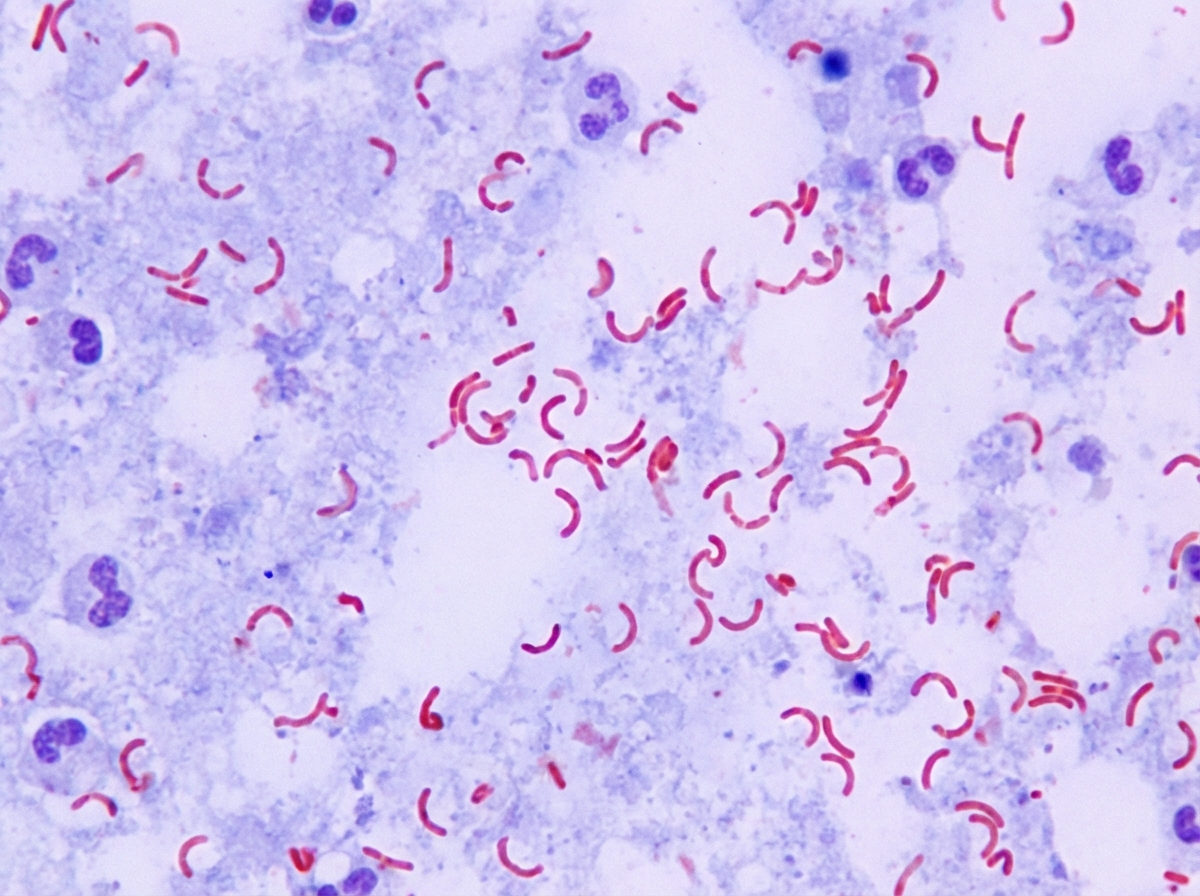
The following gram stain shows which bacteria?
Conjunctivitis is caused by all EXCEPT:
All are false regarding poliovirus except:
In HIV infection, gp120 envelope glycoproteins bind specifically to which cells?
All of the following statements are true regarding poliovirus except?
Which of the following conditions is NOT associated with Human Herpesvirus 8 (HHV-8)?
Explanation: **Explanation:** The correct answer is **DENV-2**. The risk of severe disease, such as Dengue Hemorrhagic Fever (DHF) and Dengue Shock Syndrome (DSS), is significantly higher during a **secondary infection** with a different serotype than the primary one. This phenomenon is explained by **Antibody-Dependent Enhancement (ADE)**. 1. **Why DENV-2 is correct:** While any serotype can cause DHF, epidemiological studies and clinical data consistently show that **DENV-2** is the most virulent serotype associated with severe outbreaks and a higher risk of DHF/DSS, especially when it follows a primary infection with DENV-1. In ADE, non-neutralizing antibodies from the first infection bind to the new serotype (DENV-2) but fail to neutralize it. Instead, they facilitate easier entry into macrophages via Fc receptors, leading to increased viral replication and a massive cytokine storm. 2. **Why other options are incorrect:** * **DENV-1:** Often associated with primary infections and classic Dengue Fever (breakbone fever), but less frequently the primary driver of DHF in secondary infections compared to DENV-2. * **DENV-3:** Known to cause severe disease and neurological manifestations, but statistically ranks lower than DENV-2 for DHF risk. * **DENV-4:** Generally considered the least virulent serotype, often resulting in milder clinical symptoms. **High-Yield NEET-PG Pearls:** * **Vector:** *Aedes aegypti* (Day biter, breeds in artificial collections of clean water). * **Gold Standard Diagnosis:** Viral isolation (Cell culture). * **Early Diagnosis (Day 1-5):** NS1 Antigen detection (ELISA/Rapid). * **Late Diagnosis (After Day 5):** IgM MAC-ELISA. * **Tourniquet Test:** Positive if >20 petechiae per square inch (indicates capillary fragility). * **Hallmark of DHF:** Plasma leakage due to increased vascular permeability (evidenced by rising hematocrit, pleural effusion, or ascites).
Explanation: ### Explanation **Correct Option: B. Mumps virus** The clinical presentation of fever, malaise, and **parotid gland swelling** (parotitis) is a classic manifestation of the Mumps virus. The subsequent development of pelvic pain and tenderness in a female patient indicates **oophoritis** (inflammation of the ovaries), which is a known complication of Mumps in post-pubertal females. In males, the equivalent complication is epididymo-orchitis. **Analysis of Incorrect Options:** * **A. Cytomegalovirus (CMV):** While CMV can cause sialadenitis (salivary gland inflammation) in immunocompromised patients, it typically presents as mononucleosis-like syndrome or congenital infections. It does not characteristically cause oophoritis. * **C. Rabies virus:** This neurotropic virus presents with hydrophobia, aerophobia, and encephalopathy following an animal bite. It does not involve the parotid glands or ovaries. * **D. Respiratory syncytial virus (RSV):** RSV is a leading cause of bronchiolitis and pneumonia in infants. It does not cause systemic involvement of the salivary glands or reproductive organs. **High-Yield Clinical Pearls for NEET-PG:** * **Family:** Paramyxoviridae; **Genus:** Rubulavirus. * **Transmission:** Respiratory droplets. * **Most Common Complication:** Aseptic meningitis (often asymptomatic). * **Most Common Extra-salivary Site:** Orchitis (usually unilateral; rarely leads to sterility). * **Other Complications:** Pancreatitis (look for elevated serum amylase), sensorineural hearing loss (usually permanent), and myocarditis. * **Prevention:** Live attenuated vaccine (Jeryl Lynn strain) administered as part of the MMR vaccine.
Explanation: Respiratory Syncytial Virus (RSV) is the most common cause of lower respiratory tract infections (LRTI) in infants and young children worldwide. **Explanation of the Correct Answer:** **Option B (ARDS)** is the correct answer because RSV typically causes localized respiratory disease rather than Acute Respiratory Distress Syndrome (ARDS). While severe RSV can lead to respiratory failure requiring mechanical ventilation, ARDS is a specific clinical syndrome characterized by diffuse alveolar damage and non-cardiogenic pulmonary edema, usually triggered by sepsis, trauma, or severe pneumonia (like COVID-19 or Influenza). RSV's primary pathology is focused on the bronchioles (bronchiolitis). **Explanation of Incorrect Options:** * **Option A & D (Coryza/Common Cold):** In older children and healthy adults, RSV most commonly presents as a mild upper respiratory tract infection (URTI) manifesting as coryza (nasal congestion, sneezing, sore throat) and the common cold. * **Option C (Bronchitis/Bronchiolitis):** RSV is the leading cause of **bronchiolitis** and can also cause bronchitis and pneumonia in infants. It leads to inflammation, mucus plugging, and narrowing of the small airways. **High-Yield Clinical Pearls for NEET-PG:** * **Most Common Cause:** RSV is the #1 cause of **Bronchiolitis** and **Pneumonia** in children under 1 year of age. * **Surface Proteins:** It possesses **G-protein** (for attachment) and **F-protein** (for fusion and entry). It lacks Hemagglutinin (H) and Neuraminidase (N), unlike other Paramyxoviruses. * **Cytopathology:** It induces the formation of **multinucleated giant cells (Syncytia)** via the F-protein. * **Prophylaxis:** **Palivizumab** (a monoclonal antibody against the F-protein) is used for high-risk preterm infants. * **Treatment:** **Ribavirin** (aerosolized) may be used in severe, hospitalized cases.
Explanation: **Explanation:** **1% Silver Nitrate** is historically known as **Credé’s prophylaxis**. It is used specifically for the prevention of **Ophthalmia neonatorum**, a form of neonatal conjunctivitis contracted during delivery through an infected birth canal. 1. **Why Option A is correct:** Silver nitrate acts as an antiseptic by precipitating bacterial proteins and exerting an oligodynamic effect. It was traditionally the gold standard for preventing *Neisseria gonorrhoeae* infections in newborns. While effective against Gonococcus, it is frequently associated with **chemical conjunctivitis**, leading many centers to replace it with erythromycin or tetracycline ointments. 2. **Why other options are incorrect:** * **Option B (Sympathetic ophthalmitis):** This is a bilateral granulomatous uveitis following trauma to one eye. It is an autoimmune/inflammatory condition, not an infection, and is treated with corticosteroids or immunosuppressants. * **Option C (Inclusion conjunctivitis):** Caused by *Chlamydia trachomatis* (Serotypes D-K). Silver nitrate is **ineffective** against Chlamydia; topical erythromycin or systemic azithromycin is required. * **Option D (Pharyngoconjunctival fever):** This is a viral infection caused by **Adenovirus** (Types 3, 7). Antiseptics like silver nitrate have no role in treating viral syndromes. **High-Yield Pearls for NEET-PG:** * **Ophthalmia neonatorum timing:** *N. gonorrhoeae* typically appears in the first 2–5 days, while *C. trachomatis* (the most common cause overall) appears after 5–14 days. * **Chemical Conjunctivitis:** If a neonate presents with bilateral redness within the first 24 hours of birth, it is most likely a side effect of silver nitrate prophylaxis. * **Oligodynamic action:** This refers to the toxic effect of metal ions (like Silver, Mercury, Copper) on living cells/microbes even in low concentrations.
Explanation: ***Vibrio cholerae*** - Appears as **gram-negative curved rods** with a distinctive **comma-shaped** or **curved** morphology on gram stain. - The characteristic **curved appearance** distinguishes it from other gram-negative rods that are typically straight. *Streptococcus pneumoniae* - Shows as **gram-positive cocci** arranged in **pairs (diplococci)** or short chains, not curved rods. - Has a **lancet-shaped** appearance with **alpha-hemolytic** properties on blood agar. *Staphylococcus aureus* - Appears as **gram-positive cocci** arranged in **grape-like clusters**, completely different from curved rods. - Shows **beta-hemolytic** activity and produces **golden-yellow pigment** on appropriate media. *Listeria monocytogenes* - Presents as **gram-positive rods** that are **straight**, not curved like Vibrio species. - Exhibits **tumbling motility** at room temperature and grows well at **4°C** (cold enrichment).
Explanation: **Explanation:** The correct answer is **CMV (Cytomegalovirus)**. While CMV is a significant ocular pathogen, it primarily affects the **posterior segment** of the eye, causing **retinitis** (especially in immunocompromised patients like those with HIV/AIDS). It does not typically cause conjunctivitis. **Analysis of Options:** * **Adenovirus:** This is the **most common cause** of viral conjunctivitis. It presents as Pharyngoconjunctival Fever (Serotypes 3, 7) or Epidemic Keratoconjunctivitis (Serotypes 8, 19, 37), the latter being highly contagious and associated with subepithelial corneal infiltrates. * **Enterovirus 70 & Coxsackievirus A24:** These are the classic causative agents of **Acute Hemorrhagic Conjunctivitis (AHC)**. AHC is characterized by rapid onset, eyelid swelling, and prominent subconjunctival hemorrhages. These viruses belong to the Picornaviridae family and are known for causing large-scale outbreaks. **High-Yield Clinical Pearls for NEET-PG:** 1. **Adenovirus:** Look for "follicular conjunctivitis" and preauricular lymphadenopathy in clinical vignettes. 2. **CMV Retinitis:** Classically described as a **"Pizza-pie appearance"** or "Cottage cheese and ketchup" fundus due to retinal necrosis and hemorrhage. 3. **Herpes Simplex Virus (HSV):** A common cause of dendritic keratitis (corneal involvement), but can also cause follicular conjunctivitis. 4. **Chlamydia trachomatis:** Serotypes A, B, Ba, and C cause Trachoma (leading cause of infectious blindness), while D-K cause inclusion conjunctivitis.
Explanation: **Explanation:** Poliovirus is a single-stranded RNA virus belonging to the *Picornaviridae* family. Understanding the nuances of its vaccination and epidemiology is high-yield for NEET-PG. **Why Option B is correct:** The **Inactivated Polio Vaccine (IPV)**, also known as the Salk vaccine, consists of formalin-killed virus particles. Because it contains dead virus, it cannot be administered orally (as it would be digested). It is administered via **intramuscular (IM)** or deep subcutaneous injection. In the current National Immunization Schedule of India, fractional doses of IPV (fIPV) are also given intradermally. **Why other options are incorrect:** * **Option A:** In reality, **90–95% of poliovirus infections are asymptomatic** (inapparent infection). Only about 1% of cases result in the classic paralytic poliomyelitis. * **Option C:** This is a distractor. While IPV can be given to children under 3, the primary series starts much earlier. Under the Universal Immunization Programme (UIP), IPV/fIPV is administered at **6 and 14 weeks** of age to provide early systemic immunity. * **Option D:** There are **three distinct serotypes** of poliovirus (Type 1, 2, and 3). Type 2 has been eradicated globally (2015), and Type 3 was declared eradicated in 2019. Most current paralytic cases are caused by Type 1 or vaccine-derived strains. **High-Yield Clinical Pearls for NEET-PG:** * **Sabin vs. Salk:** Sabin (OPV) is live-attenuated, produces local IgA (gut immunity), and can cause Vaccine-Associated Paralytic Polio (VAPP). Salk (IPV) produces systemic IgG and prevents paralysis but does not prevent intestinal reinfection. * **Poliomyelitis:** The virus specifically attacks the **anterior horn cells** of the spinal cord, leading to asymmetrical flaccid paralysis with preserved sensation. * **Specimen of choice:** Stool is the preferred sample for viral isolation.
Explanation: **Explanation:** The entry of HIV into host cells is a multi-step process initiated by the binding of the viral envelope glycoprotein **gp120** to specific receptors on the host cell surface. The primary receptor for HIV is the **CD4 molecule**. Therefore, HIV specifically targets cells expressing this marker, most notably **CD4+ T-helper cells**, but also macrophages and dendritic cells. * **Mechanism:** The gp120-CD4 interaction induces a conformational change in gp120, allowing it to bind to co-receptors (**CCR5** on macrophages/early infection or **CXCR4** on T-cells/late infection). This is followed by **gp41**-mediated fusion of the viral envelope with the host cell membrane. **Analysis of Incorrect Options:** * **A. CD8 T-cells:** These are cytotoxic T-cells that lack the CD4 receptor. While they are involved in the immune response *against* HIV, they are not the primary targets for viral entry. * **C. B-cells:** These cells are responsible for antibody production. While HIV causes B-cell dysregulation (hypergammaglobulinemia), they do not express CD4 and are not directly infected via gp120. * **D. NK cells:** Natural Killer cells are part of the innate immune system. They lack the CD4 receptor required for gp120 binding. **High-Yield NEET-PG Pearls:** 1. **gp120:** Responsible for **attachment** (docking) to the CD4 receptor. 2. **gp41:** Responsible for **fusion** and internalization (Targeted by the drug *Enfuvirtide*). 3. **CCR5 Mutation:** Individuals with a homozygous **CCR5-Δ32 mutation** are resistant to HIV infection. 4. **Maraviroc:** A CCR5 antagonist that prevents viral entry by blocking the co-receptor.
Explanation: **Explanation** The correct answer is **C** because Poliovirus has **three distinct serotypes** (Types 1, 2, and 3), not a single one. Immunity against one serotype does not provide cross-protection against the others. * **Type 1:** Most common cause of paralytic poliomyelitis and epidemics. * **Type 2:** Declared eradicated globally in 2015. * **Type 3:** Declared eradicated globally in 2019. **Analysis of other options:** * **Option A:** Poliovirus is an Enterovirus. It is primarily transmitted via the **feco-oral route** (ingestion of contaminated water/food), though oropharyngeal spread can occur in the early stages. * **Option B:** In children, over **90-95% of infections are asymptomatic** (inapparent). Only about 1% of infections lead to the classical paralytic disease. * **Option D:** The **Oral Polio Vaccine (OPV/Sabin)** is a live attenuated vaccine. It induces local intestinal immunity (IgA) and the vaccine virus is excreted in feces, which spreads to non-immune contacts in the community, thereby generating **herd immunity**. **High-Yield NEET-PG Pearls:** * **Family:** Picornaviridae; **Genus:** Enterovirus. * **Specimen of choice:** Stool (highest viral load). * **Pathogenesis:** Virus multiplies in the Peyer’s patches of the ileum and cervical lymph nodes. * **VAPP (Vaccine-Associated Paralytic Polio):** A rare complication of OPV, most commonly associated with Type 3. * **VDPV (Vaccine-Derived Poliovirus):** Occurs due to prolonged replication of the vaccine virus in under-immunized populations.
Explanation: **Explanation:** The correct answer is **Adult T-cell lymphoma (ATL)** because it is caused by **Human T-cell Lymphotropic Virus type 1 (HTLV-1)**, a retrovirus, rather than a herpesvirus. ATL is characterized by "flower cells" on peripheral smear and is endemic in regions like Japan and the Caribbean. **Human Herpesvirus 8 (HHV-8)**, also known as Kaposi Sarcoma-associated Herpesvirus (KSHV), is an oncogenic virus that primarily infects B-cells and endothelial cells. It is associated with the following conditions: * **Kaposi Sarcoma (Option B):** A vascular tumor presenting as violaceous cutaneous nodules, commonly seen in AIDS patients. * **Primary Effusion Lymphoma (Option C):** Also known as **Body Cavity Lymphoma**, this is a rare B-cell lymphoma that presents as malignant effusions in the pleural, pericardial, or peritoneal spaces without a formal tumor mass. * **Multicentric Castleman’s Disease (Option D):** A lymphoproliferative disorder characterized by lymphadenopathy and systemic inflammation; the plasma cell variant is strongly linked to HHV-8. **High-Yield NEET-PG Pearls:** * **Transmission:** HHV-8 is primarily transmitted through saliva and sexual contact. * **Target Cells:** It encodes a viral homolog of **Cyclin D1**, which pushes the host cell into the S-phase, leading to uncontrolled proliferation. * **Association:** In Primary Effusion Lymphoma, co-infection with **EBV** (Epstein-Barr Virus) is frequently observed. * **Treatment:** Management of HHV-8 related diseases often involves Highly Active Antiretroviral Therapy (HAART) in HIV-positive patients.
Virus Structure and Classification
Practice Questions
Viral Replication
Practice Questions
Pathogenesis of Viral Infections
Practice Questions
DNA Viruses: Herpesviruses
Practice Questions
DNA Viruses: Poxviruses and Adenoviruses
Practice Questions
Hepatitis Viruses
Practice Questions
RNA Viruses: Orthomyxoviruses
Practice Questions
RNA Viruses: Paramyxoviruses
Practice Questions
Enteroviruses and Rhinoviruses
Practice Questions
Arboviruses
Practice Questions
HIV and Retroviruses
Practice Questions
Oncogenic Viruses
Practice Questions
Get full access to all questions, explanations, and performance tracking.
Start For Free