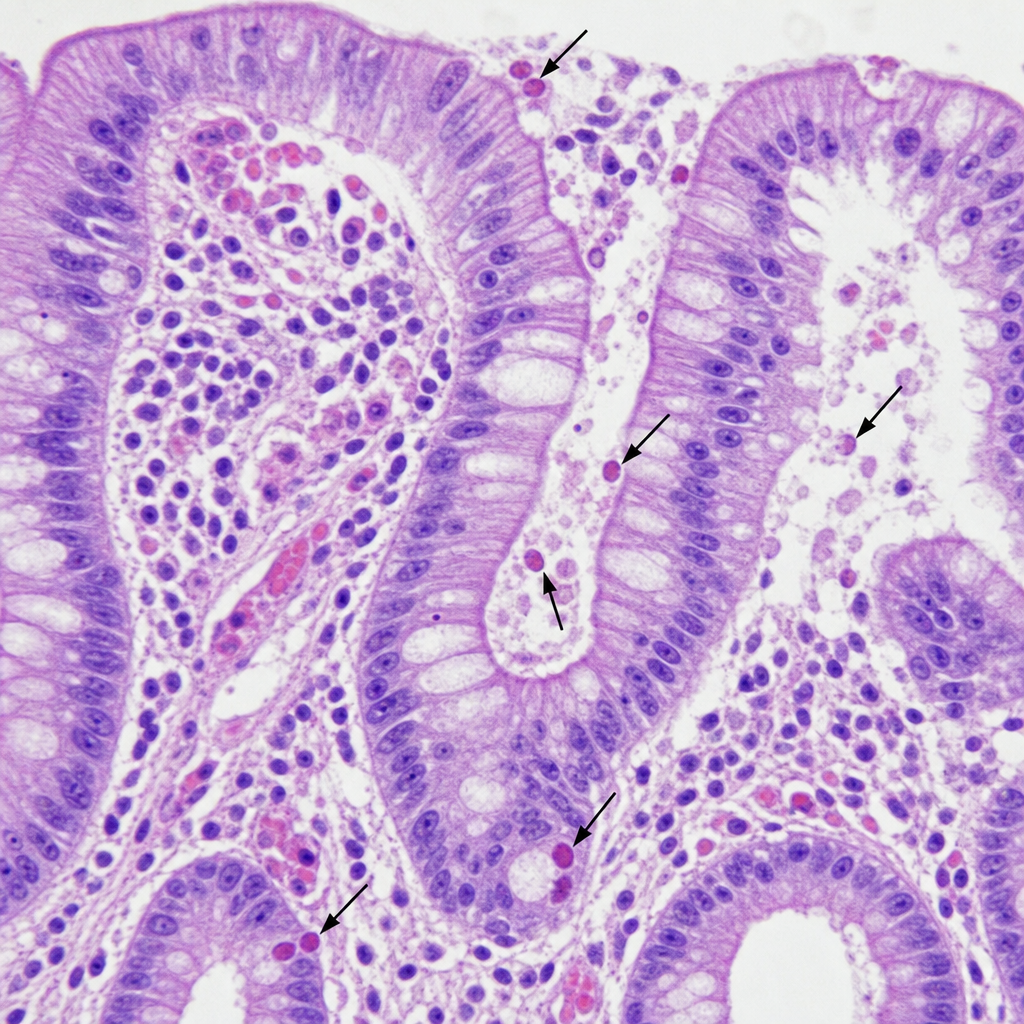
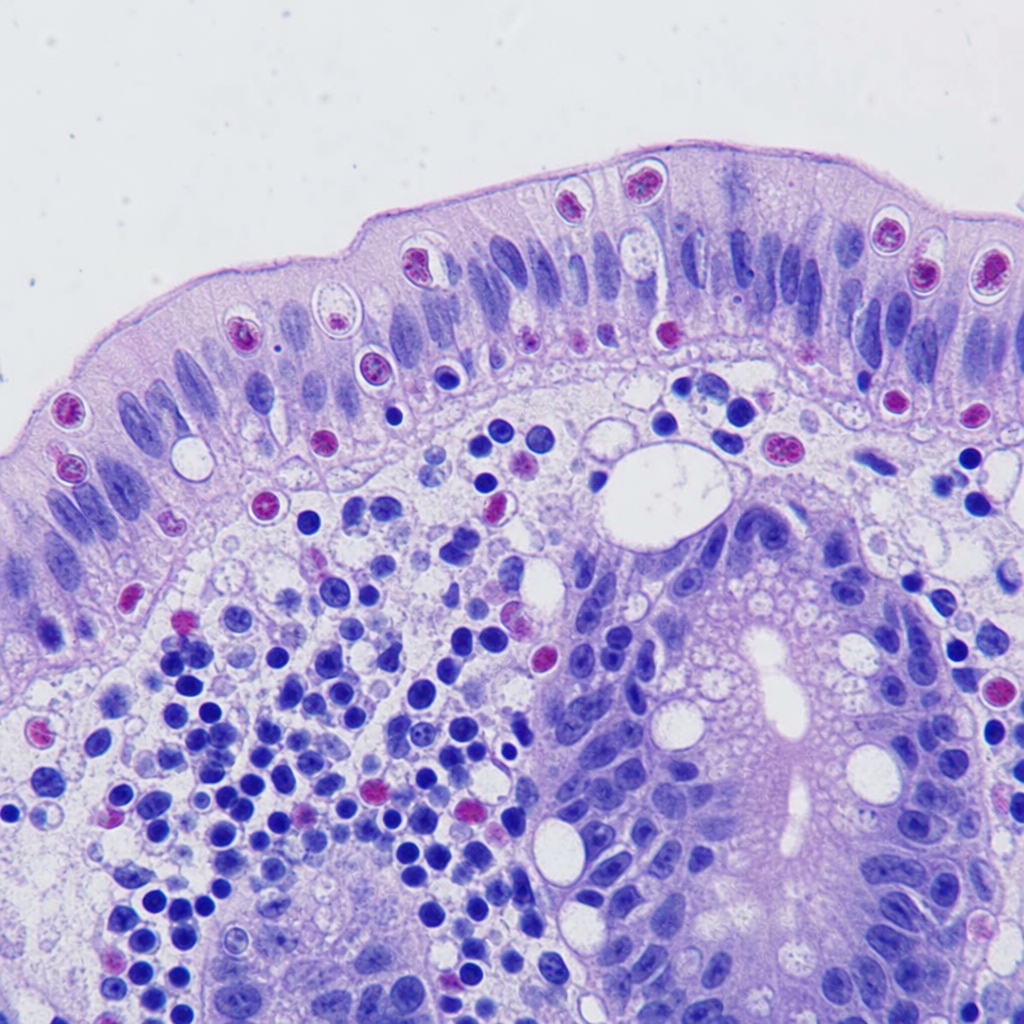
A 30-year-old man with HIV presents with chronic diarrhea. Stool examination reveals small, spherical, acid-fast oocysts. What is the causative agent?
Amoebic liver abscess can be diagnosed by demonstrating-
Which of the following is the MOST characteristic clinical feature of Giardiasis?
A 4 year old child presents with acute watery diarrhea and abdominal cramps. Stool microscopy reveals trophozoites with falling leaf motility. What is the etiological agent?
A 6-year-old child is brought with high fever with rigors for 5 days with pain in right hypochondrium. On examination, the patient is anicteric and tenderness is noted in right upper quadrant. What is the best investigation for this case?
A known HIV patient on anti-retroviral therapy presented with diarrhea of six months duration. Stool microscopy showed 10-30 micrometer cysts, Kinyoun stain was positive. What is the most likely diagnosis?
A 15-year-old boy returned from a vacation to his relatives' village. He developed a severe headache and purulent nasal discharge and was diagnosed with primary amebic meningoencephalitis (PAM). He died 5 days later. Which is the most likely etiological agent?
Flask-shaped ulcers in the intestine are caused by which of the following?
Cercariae are the infective form of which of the following parasites?
Largest intestinal protozoan is?
Explanation: ***Cryptosporidium parvum*** - This is the **most common cause** of chronic, watery diarrhea in immunocompromised individuals, particularly those with **HIV/AIDS**. - Its oocysts are **acid-fast**, small (4-6 μm), and typically **spherical**, readily identified in stool samples using modified acid-fast staining methods. - Causes self-limiting diarrhea in immunocompetent hosts but severe, persistent diarrhea in AIDS patients with CD4 count <200. *Entamoeba histolytica* - Causes **amoebic dysentery** characterized by bloody diarrhea, abdominal pain, and liver abscesses, but its cysts are **not acid-fast**. - Identification involves finding **trophozoites with ingested red blood cells** or cysts in stool, not acid-fast oocysts. *Isospora belli (Cystoisospora belli)* - Also causes chronic diarrhea in HIV patients and produces acid-fast oocysts, but its oocysts are **ellipsoidal, much larger (20-30 μm)**, and contain two sporoblasts. - While also acid-fast, its morphology in stool microscopy differs significantly from the smaller, round oocysts characteristic of *Cryptosporidium*. *Giardia lamblia* - Causes **giardiasis**, characterized by non-bloody, foul-smelling diarrhea, steatorrhea, and malabsorption. - Its cysts and trophozoites are identified in stool, but they are **not acid-fast** and have distinct pear-shaped trophozoites and oval cysts with nuclei.
Explanation: ***Trophozoites in the pus*** - **Amoebic liver abscesses** are caused by the invasive **trophozoite stage** of *Entamoeba histolytica*. - Demonstrating **trophozoites** in the characteristic **'anchovy paste' pus** aspirated from the abscess cavity is diagnostic. *Cysts in the pus* - **Cysts** are the **infective stage** of *Entamoeba histolytica* and are typically found in the **feces**, not in an abscess. - Cysts are responsible for transmission and survival outside the host, but they do not cause invasive disease. *Cysts in the liver* - The disease in the liver is caused by **trophozoites**, which invade the intestinal wall and then spread to the liver. - **Cysts** are never found within the liver parenchyma or abscesses. *Trophozoites in the feces* - While **trophozoites** can be found in the feces during acute amoebic dysentery, their presence alone does not confirm a liver abscess. - Furthermore, **trophozoites** are fragile and often difficult to detect in stool samples, especially once the stool has cooled.
Explanation: ***Diarrhea with foul-smelling stools*** - This is a hallmark symptom of Giardiasis [1], resulting from **malabsorption of fats** due to parasite adherence to the intestinal lining. - The malabsorption leads to **steatorrhea**, characterized by greasy, malodorous, and often floating stools. *Presence of Giardia cysts in stool* - While essential for **diagnosis**, the presence of cysts in stool is a **laboratory finding**, not a clinical feature experienced by the patient. - Clinical features refer to the **symptoms and signs** a patient presents with [1], which are often what prompt diagnostic testing. *Abdominal cramps and bloating* - These are **common symptoms** of Giardiasis, but they are often present in various gastrointestinal disturbances and are **less specific** than foul-smelling diarrhea. - They also can be caused by gas production and intestinal irritation, which frequently accompany many forms of infectious diarrhea. *Nausea and vomiting* - Nausea and vomiting can occur in Giardiasis, but they are **less consistent** and characteristic than the distinctive diarrhea pattern. - These symptoms are **widespread in many gastrointestinal illnesses** and do not specifically point to Giardiasis more than other conditions.
Explanation: **Giardia lamblia** - The presence of **trophozoites** with characteristic **falling leaf motility** in stool microscopy is pathognomonic for **Giardia lamblia** infection. - **Giardiasis** commonly causes **acute watery diarrhea** and **abdominal cramps** in children, often acquired through contaminated water or food. *Entamoeba histolytica* - **Entamoeba histolytica** causes **amoebic dysentery**, characterized by bloody diarrhea, unlike the watery diarrhea described. - Its trophozoites exhibit **directional motility** with pseudopods and may contain ingested red blood cells, not falling leaf motility. *Trichomonas tenax* - **Trichomonas tenax** is found in the **oral cavity** and is not associated with intestinal infections or diarrhea. - Its typical habitat and clinical presentation are entirely different from the symptoms described. *Balantidium coli* - **Balantidium coli** is a large, ciliated protozoan whose trophozoites have a **distinctive kidney-shaped macronucleus** and rotary motility with cilia. - It causes **balantidiasis**, which can range from asymptomatic to dysentery, but its trophozoite morphology and motility are distinct from falling leaf.
Explanation: ***USG*** - A **ultrasound** is the preferred initial investigation, especially in children, for evaluating abdominal pain in the **right hypochondrium** with fever. - It can effectively identify common causes like **cholecystitis**, **hepatitis**, or **liver abscess**, which fit the clinical presentation. *SGOT/LFT* - **Liver function tests (LFTs)** like SGOT/AST and SGPT/ALT provide information about liver inflammation or damage but do not help localize the pathology. - They are useful for assessing liver function but are not the primary diagnostic tool to identify the cause of the pain or fever. *CECT* - **Contrast-enhanced computed tomography (CECT)** is a more advanced imaging technique, often used after initial screening or when ultrasound findings are inconclusive. - It involves radiation exposure and contrast risks, making it less suitable as a first-line investigation for a child with these symptoms. *Serology* - **Serological tests** detect antibodies or antigens related to specific infections (e.g., viral hepatitis) but do not provide immediate anatomical information. - While they can confirm an infectious cause, they cannot identify the source of the pain or rule out other non-infectious pathologies immediately.
Explanation: ***Cystoisospora*** - **Cystoisospora belli** is a common cause of chronic diarrhea in **HIV-infected patients** and presents with oocysts typically measuring **20-30 µm** (the described 10-30 micrometer range encompasses the typical size). - The **Kinyoun acid-fast stain** is characteristically positive for *Cystoisospora* oocysts, which is the key diagnostic feature supporting this diagnosis. - This organism is particularly important in **immunocompromised patients** on ART who present with chronic diarrhea. *Balantidium coli* - **Balantidium coli** is a large ciliate, and its cysts are significantly larger (typically **40-60 µm**) than those described in the patient's stool. - While it can cause diarrhea in immunocompromised individuals, it is **not acid-fast** and therefore would not be positive with the Kinyoun stain. *Cryptosporidium* - **Cryptosporidium** is another common cause of chronic diarrhea in HIV patients, and its oocysts are **acid-fast positive** with the Kinyoun stain. - However, **Cryptosporidium** oocysts are much smaller, typically **4-6 µm**, which is inconsistent with the 10-30 micrometer cysts observed in this case. *Strongyloides* - **Strongyloides stercoralis** is a nematode that can cause chronic diarrhea and hyperinfection in immunocompromised patients, but it primarily produces **larvae** (rhabditiform and filariform) in stool, not cysts. - Its diagnostic forms are **not acid-fast**, and its morphology in stool microscopy is distinctly different from the described cysts.
Explanation: ***Naegleria fowleri*** - This free-living amoeba is the causative agent of **Primary Amebic Meningoencephalitis (PAM)**, a rapidly fatal infection acquired through nasal exposure to contaminated warm freshwater. - The rapid progression from symptom onset (headache, purulent nasal discharge) to death within 5 days is characteristic of PAM caused by **_Naegleria fowleri_**. *Plasmodium falciparum* - This parasite causes **falciparum malaria**, which can lead to cerebral malaria, but its presentation involves cyclic fevers, chills, and typically a longer disease course and different diagnostic markers than PAM. - While it affects the brain, it does not cause purulent nasal discharge or the rapid, fulminant meningoencephalitis seen in PAM. *Entamoeba histolytica* - This amoeba causes **amebic dysentery** and, in rare cases, extraintestinal amebiasis like liver abscesses; it does not typically cause PAM. - Central nervous system involvement by _Entamoeba histolytica_ is usually secondary to systemic spread and manifests as abscesses, not a fulminant meningoencephalitis acquired via nasal passages. *Toxoplasma* - _Toxoplasma gondii_ causes toxoplasmosis, which can lead to toxoplasmic encephalitis, especially in immunocompromised individuals. - _Toxoplasma_ infection typically has a slower onset, different risk factors (e.g., raw meat, cat feces), and does not present with a rapid, purulent meningoencephalitis following swimming exposure.
Explanation: ***Entamoeba histolytica*** - *Entamoeba histolytica* is a protozoan that causes **amoebiasis**, which is characterized by **flask-shaped (bottle-shaped) ulcers** in the colon - this is the **pathognomonic feature** of intestinal amoebiasis. - The trophozoites invade the intestinal mucosa and submucosa, creating a **narrow neck at the mucosal surface** and a **wider base in the submucosa**, giving them their unique flask-like appearance. - These ulcers are most commonly found in the **cecum and ascending colon**. *TB* - Intestinal tuberculosis typically causes **transverse ulcers** (perpendicular to the bowel axis) due to lymphatic spread and caseous necrosis, often in the ileocecal region. - These ulcers are usually associated with **granulomas** and acid-fast bacilli, which are histologically distinct from flask-shaped ulcers. *Giardia* - *Giardia lamblia* (or *intestinalis*) is a flagellate that causes **giardiasis**, primarily adhering to the small intestinal villi and causing malabsorption and diarrhea. - It is **non-invasive** and does not penetrate the intestinal wall or cause ulcer formation; its pathology is mainly due to **mucosal inflammation** and villous blunting. *Typhoid* - Typhoid fever, caused by *Salmonella Typhi*, commonly leads to **longitudinal ulcers** (parallel to the bowel axis) in the **Peyer's patches** of the ileum due to bacterial invasion and necrosis of lymphoid tissue. - These ulcers may perforate but do not present with the flask-shaped morphology characteristic of amoebiasis.
Explanation: ***Schistosoma hematobium*** - **Cercariae** are the motile, free-swimming larval stage of **Schistosoma** species, including *S. hematobium* - They **actively penetrate human skin** to initiate infection, making cercariae the infective form for humans *Paragonimus westermani* - The infective form for humans is **metacercariae**, which are ingested by consuming insufficiently cooked **crabs or crayfish** - Cercariae develop into metacercariae in secondary intermediate hosts (crustaceans) *Fasciola hepatica* - Humans are infected by ingesting **metacercariae** present on aquatic vegetation, such as **watercress** - Cercariae encyst on plants to form metacercariae, not directly infective *Taenia solium* - The infective forms are **cysticerci** in undercooked pork (for adult tapeworm) or **embryonated eggs** (causing cysticercosis) - This cestode has a different life cycle and does **not** involve cercariae
Explanation: ***Balantidium coli*** - *Balantidium coli* is the **largest protozoan parasite** known to infect humans, specifically found in the intestines. - It causes **balantidiasis**, an intestinal infection, and is notable for its ciliated trophozoite stage. *E. coli* - *E. coli* is a **bacterium**, not a protozoan. - While it is a common inhabitant of the intestines, it is significantly smaller than parasitic protozoa. *Giardia* - *Giardia lamblia* (or *intestinalis*) is a **flagellate protozoan** that causes giardiasis. - Though an intestinal parasite, it is considerably smaller than *Balantidium coli*. *T. gondii* - *Toxoplasma gondii* is an **intracellular protozoan parasite** known for causing toxoplasmosis. - It is much smaller than *Balantidium coli* and primarily infects cells, not existing as a large free-living form in the intestine.
Get full access to all questions, explanations, and performance tracking.
Start For Free