Drug of choice for mass therapy under filariasis control programme?
Which larvae infect humans by penetrating through the skin?
Which of the following is not helpful in preventing dracunculiasis?
Which of the following parasitic infections is characteristically associated with colitis?
Which of the following statements about Helminths is false?
Meyers Kouwenaar syndrome is a synonym for ?
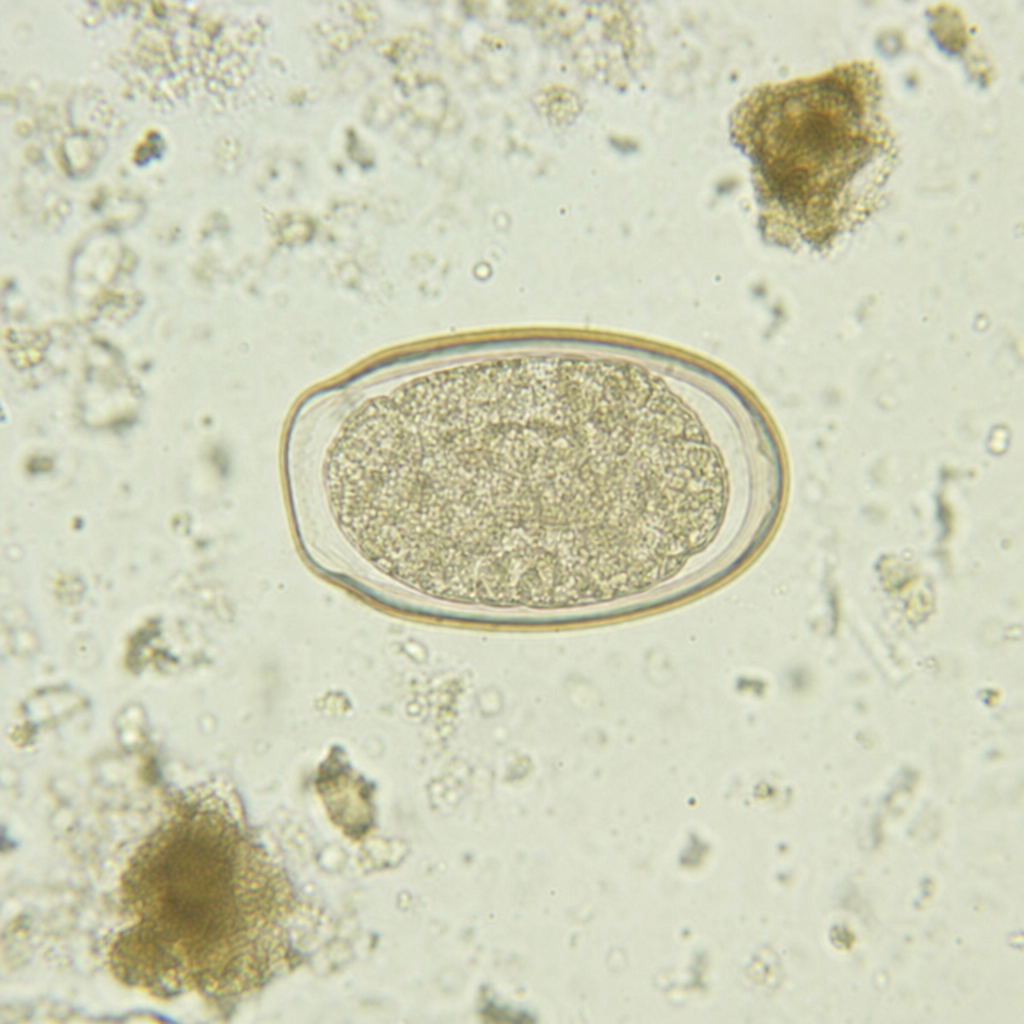
The following organism is called:
Flask-shaped ulcers in the intestine are caused by which of the following?
A 35 year old HIV positive patient comes with intractable diarrhea, crampy, abdominal pain and vomiting. Biopsy of small intestine was taken which shows cyst < 10 µm as given below. What is the appropriate diagnosis?
Largest intestinal protozoan is?
Explanation: ***Correct: DEC*** - **Diethylcarbamazine (DEC)** is the drug of choice for **mass drug administration (MDA)** campaigns aimed at eliminating lymphatic filariasis. - It effectively kills **microfilariae** and has some action on adult worms, reducing transmission. - In India's National Filariasis Elimination Programme, DEC is administered along with Albendazole in annual MDA campaigns. *Incorrect: Albendazole* - While **Albendazole** is co-administered with DEC in MDA programs, it is not the sole drug of choice for mass treatment of filariasis. - Its primary role is to provide **macrofilaricidal** activity (killing adult worms) and co-treatment for other helminth infections. - It enhances the effect of DEC but is not used alone. *Incorrect: Ivermectin* - **Ivermectin** is used in MDA programs for filariasis, particularly in areas co-endemic with **onchocerciasis** or where **Loa loa** is prevalent (as DEC is contraindicated in these areas). - However, in India and most lymphatic filariasis endemic areas, **DEC** remains the primary drug. *Incorrect: Mebendazole* - **Mebendazole** is an anthelminthic primarily used for treating **intestinal nematode infections** like ascariasis, trichuriasis, and hookworm. - It is **not used** in lymphatic filariasis mass treatment programs.
Explanation: ***Ancylostoma duodenale*** - The **filariform larvae** (L3) of *Ancylostoma duodenale*, a **hookworm**, are capable of penetrating intact **human skin**, typically through the feet. - This penetration is how the infection initially establishes in the host, leading to a migratory phase through the circulatory and respiratory systems. *Ascaris lumbricoides* - Humans become infected with *Ascaris lumbricoides* by ingesting **embryonated eggs**, usually through contaminated food or water. - The larvae hatch in the small intestine and then embark on a **lung migration phase**, but they do not penetrate the skin to initiate infection. *Trichinella spiralis* - Infection with *Trichinella spiralis* occurs by consuming undercooked meat, particularly **pork**, containing infectious cysts. - The larvae are released in the stomach and small intestine, then migrate throughout the body to encyst in muscle tissue, without a skin penetration stage. *Enterobius vermicularis* - Humans acquire *Enterobius vermicularis* (pinworm) infection by ingesting the **embryonated eggs**, often through **self-ingestion** due to perianal itching or contact with contaminated surfaces. - The life cycle is direct and does not involve larval penetration of the skin.
Explanation: ***Mass mebendazole treatment*** - Dracunculiasis (guinea worm disease) is caused by the nematode *Dracunculus medinensis*, which is transmitted through contaminated water containing copepods (water fleas) infested with larvae. **Mebendazole** is an anthelmintic medication effective against intestinal worms but has no known efficacy against *Dracunculus medinensis*. - This treatment strategy would be **ineffective** in breaking the life cycle of the guinea worm or preventing infection. *Filtering of drinking water* - This is a highly effective method as it removes the **copepods** (water fleas) containing the *Dracunculus medinensis* larvae from drinking water, thus preventing ingestion and infection. - Providing **cloth filters** or teaching filtration techniques is a cornerstone of dracunculiasis eradication programs. *Education regarding water hygiene* - Educating communities about the transmission of the disease through contaminated water and the importance of only drinking safe water is crucial for behavioral change and prevention. - This includes advising against entering water sources when infected to prevent adult worms from releasing larvae, thereby interrupting the **transmission cycle**. *Active search for new cases* - Identifying and isolating individuals with emerging guinea worms allows for proper wound care and prevents them from re-contaminating water sources with new larvae. - This strategy, combined with **containment measures** for infected individuals, is vital for monitoring and interrupting disease transmission in endemic areas.
Explanation: ***Trichuris trichiura*** - Also known as **whipworm**, *Trichuris trichiura* primarily infects the **large intestine**, particularly the cecum and ascending colon. - Heavy infections can lead to **colitis**, characterized by bloody diarrhea, abdominal pain, and rectal prolapse in severe cases. *Strongyloides* - *Strongyloides stercoralis* infection (strongyloidiasis) primarily affects the **small intestine** and can cause symptoms like abdominal pain, diarrhea, and malabsorption. - While it can lead to gastrointestinal symptoms, it is not typically associated with prominent **colitis** as its primary manifestation. *Clonorchis* - *Clonorchis sinensis* (Chinese liver fluke) infects the **biliary ducts** of the liver, causing **cholangitis** and potentially cholangiocarcinoma. - It does not primarily cause **colitis** or involve the large intestine. *Enterobius vermicularis* - *Enterobius vermicularis* (pinworm) primarily resides in the **cecum and appendix**, causing perianal itching, especially at night. - While it can cause some localized irritation, it does not typically lead to **colitis** or significant inflammation of the large intestine.
Explanation: ***Body cavity is present in trematodes*** - Trematodes are **flatworms** (Platyhelminthes), which are **acoelomate**, meaning they lack a true body cavity or coelom. - Their internal organs are embedded in a **parenchymal tissue** rather than being suspended within a fluid-filled cavity. *Alimentary canal is complete in Nematodes* - **Nematodes** (roundworms) possess a **complete alimentary canal**, with a distinct mouth, intestine, and anus. - This allows for **unidirectional flow of food** and waste through their digestive system. *Nematodes have separate sexes* - **Nematodes** are generally **dioecious**, meaning they have separate male and female individuals. - This sexual dimorphism is a characteristic feature for most species within this phylum. *Alimentary canal is Present but incomplete* - The statement refers to the digestive system of **Platyhelminthes** (flatworms) like trematodes and cestodes, where the alimentary canal is present but **incomplete** (lacking an anus). - This means they have a **single opening** that serves as both mouth and anus for digestion.
Explanation: ***Occult filariasis*** - **Meyers Kouwenaar syndrome** is a historical term used to describe **occult filariasis**, particularly those cases involving the lymphatics without the presence of microfilariae in peripheral blood. - This syndrome is characterized by **chronic lymphatic obstruction** and **eosinophilia**, often due to an immunological response to filarial antigens. *Larva migrans* - **Larva migrans** refers to conditions (cutaneous or visceral) caused by the migration of **nematode larvae** in human tissues. - It describes the migratory phase of the parasite and is not a synonym for occult filariasis, which is a specific clinical manifestation of filarial infection. *Tropical pulmonary eosinophilia* - **Tropical pulmonary eosinophilia (TPE)** is a distinct clinical syndrome characterized by **nocturnal cough**, **dyspnea**, and **marked peripheral eosinophilia**, caused by an allergic reaction to Wuchereria bancrofti or Brugia malayi microfilariae that are trapped in the lungs. - While it is a form of occult filariasis (microfilariae are absent in the blood), it is a specific presentation and not a general synonym for Meyers Kouwenaar syndrome, which typically refers to lymphatic involvement. *Cutaneous allergic reactions to Ascariasis* - **Cutaneous allergic reactions to Ascariasis** typically involve manifestations like **urticaria** or **angioedema** due to migration of Ascaris larvae or exposure to adult worms. - This is a reaction to a different parasitic infection (Ascaris lumbricoides) and does not relate to filariasis.
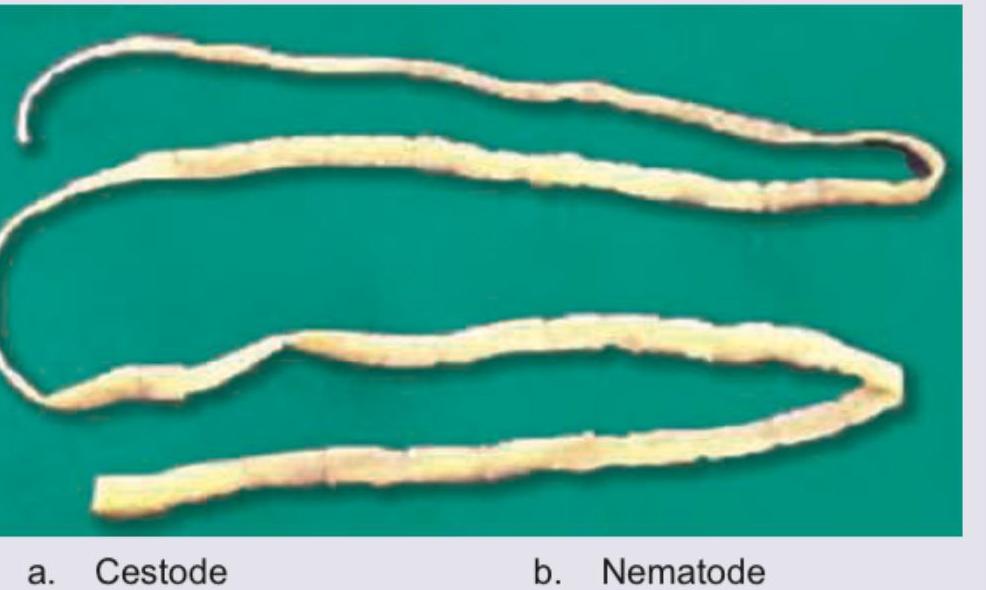
Explanation: ***Cestode*** - The image displays a long, **segmented, ribbon-like worm**, which is characteristic morphology of a **tapeworm (cestode)**. - Cestodes typically possess a head (scolex) for attachment and a body composed of repeating segments called **proglottids**. *Nematode* - **Nematodes** are generally **unsegmented**, cylindrical, and elongated worms, often described as roundworms. - They lack the distinct proglottids and flattened, ribbon-like appearance seen in the image. *Trematode* - **Trematodes**, also known as flukes, are typically **leaf-shaped** and **unsegmented**. - They are much broader and flatter than the organism shown, and do not have the visible segmentation. *Annelid* - **Annelids** are segmented worms like earthworms and leeches, but they have a **cylindrical body** with visible external ring-like segments. - Unlike cestodes, annelids have a complete digestive system and lack the flat, ribbon-like morphology and internal proglottid structure characteristic of tapeworms.
Explanation: ***Entamoeba histolytica*** - *Entamoeba histolytica* is a protozoan that causes **amoebiasis**, which is characterized by **flask-shaped (bottle-shaped) ulcers** in the colon - this is the **pathognomonic feature** of intestinal amoebiasis. - The trophozoites invade the intestinal mucosa and submucosa, creating a **narrow neck at the mucosal surface** and a **wider base in the submucosa**, giving them their unique flask-like appearance. - These ulcers are most commonly found in the **cecum and ascending colon**. *TB* - Intestinal tuberculosis typically causes **transverse ulcers** (perpendicular to the bowel axis) due to lymphatic spread and caseous necrosis, often in the ileocecal region. - These ulcers are usually associated with **granulomas** and acid-fast bacilli, which are histologically distinct from flask-shaped ulcers. *Giardia* - *Giardia lamblia* (or *intestinalis*) is a flagellate that causes **giardiasis**, primarily adhering to the small intestinal villi and causing malabsorption and diarrhea. - It is **non-invasive** and does not penetrate the intestinal wall or cause ulcer formation; its pathology is mainly due to **mucosal inflammation** and villous blunting. *Typhoid* - Typhoid fever, caused by *Salmonella Typhi*, commonly leads to **longitudinal ulcers** (parallel to the bowel axis) in the **Peyer's patches** of the ileum due to bacterial invasion and necrosis of lymphoid tissue. - These ulcers may perforate but do not present with the flask-shaped morphology characteristic of amoebiasis.
Explanation: ***Cryptosporidium parvum*** - This parasite causes **chronic, severe watery diarrhea** in immunocompromised patients, particularly those with **HIV/AIDS**, fitting the clinical picture of intractable diarrhea. - The biopsy showing **small cysts (<10 µm)** attached to the enterocytes in the small intestine is characteristic of *Cryptosporidium parvum*. *Giardia lamblia* - *Giardia lamblia* typically presents with **malabsorption** and **greasy stools**; while it can cause chronic diarrhea, the characteristic small cysts on biopsy in an HIV patient are more indicative of cryptosporidiosis. - Its cysts are usually larger (8-12 µm) and trophozoites are pear-shaped, differing from the morphology shown. *Isospora belli* - *Isospora belli* causes diarrhea in immunocompromised patients but its oocysts are **larger (20-30 µm)** and typically **ellipsoidal**, which contradicts the <10 µm cyst size mentioned. - Diagnosis is often made by identifying oocysts in stool samples, and while it infects the small intestine, the biopsy finding is less typical for *Isospora belli*. *CMV* - **Cytomegalovirus (CMV)** colititis or enteritis in HIV patients typically causes **ulcerations** and **inflammation** often with characteristic **owl's eye inclusions** in infected cells on biopsy, not small cysts. - While CMV can cause diarrhea and abdominal pain, the specified biopsy finding of small cysts points away from a viral etiology like CMV.
Explanation: ***Balantidium coli*** - *Balantidium coli* is the **largest protozoan parasite** known to infect humans, specifically found in the intestines. - It causes **balantidiasis**, an intestinal infection, and is notable for its ciliated trophozoite stage. *E. coli* - *E. coli* is a **bacterium**, not a protozoan. - While it is a common inhabitant of the intestines, it is significantly smaller than parasitic protozoa. *Giardia* - *Giardia lamblia* (or *intestinalis*) is a **flagellate protozoan** that causes giardiasis. - Though an intestinal parasite, it is considerably smaller than *Balantidium coli*. *T. gondii* - *Toxoplasma gondii* is an **intracellular protozoan parasite** known for causing toxoplasmosis. - It is much smaller than *Balantidium coli* and primarily infects cells, not existing as a large free-living form in the intestine.
Get full access to all questions, explanations, and performance tracking.
Start For Free