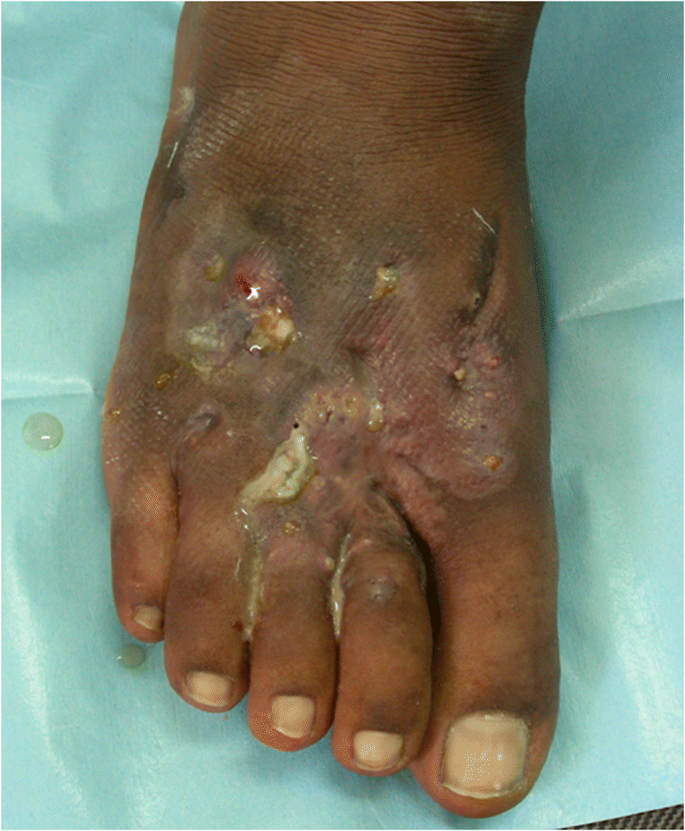
Which among the following is a subcutaneous fungal agent?
Germ tube formation is characteristic of which organism?
Mucormycosis is caused by which fungus?
Which of the following statements about dermatophytes is FALSE?
Which of the following is the most common group of fungal infections?
Which of the following is NOT an example of a zoonotic disease?
Aflatoxin is secreted by which of the following fungi?
Which of the following is an endemic mycosis?
Fungi lacking a sexual cycle are classified as:
What stain is used for degenerated fungi in tissue?
Explanation: **Explanation:** The correct answer is **Sporothrix schenckii**. Fungal infections are classified based on the depth of tissue involvement into superficial, cutaneous, subcutaneous, and systemic (deep) mycoses. **1. Why Sporothrix schenckii is correct:** *Sporothrix schenckii* is the classic agent of **subcutaneous mycosis**. It is a dimorphic fungus typically introduced into the skin via traumatic inoculation (e.g., a thorn prick), leading to **Sporotrichosis**. It characteristically spreads via the lymphatic system, causing nodules along the lymphatics (nodular lymphangitis). **2. Analysis of Incorrect Options:** * **Cryptococcus neoformans (Option A):** This is an encapsulated yeast and a **systemic/opportunistic fungal agent**. It primarily causes meningitis or pneumonia, especially in immunocompromised patients. * **Histoplasma capsulatum (Option B):** This is a **systemic (endemic) dimorphic fungus**. It is inhaled from soil contaminated with bird or bat droppings and primarily affects the lungs and reticuloendothelial system. * **Talaromyces marneffei (Option D):** Formerly *Penicillium marneffei*, this is a **systemic dimorphic fungus** endemic to Southeast Asia. It is an AIDS-defining illness and involves multiple organs (skin, lungs, liver). **3. NEET-PG High-Yield Pearls:** * **Sporotrichosis** is famously known as **"Rose Gardener’s Disease."** * **Morphology:** It is dimorphic—**Cigar-shaped yeasts** in tissue (at 37°C) and **Daisy-petal/Flower-like** conidia on Sabouraud Dextrose Agar (at 25°C). * **Asteroid bodies:** Splendore-Hoeppli phenomenon (eosinophilic material around yeast) can be seen in tissue sections. * **Treatment:** Drug of choice is **Itraconazole**. Historically, saturated solution of potassium iodide (SSKI) was used. * **Other Subcutaneous Agents:** *Chromoblastomycosis* (Sclerotic bodies/Medlar bodies) and *Mycetoma* (Madura foot).
Explanation: **Explanation:** The **Germ Tube Test** (also known as the Reynolds-Braude phenomenon) is a rapid diagnostic test used to identify **Candida albicans**. When C. albicans cells are incubated in human or rabbit serum at 37°C for 2–3 hours, they produce elongated, tube-like projections called germ tubes. These represent the initiation of hyphal growth from yeast cells. A key diagnostic feature is that there is **no constriction** at the point of origin from the parent yeast cell. **Analysis of Options:** * **Candida albicans (Correct):** It is the most common species to show a positive germ tube test (along with *Candida dubliniensis*). This is a high-yield "gold standard" rapid identification method in microbiology labs. * **Cryptococcus:** This is an encapsulated yeast identified by **India Ink** preparation (showing a halo) and urease production. It does not form germ tubes. * **Mucor:** This is a Zygomycete characterized by broad, **non-septate hyphae** with right-angled (90°) branching. It is not a yeast and does not produce germ tubes. * **Aspergillus:** This is a filamentous fungus (mold) characterized by septate hyphae with **acute-angle (45°)** branching. It reproduces via conidia, not germ tubes. **NEET-PG High-Yield Pearls:** * **C. albicans** is "dimorphic" (technically polymorphic) but exists as yeast/pseudohyphae in tissues at 37°C, unlike systemic dimorphic fungi which are molds in nature and yeasts in tissue. * **Chlamydospores:** Thick-walled resting spores formed by C. albicans on **Cornmeal Agar**. * **Culture:** Grows as creamy white colonies on Sabouraud Dextrose Agar (SDA). * **C. dubliniensis:** The only other species that is Germ Tube positive; it is differentiated by its inability to grow at 45°C.
Explanation: **Explanation:** Mucormycosis (formerly known as Zygomycosis) is a life-threatening opportunistic infection caused by fungi belonging to the order **Mucorales**. These fungi are ubiquitous in the environment, found in soil and decaying organic matter. **Why "All of the above" is correct:** The order Mucorales contains several genera capable of causing human disease. * **Rhizopus species** are the most common cause of mucormycosis globally. **Rhizopus oryzae** (also known as **Rhizopus arrhizus**) is the single most frequently isolated species, accounting for nearly 70% of all cases. * **Absidia** (specifically *Lichtheimia corymbifera*, formerly *Absidia corymbifera*) is the second or third most common genus involved, particularly in cutaneous infections and in patients with hematological malignancies. * Other relevant genera include *Mucor*, *Rhizomucor*, and *Cunninghamella*. **Clinical Pearls for NEET-PG:** 1. **Risk Factors:** Uncontrolled Diabetes Mellitus (especially **Ketoacidosis**), neutropenia, iron overload (deferoxamine therapy), and post-COVID-19 complications. 2. **Pathogenesis:** These fungi are **angioinvasive**, leading to tissue infarction, necrosis, and the characteristic "black eschar." 3. **Microscopy (High Yield):** On KOH mount or histopathology, they appear as **broad, ribbon-like, aseptate (or sparsely septate) hyphae** with **right-angle (90°) branching**. (Contrast this with *Aspergillus*, which has narrow, septate hyphae with acute-angle branching). 4. **Treatment:** Surgical debridement is crucial, combined with intravenous **Liposomal Amphotericin B**. Isavuconazole and Posaconazole are used as step-down or salvage therapy.
Explanation: ### Explanation **1. Why Option A is the Correct (False) Statement:** While *Candida albicans* is an opportunistic pathogen capable of causing systemic candidiasis (especially in immunocompromised patients), it is **not** classified as a dermatophyte. More importantly, it most commonly causes **mucocutaneous infections** (oral thrush, vaginal candidiasis, diaper rash) rather than systemic ones. In the context of this question, dermatophytes are fungi that require keratin for growth; *Candida* is a yeast that can involve mucous membranes, which dermatophytes cannot. **2. Analysis of Other Options (True Statements):** * **Option B:** Dermatophytes are "keratinophilic." They secrete the enzyme **keratinase**, limiting their infection to the non-living, superficial keratinized layers of the skin, hair, and nails. They do not typically invade deeper tissues. * **Option C:** The genus ***Microsporum*** typically involves the **skin and hair**, but it characteristically **spares the nails**. * **Option D:** The genus ***Epidermophyton*** (specifically *E. floccosum*) involves the **skin and nails**, but it characteristically **spares the hair**. **3. NEET-PG High-Yield Clinical Pearls:** To differentiate the three main genera of dermatophytes, remember this distribution table: | Genus | Skin | Hair | Nails | | :--- | :---: | :---: | :---: | | **Trichophyton** | Yes | Yes | Yes | | **Microsporum** | Yes | Yes | **No** | | **Epidermophyton** | Yes | **No** | Yes | * **Diagnostic Gold Standard:** KOH mount showing branching hyphae. * **Culture:** Sabouraud Dextrose Agar (SDA); *Microsporum canis* shows a characteristic spindle-shaped macroconidia. * **Wood’s Lamp:** Useful for *Microsporum* (bright green fluorescence), but *Trichophyton* (except *T. schoenleinii*) does not fluoresce.
Explanation: **Explanation:** **Why Deuteromycetes is the Correct Answer:** Deuteromycetes, commonly known as **"Fungi Imperfecti,"** represent the largest and most clinically significant group of fungi in medical mycology. This group is defined by the absence of a known sexual cycle (teleomorph stage), reproducing only via asexual means (anamorph stage). The vast majority of human fungal pathogens—including **Dermatophytes** (the most common cause of superficial infections), *Candida* species, *Aspergillus*, and *Sporothrix*—historically fall into this category. Because superficial and cutaneous infections (like Tinea) are the most prevalent fungal diseases globally, Deuteromycetes is considered the most common group of fungal infections. **Analysis of Incorrect Options:** * **Ascomycetes (Sac Fungi):** While many Deuteromycetes are reclassified here once their sexual stage is discovered (e.g., *Histoplasma*), this group is defined by sexual spores (ascospores) produced in a sac (ascus). * **Basidiomycetes (Club Fungi):** These include mushrooms and *Cryptococcus neoformans*. While *Cryptococcus* is a major pathogen in immunocompromised patients, it is far less common than the broad range of infections caused by Deuteromycetes. * **Zygomycetes (Conjugation Fungi):** These include *Mucor* and *Rhizopus*. These cause acute, aggressive infections (Mucormycosis) but are relatively rare compared to common dermatological or opportunistic infections. **High-Yield Clinical Pearls for NEET-PG:** * **Classification Basis:** Fungi are classified into these four groups primarily based on their **method of sexual reproduction**. * **The "Imperfect" Rule:** If a fungus has no known sexual stage, it is a Deuteromycete. * **Dermatophytes:** The most common fungal infections worldwide (Tinea corporis, pedis, etc.) are caused by *Trichophyton*, *Microsporum*, and *Epidermophyton*, all of which are Deuteromycetes. * **Note on Taxonomy:** Modern molecular phylogenetics is phasing out the term "Deuteromycota," but it remains a standard classification in traditional medical microbiology exams.
Explanation: **Explanation:** The core concept of a **zoonosis** is a disease or infection that is naturally transmissible from vertebrate animals to humans. **Why Taeniasis is the correct answer:** Taeniasis (specifically caused by *Taenia saginata* and *Taenia solium*) is classified as an **anthropozoonosis** or more specifically, a cycle involving humans as the definitive host. While animals (cattle and pigs) are intermediate hosts, the disease is maintained by the human-to-animal-to-human cycle. According to the WHO classification, diseases where the human is an essential link in the life cycle (like Taeniasis or Schistosomiasis) are often excluded from the strict definition of "zoonotic diseases," which typically refers to infections where humans are accidental hosts. **Analysis of Incorrect Options:** * **Plague:** A classic zoonosis caused by *Yersinia pestis*. It is primarily a disease of rodents, transmitted to humans via the bite of an infected rat flea (*Xenopsylla cheopis*). * **Rabies:** A viral zoonosis transmitted through the saliva of infected mammals (dogs, bats, monkeys). Humans are "dead-end" hosts. * **Brucellosis:** A bacterial zoonosis (undulant fever) transmitted to humans through direct contact with infected livestock or consumption of unpasteurized dairy products. **NEET-PG High-Yield Pearls:** * **Classification:** * *Orthozoonoses:* Cycle maintained in one reservoir (e.g., Rabies). * *Cyclozoonoses:* Require more than one vertebrate host (e.g., Taeniasis, Echinococcosis). * *Metazoonoses:* Require an invertebrate vector (e.g., Plague). * **Emerging Zoonoses:** Keep an eye on Nipah virus, Ebola, and Kyasanur Forest Disease (KFD) for recent exam trends. * **Dead-end hosts:** Humans are dead-end hosts for Rabies, Hydatid disease, and Japanese Encephalitis.
Explanation: ### Explanation **Correct Answer: D. Aspergillus** Aflatoxins are potent mycotoxins produced primarily by certain species of the genus **Aspergillus**, most notably ***Aspergillus flavus*** and ***Aspergillus parasiticus***. These fungi commonly contaminate stored agricultural crops like groundnuts (peanuts), maize, and tree nuts under warm and humid conditions. **Why Aspergillus is correct:** The medical significance of Aflatoxin (specifically **Aflatoxin B1**) lies in its role as a potent hepatocarcinogen. It induces a specific mutation in the **p53 tumor suppressor gene** (codon 249), significantly increasing the risk of **Hepatocellular Carcinoma (HCC)**. This risk is synergistically higher in patients with chronic Hepatitis B infection. **Why other options are incorrect:** * **Fusarium:** Known for producing toxins like **Fumonisins** (linked to esophageal cancer) and Trichothecenes, but not aflatoxins. * **Rhizopus:** A member of the Mucormycetes family, it causes opportunistic infections (Mucormycosis) in diabetics but is not a primary producer of dietary mycotoxins. * **Candida:** A yeast that causes superficial and systemic candidiasis; it does not produce aflatoxins. **High-Yield Clinical Pearls for NEET-PG:** * **Target Organ:** Liver (Hepatotoxicity and Carcinogenicity). * **Detection:** Aflatoxin metabolites (M1) can be detected in milk if cattle consume contaminated feed. * **Diagnosis:** Fluorescence under UV light is often used to screen contaminated grains. * **Key Association:** Aflatoxin + HBV = Massive increase in Hepatocellular Carcinoma risk.
Explanation: **Explanation:** The correct answer is **Blastomycosis**. **1. Why Blastomycosis is correct:** Endemic mycoses are fungal infections caused by **dimorphic fungi** that are restricted to specific geographical regions. These fungi exist as molds in the environment (soil) and convert to yeasts at body temperature (37°C). **Blastomycosis** (caused by *Blastomyces dermatitidis*) is a classic endemic mycosis, primarily found in the Ohio and Mississippi River Valleys and the Great Lakes region. Other major endemic mycoses include Histoplasmosis, Coccidioidomycosis, and Paracoccidioidomycosis. **2. Why the other options are incorrect:** * **Candidiasis (Option A):** This is classified as an **opportunistic mycosis**. *Candida* species are part of the normal human flora (commensals). Infection occurs due to host immunosuppression or disruption of normal barriers, rather than geographical exposure. * **Cryptococcosis (Option C):** This is also an **opportunistic mycosis**. While *Cryptococcus neoformans* is found worldwide (often associated with pigeon droppings), it primarily causes disease in immunocompromised individuals (e.g., HIV/AIDS) and is not restricted to specific endemic zones. **3. High-Yield Clinical Pearls for NEET-PG:** * **Dimorphism Rule:** "Mold in the Cold, Yeast in the Beast." * **Blastomycosis Morphology:** Characterized by **Broad-Based Budding** yeasts (BBB). * **Histoplasmosis:** Characterized by intracellular yeasts within macrophages; associated with bat/bird droppings. * **Coccidioidomycosis:** Found in Southwest US; forms **spherules** filled with endospores in tissue (not a yeast). * **Paracoccidioidomycosis:** Characterized by the **"Pilot’s Wheel"** appearance of yeast cells.
Explanation: ### Explanation **1. Why the Correct Answer is Right:** **Fungi Imperfecti (Deuteromycetes)** is a taxonomic group used to classify fungi that lack a known sexual stage (teleomorph) in their life cycle. They reproduce exclusively through asexual means, such as conidia or fragmentation. In medical mycology, this is a highly significant group because the majority of human fungal pathogens—including *Candida* species, *Aspergillus* species, and Dermatophytes—were traditionally classified here until their sexual stages were discovered or molecularly identified. **2. Why the Incorrect Options are Wrong:** * **Phycomycetes (Zygomycetes):** These are lower fungi (e.g., *Rhizopus*, *Mucor*) that possess a sexual stage involving the formation of **Zygospores**. They are characterized by broad, non-septate hyphae. * **Ascomycetes:** Known as "sac fungi," they produce sexual spores called **Ascospores** within a sac-like structure called an ascus. Examples include *Saccharomyces* and the sexual forms of *Histoplasma*. * **Basidiomycetes:** Known as "club fungi," they produce sexual spores called **Basidiospores** on a club-shaped basidium. *Cryptococcus neoformans* is a medically important basidiomycete (its sexual form is *Filobasidiella neoformans*). **3. NEET-PG Clinical Pearls & High-Yield Facts:** * **Teleomorph vs. Anamorph:** The sexual state of a fungus is called the **Teleomorph**, while the asexual state is the **Anamorph**. Fungi Imperfecti only exhibit the Anamorph state. * **Taxonomic Shift:** Modern classification (based on DNA sequencing) is moving away from the term "Deuteromycota," but it remains a frequent high-yield topic in competitive exams. * **Dimorphic Fungi:** Most systemic mycoses (e.g., *Histoplasma*, *Blastomyces*) are dimorphic, existing as molds in the environment (asexual/perfect stages) and yeasts in human tissue. * **Key Identification:** Most fungi causing human disease are identified in the lab via their asexual structures (conidia/spores) seen on **SDA (Sabouraud Dextrose Agar)** or **LPCB (Lactophenol Cotton Blue)** mounts.
Explanation: **Explanation:** The identification of fungi in histopathological sections depends on the staining of the fungal cell wall. **Why Gomori Methenamine Silver (GMS) is correct:** GMS is considered the **gold standard** and the most sensitive stain for detecting fungi in tissue. The principle involves the oxidation of carbohydrates in the fungal cell wall to aldehydes, which then reduce the silver nitrate to metallic silver. Because GMS provides an intense black contrast against a green background, it can visualize even **degenerated, non-viable, or dead fungi** that have lost their cytoplasmic detail and fail to stain with other methods. **Analysis of Incorrect Options:** * **Periodic acid-Schiff (PAS):** While excellent for highlighting the polysaccharides in fungal walls (staining them bright magenta), PAS requires intact cell wall structures. It is often less effective than GMS for degenerated organisms or those with low fungal loads. * **Hematoxylin and Eosin (H&E):** Most fungi are poorly visualized on H&E as they appear pale or nearly transparent (except for some pigmented fungi like dematiaceous molds). It cannot reliably identify degenerated fungal elements. * **Mucicarmine:** This is a selective stain used specifically for **capsular material**. In mycology, its primary use is identifying *Cryptococcus neoformans*, which has a carminophilic polysaccharide capsule. **NEET-PG High-Yield Pearls:** * **Best stain for fungal morphology:** GMS (Black/Brown). * **Best stain for *Cryptococcus* capsule:** Mayer’s Mucicarmine (Rose red). * **Best stain for *Pneumocystis jirovecii*:** GMS (shows "crushed ping-pong ball" appearance). * **Rapid screening of skin/hair/nails:** 10% KOH mount. * **Fluorescent stain for fungi:** Calcofluor White (binds to chitin).
Classification of Fungi
Practice Questions
Superficial Mycoses
Practice Questions
Dermatophytes
Practice Questions
Subcutaneous Mycoses
Practice Questions
Candidiasis
Practice Questions
Aspergillosis
Practice Questions
Cryptococcosis
Practice Questions
Zygomycosis
Practice Questions
Endemic Mycoses
Practice Questions
Opportunistic Fungal Infections
Practice Questions
Antifungal Agents
Practice Questions
Laboratory Diagnosis of Fungal Infections
Practice Questions
Get full access to all questions, explanations, and performance tracking.
Start For Free