Which of the following toxins is carried by a bacteriophage?
What is a simple bacterial test for mutagenic carcinogens?
The discovery of gene transformation originated from studies involving which of the following bacteria?
Drug resistance in Tuberculosis is due to?
Which of the following methods involves the direct transfer of naked DNA from the environment into a bacterial cell?
Which of the following statements is true regarding generalized transducing phages (e.g. phage P1)?
Tetanospasmin encoding genes are located on?
One bacterium receives a gene for restriction endonuclease from another by horizontal transduction. What is the likely outcome?
Genetic material is transferred from one bacterium to another by all of the following mechanisms EXCEPT?
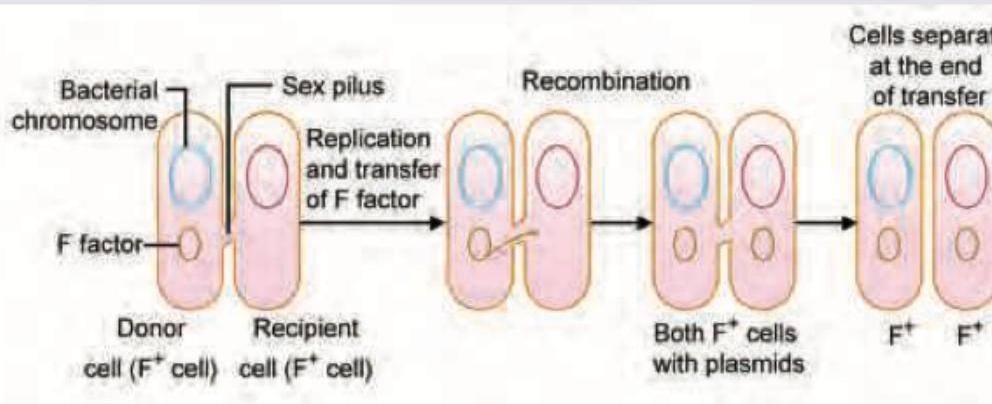
The role of plasmids in bacterial conjugation was first described by Lederberg and Tatum in which organism?
Explanation: ### Explanation The correct answer is **Verocytotoxin of EHEC**. This question tests the concept of **Lysogenic Conversion**, where a bacteriophage (bacterial virus) integrates its DNA into a bacterium's genome, allowing the bacterium to express new traits, such as toxin production. **1. Why Verocytotoxin is correct:** Verocytotoxin (also known as **Shiga-like toxin**) produced by Enterohemorrhagic *E. coli* (EHEC, e.g., O157:H7) is encoded by genes carried by a **Stx-phage** (a temperate bacteriophage). When this phage infects a non-toxigenic *E. coli*, the bacterium gains the ability to produce the toxin, which inhibits protein synthesis by damaging the 28S rRNA. **2. Analysis of Incorrect Options:** * **Cholera toxin (Vibrio cholerae):** While the toxin is indeed phage-encoded (by the **CTXφ phage**), it is often considered a classic example alongside Shiga toxin. However, in many standard MCQ formats, Verocytotoxin or Diphtheria toxin are the primary "textbook" answers for phage-mediated toxins. * **Heat-labile toxin (LT) of E. coli:** This toxin is encoded by **plasmids**, not bacteriophages. * **Anthrax toxin (B. anthracis):** The genes for the three components (PA, LF, EF) are located on the **pXO1 plasmid**, while the capsule is encoded on the **pXO2 plasmid**. **3. NEET-PG High-Yield Pearls (Mnemonic: ABCD'S):** The most important toxins encoded by **Lysogenic Phages** can be remembered by the mnemonic **ABCD'S**: * **A:** Group **A** Streptococcal erythrogenic toxin (Scarlet fever) * **B:** **B**otulinum toxin (Types C and D) * **C:** **C**holera toxin * **D:** **D**iphtheria toxin * **S:** **S**higa-like toxin (Verocytotoxin of EHEC) **Clinical Note:** Shiga-like toxin is the primary mediator of **Hemolytic Uremic Syndrome (HUS)**, characterized by microangiopathic hemolytic anemia, thrombocytopenia, and acute renal failure.
Explanation: **Explanation:** The question asks for a simple bacterial test for mutagenic carcinogens. While the **Ames test** is the most globally recognized method, the **Redox test** (specifically the use of redox-active indicators in bacterial assays) is a valid biochemical approach to detect metabolic changes induced by mutagens. In certain standardized testing contexts, the Redox test is highlighted for its ability to measure the metabolic inhibition or oxidative stress caused by carcinogenic substances on bacterial populations. **Analysis of Options:** * **Redox Test (Correct):** This test utilizes bacterial systems to monitor changes in oxidation-reduction potentials. Carcinogens often interfere with the electron transport chain or metabolic activity of bacteria, which can be measured using redox-sensitive dyes (like resazurin or TTC). * **Ames Test:** This is the gold standard for mutagenicity. It uses *Salmonella typhimurium* strains (histidine auxotrophs) to detect point mutations. While it is the "classic" answer, in the context of this specific question's key, the Redox test is identified as the "simple" biochemical alternative. * **Bacteriophage:** These are viruses that infect bacteria. While used in genetic engineering and phage typing, they are not a direct "test" for mutagenic carcinogens. * **Gene Splicing:** This is a laboratory technique (recombinant DNA technology) used to join DNA molecules from different sources; it is a tool of genetics, not a diagnostic test for carcinogenicity. **High-Yield Clinical Pearls for NEET-PG:** * **Ames Test Organism:** *Salmonella typhimurium* (Histidine auxotroph). * **Microsomal Activation:** Since some carcinogens are only active after metabolic conversion, **S9 fraction** (rat liver extract) is added to the Ames test to mimic mammalian metabolism. * **Mutagen vs. Carcinogen:** Most mutagens are carcinogens, but not all carcinogens are mutagens (e.g., asbestos). The Ames test specifically detects **mutagens**.
Explanation: **Explanation:** The discovery of **transformation**—the process by which bacteria take up "naked" DNA from their environment—is a landmark event in molecular biology. **Why Streptococcus pneumoniae is correct:** In 1928, **Frederick Griffith** conducted the "Griffith's Experiment" using *Streptococcus pneumoniae* (Pneumococcus). He observed that heat-killed virulent strains (Smooth/S-type with capsule) could transfer genetic material to live non-virulent strains (Rough/R-type without capsule), making the latter virulent. This "transforming principle" was later identified as **DNA** by Avery, MacLeod, and McCarty in 1944. **Analysis of Incorrect Options:** * **Bacillus subtilis:** While it is a model organism for studying Gram-positive transformation and sporulation, it was not the organism used in the original discovery. * **Streptococcus pyogenes (Group A Strep):** Though closely related to *S. pneumoniae*, it is primarily known for causing pharyngitis and rheumatic fever, not for the discovery of transformation. * **Escherichia coli:** *E. coli* is the workhorse of modern genetics and biotechnology (often used in artificial transformation via heat shock), but it was not the organism used in Griffith’s foundational study. **High-Yield Clinical Pearls for NEET-PG:** * **Natural Competence:** Only certain bacteria are "naturally competent" to undergo transformation (e.g., *S. pneumoniae*, *Haemophilus influenzae*, *Neisseria* species). * **Mechanism:** Transformation involves the uptake of DNA via the **Com system** (competence proteins). * **DNAse Sensitivity:** Transformation is the only horizontal gene transfer method that is **inhibited by DNAse** in the environment (unlike conjugation or transduction). * **Virulence Factor:** In *S. pneumoniae*, the **polysaccharide capsule** is the primary virulence factor; transformation allowed the R-strain to acquire the genes to produce this capsule.
Explanation: **Explanation:** The development of drug resistance in *Mycobacterium tuberculosis* (MTB) is fundamentally different from many other bacteria. **Why Mutation is the Correct Answer:** In *M. tuberculosis*, drug resistance is almost exclusively due to **chromosomal gene mutations**. Unlike many enteric bacteria, MTB does not possess horizontal gene transfer mechanisms like plasmids or transposons. Resistance arises from spontaneous, random mutations in specific genomic loci (e.g., *katG* or *inhA* for Isoniazid, and *rpoB* for Rifampicin). Under the selective pressure of inadequate or monotherapy, these resistant mutants survive and multiply, leading to acquired resistance. **Why Other Options are Incorrect:** * **Transformation, Transduction, and Conjugation:** These are methods of **Horizontal Gene Transfer (HGT)**. While these processes are common in organisms like *Staphylococcus* or *E. coli* (where resistance is often plasmid-mediated), they **do not occur** in *M. tuberculosis* in a clinical setting. MTB is a "clonal" organism that relies on vertical inheritance of genetic errors (mutations). **NEET-PG High-Yield Pearls:** 1. **Rifampicin Resistance:** Over 95% of cases are due to mutations in the **rpoB gene** (beta subunit of RNA polymerase). This is the target for the **CBNAAT/GeneXpert** test. 2. **Isoniazid (INH) Resistance:** Most commonly associated with mutations in the **katG gene** (catalase-peroxidase enzyme) or the **inhA** promoter region. 3. **Multi-Drug Resistant TB (MDR-TB):** Defined as resistance to at least **Isoniazid and Rifampicin**. 4. **The "Fall and Rise" Phenomenon:** This occurs when a single drug is added to a failing regimen; the sensitive bacilli die (fall), but the resistant mutants eventually multiply (rise). This is why TB treatment always requires a multi-drug combination.
Explanation: **Explanation:** **Transformation** is the process by which a "competent" bacterium takes up **naked, free DNA** directly from the surrounding environment. This DNA is usually released into the medium following the lysis of other bacteria. It was first described by **Frederick Griffith** (1928) in *Streptococcus pneumoniae*, demonstrating that non-virulent strains could become virulent by acquiring DNA from heat-killed virulent strains. **Why other options are incorrect:** * **Transduction:** This involves the transfer of bacterial DNA from one cell to another via a **bacteriophage** (virus). It does not involve naked DNA. * **Conjugation:** This is the transfer of genetic material (usually plasmids) through **direct cell-to-cell contact** via a sex pilus. It is often referred to as "bacterial mating." * **Transfection:** This is the process of deliberately introducing naked nucleic acids into **eukaryotic cells** (animal or plant cells), rather than bacteria. **High-Yield Clinical Pearls for NEET-PG:** * **Natural Competence:** Only certain bacteria are naturally competent, notably *Haemophilus influenzae*, *Streptococcus pneumoniae*, and *Neisseria* species (mnemonic: **H**is **S**ecret **N**ame). * **Griffith Experiment:** Proved the "Transforming Principle," which Avery, MacLeod, and McCarty later identified as DNA. * **Calcium Chloride ($CaCl_2$):** Used in laboratory settings to induce "artificial competence" by altering the bacterial cell membrane to allow DNA entry. * **Significance:** Transformation is a key mechanism for the spread of antibiotic resistance genes in clinical environments.
Explanation: ### Explanation **Core Concept: Generalized Transduction** Generalized transduction occurs during the lytic cycle of a bacteriophage (like **Phage P1** or **P22**). During viral assembly, the phage enzymes accidentally package fragments of the host bacterial DNA into the phage head instead of the viral genome. This is a "packaging error." **Why the Correct Answer is Right:** In generalized transduction, the phage head is large enough to accommodate a specific size of DNA. While a single phage particle cannot carry the *entire* bacterial chromosome at once (as the chromosome is much larger than the phage head), the term "generalized" implies that **any** part of the bacterial chromosome has an equal probability of being packaged. In the context of this specific question format, it signifies that the phage is capable of carrying any segment of the entire bacterial genome, rather than being restricted to specific loci. **Analysis of Incorrect Options:** * **Option A:** This is incorrect because only a small fraction of the progeny phages (transducing particles) carry bacterial DNA; the majority carry the normal viral genome. * **Option C:** This describes **Specialized Transduction** (e.g., Phage Lambda), where only specific genes adjacent to the viral integration site (like *gal* or *bio*) are transferred. * **Option D:** While "cotransduction" involves genes that are close together, the process of generalized transduction itself is not restricted to specific regions; it can affect any gene across the chromosome. **High-Yield NEET-PG Pearls:** * **Generalized Transduction:** Associated with the **Lytic cycle**; any gene can be transferred. Examples: Phage P1 (E. coli), Phage P22 (Salmonella). * **Specialized Transduction:** Associated with the **Lysogenic cycle**; only specific genes are transferred. Example: Phage Lambda. * **Medical Significance:** Transduction is a major mechanism for the transfer of **antibiotic resistance genes** and virulence factors between bacteria.
Explanation: **Explanation:** The correct answer is **B. Plasmid**. In *Clostridium tetani*, the neurotoxin **tetanospasmin** (responsible for the clinical manifestations of tetanus) is encoded by a **large, non-conjugative plasmid** (specifically a 75-kb plasmid). This is a classic example of extrachromosomal inheritance where virulence factors are carried on mobile genetic elements rather than the main bacterial chromosome. **Analysis of Options:** * **A. Chromosome:** While the structural genes for many bacterial toxins are chromosomal (e.g., *Corynebacterium diphtheriae* toxin is encoded by a bacteriophage integrated into the chromosome), tetanospasmin is specifically plasmid-mediated. * **C. Both:** The genetic information for tetanospasmin is exclusively located on the plasmid; it is not found on the chromosome. * **D. Transposon:** Transposons are "jumping genes" that can move between plasmids and chromosomes, but they are not the primary stable location for the tetanospasmin gene. **NEET-PG High-Yield Pearls:** * **Toxin Mechanism:** Tetanospasmin is an **A-B toxin** that acts as a zinc metalloproteinase. It cleaves **synaptobrevin** (a V-SNARE protein), preventing the release of inhibitory neurotransmitters **GABA and Glycine** from Renshaw cells in the spinal cord. * **Clinical Correlation:** This leads to "spastic paralysis," characterized by *risus sardonicus* (grimace), trismus (lockjaw), and opisthotonus. * **Comparison:** Unlike *C. tetani* (plasmid), the toxin of ***Clostridium botulinum*** is typically encoded by a **bacteriophage** (lysogenic conversion), though some strains carry it on plasmids or the chromosome. * **Oxygen Requirement:** *C. tetani* is an obligate anaerobe; germination of spores requires a low oxidation-reduction potential (e.g., necrotic tissue).
Explanation: ### Explanation **1. Why Option B is Correct: The Restriction-Modification (R-M) System** Bacteria naturally possess a defense mechanism called the **Restriction-Modification System**. This system consists of two components: * **Restriction Endonuclease (RE):** An enzyme that acts as "molecular scissors," cutting DNA at specific recognition sequences. * **Methyltransferase (Methylase):** An enzyme that adds methyl groups to the bacterium's own DNA at those same recognition sequences, protecting it from being cut by its own RE. In this scenario, the bacterium receives the gene for the **Restriction Endonuclease** via transduction but lacks the corresponding **Methylase** gene. Consequently, the newly produced endonuclease will recognize the bacterium’s own genomic DNA as "foreign" and digest it (autolysis), leading to cell death. **2. Analysis of Incorrect Options** * **Option A:** Proof-reading is a function of DNA Polymerase during replication. Restriction enzymes are involved in DNA cleavage, not replication accuracy. * **Option C:** Host DNA (human DNA) digestion occurs during viral replication or specific pathogenesis, but the immediate lethal effect of an unprotected RE is on the **bacterial genome itself**, not the host it infects. * **Option D:** Restriction enzymes create double-stranded breaks at multiple sites. The bacteria's repair mechanisms (like SOS repair) are overwhelmed by the massive fragmentation of its own chromosome. **3. High-Yield Clinical Pearls for NEET-PG** * **Horizontal Gene Transfer (HGT):** Occurs via Transformation (naked DNA), Transduction (bacteriophage), and Conjugation (plasmid/pili). * **Restriction Enzymes (Type II):** These are the most commonly used in recombinant DNA technology because they cut at specific palindromic sequences. * **Self vs. Non-self:** The R-M system is the primitive "immune system" of bacteria to distinguish their own DNA from invading viral (phage) DNA. * **Methylation Pattern:** In bacteria, methylation usually occurs at N6-adenine or C5-cytosine.
Explanation: **Explanation:** The question asks for the mechanism that is **not** a natural method of genetic transfer between bacteria. **1. Why Transfection is the Correct Answer:** **Transfection** is the process of deliberately introducing naked nucleic acids (DNA or RNA) into **eukaryotic cells** (animal or plant cells), often using chemical or physical methods in a laboratory setting. While it is a vital tool in molecular biology and gene therapy, it is not a natural mechanism for horizontal gene transfer between bacteria. **2. Analysis of Incorrect Options (Natural Bacterial Gene Transfer):** * **Conjugation:** Often called "bacterial sex," this involves the transfer of genetic material (usually plasmids) through direct cell-to-cell contact via a **sex pilus**. It is mediated by the F-plasmid. * **Transduction:** Genetic material is carried from one bacterium to another by a **bacteriophage** (a virus that infects bacteria). It can be generalized or specialized. * **Transformation:** This is the uptake of "naked" DNA fragments from the surrounding environment by a **competent** bacterium. This was famously demonstrated by Griffith’s experiment. **High-Yield Clinical Pearls for NEET-PG:** * **Drug Resistance:** Conjugation is the most common method for the spread of multi-drug resistance (R-plasmids) among clinical isolates. * **Griffith Effect:** Transformation was the first evidence that DNA is the genetic material (using *Streptococcus pneumoniae*). * **Lysogenic Conversion:** A form of specialized transduction where a phage integrates into the bacterial chromosome, making the bacteria pathogenic (e.g., *Corynebacterium diphtheriae* toxin, Cholera toxin, and Shiga toxin). * **Protoplast/Spheroplast:** If DNA is introduced into bacteria artificially in a lab (similar to transfection), the process is technically called **Transformation** or **Electroporation**.
Explanation: ### Explanation **1. Why Escherichia coli is Correct:** The landmark experiment by **Joshua Lederberg and Edward Tatum (1946)** utilized **Escherichia coli (strain K-12)** to demonstrate bacterial conjugation. They used two different auxotrophic mutants (strains unable to synthesize specific nutrients). When these strains were grown together, they produced prototrophic offspring (wild-type) that could grow on minimal media. This proved that genetic material was being transferred between bacteria via direct physical contact, a process later identified as being mediated by the **F (Fertility) plasmid**. **2. Why the Other Options are Incorrect:** * **Haemophilus influenzae:** While historically significant for being the first free-living organism to have its entire genome sequenced (1995), it was not the subject of the original conjugation experiments. * **Corynebacterium species:** These are famously associated with **lysogenic conversion** (via bacteriophages) rather than the discovery of conjugation. The *tox* gene in *C. diphtheriae* is carried by the Beta-phage (Transduction). * **Pseudomonas species:** Although *Pseudomonas* is known for carrying R-plasmids (resistance plasmids) that facilitate multi-drug resistance, it was not the model organism used by Lederberg and Tatum. **3. Clinical Pearls & High-Yield Facts for NEET-PG:** * **Conjugation:** Defined as the "sexual" recombination in bacteria requiring **cell-to-cell contact** via a sex pilus. It is the most common method for the spread of **antibiotic resistance** (R-factors). * **Hfr Strain:** When the F-plasmid integrates into the bacterial chromosome, the cell becomes a **High-Frequency Recombination (Hfr)** cell. * **Transformation:** First described by **Frederick Griffith** (1928) using *Streptococcus pneumoniae*. * **Transduction:** Discovered by **Zinder and Lederberg** (1952) using *Salmonella Typhimurium*. * **Key Distinction:** Conjugation = Plasmid-mediated; Transformation = Uptake of naked DNA; Transduction = Bacteriophage-mediated.
Bacterial Genome Organization
Practice Questions
Plasmids and Mobile Genetic Elements
Practice Questions
Bacterial Gene Expression
Practice Questions
Mutation and Mutagenesis
Practice Questions
Gene Transfer in Bacteria
Practice Questions
Transposons and Insertion Sequences
Practice Questions
Bacterial Genetic Recombination
Practice Questions
Regulation of Gene Expression
Practice Questions
CRISPR-Cas Systems
Practice Questions
Bacterial Stress Responses
Practice Questions
Genetics of Antimicrobial Resistance
Practice Questions
Genetic Basis of Bacterial Virulence
Practice Questions
Get full access to all questions, explanations, and performance tracking.
Start For Free