Which of the following vaccines is a live attenuated vaccine?
Identify the antibody shown in the diagram which has a joining chain and is mainly found in mucosal areas.
A patient presents with recurrent infections with Neisseria gonorrhoeae. Which of the following investigations is most appropriate to evaluate the underlying immunodeficiency?
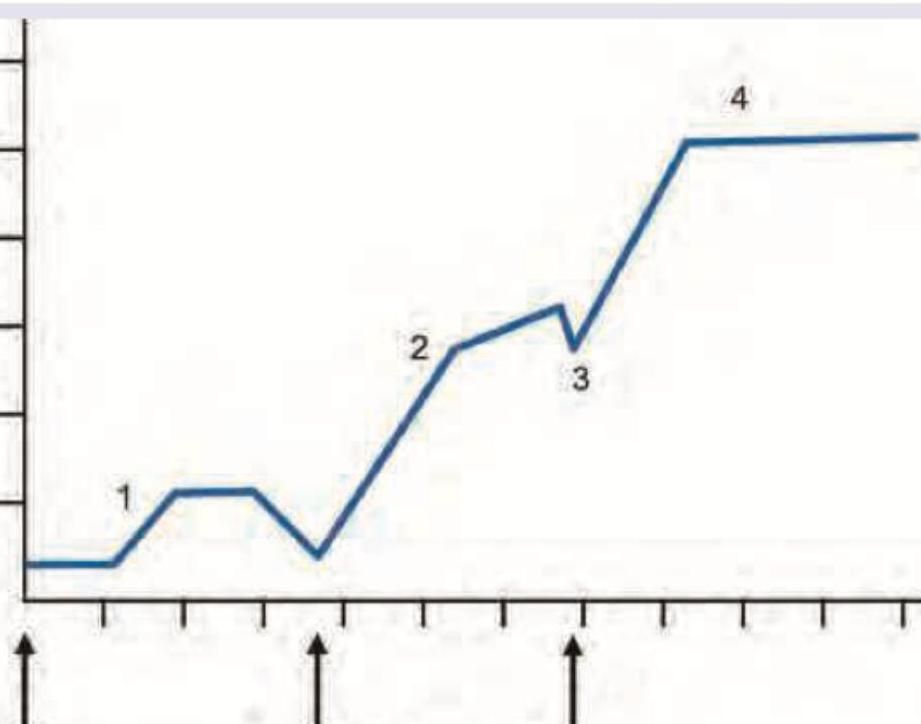
The following image shows effect of repeated antigenic stimulus on antibody production. What does phase 3 represent?
The image shows:
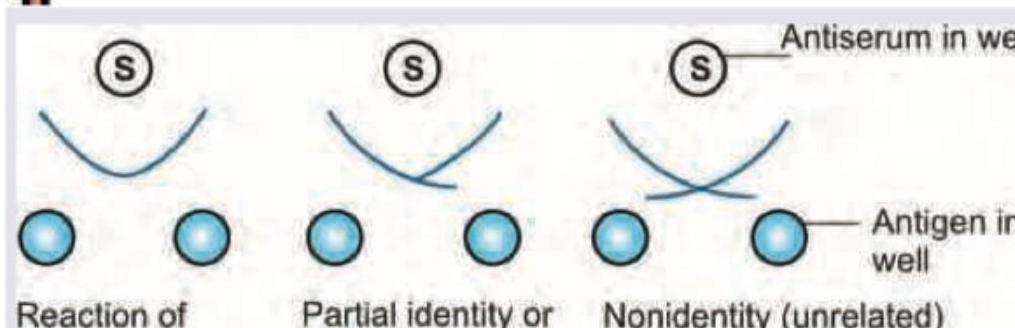
Which of the following is correct about the picture shown?
During the EARLY phase of a primary immune response, which of the following best describes the relationship between peak IgM and IgG antibody levels?
What is the main mechanism by which Treponema pallidum causes tissue damage in tertiary syphilis?
Antigen presented on MHC class I molecules activates which of the following cells?
Affinity maturation of antibodies is because of _____ .
Explanation: ***BCG vaccine*** - BCG (Bacillus Calmette-Guérin) is a **live attenuated vaccine** derived from an attenuated strain of *Mycobacterium bovis*. - Live attenuated vaccines contain weakened forms of the pathogen that can replicate but do not cause disease in immunocompetent individuals. - BCG provides protection primarily through **cell-mediated immunity** (Th1 response) against severe forms of tuberculosis, especially in children. - Other common live attenuated vaccines include MMR, varicella, oral polio vaccine (OPV), rotavirus, and yellow fever vaccines. *Diphtheria toxoid* - Diphtheria toxoid is an **inactivated vaccine** (toxoid type) containing chemically inactivated diphtheria toxin. - Toxoids are bacterial toxins that have been treated to remove their toxic properties while retaining immunogenicity. - It induces **humoral immunity** (antibody production) against the diphtheria toxin, not the bacteria itself. *Inactivated polio vaccine (IPV)* - IPV is a **killed/inactivated vaccine** containing all three types of poliovirus that have been chemically inactivated with formalin. - It induces systemic immunity (IgG) but provides limited mucosal immunity compared to oral polio vaccine (OPV). - IPV cannot revert to virulence and is safer for immunocompromised individuals. *Hepatitis B vaccine* - Hepatitis B vaccine is a **recombinant subunit vaccine** containing only the purified hepatitis B surface antigen (HBsAg). - It is produced using recombinant DNA technology in yeast cells (*Saccharomyces cerevisiae*). - Contains no live viral particles and induces protective antibody response (anti-HBs).
Explanation: ***IgA*** - The diagram shows a **dimeric** antibody structure, which consists of two monomer units linked by a **J chain** (joining chain) and a **secretory component**, a classic representation of secretory IgA (sIgA). - IgA is the predominant immunoglobulin found in **mucosal secretions** such as saliva, tears, breast milk, and gastrointestinal fluids, where it provides the first line of defense against pathogens. ***IgG*** - IgG is a **monomer**, meaning it exists as a single Y-shaped unit, and it does not have a J chain or form polymeric structures. - It is the most abundant antibody in the **blood** and tissue fluids, plays a key role in the secondary immune response, and is the only immunoglobulin that can cross the **placenta**. ***IgM*** - IgM exists as a **pentamer** in its secreted form, consisting of five monomer units linked by a J chain, which is much larger than the dimer shown in the image. - It is the first antibody class produced during a **primary immune response** and is highly effective at activating the complement system. ***IgE*** - IgE is a **monomer** and does not contain a J chain or form polymers. - It is present in very low concentrations in the serum and is primarily involved in **allergic reactions** (type I hypersensitivity) and defense against **parasitic worms**.
Explanation: ***Terminal complement (C5-C9) assay*** - Recurrent infections with *Neisseria* species (gonorrhoeae or meningitidis) are the classic presentation of a deficiency in the **Terminal Complement Components (C5-C9)**. - These components assemble the **Membrane Attack Complex (MAC)**, which is crucial for the lysis and killing of the thin cell walls of Neisserial organisms. *C1 esterase inhibitor assay* - This assay is used to diagnose **Hereditary Angioedema (HAE)**, which presents with recurrent episodes of swelling, not recurrent bacterial infections like *N. gonorrhoeae*. - HAE involves uncontrolled activation of the complement and kinin pathways, not failure to eliminate bacteria. *Quantitative immunoglobulin levels* - Measuring **IgG, IgA, and IgM** levels evaluates humoral immunity, typically diagnosing conditions like **Common Variable Immunodeficiency (CVID)**. - Antibody deficiencies usually lead to recurrent sinopulmonary infections with encapsulated bacteria (*Strep pneumoniae*, *H flu*), not specifically *Neisseria*. *Nitroblue tetrazolium test* - This test, or the modern DHR assay, screens for **Chronic Granulomatous Disease (CGD)**, a defect in phagocyte function (NADPH oxidase). - CGD patients suffer from severe, deep-seated infections and abscesses caused by **catalase-positive organisms** (e.g., *Staph aureus*, *Aspergillus*), not complement-dependent issues like recurrent *Neisseria*.
Explanation: ***Negative response*** - Phase 3 shows a **decrease in antibody levels** after the second antigenic stimulus, indicated by the downward trend in the curve. - This decline means that the antibody production rate is lower than the degradation rate or the antigen might be cleared, resulting in a **negative net effect** on circulating antibody concentration. *Primary immune response* - The **primary immune response** typically refers to the antibody production pattern after the **first exposure** to an antigen, which is slower and produces lower antibody titers. - Phase 1 in the diagram likely represents this initial response, with a gradual increase followed by a plateau or decline, not the dip seen in phase 3. *Secondary immune response* - The **secondary immune response** (anamnestic response) occurs upon **re-exposure** to an antigen, characterized by a **faster, stronger**, and more prolonged antibody production. - An increase in antibody levels is observed during phase 2 and 4, following subsequent antigenic stimuli. *Lag phase* - The **lag phase** is the initial period after antigen exposure during which **no detectable antibodies** are produced, while B cells are recognizing the antigen and differentiating. - This phase would be represented by the flat baseline before the first rise in antibody, not the dip that occurs after a response has already been initiated.
Explanation: ***Double diffusion in two dimensions*** - This image illustrates the **Ouchterlony immunodiffusion** technique, which is a method of **double diffusion in two dimensions** used to detect specific antibodies or antigens. - The different patterns (reaction of identity, partial identity, nonidentity) shown in the image are characteristic interpretations of this method, where antigen and antibody diffuse through an agar gel and form visible precipitation lines. *Radial immunodiffusion* - **Radial immunodiffusion (Mancini method)** involves the diffusion of antigen into an agar gel containing evenly distributed antibodies, resulting in a **ring of precipitation** whose diameter is proportional to the antigen concentration. - This method typically shows concentric rings, not intersecting lines or arcs as depicted in the image. *Rocket electrophoresis* - **Rocket electrophoresis**, or electroimmunodiffusion, combines electrophoresis with immunodiffusion, where antigen is driven through an antibody-containing gel by an electric current to form a **"rocket-shaped" precipitin peak**. - The image does not show a rocket shape and involves passive diffusion rather than electrophoresis. *Immunoelectrophoresis* - **Immunoelectrophoresis (IEP)** separates antigens by electrophoresis in agar gel, followed by the diffusion of antiserum from a trough to react with the separated antigens, forming **precipitin arcs**. - While it involves arcs, the setup in the image with wells arranged for direct comparison of different reactions is more indicative of Ouchterlony double diffusion, particularly given the distinct patterns of identity and non-identity without prior electrophoretic separation of antigens.
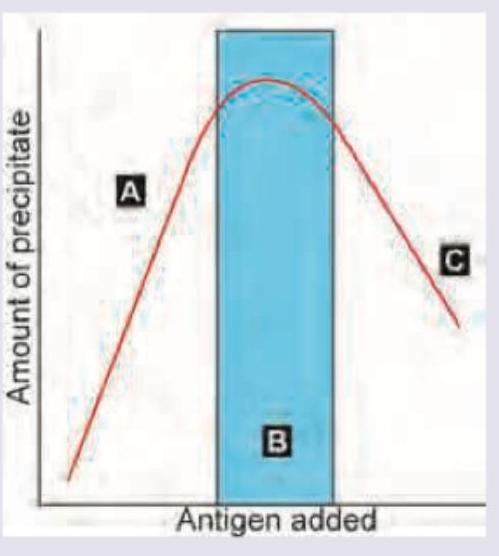
Explanation: ***A=Zone of antibody excess, B=Equivalence zone, C=Zone of antigen excess*** - In the **zone of antibody excess (A)**, there is insufficient antigen to form a stable lattice, leading to less precipitate since many antibody binding sites remain free. - The **equivalence zone (B)** represents the optimal ratio of antigen to antibody, resulting in maximal lattice formation and the highest amount of precipitate. - In the **zone of antigen excess (C)**, too much antigen is present, and each antibody molecule may bind to only one or two antigen molecules, preventing cross-linking and reducing precipitate formation. *A=Equivalence zone, B=Zone of antibody excess, C=Zone of antigen excess* - This option incorrectly identifies the **equivalence zone** as low precipitate, when it should correspond to the peak amount of precipitate. - The **zone of antibody excess (B)** is also incorrectly placed where maximal precipitation occurs, which is characteristic of the equivalence zone. *A=Zone of antigen excess, B=Equivalence zone, C=Zone of antibody excess* - This option misidentifies region A as the **zone of antigen excess**, which typically shows decreased precipitation due to antigen saturation, not the initial rise shown. - Region C is incorrectly labeled as the **zone of antibody excess**, while it shows decreasing precipitation due to antigen saturation. *A=Zone of antibody excess, B=Zone of antibody excess, C=Equivalence zone* - This option incorrectly identifies both A and B as the **zone of antibody excess**, suggesting a prolonged region of low antigen. - The **equivalence zone (C)** is incorrectly placed where precipitation is declining, rather than at its peak.
Explanation: ***100 times more*** - In the **early phase of a primary immune response**, **IgM** is the first antibody produced and reaches peak levels when **IgG** levels are still very low. - During this early period (approximately days 5-10), the **IgM concentration** can be significantly higher than IgG, with some references citing ratios up to 100-fold. - **Important note:** As the primary response matures, **IgG levels rise and eventually exceed IgM levels** through class switching. This question specifically addresses the early peak comparison. *50 times more* - While IgM does predominate early in the primary response, the 50-fold ratio underestimates the typical difference during the **early peak phase** when IgG production has just begun. - The most commonly cited ratio for early primary response is closer to 100-fold. *25 times more* - This ratio **underestimates** the relative abundance of **IgM** compared to **IgG** during the early peak of a primary immune response. - **IgG** levels are typically very low or just beginning to rise in the early stages, while IgM has reached peak levels. *10 times more* - This significantly **underestimates** the difference in antibody levels during the early primary immune response. - The rapid and robust initial production of **IgM** with delayed IgG production creates a much larger differential in the early phase. **Clinical Note:** In a **secondary immune response**, the pattern reverses dramatically—IgG is produced rapidly and in much higher quantities than IgM (often 100-1000 times more) due to memory B cell activation.
Explanation: ***Delayed hypersensitivity reaction*** - Tissue damage in **tertiary syphilis**, particularly in the formation of **gummas**, is primarily due to a **Type IV delayed hypersensitivity reaction** to persistent *T. pallidum* antigens. - This immune response leads to chronic inflammation, granuloma formation, and eventual tissue destruction or scarring. *Direct cytotoxic effect* - While *T. pallidum* does elicit an immune response, its primary mechanism of tissue damage in tertiary syphilis is **not direct cytotoxicity** of the spirochetes on host cells. - The organism itself has a relatively **low pathogenic load** in tertiary lesions; the damage is immunologically mediated. *Production of exotoxins* - *T. pallidum* is not known to produce **potent exotoxins** that directly cause the extensive tissue destruction seen in tertiary syphilis. - Its pathogenicity relies on its ability to evade the immune system and induce chronic inflammatory responses. *Endotoxin-mediated inflammation* - *T. pallidum* is a **Gram-negative spirochete**, but the extensive chronic inflammation and tissue damage in tertiary syphilis are not primarily mediated by **endotoxins (lipopolysaccharides)** as seen with some other Gram-negative bacteria. - The characteristic lesions are typically sterile and rich in chronic inflammatory cells, indicative of a persistent immune response rather than acute endotoxic shock.
Explanation: ***Cytotoxic T cells*** - **MHC class I** molecules present **intracellular antigens** (e.g., viral or tumor antigens) to **CD8+ T cells** (cytotoxic T cells). - This binding activates the cytotoxic T cells, leading to the destruction of the **infected** or **abnormal host cell**. *NK cells* - **Natural Killer (NK) cells** recognize and kill target cells that have **reduced or absent MHC class I** expression, which often occurs in virally infected or tumor cells, not cells presenting antigens on MHC class I. - They are part of the **innate immune system** and do not require prior sensitization or MHC-peptide presentation for activation. *Helper cells* - **Helper T cells** (CD4+ T cells) recognize antigens presented on **MHC class II** molecules, typically expressed by **antigen-presenting cells** (APCs) like macrophages, B cells, and dendritic cells. - Their primary role is to **orchestrate immune responses** by releasing cytokines. *B cells* - **B cells** are primarily involved in **humoral immunity**, producing antibodies after recognizing specific antigens directly via their B cell receptors or with T cell help. - While they can present antigens on **MHC class II** to helper T cells, direct antigen binding to **MHC class I** does not activate B cells.
Explanation: ***Somatic hypermutation*** - **Somatic hypermutation** is a process that introduces point mutations in the **variable regions** of immunoglobulin genes, primarily in B cells. - These mutations lead to the production of B cells with slightly altered **antibody affinities**, allowing for selection of those with higher affinity for the antigen. *Gene rearrangements* - **Gene rearrangements**, specifically **V(D)J recombination**, are responsible for the initial diversity of antibody specificities in immature B cells. - This process determines the basic antigen-binding site but does not fine-tune the **affinity** after initial antigen exposure. *CD40* - **CD40** is a co-stimulatory molecule on B cells that binds to **CD40L** on T cells, crucial for B cell activation, **isotype switching**, and germinal center formation. - While essential for antibody responses and germinal center reactions where affinity maturation occurs, **CD40** itself does not directly cause the molecular changes that lead to affinity maturation. *Differential mRNA processing* - **Differential mRNA processing** (or alternative splicing) primarily controls the production of different protein isoforms from a single gene. - In the context of antibodies, it can determine whether a B cell produces **membrane-bound** or **secreted** forms of antibodies, but it does not enhance the antigen-binding affinity.
Cells and Organs of Immune System
Practice Questions
Innate Immunity
Practice Questions
Adaptive Immunity
Practice Questions
Antigens and Antibodies
Practice Questions
Major Histocompatibility Complex
Practice Questions
Complement System
Practice Questions
Cytokines and Chemokines
Practice Questions
Hypersensitivity Reactions
Practice Questions
Autoimmunity and Autoimmune Diseases
Practice Questions
Immunodeficiency Disorders
Practice Questions
Transplantation Immunology
Practice Questions
Tumor Immunology
Practice Questions
Get full access to all questions, explanations, and performance tracking.
Start For Free