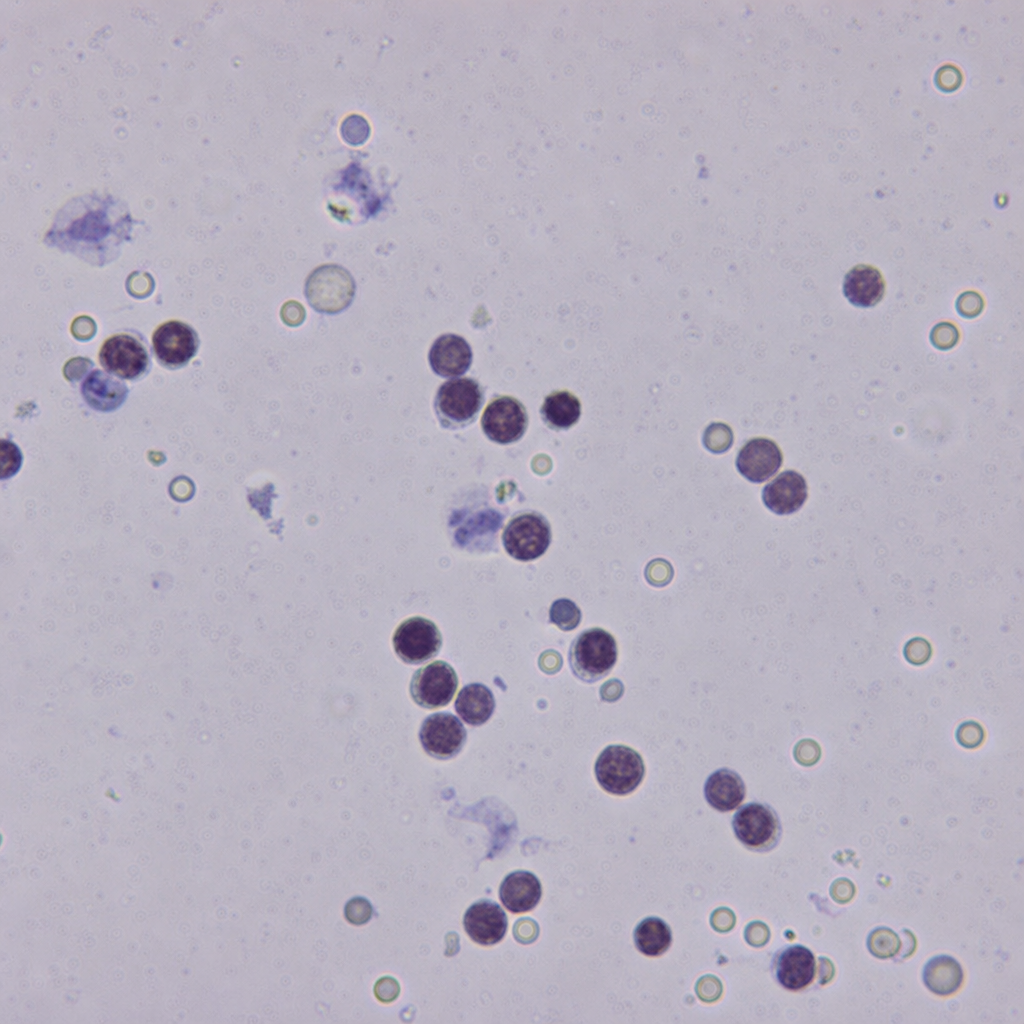
The acute inflammatory response is predominantly mediated by which type of immune cells?
Which of the following is not classified as a chemokine?
Which of the following is the platinum-based chemotherapeutic agent used as first-line treatment for ovarian carcinoma?
Which is NOT a feature of chronic inflammation?
Which interleukin is specifically secreted by Th17 cells?
TNF and IL-1 are produced by
Which interleukin is primarily responsible for inducing IgE production from B cells?
What is the primary effect of superantigens on T-cells?
Which of the following is the most potent stimulator of Naive T-cells?
Which is the most immunogenic antigen of Salmonella Typhi?
Explanation: ***Neutrophils*** - **Neutrophils** are the **primary mediators** of the **acute inflammatory response**, being the first immune cells recruited to sites of injury or infection (usually within minutes to hours) [1], [3]. - They are **innate immune cells** that perform phagocytosis, release antimicrobial substances, and form neutrophil extracellular traps (NETs) to combat pathogens [1]. - Neutrophils constitute **50-70% of circulating leukocytes** and are the hallmark cells found in acute inflammation [3]. *T lymphocytes* - **T lymphocytes** are central to **cell-mediated immunity** in the adaptive immune response, requiring several days for activation and clonal expansion [2]. - They recognize specific antigens through TCRs and are not involved in the immediate, non-specific phase of acute inflammation. - T cells play roles in **chronic inflammation** and coordinating adaptive immunity, not acute responses. *B lymphocytes* - **B lymphocytes** mediate **humoral immunity** by producing antibodies during the adaptive immune response [1]. - Their activation, differentiation into plasma cells, and antibody production take days to weeks, making them irrelevant to the rapid acute inflammatory response. - B cells are not recruited to acute inflammatory sites in the initial phase. *Both B and T lymphocytes* - While both are critical for **adaptive immunity** and host defense, neither B nor T lymphocytes are primary mediators of acute inflammation [4]. - The acute inflammatory response relies on **innate immune cells** (neutrophils, macrophages, mast cells) for immediate, non-specific protection before adaptive immunity develops [4].
Explanation: ***Histamine*** - Histamine is a **biogenic amine** involved in local immune responses, not classified as a chemokine [1]. - It functions primarily in **vasodilation** and **increased vascular permeability**, contrasting with chemokine roles. *IL-1* - IL-1 is a **cytokine** that plays a role in inflammatory responses but is not a chemokine [1]. - It primarily acts as a mediator for **fever** and **acute inflammation**. *IL-8* - IL-8 is a **chemokine** specifically known for attracting **neutrophils** to sites of inflammation [1]. - It plays a crucial role in **immune response** and is classified within the CXC chemokine family. *Eotaxin* - Eotaxin is a specific **chemokine** that primarily attracts **eosinophils** to sites of inflammation, especially in allergic reactions. - It is involved in the pathogenesis of **asthma** and other eosinophil-associated conditions. **References:** [1] Kumar V, Abbas AK, et al.. Robbins and Cotran Pathologic Basis of Disease. 9th ed. Inflammation and Repair, pp. 93-94.
Explanation: ***Cisplatin*** - **Cisplatin** is a platinum-based chemotherapy drug that forms **DNA cross-links**, inhibiting DNA synthesis and leading to the death of rapidly dividing cells, making it highly effective against **ovarian carcinoma**. - It is a cornerstone of chemotherapy regimens for ovarian cancer, often used in combination with other agents such as paclitaxel. *Methotrexate* - **Methotrexate** is an **antimetabolite** that inhibits dihydrofolate reductase, thereby interfering with DNA synthesis. - While it is used in various cancers like leukemia, lymphoma, and some solid tumors (e.g., breast cancer, gestational trophoblastic disease), it is **not a primary recommended drug for ovarian carcinoma**. *Cyclophosphamide* - **Cyclophosphamide** is an **alkylating agent** that causes DNA damage, leading to cell death. - It is used in many cancers, including lymphoma, breast cancer, and some leukemias, but it is **not a first-line or primary agent for ovarian carcinoma** in contemporary treatment guidelines. *Dacarbazine* - **Dacarbazine** is an **alkylating agent** primarily used in the treatment of **malignant melanoma** and Hodgkin lymphoma. - It is **not indicated for the treatment of ovarian carcinoma**.
Explanation: ***Neutrophil predominance*** - **Neutrophil predominance** is characteristic of **acute inflammation**, where these cells are among the first responders to injury or infection [1]. - In chronic inflammation, neutrophils are typically present in much smaller numbers compared to mononuclear cells, or their presence indicates an acute exacerbation [3]. *Mononuclear cells* - **Mononuclear cells**, such as **macrophages**, **lymphocytes**, and **plasma cells**, are the hallmark cellular infiltrates of chronic inflammation [1]. - These cells are responsible for sustained immune responses, tissue destruction, and repair processes [2]. *Fibrosis* - **Fibrosis**, or the deposition of **collagen** by fibroblasts, is a common outcome of chronic inflammation as the body attempts to repair ongoing tissue damage [3]. - It leads to **scarring** and functional impairment of affected organs [4]. *Granulation tissue* - **Granulation tissue** is an early phase of **tissue repair** during chronic inflammation, characterized by the proliferation of **fibroblasts** and new **blood vessels (angiogenesis)** [5]. - It represents the body's effort to fill tissue defects and prepare for eventual fibrous scar formation [5]. **References:** [1] Cross SS. Underwood's Pathology: A Clinical Approach. 6th ed. (Basic Pathology) introduces the student to key general principles of pathology, both as a medical science and as a clinical activity with a vital role in patient care. Part 2 (Disease Mechanisms) provides fundamental knowledge about the cellular and molecular processes involved in diseases, providing the rationale for their treatment. Part 3 (Systematic Pathology) deals in detail with specific diseases, with emphasis on the clinically important aspects., pp. 195-196. [2] Kumar V, Abbas AK, et al.. Robbins and Cotran Pathologic Basis of Disease. 9th ed. Inflammation and Repair, pp. 107-109. [3] Cross SS. Underwood's Pathology: A Clinical Approach. 6th ed. (Basic Pathology) introduces the student to key general principles of pathology, both as a medical science and as a clinical activity with a vital role in patient care. Part 2 (Disease Mechanisms) provides fundamental knowledge about the cellular and molecular processes involved in diseases, providing the rationale for their treatment. Part 3 (Systematic Pathology) deals in detail with specific diseases, with emphasis on the clinically important aspects., pp. 196-197. [4] Cross SS. Underwood's Pathology: A Clinical Approach. 6th ed. (Basic Pathology) introduces the student to key general principles of pathology, both as a medical science and as a clinical activity with a vital role in patient care. Part 2 (Disease Mechanisms) provides fundamental knowledge about the cellular and molecular processes involved in diseases, providing the rationale for their treatment. Part 3 (Systematic Pathology) deals in detail with specific diseases, with emphasis on the clinically important aspects., pp. 200-202. [5] Cross SS. Underwood's Pathology: A Clinical Approach. 6th ed. (Basic Pathology) introduces the student to key general principles of pathology, both as a medical science and as a clinical activity with a vital role in patient care. Part 2 (Disease Mechanisms) provides fundamental knowledge about the cellular and molecular processes involved in diseases, providing the rationale for their treatment. Part 3 (Systematic Pathology) deals in detail with specific diseases, with emphasis on the clinically important aspects., pp. 194-195.
Explanation: ***IL22*** - Th17 cells predominantly secrete **IL-17** and also produce **IL-22**, which is significant in mucosal immunity and inflammation [1]. - **IL-22** plays a crucial role in the response to infections and in the pathogenesis of inflammatory diseases. *IL16* - IL-16 is primarily associated with **chemoattractant and regulatory functions** for lymphocytes and not directly secreted by Th17 cells. - It is involved in **eosinophil and T cell activation**, which is not characteristic of the Th17 response. *IFN Gamma* - IFN-gamma is mainly produced by **Th1 cells** and is critical for **cell-mediated immunity**, which is distinct from the function of Th17 cells. - It plays a role in activating **macrophages**, unlike Th17 cells which focus on **neutrophil recruitment** and inflammation. *IL6* - While IL-6 is a pro-inflammatory cytokine that can be involved in various immune responses, it is not primarily secreted by Th17 cells. - It is produced by a variety of cell types including fibroblasts and macrophages, acting as a mediator in the **acute phase response**. **References:** [1] Cross SS. Underwood's Pathology: A Clinical Approach. 6th ed. (Basic Pathology) introduces the student to key general principles of pathology, both as a medical science and as a clinical activity with a vital role in patient care. Part 2 (Disease Mechanisms) provides fundamental knowledge about the cellular and molecular processes involved in diseases, providing the rationale for their treatment. Part 3 (Systematic Pathology) deals in detail with specific diseases, with emphasis on the clinically important aspects., pp. 158-160.
Explanation: ***Activated Macrophages*** - Activated macrophages are the primary source of **TNF** and **IL-1**, which are key cytokines in inflammatory responses [1]. - They play a crucial role in **immune modulation** and act as important mediators of the inflammatory process [1]. *Lymphocytes* - Lymphocytes primarily produce **antibodies** and other cytokines like **IL-2**, but they are not the main producers of TNF and IL-1. - Their role is more prominent in the adaptive immune response rather than in the innate response where TNF and IL-1 are more directly involved. *Neutrophils* - Neutrophils are involved in acute **inflammation** and primarily release **proteolytic enzymes** and reactive oxygen species, but not TNF and IL-1. - They are crucial for initial defense against infections but do not have a significant role in producing these cytokines. *Monocytes* - Monocytes can differentiate into macrophages and play a role in inflammation, but they do not produce **TNF** and **IL-1** to the same extent as activated macrophages. - Their primary function is as precursors to macrophages and dendritic cells, contributing indirectly to cytokine production. **References:** [1] Kumar V, Abbas AK, et al.. Robbins and Cotran Pathologic Basis of Disease. 9th ed. Inflammation and Repair, pp. 105-106.
Explanation: ***IL-4*** - **IL-4** is the primary cytokine responsible for promoting B cell differentiation into **plasma cells** that produce **IgE antibodies**. - It plays a crucial role in the development of **allergic reactions** by stimulating IgE class switching. *IL-1* - **IL-1** is a pro-inflammatory cytokine primarily involved in the **innate immune response**, fever, and acute phase reactions. - It does not directly induce IgE production but can modulate immune responses in a broader context. *IL-3* - **IL-3** is a cytokine that primarily supports the growth and differentiation of **hematopoietic stem cells** in the bone marrow. - It is crucial for the development of various blood cell lineages but is not directly involved in IgE class switching. *IL-1 and IL-3* - While both **IL-1** and **IL-3** have important roles in immunity and hematopoiesis, neither directly induces **IgE production** from B cells. - **IL-4** is the specific and most significant interleukin for this function.
Explanation: ***Polyclonal activation of T-cells leading to cytokine release*** - **Superantigens** bypass the normal antigen presentation pathway by binding directly to the **MHC class II molecule** and the **T-cell receptor (TCR) beta chain**, activating a large proportion of T-cells. - This widespread T-cell activation results in a massive release of various **cytokines**, leading to systemic inflammation and conditions like **toxic shock syndrome**. *Stimulation of B cells and antibody production* - While B cells can be activated, the primary and most significant effect of superantigens is on T-cells, leading to **non-specific T-cell activation**. - Superantigen-mediated T-cell activation does not directly lead to **antigen-specific B cell activation** and **antibody production** in the same manner as conventional antigens. *Enhancement of phagocytosis by macrophages* - Superantigens do not primarily enhance **macrophage phagocytosis**. Their main mechanism involves direct interaction with **APC MHC class II** and **TCRs**. - Macrophages themselves can act as **antigen-presenting cells** in the superantigen pathway, but their phagocytic function is not the main target. *Activation of the complement system* - The complement system is primarily activated by **antibody-antigen complexes** or directly by pathogen surfaces, not directly by **superantigens**. - While the inflammatory response from superantigens can indirectly affect other immune components, direct activation of the complement cascade is not their primary mechanism of action.
Explanation: ***Mature dendritic cells*** - **Mature dendritic cells** are the most potent professional antigen-presenting cells (APCs) for activating **naive T cells** due to their efficient antigen processing, presentation abilities, and high expression of costimulatory molecules (e.g., CD80, CD86) and MHC-peptide complexes. - Activated by pathogens or inflammatory signals, they migrate to secondary lymphoid organs where they initiate primary immune responses by presenting antigens to and activating naive T cells. *Follicular dendritic cells* - **Follicular dendritic cells** primarily present intact antigens to **B cells** in germinal centers of secondary lymphoid organs, playing a crucial role in B cell maturation, selection, and antibody production. - They lack MHC class II molecules and thus cannot directly present antigens to naive T cells. *Macrophages* - While **macrophages** are professional APCs, they are generally less efficient than mature dendritic cells at activating **naive T cells**, especially in the initiation of primary immune responses. - They are more involved in presenting antigens to already activated T cells and clearing pathogens, often acting as secondary APCs. *B-cell* - **B cells** can act as APCs, but they are generally less efficient than **dendritic cells** in activating **naive T cells**, especially for the primary immune response. - Their primary role in antigen presentation is to present processed antigens to **helper T cells** to receive costimulation for their own activation and differentiation into plasma cells, often after being activated themselves.
Explanation: **Explanation:** The immunogenicity of an antigen is determined by its chemical complexity and size. In *Salmonella Typhi*, the **H (Flagellar) antigen** is the most immunogenic because it is composed of proteins (flagellin). Proteins are more potent triggers of the immune system compared to polysaccharides, leading to a robust antibody response. This is why H-agglutinins appear earlier and reach higher titers than O-agglutinins during a *Salmonella* infection. **Analysis of Options:** * **A & D. O Antigen (Somatic Antigen):** These are the same entity. The O antigen is a lipopolysaccharide (LPS) located on the outer membrane. While it is important for serogrouping, polysaccharides are generally less immunogenic than proteins. O-antibodies appear later and disappear sooner than H-antibodies. * **C. Vi Antigen:** This is a surface polysaccharide capsular antigen (Virulence antigen). It is poorly immunogenic and primarily functions by masking the O antigen from antibodies. Its main clinical utility is in identifying chronic carriers and for use in certain vaccines (e.g., Typhim VI). **High-Yield Clinical Pearls for NEET-PG:** * **Widal Test:** Measures antibodies against O and H antigens. A titer of **>1:160 for O** and **>1:160 for H** is usually considered significant in endemic areas. * **Sequence of Appearance:** In Enteric fever, O antibodies appear first (around the end of the 1st week), but H antibodies reach higher peaks and persist longer. * **Carrier State:** Persistent high titers of **Vi antibodies** (1:10 or more) suggest a chronic carrier state, as the bacteria continue to harbor the capsule in the gallbladder or urinary tract.
Get full access to all questions, explanations, and performance tracking.
Start For Free