A patient presents with urethral discharge. Gram stain shows intracellular gram-negative diplococci. What is the causative organism?
A sex worker presents with purulent urethral discharge and gram-negative diplococci in culture. What is the most likely diagnosis?
Increased susceptibility to N. meningitidis infections is associated with deficiency of which complement component:
A sex worker presents with purulent urethral discharge and gram-negative diplococci. Diagnosis?
What is the most common genetic factor associated with increased susceptibility to Neisseria infections?
Meningitis with rash is seen in -
A 9-year-old child presented to OPD with complaints of high-grade fever, vomiting, and one episode of seizure. CSF examination was done and Gram staining of the culture showed lanceolate-shaped gram-positive diplococci. What is the probable causative agent?
An adult patient with a military background is admitted with a rash, fever, altered sensorium, and a deficiency of the membrane attack complex. What is the most likely etiological agent?
A lady came with yellowish discharge and stain showing gram-negative diplococci. What is the most likely causative organism of her condition?
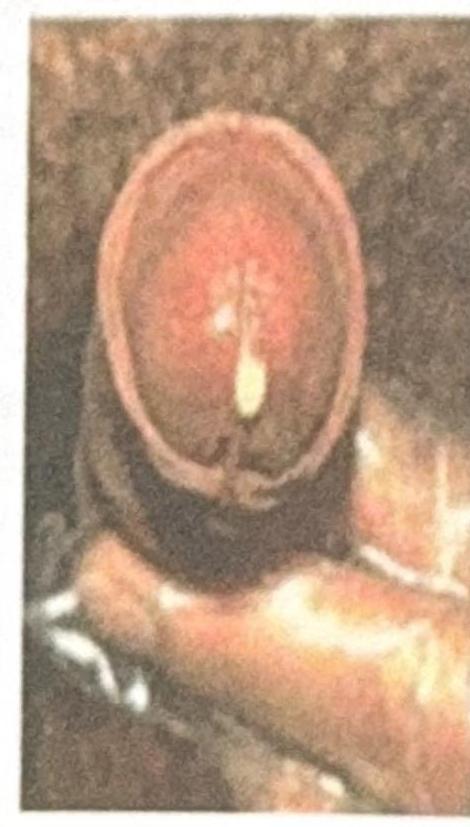
A male patient presents with white discharge from the urethra, as shown in the image. What is the most probable causative organism?
Explanation: ***Neisseria gonorrhoeae*** - The presence of **intracellular gram-negative diplococci** in urethral discharge is a classic microscopic finding for *Neisseria gonorrhoeae*. - This organism directly invades host cells, and its unique gram staining characteristic makes it readily identifiable in clinical samples. *Mycoplasma genitalium* - This organism does not have a **cell wall** and therefore will not gram stain. It cannot be identified by Gram stain. - Diagnosis typically requires molecular methods like **PCR**. *Treponema pallidum* - This spirochete is too thin to be visualized with standard Gram stain and is typically identified using **dark-field microscopy** or serological tests. - It does not present as gram-negative diplococci. *Chlamydia trachomatis* - *Chlamydia trachomatis* is an **obligate intracellular bacterium** but does not stain well with Gram stain due to its unique cell wall structure (lacks peptidoglycan). - It is often diagnosed using **nucleic acid amplification tests (NAATs)**.
Explanation: ***Neisseria gonorrhoeae*** - **Purulent urethral discharge** and identification of **Gram-negative diplococci** on microscopy are classic diagnostic features of gonococcal urethritis [1]. - This sexually transmitted infection is common among sexually active individuals, including **sex workers** [1]. *Treponema pallidum* - This bacterium causes **syphilis**, which is characterized by **chancres** in the primary stage, and widespread rashes or lesions in later stages [2]. - It would not typically present with Gram-negative diplococci or purulent urethral discharge [2]. *Haemophilus ducreyi* - This organism is responsible for **chancroid**, a sexually transmitted infection that causes painful **genital ulcers** with ragged borders and often associated with lymphadenopathy [3]. - It would not lead to purulent urethral discharge, and while Gram-negative, it is typically seen as pleomorphic rods in chains. *Chlamydia trachomatis* - **Chlamydia** infection often presents with mucopurulent urethral discharge, but it is typically less purulent than gonorrhea and may be **asymptomatic** [1]. - **Chlamydia** is an **obligate intracellular bacterium** and would not be visualized as Gram-negative diplococci on a Gram stain [1].
Explanation: ***C5-C9 deficiency*** - Deficiencies in **C5-C9 components** impair the formation of the **Membrane Attack Complex (MAC)**, which is crucial for lysing Gram-negative bacteria like **N. meningitidis**. - Patients with MAC deficiencies are at significantly higher risk for recurrent invasive **N. meningitidis** infections. *C1-C4 deficiency* - Deficiencies in **C1-C4 components** primarily affect the **classical complement pathway** and are associated with increased susceptibility to **bacterial infections** and **immune complex diseases** (e.g., SLE). - While these deficiencies compromise opsonization and inflammation, they are not specifically linked to recurrent **N. meningitidis** infections. *C3 deficiency* - **C3 deficiency** is a severe primary immunodeficiency leading to profound defects in complement activation via all pathways, affecting **opsonization** and the formation of the MAC. - This deficiency causes severe recurrent **pyogenic infections** due to encapsulated bacteria but is not as specifically or commonly linked to **N. meningitidis** as deficiencies in the terminal pathway. *C2 deficiency* - **C2 deficiency** is the most common complement deficiency and primarily impacts the **classical pathway**, leading to impaired opsonization and immune complex clearance. - It is often associated with recurrent infections (especially with encapsulated bacteria) and **lupus-like syndromes**, but not specifically increased susceptibility to **N. meningitidis** infections.
Explanation: ***N. gonorrhoeae*** - The presence of **purulent urethral discharge** and **Gram-negative diplococci** on microscopy is highly characteristic of **gonorrhea**. - **Neisseria gonorrhoeae** is a common cause of sexually transmitted infections, particularly in individuals with a higher risk profile like sex workers. *T. pallidum* - **Treponema pallidum** causes syphilis, which typically presents with a **chancre** (primary stage) or a rash (secondary stage), not purulent urethral discharge. - It is a **spirochete** and cannot be visualized as Gram-negative diplococci. *C. trachomatis* - **Chlamydia trachomatis** causes **nongonococcal urethritis**, which often presents with a less purulent or mucoid discharge, and may be asymptomatic. - It is an **obligate intracellular bacterium** and does not appear as Gram-negative diplococci on Gram stain. *H. ducreyi* - **Haemophilus ducreyi** causes **chancroid**, characterized by painful genital ulcers with regional lymphadenopathy. - It would not typically present with purulent urethral discharge and is a **Gram-negative rod**, not diplococci.
Explanation: ***Complement deficiency*** - Deficiencies in the **terminal complement pathway (C5-C9)**, particularly C5b-C9 (membrane attack complex, MAC), significantly increase susceptibility to disseminated *Neisseria* infections. - The MAC is crucial for lysing Gram-negative bacteria like *Neisseria meningitidis* and *Neisseria gonorrhoeae*, and its absence allows for uncontrolled bacterial proliferation. *Factor H deficiency* - **Factor H** is a regulatory protein of the alternative complement pathway, preventing its overactivation on host cells. - Its deficiency typically leads to conditions like **atypical hemolytic uremic syndrome (aHUS)** and **dense deposit disease**, not primarily increased susceptibility to *Neisseria* infections. *HLA B27* - **HLA-B27** is a human leukocyte antigen strongly associated with a group of autoimmune inflammatory diseases called **spondyloarthropathies**, such as ankylosing spondylitis. - It does not directly impact the immune response to *Neisseria* infections or increase susceptibility to them. *IgA deficiency* - **Selective IgA deficiency** is the most common primary immunodeficiency, characterized by low or absent IgA levels. - Individuals with IgA deficiency are more prone to **recurrent respiratory and gastrointestinal infections**, but not specifically disseminated *Neisseria* infections.
Explanation: **Neisseria meningitidis** - **Meningococcal meningitis** is classically associated with an acute onset of fever, headache, stiff neck, and a characteristic **petechial or purpuric rash** [1]. - The rash is due to widespread **vasculitis** and disseminated intravascular coagulation (DIC) caused by the bacteria. *H. influenzae* - While *H. influenzae* type b (Hib) was a major cause of bacterial meningitis before vaccination, it typically does not cause a *rash*. - Meningitis caused by *H. influenzae* presents with fever, headache, stiff neck, and altered mental status without dermatological manifestations. *Strepto. agalactiae* - *Streptococcus agalactiae* (Group B Strep) is a common cause of meningitis in **neonates** and infants. - It usually presents with non-specific symptoms like fever, lethargy, and poor feeding, and a rash is not a typical feature of GBS meningitis. *Pneumococcus* - *Streptococcus pneumoniae* (Pneumococcus) is another leading cause of bacterial meningitis in adults and children [1]. - Symptoms include fever, headache, stiff neck, and altered mental status, but a cutaneous rash is not characteristic of pneumococcal meningitis [1].
Explanation: ***Streptococcus pneumoniae*** - The description of **lanceolate-shaped gram-positive diplococci** in CSF is characteristic of *S. pneumoniae*. - This bacterium is a common cause of **bacterial meningitis** in children and can present with high fever, vomiting, and seizures. *Haemophilus influenzae* - This is a **gram-negative coccobacillus**, which would appear as small, pleomorphic rods rather than lanceolate-shaped diplococci on Gram stain. - While it causes meningitis, its Gram stain morphology is distinct from *S. pneumoniae*. *Streptococcus agalactiae* - *S. agalactiae* (Group B Streptococcus) is a **gram-positive coccus**, but it typically appears in **chains** and is a major cause of neonatal meningitis, not usually in a 9-year-old child. - Its morphology on Gram stain would not be described as lanceolate diplococci. *Neisseria meningitidis* - *N. meningitidis* is a **gram-negative diplococcus** and would appear as kidney-bean shaped or flattened paired cocci, not gram-positive. - Though a common cause of meningitis, the Gram stain morphology described rules it out.
Explanation: ***Neisseria meningitidis*** - A deficiency in the **membrane attack complex (MAC)**, particularly **C5-C9 components**, predisposes individuals to recurrent infections with encapsulated bacteria, especially *N. meningitidis*. - *N. meningitidis* is a common cause of **meningitis**, presenting with **fever, altered sensorium**, and often a **petechial rash** due to disseminated intravascular coagulation (DIC), which align with the patient's symptoms. *Klebsiella pneumoniae* - While *K. pneumoniae* can cause severe infections, including pneumonia and meningitis, it is not specifically associated with **MAC deficiency**. - Its infections more commonly manifest as **severe pneumonia** or **urinary tract infections** in immunocompromised patients. *Haemophilus influenzae* - *H. influenzae* can cause meningitis and other invasive infections, especially in children, but it is not typically linked to **MAC deficiency**. - The classic presentation involving **rash** and severe systemic symptoms as described is more characteristic of **meningococcal disease**. *CMV* - **Cytomegalovirus (CMV)** is a herpesvirus that causes a wide range of diseases, particularly in immunocompromised individuals. - However, CMV infections are primarily associated with **cellular immunity defects** rather than a deficiency in the **membrane attack complex** of the complement system.
Explanation: ***Neisseria gonorrhoeae*** - The presence of **yellowish discharge** and **gram-negative diplococci** on a stain is a classic presentation for **gonorrhea**, caused by *Neisseria gonorrhoeae*. - This bacterium is a common cause of **sexually transmitted infections (STIs)**, leading to conditions like cervicitis, urethritis, and pelvic inflammatory disease. *Streptococcus pneumoniae* - This organism is a **gram-positive coccus** and typically causes **respiratory infections** (e.g., pneumonia, otitis media, meningitis), not genital discharge with gram-negative diplococci. - It is not associated with STI-related yellowish genital discharge. *Enterococcus faecalis* - This is a **gram-positive coccus** and a common cause of **urinary tract infections (UTIs)** and **nosocomial infections**, but not typically associated with yellowish genital discharge showing gram-negative diplococci. - It is also not classified as a gram-negative organism. *Both Streptococcus and Enterococcus* - This option is incorrect because both *Streptococcus* and *Enterococcus* are **gram-positive organisms**. - The clinical presentation clearly describes **gram-negative diplococci**, which rules out these bacteria as the primary cause.
Explanation: ***Neisseria gonorrhoeae*** - Among the given options, *Neisseria gonorrhoeae* is the **most probable causative organism** for **urethral discharge** in males. - Gonorrhea is a common sexually transmitted infection (STI) presenting with **purulent urethritis**, typically with thick, yellow-green discharge, though appearance can vary. - **Clinical note:** While classic gonococcal discharge is purulent and yellow-green, the clinical presentation can vary. None of the other organisms listed cause urethritis with discharge. *Haemophilus ducreyi* - This bacterium causes **chancroid**, a sexually transmitted infection characterized by **painful genital ulcers (chancres)** and **inguinal lymphadenopathy**, not urethral discharge. - Presents with ulcerative lesions, not discharge. *Klebsiella granulomatis* - This organism is responsible for **donovanosis** (granuloma inguinale), which manifests as **painless, progressive ulcerative lesions** on the genitals. - It does not cause urethral discharge; presents with beefy red granulomatous lesions. *Treponema pallidum* - This spirochete causes **syphilis**, which presents with **painless chancres** in the primary stage, **maculopapular rash** in the secondary stage, and gummas or neurological symptoms in later stages. - Urethral discharge is not a typical symptom of syphilis; primary lesions are ulcerative.
Get full access to all questions, explanations, and performance tracking.
Start For Free