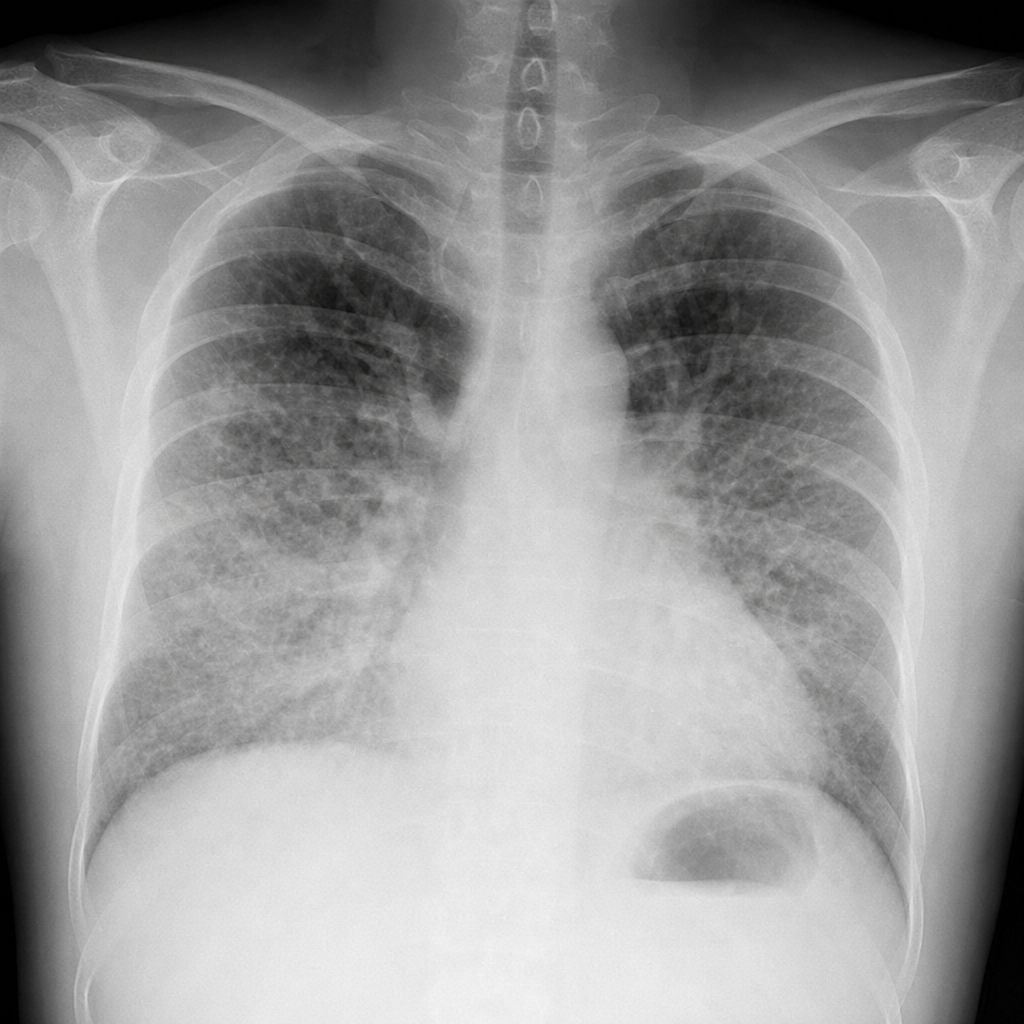
Which of the following statements is FALSE regarding acute aluminum phosphide poisoning?
Basal ganglia calcification is associated with poisoning of which substance?
A patient presented with vomiting, pain in abdomen, jaundice, and encephalopathy following an attempted suicide. Poisoning is suspected. What is the most likely offending agent?
A patient is admitted with acute organophosphorus insecticide poisoning, develops ptosis, inability to lift the head, and difficulty in breathing on the third day. What is the most likely diagnosis?
A 21-year-old woman attempted suicide by taking an overdose of barbiturates. On arrival in the emergency department, her blood pressure is 95/65 mmHg and her pulse is 105 beats per minute. Arterial blood gases are ordered. Which of the following values would you expect in this patient?
Which enzyme is inhibited in cyanide poisoning?
"Hatter's shakes" are seen in poisoning with?
A child presents with a history of scorpion sting and is experiencing increased sweating. What is the next best step in management?
Hemoperfusion with charcoal is useful in poisoning with:
A 37-year-old factory worker develops increasing weakness in the legs, with coworkers noting episodes of transient confusion. The patient presents with bilateral foot drop and atrophy, and mild wrist weakness. Deep tendon reflexes are absent in the lower extremities. His CBC shows an anemia with hemoglobin of 9.6 g/dL, and the peripheral blood smear shows basophilic stippling. Which of the following is the most likely cause of this patient's symptoms?
Explanation: Aluminum phosphide (AlP) is a highly lethal fumigant commonly used in grain preservation. The correct answer is **D** because esophageal strictures are a classic complication of **corrosive poisoning** (strong acids or alkalis), not aluminum phosphide [2]. AlP causes systemic cellular toxicity rather than local corrosive tissue destruction. **Why the other options are correct (and thus incorrect choices for this question):** * **Mechanism (B & C):** Upon contact with moisture (water or gastric acid), AlP releases **phosphine gas (PH₃)** [1, 3]. This gas is a potent mitochondrial toxin that inhibits **cytochrome c oxidase**, leading to a total breakdown of the electron transport chain, cellular hypoxia, and multi-organ failure [1]. * **Cardiac Effects (A):** The heart is highly sensitive to phosphine [1]. It causes direct toxic myocarditis, arrhythmias, and **subendocardial infarction/hemorrhage**, even in patients with normal coronary arteries. This is a hallmark of fatal AlP poisoning. **High-Yield Clinical Pearls for NEET-PG:** * **Garlic Odor:** A characteristic garlic-like or decaying fish odor is often noted in the patient's breath or gastric aspirate [4]. * **Silver Nitrate Test:** A quick bedside test where gastric aspirate or exhaled air turns silver nitrate paper **black** (due to the formation of silver phosphide). * **Refractory Shock:** The primary cause of death is profound, treatment-resistant metabolic acidosis and cardiovascular collapse [1]. * **Management:** There is no specific antidote [3]. Management is supportive, often involving gastric lavage with **potassium permanganate (1:10,000)** to oxidize phosphine and the use of coconut oil to inhibit gas release.
Explanation: Carbon monoxide (CO) poisoning is the correct answer because of its specific affinity for the basal ganglia, particularly the globus pallidus [1]. CO causes tissue hypoxia by forming carboxyhemoglobin (which displaces oxygen) and by directly inhibiting the mitochondrial cytochrome oxidase system [1]. The basal ganglia are highly metabolically active and have a unique vascular supply that makes them susceptible to ischemic-hypoxic injury. Following an acute or chronic exposure, necrotic areas in the globus pallidus can undergo dystrophic calcification, which is a classic neuroimaging finding on CT scans in survivors. [2] Analysis of Incorrect Options: * A. Carbon dioxide: High levels cause respiratory acidosis and narcosis but do not typically result in focal basal ganglia calcification. * C. Hydrogen sulfide: While it also inhibits cytochrome oxidase (similar to cyanide), it is more commonly associated with rapid respiratory failure and "knock-down" effects rather than delayed basal ganglia calcification. [4] * D. Sulfur dioxide: This is primarily a mucosal and respiratory irritant; it does not have a predilection for deep brain structures. High-Yield Clinical Pearls for NEET-PG: * MRI Finding: The most sensitive early sign of CO poisoning is bilateral hyperintensity of the globus pallidus on T2-weighted images. * Cherry-red skin: A classic (though often post-mortem) physical sign of CO poisoning. [3] * Treatment: 100% high-flow oxygen is the first line; Hyperbaric Oxygen (HBO) is indicated if carboxyhemoglobin levels are >25% or if there are neurological deficits/loss of consciousness. * Differential Diagnosis: Other causes of basal ganglia calcification include Fahr’s Syndrome, hypoparathyroidism, and lead poisoning. [5]
Explanation: **Explanation:** The clinical presentation of **vomiting, abdominal pain, jaundice, and encephalopathy** is a classic description of **Acute Liver Failure (ALF)** [3]. Among the options provided, **Paracetamol (Acetaminophen)** is the most common cause of drug-induced fulminant hepatic failure. **Why Paracetamol is correct:** Paracetamol toxicity occurs when the metabolic pathway involving glutathione becomes saturated. This leads to the accumulation of the toxic metabolite **NAPQI** (*N-acetyl-p-benzoquinone imine*), which causes centrilobular hepatic necrosis [1]. The clinical course typically progresses from initial GI upset (Phase 1) to right upper quadrant pain and elevated transaminases (Phase 2), culminating in jaundice, coagulopathy, and hepatic encephalopathy (Phase 3) within 72–96 hours [1]. **Why the other options are incorrect:** * **Benzodiazepines:** Overdose typically presents with CNS depression (lethargy, coma) and respiratory depression, but does not cause hepatic failure [2]. * **Organophosphorus:** Presentation includes cholinergic crisis (miosis, salivation, lacrimation, bradycardia, and muscle fasciculations). It does not cause jaundice or ALF. * **Acetylsalicylic acid (Aspirin):** Toxicity presents with tinnitus, hyperventilation, metabolic acidosis, and respiratory alkalosis. While it can cause Reye’s syndrome in children, it is not a primary cause of acute hepatic encephalopathy in adults [4]. **High-Yield Clinical Pearls for NEET-PG:** * **Antidote:** N-acetylcysteine (NAC) – most effective if given within 8 hours. * **Rumack-Matthew Nomogram:** Used to predict hepatotoxicity based on plasma paracetamol levels (only for single acute ingestions). * **King’s College Criteria:** Used to determine the need for a liver transplant in paracetamol-induced ALF (pH <7.3 or the triad of PT >100s, Cr >3.4 mg/dL, and Grade III/IV encephalopathy).
Explanation: **Explanation:** The clinical presentation of ptosis, neck muscle weakness (inability to lift the head), and respiratory distress occurring **24 to 96 hours (1–4 days)** after an acute organophosphorus (OP) poisoning episode is classic for **Intermediate Syndrome (IMS)** [1], [2]. **1. Why Intermediate Syndrome is Correct:** IMS occurs after the resolution of the initial cholinergic crisis but before the onset of delayed neuropathy [1]. It is thought to be caused by **post-synaptic neuromuscular junction (NMJ) dysfunction** due to prolonged acetylcholinesterase inhibition [3]. It characteristically involves: * **Proximal muscle weakness** (especially neck flexors) [1], [3]. * **Cranial nerve palsies** (ptosis, extraocular muscle weakness) [1]. * **Respiratory muscle paralysis**, which is the most dangerous complication requiring mechanical ventilation [1], [3]. **2. Why Other Options are Incorrect:** * **Hypokalemia:** While OP poisoning can cause GI losses, the specific pattern of cranial nerve involvement and the timing (Day 3) specifically point toward IMS rather than electrolyte imbalance [2]. * **Inflammatory Polyneuropathy (GBS):** This typically presents as an ascending paralysis and occurs weeks after an inciting event, not within 3 days of acute poisoning. * **Polymyositis:** This is a chronic autoimmune inflammatory myopathy presenting with subacute proximal weakness, not an acute complication of toxin exposure. **High-Yield Clinical Pearls for NEET-PG:** * **OP Poisoning Timeline:** 1. **Cholinergic Crisis:** Minutes to hours (SLUDGE/DUMBELS symptoms). Treatment: Atropine + Pralidoxime [4]. 2. **Intermediate Syndrome:** 24–96 hours. Treatment: Supportive/Ventilation (Atropine has no role here) [3]. 3. **OPIDN (Delayed Neuropathy):** 2–3 weeks later. Presents as "dying-back" axonal degeneration (foot drop) [1], [3]. * **Key Sign:** "Inability to lift the head off the pillow" is the most common board-style description for IMS [1].
Explanation: The core clinical concept here is **Type 2 Respiratory Failure (Hypoventilation)** caused by Central Nervous System (CNS) depression. Barbiturates are potent GABA-A receptor agonists that depress the medullary respiratory centers, leading to a decrease in both tidal volume and respiratory rate [2]. **1. Why Option D is Correct:** In hypoventilation, the lungs fail to eliminate CO2 and fail to take in adequate O2. This results in: * **Hypercapnia:** Elevated $PCO_2$ (Normal: 35–45 mmHg). Hypercapnia involves the retention of $CO_2$ in the body, which can eventually lead to coma with respiratory depression [3]. Option D shows $PCO_2 = 60$ mmHg. * **Respiratory Acidosis:** High $CO_2$ leads to an increase in $H^+$ ions, lowering the pH (Normal: 7.35–7.45). Option D shows $pH = 7.30$. * **Hypoxemia:** Reduced $PO_2$ (Normal: 80–100 mmHg) due to displaced alveolar oxygen by excess $CO_2$. Option D shows $PO_2 = 75$ mmHg. **2. Why Other Options are Incorrect:** * **Option A & B:** These show an alkaline pH ($>7.45$). Barbiturate overdose causes acidosis, not alkalosis. * **Option C:** This shows a low $PCO_2$ (35 mmHg) and a slightly alkalotic pH (7.45), which is characteristic of hyperventilation (Respiratory Alkalosis), the opposite of what occurs in sedative overdose. **High-Yield Clinical Pearls for NEET-PG:** * **Management:** The mainstay of barbiturate toxicity is supportive care (airway protection/mechanical ventilation) [1]. Unlike benzodiazepines (Flumazenil), there is **no specific pharmacological antagonist** for barbiturates. * **Urinary Alkalinization:** For Phenobarbital (long-acting) overdose, IV Sodium Bicarbonate is used to increase renal excretion (ion trapping) by maintaining a urinary pH between 7.5 and 8 [1]. * **A-a Gradient:** In pure hypoventilation (like drug overdose), the **Alveolar-arterial (A-a) gradient remains normal**, helping distinguish it from intrinsic lung diseases like pneumonia or PE.
Explanation: **Explanation:** **Cyanide poisoning** is a life-threatening condition that primarily affects cellular respiration. The correct answer is **Cytochrome oxidase** (specifically **Cytochrome a3**), which is a key component of the **Electron Transport Chain (ETC)** located in the inner mitochondrial membrane [1]. 1. **Mechanism of Action:** Cyanide ions ($CN^-$) have a high affinity for the **ferric ($Fe^{3+}$) state** of iron. They bind to the heme group of Cytochrome a3 (Complex IV), effectively halting the final step of the ETC [1]. This prevents the reduction of oxygen to water, leading to a total arrest of aerobic metabolism. The cell shifts to anaerobic glycolysis, resulting in profound **lactic acidosis** and a high venous oxygen saturation as tissues cannot extract oxygen from the blood [1]. 2. **Analysis of Incorrect Options:** * **Xanthine oxidase:** This enzyme is involved in the catabolism of purines (converting hypoxanthine to xanthine and then to uric acid). It is the target of drugs like Allopurinol, not cyanide. * **Glutathione oxidase:** While glutathione systems are vital for managing oxidative stress, they are not the primary target of cyanide. Cyanide does not directly inhibit these enzymes to cause its lethal effects. **High-Yield Clinical Pearls for NEET-PG:** * **Clinical Presentation:** "Cherry-red" skin/mucosa, almond-like odor on the breath, and severe metabolic acidosis with an increased anion gap [1]. * **Antidote Protocol:** 1. **Amyl nitrite/Sodium nitrite:** Induces **methemoglobinemia**. Methemoglobin contains $Fe^{3+}$, which "lures" cyanide away from cytochrome oxidase to form cyanomethemoglobin [1]. 2. **Sodium thiosulfate:** Acts as a sulfur donor for the enzyme **rhodanase**, converting cyanide into the non-toxic thiocyanate [1]. 3. **Hydroxocobalamin (Preferred):** Binds cyanide to form Vitamin B12 (cyanocobalamin), which is excreted by the kidneys.
Explanation: **Explanation:** **Mercury poisoning** is the correct answer. The term **"Hatter’s shakes"** refers to the coarse intention tremors involving the hands, arms, and tongue seen in chronic inorganic mercury toxicity. Historically, felt-hat makers used mercuric nitrate to process fur; chronic inhalation of these vapors led to neurological damage, characterized by tremors and behavioral changes (known as "Erethism mercurialis" or the "Mad Hatter" syndrome). **Analysis of Options:** * **Mercury (Correct):** Chronic toxicity presents with the triad of **Tremors** (Hatter’s shakes), **Erethism** (shyness, irritability, memory loss), and **Gingivostomatitis**. * **Arsenic:** Characterized by "Raindrop pigmentation" of the skin, hyperkeratosis of palms/soles, and Mees' lines on nails. It does not typically cause the specific "Hatter’s shakes." * **Cadmium:** Primarily affects the kidneys (Fanconi syndrome) and lungs. Chronic exposure leads to **Itai-Itai disease**, characterized by osteomalacia and painful fractures. * **Lead:** Presents with abdominal colic, encephalopathy, and peripheral motor neuropathy (notably **Wrist drop/Foot drop**), but not the characteristic intention tremors of mercury. **NEET-PG High-Yield Pearls:** * **Minamata Disease:** Caused by **Methylmercury** (organic mercury) through contaminated fish. * **Acrodynia (Pink Disease):** An idiosyncratic reaction to mercury in children, presenting with pinkish discoloration of hands/feet, sweating, and irritability. * **Antidote:** BAL (Dimercaprol) is used for inorganic mercury; however, it is contraindicated in organic mercury (use Succimer/DMSA instead). * **Danbury Shakes:** Another historical name for the tremors seen in mercury-exposed hat workers in Danbury, Connecticut.
Explanation: The clinical presentation of a scorpion sting involves a complex "autonomic storm." [2] Scorpion venom causes the massive release of catecholamines (sympathetic) and acetylcholine (parasympathetic). Increased sweating (diaphoresis) is a hallmark of the **cholinergic phase** of scorpion envenomation. [1] **1. Why Lytic Cocktail is the Correct Answer:** In the management of scorpion stings, especially in children, the **Lytic Cocktail** (typically a combination of Pethidine, Chlorpromazine, and Promethazine) is used to counteract the autonomic overactivity. It serves to sedate the patient, reduce pain, and stabilize the autonomic nervous system, thereby controlling symptoms like excessive sweating, agitation, and hypertension. **2. Why Other Options are Incorrect:** * **Atropine:** While it can block cholinergic effects like sweating and salivation, it is **contraindicated** in scorpion stings. Atropine can worsen tachycardia and precipitate pulmonary edema by further increasing the heart rate and myocardial oxygen demand during the catecholamine surge. * **Antivenom:** While specific antivenom exists, its efficacy is time-dependent and often unavailable. In many protocols, symptomatic management of the autonomic storm takes precedence. [1] * **Local Xylocaine Infiltration:** This may provide temporary pain relief at the site but does nothing to address the systemic autonomic toxicity (sweating, tachycardia, etc.) which is the primary concern in pediatric cases. **Clinical Pearls for NEET-PG:** * **Prazosin** is the drug of choice for scorpion stings with cardiovascular symptoms (hypertension/pulmonary edema) as it is a physiological antagonist to the catecholamine surge. [1] * **Avoid Atropine** unless there is severe, symptomatic bradycardia (rare). * The most common cause of death in scorpion stings is **Acute Pulmonary Edema.** [1]
Explanation: **Explanation:** **Hemoperfusion** is an extracorporeal technique where blood is passed through a column containing adsorbent material, typically **activated charcoal**. For a toxin to be effectively removed by hemoperfusion, it must have a **high affinity for charcoal**, a **low volume of distribution (Vd)**, and **high protein binding**. [1], [2] 1. **Why Phenytoin is Correct:** Phenytoin is highly protein-bound (~90%). While high protein binding makes conventional hemodialysis ineffective (as only free drug passes the membrane), hemoperfusion excels here because the charcoal granules have a higher affinity for the drug than the plasma proteins, "stripping" the drug from its carriers. It also has a relatively small Vd, making it accessible in the intravascular compartment. 2. **Why the others are Incorrect:** * **Methyl Alcohol & Ethylene Glycol:** These are small, water-soluble molecules with very low protein binding. They are best removed by **Hemodialysis**, which also helps correct the associated profound metabolic acidosis and removes toxic metabolites (formic acid/oxalic acid). * **Lithium:** Lithium is a small ion that does not bind to proteins and does not adsorb to charcoal. **Hemodialysis** is the gold standard for life-threatening lithium toxicity. **High-Yield Clinical Pearls for NEET-PG:** * **Mnemonic for Hemoperfusion:** "The **C**harcoal **P**urifies **T**he **B**lood" → **C**arbamazepine, **P**henobarbital, **P**henytoin, **T**heophylline, **B**arbiturates. [1] * **Hemodialysis vs. Hemoperfusion:** If the toxin is water-soluble and small (Lithium, Alcohols), choose Dialysis. If the toxin is lipid-soluble and highly protein-bound (Phenytoin, Theophylline), choose Hemoperfusion. * **Limitation:** Hemoperfusion does not correct acid-base or electrolyte imbalances, whereas hemodialysis does.
Explanation: ### Explanation **Correct Option: B. Lead Poisoning** The clinical presentation of **bilateral foot drop**, wrist weakness, and peripheral neuropathy in a factory worker is classic for chronic lead poisoning (plumbism) [1]. Lead toxicity primarily affects the motor nerves, leading to the characteristic "wrist drop" and "foot drop" due to segmental demyelination and axonal degeneration [2]. The hematological findings are pathognomonic: * **Microcytic hypochromic anemia:** Lead inhibits enzymes in the heme synthesis pathway (δ-aminolevulinic acid dehydratase and ferrochelatase). * **Basophilic stippling:** This occurs due to the inhibition of the enzyme **pyrimidine 5'-nucleotidase**, leading to the accumulation of ribosomal RNA fragments in erythrocytes [1]. **Incorrect Options:** * **A. Amyotrophic lateral sclerosis (ALS):** While ALS causes weakness and atrophy, it involves both Upper Motor Neuron (UMN) and Lower Motor Neuron (LMN) signs. It would not present with anemia or basophilic stippling. * **C. Overuse syndrome:** This typically presents with localized pain and inflammation (e.g., tendonitis) rather than systemic anemia and bilateral neurological deficits. * **D. Myasthenia gravis:** This is a neuromuscular junction disorder characterized by fatigable weakness, ptosis, and diplopia. It does not cause muscle atrophy, absent reflexes, or hematological abnormalities. **NEET-PG High-Yield Pearls:** * **Burton’s Line:** A bluish-purple line on the gingival margins (seen in patients with poor oral hygiene) [1]. * **Lead Encephalopathy:** More common in children; presents with confusion and seizures [2]. * **Diagnosis:** Best initial screening is **Whole Blood Lead Levels**. * **Treatment:** Chelation therapy with **Succimer** (oral, first-line for adults), **CaNa₂EDTA**, or **Dimercaprol (BAL)** [2]. * **Radiology:** "Lead lines" (increased metaphyseal density) may be seen on X-rays of long bones in children [1].
General Principles of Toxicology
Practice Questions
Antidotes and Specific Therapies
Practice Questions
Drug Overdose Management
Practice Questions
Heavy Metal Poisoning
Practice Questions
Pesticide and Insecticide Poisoning
Practice Questions
Plant and Food Toxins
Practice Questions
Household Chemical Exposure
Practice Questions
Environmental Toxins
Practice Questions
Occupational Exposures
Practice Questions
Toxicological Screening and Diagnosis
Practice Questions
Extracorporeal Removal Techniques
Practice Questions
Poisoning Prevention Strategies
Practice Questions
Get full access to all questions, explanations, and performance tracking.
Start For Free