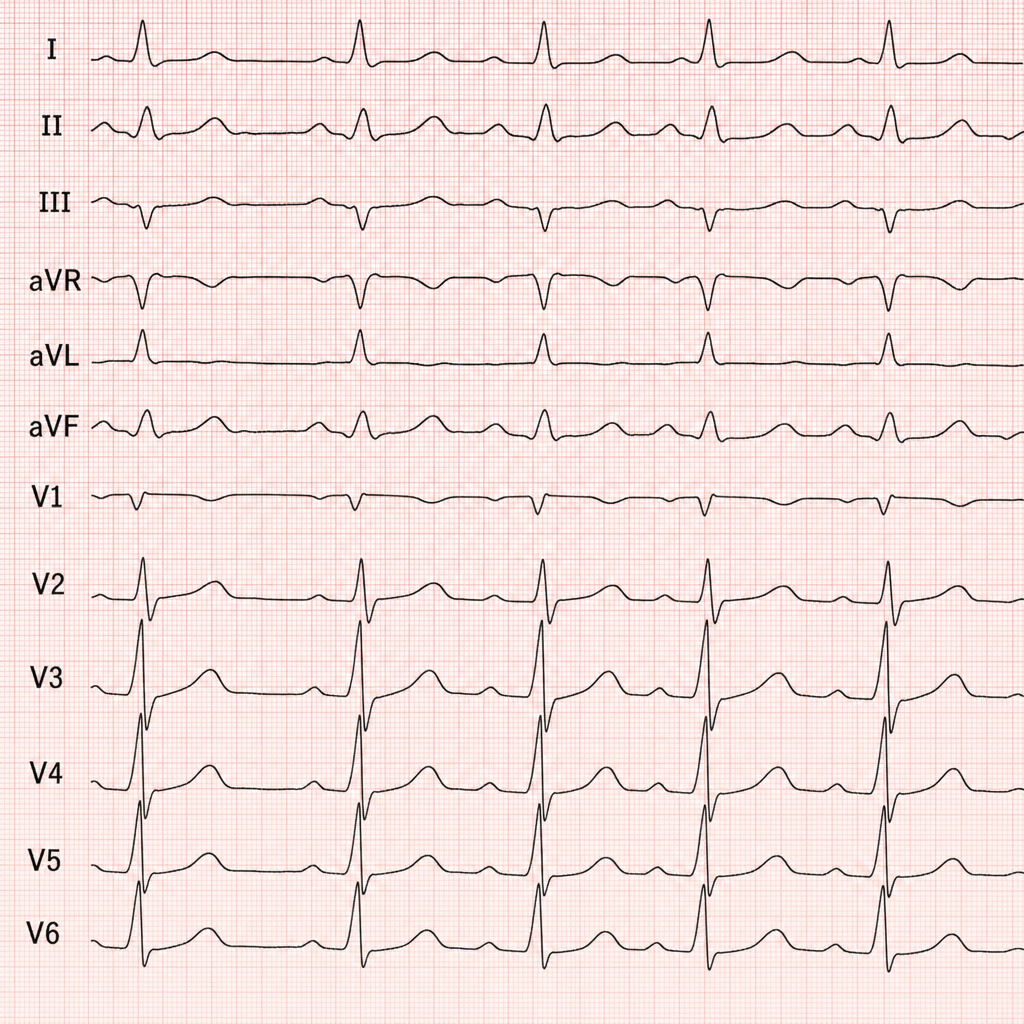
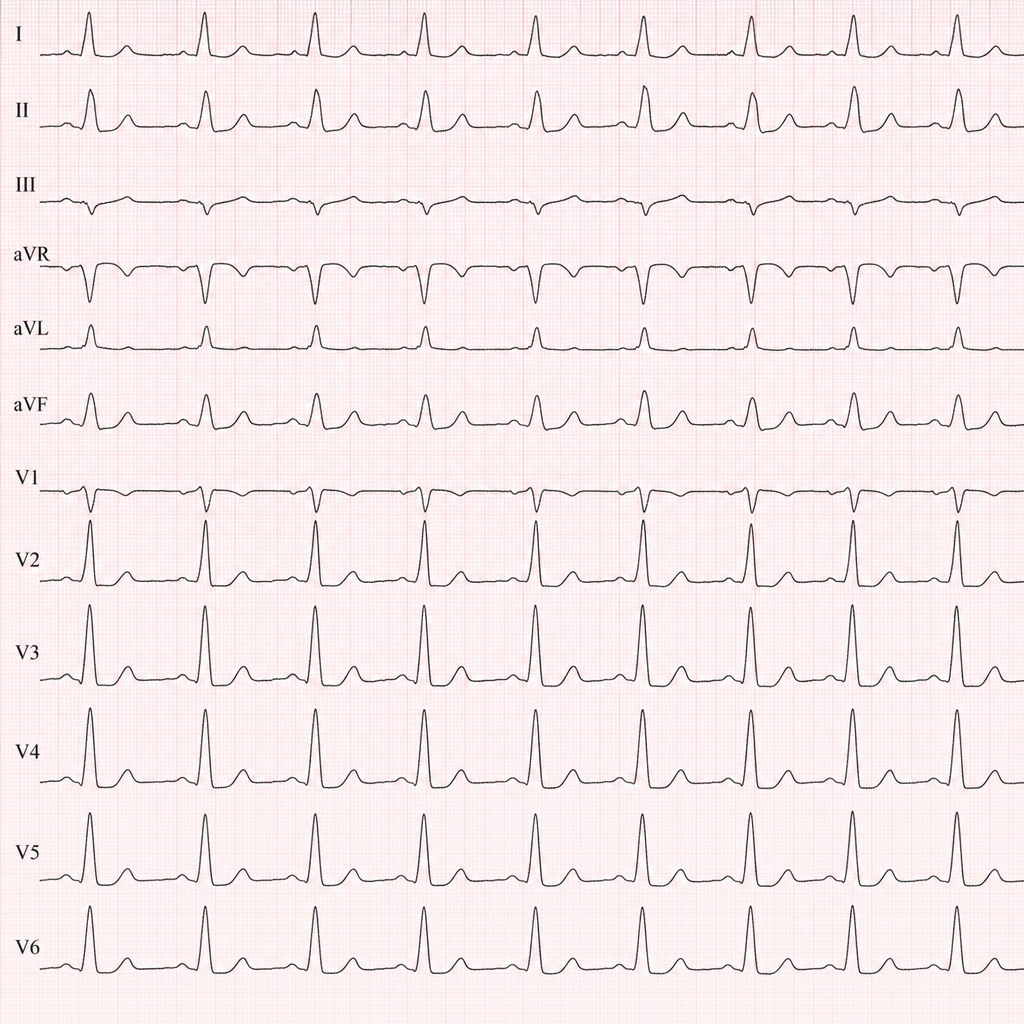
A 25-year-old patient presents with loss of consciousness following cocaine overdose. On examination, BP is 200/100 mmHg and GCS is 7/15. The right pupil is dilated and sluggish to light. Which of the following interventions is NOT recommended for this patient?
A 28-year-old male patient is brought to casualty in a comatose state with pinpoint pupils, reduced respiratory rate, and bradycardia. What is the most likely diagnosis?
Aerial blood gas analysis in Carbon monoxide poisoning typically shows which of the following?
A patient presented with dry mouth, dry hot skin, and dilated pupils. What is the likely cause?
Which of the following is the drug of choice for opioid overdose?
Hemoperfusion with charcoal is useful in poisoning with which of the following substances?
Dialysis is not indicated in the toxicity of which of the following substances?
A patient ingested an unknown substance and presented with myoclonic jerks, seizures, tachycardia, and hypotension. The ECG showed a heart rate of 120/minute with a QRS interval of 0.16 seconds. The arterial blood gas revealed a pH of 7.25, PCO2 of 30 mmHg, and HCO3 of 15 mmol/L. What is the most likely cause of poisoning?
Which of the following are indications of dialysis in a patient with suspected poisoning?
Hemodialysis is absolutely indicated in which of the following poisonings?
Explanation: ### Explanation This patient presents with a **cocaine-induced hypertensive emergency** complicated by signs of **increased intracranial pressure (ICP)** (GCS 7, anisocoria). The goal of management is to control ICP and blood pressure without compromising cerebral perfusion or worsening the underlying pathophysiology. **1. Why Option C is NOT recommended:** Sodium nitroprusside is a potent vasodilator that causes significant **cerebral vasodilation**. In a patient with already elevated ICP (suggested by the dilated pupil and low GCS), nitroprusside can further increase intracranial volume and pressure, potentially leading to brain herniation. Furthermore, in cocaine toxicity, rapid BP reduction should ideally be achieved with agents like **Phentolamine** (alpha-blocker) or **Benzodiazepines**. Pure beta-blockers are contraindicated due to "unopposed alpha-stimulation." [2], [3] **2. Analysis of Incorrect Options:** * **Option A (Mannitol):** This is a standard osmotic diuretic used to reduce cerebral edema and lower ICP in acute neurological emergencies. * **Option B (Hypertonic fluids):** Maintaining sodium at high-normal levels (145–155 mEq/L) helps create an osmotic gradient to reduce brain water content, a common strategy in neuro-critical care. * **Option D (Neuromuscular paralysis):** In a patient with GCS 7, endotracheal intubation is mandatory for airway protection [1], [4]. Neuromuscular paralysis is often required during intubation and subsequent mechanical ventilation to prevent "bucking" the ventilator, which can spike ICP. **Clinical Pearls for NEET-PG:** * **Cocaine & Beta-blockers:** Never use Propranolol alone in cocaine toxicity; it leads to paradoxical hypertension due to unopposed alpha-adrenergic activity [3]. * **ICP Management:** Avoid vasodilators like Nitroprusside and Nitroglycerin if ICP is high; use Labetalol (with caution) or Nicardipine instead. * **Cushing’s Triad:** Hypertension, Bradycardia, and Irregular respirations (indicates impending herniation).
Explanation: ### Explanation The clinical presentation described—**coma, pinpoint pupils (miosis), and respiratory depression**—constitutes the classic **"Opioid Toxidrome."** [1], [2] #### 1. Why Opioid Poisoning is Correct Opioids (e.g., Morphine, Heroin) act on $\mu$-opioid receptors in the central nervous system. This leads to: * **CNS Depression:** Resulting in a comatose state [1]. * **Respiratory Depression:** Decreased sensitivity of the brainstem to $CO_2$ [1]. * **Miosis:** Stimulation of the Edinger-Westphal nucleus (parasympathetic outflow to the eye) [1]. * **Bradycardia/Hypotension:** Due to decreased sympathetic drive [1]. #### 2. Why Other Options are Incorrect * **Tricyclic Antidepressant (TCA) Poisoning:** Characterized by **mydriasis (dilated pupils)**, tachycardia, seizures, and ECG changes (prolonged QRS/QTc). It has anticholinergic effects, unlike the "wet" or constricted presentation of opioids. * **Benzodiazepine Poisoning:** While it causes CNS and respiratory depression, it typically presents with **normal or mid-position pupils**. It rarely causes the pinpoint pupils seen in opioid toxicity. * **Organophosphorus (OP) Poisoning:** While OP poisoning causes miosis and bradycardia, it is distinguished by **cholinergic excess ("SLUDGE" symptoms)**: Salivation, Lacrimation, Urination, Defecation, GI distress, and Emesis. The absence of secretions makes opioid poisoning more likely here. #### 3. NEET-PG High-Yield Pearls * **Antidote:** **Naloxone** (pure opioid antagonist). It has a shorter half-life than most opioids, so repeated dosing or infusion may be needed. * **Exception to Miosis:** **Meperidine (Pethidine)** poisoning often presents with **mydriasis** (due to its atropine-like metabolite, normeperidine) [3]. * **Triad of Death:** Coma, Pinpoint pupils, and Respiratory depression (<8-10 breaths/min) [1], [2]. * **Diagnostic Clue:** If the patient responds to a trial of Naloxone, the diagnosis of opioid overdose is confirmed.
Explanation: ### Explanation In Carbon Monoxide (CO) poisoning, the fundamental concept is that CO competes with Oxygen for binding sites on hemoglobin [1]. However, it does **not** interfere with the amount of oxygen dissolved in the plasma. **1. Why the Correct Answer is Right:** * **Normal $PO_2$:** $PO_2$ (Partial pressure of oxygen) measures oxygen dissolved in the plasma, not oxygen bound to hemoglobin. Since CO poisoning is a gas exchange issue at the hemoglobin level and not a lung parenchyma or ventilation issue, the dissolved oxygen remains normal. * **Decreased $O_2$ Saturation ($SaO_2$):** CO has an affinity for hemoglobin 200–250 times greater than oxygen [1]. It displaces oxygen, forming Carboxyhemoglobin (COHb), which significantly reduces the percentage of hemoglobin saturated with oxygen. * **Normal/Low $PCO_2$:** Patients often hyperventilate due to tissue hypoxia, leading to a normal or slightly decreased $PCO_2$ (respiratory alkalosis) [2]. **2. Why Incorrect Options are Wrong:** * **Options A, C, and D ($PO_2$ decreased):** These are incorrect because $PO_2$ only drops in conditions affecting gas exchange in the lungs (e.g., pneumonia, ARDS) or low inspired oxygen (high altitude). In CO poisoning, the lungs are usually clear, so $PO_2$ remains normal. **3. High-Yield Clinical Pearls for NEET-PG:** * **The Pulse Oximetry Trap:** Standard pulse oximeters cannot distinguish between Oxyhemoglobin and Carboxyhemoglobin. Therefore, a patient may have a **falsely normal $SpO_2$** despite severe poisoning. Co-oximetry is required for diagnosis. * **Left Shift:** CO causes a **leftward shift** of the Oxygen-Dissociation Curve, meaning the remaining oxygen binds more tightly to hemoglobin and is not released to tissues, worsening cellular hypoxia [1]. * **Cherry Red Skin:** A classic but rare physical finding; more commonly, patients present with headache, dizziness, and confusion [3]. * **Treatment:** 100% High-flow Oxygen (reduces CO half-life from 5 hours to 90 minutes) or Hyperbaric Oxygen (HBO). **Postmortem Findings:** Internal examinations often reveal cherry red coloration of the tissues and blood, along with pulmonary edema and congestion [4].
Explanation: ### Explanation The clinical presentation of **dry mouth, dry hot skin, and dilated pupils** is the classic "Anticholinergic Toxidrome." This occurs due to the competitive inhibition of acetylcholine at muscarinic receptors [1] [2]. #### 1. Why Anticholinergic Poisoning is Correct Anticholinergic agents (e.g., Atropine, Datura, TCAs, Antihistamines) block the parasympathetic nervous system, leading to: * **Dry mouth (Xerostomia):** Decreased salivary secretions. * **Dry hot skin:** Inhibition of sweat glands (anhidrosis) leads to hyperthermia [2]. * **Dilated pupils (Mydriasis):** Paralysis of the pupillary sphincter muscle. * **Other signs:** Tachycardia, urinary retention, and "madness" (delirium/hallucinations) [1]. #### 2. Why Other Options are Incorrect * **Options B & C (Cholinesterase inhibitors/Organophosphates):** These cause a **Cholinergic Toxidrome** by increasing acetylcholine levels [4]. This presents with the opposite symptoms, often remembered by the mnemonic **DUMBELS**: Diarrhea, Urination, Miosis (constricted pupils), Bradycardia/Bronchospasm, Emesis, Lacrimation, and Salivation. The patient would have "wet" skin and pinpoint pupils, not dry skin and dilated pupils. #### 3. NEET-PG High-Yield Pearls * **Classic Mnemonic:** "Hot as a hare (hyperthermia), Red as a beet (flushing), Dry as a bone (anhidrosis), Blind as a bat (mydriasis/cycloplegia), and Mad as a hatter (delirium)." * **Antidote:** **Physostigmine** is the specific antidote for central anticholinergic toxicity (it crosses the blood-brain barrier) [3]. * **Common Culprit:** In the Indian context, **Datura poisoning** is a frequent cause of this toxidrome [1]. * **Management:** Primarily supportive care, cooling measures, and benzodiazepines for agitation [3]. Avoid phenothiazines as they have anticholinergic properties.
Explanation: **Explanation:** The drug of choice for acute opioid overdose is **Naloxone** [1]. It is a potent, competitive **opioid receptor antagonist** [1] with a high affinity for $\mu$ (mu) receptors. In an overdose scenario, Naloxone rapidly displaces opioids from the receptors, reversing life-threatening symptoms such as respiratory depression, sedation, and miosis. **Analysis of Options:** * **Naloxone (Correct):** It has a rapid onset (1–2 minutes IV) but a short half-life (30–90 minutes). Because many opioids (like methadone) last longer than naloxone, patients must be monitored for "re-narcotization" as the antagonist wears off [1]. * **Clonidine:** An $\alpha_2$-adrenergic agonist used to manage the **autonomic symptoms of opioid withdrawal** (e.g., hypertension, tachycardia, sweating), but it has no role in reversing acute toxicity. * **Buprenorphine:** A **partial $\mu$-opioid agonist**. While used in maintenance therapy for opioid use disorder, it can actually precipitate withdrawal if given to a dependent patient or worsen sedation in an overdose. * **Flumazenil:** The specific antagonist for **Benzodiazepine** overdose [1]. It does not act on opioid receptors. **High-Yield Clinical Pearls for NEET-PG:** 1. **The Opioid Toxidrome:** Characterized by the triad of **Respiratory Depression, Pinpoint Pupils (Miosis), and Altered Mental Status** [2]. 2. **Exception to Miosis:** Meperidine (Pethidine) overdose typically presents with **mydriasis** (dilated pupils) due to its atropine-like effects. 3. **Naltrexone vs. Naloxone:** Naltrexone is an orally active long-acting antagonist used for **relapse prevention** (maintenance), not for acute emergency reversal. 4. **Route:** Naloxone can be administered IV, IM, SC, or intranasally [1].
Explanation: **Explanation:** **Hemoperfusion** is an extracorporeal technique where blood is passed through a column containing adsorbent material, typically **activated charcoal** or resin. It is superior to hemodialysis for substances that have high lipid solubility, high protein binding, or a large molecular weight, as these factors often limit the clearance of toxins through a standard dialysis membrane. 1. **Why Barbiturates are the correct answer:** Long-acting barbiturates (like Phenobarbital) and especially short-to-intermediate acting barbiturates are highly lipid-soluble and protein-bound. Charcoal hemoperfusion is highly effective at adsorbing these molecules directly from the blood, making it a preferred method for severe, life-threatening barbiturate toxicity when supportive care is insufficient. 2. **Why the other options are incorrect:** * **Methyl Alcohol & Ethylene Glycol:** These are small, water-soluble molecules with low protein binding. They are best removed by **Hemodialysis**, which also helps correct the severe anion-gap metabolic acidosis associated with these toxicities. * **Lithium:** Lithium is a small monovalent cation that does not bind to charcoal. It is effectively removed by **Hemodialysis** due to its small size and lack of protein binding. **High-Yield Clinical Pearls for NEET-PG:** * **Mnemonic for Hemoperfusion:** Remember **"CHIP"** (Chloramphenicol, Hydantoin/Phenytoin, Isopropyl alcohol/Isothiazides, Phenobarbital/Paraquat). * **Paraquat poisoning:** Hemoperfusion is the treatment of choice if initiated early (within 2-4 hours). * **Hemodialysis vs. Hemoperfusion:** If the toxin is small and water-soluble (Lithium, Alcohols, Salicylates), choose Hemodialysis. If the toxin is large, lipid-soluble, or protein-bound (Barbiturates, Carbamazepine, Theophylline), choose Hemoperfusion.
Explanation: **Explanation:** The effectiveness of hemodialysis in removing a toxin depends on specific pharmacokinetic properties: low molecular weight, low protein binding, and a **small volume of distribution (Vd < 1 L/kg)**. **Why Digitalis is the Correct Answer:** Digitalis (Digoxin) has an exceptionally **large volume of distribution** (approx. 5–7 L/kg) because it binds extensively to cardiac and skeletal muscle tissues. Only a tiny fraction of the drug remains in the plasma to be filtered. Furthermore, it has a high molecular weight. Therefore, dialysis is ineffective. The definitive management for severe digitalis toxicity is **Digoxin-specific antibody fragments (DigiFab).** **Why the other options are incorrect:** * **Lithium:** It is the "classic" dialyzable drug. It is a small ion, not protein-bound, and has a relatively small Vd [2]. Dialysis is indicated if levels are >4 mEq/L or if there is severe neurotoxicity. * **Methanol:** It is a small, water-soluble molecule. Dialysis is indicated to rapidly remove both the parent alcohol and its toxic metabolite (formic acid) to prevent retinal damage and severe metabolic acidosis. * **Salicylates:** Aspirin has a small Vd and low protein binding at toxic levels. Dialysis is indicated if levels are >100 mg/dL (see concentrations suggesting serious toxicity) [1] or if there is refractory acidosis/end-organ damage. Urinary alkalinisation is also a treatment modality for salicylate poisoning [1]. **High-Yield Clinical Pearls for NEET-PG:** * **Mnemonic for Dialyzable drugs (I STUMBLE):** **I**sopropanol, **S**alicylates, **T**heophylline, **U**remia, **M**ethanol, **B**arbiturates (Phenobarbital), **L**ithium, **E**thylene glycol. * **Non-dialyzable drugs:** Digitalis, Benzodiazepines, Tricyclic Antidepressants (TCAs), and Opioids (due to large Vd or high protein binding). * **Hemoperfusion** is preferred over dialysis for **Theophylline** and **Carbamazepine** overdose.
Explanation: **Explanation:** The clinical presentation of **seizures, tachycardia, hypotension, and QRS prolongation** is a classic toxidrome for **Tricyclic Antidepressant (TCA) overdose**, such as **Imipramine**. **1. Why Imipramine is Correct:** TCAs inhibit the fast sodium channels in the myocardium, leading to a slowed depolarization phase. This manifests on an ECG as **QRS prolongation (>0.10s)** and a dominant R wave in lead aVR. A QRS >0.16s is highly predictive of seizures and ventricular arrhythmias [1]. The metabolic acidosis (pH 7.25) and hypotension are also hallmark features due to alpha-1 adrenergic blockade and direct myocardial depression. Myoclonic jerks and seizures occur due to GABA antagonism and anticholinergic effects. **2. Why Other Options are Incorrect:** * **Amanita phalloides:** Primarily causes severe gastrointestinal distress followed by fulminant hepatic failure (hepatotoxicity); it does not typically cause acute QRS prolongation. * **Ethylene glycol:** Causes a profound high anion gap metabolic acidosis and renal failure (calcium oxalate crystals), but not the specific sodium-channel blockade ECG changes seen here. * **Phencyclidine (PCP):** Presents with nystagmus, agitation, and hypertension. While it can cause seizures, it does not typically cause the significant QRS widening characteristic of TCAs. **Clinical Pearls for NEET-PG:** * **Management:** The first-line treatment for TCA-induced QRS widening or hypotension is **Sodium Bicarbonate (NaHCO3)** [1]. It works by increasing extracellular sodium and alkalinizing the blood, which decreases the affinity of the TCA for sodium channels [1]. * **ECG Marker:** Look for an **R wave >3mm in lead aVR** as a specific sign of TCA toxicity. * **Anticholinergic Toxidrome:** Remember the mnemonic: "Mad as a hatter, red as a beet, dry as a bone, blind as a bat, and hot as a hare."
Explanation: In toxicology, extracorporeal toxin removal (dialysis or hemoperfusion) is indicated when the body’s natural elimination pathways are overwhelmed or failing, and the toxin is dialyzable (low molecular weight, low volume of distribution, and low protein binding). [1] **Explanation of Options:** * **Prolonged Coma (Option A):** Severe clinical deterioration, such as deep or prolonged coma that leads to secondary complications (e.g., aspiration pneumonia or hypoventilation), is a classic indication for dialysis, especially in sedative-hypnotic poisoning. [1], [4] * **Hepatic and Renal Failure (Option B):** If the primary organs of metabolism and excretion are compromised, toxins accumulate rapidly. Dialysis acts as a "bridge" to perform the excretory functions the body can no longer manage. [1] * **Fatal Plasma Levels (Option C):** Quantitative levels of certain toxins (e.g., Lithium >4.0 mEq/L, Salicylates >100 mg/dL, or Methanol >50 mg/dL) are independent indications for dialysis to prevent irreversible end-organ damage, even if the patient appears stable initially. [2] Since all three scenarios represent critical thresholds where conservative management is insufficient, **Option D** is the correct answer. **High-Yield Clinical Pearls for NEET-PG:** * **Mnemonic for Dialyzable Toxins (I STUMBLE):** **I**sopropanol, **S**alicylates, **T**heophylline, **U**remia, **M**ethanol, **B**arbiturates (Phenobarbital), **L**ithium, **E**thylene glycol. [3] * **Hemoperfusion vs. Dialysis:** Hemoperfusion is superior for toxins with high protein binding (e.g., Carbamazepine, Theophylline) because the blood passes directly over an adsorbent material (charcoal). * **Ineffective for:** Benzodiazepines, Digoxin, and Tricyclic Antidepressants (due to high volume of distribution).
Explanation: **Explanation:** **1. Why Methanol is the Correct Answer:** Hemodialysis (HD) is a definitive treatment for methanol poisoning because methanol is a low-molecular-weight, water-soluble molecule with a small volume of distribution and low protein binding—the ideal characteristics for dialyzability. HD is indicated when there is severe metabolic acidosis (pH < 7.25), visual impairment, or a serum methanol level >50 mg/dL [1]. It effectively removes both the parent compound (methanol) and its toxic metabolite, **formic acid**, which causes retinal damage and basal ganglia necrosis [2,4]. **2. Why Other Options are Incorrect:** * **Benzodiazepines:** These have a high volume of distribution and are highly protein-bound, making them unsuitable for dialysis. Management is supportive; Flumazenil is the specific antagonist. * **Organophosphorus (OP) Poisoning:** OP compounds cause irreversible inhibition of acetylcholinesterase. Treatment focuses on Atropine (antimuscarinic) and Pralidoxime (enzyme reactivator), not extracorporeal removal. * **Amphetamines:** These are primarily managed with supportive care (sedation with benzodiazepines and cooling). They are not effectively removed by HD. **3. NEET-PG High-Yield Pearls:** * **Mnemonic for Dialyzable Poisons (STUMBLED):** **S**alicylates, **T**heophylline, **U**remia, **M**ethanol, **B**arbiturates (Phenobarbital), **L**ithium, **E**thylene glycol, **D**epakote (Valproate). * **Antidote for Methanol:** Fomepizole (inhibits alcohol dehydrogenase) is the first-line antidote [3]. Ethanol is used as an alternative if Fomepizole is unavailable. * **Key Lab Finding:** Methanol poisoning presents with a **High Anion Gap Metabolic Acidosis (HAGMA)** and an **increased Osmolar Gap** [2,4].
General Principles of Toxicology
Practice Questions
Antidotes and Specific Therapies
Practice Questions
Drug Overdose Management
Practice Questions
Heavy Metal Poisoning
Practice Questions
Pesticide and Insecticide Poisoning
Practice Questions
Plant and Food Toxins
Practice Questions
Household Chemical Exposure
Practice Questions
Environmental Toxins
Practice Questions
Occupational Exposures
Practice Questions
Toxicological Screening and Diagnosis
Practice Questions
Extracorporeal Removal Techniques
Practice Questions
Poisoning Prevention Strategies
Practice Questions
Get full access to all questions, explanations, and performance tracking.
Start For Free