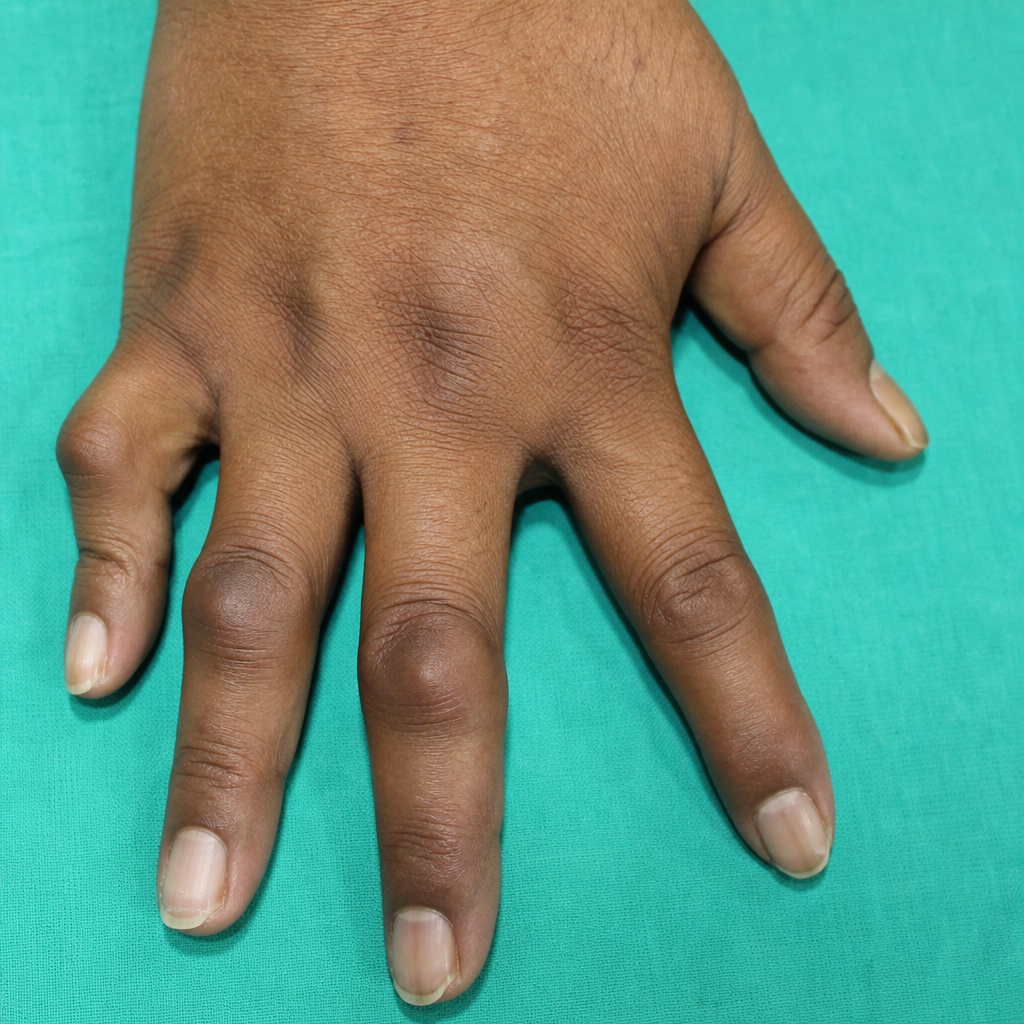
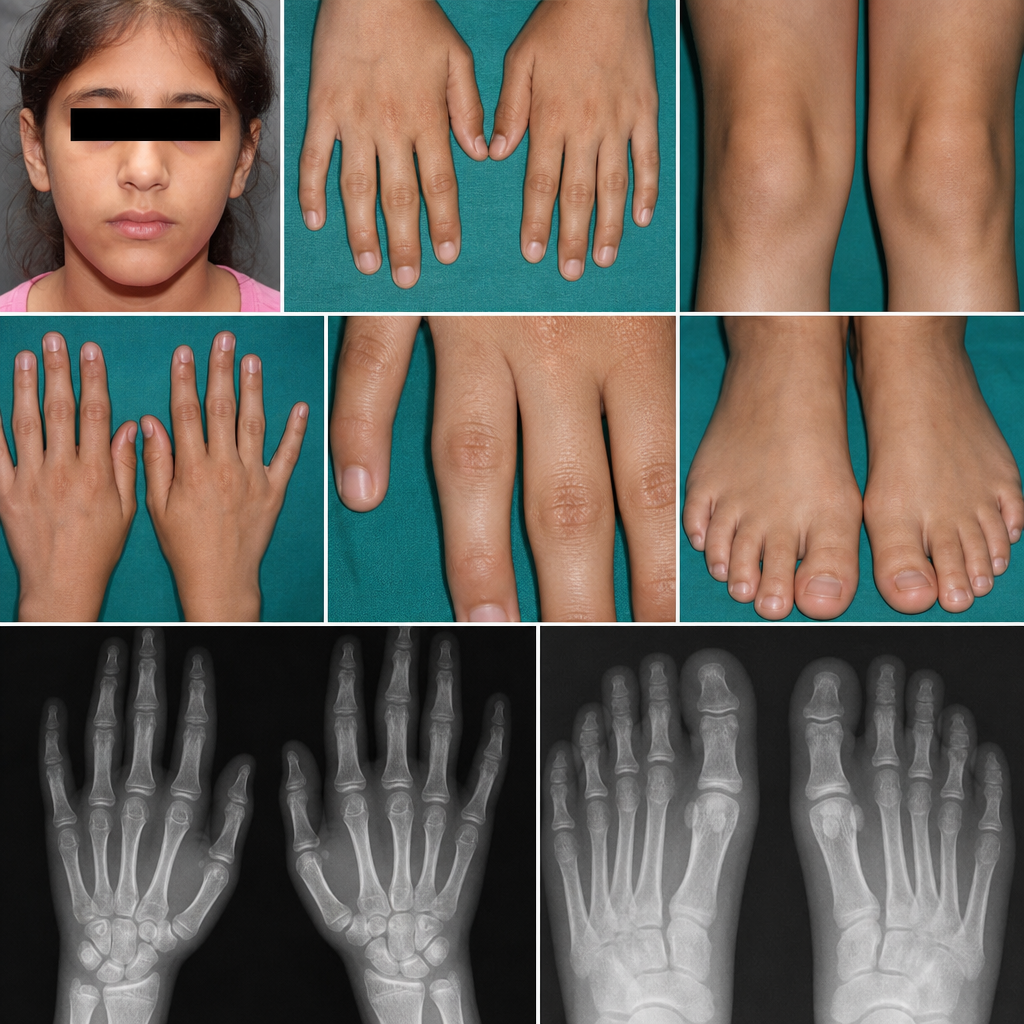
A 45-year-old woman with long-standing rheumatoid arthritis complains of dry eyes and dry mouth. Bilateral enlargement of the parotids is noted on physical examination. The syndrome described here is best described as
A 30-year-old male has had multiple episodes of sudden, severe pain, redness, and swelling of metatarsophalangeal joint of his great toes. These problems seem to occur after the man has had a night out on the town with his friends, when they go barhopping, and the night usually ends with a cab ride home for the group. This problem would also be exacerbated if the man eats which one of the following during his night out?
Bony erosions are seen in the following except -
All of the following are features of scleroderma except:
False positive rheumatoid factor can be associated with all except:
Heberdens nodes are the clinical manifestations seen in -
40-year-old patient having arthritis of PIP and DIP along with carpometacarpal joint of thumb and sparing of wrist and metacarpophalangeal joint, most likely diagnosis is
Uveoparotid fever is seen in:
True about subcutaneous nodules in Rheumatic fever:
Most strongly associated with rheumatoid arthritis among the following is?
Explanation: ***Autoimmune*** - The combination of **dry eyes (xerophthalmia)**, **dry mouth (xerostomia)**, **parotid enlargement**, and a history of **rheumatoid arthritis** points to **Sjögren's syndrome**, which is a systemic autoimmune disease characterized by lymphocytic infiltration of exocrine glands. - Sjögren's syndrome is frequently associated with other autoimmune diseases, with **rheumatoid arthritis** being the most common secondary autoimmune condition [1]. *Metastatic* - **Metastatic** refers to the spread of cancer from its primary site to other parts of the body. - The patient's symptoms of dry eyes, dry mouth, and parotid enlargement are not typical manifestations of metastatic disease. *Metabolic* - **Metabolic** conditions involve disturbances in the body's chemical processes, such as diabetes or thyroid disorders. - While some metabolic conditions can cause systemic symptoms, the specific constellation of dry eyes, dry mouth, and parotid enlargement is not characteristic of a primary metabolic disorder. *Infectious* - **Infectious** diseases are caused by pathogenic microorganisms. - Although some infections can cause dry mouth or parotid gland enlargement (e.g., mumps), the chronic nature of the symptoms, associated dry eyes, and chronic rheumatoid arthritis are inconsistent with an acute infectious process.
Explanation: ***Chopped liver*** - This patient's symptoms (sudden, severe pain, redness, and swelling of the **metatarsophalangeal joint of the great toe**) are classic for **gout** [2]. - **Chopped liver** is very high in **purines**, which are metabolized to uric acid and can trigger or exacerbate gout attacks [1]. *Chicago hot dog* - While hot dogs can contain some purines, they are generally not as high in purine content as organ meats like liver, making them less likely to be a primary trigger for gout. - The most significant dietary triggers for gout are typically **red meat**, **organ meats**, **certain seafood**, and **alcohol** [1]. *Hamburger* - A typical hamburger patty (ground beef) contains purines, but often less than organ meats, and may not be as strong a trigger for gout compared to liver. - The preparation and size of the hamburger would influence its purine content, but it's generally not the highest purine food. *Nachos and salsa* - Nachos and salsa are generally not rich in purines and are unlikely to directly trigger a gout flare. - While other ingredients or high-fat content might have indirect effects on metabolism, they are not primary dietary risk factors for hyperuricemia.
Explanation: ***SLE*** - **Systemic Lupus Erythematosus (SLE)** is primarily a connective tissue disease characterized by inflammation, but it typically causes **non-erosive arthritis** [1]. - While joint pain and inflammation are common, **bony erosions** are a classic feature of inflammatory arthropathies like rheumatoid arthritis or spondyloarthropathies, not SLE [1]. *Psoriasis* - **Psoriatic arthritis**, a form of spondyloarthritis associated with psoriasis, frequently causes **bony erosions**, particularly in the small joints of the hands and feet [1]. - It can also lead to characteristic radiographic changes like the "**pencil-in-cup**" deformity and periostitis [1]. *Osteoarthritis* - **Osteoarthritis** is characterized by cartilage degradation, but it can lead to **subchondral bone erosions** in advanced stages, particularly in severely affected joints. - These erosions are often accompanied by **osteophytes** and **subchondral sclerosis**. *Gout* - **Gout** is caused by the deposition of urate crystals, which can lead to characteristic **bony erosions** known as "punched-out" lesions or **tophi** on radiographs [2]. - These erosions often have an **overhanging edge** appearance, particularly around the affected joints.
Explanation: ***Calcification in long bones*** - While **calcinosis** (cutaneous calcification) can occur in scleroderma, **calcification within the long bones themselves** is not a typical feature of the disease. - Scleroderma primarily affects connective tissue, leading to fibrosis and vascular changes, rather than direct calcification of the bone matrix. *Skin contracture* - **Skin contractures** are a hallmark of scleroderma, resulting from excessive collagen deposition and fibrosis in the skin [1]. - This leads to thickening and hardening of the skin, causing reduced mobility and contractures, especially in the hands and face [1]. *Dysphagia* - **Dysphagia** (difficulty swallowing) is a common manifestation in scleroderma due to fibrosis and smooth muscle atrophy in the esophagus. - This can impair esophageal motility, leading to acid reflux and difficulty moving food down the digestive tract. *Raynaud's phenomenon* - **Raynaud's phenomenon** is often one of the earliest and most prevalent symptoms of scleroderma, affecting nearly all patients. - It involves episodic vasospasm of the digital arteries in response to cold or stress, causing characteristic color changes (white, blue, red) in the fingers and toes [1].
Explanation: ***Inflammatory bowel disease*** - **Inflammatory bowel disease (IBD)**, including Crohn's disease and ulcerative colitis, is typically associated with a **negative rheumatoid factor**. - While IBD can have extra-intestinal manifestations, including joint pain (arthralgia or arthritis), this is usually seronegative for RF. [1] *HBsAg* - **Chronic viral infections** such as **chronic hepatitis B (HBsAg positivity)** can lead to immune complex formation and stimulate the production of rheumatoid factor, resulting in a false-positive result. [2] - This is an example of **polyclonal B-cell activation** that can occur in certain chronic infections. [2] *Coombs test* - The **Coombs test** (direct or indirect) detects antibodies against red blood cells and is unrelated to rheumatoid factor. [1] - A positive Coombs test is indicative of **autoimmune hemolytic anemia** and does not cause a false-positive rheumatoid factor. *VDRL* - The **Venereal Disease Research Laboratory (VDRL)** test can be falsely positive in various autoimmune conditions and infections, including those that can also cause a false-positive rheumatoid factor. [2] - While VDRL directly tests for syphilis, **syphilis** itself is a known cause of **false-positive rheumatoid factor** due to generalized immune stimulation. [2]
Explanation: Explanation: ***Osteoarthritis*** - **Heberden's nodes** are characteristic bony enlargements of the **distal interphalangeal (DIP) joints** of the fingers, resulting from osteophyte formation due to osteoarthritis [1]. - They are a common sign of **degenerative joint disease**, particularly in older adults and are often associated with genetic predisposition and trauma [1]. *Reactive arthritis* - This condition typically affects larger joints in the lower extremities, often following a genitourinary or gastrointestinal infection. - It does not characteristically involve the formation of **Heberden's nodes** on the DIP joints. *Rheumatoid arthritis* - **Rheumatoid arthritis** primarily affects the small joints of the hands and feet, but it causes **inflammatory synovial hypertrophy** and erosions, not bony nodes like Heberden's [2]. - This condition is characterized by **symmetric polyarthritis** and often spares the DIP joints, while affecting the proximal interphalangeal (PIP) and metacarpophalangeal (MCP) joints [2]. *Ankylosing spondylitis* - **Ankylosing spondylitis** is a chronic inflammatory disease primarily affecting the **axial skeleton**, particularly the sacroiliac joints and spine. - It does not typically cause peripheral joint involvement leading to symptoms like **Heberden's nodes**.
Explanation: ***Osteoarthritis*** - This classic presentation of arthritis in the **PIP, DIP**, and **first carpometacarpal (CMC) joint** with sparing of the wrist and MCP joints is highly characteristic of **osteoarthritis** [1]. - **Osteoarthritis** primarily affects cartilage and bone, leading to pain and stiffness, and commonly involves these specific hand joints [1]. *Pseudo gout* - Pseudo gout, or **calcium pyrophosphate deposition disease (CPPD)**, typically causes acute, monoarticular or oligoarticular arthritis, often affecting larger joints like the knee or wrist [3]. - While it can affect the hand, its presentation is usually more acute and less chronic, and it does not typically show the joint distribution described here. *Psoriatic arthritis* - **Psoriatic arthritis** can affect the DIP joints and can cause a "sausage digit" (dactylitis), but it often also involves the wrist or other joints, and skin/nail changes of psoriasis would typically be present. - While it can involve the DIP joints, the classic sparing of wrist and MCP for this specific pattern is less typical for psoriatic arthritis compared to osteoarthritis. *Rheumatoid arthritis* - **Rheumatoid arthritis** typically affects the **MCP joints** and **wrists symmetrically**, often sparing the DIP joints [2]. - The presented pattern of joint involvement, especially the sparing of the MCP and wrist joints and involvement of the DIP and CMC joints, makes rheumatoid arthritis unlikely [2].
Explanation: ***Sarcoidosis*** - **Uveoparotid fever** (also known as Heerfordt's syndrome) is a rare manifestation of **sarcoidosis**, characterized by bilateral **uveitis**, **parotid gland enlargement**, facial nerve palsy, and fever [1]. - Sarcoidosis is a systemic granulomatous disease, and **uveoparotid fever** represents a specific, classic constellation of symptoms within this condition [1]. *Rheumatoid Arthritis* - While **rheumatoid arthritis** can cause **ocular inflammation** (e.g., scleritis, episcleritis), it does not typically present as **uveitis** or **parotid gland enlargement** [2]. - Its primary targets are synovial joints, leading to inflammatory **polyarthritis**. *Sjogren's syndrome* - **Sjogren's syndrome** is well-known for affecting exocrine glands, causing **sicca symptoms** (dry eyes and mouth) due to lymphocytic infiltration of the lacrimal and salivary glands [2]. - However, while **parotid gland enlargement** can occur, it's not typically associated with **uveitis** in the specific combination described as **uveoparotid fever**. *SLE* - **Systemic Lupus Erythematosus (SLE)** is a multi-system autoimmune disease that can affect nearly any organ, including the eyes (e.g., retinal vasculitis, episcleritis) and occasionally salivary glands [3]. - However, **uveoparotid fever** is not a characteristic or specific manifestation of **SLE**.
Explanation: ***Non tender*** - Subcutaneous nodules in **rheumatic fever** are typically **firm**, **painless**, and **non-tender** to palpation. - Their non-tender nature distinguishes them from other inflammatory nodules and is a key diagnostic feature. *Most common manifestation* - Subcutaneous nodules are a **minor manifestation** of rheumatic fever, occurring in a small percentage of cases (around 10%). - The most common manifestations are **arthralgia/arthritis** and **carditis** [1]. *Present in flexor surfaces* - These nodules are typically found on the **extensor surfaces** of joints, such as the elbows, knees, wrists, and ankles, as well as over tendons and bony prominences. - Their presence on **flexor surfaces** is uncommon. *Associated with arthritis* - While both can occur in rheumatic fever, subcutaneous nodules and arthritis are **separate major manifestations** according to the Jones criteria [1]. - Their presence together does not imply a direct causal or concurrent association; one can occur without the other.
Explanation: ***HLA DR4*** - **HLA-DR4** is the **MHC Class II allele** most strongly associated with an increased risk and severity of **rheumatoid arthritis (RA)**. - It is thought to contribute to RA pathogenesis by presenting specific peptides that activate **auto-reactive T cells**, initiating the autoimmune response. *HLA B27* - **HLA-B27** is primarily associated with **seronegative spondyloarthropathies**, such as **ankylosing spondylitis** and **reactive arthritis**. - It has no significant association with **rheumatoid arthritis**. *HLA DQ1* - While a variety of **HLA-DQ alleles** are involved in autoimmune diseases, **HLA-DQ1** is not among the primary genetic associations for **rheumatoid arthritis**. - Its pathogenic role is more commonly studied in other conditions, such as **coeliac disease**, though various subtypes exist. *HLA DR8* - **HLA-DR8** has some associations with certain autoimmune conditions, such as **primary biliary cholangitis** and **Crohn's disease**. - It is not considered a primary or strong genetic risk factor for **rheumatoid arthritis**.
Rheumatoid Arthritis
Practice Questions
Spondyloarthropathies
Practice Questions
Systemic Lupus Erythematosus
Practice Questions
Vasculitis Syndromes
Practice Questions
Scleroderma and Related Disorders
Practice Questions
Inflammatory Myopathies
Practice Questions
Crystal Arthropathies
Practice Questions
Osteoarthritis
Practice Questions
Primary Immunodeficiency Disorders
Practice Questions
Autoinflammatory Syndromes
Practice Questions
Sjögren's Syndrome
Practice Questions
Antiphospholipid Syndrome
Practice Questions
Get full access to all questions, explanations, and performance tracking.
Start For Free