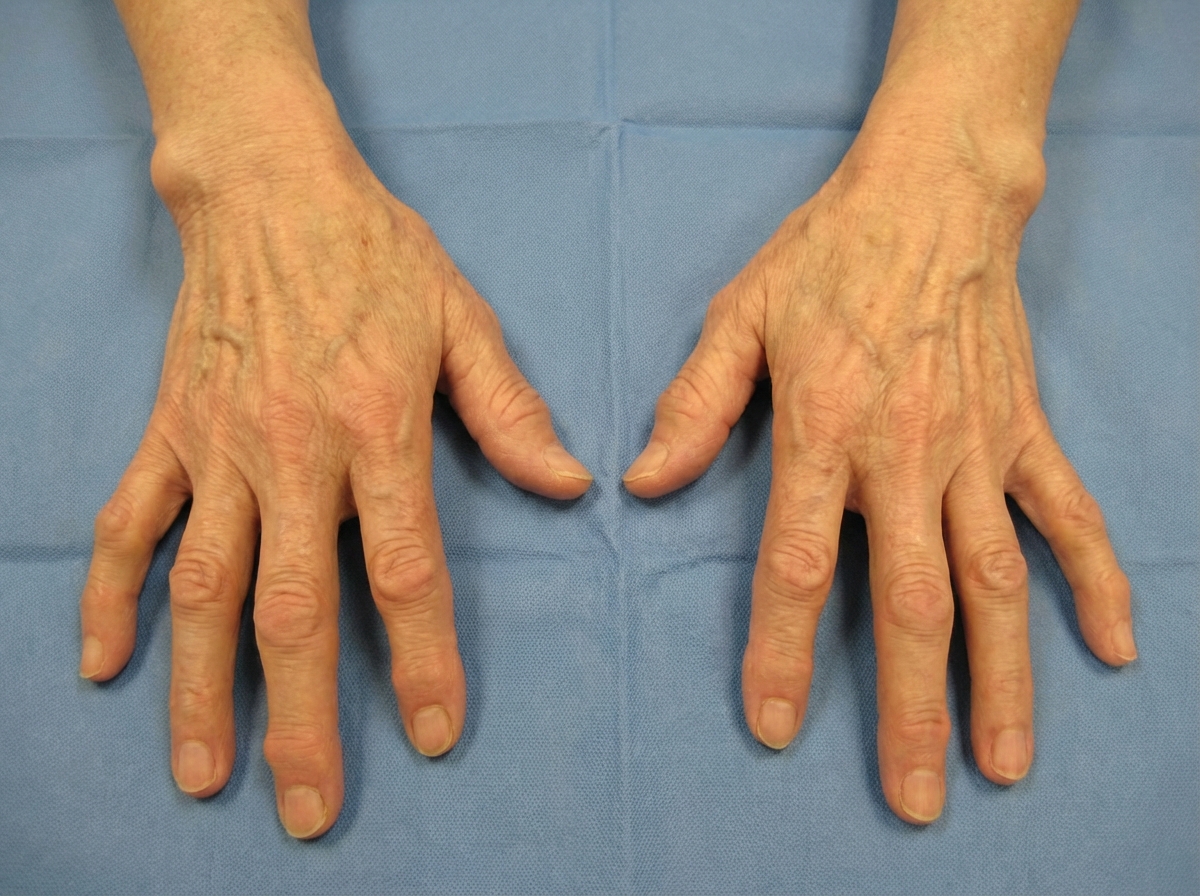
Which one of the following is not a characteristic feature of rheumatoid arthritis?
A triad of skin lesions, asymmetric mononeuritis multiplex, and eosinophilia is seen in which condition?
Calcium pyrophosphate crystal deposition is seen in which condition?
Which of the following diseases is NOT treated with anti-TNF alpha drugs?
A 10-year-old girl complains of persistent redness of the skin over her knuckles and around the nail beds. She describes easy fatigability and can rise only with difficulty from a squatting position. Physical examination reveals erythema over the knuckles and a heliotropic rash. A muscle biopsy shows infiltrates of B and T lymphocytes around blood vessels and in connective tissue of the perimysium. Elevated serum levels of which of the following would be expected in this patient?
Which of the following conditions is associated with HLA-B27?
Antinuclear antibodies are typically seen in which of the following conditions?
Which of the following is most important for ruling out rheumatoid arthritis?
Which of the following is the most likely diagnosis for the most common form of eye involvement in Rheumatoid Arthritis?
A 36-year-old male presents with cavitary lung lesions, sinusitis, and mouth ulcers. Urine analysis reveals RBC casts. What is the most likely diagnosis?
Explanation: **Explanation:** **Rheumatoid Arthritis (RA)** is a chronic, systemic inflammatory disorder characterized primarily by symmetrical, erosive polyarthritis that typically affects small joints. **Why Sacroiliitis is the Correct Answer:** Sacroiliitis (inflammation of the sacroiliac joints) is a hallmark feature of **Seronegative Spondyloarthropathies** (such as Ankylosing Spondylitis, Psoriatic Arthritis, and Reactive Arthritis) [1]. In contrast, Rheumatoid Arthritis characteristically **spares the axial skeleton**, with the notable exception of the **Cervical Spine** (C1-C2 subluxation). Therefore, sacroiliitis is not a feature of RA. **Analysis of Incorrect Options:** * **Metacarpophalangeal (MCP) joint involvement:** This is a classic feature of RA. It typically involves the MCP, PIP (proximal interphalangeal), and MTP joints, while characteristically sparing the DIP (distal interphalangeal) joints [1]. * **Symmetrical arthritis:** RA is defined by its symmetrical distribution (affecting the same joint areas on both sides of the body), which helps distinguish it from the often asymmetrical presentation of osteoarthritis or gout. * **Positive Rheumatoid Factor (RF):** Approximately 70-80% of patients with RA are seropositive for RF. While not 100% specific, it remains a key diagnostic criterion. **High-Yield Clinical Pearls for NEET-PG:** * **Joint Sparing:** RA spares the DIP joints and the Lumbar/Sacral spine [1]. * **Specific Marker:** Anti-CCP (Anti-cyclic citrullinated peptide) antibodies are more specific for RA than Rheumatoid Factor. * **Deformities:** Look for "Z-deformity" of the thumb, Swan-neck deformity, and Boutonniere deformity in clinical vignettes. * **Morning Stiffness:** In RA, stiffness typically lasts **>1 hour**, improving with activity.
Explanation: **Explanation:** The clinical triad of **skin lesions** (often palpable purpura or nodules), **asymmetric mononeuritis multiplex**, and **peripheral eosinophilia** [1] is a classic presentation of **Churg-Strauss syndrome**, now formally known as **Eosinophilic Granulomatosis with Polyangiitis (EGPA)**. EGPA is a small-to-medium vessel necrotizing vasculitis [1]. The hallmark of the disease is the presence of asthma, allergic rhinitis, and marked eosinophilia (>10% of total WBC count). Mononeuritis multiplex (e.g., foot drop or wrist drop) occurs due to vasculitis of the *vasa nervorum*, affecting approximately 75% of patients. **Analysis of Incorrect Options:** * **A. Cryoglobulinemic Vasculitis:** Characterized by the triad of purpura, arthralgia, and myalgia (Meltzer’s triad). It is strongly associated with Hepatitis C but does not typically feature eosinophilia. * **B. Polyarteritis Nodosa (PAN):** While PAN causes mononeuritis multiplex and skin lesions (livedo reticularis), it is **not** associated with eosinophilia or pulmonary involvement (asthma). It is frequently linked to Hepatitis B. * **D. Giant Cell Arteritis:** A large-vessel vasculitis primarily affecting the elderly. Key features include jaw claudication, scalp tenderness, and visual loss, with an elevated ESR but no eosinophilia. **NEET-PG High-Yield Pearls:** * **ANCA Status:** EGPA is p-ANCA (anti-MPO) positive in about 40-50% of cases [1]. * **Phases of EGPA:** 1. Prodromal (Asthma/Rhinitis) → 2. Eosinophilic phase → 3. Vasculitic phase. * **Cardiac Involvement:** The most common cause of mortality in EGPA is myocardial inflammation/fibrosis. * **Biopsy:** Shows extravascular granulomas and eosinophilic infiltration [1].
Explanation: **Explanation:** **Calcium Pyrophosphate Deposition (CPPD) Disease**, commonly known as **Pseudogout**, is characterized by the deposition of calcium pyrophosphate dihydrate crystals in the articular cartilage and periarticular tissues [1]. 1. **Why Pseudogout is Correct:** Pseudogout is the clinical syndrome of acute crystal-induced arthritis caused specifically by CPPD crystals [1]. Under polarized light microscopy, these crystals are **weakly positively birefringent** and typically appear **rhomboid-shaped**. This distinguishes them from the needle-shaped, negatively birefringent crystals of gout. 2. **Analysis of Incorrect Options:** * **A. Gout:** Caused by the deposition of **Monosodium Urate (MSU)** crystals, not calcium pyrophosphate [1]. * **C. Chondrocalcinosis:** This is a *radiological* finding (calcification of hyaline or fibrocartilage) often associated with CPPD, but it is a sign, not the clinical disease entity itself [1]. While CPPD causes chondrocalcinosis, the question asks for the condition synonymous with the clinical deposition syndrome. * **D. Alkaptonuria:** This is a metabolic disorder (deficiency of homogentisic acid oxidase) leading to **Ochronosis** (darkening of tissues). While it causes severe arthritis, the pigment deposited is homogentisic acid, not calcium pyrophosphate. **High-Yield Clinical Pearls for NEET-PG:** * **Most Common Site:** The **Knee** is the most frequently affected joint in Pseudogout [1]. * **Radiology:** Look for a linear radio-dense line in the joint space (Chondrocalcinosis) [1]. * **Associated Metabolic Conditions:** Always screen for the "3 H's": **H**yperparathyroidism, **H**emochromatosis, and **H**ypomagnesemia, as these predispose patients to CPPD. * **Treatment:** Acute attacks are managed with NSAIDs, Colchicine, or intra-articular steroids.
Explanation: The correct answer is Systemic Lupus Erythematosus (SLE). Why SLE is the correct answer: Anti-TNF alpha agents (e.g., Infliximab, Etanercept, Adalimumab) are generally avoided or contraindicated in SLE. The primary reason is that TNF inhibitors can induce the production of autoantibodies (like ANA and anti-dsDNA) and may trigger Drug-Induced Lupus Erythematosus (DILE). Furthermore, clinical trials have shown that blocking TNF-alpha in SLE patients can lead to disease flares rather than improvement, as TNF-alpha may play a complex regulatory role in limiting B-cell hyperactivity in certain lupus phenotypes. Why the other options are incorrect: * Seronegative Arthritis (e.g., Ankylosing Spondylitis): TNF-alpha is a key driver of inflammation in the axial skeleton. Anti-TNF drugs are the first-line biological drug in RA and related inflammatory conditions [1]. * Psoriatic Arthritis: TNF inhibitors are highly effective in treating both the skin manifestations (psoriasis) and the joint destruction associated with this condition [2]. Psoriatic arthritis includes patterns such as distal IPJ arthritis and arthritis mutilans [2]. * Crohn’s Disease: TNF-alpha is a major pro-inflammatory cytokine in the gut mucosa. Anti-TNF agents (specifically monoclonal antibodies like Infliximab) are mainstay treatments for moderate-to-severe or fistulizing Crohn’s. High-Yield Clinical Pearls for NEET-PG: 1. Screening: Always perform a Tuberculin Skin Test (TST) or IGRA and a Chest X-ray before starting anti-TNF drugs, as they significantly increase the risk of reactivating Latent TB. 2. Contraindications: Avoid anti-TNF drugs in patients with NYHA Class III/IV Heart Failure and Demyelinating diseases (like Multiple Sclerosis). 3. Paradoxical Effect: While they treat psoriasis, anti-TNF drugs can occasionally cause "paradoxical psoriasis" in some patients. 4. Drug-Induced Lupus: Anti-TNF induced lupus usually presents with skin and joint symptoms but rarely involves the kidneys or CNS.
Explanation: ### Explanation **1. Why the Correct Answer is Right:** The clinical presentation—**heliotrope rash** (violaceous discoloration of eyelids), **Gottron’s papules** (erythema over knuckles), and **proximal muscle weakness** (difficulty rising from a squatting position)—is classic for **Juvenile Dermatomyositis (JDM)** [1]. The underlying pathology involves an antibody-mediated vasculopathy. The muscle biopsy findings of **perivascular and perimysial inflammation** (B and T-cell infiltrates) are pathognomonic for dermatomyositis (unlike polymyositis, which shows endomysial inflammation). This inflammatory process leads to muscle fiber necrosis, causing the leakage of muscle enzymes into the bloodstream. **Creatine Kinase (CK)** is the most sensitive and specific serum marker for monitoring muscle damage in these patients. Other elevated enzymes may include LDH, AST, ALT, and Aldolase. **2. Why the Incorrect Options are Wrong:** * **A. Alkaline Phosphatase:** This is a marker for cholestatic liver disease or high bone turnover (e.g., Paget’s disease). It is not elevated in primary inflammatory myopathies. * **B. Alpha-fetoprotein (AFP):** A tumor marker for Hepatocellular Carcinoma or Yolk Sac tumors; it has no relevance to autoimmune muscle disease. * **C. Carcinoembryonic Antigen (CEA):** A marker primarily for colorectal and GI malignancies. While adult dermatomyositis is often associated with paraneoplastic syndromes, JDM is not, and CEA is not a diagnostic marker for myositis. **3. NEET-PG High-Yield Pearls:** * **Biopsy Hallmark:** Dermatomyositis = **Perimysial** inflammation + **Perifascicular atrophy**. Polymyositis = **Endomysial** inflammation (CD8+ T-cells). * **Specific Antibodies:** **Anti-Mi-2** (highly specific for dermatomyositis); **Anti-Jo-1** (associated with Antisynthetase syndrome: interstitial lung disease, mechanic’s hands, and Raynaud’s) [1]. * **Clinical Sign:** The "Gower’s sign" (using hands to "climb up" the legs to stand) is common in both JDM and Duchenne Muscular Dystrophy due to proximal muscle weakness.
Explanation: **Explanation:** **Ankylosing Spondylitis (AS)** is the correct answer because it is the prototypical member of the **Seronegative Spondyloarthritides (SpA)**, a group of inflammatory diseases strongly linked to the **HLA-B27** allele [1]. HLA-B27 is a Class I surface antigen encoded by the B locus in the Major Histocompatibility Complex (MHC). In patients with AS, the association is remarkably high, with approximately **90-95%** of patients testing positive for HLA-B27 [1]. The molecule is thought to play a role in disease pathogenesis through "misfolding" or "arthritogenic peptide" presentation, leading to sacroiliitis and spinal fusion (bamboo spine) [1], [2]. **Incorrect Options:** * **A. Osteoporosis:** This is a metabolic bone disease characterized by decreased bone mineral density, not an immune-mediated inflammatory condition. It is associated with aging, hormonal changes, and vitamin D deficiency rather than HLA markers. * **C. Gout:** This is a crystal-induced arthropathy caused by the deposition of monosodium urate crystals in joints due to hyperuricemia. It is linked to metabolic factors and renal excretion issues, not HLA-B27. * **D. Rheumatoid Arthritis (RA):** While RA is an autoimmune condition, it is primarily associated with **HLA-DR4** (specifically the "shared epitope"), not HLA-B27. **High-Yield Clinical Pearls for NEET-PG:** * **Mnemonic for HLA-B27 associations (PAIR):** **P**soriatic arthritis, **A**nkylosing spondylitis, **I**nflammatory bowel disease-associated arthritis, and **R**eactive arthritis. * **Extra-articular manifestation:** The most common extra-articular feature of AS is **Acute Anterior Uveitis** [1]. * **Schober’s Test:** Used clinically to assess the restriction of lumbar spine flexion in AS patients. * **Radiology:** Look for "Bamboo spine" (syndesmophytes) and "Dagger sign" on X-ray [2].
Explanation: **Explanation:** **1. Why Option A is Correct:** Antinuclear antibodies (ANA) are the hallmark of **Systemic Lupus Erythematosus (SLE)**. ANA is present in approximately **95-99%** of SLE patients, making it the best initial screening test due to its extremely high sensitivity [1]. In the context of the ACR/EULAR 2019 classification criteria, a positive ANA titer (≥1:80) is considered the mandatory entry criterion for diagnosing SLE. **2. Analysis of Other Options:** * **Option B (Systemic Sclerosis):** While ANA is positive in about 90% of patients with Systemic Sclerosis (Scleroderma), it is not as pathognomonic or universally used as a primary diagnostic entry criterion in the same way it is for SLE in standard medical examinations unless "All of the above" is the intended answer [1]. * **Option C (Morphea):** Morphea is a form of **localized scleroderma**. Unlike systemic sclerosis, morphea primarily affects the skin and subcutaneous tissues and lacks systemic involvement. Consequently, ANA is frequently negative in morphea, making it an incorrect choice for a "typical" association. * **Option D (All of the above):** Since Morphea is typically ANA-negative, this option is incorrect. **3. High-Yield Clinical Pearls for NEET-PG:** * **Best Screening Test for SLE:** ANA (High sensitivity, low specificity) [1]. * **Most Specific Test for SLE:** Anti-dsDNA and Anti-Smith (Anti-Sm) antibodies [1]. * **Drug-Induced Lupus:** Anti-histone antibodies are the marker of choice. * **ANA Patterns:** * *Homogeneous:* SLE, Drug-induced lupus. * *Speckled:* MCTD (Anti-U1RNP), SLE, Sjogren’s. * *Centromere:* CREST syndrome (Limited Systemic Sclerosis). * *Nucleolar:* Diffuse Systemic Sclerosis. * **Note:** A negative ANA virtually rules out SLE (High Negative Predictive Value) [1].
Explanation: The association between **Rheumatoid Arthritis (RA)** and the Major Histocompatibility Complex (MHC) is a classic high-yield topic. The correct answer is **HLA-DR4** because it is the primary genetic risk factor associated with the development and severity of RA. 1. **Why HLA-DR4 is correct:** The susceptibility to RA is linked to a specific sequence of amino acids (the "shared epitope") located on the beta chain of the HLA-DR molecule. This epitope is most frequently found in alleles of **HLA-DR4** (specifically *DRB1*0401, 0404, and 0405) and **HLA-DR1**. Patients carrying these alleles have a higher risk of developing RA, more aggressive joint destruction, and extra-articular manifestations. In the context of "ruling out" or identifying the association in a multiple-choice format, HLA-DR4 is the definitive marker. 2. **Analysis of Incorrect Options:** * **HLA-DR8:** Associated with Juvenile Idiopathic Arthritis (JIA) and Primary Biliary Cholangitis, but not classically with adult RA. * **HLA-DQ1:** This is an MHC Class II molecule but does not have a primary or significant association with RA pathogenesis. * **HLA-B27:** This is the hallmark marker for **Seronegative Spondyloarthropathies** (e.g., Ankylosing Spondylitis, Reactive Arthritis, Psoriatic Arthritis). It is a Class I MHC molecule and is typically *absent* in classic RA. **High-Yield Clinical Pearls for NEET-PG:** * **Shared Epitope:** The specific 5-amino acid sequence (67–71) on the DRβ1 chain. * **Serology:** Anti-CCP (ACPA) is more specific for RA than Rheumatoid Factor (RF). HLA-DR4 is most strongly associated with **ACPA-positive** RA. * **Felty’s Syndrome:** A triad of RA, Splenomegaly, and Neutropenia; it has an extremely high association with HLA-DR4 [1]. * **Drug-Induced Lupus:** Associated with HLA-DR4 (specifically with hydralazine).
Explanation: **Explanation:** The most common ocular manifestation in Rheumatoid Arthritis (RA) is **Secondary Sjogren’s Syndrome**, specifically presenting as **Keratoconjunctivitis Sicca (KCS)** or dry eye syndrome [1]. It occurs in approximately 15-25% of RA patients. The underlying mechanism involves lymphocytic infiltration of the lacrimal glands, leading to decreased tear production, which results in symptoms of grittiness, burning, and foreign body sensation. **Analysis of Options:** * **Sjogren’s Syndrome (Correct):** As stated, secondary Sjogren’s is the most frequent eye involvement [1]. While **Episcleritis** is the most *specific* ocular manifestation associated with RA activity, it is less common than KCS [1]. * **Episcleritis (Incorrect):** This presents as painless redness of the eye [1]. While classic for RA, its prevalence is lower than that of Sjogren’s. * **Rheumatoid Vasculitis (Incorrect):** This is a severe systemic complication of long-standing RA involving small to medium-sized vessels [1]. While it can cause ocular issues (like peripheral ulcerative keratitis), it is a rare, late-stage complication. * **Felty’s Syndrome (Incorrect):** This is a triad of RA, splenomegaly, and neutropenia [2]. It is a systemic association rather than a primary ocular manifestation. **High-Yield Pearls for NEET-PG:** * **Most Common Eye Finding:** Keratoconjunctivitis Sicca (Secondary Sjogren’s) [1]. * **Most Serious Eye Finding:** Scleritis (can lead to *Scleromalacia Perforans*, which is painless thinning of the sclera) [1]. * **Schirmer’s Test:** Used to quantify tear production (positive if <5mm in 5 minutes). * **Rose Bengal Staining:** Used to identify corneal epithelial damage in KCS.
Explanation: The clinical presentation of **Granulomatosis with Polyangiitis (GPA)**, formerly known as Wegener’s Granulomatosis, is classically defined by a "triad" of involvement: the upper respiratory tract, lower respiratory tract, and kidneys. [1] 1. **Upper Respiratory Tract:** Sinusitis, nasal crusting, and mucosal ulcerations (mouth ulcers). 2. **Lower Respiratory Tract:** Cavitary lung lesions (nodules that undergo necrosis). [1] 3. **Kidneys:** Pauci-immune glomerulonephritis, evidenced here by **RBC casts**, indicating active vasculitis in the glomeruli. [3] **Why other options are incorrect:** * **Eosinophilic Granulomatosis with Polyangiitis (EGPA):** Characterized by asthma, peripheral eosinophilia, and migratory pulmonary infiltrates, rather than cavitary lesions and destructive sinusitis. [2] * **IgA Vasculitis (Henoch-Schönlein Purpura):** Typically presents with palpable purpura (lower limbs), abdominal pain, and arthralgia. It is more common in children and does not cause cavitary lung lesions. [2] * **Microscopic Polyangiitis (MPA):** While it causes pulmonary-renal syndrome, it **spares the upper respiratory tract** (no sinusitis/mouth ulcers) and rarely presents with cavitary lesions. [1] **High-Yield Pearls for NEET-PG:** * **Serology:** GPA is strongly associated with **c-ANCA (anti-PR3)**; MPA and EGPA are associated with **p-ANCA (anti-MPO)**. * **Biopsy:** GPA shows granulomatous inflammation; MPA shows non-granulomatous necrotizing vasculitis. [1] * **Classic Sign:** "Saddle nose deformity" due to destruction of the nasal septum. [1] * **Treatment:** Induction with Corticosteroids + Cyclophosphamide (or Rituximab). [2]
Rheumatoid Arthritis
Practice Questions
Spondyloarthropathies
Practice Questions
Systemic Lupus Erythematosus
Practice Questions
Vasculitis Syndromes
Practice Questions
Scleroderma and Related Disorders
Practice Questions
Inflammatory Myopathies
Practice Questions
Crystal Arthropathies
Practice Questions
Osteoarthritis
Practice Questions
Primary Immunodeficiency Disorders
Practice Questions
Autoinflammatory Syndromes
Practice Questions
Sjögren's Syndrome
Practice Questions
Antiphospholipid Syndrome
Practice Questions
Get full access to all questions, explanations, and performance tracking.
Start For Free