Which of the following statements about Behcet's Syndrome is false?
Q402Medium
A 55-year-old woman presents with several weeks of fever, abdominal pain, weight loss, and fatigue. Three days prior to assessment, she developed a left foot drop. Her blood pressure is 160/90 mm Hg, and pulse is 80/min. Physical examination confirms left peroneal nerve damage and a bilateral sensory peripheral neuropathy in both legs. There are no skin rashes. Laboratory evaluation reveals ESR of 105 mm/h, WBC of 14,000/mL, and negative serologic tests for antineutrophil cytoplasmic antibody (ANCA) and ANA. The eosinophil count is normal, and urinalysis is negative for casts, protein, and red cells. Which of the following is the most likely mechanism for renal injury in this condition?
Q403Easy
Which condition is characterized by the presence of NANA antibody?
Q404Medium
A 30-year-old woman has had gradually increased muscle weakness with myalgia for the past year. She now has difficulty getting up from a chair and climbing stairs. She does not have weakness in her hand muscles. Physical examination reveals a fine violaceous rash on her face, predominantly palpebral. Dusky, flat, red patches are present on her elbows, knees, and knuckles. Laboratory studies show serum creatine kinase of 620 U/L. A deltoid biopsy specimen is obtained, and on microscopic examination shows a mononuclear inflammatory cell infiltrate around small blood vessels and groups of atrophic myofibers at the periphery of fascicles. What mechanism is most likely responsible for her disease?
Q405Medium
A 52-year-old woman, diagnosed with osteoporosis via dual-energy x-ray absorptiometry of the hip, presents for management of bone loss prevention. She experienced menopause at age 50 and did not initiate hormone replacement therapy due to a family history of breast cancer. She is concerned about future hip fracture. Which of the following pharmaceutical agents is most appropriate for this patient?
Q406Medium
A 68-year-old man complains of aching pain around his left hip and right knee, which is worse after exertion and relieved with rest. Both joints are tender and swollen, with pain and crepitus on passive motion. Tests for rheumatoid factor and antinuclear antibodies are negative, and ESR is normal. X-rays are likely to reveal all of the following findings, EXCEPT:
Q407Medium
A 40-year-old man presents with a 2-week history of recurrent oral ulcers, genital ulcers, intermittent arthritic pain of the knees, and abdominal pain. Physical examination reveals shallow ulcerations of the mucosa of the glans penis, as well as oral aphthous ulcers and conjunctivitis. The Pathergy test is positive. Which of the following is the most likely diagnosis?
Q408Medium
All of the following statements regarding Rheumatoid arthritis are true, except?
Q409Medium
A 28-year-old man complains of nasal obstruction, bloody nose, cough, and bloody sputum. A chest X-ray displays cavitated lesions and multiple nodules within both lung fields. Urinalysis reveals 3+ hematuria and red blood cell casts. Laboratory studies show anemia and elevated serum levels of C-ANCA. Peripheral eosinophils are not increased. A renal biopsy exhibits focal glomerular necrosis with crescents and vasculitis affecting arterioles and venules. Which of the following best describes the renal disease of the patient?
Q410Easy
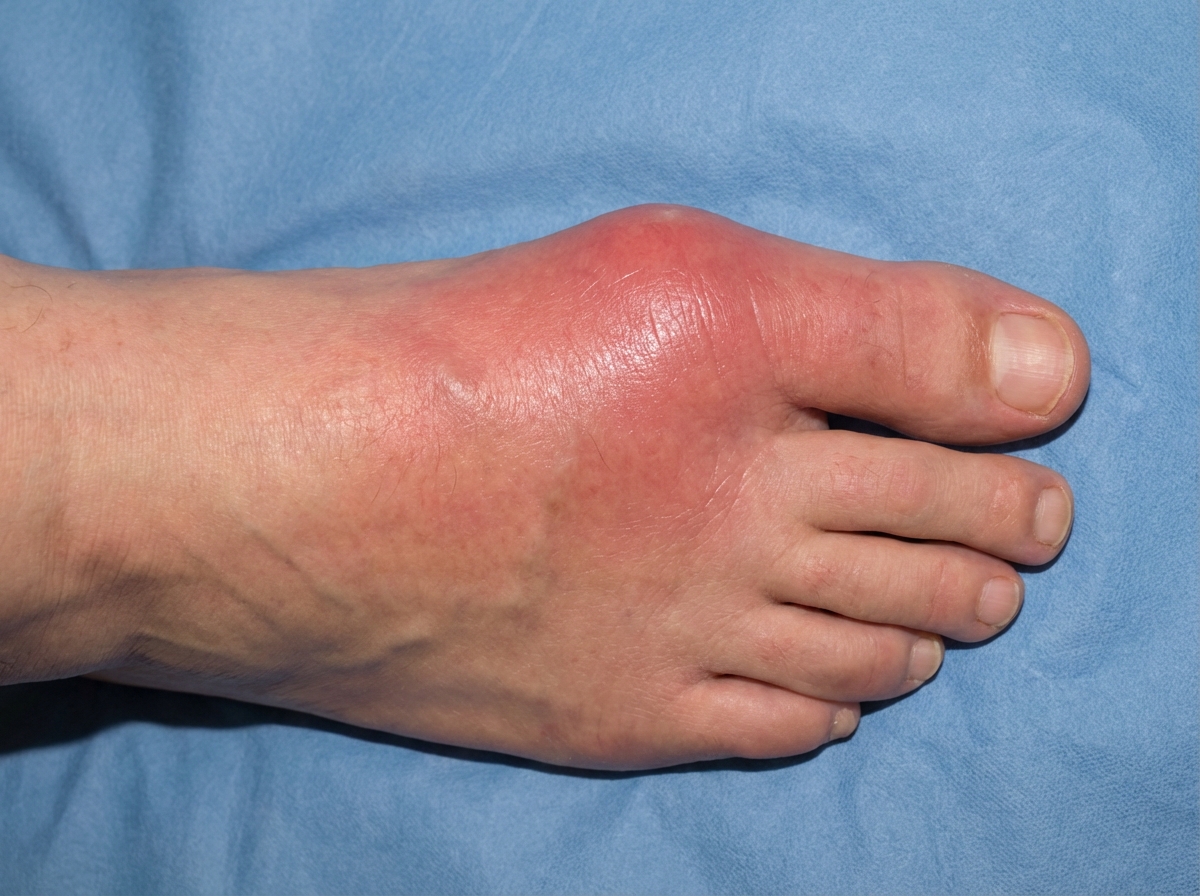
Which of the following joints is typically spared in acute gout?
Rheumatology and Immunology Indian Medical PG Practice Questions and MCQs
Question 401: Which of the following statements about Behcet's Syndrome is false?
A. HLA-B51 association
B. Superficial or deep peripheral vein thrombosis
C. Pathergy test positive
D. Recurrent genital ulcer is a hallmark diagnostic criterion (Correct Answer)
Explanation: **Explanation:**
Behcet’s Syndrome is a chronic, multisystemic inflammatory perivasculitis. To identify the false statement, we must look at the **International Study Group (ISG) Criteria**, which is the gold standard for diagnosis.
**Why Option D is the Correct (False) Statement:**
While recurrent genital ulcers are a major feature of Behcet’s, they are **not** the hallmark diagnostic criterion. According to the ISG criteria, **Recurrent Oral Ulceration** (at least 3 times in one year) is the **mandatory hallmark criterion**. Diagnosis requires oral ulcers plus any two of the following: recurrent genital ulcers, eye lesions (uveitis), skin lesions (erythema nodosum), or a positive pathergy test.
**Analysis of Other Options:**
* **A. HLA-B51 association:** This is true. HLA-B51 is the most strongly associated genetic marker, particularly in patients from the "Silk Road" region (Middle East and East Asia).
* **B. Superficial or deep peripheral vein thrombosis:** This is true. Behcet’s is unique among vasculitides because it involves both arteries and veins. Venous involvement (superficial thrombophlebitis or DVT) occurs in about 25% of patients.
* **C. Pathergy test positive:** This is true. A positive pathergy test (development of a papule or pustule 24–48 hours after a sterile needle prick) is a highly specific diagnostic marker for the disease.
**High-Yield Clinical Pearls for NEET-PG:**
* **Magic Syndrome:** A variant involving features of both Behcet’s and Relapsing Polychondritis (Mouth And Genital Ulcers with Inflamed Cartilage).
* **Vascular:** Behcet’s can cause **pulmonary artery aneurysms**, which carry a high mortality risk due to hemoptysis.
* **Neurological:** "Neuro-Behcet’s" typically involves the brainstem and can mimic Multiple Sclerosis on MRI.
* **Treatment:** Colchicine is first-line for mucocutaneous symptoms; Azathioprine or Anti-TNF agents are used for severe ocular or systemic disease.
Question 402: A 55-year-old woman presents with several weeks of fever, abdominal pain, weight loss, and fatigue. Three days prior to assessment, she developed a left foot drop. Her blood pressure is 160/90 mm Hg, and pulse is 80/min. Physical examination confirms left peroneal nerve damage and a bilateral sensory peripheral neuropathy in both legs. There are no skin rashes. Laboratory evaluation reveals ESR of 105 mm/h, WBC of 14,000/mL, and negative serologic tests for antineutrophil cytoplasmic antibody (ANCA) and ANA. The eosinophil count is normal, and urinalysis is negative for casts, protein, and red cells. Which of the following is the most likely mechanism for renal injury in this condition?
A. Nephrotic syndrome
B. Diffuse glomerulonephritis
C. Granuloma formation
D. Necrotizing vasculitis of vessels (Correct Answer)
Explanation: ### Explanation
The clinical presentation of fever, weight loss, hypertension, and **mononeuritis multiplex** (manifesting here as left foot drop/peroneal nerve damage) in an ANCA-negative patient strongly suggests **Polyarteritis Nodosa (PAN)**. [1]
**1. Why the Correct Answer is Right:**
PAN is a systemic necrotizing vasculitis that typically affects **medium-sized and small muscular arteries**. [1] Unlike many other vasculitides, PAN characteristically **spares the capillaries** and therefore does **not** cause glomerulonephritis. Renal involvement in PAN is due to **necrotizing vasculitis of the renal arteries**, leading to ischemia, infarcts, and microaneurysms (often seen on angiography). [1] This explains the patient's new-onset hypertension and the absence of RBC casts or significant proteinuria in the urinalysis.
**2. Why the Incorrect Options are Wrong:**
* **A & B (Nephrotic Syndrome / Diffuse Glomerulonephritis):** These conditions involve the renal glomeruli (capillaries). [2] Since PAN spares the capillaries, glomerular diseases are not seen. If the patient had hematuria or RBC casts, one would consider Microscopic Polyangiitis (MPA) or Granulomatosis with Polyangiitis (GPA). [2]
* **C (Granuloma formation):** This is a hallmark of GPA (Wegener’s) or Eosinophilic Granulomatosis with Polyangiitis (EGPA/Churg-Strauss). PAN is a non-granulomatous vasculitis.
**3. Clinical Pearls for NEET-PG:**
* **PAN Association:** Strongly associated with **Hepatitis B surface antigen (HBsAg)** in about 10–30% of cases.
* **Key Negative Findings:** PAN is typically **ANCA-negative** and does not involve the lungs (spares pulmonary vessels).
* **Diagnosis:** Confirmed via biopsy (showing transmural inflammation with fibrinoid necrosis) or **renal/mesenteric angiography** (showing "string of pearls" microaneurysms).
* **Mononeuritis Multiplex:** The sudden onset of foot drop or wrist drop in a patient with systemic symptoms is a major "red flag" for vasculitis. [1]
Question 403: Which condition is characterized by the presence of NANA antibody?
A. Sarcoidosis (Correct Answer)
B. Tuberculosis
C. Leprosy
D. Carcinoid
Explanation: **Explanation:**
**NANA (N-Acetylneuraminic Acid)** is a type of sialic acid found on cell surfaces and in serum. In the context of **Sarcoidosis**, elevated levels of NANA antibodies (or increased serum NANA levels) serve as a biochemical marker of disease activity [1]. Sarcoidosis is a multisystem granulomatous disease characterized by non-caseating granulomas; the presence of these antibodies reflects the intense inflammatory response and cellular turnover associated with the disease [1].
**Analysis of Options:**
* **Sarcoidosis (Correct):** Serum N-acetylneuraminic acid (NANA) is significantly elevated in patients with active sarcoidosis. It is often used alongside Serum Angiotensin-Converting Enzyme (SACE) levels to monitor disease progression and response to therapy [1].
* **Tuberculosis (Incorrect):** While TB is a granulomatous disease, it is characterized by *caseating* granulomas and is diagnosed via AFB staining, Culture (LJ medium), or CBNAAT. NANA is not a specific marker for TB.
* **Leprosy (Incorrect):** Leprosy (Hansen’s disease) is identified by skin slit smears and clinical features like nerve thickening. While it involves the immune system, NANA antibodies are not a diagnostic feature.
* **Carcinoid (Incorrect):** Carcinoid tumors are neuroendocrine malignancies. The hallmark biochemical marker for Carcinoid syndrome is **5-HIAA** (a metabolite of serotonin) in a 24-hour urine sample, not NANA.
**NEET-PG High-Yield Pearls for Sarcoidosis:**
* **Biochemical Markers:** Elevated **SACE** (most common), elevated **NANA**, and **Hypercalcemia/Hypercalciuria** (due to 1-alpha hydroxylase activity in macrophages) [1].
* **Radiology:** Bilateral hilar lymphadenopathy (Stage I) [1].
* **Pathology:** Non-caseating granulomas, **Schaumann bodies** (calcium/protein inclusions), and **Asteroid bodies**.
* **Kveim-Siltzbach Test:** A historical skin test (now largely replaced by biopsy).
Question 404: A 30-year-old woman has had gradually increased muscle weakness with myalgia for the past year. She now has difficulty getting up from a chair and climbing stairs. She does not have weakness in her hand muscles. Physical examination reveals a fine violaceous rash on her face, predominantly palpebral. Dusky, flat, red patches are present on her elbows, knees, and knuckles. Laboratory studies show serum creatine kinase of 620 U/L. A deltoid biopsy specimen is obtained, and on microscopic examination shows a mononuclear inflammatory cell infiltrate around small blood vessels and groups of atrophic myofibers at the periphery of fascicles. What mechanism is most likely responsible for her disease?
A. Antibody- and complement-mediated injury to the microvasculature (Correct Answer)
B. Expansion of CTG repeat sequences on chromosome 19q13.2
C. Mutation in a gene encoding for voltage-gated calcium channels
D. Myofiber injury by CD8+ cells directed against muscle antigens
Explanation: ### Explanation
The clinical presentation of proximal muscle weakness, myalgia, and characteristic skin findings (**Heliotrope rash** on eyelids and **Gottron papules** on knuckles/elbows) in a young woman is diagnostic of **Dermatomyositis** [1].
#### 1. Why Option A is Correct
Dermatomyositis is primarily a **humoral-mediated (B-cell)** autoimmune disease. The pathogenesis involves the deposition of the **membrane attack complex (C5b-9)** and antibodies within the endomysial capillaries. This leads to microvascular injury, ischemia, and subsequent muscle fiber necrosis. The biopsy finding of **perifascicular atrophy** (atrophic myofibers at the periphery of fascicles) is pathognomonic and results from this hypoperfusion at the edges of the muscle bundles.
#### 2. Why Other Options are Incorrect
* **Option B:** Refers to **Myotonic Dystrophy Type 1**, characterized by distal weakness, "hatchet facies," and myotonia (delayed relaxation), not inflammatory rashes.
* **Option C:** Refers to **Lambert-Eaton Myasthenic Syndrome (LEMS)**, a paraneoplastic condition where antibodies target presynaptic calcium channels, leading to weakness that *improves* with repetitive use [3].
* **Option D:** Refers to **Polymyositis**. Unlike dermatomyositis, polymyositis is a **cell-mediated (T-cell)** process where CD8+ T-cells directly invade healthy myofibers. Biopsy shows **endomysial** inflammation without perifascicular atrophy or skin involvement [1].
#### 3. NEET-PG High-Yield Pearls
* **Markers:** Elevated CK, LDH, and Aldolase [2]. Most specific antibody: **Anti-Mi-2**. Antibody associated with interstitial lung disease: **Anti-Jo-1** [1].
* **Malignancy:** Dermatomyositis in adults is associated with an increased risk of occult visceral malignancies (Ovarian, Lung, Gastric) [2].
* **Biopsy Key:** Dermatomyositis = **Perifascicular** atrophy; Polymyositis = **Endomysial** inflammation.
Question 405: A 52-year-old woman, diagnosed with osteoporosis via dual-energy x-ray absorptiometry of the hip, presents for management of bone loss prevention. She experienced menopause at age 50 and did not initiate hormone replacement therapy due to a family history of breast cancer. She is concerned about future hip fracture. Which of the following pharmaceutical agents is most appropriate for this patient?
A. Calcitonin nasal spray
B. Oral conjugated estrogen
C. Raloxifene (Correct Answer)
D. Tamoxifen
Explanation: **Explanation:**
The patient is a postmenopausal woman with osteoporosis and a significant family history of breast cancer. The goal of therapy is to treat bone loss while minimizing the risk of estrogen-sensitive malignancy.
**1. Why Raloxifene is correct:**
Raloxifene is a **Selective Estrogen Receptor Modulator (SERM)**. It acts as an **estrogen agonist in the bone**, where it inhibits osteoclast activity and increases bone mineral density, and as an **estrogen antagonist in the breast and uterus** [1]. This dual action makes it the ideal choice for postmenopausal osteoporosis in women with a high risk of breast cancer.
**2. Why the other options are incorrect:**
* **Calcitonin nasal spray:** While it can be used for osteoporosis, it is significantly less effective than SERMs or Bisphosphonates and is generally reserved for short-term pain management in acute vertebral fractures.
* **Oral conjugated estrogen:** Hormone Replacement Therapy (HRT) is effective for osteoporosis but is contraindicated in this patient due to her family history of breast cancer, as it increases the risk of hormone-sensitive tumors [1].
* **Tamoxifen:** Although also a SERM, Tamoxifen is primarily used for the treatment/prophylaxis of breast cancer. While it has some protective effects on bone, it is an **agonist in the endometrium**, increasing the risk of endometrial hyperplasia and cancer, unlike Raloxifene [1].
**Clinical Pearls for NEET-PG:**
* **Raloxifene Side Effects:** Increased risk of **Venous Thromboembolism (VTE)** and worsening of **hot flashes** (vasomotor symptoms) [1].
* **First-line therapy:** For most patients without contraindications, **Bisphosphonates** (e.g., Alendronate) remain the first-line treatment for osteoporosis [2].
* **DEXA Scoring:** Osteoporosis is defined as a T-score **≤ -2.5**.
* **Key Distinction:** Raloxifene reduces the risk of **vertebral fractures** but has not been proven to reduce the risk of non-vertebral or hip fractures as effectively as bisphosphonates [1].
Question 406: A 68-year-old man complains of aching pain around his left hip and right knee, which is worse after exertion and relieved with rest. Both joints are tender and swollen, with pain and crepitus on passive motion. Tests for rheumatoid factor and antinuclear antibodies are negative, and ESR is normal. X-rays are likely to reveal all of the following findings, EXCEPT:
A. Joint space narrowing
B. Osteoarthritis (Correct Answer)
C. Subchondral bone sclerosis
D. Osteophytes
Explanation: The clinical presentation of a 68-year-old patient with weight-bearing joint pain (hip and knee) that worsens with exertion and improves with rest, accompanied by crepitus and negative inflammatory markers (normal ESR, negative RF/ANA), is a classic description of **Osteoarthritis (OA)** [1].
**Why Option B is the Correct Answer:**
The question asks for X-ray findings. **Osteoarthritis** is the *diagnosis* itself, not a radiographic finding. While the patient has osteoarthritis, "Osteoarthritis" is not a feature seen on an X-ray; rather, the X-ray reveals specific structural changes that lead to the diagnosis.
**Analysis of Incorrect Options (Radiographic Features of OA):**
The hallmark X-ray findings of Osteoarthritis (often remembered by the mnemonic **LOSS**) include:
* **A. Joint space narrowing:** Caused by the progressive loss and attrition of articular cartilage.
* **C. Subchondral bone sclerosis:** Increased bone density (whiteness on X-ray) beneath the joint surface due to increased mechanical stress.
* **D. Osteophytes:** Bony spurs at the joint margins representing the body's attempt to increase the joint surface area [1].
* *(Note: Subchondral cysts are the fourth classic feature).
**NEET-PG High-Yield Pearls:**
* **Pain Pattern:** OA pain is "mechanical" (worse with use), whereas Rheumatoid Arthritis (RA) pain is "inflammatory" (worse with rest/morning stiffness >1 hour) [1].
* **Nodal OA:** Look for **Heberden’s nodes** (DIP joints) and **Bouchard’s nodes** (PIP joints) [1].
* **First-line Management:** Acetaminophen (Paracetamol) is traditionally the initial drug, but topical or oral NSAIDs are often more effective for symptomatic relief.
* **Radiology-Clinical Correlation:** X-ray severity in OA often correlates poorly with the degree of clinical pain [1].
Question 407: A 40-year-old man presents with a 2-week history of recurrent oral ulcers, genital ulcers, intermittent arthritic pain of the knees, and abdominal pain. Physical examination reveals shallow ulcerations of the mucosa of the glans penis, as well as oral aphthous ulcers and conjunctivitis. The Pathergy test is positive. Which of the following is the most likely diagnosis?
A. Behcet's syndrome (Correct Answer)
B. Genital herpes
C. Gonorrhea
D. Syphilis
Explanation: ### Explanation
**Correct Answer: A. Behcet's Syndrome**
Behcet’s syndrome is a chronic, multisystemic, relapsing inflammatory perivasculitis. The diagnosis is primarily clinical, based on the **International Study Group criteria**, which require **recurrent oral ulceration** (at least 3 times in one year) plus two of the following:
1. **Recurrent genital ulcers** (characteristically painful and scarring).
2. **Eye lesions** (uveitis, retinal vasculitis, or conjunctivitis).
3. **Skin lesions** (erythema nodosum, acneiform nodules).
4. **Positive Pathergy Test:** This is a highly specific (though not always sensitive) test where a sterile needle prick results in a papule or pustule within 24–48 hours, indicating cutaneous hypersensitivity.
This patient’s presentation of oral/genital ulcers, arthritis, and a positive pathergy test is a classic "textbook" description of Behcet’s [3].
**Why Incorrect Options are Wrong:**
* **B. Genital Herpes:** While it causes painful ulcers [1], [2], it does not explain the multisystem involvement (arthritis, abdominal pain) or the positive pathergy test.
* **C. Gonorrhea:** Typically presents with urethritis (discharge) and septic arthritis, but not recurrent oral/genital aphthous ulcers or a positive pathergy test.
* **D. Syphilis:** Primary syphilis presents with a **painless** chancre. Secondary syphilis involves a maculopapular rash (palms/soles) and condyloma lata, but not the specific pattern of recurrent aphthous ulcers seen here [1].
**High-Yield Clinical Pearls for NEET-PG:**
* **HLA Association:** Strongly associated with **HLA-B51**.
* **Vascular Involvement:** It is unique because it involves **both arteries and veins** of all sizes (risk of Budd-Chiari syndrome and pulmonary artery aneurysms).
* **Neurological:** "Neuro-Behcet" often involves the brainstem and can mimic Multiple Sclerosis.
* **Treatment:** Colchicine for mucocutaneous symptoms; systemic steroids or immunosuppressants (Azathioprine, Anti-TNF) for major organ involvement.
Question 408: All of the following statements regarding Rheumatoid arthritis are true, except?
A. Presence of IgM antibody directed against the Fc portion of IgG
B. Morning stiffness
C. Raised ESR
D. C-reactive protein suggests a good prognosis (Correct Answer)
Explanation: ### Explanation
**Correct Answer: D. C-reactive protein suggests a good prognosis**
In Rheumatoid Arthritis (RA), **C-reactive protein (CRP)** and **Erythrocyte Sedimentation Rate (ESR)** are acute-phase reactants that reflect the degree of systemic inflammation [1]. High levels of CRP are associated with **increased disease activity, progressive joint destruction, and a poorer prognosis**, rather than a good one [1]. CRP is often considered a more sensitive indicator of change in disease activity than ESR.
**Analysis of Other Options:**
* **A. Presence of IgM antibody directed against the Fc portion of IgG:** This is the classic definition of **Rheumatoid Factor (RF)**. While RF can be of various isotypes (IgA, IgG, IgM), the standard clinical test detects the IgM autoantibody directed against the Fc fragment of IgG. It is present in approximately 70-80% of patients [1].
* **B. Morning stiffness:** This is a hallmark clinical feature of inflammatory arthritis. In RA, morning stiffness typically lasts **more than 1 hour** and improves with physical activity.
* **C. Raised ESR:** As an inflammatory condition, RA leads to an increase in fibrinogen and other globulins, which causes red blood cells to sediment faster, resulting in an elevated ESR [1].
**Clinical Pearls for NEET-PG:**
* **Most Specific Marker:** Anti-Cyclic Citrullinated Peptide (**Anti-CCP**) antibodies have higher specificity (>95%) for RA than RF and are predictive of erosive disease [1].
* **Joint Involvement:** RA typically involves small joints of the hands and feet (MCP, PIP, MTP) but **characteristically spares the Distal Interphalangeal (DIP) joints** [1].
* **Extra-articular Manifestations:** Rheumatoid nodules, vasculitis, and **Felty’s Syndrome** (RA + Splenomegaly + Neutropenia) [1].
* **Treatment Gold Standard:** Methotrexate is the first-line Disease-Modifying Antirheumatic Drug (DMARD).
Question 409: A 28-year-old man complains of nasal obstruction, bloody nose, cough, and bloody sputum. A chest X-ray displays cavitated lesions and multiple nodules within both lung fields. Urinalysis reveals 3+ hematuria and red blood cell casts. Laboratory studies show anemia and elevated serum levels of C-ANCA. Peripheral eosinophils are not increased. A renal biopsy exhibits focal glomerular necrosis with crescents and vasculitis affecting arterioles and venules. Which of the following best describes the renal disease of the patient?
A. Chronic nephritic syndrome
B. Nephrotic syndrome
C. Rapidly progressive glomerulonephritis (Correct Answer)
D. Type I membranoproliferative glomerulonephritis
Explanation: ### Explanation
The patient presents with a classic triad of **Granulomatosis with Polyangiitis (GPA)**, formerly known as Wegener’s Granulomatosis:
1. **Upper Respiratory Tract:** Nasal obstruction, epistaxis (bloody nose).
2. **Lower Respiratory Tract:** Cough, hemoptysis, and cavitary nodules on CXR.
3. **Renal Involvement:** Hematuria, RBC casts, and focal necrotizing glomerulonephritis [1].
The presence of **crescents** on renal biopsy and the clinical progression of renal failure (implied by the biopsy findings) are hallmarks of **Rapidly Progressive Glomerulonephritis (RPGN)** [2]. In GPA, this is specifically a **Pauci-immune RPGN** (Type III), characterized by the absence of significant antibody deposits and a positive **c-ANCA (anti-PR3)** [1].
#### Why the other options are incorrect:
* **Chronic Nephritic Syndrome:** This refers to slow, progressive renal decline over years, often leading to small, shrunken kidneys. The acute presentation of crescents and systemic vasculitis points to an aggressive, acute process rather than a chronic one.
* **Nephrotic Syndrome:** Characterized by massive proteinuria (>3.5g/day), edema, and hypoalbuminemia. The presence of RBC casts and hematuria defines a *nephritic* rather than a *nephrotic* pattern.
* **Type I Membranoproliferative Glomerulonephritis (MPGN):** This typically presents with a "tram-track" appearance on biopsy due to basement membrane splitting and is often associated with Hepatitis C. It does not typically cause cavitary lung lesions or c-ANCA positivity.
#### NEET-PG High-Yield Pearls:
* **RPGN Classification:**
* **Type I:** Anti-GBM (Goodpasture syndrome) – Linear IgG deposits [2].
* **Type II:** Immune Complex (PSGN, SLE) – Lumpy-bumpy/Granular deposits [2].
* **Type III:** Pauci-immune (GPA, MPA, Churg-Strauss) – ANCA associated [1].
* **GPA Key Feature:** Look for the involvement of the **Upper Respiratory Tract** (sinusitis/saddle nose) to differentiate it from Microscopic Polyangiitis (MPA), which lacks URT involvement.
* **Cavitary lesions + Hematuria + c-ANCA = GPA.**
Question 410: Which of the following joints is typically spared in acute gout?
A. Metatarsophalangeal (MTP) joint
B. Glenohumeral joint (Correct Answer)
C. Ankle joint
D. Knee joint
Explanation: Gout is a crystal-induced arthropathy caused by the deposition of monosodium urate (MSU) crystals [1]. It has a strong predilection for **peripheral joints** in the lower extremities, primarily due to lower intra-articular temperatures and prior minor trauma, which facilitate crystal precipitation.
**Why the Glenohumeral Joint is the Correct Answer:**
The **glenohumeral (shoulder) joint** is a large, proximal, axial joint with high vascularity and a higher core temperature. These factors make it an unfavorable site for MSU crystal deposition. While gout can theoretically affect any joint in advanced chronic stages (tophaceous gout), it is **typically spared** during acute attacks. Involvement of the shoulder should prompt a clinician to consider alternative diagnoses like Calcium Pyrophosphate Deposition Disease (CPPD) or septic arthritis.
**Analysis of Incorrect Options:**
* **A. Metatarsophalangeal (MTP) joint:** The 1st MTP joint is the most common site for an initial attack (Podagra), affected in ~50% of first episodes and ~90% of patients eventually [1].
* **C. Ankle joint:** A very common site for acute gout, often presenting as part of a monoarticular or oligoarticular lower limb distribution.
* **D. Knee joint:** The second most common site for acute gout after the 1st MTP joint.
**NEET-PG High-Yield Pearls:**
* **Gold Standard Diagnosis:** Polarized light microscopy showing **needle-shaped, negatively birefringent** crystals (yellow when parallel to the axis).
* **Radiology:** "Punced-out" erosions with overhanging edges (**Martel’s sign**) are characteristic of chronic gout.
* **Acute Management:** NSAIDs (first-line), Colchicine, or Corticosteroids.
* **Note:** Never start or stop Allopurinol during an acute attack, as fluctuating serum urate levels can prolong the episode.