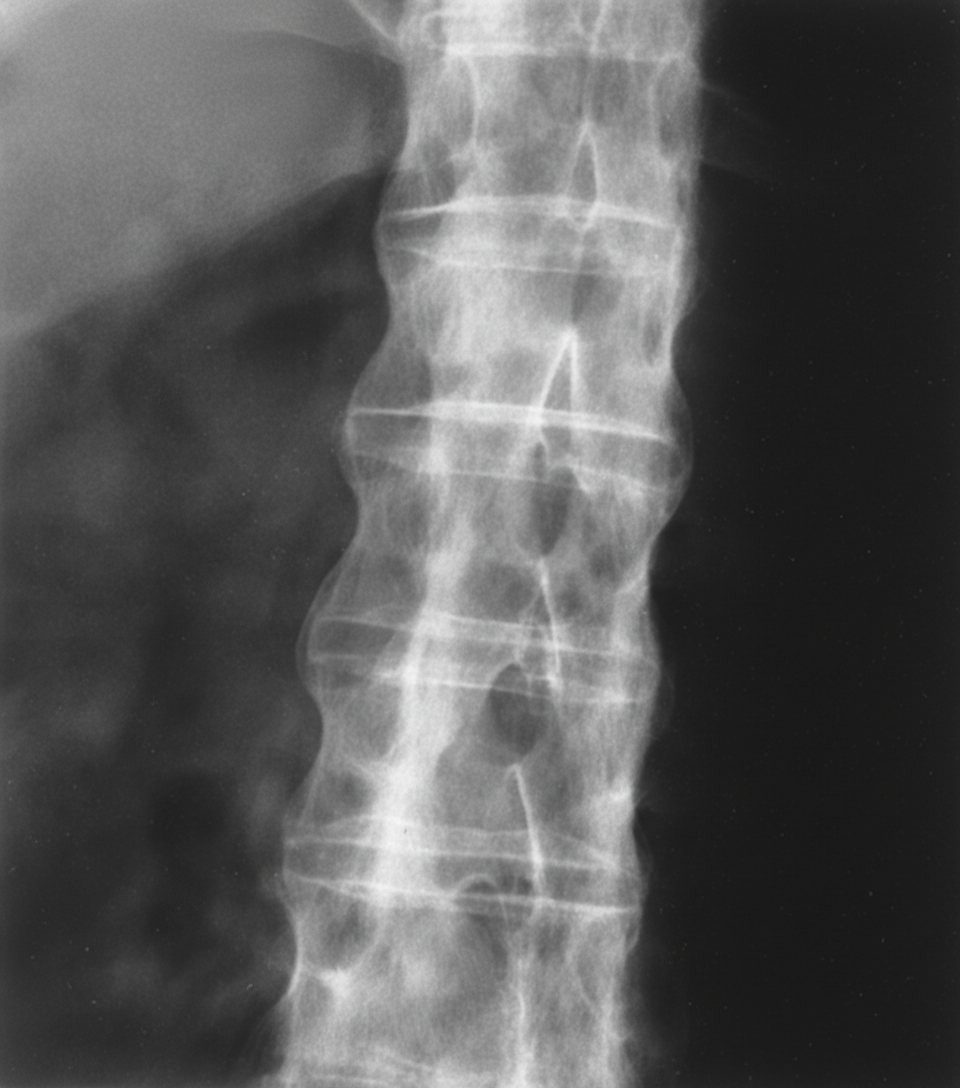
Abatacept is used in the treatment of which of the following conditions?
Which joint is typically spared in Rheumatoid arthritis?
A young male presents with leg swelling and recurrent aphthous ulcers of his lips and tongue. He has also recently noted painful genital ulcers. There is no urethritis or conjunctivitis. On exam, he has evidence of deep vein thrombophlebitis. What is the most likely diagnosis?
Which of the following conditions is associated with HLA-B27?
Which of the following organs can be involved in Wegener's granulomatosis?
A 25-year-old female presents with serous otitis media of the left ear, along with cough, occasional hemoptysis, hematuria, and epistaxis for one and a half months. Her hemoglobin is 7 gm. Blood pressure is > 170/100, proteinuria is +++, RA is positive, and ANCA is positive. What is the likely diagnosis?
What is the most common cause of death in rheumatoid arthritis?
Which of the following are classified as small vessel vasculitis?
The Kveim test is used for the diagnosis of which condition?
A patient with limited systemic sclerosis for the past 10 years complains of shortness of breath for the past one year. His pulmonary function tests are as follows: FVC 2.63 (predicted 2.82), FEV1 88% of predicted, and DLCO 5.2 (predicted 16.3). Which among the following is the probable diagnosis?
Explanation: **Explanation:** **Abatacept** is a biological disease-modifying antirheumatic drug (bDMARD) used primarily in the treatment of **Rheumatoid Arthritis (RA)**, particularly in patients who have had an inadequate response to methotrexate or TNF inhibitors [1]. **Mechanism of Action:** Abatacept is a soluble fusion protein consisting of the extracellular domain of human **CTLA-4** linked to a modified Fc portion of human IgG1. It acts as a **T-cell costimulation modulator**. To activate a T-cell, two signals are required: 1. The TCR binding to the MHC-peptide complex. 2. The **CD28** on the T-cell binding to **CD80/86** on the Antigen Presenting Cell (APC). Abatacept binds to CD80/86 with high affinity, preventing it from binding to CD28, thereby inhibiting T-cell activation and the subsequent inflammatory cascade in RA [1]. **Analysis of Incorrect Options:** * **B. Asthma:** Managed with inhaled corticosteroids, beta-agonists, or biologics like Omalizumab (anti-IgE) or Mepolizumab (anti-IL-5). * **C. Paroxysmal Nocturnal Hemoglobinuria (PNH):** The drug of choice is **Eculizumab**, a monoclonal antibody against the complement protein C5. * **D. Autoimmune Hemolytic Anemia (AIHA):** Primarily treated with corticosteroids, immunosuppressants (Azathioprine/Mycophenolate), or Rituximab (anti-CD20). **High-Yield Clinical Pearls for NEET-PG:** * **Belatacept:** A related drug (higher affinity for CD80/86) used in **renal transplantation** to prevent graft rejection. * **Screening:** Always screen for **Latent TB** and Hepatitis B before starting Abatacept. * **Contraindication:** Do not combine Abatacept with TNF-alpha inhibitors (e.g., Etanercept, Infliximab) due to the significantly increased risk of serious infections [1]. **Note on Management:** Early use of DMARDs such as methotrexate is the mainstay of RA treatment, with progression to biological drugs if necessary [2].
Explanation: Rheumatoid Arthritis (RA) is a chronic, systemic inflammatory disease characterized by symmetric polyarthritis [1]. The hallmark of RA is the involvement of small joints of the hands and feet, specifically targeting the synovium [1]. **1. Why the Distal Interphalangeal (DIP) joints are spared:** The DIP joints are typically spared in RA because they have minimal synovial tissue compared to other joints. Inflammation of the DIP joints is instead a classic feature of **Osteoarthritis (Heberden’s nodes)** and **Psoriatic Arthritis** [3]. If a patient presents with DIP involvement, clinicians should look for alternative diagnoses. **2. Analysis of Incorrect Options:** * **Metacarpophalangeal (MCP) joints:** These are the most commonly involved joints in the hand in RA, leading to characteristic deformities like ulnar deviation. * **Proximal Interphalangeal (PIP) joints:** These are frequently involved early in the disease, often resulting in "fusiform swelling" or "spindle-shaped" fingers [1]. * **Atlanto-axial joint (C1-C2):** While RA generally spares the lumbosacral spine, it characteristically involves the cervical spine. Synovitis of the transverse ligament can lead to **atlanto-axial subluxation**, a potentially life-threatening complication. **3. High-Yield Clinical Pearls for NEET-PG:** * **Joints Spared in RA:** DIP joints, Thoracolumbar spine, and Sacroiliac joints. * **Early Sign:** Symmetrical involvement of the MTP (Metatarsophalangeal) joints of the feet is often the earliest manifestation. * **Deformities:** Boutonnière deformity (PIP flexion, DIP hyperextension) and Swan-neck deformity (PIP hyperextension, DIP flexion). * **Serology:** Anti-CCP (Cyclic Citrullinated Peptide) is more specific than Rheumatoid Factor (RF) for diagnosis [2].
Explanation: **Explanation:** The clinical presentation of **recurrent oral aphthous ulcers**, **genital ulcers**, and **vascular involvement** (deep vein thrombophlebitis) in a young male is classic for **Behcet Syndrome**. Behcet syndrome is a chronic, multisystemic, relapsing inflammatory perivasculitis. The hallmark is painful, recurrent oral ulcers (required for diagnosis) plus at least two of the following: recurrent genital ulcers, eye lesions (uveitis), skin lesions (erythema nodosum), or a positive pathergy test. A unique feature of Behcet is its **vasculitis of all vessel sizes** (small, medium, and large) on both the arterial and venous sides. Venous thrombosis (DVT) and pulmonary artery aneurysms are high-yield systemic manifestations. **Why other options are incorrect:** * **Ankylosing Spondylitis:** Primarily involves the axial skeleton (sacroiliitis). While it can cause uveitis, it does not present with recurrent aphthous or genital ulcers. * **Polymyalgia Rheumatica:** Typically affects patients over age 50, presenting with proximal muscle pain and stiffness (shoulders/hips) and elevated ESR, not mucosal ulcers or DVT. * **Polyarteritis Nodosa (PAN):** A medium-vessel vasculitis often associated with Hepatitis B. While it causes skin ulcers and livedo reticularis, it characteristically **spares the lungs** and does not typically cause recurrent aphthous/genital ulcers. **NEET-PG High-Yield Pearls:** * **Pathergy Test:** Development of a papule/pustule 24–48 hours after a sterile needle prick; highly specific for Behcet. * **HLA Association:** Strongly linked with **HLA-B51**. * **Vascular:** It is one of the few causes of **pulmonary artery aneurysms** (Hughes-Stovin Syndrome is considered a variant). * **Treatment:** Steroids for acute flares; Colchicine for mucosal lesions; Azathioprine or Anti-TNF agents for systemic/ocular involvement.
Explanation: **Explanation:** **Ankylosing Spondylitis (AS)** is the correct answer because it has the strongest known association with **HLA-B27** among all human diseases [1]. Over **90-95%** of patients with AS are HLA-B27 positive, and the marker is also strongly associated with reactive arthritis [1]. HLA-B27 is a Class I surface antigen encoded by the B locus in the Major Histocompatibility Complex (MHC) on chromosome 6. It plays a critical role in the pathogenesis of Seronegative Spondyloarthritides (SpA) by presenting arthritogenic peptides to T-cells. **Analysis of Incorrect Options:** * **B. Rheumatoid Arthritis:** Associated with **HLA-DR4** (specifically the "shared epitope" on the DRB1 allele), not HLA-B27. * **C. Chronic Active Hepatitis:** Autoimmune hepatitis is more commonly associated with **HLA-DR3** and **HLA-DR4**. * **D. Diabetes Mellitus (Type 1):** Strongly linked to MHC Class II alleles, specifically **HLA-DR3** and **HLA-DR4** (DQ2 and DQ8). **High-Yield Clinical Pearls for NEET-PG:** * **Mnemonic for HLA-B27 (PAIR):** **P**soriatic arthritis, **A**nkylosing spondylitis, **I**nflammatory bowel disease-associated arthritis, and **R**eactive arthritis [1]. * **Relative Risk:** A person with HLA-B27 is approximately 90 times more likely to develop AS than someone without the marker. * **Other HLA Associations to Remember:** * **HLA-B51:** Behcet’s disease. * **HLA-DR2:** SLE, Multiple Sclerosis, Goodpasture syndrome. * **HLA-DQ2/DQ8:** Celiac disease. * **HLA-B*5701:** Abacavir hypersensitivity.
Explanation: Wegener’s Granulomatosis, now more commonly known as **Granulomatosis with Polyangiitis (GPA)**, is a systemic necrotizing vasculitis that primarily affects small to medium-sized vessels [1]. It is characterized by a classic "triad" of involvement: the upper respiratory tract, the lower respiratory tract, and the kidneys [2]. * **Nose (Upper Respiratory Tract):** This is often the earliest site of involvement (90% of cases). Clinical features include chronic sinusitis, epistaxis, and the classic **saddle-nose deformity** due to destruction of the nasal septal cartilage [2]. * **Lung (Lower Respiratory Tract):** Pulmonary involvement is a hallmark of the disease, presenting as cough, hemoptysis, and pleuritic chest pain. Radiologically, it often shows **bilateral nodular infiltrates** which frequently undergo cavitation [2]. * **Kidney:** Renal involvement occurs in approximately 75-80% of patients, manifesting as **Pauci-immune Crescentic Glomerulonephritis**. This can lead to rapidly progressive renal failure if left untreated. Since GPA is a multisystemic disease that frequently involves all three mentioned organs, **Option D** is the correct answer. **High-Yield Clinical Pearls for NEET-PG:** * **Serology:** The most specific marker is **c-ANCA (anti-PR3)**. Levels often correlate with disease activity. * **Histopathology:** Look for the "triad" of vasculitis, mucosal granulomatous inflammation, and tissue necrosis [2]. * **Treatment:** The standard induction therapy includes a combination of **Corticosteroids** and **Cyclophosphamide** (or Rituximab). * **Limited GPA:** A variant where the disease is restricted to the respiratory tract without renal involvement.
Explanation: The clinical presentation follows the classic triad of **Granulomatosis with Polyangiitis (GPA)**, formerly known as Wegener’s Granulomatosis: **Upper Respiratory Tract (URT), Lower Respiratory Tract (LRT), and Renal involvement.** 1. **Why Wegener’s is correct:** * **URT:** Epistaxis and serous otitis media (due to Eustachian tube dysfunction) are hallmark early signs. * **LRT:** Cough and hemoptysis indicate pulmonary nodules or alveolar hemorrhage. * **Renal:** Hematuria, proteinuria, and hypertension signify necrotizing glomerulonephritis [1]. * **Serology:** GPA is strongly associated with **c-ANCA (PR3-ANCA)**. While RA factor can be positive in 50% of GPA cases, it is a non-specific finding here. 2. **Why other options are incorrect:** * **Rheumatoid Arthritis:** While RA factor is positive, RA typically presents with symmetrical small joint polyarthritis, not life-threatening pulmonary-renal syndromes or chronic sinusitis. * **Rapidly Progressive Glomerulonephritis (RPGN):** This is a clinical syndrome (pathological finding), not a specific disease. While GPA causes RPGN, the multisystem involvement (ear, lung, nose) makes GPA the more complete diagnosis. * **Goodpasture’s Syndrome:** This involves a pulmonary-renal syndrome (anti-GBM antibodies) but **never** involves the upper respiratory tract (ears/sinuses). **Clinical Pearls for NEET-PG:** * **Classic Triad:** Sinusitis/Otitis + Pulmonary nodules + Glomerulonephritis. * **Biopsy Gold Standard:** Shows necrotizing granulomatous inflammation. * **Treatment:** Induction with Corticosteroids + Cyclophosphamide (or Rituximab). * **High-Yield Sign:** "Saddle nose deformity" due to nasal cartilage destruction.
Explanation: **Explanation:** **Rheumatoid Arthritis (RA)** is a chronic systemic inflammatory disorder. While joint destruction is the hallmark, the systemic inflammatory milieu significantly impacts long-term survival. **1. Why Cardiovascular Complications are Correct:** Cardiovascular disease (CVD) is the leading cause of mortality in RA patients, accounting for approximately **40-50% of deaths**. Chronic systemic inflammation leads to accelerated **atherosclerosis**, endothelial dysfunction, and an increased risk of myocardial infarction and stroke [1]. Pro-inflammatory cytokines (TNF-α, IL-6) promote a pro-thrombotic state and alter lipid metabolism, making RA an independent risk factor for CVD, similar to Diabetes Mellitus [2]. **2. Why Other Options are Incorrect:** * **Neurological complications:** While RA can cause atlantoaxial subluxation or peripheral neuropathies (e.g., Carpal Tunnel Syndrome), these are rarely fatal [3]. * **Lung disease complications:** Interstitial Lung Disease (ILD) is the second most common cause of death in RA [4]. While significant, its prevalence and mortality rate remain lower than CVD. * **Haematological complications:** RA is associated with anemia of chronic disease and Felty’s syndrome, but these are typically managed clinically and are not primary causes of death [3]. **Clinical Pearls for NEET-PG:** * **Most common cause of death:** Cardiovascular disease (Accelerated Atherosclerosis). * **Most common pulmonary manifestation:** Pleurisy/Pleural effusion (Exudative, characteristically very low glucose) [4]. * **Most common valvular lesion:** Mitral Regurgitation (though clinical heart failure is more often due to ischemic heart disease). * **Key marker for prognosis:** Anti-CCP (ACPA) antibodies are more specific than RF and correlate with aggressive joint destruction.
Explanation: The classification of vasculitis is primarily based on the size of the predominant vessel involved, as defined by the **Chapel Hill Consensus Conference (CHCC)**. [2] ### **Explanation of the Correct Answer** The correct option includes **Henoch-Schönlein Purpura (HSP)** and **Churg-Strauss Syndrome (EGPA)**, which are classic examples of small-vessel vasculitis. [1] * **Small-vessel vasculitis** involves intraparenchymal arteries, arterioles, capillaries, and venules. It is subdivided into ANCA-associated (e.g., Churg-Strauss, Wegener’s) and Immune-complex mediated (e.g., HSP). [1] * **Note on PAN:** While the 2012 CHCC update reclassified **Classical Polyarteritis Nodosa (PAN)** strictly as a **medium-vessel vasculitis**, many traditional textbooks and older NEET-PG patterns still group it with small-vessel diseases because it can affect small visceral arteries. In the context of this specific question, Option A is the most appropriate choice among the provided sets. ### **Analysis of Incorrect Options** * **Option B & D:** **Wegener’s Granulomatosis** (Granulomatosis with polyangiitis) is indeed a small-vessel vasculitis. However, these options are often excluded if another set is deemed more "classically" grouped in specific exam formats. * **Option C & D:** **Giant Cell Arteritis (GCA)** is a **large-vessel vasculitis** (along with Takayasu arteritis). Its inclusion automatically makes these options incorrect. ### **NEET-PG High-Yield Pearls** 1. **Large Vessel:** Giant Cell Arteritis (associated with Polymyalgia Rheumatica), Takayasu Arteritis (Pulseless disease). 2. **Medium Vessel:** Classical PAN (associated with Hepatitis B), Kawasaki Disease (Strawberry tongue, coronary aneurysms). 3. **Small Vessel (ANCA +ve):** Wegener’s (c-ANCA/PR3), Churg-Strauss (p-ANCA/MPO + Eosinophilia + Asthma), Microscopic Polyangiitis (p-ANCA/MPO). [1] 4. **Small Vessel (Immune Complex):** HSP (IgA deposition), Cryoglobulinemic vasculitis. [1] 5. **Key Distinction:** PAN **never** affects the lungs (no pulmonary involvement), whereas Wegener's and Churg-Strauss frequently do.
Explanation: The **Kveim test** (or Kveim-Siltzbach test) is a historical skin test used for the diagnosis of **Sarcoidosis**. It involves the intradermal injection of a suspension derived from the spleen or lymph node of a patient with known sarcoidosis [1]. If the patient has active sarcoidosis, a nodule develops at the injection site within 4–6 weeks. A biopsy of this nodule revealing **non-caseating granulomas** confirms a positive result. While highly specific, it is rarely used in modern practice due to the risk of transmitting infections (like BSE/vCJD) and the availability of more reliable diagnostic tools like EBUS-guided biopsy. **Analysis of Incorrect Options:** * **Tuberculosis:** Diagnosed via the **Mantoux (Tuberculin) test**, which uses Purified Protein Derivative (PPD) [2]. Unlike the Kveim test, the Mantoux test is read within 48–72 hours and shows caseating granulomas on biopsy. * **Systemic Lupus Erythematosus (SLE):** Diagnosis relies on clinical criteria (SLICC/ACR) and serology (ANA, Anti-dsDNA, Anti-Smith). The **Lupus Band Test** (direct immunofluorescence of skin biopsy) is the relevant skin-related investigation. * **Cystic Fibrosis:** The gold standard for diagnosis is the **Pilocarpine Iontophoresis (Sweat Chloride Test)**, which measures chloride concentration in sweat. **High-Yield Clinical Pearls for NEET-PG:** * **Sarcoidosis Hallmark:** Non-caseating granulomas and bilateral hilar lymphadenopathy [1]. * **Biochemical marker:** Elevated **Serum ACE levels** (reflects total granuloma burden). * **Calcium metabolism:** Hypercalcemia and hypercalciuria occur due to 1-alpha-hydroxylase activity in macrophages (increased Vitamin D3) [1]. * **Scadding’s Stages:** Stage I (Hilar adenopathy only) to Stage IV (Pulmonary fibrosis) [1].
Explanation: **Explanation:** The clinical presentation and pulmonary function tests (PFTs) are classic for **Pulmonary Arterial Hypertension (PAH)**, a common complication of limited systemic sclerosis (CREST syndrome) [2]. **1. Why Pulmonary Hypertension is correct:** * **Normal Spirometry:** The FVC (93% of predicted) and FEV1/FVC ratio are within normal limits, which effectively rules out restrictive or obstructive lung diseases. * **Isolated low DLCO:** A significantly reduced DLCO (Diffusion Capacity of the Lungs for Carbon Monoxide) in the presence of normal lung volumes (FVC) is the hallmark of pulmonary vascular disease [2]. In systemic sclerosis, this indicates the obliteration of the pulmonary capillary bed. * **Clinical Context:** Patients with limited systemic sclerosis often develop PAH late in the disease course (typically after 10+ years) [4]. Typical symptoms include breathlessness, fatigue, and signs of right heart strain [2]. **2. Why other options are incorrect:** * **Interstitial Lung Disease (ILD):** ILD is more common in *diffuse* systemic sclerosis [3]. PFTs would show a **restrictive pattern** (decreased FVC) along with a low DLCO [1]. Here, the FVC is preserved. * **Pneumothorax:** This is an acute event presenting with sudden onset chest pain and respiratory distress, not a chronic one-year progression. * **Diaphragmatic Weakness:** This would present as a restrictive defect on PFTs (low FVC) that typically worsens in the supine position; in SLE, this is known as 'shrinking lung' syndrome [3]. **NEET-PG High-Yield Pearls:** * **Limited Systemic Sclerosis:** Associated with **PAH** and anti-centromere antibodies. * **Diffuse Systemic Sclerosis:** Associated with **ILD** and anti-Scl-70 (anti-topoisomerase I) antibodies. * **Screening:** All systemic sclerosis patients should undergo annual screening for PAH using transthoracic echocardiography and DLCO measurements [2]. * **Gold Standard Diagnosis:** Right heart catheterization is required to confirm PAH (Mean Pulmonary Artery Pressure >20 mmHg).
Rheumatoid Arthritis
Practice Questions
Spondyloarthropathies
Practice Questions
Systemic Lupus Erythematosus
Practice Questions
Vasculitis Syndromes
Practice Questions
Scleroderma and Related Disorders
Practice Questions
Inflammatory Myopathies
Practice Questions
Crystal Arthropathies
Practice Questions
Osteoarthritis
Practice Questions
Primary Immunodeficiency Disorders
Practice Questions
Autoinflammatory Syndromes
Practice Questions
Sjögren's Syndrome
Practice Questions
Antiphospholipid Syndrome
Practice Questions
Get full access to all questions, explanations, and performance tracking.
Start For Free