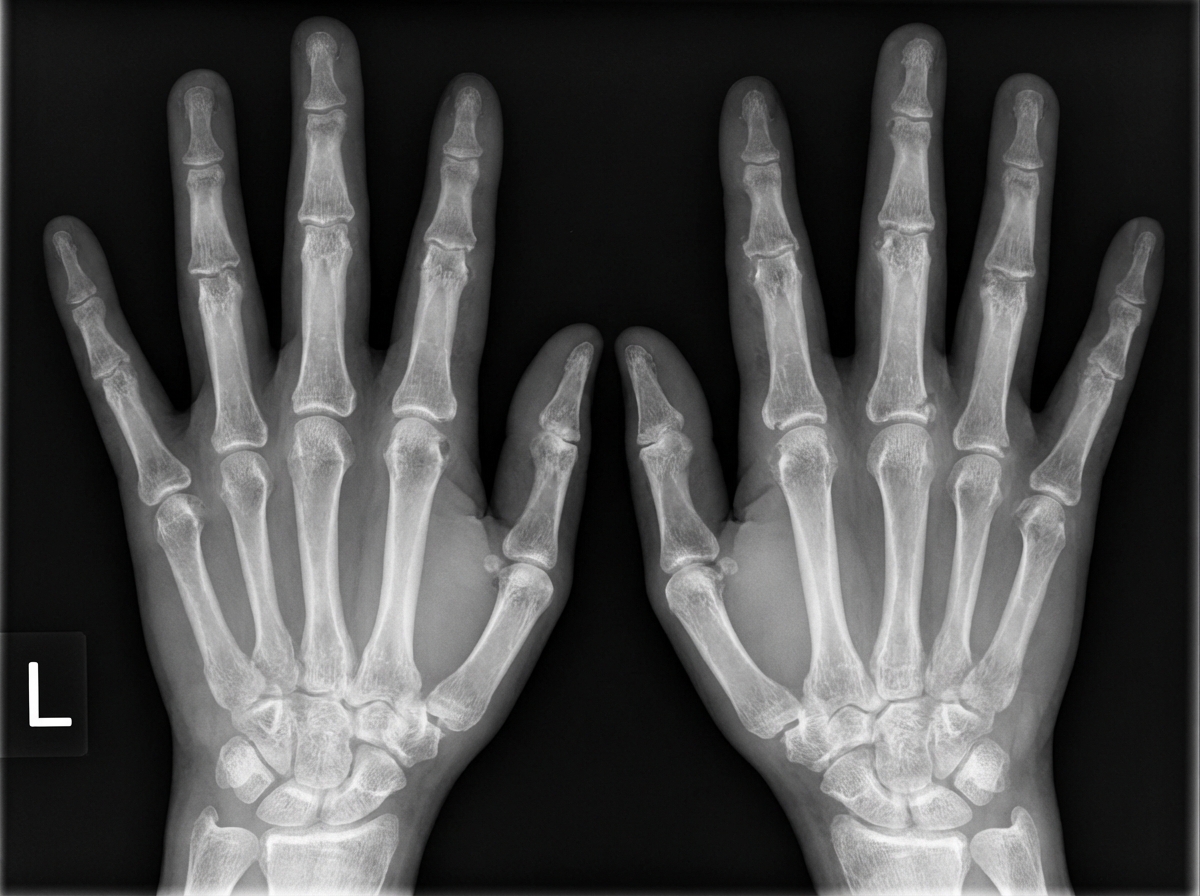
Which HLA marker is associated with Behcet's syndrome?
A patient complains of finger stiffness and dysphagia. What is the most probable diagnosis?
Abatacept is a new drug approved for which of the following conditions?
Which of the following is NOT a feature of reactive arthritis?
What is the most diagnostic test for Systemic Lupus Erythematosus (SLE)?
Anti-topoisomerase I is a marker of which condition?
What condition is characterized by the tetrad of urethritis, arthritis, conjunctivitis, and oral ulcers?
Which of the following is not included in the triad of Reiter's syndrome?
Which organism most commonly causes reactive arthritis?
An elderly patient presents with severe temporal headache, jaw claudication, and scalp tenderness. ESR is markedly elevated. What is the most likely diagnosis?
Explanation: ### Explanation **Correct Option: C. HLA-B51** Behcet’s syndrome is a multi-systemic, chronic relapsing vasculitis characterized by the triad of oral ulcers, genital ulcers, and uveitis. The strongest genetic risk factor associated with Behcet’s syndrome is **HLA-B51**, a subtype of HLA-B5. It is particularly prevalent in populations along the "Silk Road" (Middle East and East Asia). Patients carrying this marker often have a more severe disease course, specifically regarding ocular and gastrointestinal involvement. **Incorrect Options:** * **A. HLA-B27:** This is the hallmark marker for **Seronegative Spondyloarthropathies**, including Ankylosing Spondylitis, Reactive Arthritis, Psoriatic Arthritis, and Enteropathic Arthritis [1]. * **B. HLA-DR5:** This marker is traditionally associated with **Juvenile Rheumatoid Arthritis (JRA)** and **Pernicious Anemia**, but it is not a primary marker for Behcet’s. * **C. HLA-CW6:** This is the strongest genetic association for **Psoriasis vulgaris**, particularly early-onset (Type 1) psoriasis. **Clinical Pearls for NEET-PG:** 1. **Pathergy Test:** A unique diagnostic feature where a sterile needle prick results in a papule or pustule within 24–48 hours. It is highly specific for Behcet’s. 2. **Vascular Involvement:** Behcet’s is unique among vasculitides as it involves both **arteries and veins** (venous thrombosis is common). 3. **Pulmonary Artery Aneurysms:** A high-yield cause of death in these patients; Behcet’s is one of the few conditions causing "hemoptysis with a normal chest X-ray" or massive pulmonary hemorrhage. 4. **Treatment:** Colchicine is first-line for mucocutaneous symptoms; Azathioprine or Anti-TNF agents (Infliximab) are used for ocular or systemic involvement.
Explanation: **Explanation:** The combination of **finger stiffness** and **dysphagia** is a classic clinical presentation of **Systemic Sclerosis (Scleroderma)**. 1. **Why Scleroderma is correct:** * **Finger Stiffness:** This is often the earliest manifestation, caused by skin thickening (sclerodactyly) and Raynaud’s phenomenon. * **Dysphagia:** Scleroderma involves the gastrointestinal tract in about 90% of cases. It causes atrophy of the smooth muscle in the lower two-thirds of the esophagus and collagen deposition, leading to **impaired peristalsis** and decreased lower esophageal sphincter (LES) pressure. This results in dysphagia (initially for solids) and severe gastroesophageal reflux (GERD). 2. **Why other options are incorrect:** * **Achalasia:** While it presents with dysphagia, it is characterized by *increased* LES pressure and failure to relax. It does not involve systemic features like finger stiffness. * **Lower Esophageal Ring (Schatzki Ring):** This causes intermittent dysphagia (usually for large boluses of meat) but is a localized structural issue with no systemic skin involvement. * **Esophageal Carcinoma:** Presents with progressive dysphagia (solids then liquids) and significant weight loss, typically in older patients, without rheumatological symptoms. **NEET-PG High-Yield Pearls:** * **CREST Syndrome:** Calcinosis, Raynaud’s, Esophageal dysmotility, Sclerodactyly, Telangiectasia. * **Antibodies:** **Anti-Scl-70** (topoisomerase I) is specific for Diffuse Scleroderma; **Anti-centromere** is specific for Limited Scleroderma (CREST). * **Manometry Finding:** Characterized by "Low-amplitude" or absent peristalsis in the distal esophagus and a **hypotensive LES**. * **Most common cause of death:** Interstitial Lung Disease (ILD) is now the leading cause of mortality in Scleroderma.
Explanation: **Explanation:** **Abatacept** is a biological disease-modifying antirheumatic drug (bDMARD) that functions as a **T-cell costimulation modulator**. To activate a T-cell, two signals are required: the binding of the T-cell receptor to an antigen and a costimulatory signal (binding of **CD28** on T-cells to **CD80/86** on antigen-presenting cells). Abatacept is a fusion protein (CTLA-4 linked to IgG1 Fc) that binds to CD80/86 with high affinity, effectively blocking the costimulatory signal and preventing T-cell activation. 1. **Why Rheumatoid Arthritis (RA) is correct:** Abatacept is FDA-approved for the treatment of moderate-to-severe RA in patients who have had an inadequate response to other DMARDs (like Methotrexate) or TNF-inhibitors [1]. By inhibiting T-cell mediated inflammation, it reduces joint damage and improves physical function [2]. It is also approved for Psoriatic Arthritis and Juvenile Idiopathic Arthritis [1]. 2. **Why other options are incorrect:** * **SLE:** While T-cells play a role in SLE, Abatacept has not shown consistent clinical efficacy in major trials for lupus nephritis or systemic manifestations compared to standard therapies like Mycophenolate or Belimumab [3]. * **Sjögren Syndrome & Scleroderma:** These conditions currently lack robust evidence for Abatacept use. Treatment for Sjögren’s is largely symptomatic, and Scleroderma management focuses on immunosuppressants like Mycophenolate or Tocilizumab (for lung involvement) [3]. **High-Yield Clinical Pearls for NEET-PG:** * **Mechanism:** Soluble fusion protein; CTLA-4 + IgG1 Fc portion. * **Target:** Binds to CD80 and CD86 on Antigen Presenting Cells (APCs). * **Screening:** Always screen for **Latent TB** and **Hepatitis B** before starting Abatacept. * **Contraindication:** Do not combine with TNF-inhibitors (e.g., Etanercept) due to the high risk of serious infections [1].
Explanation: **Explanation:** Reactive arthritis (formerly Reiter’s Syndrome) is a sterile, inflammatory spondyloarthropathy that develops following an extra-articular infection, typically of the gastrointestinal or urogenital tract [1]. **Why Option B is the Correct Answer:** Reactive arthritis classically presents as an **asymmetrical oligoarthritis** that **predominantly affects the lower extremities** (especially the knees, ankles, and small joints of the feet) [1]. Involvement of the upper extremities is uncommon and usually occurs only in severe or chronic cases. Therefore, the statement that it predominantly affects upper extremities is incorrect. **Analysis of Other Options:** * **Option A:** This is a hallmark feature. The arthritis is "reactive" (non-purulent/sterile) because the inciting pathogen cannot be cultured from the joint fluid [1]. It typically involves fewer than five joints in an asymmetrical pattern. * **Option C:** **Circinate balanitis** (painless vesicles or erosions on the glans penis) is a pathognomonic mucocutaneous feature of reactive arthritis, occurring in approximately 25-40% of male patients [1]. * **Option D:** While rare, **perihepatitis (Fitz-Hugh-Curtis syndrome)** can be associated with reactive arthritis when the inciting trigger is *Chlamydia trachomatis*, as the bacteria can spread through the peritoneal cavity. **High-Yield Clinical Pearls for NEET-PG:** * **Classic Triad:** "Can't see (Uveitis), can't pee (Urethritis), can't climb a tree (Arthritis) [1]." * **Genetic Association:** Strongly linked to **HLA-B27** (positive in 30-50% of cases) [1]. * **Common Triggers:** *Chlamydia trachomatis* (most common post-venereal); *Salmonella, Shigella, Campylobacter, Yersinia* (post-enteric) [1]. * **Keratoderma Blennorrhagica:** Hyperkeratotic skin lesions on palms and soles, clinically indistinguishable from pustular psoriasis [1]. * **Treatment:** NSAIDs are first-line; DMARDs (Sulfasalazine) for chronic cases.
Explanation: ### Explanation **Correct Answer: C. Antibodies against double-stranded DNA (anti-dsDNA)** **Why it is the correct answer:** In the context of Systemic Lupus Erythematosus (SLE), **Anti-dsDNA** is considered the most diagnostic (highly specific) test. While Antinuclear Antibody (ANA) is the best screening test due to its high sensitivity (95-99%), it lacks specificity [2]. Anti-dsDNA, however, has a specificity of >95% for SLE. Furthermore, its titers correlate with **disease activity**, particularly the development of **lupus nephritis**, making it invaluable for both diagnosis and monitoring [1]. **Analysis of Incorrect Options:** * **A. Complement fixation test:** This is a general immunological technique used to detect various antigens/antibodies (e.g., in syphilis or viral infections). In SLE, we measure complement *levels* (C3, C4), which are typically decreased during flares [1], but the test itself is not diagnostic for SLE. * **B. Antibodies against ANA cells:** This is a terminological error. ANA stands for Antinuclear Antibodies; we do not test for antibodies *against* these cells, but rather for the presence of the antibodies themselves in the serum. * **D. Antibodies against the nucleus (ANA):** This refers to the **ANA test**. While it is the **initial/best screening test** of choice (if ANA is negative, SLE is unlikely), it is not the most diagnostic because it can be positive in other autoimmune diseases, infections, and even in healthy individuals [2]. **High-Yield Clinical Pearls for NEET-PG:** * **Most Sensitive Test:** ANA (Indirect Immunofluorescence is the gold standard) [2]. * **Most Specific Test:** Anti-Smith (Anti-Sm) antibody (more specific than anti-dsDNA, but does not correlate with disease activity) [2]. * **Drug-Induced Lupus:** Anti-Histone antibodies are the hallmark (95%+). * **Neonatal Lupus/Sjögren’s:** Anti-Ro (SS-A) and Anti-La (SS-B) antibodies [1]. * **Best Marker for Renal Activity:** Anti-dsDNA and falling C3/C4 levels [1].
Explanation: **Explanation:** **Anti-topoisomerase I (also known as Anti-Scl-70)** is a highly specific autoantibody for **Systemic Sclerosis (SSc)** [1], particularly the **diffuse cutaneous subtype**. Topoisomerase I is a nuclear enzyme involved in DNA replication and transcription; the presence of these antibodies is strongly associated with an increased risk of interstitial lung disease (ILD) and more extensive skin involvement [2]. **Analysis of Options:** * **A. Systemic Sclerosis (Correct):** Anti-Scl-70 is one of the "big three" antibodies in SSc [1], alongside **Anti-centromere** (associated with limited cutaneous SSc/CREST syndrome) and **Anti-RNA polymerase III** (associated with rapid skin progression and renal crisis). * **B. Classic Polyarteritis Nodosa:** This is a medium-vessel vasculitis. It is typically **ANCA-negative** and is strongly associated with Hepatitis B infection. * **C. Nephrotic Syndrome:** This is a clinical complex (proteinuria, hypoalbuminemia, edema) caused by various glomerular diseases (e.g., Minimal Change Disease, FSGS). It is not defined by specific rheumatological autoantibodies. * **D. Rheumatoid Arthritis:** The hallmark markers are **Rheumatoid Factor (RF)** (sensitive but less specific) and **Anti-Cyclic Citrullinated Peptide (Anti-CCP)** (highly specific). **High-Yield Clinical Pearls for NEET-PG:** * **Most sensitive screening test for SSc:** ANA (positive in >95% of cases) [1]. * **Anti-Scl-70:** Marker for Diffuse SSc and Pulmonary Fibrosis. * **Anti-centromere:** Marker for Limited SSc (CREST) and Pulmonary Hypertension. * **Anti-RNA Polymerase III:** Marker for Scleroderma Renal Crisis and increased malignancy risk.
Explanation: **Explanation:** **Reiter’s Syndrome** (now more commonly referred to as **Reactive Arthritis**) is a classic seronegative spondyloarthropathy [2]. It typically follows a gastrointestinal (e.g., *Salmonella*, *Shigella*) or genitourinary (e.g., *Chlamydia trachomatis*) infection [1]. The diagnosis is clinically defined by a classic tetrad: 1. **Urethritis:** Non-gonococcal inflammation of the urogenital tract [1]. 2. **Arthritis:** Typically an asymmetric oligoarthritis affecting the lower limbs [1]. 3. **Conjunctivitis:** (or uveitis) Ocular inflammation [1]. 4. **Mucocutaneous lesions:** Including **oral ulcers**, circinate balanitis, and keratoderma blennorrhagicum [1]. **Analysis of Incorrect Options:** * **Heerfordt Syndrome:** A specific presentation of Sarcoidosis characterized by the triad of uveitis, parotid gland swelling, and facial nerve palsy (Uveoparotid fever). * **Behcet Syndrome:** A multi-system vasculitis characterized by recurrent oral and genital ulcers and uveitis. While it shares some features, it lacks the specific association with preceding infections and the characteristic urethritis/arthritis pattern of Reiter's. * **Cowden Syndrome:** An autosomal dominant PTEN mutation syndrome characterized by multiple hamartomas and an increased risk of breast, thyroid, and endometrial cancers. **NEET-PG High-Yield Pearls:** * **Mnemonic:** "Can't see (conjunctivitis), can't pee (urethritis), can't climb a tree (arthritis)." * **Genetic Association:** Strongly associated with **HLA-B27** (seen in ~75% of cases) [2]. * **Keratoderma Blennorrhagicum:** Hyperkeratotic skin lesions on the palms and soles, which are pathognomonic for this condition [1]. * **Joint Involvement:** Most commonly affects the knees and sacroiliac joints [1].
Explanation: Reiter’s syndrome, now more commonly referred to as **Reactive Arthritis (ReA)**, is a classic seronegative spondyloarthropathy that typically follows a gastrointestinal or urogenital infection. To identify the correct answer, one must distinguish between the **defining clinical triad** and the **associated clinical features**. [1] **1. Why Option D is correct:** The classic triad of Reiter’s syndrome is famously remembered by the mnemonic *"Can't see, can't pee, can't climb a tree."* While **Keratoderma blenorrhagica** (hyperkeratotic skin lesions on palms and soles) is a highly characteristic and pathognomonic finding in Reactive Arthritis, it is considered an **associated mucocutaneous manifestation** rather than a component of the primary diagnostic triad. [1] **2. Why the other options are incorrect:** * **Option A (Conjunctivitis):** This represents the "Can't see" component. It is usually bilateral, sterile, and occurs early in the disease course. [1] * **Option B (Urethritis):** This represents the "Can't pee" component. In post-enteric cases, it may be sterile; in post-venereal cases, it is often triggered by *Chlamydia trachomatis*. [1] * **Option C (Arthritis):** This represents the "Can't climb a tree" component. It is typically an asymmetric, oligoarthritis affecting the large joints of the lower extremities (knees and ankles). [1] **Clinical Pearls for NEET-PG:** * **HLA Association:** Strongly associated with **HLA-B27** (seen in 60-80% of cases). [2] * **Common Triggers:** *Chlamydia trachomatis* (most common), *Shigella*, *Salmonella*, *Campylobacter*, and *Yersinia*. [1] * **Circinate Balanitis:** Another high-yield mucocutaneous finding (painless ulcers on the glans penis). [1] * **Treatment:** NSAIDs are the first-line treatment; antibiotics are used only to treat the underlying active infection (e.g., Chlamydia).
Explanation: **Explanation:** **Reactive Arthritis (ReA)** is a sterile joint inflammation that develops following a distant infection, typically of the gastrointestinal (GI) or urogenital (UG) tract. It belongs to the group of **Seronegative Spondyloarthropathies** [1]. **Why Chlamydia is correct:** **Chlamydia trachomatis** is the most common cause of reactive arthritis worldwide. It typically follows a urogenital infection (often asymptomatic in women) [1]. It is the classic trigger for the "Reiter’s Syndrome" triad: **Urethritis, Conjunctivitis, and Arthritis** ("Can't see, can't pee, can't climb a tree") [1]. **Analysis of Incorrect Options:** * **Ureaplasma urealyticum:** While it is a known urogenital trigger for ReA, it is significantly less common than *Chlamydia*. * **Group A beta-hemolytic streptococci:** This organism causes **Acute Rheumatic Fever (ARF)**. While "Post-streococcal reactive arthritis" exists as a distinct entity, it is not the "most common" cause of classic ReA. * **Borrelia burgdorferi:** This is the causative agent of **Lyme Disease**. While it causes chronic inflammatory arthritis, it is categorized as an infectious arthritis (Lyme arthritis) rather than a sterile reactive arthritis. **High-Yield Clinical Pearls for NEET-PG:** 1. **Common Triggers:** * **Urogenital:** *Chlamydia trachomatis* (Most common overall) [1]. * **Enteric (GI):** *Shigella flexneri*, *Salmonella*, *Campylobacter*, and *Yersinia* [1]. 2. **Genetic Association:** Strongly associated with **HLA-B27** (present in 30–50% of cases) [1]. 3. **Dermatological Findings:** Look for **Keratoderma blennorrhagicum** (vesicular/pustular lesions on palms/soles) and **Circinate balanitis** [1]. 4. **Joint Involvement:** Typically an **asymmetric oligoarthritis** affecting large joints of the lower extremities (knees, ankles) [1].
Explanation: ***Giant cell arteritis*** - The combination of **temporal headache**, **jaw claudication**, **scalp tenderness** in an elderly patient with **markedly elevated ESR** is pathognomonic for giant cell arteritis. - **Temporal artery biopsy** showing transmural inflammation with giant cells confirms the diagnosis and prevents irreversible **vision loss**. *Wegener's granulomatosis* - Primarily affects the **respiratory tract** and **kidneys** with necrotizing granulomatous inflammation, not temporal arteries. - Presents with **sinusitis**, **pulmonary nodules**, and **glomerulonephritis**, with positive **c-ANCA/PR3** antibodies. *Microscopic polyangiitis* - A **small vessel ANCA-associated vasculitis** affecting capillaries and venules, not large arteries like the temporal artery. - Typically presents with **pulmonary-renal syndrome** and positive **p-ANCA/MPO** antibodies, without jaw claudication. *Takayasu arteritis* - Affects **young women** under 40 years old, involving the **aortic arch** and its major branches. - Presents with **arm claudication**, **blood pressure discrepancies**, and **bruits**, not temporal symptoms in elderly patients.
Rheumatoid Arthritis
Practice Questions
Spondyloarthropathies
Practice Questions
Systemic Lupus Erythematosus
Practice Questions
Vasculitis Syndromes
Practice Questions
Scleroderma and Related Disorders
Practice Questions
Inflammatory Myopathies
Practice Questions
Crystal Arthropathies
Practice Questions
Osteoarthritis
Practice Questions
Primary Immunodeficiency Disorders
Practice Questions
Autoinflammatory Syndromes
Practice Questions
Sjögren's Syndrome
Practice Questions
Antiphospholipid Syndrome
Practice Questions
Get full access to all questions, explanations, and performance tracking.
Start For Free