A 23-year-old man presents with new low back pain, stiffness, and left eye discomfort. He notes increased sensitivity to sunlight. The back pain is worse at night, described as a dull ache in the back and buttock area. Physical examination reveals paravertebral muscle, iliac crest, and ischial tuberosity tenderness with limited lumbar spine flexion. His eye is inflamed with a constricted pupil. Pelvic x-rays show sacroiliitis. What is the most likely diagnosis for his eye symptoms, considering it is the most common extra-articular manifestation of this condition?
Which of the following statements is false regarding Rheumatoid Arthritis?
What is true about Henoch-Schonlein purpura?
Which of the following are examples of seronegative arthritis?
Intravenous immunoglobulin is indicated in all of the following conditions except?
What is the most specific symptom of temporal arteritis?
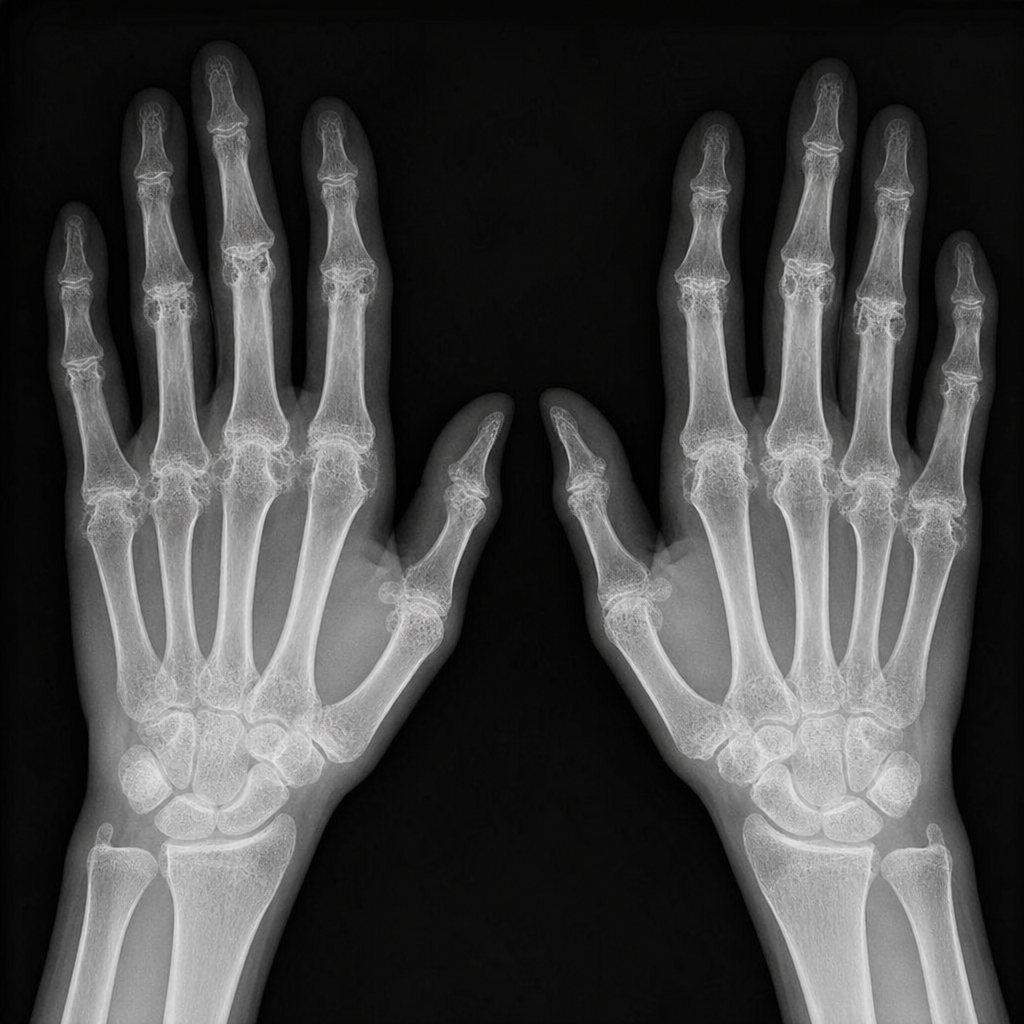
A 50-year-old man presents with fatigue and painful swelling of both hands. He experiences significant morning stiffness. Physical examination reveals symmetric erythema, swelling, and tenderness of the proximal interphalangeal and metacarpophalangeal joints. Plain hand x-rays are ordered. Which of the following x-ray findings is characteristic of this condition?
Which one of the following statements is best suited for isolated polymyalgia rheumatica?
Which HLA antigen is associated with rheumatoid arthritis?
A 30-year-old male presented with pain and swelling of the right knee and ankle joints, particularly at the insertion sites, along with burning sensation and pain during micturition, urethral discharge, and fever for two weeks. The patient also reported multiple episodes of bloody diarrhea one week prior. On examination, bilateral conjunctivitis, oral ulcers, plantar fasciitis, onycholysis, and distal yellow discoloration of nails were noted. X-ray of the pelvis with bilateral hips was normal. Lab findings revealed raised ESR and other acute phase reactants, mild anemia, and increased HLA-B27 titers. Joint aspirate was sterile. What is the most likely diagnosis?
Explanation: The clinical presentation describes a classic case of **Ankylosing Spondylitis (AS)**, a seronegative spondyloarthropathy [1]. The patient exhibits inflammatory back pain (worse at night/rest, stiffness), enthesitis (tenderness at iliac crest/ischial tuberosity), and radiographic sacroiliitis [2]. ### 1. Why Acute Anterior Uveitis is Correct **Acute Anterior Uveitis (AAU)**, also known as iridocyclitis, is the **most common extra-articular manifestation** of Ankylosing Spondylitis, occurring in 25–40% of patients [1]. It typically presents as sudden-onset unilateral eye pain, redness, photophobia (sensitivity to light), and blurred vision. The finding of a **constricted pupil** (due to ciliary spasm) is a hallmark sign that differentiates it from other causes of red eye. ### 2. Why Incorrect Options are Wrong * **Glaucoma:** While secondary glaucoma can be a *complication* of chronic uveitis, it is not the primary manifestation. Acute angle-closure glaucoma presents with a mid-dilated pupil, not a constricted one. * **Keratitis:** This involves corneal inflammation. While it causes photophobia, it is not specifically associated with AS and usually presents with corneal opacities or ulcers. * **Conjunctivitis:** This is a common cause of red eye but is typically painless, lacks photophobia, and does not affect the pupil size or cause deep-seated ache. ### 3. NEET-PG High-Yield Pearls * **HLA-B27:** Strongly associated with AS (>90% of cases) [1]. * **Schober’s Test:** Used to quantify limited lumbar spine flexion. * **Bamboo Spine:** A late radiographic feature due to syndesmophyte formation [2]. * **Treatment of AAU:** Urgent referral to ophthalmology; managed with topical corticosteroids and cycloplegic agents to prevent synechiae. * **Other Extra-articular features:** Aortitis (Aortic regurgitation), Apical lung fibrosis, and IgA nephropathy.
Explanation: ### Explanation **1. Why Option C is the Correct (False) Statement:** In Rheumatoid Arthritis (RA), the primary pathology is **synovitis** (inflammation of the synovial membrane). Early in the disease, the hallmark is **ligamentous laxity and destruction**, not fibrosis. The inflammatory pannus releases proteolytic enzymes (metalloproteinases) that degrade collagen and elastin, leading to the stretching and weakening of ligaments and tendons. This laxity, combined with joint surface erosion, results in the characteristic subluxations and deformities [1]. Fibrosis or ankylosis, if it occurs, is typically a late-stage sequela of chronic inflammation [1]. **2. Analysis of Incorrect Options:** * **Option A (True):** RA is characterized by the formation of a **Pannus**, which is an inflammatory hypertrophy of the synovial membrane [1]. This vascularized tissue invades the cartilage and bone. * **Option B (True):** Rheumatoid nodules occur in about 25% of patients (usually RF positive) [2]. They are typically **firm, non-tender (painless)**, and located over pressure points like the extensor surface of the forearm [2]. * **Option D (True):** Chronic, uncontrolled inflammation leads to joint destruction, resulting in **permanent deformities** such as Ulnar deviation, Swan-neck deformity, and Boutonniere deformity [1]. **3. Clinical Pearls for NEET-PG:** * **Earliest Sign:** The earliest radiological sign of RA is **periarticular osteopenia** (juxta-articular rarefaction). * **Joint Sparing:** RA characteristically **spares the Distal Interphalangeal (DIP) joints** and the Thoracolumbar spine (except C1-C2). * **Most Specific Marker:** While Rheumatoid Factor (RF) is sensitive, **Anti-CCP (ACPA)** is the most specific marker for RA and predicts aggressive disease [1]. * **Caplan Syndrome:** RA associated with pneumoconiosis (lung nodules). * **Felty Syndrome:** Triad of RA, Splenomegaly, and Neutropenia [3].
Explanation: Henoch-Schönlein Purpura (HSP), now formally known as **IgA Vasculitis**, is a small-vessel vasculitis characterized by the deposition of IgA-dominant immune complexes [1]. It typically presents with a classic tetrad of symptoms: palpable purpura, arthralgia, abdominal pain, and renal involvement (hematuria) [1]. * **Option A (Palpable Purpura):** This is the hallmark clinical sign. Unlike thrombocytopenic purpura, the rash in HSP is raised (palpable) because it is caused by inflammatory exudation and vessel wall damage (leukocytoclastic vasculitis), not just simple bleeding. It is most commonly found on the lower extremities and buttocks. * **Option B (Common in children):** HSP is the most common vasculitis in the pediatric population, usually affecting children between the ages of 3 and 15. It often follows an upper respiratory tract infection (URI) [1]. * **Option C (Thrombocytosis):** HSP is a **non-thrombocytopenic** purpura. In fact, because it is an inflammatory condition, the platelet count is typically normal or elevated (reactive thrombocytosis). This is a crucial diagnostic differentiator from Immune Thrombocytopenic Purpura (ITP), where the platelet count is low. **High-Yield Clinical Pearls for NEET-PG:** * **Diagnosis:** Primarily clinical. Skin biopsy shows **Leukocytoclastic Vasculitis** with **IgA deposition** on immunofluorescence. * **Renal Involvement:** HSP nephritis is histologically identical to **IgA Nephropathy (Berger’s disease)** [2], [3]. * **GI Complication:** In children, HSP is a known lead point for **intussusception** (usually ileo-ileal). * **Treatment:** Mostly supportive; steroids are used for severe GI symptoms or renal involvement but do not prevent chronic kidney disease.
Explanation: The term **Seronegative Spondyloarthropathies (SpA)** refers to a group of multi-system inflammatory disorders that share common clinical, pathological, and genetic features. The hallmark of these conditions is the **absence of Rheumatoid Factor (RF)** and Anti-CCP antibodies in the serum, hence the term "seronegative." **Why "All of the above" is correct:** The classic members of this group are remembered by the mnemonic **PEAR**: * **P – Psoriatic Arthritis:** Associated with skin psoriasis and nail changes (pitting). [1] * **E – Enteropathic Arthritis:** Associated with Inflammatory Bowel Disease (Ulcerative Colitis and Crohn’s). * **A – Ankylosing Spondylitis (AS):** The prototype of the group, primarily affecting the sacroiliac joints and spine. [1] * **R – Reactive Arthritis (formerly Reiter’s Syndrome):** Arthritis that develops following a urogenital (Chlamydia) or gastrointestinal (Shigella, Salmonella) infection. [1] **Common Features of Seronegative SpA:** 1. **Genetic Association:** Strong link with **HLA-B27**. [1] 2. **Pathology:** The primary site of inflammation is the **Enthesis** (where tendons/ligaments insert into bone), unlike Rheumatoid Arthritis which is primarily a synovitis. [1] 3. **Clinical:** Asymmetrical peripheral arthritis, sacroiliitis, uveitis, and "bamboo spine" (in AS). [1] **High-Yield Clinical Pearls for NEET-PG:** * **Most common extra-articular manifestation:** Acute Anterior Uveitis. [1] * **Schober’s Test:** Used to assess reduced lumbar spine mobility in Ankylosing Spondylitis. * **Radiology:** Look for "Dactylitis" (sausage digits) in Psoriatic and Reactive arthritis, and "Syndesmophytes" in AS. [1] * **Reactive Arthritis Triad:** Urethritis, Conjunctivitis, and Arthritis ("Can't see, can't pee, can't climb a tree"). [1]
Explanation: The correct answer is **Wegener's granulomatosis** (now known as Granulomatosis with Polyangiitis or GPA). **1. Why Wegener's Granulomatosis is the correct answer:** GPA is a small-vessel vasculitis associated with c-ANCA. The mainstay of treatment for induction of remission involves **Corticosteroids** combined with either **Cyclophosphamide** or **Rituximab**. While IVIG has been studied as an adjunctive therapy in refractory cases, it is *not* a standard or first-line indication for the disease. **2. Analysis of Incorrect Options:** * **Kawasaki Disease:** IVIG is the **gold standard** treatment. When administered within the first 10 days of fever, it significantly reduces the risk of coronary artery aneurysms. * **Acute ITP:** IVIG is indicated when a rapid rise in platelet count is required (e.g., life-threatening bleed or pre-surgery). It works by saturating the Fc receptors on splenic macrophages, preventing platelet destruction. * **Myasthenic Crisis:** IVIG and Plasmapheresis are the first-line treatments for rapid stabilization during a crisis or prior to thymectomy, as they quickly lower the levels of pathogenic acetylcholine receptor antibodies [1]. **3. High-Yield Clinical Pearls for NEET-PG:** * **Mechanism of IVIG:** It provides passive immunity, neutralizes autoantibodies, and modulates Fc receptor expression. * **Other common indications:** Guillain-Barré Syndrome (GBS), Dermatomyositis (refractory), and Common Variable Immunodeficiency (CVID). * **Side Effect:** A high-yield complication to remember for exams is **Aseptic Meningitis** and acute renal failure (due to sucrose stabilizers). * **Contraindication:** IVIG is contraindicated in patients with **IgA deficiency** due to the risk of anaphylaxis.
Explanation: **Explanation:** **Temporal Arteritis (Giant Cell Arteritis)** is a large-vessel vasculitis that primarily affects the branches of the external carotid artery. **Why Jaw Claudication is the correct answer:** While headache is the most common symptom, **jaw claudication** (pain in the jaw muscles during chewing that resolves with rest) is the **most specific symptom** (specificity >90%). It occurs due to ischemia of the masseter and temporalis muscles resulting from vasculitis of the maxillary artery and its branches. Its presence significantly increases the likelihood of the diagnosis. **Analysis of Incorrect Options:** * **A. Visual Loss:** This is the most dreaded complication (due to anterior ischemic optic neuropathy), but it is not the most specific. It occurs in about 15-20% of untreated patients [1]. * **C. Temporal Headache:** This is the **most common** presenting symptom (occurring in ~75% of cases) [1]. However, because headaches are ubiquitous in clinical practice, it lacks the specificity of jaw claudication [2]. * **D. Polymyalgia Rheumatica (PMR):** PMR (proximal muscle pain and stiffness) is associated with Temporal Arteritis in about 40-50% of cases [1], but it is a distinct clinical syndrome rather than a specific symptom of the arteritis itself. **High-Yield Clinical Pearls for NEET-PG:** * **Gold Standard Diagnosis:** Temporal artery biopsy (look for "skip lesions") [1]. * **Best Initial Test:** ESR (usually >50 mm/hr, often >100 mm/hr) and CRP [1]. * **Treatment:** Immediate high-dose corticosteroids (Prednisone) to prevent permanent blindness [1]. Do not wait for biopsy results to start treatment. * **Demographics:** Almost exclusively occurs in patients >50 years of age.
Explanation: ### **Explanation** The clinical presentation of symmetric small joint involvement (PIP and MCP joints), morning stiffness, and constitutional symptoms (fatigue) in a middle-aged male is classic for **Rheumatoid Arthritis (RA)** [3]. **1. Why Option A is Correct:** RA is a chronic inflammatory autoimmune disease characterized by synovial hypertrophy (pannus formation). This pannus releases inflammatory cytokines and enzymes (like metalloproteinases) that lead to the destruction of the joint [1]. The hallmark radiographic findings include: * **Loss of articular cartilage:** Manifests as symmetric joint space narrowing. * **Bone erosions:** Typically "marginal erosions" occurring at the "bare areas" (where bone is not covered by cartilage) [1]. * **Periarticular osteopenia:** Early sign due to increased blood flow and inflammatory cytokines. **2. Why Incorrect Options are Wrong:** * **Option B (Normal):** While x-rays can be normal in very early RA, they are not "characteristic" of the established disease process described. * **Option C (Osteolytic changes):** These are typically seen in multiple myeloma or metastatic bone disease, appearing as "punched-out" lesions without the symmetric joint involvement of RA. * **Option D (Osteosclerotic changes):** These are characteristic of **Osteoarthritis (OA)** (e.g., subchondral sclerosis) or blastic metastases (e.g., prostate cancer). RA is primarily an erosive/destructive process, not a bone-forming one. **3. NEET-PG High-Yield Pearls:** * **Earliest X-ray sign of RA:** Soft tissue swelling and periarticular osteopenia (juxta-articular demineralization). * **Joint Sparing:** RA characteristically **spares the Distal Interphalangeal (DIP) joints** and the Thoracolumbar spine (except C1-C2) [3]. * **Specific Marker:** Anti-Cyclic Citrullinated Peptide (**Anti-CCP**) is more specific for RA than Rheumatoid Factor (RF) [2]. * **Cervical Spine:** Always look for **atlanto-axial subluxation** in long-standing RA patients before intubation [4].
Explanation: **Explanation:** Polymyalgia Rheumatica (PMR) is an inflammatory condition characterized by proximal muscle pain and stiffness (shoulders and pelvic girdle) in patients over 50 [1], often accompanied by a high ESR. **1. Why Option B is correct:** A hallmark of PMR is its **exquisite sensitivity to low-dose corticosteroids** (typically 12.5–20 mg of Prednisone). A dramatic clinical improvement—often described as "miraculous"—usually occurs within **24 to 72 hours**, and almost always within **seven days** [1]. If a patient does not respond within this timeframe, the diagnosis of PMR should be reconsidered. **2. Why other options are incorrect:** * **Option A:** Temporal artery biopsy is the gold standard for **Giant Cell Arteritis (GCA)**, not isolated PMR [1]. While 15-30% of PMR patients may develop GCA, a biopsy is not required for a diagnosis of PMR alone. * **Option C:** PMR requires a slow, tapered course of steroids. Most patients require treatment for **1 to 2 years**. Withdrawing therapy at six months carries a high risk of relapse. * **Option D:** Sudden uniocular blindness in a PMR patient is a medical emergency suggesting **Giant Cell Arteritis (Ischemic Optic Neuropathy)**, not a steroid-induced cataract (which is a gradual process) [1]. **Clinical Pearls for NEET-PG:** * **Age:** Almost never occurs before age 50. * **Labs:** Markedly elevated ESR (often >50 mm/hr) and CRP; however, **CK (Creatine Kinase) levels are normal** (unlike inflammatory myositis) [2]. * **Association:** Strongly associated with HLA-DR4. * **Treatment:** Low-dose steroids for PMR; high-dose steroids if GCA is suspected [1].
Explanation: **Explanation:** The correct answer is **HLA DR4**. **1. Why HLA DR4 is correct:** Rheumatoid Arthritis (RA) is strongly associated with the **HLA-DRB1** gene, specifically the alleles that encode a specific sequence of amino acids (70-74) known as the **"Shared Epitope."** The most common serotype associated with this genetic predisposition is **HLA DR4** (specifically DRB1*0401 and *0404). This shared epitope is thought to influence the presentation of arthritogenic antigens to T-cells, triggering the autoimmune inflammatory cascade characteristic of RA. Patients with HLA DR4 often have more severe, erosive disease. **2. Why the other options are incorrect:** * **HLA DR3:** This is primarily associated with **Systemic Lupus Erythematosus (SLE)**, Sjogren’s syndrome, and Type 1 Diabetes Mellitus. * **HLA DR27:** This is not a standard HLA nomenclature; it is likely a distractor combining DR and B27. * **HLA B27:** This is a Class I MHC molecule strongly associated with **Seronegative Spondyloarthropathies**, such as Ankylosing Spondylitis (90% association), Reactive Arthritis, and Psoriatic Arthritis [1]. **3. High-Yield Clinical Pearls for NEET-PG:** * **HLA DR4:** Associated with Rheumatoid Arthritis and Pemphigus Vulgaris. * **HLA DR2:** Associated with Multiple Sclerosis and Goodpasture Syndrome. * **HLA DR3 & DR4:** Both are associated with Type 1 Diabetes Mellitus. * **HLA B51:** Associated with Behcet’s Disease. * **Felty’s Syndrome:** A severe form of RA (triad of RA, splenomegaly, and neutropenia) is very strongly linked to HLA DR4.
Explanation: ### **Explanation** The clinical presentation follows the classic triad of **Reactive Arthritis (ReA)**, formerly known as Reiter’s syndrome [1]: **"Can't see (conjunctivitis), can't pee (urethritis), and can't climb a tree (arthritis)."** **1. Why Reactive Arthritis is correct:** Reactive arthritis is an aseptic inflammatory polyarthritis that develops following a gastrointestinal (bloody diarrhea) or genitourinary infection [1]. * **Clinical Features:** This patient exhibits **asymmetric oligoarthritis** (knee and ankle) and **enthesitis** (plantar fasciitis, Achilles tendonitis) [1]. * **Extra-articular manifestations:** Urethritis, conjunctivitis, oral ulcers, and nail changes (onycholysis) are hallmark features [1]. * **Laboratory findings:** Elevated ESR, HLA-B27 positivity (present in 30-50% of cases), and a **sterile joint aspirate** (confirming it is an immune-mediated reaction, not an active infection of the joint) strongly support ReA [1], [3]. **2. Why other options are incorrect:** * **Septic Arthritis:** Usually presents as an acute monoarthritis. The joint aspirate would show high WBC counts and positive cultures/Gram stain, unlike the sterile aspirate here. * **Psoriatic Arthritis:** While it causes nail changes and dactylitis, the history of preceding diarrhea and urethritis specifically points toward ReA [1]. * **Ankylosing Spondylitis (AS):** AS primarily involves the sacroiliac joints and axial skeleton. The normal X-ray of the pelvis/hips and the acute onset following infection rule out AS [2]. **3. High-Yield Clinical Pearls for NEET-PG:** * **Common Triggers:** *Chlamydia trachomatis* (GU) or *Shigella, Salmonella, Campylobacter* (GI) [1]. * **Keratoderma Blennorrhagica:** Hyperkeratotic skin lesions on palms/soles, pathognomonic for ReA (clinically similar to pustular psoriasis) [1]. * **Circinate Balanitis:** Painless ulcers on the glans penis [1]. * **Treatment:** NSAIDs are first-line; antibiotics treat the underlying infection but do not resolve the arthritis once it has started.
Rheumatoid Arthritis
Practice Questions
Spondyloarthropathies
Practice Questions
Systemic Lupus Erythematosus
Practice Questions
Vasculitis Syndromes
Practice Questions
Scleroderma and Related Disorders
Practice Questions
Inflammatory Myopathies
Practice Questions
Crystal Arthropathies
Practice Questions
Osteoarthritis
Practice Questions
Primary Immunodeficiency Disorders
Practice Questions
Autoinflammatory Syndromes
Practice Questions
Sjögren's Syndrome
Practice Questions
Antiphospholipid Syndrome
Practice Questions
Get full access to all questions, explanations, and performance tracking.
Start For Free