Which of the following constituents of commonly used metered dose inhalers in bronchial asthma is also an air pollutant dangerous to the Earth's stratosphere?
A patient with asthma on inhaled corticosteroids and LABA continues to have exacerbations. FEV1 is normal, and there is no improvement with salbutamol challenge. The symptoms worsen seasonally. Which of the following is the most appropriate next step?
A young patient experiences shortness of breath specifically during exercise in winter, which subsides after using salbutamol. What is the most likely explanation for this condition?
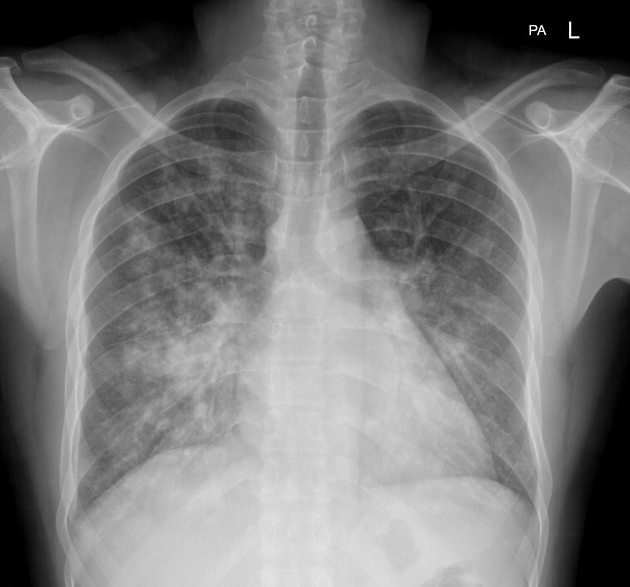
A patient presents with progressive shortness of breath for the last 6 months, accompanied by dry cough. Auscultation reveals bilateral basal end-inspiratory crepitations. There is no history of fever, joint pain, or occupational exposure. What is the diagnosis?
A 62-year-old woman with a history of chronic obstructive pulmonary disease (COPD) presents with increased breathlessness, cough, and sputum production over the last two days. She appears distressed and has a respiratory rate of 28 breaths per minute. Her oxygen saturation is 88% on room air. Which of the following management strategies is most appropriate for her immediate treatment?
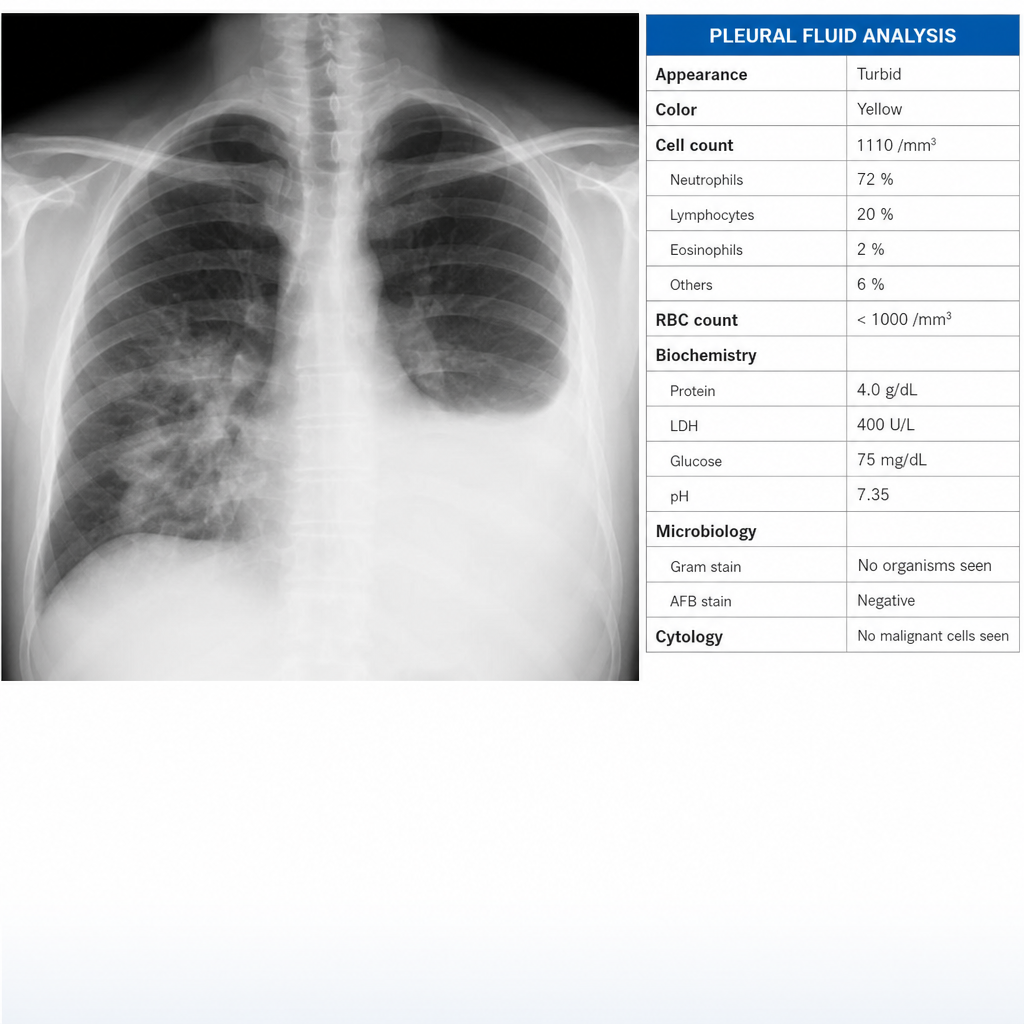
A patient with a history of pneumonia develops pleural effusion. What is the expected finding in the pleural analysis for a complicated parapneumonic effusion?
A patient presents with respiratory difficulty and a history of chronic smoking. Pulmonary function testing shows a decrease in FEV1/FVC ratio. What is the most probable diagnosis?
An elderly male on bed rest for many months presented with breathlessness and chest pain. What is the next best step in the management of this patient?
Hamman sign is seen in
A patient comes to you with increased cough, increased breathlessness, and decreased exercise capacity. Chest X-ray shows pulmonary fibrosis. Which drug can be administered in the given condition?
Explanation: **Explanation:** **Correct Option: A. Fluorocarbons** Metered-dose inhalers (MDIs) traditionally used **Chlorofluorocarbons (CFCs)** as propellants to deliver medication into the lungs. While effective for drug delivery, CFCs are potent air pollutants. When released, they migrate to the stratosphere where ultraviolet radiation causes them to release chlorine atoms. These atoms catalyze the breakdown of the **ozone layer**, leading to environmental damage. Due to the Montreal Protocol, CFC-propelled MDIs have been largely phased out and replaced by **Hydrofluoroalkanes (HFAs)**, which do not deplete the ozone layer. **Analysis of Incorrect Options:** * **B. Salbutamol:** This is a short-acting beta-2 agonist (SABA) used as the active pharmacological agent (bronchodilator) in the inhaler [1]. It is a medication, not an atmospheric pollutant. * **C. Ozone:** While ozone is the substance being *depleted* in the stratosphere by fluorocarbons, it is not a constituent of an MDI. Ground-level ozone is a pollutant (smog), but it is not used in medical inhalers. * **D. Oxygen:** Oxygen is a natural atmospheric gas and is often used in emergency management of asthma, but it is not a propellant in MDIs and does not damage the stratosphere. **High-Yield Clinical Pearls for NEET-PG:** * **Propellant Shift:** Modern MDIs use **HFA (Hydrofluoroalkane)**. HFAs produce a slower, warmer, and softer spray compared to CFCs, which reduces the "cold-freon effect" (where the cold spray causes the patient to stop inhaling). * **Technique:** The most common error in MDI use is poor hand-breath coordination. Using a **spacer** device can mitigate this and increase lung deposition while decreasing oropharyngeal side effects (like candidiasis with steroids). * **Dry Powder Inhalers (DPIs):** These are breath-actuated and do not require propellants, making them more environmentally friendly than MDIs.
Explanation: ***Increase dose of ICS*** - In the stepwise management of asthma, if a patient on a low or medium-dose **inhaled corticosteroid (ICS)** and **long-acting beta-agonist (LABA)** combination continues to have poor control or exacerbations, the next appropriate step is to increase the dose of the ICS [1]. - This addresses the underlying **airway inflammation**, which is the primary driver of asthma symptoms and exacerbations, especially in a patient with seasonal worsening suggesting an allergic component. *Add LAMA* - Adding a **long-acting muscarinic antagonist (LAMA)**, such as tiotropium, is typically considered at **Step 5** of asthma management, for patients who remain symptomatic despite being on a high-dose ICS-LABA. - It is not the next step after a standard-dose ICS-LABA and should only be considered after optimizing the ICS dose [1]. *Add Theophylline* - **Theophylline** is generally considered a low-preference alternative or add-on therapy due to its **narrow therapeutic index** and significant potential for side effects (e.g., cardiotoxicity, neurotoxicity). - Modern guidelines recommend other options, such as increasing the ICS dose or adding a LAMA, before considering theophylline [1]. *Add Omalizumab* - **Omalizumab** is a biologic agent (anti-IgE) reserved for **Step 5** management of severe, persistent **allergic asthma** that is poorly controlled on high-dose ICS-LABA. - Its initiation requires confirmation of an allergic phenotype (e.g., elevated IgE levels) and is not indicated before optimizing standard controller therapies [1].
Explanation: ***Exercise-induced bronchoconstriction triggered by cold air*** - This patient presents with classic **Exercise-Induced Bronchoconstriction (EIB)**, previously known as exercise-induced asthma - **Key clinical features:** Dyspnea occurring during/after exercise, worsened by cold/dry air, rapid response to beta-2 agonists (salbutamol) [1] - **Pathophysiology:** Exercise increases ventilation → inhalation of cold, dry air → water loss from airway surface → increased osmolarity → mast cell degranulation and inflammatory mediator release → bronchoconstriction - Cold air is a potent trigger as it increases airway heat and water loss - Salbutamol (short-acting beta-2 agonist) provides rapid bronchodilation, confirming bronchospasm as the mechanism *Decreased cardiac output stimulates baroreceptors* - Baroreceptors respond to changes in blood pressure, not directly related to bronchospasm - Would not explain the rapid response to salbutamol - Cardiac dysfunction would present with different symptoms (fatigue, peripheral edema) [1] *Hyperventilation-induced respiratory alkalosis* - While exercise increases respiratory rate, respiratory alkalosis causes paresthesias, lightheadedness, not primarily dyspnea - Does not explain the seasonal (winter) pattern - Would not respond specifically to bronchodilators *Vagal stimulation due to cold air exposure* - Cold air can trigger vagal reflexes, but this would cause bradycardia and peripheral vasoconstriction - Vagal bronchomotor tone increases airway resistance but doesn't fully explain the exercise + cold air synergy - The dramatic response to salbutamol indicates beta-2 receptor-mediated bronchodilation is the primary mechanism
Explanation: ### IPF - The presentation of progressive **shortness of breath**, dry cough, and characteristic **bilateral basal end-inspiratory crepitations** (**Velcro crackles**) strongly suggests Idiopathic Pulmonary Fibrosis [1]. - IPF is a diagnosis of exclusion, supported here by the absence of fever, joint pain, or known occupational/environmental exposures (making it **idiopathic**) [1][2]. *Cor-pulmonale* - *Cor-pulmonale* is **right ventricular failure** secondary to pulmonary hypertension caused by underlying lung disease, and typically presents with signs of systemic venous congestion (e.g., peripheral edema, elevated JVP). - While advanced IPF can *cause* cor-pulmonale, it is not the primary process causing the initial restrictive pattern and bilateral basal **crepitations**. *Sarcoidosis* - Sarcoidosis often involves **bilateral hilar lymphadenopathy** and systemic features (e.g., skin or eye findings), which are absent in this presentation [4]. - Pulmonary fibrosis associated with sarcoidosis typically has an **upper lobe predominance**, unlike the basal findings described here [4]. *Hypersensitivity pneumonitis* - This diagnosis requires a history of exposure to an inhaled **antigen** (e.g., birds, molds) in the home or workplace, which is explicitly excluded in the patient history [3]. - Acute or subacute forms of HP often involve systemic symptoms like fever and chills, which are not mentioned in this slowly progressive presentation [3].
Explanation: ***Correct: Start nebulised bronchodilator therapy with salbutamol and ipratropium*** - This represents an **acute exacerbation of COPD (AECOPD)** requiring immediate bronchodilation - **Nebulized SABA (salbutamol) + SAMA (ipratropium)** is the first-line immediate treatment as per GOLD guidelines [1] - Provides rapid relief of bronchospasm and improves airflow in acute distress [1] - Can be administered immediately without delaying for investigations - Combined therapy is more effective than either agent alone in acute exacerbations [1] *Incorrect: Order a chest X-ray before any treatment is provided* - While chest X-ray is important to rule out complications (pneumonia, pneumothorax), **treatment should not be delayed** in an acutely distressed patient - Investigations can be performed after stabilization begins - Clinical assessment is sufficient to initiate bronchodilator therapy *Incorrect: Initiate high-flow oxygen therapy to maintain oxygen saturation above 95%* - COPD patients require **controlled oxygen therapy** with target SpO2 of **88-92%** - High oxygen concentrations can suppress hypoxic respiratory drive and lead to **CO2 retention** and hypercapnic respiratory failure - Venturi masks (24-28% oxygen) are preferred for controlled delivery [2] *Incorrect: Begin intravenous glucocorticoids immediately* - While **systemic corticosteroids** are important in AECOPD management, **bronchodilators take priority** as immediate treatment - Oral prednisolone (30-40 mg for 5-7 days) is typically preferred unless patient cannot take oral medication - Steroids are given after initial bronchodilation is started
Explanation: ***Pleural pH less than 7.2***- This finding is the critical biochemical parameter defining a **complicated parapneumonic effusion** or **empyema** [1].- The low pH results from high local acid production (lactic acid, CO2) due to bacterial metabolism and inflammatory cell activity, which strongly indicates the need for **chest tube drainage** [1].*Pleural protein/plasma protein ratio less than 0.5*- This ratio is characteristic of a **transudative pleural effusion** (e.g., heart failure or nephrotic syndrome).- Parapneumonic effusions are inflammatory processes that result in **exudative effusions**, where this ratio is typically greater than 0.5 according to **Light’s criteria** [1].*Pleural LDH less than 2/3rd of plasma LDH*- High pleural fluid LDH is a key feature of an **exudative effusion**; therefore, LDH levels would generally be expected to be higher than this threshold in a parapneumonic effusion.- The standard Light's criteria dictate that pleural LDH must be greater than 2/3rds the upper limit of normal serum LDH for an effusion to be classified as an **exudate** [1].*Pleural LDH less than 0.6 of plasma LDH*- In an exudative process like a parapneumonic effusion, the pleural fluid LDH to serum LDH ratio is expected to be **greater than 0.6**.- A ratio less than 0.6 is characteristic of a **transudative effusion**.
Explanation: ***Chronic Obstructive Pulmonary Disease (COPD)*** - COPD is the most likely diagnosis given the history of **chronic smoking** and pulmonary function tests showing a **decreased FEV1%**, which is a hallmark of an **obstructive lung disease**. - The pathophysiology involves **bronchiolar obstruction** leading to **air trapping**, which results in an elevated **Residual Volume (RV)** and **Total Lung Capacity (TLC)**, consistent with the provided flowchart. *Pulmonary Fibrosis* - This is a **restrictive lung disease**, characterized by scarring of the lung tissue, which would cause a **decrease**, not an increase, in Total Lung Capacity (TLC). - Spirometry in pulmonary fibrosis typically shows a **normal or increased FEV1/FVC ratio**, as both FEV1 and FVC are reduced proportionally. *Interstitial Lung Disease* - This is a broad category of **restrictive lung diseases**, which includes pulmonary fibrosis. These conditions make the lungs stiff and difficult to expand. - The characteristic PFT finding is a **restrictive pattern** (decreased TLC, FVC, and FEV1) with a normal or high FEV1/FVC ratio, which contradicts the patient's results. *Asthma* - Although asthma is an **obstructive disease** that can cause a low FEV1%, the airflow limitation is typically **reversible** with bronchodilators. - While both can present similarly, the patient's history of **chronic smoking** makes COPD, a progressive and largely irreversible condition, the more probable diagnosis.
Explanation: ***CT pulmonary angiogram***- This is the **gold standard** imaging investigation for diagnosing **pulmonary embolism (PE)**, offering rapid confirmation of emboli within the pulmonary arteries [1].- The patient's history of prolonged **bed rest** (immobilization) makes them high-risk for **Deep Vein Thrombosis (DVT)**, predisposing them to PE, which manifests as acute breathlessness and chest pain [2].*ECG*- An ECG is a standard initial test (often alongside chest X-ray) to exclude cardiac causes like **myocardial infarction** and assess for features of right ventricular strain (e.g., **S1Q3T3 pattern**) associated with PE [1].- However, ECG findings are non-specific and cannot definitively confirm or exclude the diagnosis of PE; imaging is required.*CT thorax*- A standard non-contrast CT thorax is effective for evaluating lung parenchyma (e.g., pneumonia or malignancy).- It is inadequate for diagnosing PE, which requires intravenous contrast specifically timed to opacify the pulmonary arteries (a **CT pulmonary angiogram**).*Echocardiography*- Echocardiography is primarily used to assess the functional and prognostic impact of PE, specifically looking for **right ventricular (RV) dilation** and dysfunction.- It may be utilized in critically **hemodynamically unstable** patients suspected of PE (where immediate transport to CTPA is dangerous), but for a stable patient, CTPA provides the definitive anatomical diagnosis.
Explanation: ***Pneumomediastinum*** - Hamman sign (or Hamman's crunch) is the classic auscultatory finding associated with **pneumomediastinum** (air in the mediastinum). - It is described as a **crunching, grating, or rasping sound** over the pre-cordium, synchronous with the heartbeat, caused by the heart beating against adjacent air-filled tissue. *Pneumoperitoneum* - This condition involves free air within the **peritoneal cavity**, commonly presenting with signs of **acute abdomen** and rigidity. - It is diagnosed radiographically by finding **free gas under the dome of the diaphragm**, without causing pre-cordial crunching sounds. *Pneumopericardium* - This refers to air accumulating within the **pericardial sac** surrounding the heart. - While air near the heart exists, the specific Hamman sign is due to air in the surrounding **mediastinal tissue planes**, not within the confined pericardium. *Hydropneumothorax* - This involves the presence of both fluid (*hydro*) and air (*pneumo*) within the **pleural space**, outside the mediastinum. - Clinical features are typically related to compromised lung function, demonstrating signs of both pleural effusion and **pneumothorax**, without the characteristic Hamman sign.
Explanation: ***Pirfenidone***- This drug is an **antifibrotic agent** used specifically in the management of **Idiopathic Pulmonary Fibrosis (IPF)** to slow disease progression and decline in lung function [1].- It works by reducing the synthesis of **Transforming Growth Factor-beta (TGF-$\beta$)** and inhibiting collagen deposition, thus limiting fibrotic remodeling.*Bortezomib*- **Bortezomib** is a **proteasome inhibitor** primarily used in the treatment of hematological malignancies, such as **multiple myeloma** and mantle cell lymphoma.- It has no established role in the pathological treatment or management of the underlying lung fibrosis.*Roflumilast*- **Roflumilast** is a selective **phosphodiesterase-4 (PDE-4) inhibitor** used to reduce the risk of exacerbations in patients with severe **COPD** associated with chronic bronchitis [2].- It is an anti-inflammatory maintenance therapy for COPD, but it is not indicated as an antifibrotic treatment for pulmonary fibrosis [2].*Imatinib*- **Imatinib** is a selective **tyrosine kinase inhibitor** effective against the **BCR-ABL fusion protein**, making it the primary treatment for **Chronic Myeloid Leukemia (CML)**.- While tyrosine kinases are sometimes implicated in fibrosis pathways, Imatinib is not an approved or standard treatment for pulmonary fibrosis.
Obstructive Airway Diseases (Asthma, COPD)
Practice Questions
Interstitial Lung Diseases
Practice Questions
Pulmonary Infections
Practice Questions
Pulmonary Vascular Diseases
Practice Questions
Pleural Diseases
Practice Questions
Sleep-Disordered Breathing
Practice Questions
Respiratory Failure
Practice Questions
Mediastinal Disorders
Practice Questions
Occupational Lung Diseases
Practice Questions
Pulmonary Function Testing
Practice Questions
Bronchiectasis and Cystic Fibrosis
Practice Questions
Lung Cancer Approach
Practice Questions
Get full access to all questions, explanations, and performance tracking.
Start For Free