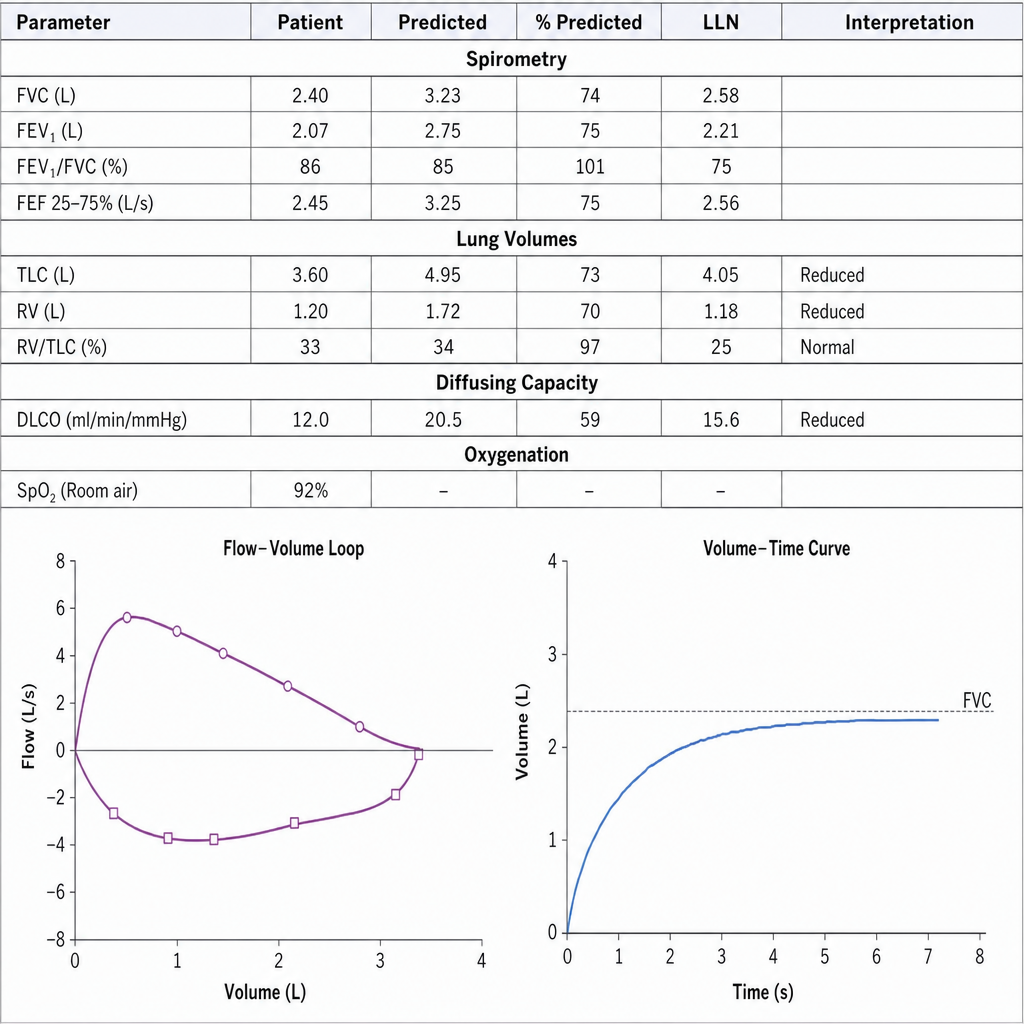
A 45-year-old male with a history of alcohol abuse and periodontal disease presents with a spiking fever and chills. Physical examination reveals signs of lung consolidation. A chest x-ray shows a cavity in the right lower lobe with an air/fluid level. Based upon the clinical presentation, which of the following would be the most likely causative organism?
A 47-year-old female with a history of Antiphospholipid antibody syndrome, who has been non-compliant with warfarin, presents with deep vein thrombosis and dyspnea. She is hypotensive and tachypneic. CT of the chest shows a saddle embolus. She does not respond to heparin and fluids. Echocardiogram shows RV hypokinesis. Which of the following is the appropriate management?
Which of the following is the most potent stimulus for the development of cor pulmonale in patients with chronic obstructive pulmonary disease?
Which of the following is NOT true about sarcoidosis?
Serum angiotensin-converting enzyme may be raised in all of the following, except?
Type IV respiratory failure best relates to which of the following?
Pulmonary hypertension is caused by?
Which of the following signs is NOT suggestive of pulmonary embolism?
What is the most common cause of pulmonary embolism?
Apical lung carcinoma commonly manifests as:
Explanation: ### Explanation **Correct Option: A. Anaerobic bacteria** The clinical triad of **alcohol abuse**, **periodontal disease**, and a **cavitary lesion with an air-fluid level** in the dependent segments of the lung (right lower lobe) is classic for a **Lung Abscess** caused by anaerobic bacteria. [1] * **Mechanism:** Alcoholism leads to an altered state of consciousness, which impairs the cough reflex and predisposes the patient to **aspiration** of oropharyngeal secretions. [1] Periodontal disease increases the bacterial load of anaerobes (e.g., *Peptostreptococcus*, *Fusobacterium*, *Bacteroides*) in the saliva. * **Pathology:** These organisms cause liquefactive necrosis, resulting in a cavity. The air-fluid level indicates communication with the bronchial tree. **Incorrect Options:** * **B. Aspergillus fumigatus:** Typically presents as an "Aspergilloma" (fungus ball) within a *pre-existing* cavity (like old TB). [2] It usually lacks the acute spiking fevers and "foul-smelling sputum" associated with anaerobic infections. * **C. Entamoeba histolytica:** Can cause a liver abscess that ruptures through the diaphragm into the lung (usually right lower lobe), but it typically presents with "anchovy sauce" sputum and a primary history of hepatic symptoms. * **D. Staphylococcus aureus:** While it can cause cavitary pneumonia (especially post-influenza), it is more commonly associated with multiple thin-walled **pneumatoceles** and a more fulminant, necrotizing course in intravenous drug users or hospitalized patients. [1] **High-Yield Clinical Pearls for NEET-PG:** * **Most common site for aspiration:** Superior segment of the right lower lobe (if supine) or posterior segment of the upper lobes. * **Clinical Clue:** Putrid or foul-smelling sputum is pathognomonic for anaerobic infection. * **Treatment:** Ampicillin-sulbactam or Clindamycin are the preferred choices. * **Imaging:** A lung abscess is characterized by a thick-walled cavity with an air-fluid level, whereas a pneumatocele is thin-walled.
Explanation: ### Explanation **Correct Answer: B. Recombinant tissue plasminogen activator (rtPA)** **1. Why it is correct:** The patient presents with **Massive Pulmonary Embolism (PE)**, defined by the presence of PE along with **hemodynamic instability** (hypotension: SBP <90 mmHg or a drop of ≥40 mmHg for >15 mins) and evidence of **Right Ventricular (RV) dysfunction** (hypokinesis on Echo) [1]. In massive PE, systemic thrombolysis with rtPA (e.g., Alteplase) is the first-line treatment [1]. It works by converting plasminogen to plasmin, which lyses the thrombus, rapidly reducing RV afterload and improving systemic perfusion. **2. Why the other options are incorrect:** * **A. Urgent referral for surgical embolectomy:** This is reserved for patients with massive PE who have **absolute contraindications to thrombolysis** or those who have failed thrombolytic therapy [1]. It is not the first-line choice if thrombolysis is available. * **C. Continue administration of fluids and heparin:** While heparin is the standard for stable PE, it does not dissolve existing clots. In the face of hypotension and RV failure, "watchful waiting" with heparin is insufficient and associated with high mortality. * **D. Add lepirudin:** Lepirudin is a direct thrombin inhibitor used in Heparin-Induced Thrombocytopenia (HIT). There is no evidence of HIT here; the primary issue is obstructive shock requiring clot lysis. **3. Clinical Pearls for NEET-PG:** * **Classification of PE:** * **Massive:** Hypotension + RV strain (Needs Thrombolysis) [1]. * **Sub-massive:** Normotension + RV strain (Consider Thrombolysis if clinical worsening) [1]. * **Low-risk:** Normotension + No RV strain (Anticoagulation only). * **Gold Standard Diagnosis:** CT Pulmonary Angiography (CTPA) [2]. * **ECG Findings:** Most common is Sinus Tachycardia; most specific is **S1Q3T3** (deep S in lead I, Q wave and inverted T in lead III) [2]. * **Echo Sign:** **McConnell’s sign** (RV free wall akinesia with sparing of the apex) is highly suggestive of PE.
Explanation: **Explanation:** Cor pulmonale refers to right ventricular hypertrophy and/or dilatation (and eventually failure) resulting from pulmonary hypertension caused by primary diseases of the lungs or pulmonary vasculature [2]. **Why Hypoxia is the Correct Answer:** In COPD, **alveolar hypoxia** is the most potent and significant stimulus for pulmonary hypertension. Unlike systemic vessels which dilate in response to low oxygen, pulmonary arterioles undergo **Hypoxic Pulmonary Vasoconstriction (HPV)**. This is a physiological mechanism intended to shunt blood away from poorly ventilated areas. However, in chronic lung disease, widespread hypoxia leads to generalized vasoconstriction, increased pulmonary vascular resistance, and subsequent right heart strain. Chronic hypoxia also triggers vascular remodeling (intimal thickening and smooth muscle hypertrophy), further elevating pressures. **Analysis of Incorrect Options:** * **Option A (Obliteration of the pulmonary vascular bed):** While the destruction of alveolar septa in emphysema does reduce the capillary surface area, the pulmonary bed has a massive reserve capacity. It typically requires a loss of over 50–70% of the vascular bed to cause significant hypertension; thus, it is a secondary contributor compared to the dynamic effect of hypoxia. * **Option B (Alveolar membrane damage):** This primarily affects gas exchange (diffusion capacity), leading to hypoxia, but it is the resulting hypoxia itself—not the structural damage—that directly triggers the pressor response in the vessels. * **Option C (Left ventricular failure):** By definition, cor pulmonale excludes right heart failure resulting from left-sided heart disease (Post-capillary pulmonary hypertension). **High-Yield Clinical Pearls for NEET-PG:** * **Most common cause of Cor Pulmonale:** COPD. * **Most common cause of Right Heart Failure:** Left Heart Failure (Note: This is *not* cor pulmonale). * **ECG Findings:** Tall peaked P waves (P-pulmonale), Right Axis Deviation, and R/S ratio >1 in V1 [2]. * **Management:** Long-term oxygen therapy (LTOT) is the only intervention shown to improve survival by reducing hypoxic vasoconstriction and secondary polycythemia [1].
Explanation: **Explanation:** Sarcoidosis is a multisystem, chronic granulomatous disease of unknown etiology characterized by the formation of **non-caseating granulomas**. **Why Option C is the correct answer:** In sarcoidosis, there is a paradoxical immune response: while there is exaggerated T-cell activity at the sites of active disease (like the lungs), there is a **depression of delayed-type hypersensitivity (DTH)** in the peripheral blood. This leads to **cutaneous anergy**. Therefore, patients with sarcoidosis typically have a **negative or suppressed tuberculin (Mantoux) skin test**, even if they have been previously exposed to TB. A strongly positive test should prompt a search for tuberculosis rather than sarcoidosis. **Analysis of Incorrect Options:** * **A. Bilateral symmetrical hilar adenopathy:** This is the classic radiologic hallmark of Stage I sarcoidosis, seen in over 90% of patients [1]. * **B. Arthralgias:** Joint pain is a common extrapulmonary manifestation [1]. **Löfgren’s syndrome**, a specific acute presentation of sarcoidosis, consists of the triad of hilar adenopathy, erythema nodosum, and migratory polyarthritis (usually involving the ankles) [1]. * **D. Increased ACE levels:** Angiotensin-Converting Enzyme (ACE) is produced by the epithelioid cells within the sarcoid granuloma. Elevated levels are found in roughly 60-80% of patients with active disease and are often used to monitor disease activity and response to therapy. **High-Yield Clinical Pearls for NEET-PG:** * **Asteroid bodies** and **Schaumann bodies** are characteristic microscopic findings within the granulomas. * **Hypercalcemia/Hypercalciuria:** Occurs because macrophages in the granulomas produce 1-alpha-hydroxylase, which converts Vitamin D to its active form (1,25-dihydroxyvitamin D). * **Kveim-Siltzbach test:** An older diagnostic skin test (now largely replaced by biopsy). * **Organ involvement:** Lung is most common (>90%), followed by skin and eyes (uveitis) [1].
Explanation: Serum Angiotensin-Converting Enzyme (SACE) is produced by the vascular endothelium and, importantly, by **activated macrophages and epithelioid cells** within granulomas. Therefore, elevated SACE levels are typically associated with **granulomatous diseases** rather than neoplastic processes like Bronchogenic carcinoma [1]. **Why Bronchogenic Carcinoma is the Correct Answer:** Bronchogenic carcinoma is a malignancy of the bronchial epithelium [2]. It does not typically involve the formation of epithelioid granulomas or the systemic activation of macrophages that leads to increased SACE production. While some malignancies (like Lymphoma) can occasionally show mild elevations, Bronchogenic carcinoma is not a recognized cause of raised SACE. Non-metastatic extrapulmonary effects of bronchial carcinoma often include SIADH or hypercalcaemia rather than enzyme elevations associated with granulomas [2]. **Analysis of Other Options:** * **Sarcoidosis:** This is the classic cause. SACE is elevated in roughly 60-80% of active cases due to the massive burden of systemic epithelioid granulomas [1]. It is used to monitor disease activity and treatment response. * **Silicosis:** This is a fibronodular lung disease caused by silica dust [1]. The pathophysiology involves alveolar macrophages ingesting silica, leading to inflammation and granulomatous-like reactions, which can elevate SACE. * **Berylliosis:** Chronic Beryllium Disease (CBD) is a granulomatous lung disease that clinically and histologically mimics sarcoidosis [1]. Because it involves T-cell mediated granuloma formation, SACE levels are frequently elevated. **NEET-PG High-Yield Pearls:** * **Other causes of raised SACE:** Gaucher’s disease (highest levels often seen here), Leprosy, Histoplasmosis, Hyperthyroidism, and Liver Cirrhosis. * **Clinical Utility:** SACE has **high specificity but low sensitivity** for Sarcoidosis; it is better for monitoring progress than for initial diagnosis. * **False Lows:** SACE levels may be falsely low in patients taking **ACE inhibitors** (e.g., Enalapril, Ramipril).
Explanation: ### Explanation Respiratory failure is traditionally classified into four types based on the underlying pathophysiological mechanism [1]. **Type IV Respiratory Failure** specifically refers to respiratory failure associated with **shock or hypoperfusion of the respiratory muscles.** **1. Why Option C is Correct:** In states of circulatory shock (cardiogenic, hypovolemic, or septic), there is systemic hypotension leading to decreased perfusion of the diaphragm and other respiratory muscles [2]. Despite the lungs being structurally intact initially, the respiratory muscles become fatigued due to an imbalance between energy supply (oxygen delivery) and demand. This leads to an inability to maintain adequate ventilation. Intubation and mechanical ventilation are often used in these patients not just for gas exchange, but to "unload" the respiratory muscles and redirect the limited cardiac output to other vital organs. **2. Why the Other Options are Incorrect:** * **Option A (Alveolar hypoventilation):** This is the hallmark of **Type II (Hypercapnic)** respiratory failure, characterized by increased $PaCO_2$ due to reduced minute ventilation (e.g., COPD, neuromuscular disorders) [1]. * **Option B (Alveolar flooding):** This occurs in **Type I (Hypoxemic)** respiratory failure. Conditions like pulmonary edema or pneumonia fill the alveoli with fluid, impairing oxygen diffusion [1]. * **Option D (Lung atelectasis):** This is a common cause of **Type III (Perioperative)** respiratory failure, where basal lung collapse occurs due to anesthesia, pain, or abdominal distension. **3. High-Yield Clinical Pearls for NEET-PG:** * **Type I:** Hypoxemic ($PaO_2 < 60$ mmHg); e.g., ARDS, Pneumonia [1]. * **Type II:** Hypercapnic ($PaCO_2 > 50$ mmHg); e.g., COPD, Myasthenia Gravis [1]. * **Type III:** Perioperative; related to decreased Functional Residual Capacity (FRC). * **Type IV:** Shock-related; the primary goal of treatment is stabilizing hemodynamics [2].
Explanation: **Explanation:** Pulmonary Hypertension (PH) is defined as a mean pulmonary arterial pressure (mPAP) >20 mmHg. To understand the etiology, it is essential to refer to the **WHO Clinical Classification of PH**. **1. Why Interstitial Lung Disease (ILD) is correct:** ILD falls under **Group 3 PH** (PH due to lung diseases and/or hypoxia). The mechanism is multifactorial: * **Destruction of Capillary Bed:** Fibrosis destroys the alveolar-capillary units, reducing the total surface area of the pulmonary vasculature. * **Hypoxic Pulmonary Vasoconstriction:** Chronic hypoxia leads to the constriction of pulmonary arterioles to divert blood to better-ventilated areas, increasing vascular resistance. * **Vascular Remodeling:** Chronic inflammation and mechanical stress from stiff lungs lead to intimal thickening of pulmonary vessels [1]. **2. Analysis of Incorrect Options:** * **B. Myocardial Infarction:** While chronic left heart failure (Group 2) causes PH, an acute MI itself is a cause of cardiogenic shock or acute pulmonary edema, not typically the primary chronic driver of PH unless it leads to significant chronic mitral regurgitation or left ventricular dysfunction [2]. * **C. Systemic Hypertension:** This affects the systemic circulation (high afterload for the left ventricle). It does not directly cause pulmonary hypertension unless it leads to heart failure with preserved ejection fraction (HFpEF). * **D. Thromboembolism:** While **Chronic Thromboembolic Pulmonary Hypertension (CTEPH - Group 4)** is a major cause, a single episode of "thromboembolism" (Acute PE) causes acute right heart strain, not the chronic clinical syndrome of PH unless it fails to resolve [2]. In the context of standard MCQ hierarchy, ILD is a more classic "direct" parenchymal cause. **High-Yield NEET-PG Pearls:** * **WHO Group 1:** Pulmonary Arterial Hypertension (PAH) – includes Idiopathic, Heritable (BMPR2 mutation), and Drugs (Aminorex, Fenfluramine). * **Most Common Cause:** Globally, Group 2 (Left Heart Disease) is the most common cause of PH. * **Gold Standard Investigation:** Right Heart Catheterization (RHC). * **ECG Finding:** Right axis deviation, 'P pulmonale', and RVH [1].
Explanation: **Explanation** Pulmonary Embolism (PE) typically presents with signs and symptoms related to acute vascular obstruction and pulmonary infarction [1]. **Why "Wheeze" is the correct answer:** While bronchospasm can rarely occur due to the release of mediators like serotonin from platelets, **wheezing** is not a classic or suggestive sign of PE. It is far more characteristic of obstructive airway diseases like asthma, COPD, or heart failure ("cardiac asthma") [2], [4]. In the context of a sudden-onset respiratory distress question, the presence of wheezing usually points the clinician *away* from a diagnosis of PE and toward an alternative diagnosis. **Analysis of other options:** * **Tachypnea (B):** This is the **most common sign** of pulmonary embolism [1]. Increased respiratory rate occurs due to V/Q mismatch and reflex stimulation of irritant receptors. * **Pleuritic Chest Pain (A):** This occurs when the embolus is peripheral, leading to pulmonary infarction and inflammation of the adjacent parietal pleura [3]. It is a hallmark symptom of small, peripheral emboli. * **Hemoptysis (C):** This results from alveolar hemorrhage following pulmonary infarction [3]. Along with pleuritic pain and dyspnea, it forms the classic (though infrequent) Virchow’s triad of PE symptoms. **High-Yield Clinical Pearls for NEET-PG:** 1. **Most common symptom:** Dyspnea. 2. **Most common sign:** Tachypnea [1]. 3. **ECG findings:** Most common is **Sinus Tachycardia** [1]. The "classic" **S1Q3T3** pattern is specific but seen in only <20% of cases. 4. **Gold Standard Investigation:** CT Pulmonary Angiography (CTPA). 5. **Chest X-ray:** Usually normal, but may show **Hampton’s Hump** (wedge-shaped opacity) or **Westermark sign** (focal oligemia) [1].
Explanation: **Explanation:** **1. Why Thrombophlebitis is Correct:** Pulmonary Embolism (PE) is most commonly a complication of **Deep Vein Thrombosis (DVT)**, a condition where a blood clot forms within the deep veins, typically in the lower extremities [1]. The term **Thrombophlebitis** refers to an inflammatory process that causes a blood clot to form and block one or more veins. When these thrombi dislodge, they travel through the systemic venous circulation, right heart chambers, and into the pulmonary arteries, causing an obstruction (PE). Over 90% of pulmonary emboli originate from proximal deep vein thrombophlebitis of the legs (popliteal, femoral, and iliac veins). **2. Why the Other Options are Incorrect:** * **Endarteritis:** This is the inflammation of the inner lining of an **artery**. While it can lead to local thrombosis, it does not typically cause pulmonary embolism, which is a venous phenomenon. * **Atherosclerosis:** This involves the buildup of plaques in **arteries** (e.g., coronary or carotid arteries). While atherosclerosis leads to myocardial infarction or stroke, it is not a cause of venous thromboembolism. * **Lymphangitis:** This is the inflammation of the **lymphatic channels**, usually due to distal infection. It does not involve the blood coagulation system or the venous return to the lungs. **3. Clinical Pearls for NEET-PG:** * **Virchow’s Triad:** The three factors contributing to thrombosis are stasis, endothelial injury, and hypercoagulability. * **Most Common Site:** The most common source of PE is the **proximal deep veins of the lower limb** (above the knee). * **Gold Standard Investigation:** Computed Tomographic Pulmonary Angiography (CTPA). * **ECG Finding:** The most common ECG finding in PE is **Sinus Tachycardia**, while the most specific (though rare) is the **S1Q3T3 pattern**. * **Chest X-ray:** Usually normal, but may show **Hampton’s Hump** (wedge-shaped opacity) or **Westermark sign** (focal oligemia). [2] Note: Emergency management like thrombolysis is indicated for massive PE accompanied by shock [2].
Explanation: Apical lung carcinoma, specifically a **Pancoast tumor** (Superior Sulcus Tumor), arises at the extreme apex of the lung. The clinical manifestations are dictated by the local invasion of surrounding anatomical structures rather than typical endobronchial symptoms. **Why Horner’s Syndrome is Correct:** The tumor frequently invades the **paravertebral sympathetic chain** and the **stellate ganglion** (C8–T2). Destruction of these sympathetic fibers results in **ipsilateral Horner’s syndrome**, characterized by the classic triad of **Ptosis** (drooping eyelid), **Miosis** (clonstricted pupil), and **Anhidrosis** (lack of sweating). **Analysis of Incorrect Options:** * **A & B (Pleural/Pericardial involvement):** While lung cancers can cause effusions, these are more common in peripheral tumors or advanced metastatic disease. * **D (Tumour obstruction of the airway):** Apical tumors are peripheral. Airway obstruction and collapse/atelectasis [1] are characteristic of **central (hilar) tumors**, such as Squamous Cell Carcinoma or Small Cell Carcinoma, which involve the main bronchi. [1] **NEET-PG High-Yield Pearls:** * **Pancoast Syndrome:** Includes Horner’s syndrome plus shoulder pain radiating down the arm (ulnar distribution) due to involvement of the **brachial plexus** (C8, T1, T2) and destruction of the first/second ribs. * **Most Common Histology:** Most Pancoast tumors are **Adenocarcinomas** (previously thought to be Squamous Cell). * **Initial Symptom:** Shoulder pain is often the earliest presenting symptom, frequently misdiagnosed as cervical osteoarthritis or rotator cuff injury.
Obstructive Airway Diseases (Asthma, COPD)
Practice Questions
Interstitial Lung Diseases
Practice Questions
Pulmonary Infections
Practice Questions
Pulmonary Vascular Diseases
Practice Questions
Pleural Diseases
Practice Questions
Sleep-Disordered Breathing
Practice Questions
Respiratory Failure
Practice Questions
Mediastinal Disorders
Practice Questions
Occupational Lung Diseases
Practice Questions
Pulmonary Function Testing
Practice Questions
Bronchiectasis and Cystic Fibrosis
Practice Questions
Lung Cancer Approach
Practice Questions
Get full access to all questions, explanations, and performance tracking.
Start For Free