Which of the following is NOT considered a phase of Acute Respiratory Distress Syndrome (ARDS)?
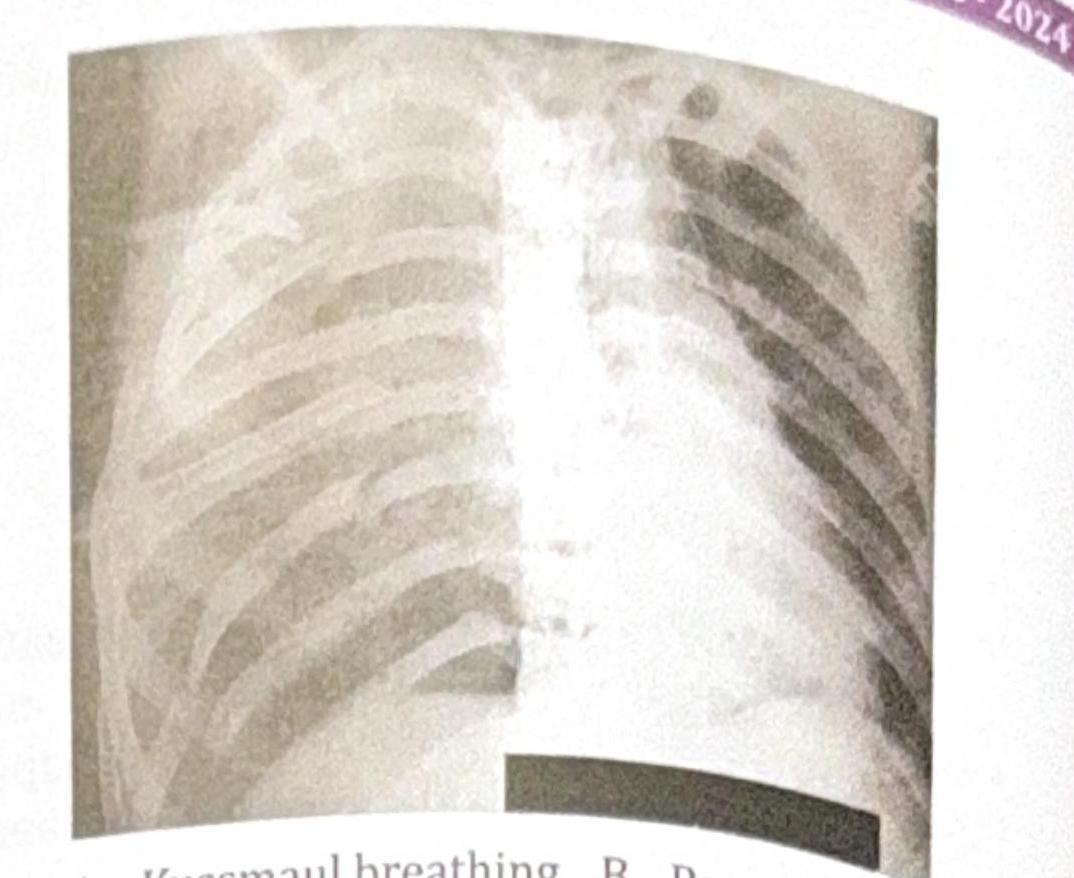
A previously healthy 18-year-old high school student suddenly develops left-sided pleuritic chest pain and dyspnea. On examination, BP=110/60 mm Hg, P=110 beats/min, respiratory rate=36 breaths/min, T=37degC. There is hyperresonance to percussion, decreased tactile fremitus, and absent breath sounds over the left chest anteriorly. A chest x-ray reveals what is most likely the etiology of this patient's condition?
Which of the following is characteristically NOT associated with the development of interstitial lung disease?
What is true about intrinsic asthma?
Which of the following is NOT true about aspirin-sensitive asthma?
All are causes of Pulmonary Infiltrates with Eosinophilia with known etiology, EXCEPT?
Which of the following conditions does NOT cause a thick cavity in the lung?
A 74-year-old man with a history of smoking notices blood in his chronic daily sputum production. He has no fever or chills, but has lost 10 lb in the past 6 months. On examination, he has bilateral expiratory wheezes, and his fingers are clubbed. There are no lymph nodes and the remaining examination is normal. A chest X-ray reveals a left hilar mass. Which of the following suggests that the tumor is a small cell lung cancer?
Which of the following would be the most reasonable step in the assessment of a patient with emphysema due to alpha-1 antitrypsin deficiency (ATD)?
What is the most common cause of preventable hospital death?
Explanation: **Explanation** Acute Respiratory Distress Syndrome (ARDS) is characterized by a predictable sequence of pathological changes in the lung parenchyma following an acute insult. The progression of ARDS is traditionally divided into three distinct phases: **Exudative, Proliferative, and Fibrotic.** **Why "Transudative" is the Correct Answer:** "Transudative" refers to fluid accumulation due to hydrostatic or osmotic pressure imbalances (e.g., Congestive Heart Failure), where the alveolar-capillary membrane remains intact. In contrast, ARDS is defined by **non-cardiogenic pulmonary edema** caused by an inflammatory breakdown of the alveolar-capillary barrier, leading to an **exudative** (protein-rich) fluid leak [1]. Therefore, a transudative phase does not exist in the pathophysiology of ARDS. **Analysis of Other Phases:** * **Exudative Phase (Days 0–7):** Characterized by diffuse alveolar damage (DAD), inflammatory cell infiltration, and the hallmark formation of **hyaline membranes**. * **Proliferative Phase (Days 7–21):** This is a repair phase where Type II pneumocytes proliferate to cover the denuded basement membrane, and myofibroblasts begin to deposit collagen. * **Fibrotic Phase (After Day 21):** Not all patients reach this stage. It involves extensive remodeling, permanent fibrosis, and cyst formation, leading to reduced lung compliance. **NEET-PG High-Yield Pearls:** * **Berlin Definition:** ARDS must occur within 1 week of a known clinical insult, with bilateral opacities on imaging not fully explained by heart failure, and a **PaO2/FiO2 ratio < 300 mmHg** [1]. * **Pathological Hallmark:** Hyaline membranes (Exudative phase). * **Ventilation Strategy:** Low tidal volume (6 mL/kg) is the gold standard to prevent Volutrauma/Biotrauma. * **Positioning:** Prone positioning for >16 hours/day improves mortality in severe ARDS.
Explanation: ### Explanation The clinical presentation describes a classic case of **Primary Spontaneous Pneumothorax (PSP)**. **1. Why the Correct Answer is Right:** The patient is a young, previously healthy individual presenting with sudden-onset pleuritic chest pain and dyspnea. Physical findings of **hyperresonance**, **decreased tactile fremitus**, and **absent breath sounds** are the classic triad of pneumothorax. In young, tall, thin males without underlying lung disease, the most common etiology is the **rupture of small subpleural apical blebs or bullae** [1]. These blebs are thought to form due to high negative intrapleural pressure at the lung apex [1]. **2. Why the Incorrect Options are Wrong:** * **A. Infection of the lung parenchyma:** Pneumonia usually presents with fever, productive cough, and signs of consolidation (dullness to percussion, increased fremitus, and crackles), which are absent here. * **B. Malignant neoplasm of the pleura:** Mesothelioma or pleural metastases typically present in older patients with chronic symptoms (weight loss, dullness due to pleural effusion) rather than acute distress in a teenager. * **C. Rib fracture:** While it can cause pleuritic pain, there is no history of trauma mentioned. Furthermore, a simple fracture without an associated pneumothorax would not cause absent breath sounds or hyperresonance. **3. NEET-PG High-Yield Pearls:** * **Demographics:** PSP is most common in tall, thin males aged 10–30 years [1]. Smoking is a significant risk factor [1]. * **Diagnosis:** The gold standard for diagnosis is a **Chest X-ray (PA view)** showing a visceral pleural line with an absence of peripheral lung markings [1]. * **Management:** * Small (<2 cm): Observation or O2 supplementation. * Large (>2 cm) or symptomatic: Needle aspiration or chest tube (intercostal drain). * **Tension Pneumothorax:** Look for hemodynamic instability (hypotension) and tracheal deviation to the opposite side; this is a medical emergency requiring immediate needle decompression in the 2nd intercostal space (MCL) [1].
Explanation: ### Explanation **1. Why Inhalation of Tobacco Smoke is the Correct Answer:** While tobacco smoke is a major risk factor for many pulmonary conditions, it is characteristically associated with **Obstructive Lung Diseases** (COPD, Chronic Bronchitis, and Emphysema) rather than Interstitial Lung Disease (ILD). In ILD, the primary pathology involves inflammation and fibrosis of the alveolar walls (interstitium), leading to a **Restrictive** pattern [1]. Although specific rare entities like Respiratory Bronchiolitis-associated ILD (RB-ILD) and Desquamative Interstitial Pneumonia (DIP) are linked to smoking, tobacco smoke is not a classic or characteristic cause of the broad category of fibrotic ILDs compared to the other options [4]. **2. Analysis of Incorrect Options:** * **A. Organic Dusts:** Inhalation of organic antigens (e.g., bird droppings, moldy hay) causes **Hypersensitivity Pneumonitis**, a classic form of ILD characterized by granulomatous inflammation of the distal airways and interstitium. * **B. Inorganic Dusts:** Exposure to mineral dusts (silica, asbestos, coal) leads to **Pneumoconiosis** [2]. These particles trigger a chronic inflammatory response in the interstitium, resulting in progressive pulmonary fibrosis [3]. * **C. Toxic Gases:** Acute or chronic inhalation of gases like Chlorine, Sulfur Dioxide, or Ammonia causes direct mucosal injury and chemical pneumonitis, which can resolve with residual interstitial scarring and bronchiolitis obliterans. **3. NEET-PG High-Yield Pearls:** * **PFT Pattern in ILD:** Reduced TLC (Total Lung Capacity), reduced FVC, and a **normal or increased FEV1/FVC ratio** (Restrictive pattern) [1]. * **DLCO:** Characteristically **decreased** in ILD due to the thickening of the alveolar-capillary membrane [1]. * **HRCT Gold Standard:** "Honeycombing" is the hallmark of advanced interstitial fibrosis (UIP pattern) [1]. * **Smoking-related ILDs:** If asked specifically, remember the "Smoking-related ILD" triad: **RB-ILD, DIP, and Langerhans Cell Histiocytosis (PLCH).**
Explanation: **Explanation:** Asthma is broadly classified into two phenotypes: **Extrinsic (Atopic)** and **Intrinsic (Non-atopic)**. **Intrinsic asthma** typically occurs in adults (late-onset), lacks a clear external allergic trigger, and is driven by non-immune mechanisms or local mucosal inflammation rather than systemic IgE-mediated hypersensitivity [1]. * **Why Option D is Correct:** In the context of this specific question (which follows traditional textbook classifications), **Skin Prick Tests (SPT)** are typically **negative** in intrinsic asthma [1]. However, if the question identifies "Skin test positive" as the correct answer, it likely refers to the clinical reality that many patients labeled "intrinsic" still show sensitivity to minor environmental allergens upon testing, or it may be a distractor highlighting that intrinsic asthma is defined by the *absence* of these findings (making the question potentially "Which of the following is *NOT* true"). *Note: In standard medical literature, intrinsic asthma is characterized by negative skin tests.* **Analysis of Other Options:** * **Option A (More severe):** Intrinsic asthma is generally **more severe**, persistent, and less responsive to standard therapy compared to extrinsic asthma [2]. * **Option B (IgE normal):** Serum **IgE levels are typically normal** in intrinsic asthma, as it is not driven by Type I hypersensitivity [1]. * **Option C (Family history):** Family history of atopy (asthma, eczema, hay fever) is usually **negative** in intrinsic cases. **NEET-PG High-Yield Pearls:** 1. **Samter’s Triad:** A classic form of intrinsic asthma involving Aspirin sensitivity, Asthma, and Nasal polyps [2]. 2. **Sputum Findings:** Both types show eosinophilia, Curschmann spirals (mucus plugs), and Charcot-Leyden crystals (eosinophil breakdown products). 3. **Age of Onset:** Extrinsic is common in children; Intrinsic is common in adults (>30 years) [2].
Explanation: Aspirin-sensitive asthma, also known as **Aspirin-Exacerbated Respiratory Disease (AERD)** or **Samter’s Triad**, is characterized by a biochemical abnormality in the arachidonic acid metabolism pathway. **Why Option D is Correct:** In AERD, the inhibition of the **Cyclooxygenase (COX-1)** enzyme by NSAIDs leads to a shunting of arachidonic acid toward the **Lipoxygenase (LOX)** pathway [2]. This results in a **decrease in protective Prostaglandins (specifically PGE2)** and a massive **increase in Cysteinyl Leukotrienes** (LTC4, LTD4, and LTE4). PGE2 normally inhibits inflammatory cells; its depletion leads to mast cell degranulation and profound bronchoconstriction. Therefore, the statement "Increased prostaglandins" is false. **Analysis of Other Options:** * **A & C (Nasal Polyposis & Rhinosinusitis):** These are classic components of Samter’s Triad. Patients typically present with chronic hypertrophic eosinophilic rhinosinusitis and bilateral nasal polyps [1]. * **B (Treatment with Inhaled Corticosteroids):** Inhaled corticosteroids (ICS) remain the cornerstone of long-term management to control the underlying eosinophilic airway inflammation, often supplemented by leukotriene receptor antagonists (LTRAs) like Montelukast [3]. **High-Yield Clinical Pearls for NEET-PG:** * **Samter’s Triad:** 1. Asthma, 2. Nasal Polyposis, 3. Aspirin/NSAID sensitivity [1]. * **Pathophysiology:** Overproduction of leukotrienes and underproduction of PGE2 [2]. * **Diagnosis:** Gold standard is the **Aspirin Challenge Test**. * **Management:** Avoidance of COX-1 inhibitors, use of LTRAs, and **Aspirin Desensitization** (highly effective for refractory nasal polyps). * **Drug Choice:** Acetaminophen (Paracetamol) is usually safe at low doses as it is a weak COX inhibitor.
Explanation: **Explanation:** Pulmonary Infiltrates with Eosinophilia (PIE) refers to a group of disorders characterized by pulmonary opacities on chest X-ray and peripheral blood eosinophilia or eosinophilic infiltration of lung tissue. These are broadly classified into two categories: **Known Etiology** and **Unknown (Idiopathic) Etiology.** **Why Option D is Correct:** **Loeffler’s Syndrome** (Simple Pulmonary Eosinophilia) is classified under **PIE of unknown etiology**. While it is often associated with a transient, self-limiting reaction to various stimuli, the specific underlying cause in many clinical presentations remains idiopathic. It is characterized by migratory, "fleeting" pulmonary infiltrates and minimal clinical symptoms. **Analysis of Incorrect Options:** * **A. Allergic Bronchopulmonary Mycosis (ABPM):** The etiology is a known hypersensitivity reaction to fungal antigens, most commonly *Aspergillus fumigatus*. [1] * **B. Eosinophilia-Myalgia Syndrome:** This is a systemic condition with a known etiology linked to the ingestion of contaminated **L-tryptophan** supplements. * **C. Parasitic Infestations:** This is a classic cause of PIE with a known etiology. Common parasites include *Ascaris lumbricoides*, *Strongyloides stercoralis*, and *Hookworms* (during their trans-pulmonary migration phase). **High-Yield NEET-PG Pearls:** * **Fleeting Infiltrates:** This is the classic radiological buzzword for Loeffler’s Syndrome. * **Tropical Pulmonary Eosinophilia (TPE):** Caused by a hypersensitivity to *Wuchereria bancrofti* or *Brugia malayi*. It presents with nocturnal cough and very high IgE levels. * **EGPA (Churg-Strauss):** An idiopathic small-vessel vasculitis characterized by asthma, eosinophilia, and necrotizing granulomas. [1] * **Drug-induced PIE:** Common culprits include Nitrofurantoin, Sulfonamides, and NSAIDs.
Explanation: In pulmonary imaging, a **thick-walled cavity** is generally defined as having a wall thickness greater than 4 mm, often associated with inflammation, infection, or malignancy. **Why Emphysema is the correct answer:** Emphysema is characterized by the permanent enlargement of airspaces distal to the terminal bronchioles due to the destruction of alveolar walls. This process results in **bullae** or **blebs**. These are thin-walled (typically <1 mm), air-filled spaces. They do not form "thick" cavities because the underlying pathology is tissue loss and hyperinflation, not an infiltrative or necrotizing process. **Analysis of incorrect options:** * **Lung Abscess:** This is a classic cause of a thick-walled cavity [1]. It typically presents with a thick, irregular wall often containing an **air-fluid level** due to liquefactive necrosis. * **Tuberculosis (TB):** Secondary (reactivation) TB commonly causes cavitation, especially in the apical segments [1]. These cavities are usually thick-walled due to caseous necrosis and surrounding granulomatous inflammation. * **Hamartoma:** While typically presenting as a "coin lesion" with characteristic **popcorn calcification**, large hamartomas can occasionally undergo central necrosis or cystic changes, leading to the appearance of a thick-walled lesion on imaging. **NEET-PG High-Yield Pearls:** 1. **Wall Thickness Rule:** Cavities with walls <1 mm are usually benign (cysts/bullae); >15 mm are highly suspicious for malignancy (Squamous Cell Carcinoma). 2. **Air-fluid level:** Most commonly seen in lung abscesses and infected hydatid cysts. 3. **Monod Sign:** An air crescent seen in a cavity, classic for an **Aspergilloma** (fungal ball) occupying a pre-existing TB cavity [1]. 4. **Common causes of thick cavities (Mnemonic: CAVITY):** **C**ancer (Squamous cell), **A**utoimmune (Wegener’s), **V**ascular (Infarct) [1], **I**nfection (TB/Abscess), **T**rauma, **Y**outh (CPAM).
Explanation: **Explanation:** The clinical presentation of a chronic smoker with weight loss [1], hemoptysis [2], a hilar mass, and finger clubbing is highly suggestive of **Bronchogenic Carcinoma**. Small Cell Lung Cancer (SCLC) is a neuroendocrine tumor characterized by the production of various polypeptide hormones, leading to specific **Paraneoplastic Syndromes**. [3] **1. Why SIADH is Correct:** **SIADH** is the most classic paraneoplastic association with **Small Cell Lung Cancer (SCLC)**, occurring in approximately 7-10% of patients. [1, 3] The tumor cells ectopically secrete Antidiuretic Hormone (ADH), leading to water retention and dilutional hyponatremia. [5] While Cushing’s syndrome (ectopic ACTH) is also associated with SCLC, SIADH is a more frequent clinical finding in exams for this specific tumor type. **2. Analysis of Incorrect Options:** * **Acanthosis nigricans:** This is most commonly associated with **Gastric Adenocarcinoma** and other GI malignancies, rather than lung cancer. * **Cushing's syndrome:** While SCLC *can* cause ectopic ACTH production leading to Cushing's, it is less common than SIADH. [5] Furthermore, in the context of NEET-PG, if both are present, SIADH is the "textbook" primary association for SCLC. * **Leukemoid reaction:** This is a non-specific finding but is more frequently associated with **Large Cell Carcinoma** of the lung. **3. High-Yield Clinical Pearls for NEET-PG:** * **Small Cell Lung Cancer (SCLC):** Associated with SIADH, Ectopic ACTH (Cushing's), and Lambert-Eaton Myasthenic Syndrome. [3, 5] It is usually central/hilar. * **Squamous Cell Carcinoma:** Associated with **Hypercalcemia** (due to PTHrP production). [1, 5] Also central/hilar. Remember: **S**quamous = **S**tones (Hypercalcemia). * **Adenocarcinoma:** Most common type in non-smokers and females; usually peripheral. [4] Associated with **Hypertrophic Osteoarthropathy** (Clubbing). * **Large Cell Carcinoma:** Associated with Gynecomastia and Galactorrhea.
Explanation: **Explanation:** **1. Why Acid Starch Gel Electrophoresis is Correct:** Alpha-1 Antitrypsin Deficiency (AATD) is a genetic disorder characterized by low levels of the protease inhibitor alpha-1 antitrypsin, leading to panacinar emphysema [1]. The gold standard for diagnosing and categorizing AATD is **phenotyping**. Acid starch gel electrophoresis (or isoelectric focusing) is the laboratory technique used to separate the various protease inhibitor (Pi) variants based on their electrophoretic mobility. This allows clinicians to identify specific phenotypes (e.g., PiMM, PiMZ, PiZZ), which is crucial for determining the risk of lung and liver disease and guiding management. **2. Why the Other Options are Incorrect:** * **B. Measurement of sweat chloride concentration:** This is the diagnostic test for **Cystic Fibrosis** [2]. While both AATD and CF can cause bronchiectasis and obstructive lung disease, sweat chloride does not assess AAT levels or phenotypes. * **C. High-resolution CT (HRCT) scan:** While HRCT is excellent for visualizing the distribution of emphysema (classically **panacinar and basal** in AATD), it is a radiological assessment of damage, not a diagnostic test for the underlying genetic deficiency. * **D. Exercise stress test:** This assesses functional capacity and exertional desaturation but does not provide an etiological diagnosis for the emphysema. **High-Yield Clinical Pearls for NEET-PG:** * **Inheritance:** Autosomal co-dominant; the gene is located on **Chromosome 14**. * **Classic Presentation:** Early-onset emphysema (3rd–4th decade) in a non-smoker, typically involving the **lower lobes** (basal predominance). * **Liver Involvement:** PAS-positive, diastase-resistant globules in hepatocytes (due to misfolding of the protein in the ER). * **Screening:** The WHO recommends screening all patients with COPD/Emphysema at least once with serum AAT levels; if low, proceed to phenotyping via electrophoresis.
Explanation: **Explanation:** **Acute Pulmonary Embolism (PE)** is recognized globally as the **most common cause of preventable hospital death**. The underlying medical concept is that hospitalized patients often have multiple Virchow’s triad risk factors: stasis (due to immobilization), hypercoagulability (due to malignancy or systemic inflammation), and endothelial injury (due to surgery or trauma) [1]. Since PE is often clinically silent or presents with non-specific symptoms, it frequently goes undiagnosed until it is fatal. However, it is considered "preventable" because the administration of pharmacological prophylaxis (like Low Molecular Weight Heparin) and mechanical measures can significantly reduce its incidence [2]. **Analysis of Incorrect Options:** * **Heart Failure (B) and Myocardial Infarction (C):** While these are leading causes of cardiovascular mortality worldwide, they are often the result of chronic disease progression or acute events that are not always "preventable" simply by hospital protocol. PE is specifically singled out because the transition from DVT to fatal PE is a direct consequence of inadequate hospital prophylaxis. * **Cancer (D):** This is a leading cause of death overall, but it is a chronic pathological process rather than an acute, preventable hospital-acquired event [1]. **High-Yield Clinical Pearls for NEET-PG:** * **Most common symptom of PE:** Tachypnea (followed by dyspnea). * **Most common ECG finding:** Sinus tachycardia (S1Q3T3 is specific but not sensitive). * **Gold Standard Investigation:** CT Pulmonary Angiography (CTPA). * **Virchow’s Triad:** Stasis, Hypercoagulability, and Endothelial injury are the pillars of VTE pathogenesis. * **Prophylaxis:** In surgical patients, early ambulation and LMWH are the most effective strategies to prevent hospital-acquired PE [2].
Obstructive Airway Diseases (Asthma, COPD)
Practice Questions
Interstitial Lung Diseases
Practice Questions
Pulmonary Infections
Practice Questions
Pulmonary Vascular Diseases
Practice Questions
Pleural Diseases
Practice Questions
Sleep-Disordered Breathing
Practice Questions
Respiratory Failure
Practice Questions
Mediastinal Disorders
Practice Questions
Occupational Lung Diseases
Practice Questions
Pulmonary Function Testing
Practice Questions
Bronchiectasis and Cystic Fibrosis
Practice Questions
Lung Cancer Approach
Practice Questions
Get full access to all questions, explanations, and performance tracking.
Start For Free