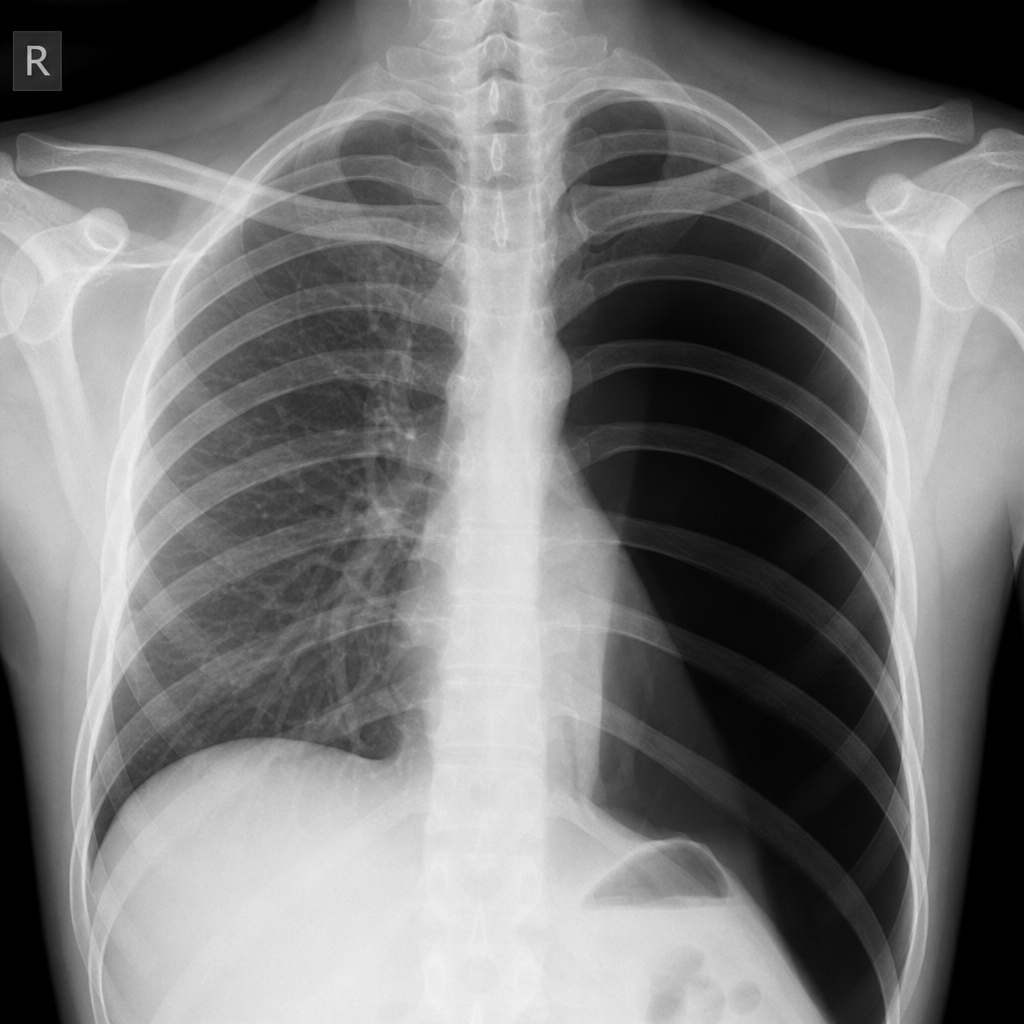
What is the treatment of choice in a patient with acute pulmonary embolism, right ventricular hypokinesia, and compromised cardiac output but normal blood pressure?
ARDS is due to a defect in which of the following?
What is the characteristic value of PaO2/FiO2 ratio in ARDS?
Bronchoalveolar lavage is beneficial in the evaluation of which condition?
A chronic smoker presents with complaints of haemoptysis. Chest X-ray appears to be normal. What is the next best investigation?
A non-smoker patient presents with a cough of more than 3 months duration and a normal chest X-ray. All of the following are potential causes of chronic cough EXCEPT:
Which of the following pulmonary symptoms does NOT have a corresponding non-pulmonary association?
Which of the following is NOT a type I respiratory failure?
Which of the following is NOT typically seen in Acute Respiratory Distress Syndrome (ARDS)?
In pulmonary embolism, what is fibrinolytic therapy responsible for?
Explanation: This question addresses the management of **Submassive (Intermediate-risk) Pulmonary Embolism (PE)**. ### **Explanation** The patient presents with **Right Ventricular (RV) hypokinesia** and **compromised cardiac output**, which indicates significant RV strain. While the blood pressure is currently normal (preventing a classification of "Massive PE"), the presence of low cardiac output and RV dysfunction signifies a high risk of clinical deterioration and obstructive shock. In such cases, **Thrombolytic agents** (e.g., Alteplase) are the treatment of choice [2]. Thrombolysis rapidly dissolves the clot, reduces pulmonary artery pressure, and improves RV function more quickly than anticoagulation alone, thereby preventing hemodynamic collapse [2]. ### **Why other options are incorrect:** * **Low Molecular Weight Heparin (LMWH):** This is the standard treatment for *stable* (Low-risk) PE. While it prevents further clot formation, it does not actively dissolve the existing large thrombus causing RV strain. * **IVC Filters:** These are indicated only when anticoagulation is strictly contraindicated or has failed despite adequate dosing. They do not treat the current pulmonary obstruction. * **Warfarin:** This is used for long-term maintenance therapy. It has a slow onset of action (requiring 5–7 days for full effect) and is never used as monotherapy in the acute phase. ### **High-Yield Clinical Pearls for NEET-PG:** 1. **Massive PE:** Hypotension (SBP <90 mmHg) + RV strain. **Tx: Thrombolysis. [2]** 2. **Submassive PE:** Normal BP + RV strain (Echo/CT) or elevated Troponin/BNP. **Tx: Thrombolysis** (especially if cardiac output is compromised) [2]. 3. **Low-risk PE:** Normal BP + No RV strain. **Tx: Anticoagulation (LMWH/NOACs).** 4. **Gold Standard Diagnosis:** CT Pulmonary Angiography (CTPA) [1]. 5. **Most common ECG finding:** Sinus tachycardia (S1Q3T3 is specific but less common) [3].
Explanation: **Explanation:** Acute Respiratory Distress Syndrome (ARDS) is characterized by **diffuse alveolar damage (DAD)**. The primary pathophysiology involves an acute insult to the **alveolar-capillary membrane**, which consists of both the vascular endothelium and the alveolar epithelium. **Why Endothelial Cells are the Correct Answer:** The initial event in ARDS is typically an injury to the **capillary endothelial cells** (due to sepsis, trauma, or pneumonia). This injury increases vascular permeability, allowing protein-rich fluid to leak into the interstitium and then into the alveoli (non-cardiogenic pulmonary edema). This endothelial dysfunction triggers a massive inflammatory cascade, leading to the formation of the characteristic **hyaline membranes**. **Analysis of Incorrect Options:** * **Type 1 Pneumocytes (A):** While these cells are damaged during the progression of ARDS (leading to impaired gas exchange), they are generally considered secondary targets of the inflammatory process rather than the primary site of the initiating defect. * **Type 2 Pneumocytes (B):** These cells produce surfactant and act as progenitor cells for Type 1 pneumocytes. Their damage leads to surfactant depletion and atelectasis, but they are not the primary site of the initial "leak" in ARDS [1]. * **Clara Cells (C):** Now known as **Club cells**, these are found in the bronchioles. They secrete protective agents and detoxify substances but are not involved in the primary pathogenesis of ARDS. **High-Yield Clinical Pearls for NEET-PG:** * **Berlin Criteria for ARDS:** Acute onset (within 1 week), bilateral opacities on imaging, and $PaO_2/FiO_2$ ratio $< 300$ mmHg with PEEP $\geq 5 \text{ cm } H_2O$ [1]. * **Histology:** The hallmark of the acute phase is **Hyaline Membranes** lining the alveolar walls. * **Management:** The gold standard is **Lung Protective Ventilation** (Low tidal volume: $6 \text{ mL/kg}$ of predicted body weight). * **PCWP:** In ARDS, the Pulmonary Capillary Wedge Pressure is typically **$< 18 \text{ mmHg}$** (ruling out cardiogenic causes).
Explanation: The **PaO2/FiO2 (P/F) ratio** is a critical index used to assess the severity of hypoxemia in Acute Respiratory Distress Syndrome (ARDS) [1]. It represents the ratio of arterial oxygen partial pressure to the fraction of inspired oxygen. ### **Explanation of the Correct Answer** According to the **Berlin Definition (2012)**, ARDS is characterized by acute onset respiratory failure with bilateral opacities on chest imaging not fully explained by heart failure [1]. The hallmark is a **P/F ratio ≤ 300 mmHg** while on a minimum of 5 cmH2O of PEEP (Positive End-Expiratory Pressure). * **Option A (< 200 mmHg)** is the correct choice because it represents the threshold for **Moderate ARDS** (100–200 mmHg). Historically, in the older AECC definition, a P/F ratio < 200 mmHg was the specific cutoff for ARDS, while 200–300 mmHg was termed "Acute Lung Injury" (ALI). ### **Why Other Options are Incorrect** * **Option B (200 - 400 mmHg):** A ratio between 200–300 mmHg is classified as **Mild ARDS**. Values above 300 mmHg do not meet the diagnostic criteria for ARDS. * **Options C & D:** These values represent normal or near-normal lung function. A healthy individual breathing room air (FiO2 0.21) with a PaO2 of 100 mmHg has a ratio of ~476 mmHg. ### **High-Yield Clinical Pearls for NEET-PG** * **Berlin Criteria Severity:** * **Mild:** P/F ratio 200 – 300 mmHg * **Moderate:** P/F ratio 100 – 200 mmHg * **Severe:** P/F ratio < 100 mmHg * **Management Gold Standard:** Low tidal volume ventilation (**6 mL/kg** of predicted body weight) to prevent volutrauma. * **Refractory Hypoxemia:** Prone positioning is indicated if the P/F ratio remains **< 150 mmHg**. * **PCWP:** In ARDS, the Pulmonary Capillary Wedge Pressure is typically **< 18 mmHg** (ruling out cardiogenic edema).
Explanation: Explanation: Pulmonary Alveolar Proteinosis (PAP) is a rare condition characterized by the accumulation of surfactant-like phospholipid material within the alveoli due to impaired clearance by alveolar macrophages. [3] Bronchoalveolar lavage (BAL) is both diagnostic and therapeutic for this condition. * Diagnostic Finding: The BAL fluid in PAP typically has a characteristic milky, opaque, or turbid appearance. On microscopic examination with Periodic Acid-Schiff (PAS) staining, the fluid shows PAS-positive, acellular proteinaceous debris. * Therapeutic Benefit: Whole Lung Lavage (WLL) remains the gold standard treatment for PAP, where large volumes of saline are used to physically wash out the accumulated material, significantly improving oxygenation. Analysis of Incorrect Options: * Squamous Cell Carcinoma: This is typically a central airway tumor. Diagnosis is best achieved via endobronchial biopsy or sputum cytology. BAL has a low yield for central malignancies compared to peripheral lesions. * Bronchiectasis: Diagnosis is primarily made using High-Resolution CT (HRCT) showing "signet ring" signs. [1] BAL is only used to identify specific pathogens during acute exacerbations, not for primary evaluation. [2] * Bronchopleural Fistula: This is a surgical/anatomical complication. Diagnosis is clinical and radiological (persistent air leak, hydropneumothorax). Performing BAL is contraindicated or risky as it may worsen the air leak or fail to return fluid. High-Yield Clinical Pearls for NEET-PG: * PAP Hallmark: "Crazy Paving" pattern on HRCT (interlobular septal thickening superimposed on ground-glass opacities). * Antibody Association: Most adult cases are autoimmune and associated with anti-GM-CSF antibodies. * BAL in other conditions: * Eosinophilic Pneumonia: >25% eosinophils in BAL. [3] * Sarcoidosis: Increased CD4/CD8 ratio (>3.5:1). * Hypersensitivity Pneumonitis: Predominant lymphocytosis with decreased CD4/CD8 ratio.
Explanation: **Explanation:** In a chronic smoker presenting with hemoptysis and a normal chest X-ray (CXR), the primary clinical concern is an endobronchial lesion (e.g., Bronchogenic Carcinoma) that is not yet large enough to be visible on plain film [1]. **1. Why Bronchoscopy is the Correct Answer:** Fiberoptic Bronchoscopy (FOB) is the "gold standard" for evaluating hemoptysis in patients with a normal CXR who are at high risk for malignancy (age >40, heavy smoking history). It allows for direct visualization of the tracheobronchial tree, identification of the site of bleeding, and the ability to perform a biopsy of suspicious endobronchial lesions. Up to 5-10% of patients with hemoptysis and a normal CXR are diagnosed with malignancy via bronchoscopy. **2. Why Other Options are Incorrect:** * **High-Resolution CT (HRCT):** While CT is excellent for detecting bronchiectasis or peripheral nodules, it cannot provide a definitive tissue diagnosis or visualize subtle mucosal changes [4]. * **Sputum Cytology:** This has low sensitivity and a high false-negative rate. It cannot localize the site of bleeding or provide a prompt diagnosis. * **Bronchoalveolar Lavage (BAL):** This is a procedure performed *during* bronchoscopy, primarily used to diagnose infections or diffuse alveolar hemorrhage, but it is not the primary diagnostic modality for a suspected structural lesion. **Clinical Pearls for NEET-PG:** * **Massive Hemoptysis:** Defined as >200-600 mL in 24 hours. The first step is always **Airway, Breathing, and Circulation (ABC)** and placing the patient in the **lateral decubitus position** (bleeding side down). * **Most common cause of hemoptysis (overall):** Acute/Chronic Bronchitis. * **Most common cause of massive hemoptysis:** Bronchiectasis [3]. * **Next step in Massive Hemoptysis:** Rigid Bronchoscopy (for better suctioning and airway control) or Bronchial Artery Embolization (BAE) [2].
Explanation: Explanation: The definition of a **chronic cough** is a cough lasting for **more than 8 weeks**. In a non-smoker with a normal chest X-ray, the "pathogenic triad" of chronic cough accounts for over 90% of cases. **Why "Common Cold" is the correct answer:** The common cold is a viral upper respiratory tract infection. It typically presents as an **acute cough**, which lasts for less than 3 weeks [1]. While it can sometimes lead to a subacute cough (3–8 weeks) due to bronchial hyperreactivity, it is not a cause of chronic cough ( >8 weeks). **Analysis of incorrect options (Causes of Chronic Cough):** * **Post-nasal drip (Upper Airway Cough Syndrome):** This is the **most common cause** of chronic cough. It is characterized by a "cobblestone" appearance of the oropharyngeal mucosa and a frequent need to clear the throat [1]. * **Asthma:** Specifically "Cough Variant Asthma," where cough is the sole manifestation without overt wheezing. It is the second most common cause in adults and the most common in children. * **Gastroesophageal Reflux (GERD):** This is the third most common cause. It can be "silent" (without heartburn), where micro-aspiration of gastric acid triggers the cough reflex. **Clinical Pearls for NEET-PG:** 1. **The Triad:** Post-nasal drip + Asthma + GERD = 90% of chronic cough cases in non-smokers with normal CXR. 2. **ACE Inhibitors:** Always check the medication history; ACE inhibitors are a notorious cause of dry chronic cough due to bradykinin accumulation. 3. **Initial Investigation:** The first step in evaluating a chronic cough is always a **Chest X-ray** to rule out malignancy or tuberculosis. 4. **Treatment:** If the cause is unclear, a trial of antihistamines/decongestants (for PNDS) or inhaled corticosteroids (for Asthma) is often initiated.
Explanation: ### Explanation This question tests the ability to distinguish between primary pulmonary symptoms and their systemic or non-pulmonary mimics. **1. Why "Cyanosis-Anxiety" is the correct answer:** Cyanosis is a physical sign characterized by a bluish discoloration of the skin and mucous membranes, occurring when absolute deoxygenated hemoglobin exceeds **5 g/dL**. It is a result of objective physiological changes (hypoxemia or circulatory failure). **Anxiety** is a psychological state that may cause hyperventilation or palpitations, but it does **not** physiologically cause cyanosis [1]. While anxiety can lead to *peripheral* vasoconstriction (cold hands), it does not produce the true central or peripheral cyanosis seen in organic disease. **2. Analysis of Incorrect Options:** * **Wheezing-Congestive Heart Failure (CHF):** This is a well-known association called **"Cardiac Asthma."** In CHF, pulmonary edema causes bronchial wall swelling and fluid in the airways, leading to bronchospasm and wheezing that mimics bronchial asthma [2]. * **Tachypnea-Acidosis:** This is a classic compensatory mechanism. In **Metabolic Acidosis** (e.g., DKA), the body increases the respiratory rate and depth (**Kussmaul breathing**) to blow off $CO_2$ and increase the pH. * **Chest pain-Pericarditis:** While chest pain is a hallmark of pleurisy (pulmonary), it is also the primary symptom of **Pericarditis** (cardiac) [3]. This pain is typically retrosternal, pleuritic in nature, and relieved by sitting forward. **Clinical Pearls for NEET-PG:** * **Pseudo-cyanosis:** This can be caused by certain drugs (e.g., Amiodarone, Silver, Gold) or metals, where the skin turns blue/grey without low oxygen saturation. * **Differential for Wheezing:** Always consider "All that wheezes is not asthma." Rule out CHF, foreign body aspiration, and pulmonary embolism [2]. * **Silent Chest:** A dangerous sign in severe asthma where airflow is too low to even produce a wheeze.
Explanation: Respiratory failure is classified into two main types based on arterial blood gas (ABG) patterns: **Type I (Hypoxemic)** and **Type II (Hypercapnic)** [1]. **Why COPD is the correct answer:** COPD (Chronic Obstructive Pulmonary Disease) typically presents as **Type II Respiratory Failure** [3]. The underlying mechanism is **alveolar hypoventilation** due to increased airway resistance, air trapping, and respiratory muscle fatigue [2]. This leads to a failure in gas exchange characterized by **Hypercapnia (PaCO₂ >45 mmHg)**, often accompanied by hypoxemia [3]. **Why the other options are incorrect:** Type I Respiratory Failure is characterized by **Hypoxemia (PaO₂ <60 mmHg)** with a normal or low PaCO₂ [2]. It is primarily caused by **V/Q mismatch** or **shunting**. * **ARDS & Pulmonary Edema:** Both involve fluid accumulation in the alveoli (non-cardiogenic and cardiogenic, respectively), which impairs oxygen diffusion and causes a significant shunt [4]. * **Pneumonia:** Inflammatory exudates fill the alveoli, leading to localized V/Q mismatch and impaired oxygenation [1]. **High-Yield Clinical Pearls for NEET-PG:** * **Type I (Hypoxemic):** Think "Lung Parenchyma" issues (Pneumonia, Pulmonary Edema, ARDS, PE, Fibrosis) [2]. * **Type II (Hypercapnic):** Think "Pump Failure" or "Obstruction" (COPD, Asthma, Myasthenia Gravis, Obesity Hypoventilation, Chest wall deformities) [3]. * **A-a Gradient:** It is **increased** in Type I (intrinsic lung disease) but **normal** in Type II failure caused by extrapulmonary issues (e.g., CNS depression). * **Type III:** Perioperative respiratory failure. * **Type IV:** Shock-related (hypoperfusion of respiratory muscles).
Explanation: ### Explanation **Acute Respiratory Distress Syndrome (ARDS)** is a form of **non-cardiogenic pulmonary edema** characterized by diffuse alveolar damage. The fundamental pathology is increased permeability of the alveolar-capillary membrane [1]. #### Why "Low Protein Edema" is the Correct Answer: In ARDS, the inflammatory process damages the capillary endothelium, allowing large molecules and proteins to leak into the alveolar space. Therefore, the edema fluid in ARDS is **Exudative (High Protein)**. * **Low protein (Transudative) edema** is characteristic of cardiogenic pulmonary edema (e.g., Congestive Heart Failure), where increased hydrostatic pressure pushes fluid out, but the intact membrane keeps proteins within the vessels. #### Analysis of Other Options: * **B & C (Low or Normal PAWP):** By definition (Berlin Criteria), ARDS occurs in the absence of left atrial hypertension [1]. Therefore, the **Pulmonary Artery Wedge Pressure (PAWP) is typically ≤ 18 mmHg** (Normal or Low). This helps distinguish it from heart failure. * **D (High PAWP):** While a high PAWP (>18 mmHg) usually suggests a cardiogenic cause, the current Berlin Criteria allow for ARDS to coexist with elevated PAWP if there are clear risk factors for lung injury (e.g., sepsis/trauma) [1]. However, a *low* protein count remains the defining feature that is **not** seen in ARDS. #### NEET-PG High-Yield Pearls: 1. **Berlin Criteria:** Acute onset (<1 week), bilateral opacities on imaging, PaO2/FiO2 ratio < 300 mmHg, and respiratory failure not fully explained by heart failure [1]. 2. **Severity (PaO2/FiO2):** Mild (200-300), Moderate (100-200), Severe (<100). 3. **Pathology:** The hallmark is **Diffuse Alveolar Damage (DAD)** with the formation of **Hyaline Membranes**. 4. **Management:** Low tidal volume ventilation (6 mL/kg) is the gold standard to prevent Volutrauma.
Explanation: Fibrinolytic therapy (e.g., Alteplase, Streptokinase) works by converting plasminogen to plasmin, which enzymatically degrades fibrin clots [1]. While highly effective at rapidly dissolving pulmonary emboli, its systemic action does not differentiate between a pathological thrombus and a protective physiological hemostatic plug [3]. Consequently, the most significant and feared complication of this therapy is a **major risk of hemorrhage**, including life-threatening intracranial or gastrointestinal bleeding [2], [3]. * **Option A (Massive emboli):** This is an **indication** for fibrinolytic therapy, not something the therapy is "responsible for" as a consequence. Fibrinolytics are reserved for hemodynamically unstable patients (Massive PE) with systolic BP <90 mmHg [2]. * **Option B (Correct):** Fibrinolytics carry a significantly higher risk of bleeding compared to anticoagulation alone (approximately 10-20% risk of major bleed, with a 1-2% risk of intracranial hemorrhage) [2]. * **Option C & D:** Since Option A is an indication and Option B is a complication/responsibility of the drug's action, "All the above" is incorrect. **High-Yield Clinical Pearls for NEET-PG:** * **Primary Indication:** Hemodynamic instability (Massive PE) [2]. It is generally *not* indicated for stable patients (Low-risk) or those with only right ventricular strain (Submassive PE), unless they deteriorate. * **Therapeutic Window:** Most effective when started within **48 hours** of symptom onset, but can be beneficial up to 14 days. * **Absolute Contraindications:** Prior intracranial hemorrhage, known structural cerebrovascular lesion, ischemic stroke within 3 months, or active internal bleeding. * **Antidote:** If life-threatening bleeding occurs, use **Tranexamic acid** or Cryoprecipitate.
Obstructive Airway Diseases (Asthma, COPD)
Practice Questions
Interstitial Lung Diseases
Practice Questions
Pulmonary Infections
Practice Questions
Pulmonary Vascular Diseases
Practice Questions
Pleural Diseases
Practice Questions
Sleep-Disordered Breathing
Practice Questions
Respiratory Failure
Practice Questions
Mediastinal Disorders
Practice Questions
Occupational Lung Diseases
Practice Questions
Pulmonary Function Testing
Practice Questions
Bronchiectasis and Cystic Fibrosis
Practice Questions
Lung Cancer Approach
Practice Questions
Get full access to all questions, explanations, and performance tracking.
Start For Free