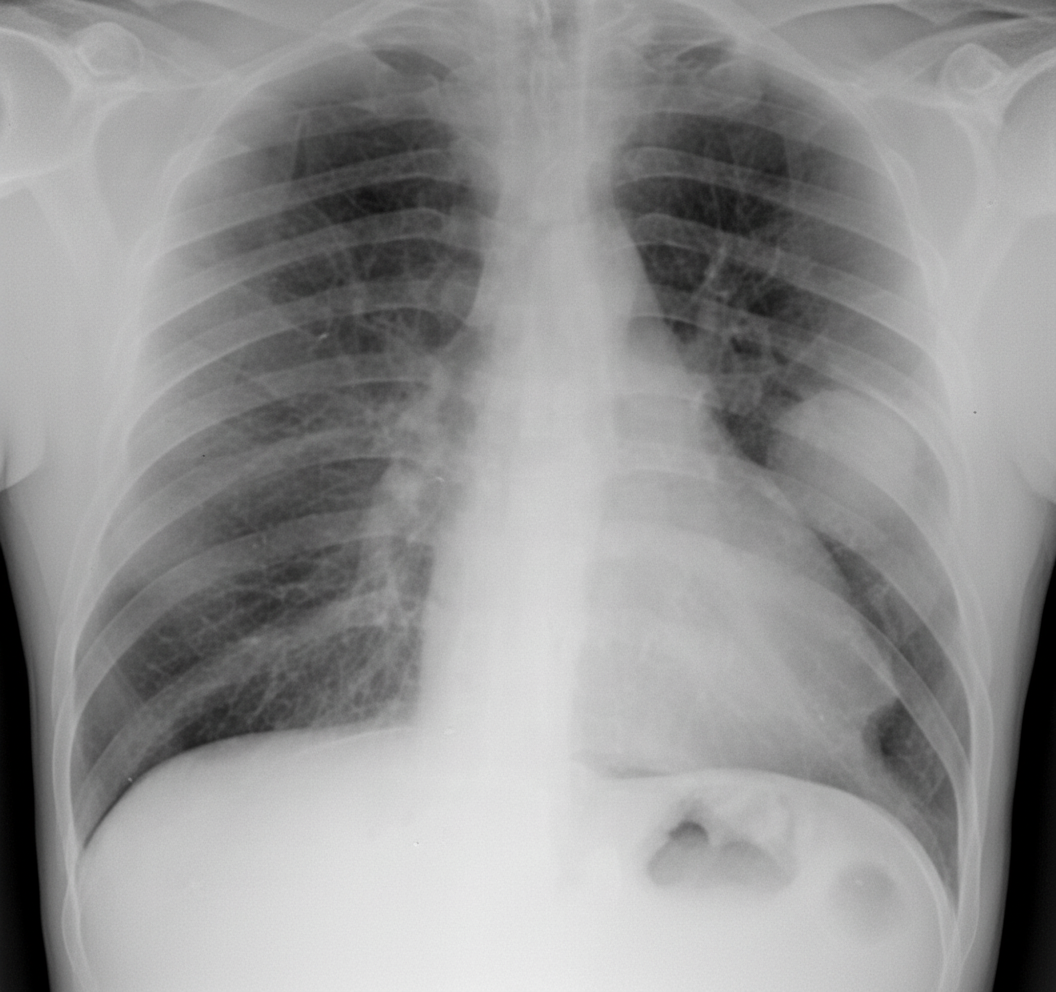
In the management of pulmonary emboli, what is the recommended infusion time for alteplase?
A 30-year-old man presents with coughing up blood and sputum. There is no associated dyspnea, fever, or pleuritic chest pain. His past medical history is significant for recurrent pneumonias and a chronic cough productive of foul-smelling purulent sputum. The sputum production is usually worse when lying down and in the morning. He quit smoking 5 years ago and started when he was 18 years old. On physical examination, he appears chronically ill with clubbing of the fingers. Wet inspiratory crackles are heard at the lung bases posteriorly. Chest imaging reveals scarring in the right lower lobe, identified as airway dilatation, bronchial wall thickening, and grapelike cysts. Which of the following is the most likely diagnosis?
Which of the following is NOT a feature of tuberculous pleural effusion?
All of the following constitute primary diagnostic criteria for ABPA, except:
Thermoplasty is used in which condition?
A 34-year-old man presents with increasing shortness of breath. He has a history of asthma that was previously well controlled, but two weeks ago he developed cold symptoms and has noticed increased coughing and shortness of breath since then. He reports no fevers or chills and denies sputum production. He is currently using his salbutamol inhaler six times a day for rescue therapy and feels unwell. His physical examination reveals wheezing on expiration, but is otherwise normal. A chest X-ray is normal. He is prescribed prednisone 30 mg once daily for one week. What is the primary mechanism of glucocorticoids in the management of asthma?
A 80-year-old male presented with a lung abscess in the left upper zone. What is the best initial treatment modality?
Clinical manifestations of bronchogenic carcinoma include the following except?
All of the following are features of sarcoidosis except?
A patient presents with non-productive cough, hemoptysis, and grade III clubbing. Chest X-ray reveals an upper left zone lesion. What is the likely cause?
Explanation: **Explanation:** In the management of hemodynamically unstable (massive) pulmonary embolism (PE), thrombolytic therapy is indicated to rapidly dissolve the clot and reduce right ventricular strain [1]. **Alteplase (rt-PA)** is the preferred thrombolytic agent [2]. **1. Why Option A is Correct:** The standard FDA-approved regimen for alteplase in acute PE is **100 mg administered as a continuous intravenous infusion over 2 hours**. This rapid infusion (1-3 hour window) is preferred over older, prolonged regimens because it achieves faster clot lysis and hemodynamic improvement without a significant increase in major bleeding complications. In extreme cases of cardiac arrest, a "bolus" dose may be considered, but the 2-hour infusion remains the gold standard for massive PE. **2. Why Other Options are Incorrect:** * **Options B, C, and D:** These timeframes (4-12 hours) represent outdated protocols. Historically, first-generation thrombolytics like Streptokinase were administered over 12–24 hours [2]. However, for Alteplase, prolonged infusions do not offer additional efficacy and significantly increase the risk of bleeding, particularly intracranial hemorrhage [1]. **3. Clinical Pearls for NEET-PG:** * **Indication:** Thrombolysis is reserved for **Massive PE** (defined by hypotension: SBP <90 mmHg) or select cases of Submassive PE with evidence of severe RV dysfunction [1]. * **Drug of Choice:** Alteplase (100 mg over 2 hours). * **Alternative:** Tenecteplase (TNK-tPA) is often used in MI but is currently being studied for PE (not yet the primary standard over Alteplase in all guidelines). * **Contraindication:** Always screen for absolute contraindications like recent intracranial hemorrhage, active internal bleeding, or recent ischemic stroke (within 3 months) [1]. * **Post-Thrombolysis:** Heparin therapy should be initiated/resumed once the aPTT falls below twice the upper limit of normal.
Explanation: ### Explanation **1. Why Bronchiectasis is Correct:** The clinical triad of **chronic cough**, **foul-smelling purulent sputum**, and **hemoptysis** [1] in a patient with a history of recurrent infections is classic for bronchiectasis. The key pathophysiological concept is the permanent, abnormal dilation of the bronchi due to a cycle of inflammation and infection. * **Sputum Production:** The increase in sputum when lying down (postural drainage) is characteristic. * **Physical Findings:** Digital clubbing [1] and "wet" inspiratory crackles [2] (velcro crackles) are hallmark signs. * **Imaging:** The description of "airway dilatation, bronchial wall thickening, and grapelike cysts" refers to the classic **"Tram-track" appearance** and **cystic bronchiectasis**, which are definitive diagnostic features on HRCT (the gold standard) [2]. **2. Why Incorrect Options are Wrong:** * **B. Chronic Bronchitis:** While it involves a productive cough, it is usually associated with heavy smoking (this patient quit 5 years ago) and does not typically present with clubbing, foul-smelling sputum, or cystic changes on imaging. * **C. Disseminated TB:** Usually presents with systemic symptoms like high-grade fever, night sweats, and weight loss. Imaging would show miliary mottling or upper lobe cavitary lesions rather than localized lower lobe bronchial dilation. * **D. Pulmonary Neoplasm:** While it can cause hemoptysis and clubbing, it is less likely in a 30-year-old with a lifelong history of recurrent pneumonias and foul-smelling sputum. **3. NEET-PG High-Yield Pearls:** * **Gold Standard Investigation:** High-Resolution CT (HRCT) of the chest. * **Signet Ring Sign:** On HRCT, a dilated bronchus appearing larger than its accompanying pulmonary artery. * **Most Common Cause (Global):** Post-infectious (e.g., TB, Measles, Pertussis). * **Most Common Cause (Genetic):** Cystic Fibrosis (usually involves upper lobes). * **Kartagener Syndrome:** A subset of Primary Ciliary Dyskinesia presenting with the triad of Bronchiectasis, Sinusitis, and Situs Inversus.
Explanation: ### Explanation **Correct Answer: D. Increased mesothelial cells** In **Tuberculous Pleural Effusion (TPE)**, the hallmark finding is a **paucity or near-absence of mesothelial cells** (typically <5%). This occurs because the intense delayed-type hypersensitivity reaction causes extensive fibrin deposition and inflammation on the pleural surfaces, which "coats" the pleura and prevents mesothelial cells from shedding into the fluid [1]. Therefore, the presence of many mesothelial cells effectively rules out tuberculosis [1]. **Analysis of Incorrect Options:** * **A. LDH > 60% of serum LDH:** TPE is a classic **exudate**. According to Light’s Criteria, an exudate must meet at least one of three criteria: Pleural fluid/Serum Protein ratio >0.5, Pleural fluid/Serum LDH ratio >0.6, or Pleural fluid LDH >2/3rd the upper limit of normal serum LDH [1]. * **B. Adenosine Deaminase (ADA):** ADA is a high-yield marker for TPE. Levels **>40 U/L** have high sensitivity and specificity. It reflects the activation of T-lymphocytes in response to mycobacterial antigens. * **C. WBC count 5000 - 10000:** TPE typically presents with a total leukocyte count in the range of 1,000 to 10,000 cells/µL, with a marked **lymphocyte predominance** (>80-90%) [1]. **Clinical Pearls for NEET-PG:** * **Gold Standard Diagnosis:** Pleural biopsy (showing granulomas) is more sensitive than fluid culture or AFB staining [1]. * **IFN-gamma:** High levels of Interferon-gamma in pleural fluid are also highly suggestive of TPE. * **Glucose:** Usually low to normal; if extremely low (<30 mg/dL), consider empyema or malignancy [1]. * **Rule of Thumb:** If you see "many mesothelial cells" on a cytology report, think of other causes like pulmonary infarction or congestive heart failure, not TB [1].
Explanation: Allergic Bronchopulmonary Aspergillosis (ABPA) is a complex hypersensitivity reaction to Aspergillus fumigatus colonization in the airways, typically seen in patients with Asthma or Cystic Fibrosis. Why Option D is the correct answer: The identification of A. fumigatus from sputum is not a primary diagnostic criterion. Aspergillus is ubiquitous in the environment; its presence in sputum may represent simple colonization or environmental contamination and does not confirm an active immunological disease process. Diagnosis relies on immunological evidence and radiological findings rather than a positive culture. Analysis of other options (Primary Criteria): Elevated Serum IgE (>417 IU/ml or >1000 ng/ml): This is a mandatory "obligatory" criterion. A level <1000 ng/ml makes ABPA highly unlikely unless the patient is on systemic steroids. [1] Peripheral Eosinophilia (>500 cells/µL): This is a classic secondary/supportive criterion (often part of the ISHAM criteria) reflecting the Type I and Type III hypersensitivity nature of the disease. Central/Proximal Bronchiectasis: This is a hallmark radiological finding. Unlike post-tubercular bronchiectasis, ABPA typically affects the inner two-thirds of the lung fields (central), sparing the periphery. High-Yield Clinical Pearls for NEET-PG: Obligatory Criteria (ISHAM 2013): 1. Positive Type I skin test for Aspergillus OR elevated IgE specific to A. fumigatus. 2. Elevated Total Serum IgE (>1000 IU/mL). [1] Radiology: Look for "Finger-in-glove" appearance and "High-attenuation mucus" (HAM) on CT—the latter is pathognomonic for ABPA. Treatment: The mainstay is Oral Corticosteroids to suppress the immune response, often combined with Itraconazole to reduce the fungal burden.
Explanation: **Explanation:** **Bronchial Thermoplasty (BT)** is an innovative, FDA-approved bronchoscopic procedure specifically designed for the management of **severe, persistent asthma** that remains uncontrolled despite optimal medical therapy (high-dose inhaled corticosteroids and long-acting beta-agonists) [1]. **Why Asthma is the Correct Answer:** The pathophysiology of asthma involves hypertrophy and hyperplasia of the **bronchial smooth muscle (BSM)**, leading to airway hyperresponsiveness and narrowing. Bronchial thermoplasty uses controlled **radiofrequency energy** (thermal energy) delivered via a catheter to the airways. This heat selectively reduces the mass of the smooth muscle, thereby decreasing the lung's ability to constrict during an asthma attack. It typically involves three separate sessions targeting different lobes of the lungs. **Why Other Options are Incorrect:** * **COPD:** While COPD involves airway obstruction, the primary pathology is alveolar destruction (emphysema) and chronic inflammation/mucus production (bronchitis), rather than reversible smooth muscle constriction. * **Bronchiectasis:** This is characterized by permanent, abnormal dilation of the bronchi due to chronic infection and inflammation. Treatment focuses on airway clearance and antibiotics, not smooth muscle reduction. * **Carcinoma Lung:** Treatment modalities for lung cancer include surgery, chemotherapy, radiotherapy, or endobronchial interventions like stenting or laser ablation, but not thermoplasty. **High-Yield Clinical Pearls for NEET-PG:** * **Indication:** Severe persistent asthma in patients ≥18 years old [1]. * **Mechanism:** Reduction of airway smooth muscle (ASM) mass. * **Contraindication:** Patients with pacemakers, internal defibrillators, or those experiencing an active asthma exacerbation. * **Common Side Effect:** Transient worsening of respiratory symptoms (cough, wheeze) immediately following the procedure.
Explanation: **Explanation:** **Why Option A is correct:** Asthma is fundamentally a **chronic inflammatory disorder** of the airways. Glucocorticoids (like Prednisone) are the most effective anti-inflammatory agents used in its management. Their primary mechanism involves: 1. **Inhibition of inflammatory mediators:** They inhibit the synthesis of cytokines (IL-4, IL-5), leukotrienes, and prostaglandins. 2. **Reduction of inflammatory cells:** They induce apoptosis of eosinophils and T-lymphocytes and decrease mast cell density. 3. **Up-regulation of Beta-2 receptors:** They increase the expression of $\beta_2$-adrenergic receptors on airway smooth muscle, which enhances the responsiveness to bronchodilators (synergistic effect). **Why the other options are incorrect:** * **B. Bronchodilatory effect:** Glucocorticoids do **not** have a direct relaxant effect on airway smooth muscle. Bronchodilation is achieved by $\beta_2$-agonists (e.g., Salbutamol) or anticholinergics (e.g., Ipratropium) [1]. * **C. Sedative effect:** Glucocorticoids do not cause sedation; in fact, they can cause CNS side effects like insomnia, euphoria, or psychosis. * **D. Mucolytic effect:** While steroids reduce mucus hypersecretion by decreasing inflammation, they do not chemically break down mucus (the role of mucolytics like N-acetylcysteine). **High-Yield Clinical Pearls for NEET-PG:** * **Drug of Choice:** Inhaled Corticosteroids (ICS) are the first-line maintenance therapy for persistent asthma [1]. * **Systemic Steroids:** Reserved for acute exacerbations (as seen in this patient) to prevent relapse and speed up recovery [1]. * **Side Effects:** Long-term ICS use carries a risk of **oropharyngeal candidiasis** (prevented by using a spacer and rinsing the mouth) and dysphonia. * **Mechanism Tip:** Steroids act via **intracellular receptors** to alter gene transcription (genomic effect), which is why their clinical onset takes several hours. [1]
Explanation: ### Explanation **Correct Option: A. Antibiotics guided by identified organisms** The cornerstone of management for a lung abscess is **prolonged medical therapy with antibiotics** [1]. Unlike abscesses in other parts of the body, lung abscesses typically communicate with the bronchial tree, allowing for natural drainage through expectoration. Therefore, surgical or percutaneous drainage is rarely required as an initial step. Treatment usually begins with empirical coverage (targeting anaerobes, *S. aureus*, and Gram-negative bacilli) and is subsequently tailored based on culture and sensitivity results from sputum, blood, or bronchoalveolar lavage [1]. **Why other options are incorrect:** * **B. Surgical Drainage:** This is reserved for refractory cases (failure of medical therapy), suspected malignancy, or massive hemoptysis [1]. It is not the initial treatment due to high morbidity and the risk of bronchopleural fistula. * **C. Tube Thoracostomy:** This is the treatment of choice for **empyema** (pus in the pleural space), not a lung abscess [2]. Inserting a chest tube into a lung abscess can lead to a persistent air leak or a bronchopleural fistula [2]. * **D. Observation:** Lung abscess is a serious infection that can lead to sepsis, rupture, or chronic lung damage; it requires active pharmacological intervention. **Clinical Pearls for NEET-PG:** * **Duration of Therapy:** Antibiotics are typically continued for **3–6 weeks** (or until the chest X-ray shows the cavity has cleared or a small stable scar remains) [1]. * **Most Common Site:** The **posterior segment of the right upper lobe** and the **superior segment of the lower lobes** (due to aspiration anatomy). * **Primary Organisms:** Anaerobes (e.g., *Peptostreptococcus*, *Fusobacterium*, *Bacteroides*) are most common in aspiration-related abscesses. * **Indications for Surgery:** Large cavity (>6 cm), failure of medical therapy after 7–10 days, or life-threatening hemoptysis [1].
Explanation: Bronchogenic carcinoma often presents with symptoms related to local tumor invasion or compression of adjacent mediastinal structures [1]. **Why Option D is the Correct Answer:** While the **vagus nerve** can occasionally be involved by a mediastinal tumor, it typically manifests as vocal cord paralysis (via the recurrent laryngeal branch). **Gastroparesis** (delayed gastric emptying) is not a recognized clinical manifestation of bronchogenic carcinoma. Gastroparesis is more commonly associated with diabetes mellitus, post-viral syndromes, or post-surgical complications, rather than neoplastic infiltration in the chest. **Analysis of Incorrect Options:** * **A. Hoarseness of voice:** This is a classic sign of lung cancer, particularly in the left lung [1]. The **left recurrent laryngeal nerve** loops under the aortic arch and is frequently compressed by hilar lymphadenopathy or direct tumor extension, leading to vocal cord palsy. * **B. Horner’s Syndrome:** This occurs due to an apical tumor (**Pancoast tumor**) invading the **cervical sympathetic chain** (specifically the stellate ganglion). It presents with the triad of miosis, ptosis, and anhidrosis. * **C. Diaphragmatic palsy:** Infiltration of the **phrenic nerve** by the tumor leads to paralysis of the hemidiaphragm, which is seen as an elevated diaphragm on a chest X-ray and paradoxical movement during respiration. **High-Yield Clinical Pearls for NEET-PG:** * **Pancoast Syndrome:** Superior sulcus tumor + Horner’s syndrome + shoulder pain + atrophy of hand muscles (C8-T2 involvement). * **SVC Syndrome:** Most commonly caused by small cell lung cancer or squamous cell carcinoma. * **Phrenic Nerve:** "C3, 4, 5 keep the diaphragm alive." Its involvement is a sign of unresectability in some staging systems. * **Left vs. Right:** The left recurrent laryngeal nerve is more susceptible to thoracic pathology than the right due to its longer intrathoracic course [1].
Explanation: Explanation: Sarcoidosis is a multisystem, chronic granulomatous disease characterized by the formation of **non-caseating granulomas**. **Why Malabsorption Syndrome is the correct answer:** While sarcoidosis can affect almost any organ, the gastrointestinal tract is involved in less than 1% of cases [1]. When it does occur, it most commonly affects the stomach (gastritis). **Malabsorption syndrome** is not a feature of sarcoidosis; it is more characteristic of conditions like Celiac disease, Tropical sprue, or Whipple’s disease. [1] **Analysis of incorrect options:** * **Right paratracheal lymphadenopathy:** This is a classic radiological finding. Sarcoidosis typically presents with **bilateral hilar lymphadenopathy** often accompanied by right paratracheal lymphadenopathy (forming the "1-2-3 sign" or Garland’s triad) [1]. * **Cardiomyopathy:** Cardiac sarcoidosis occurs in about 5% of patients [1]. Granulomatous infiltration of the myocardium can lead to restrictive cardiomyopathy, heart block, arrhythmias, and sudden cardiac death [1]. * **Hypercalcemia:** This is a high-yield metabolic feature. Epithelioid cells within the granulomas contain the enzyme **1-alpha-hydroxylase**, which converts Vitamin D to its active form (1,25-dihydroxyvitamin D), leading to increased intestinal calcium absorption and hypercalciuria/hypercalcemia [1]. **NEET-PG Clinical Pearls:** * **Lofgren’s Syndrome:** A triad of Erythema nodosum, bilateral hilar lymphadenopathy, and polyarthritis (Good prognosis) [1]. * **Heerfordt’s Syndrome (Uveoparotid fever):** Parotid enlargement, facial nerve palsy, and anterior uveitis. * **Diagnosis:** Elevated **Serum ACE levels** (non-specific) and biopsy showing non-caseating granulomas. * **Asteroid bodies** and **Schaumann bodies** are characteristic microscopic findings within the granulomas.
Explanation: ### Explanation The clinical triad of **non-productive cough, hemoptysis, and digital clubbing** in an adult with a localized lung lesion is highly suggestive of bronchogenic carcinoma [1]. **1. Why Non-small cell carcinoma (NSCLC) is correct:** NSCLC (specifically Squamous cell carcinoma and Adenocarcinoma) is the most common cause of **digital clubbing** among lung malignancies. Squamous cell carcinoma typically presents as a central hilar mass with hemoptysis [1], while Adenocarcinoma often presents as a peripheral lesion in the upper zones. The presence of **Grade III clubbing** (increased curvature and "drumstick" appearance) is a classic paraneoplastic sign of NSCLC [2], whereas it is notably **rare in Small cell carcinoma**. **2. Why the other options are incorrect:** * **Small cell carcinoma:** While it presents with cough and hemoptysis, it is rarely associated with clubbing. It is more commonly associated with endocrine paraneoplastic syndromes like SIADH or Cushing’s syndrome [2]. * **Tuberculosis (TB):** TB is a common cause of upper zone lesions and hemoptysis in endemic regions. However, clubbing [3] is generally a feature of chronic suppurative complications (like bronchiectasis) rather than uncomplicated TB. * **Fungal infection:** While conditions like an Aspergilloma (fungal ball) can cause hemoptysis and appear as an upper zone mass, they do not typically cause significant digital clubbing unless there is underlying chronic lung destruction. **Clinical Pearls for NEET-PG:** * **Clubbing + Lung Cancer:** If a question mentions clubbing in a lung cancer case, think **NSCLC** [3] (specifically Adenocarcinoma or Squamous cell). * **Hypertrophic Osteoarthropathy (HOA):** This is a syndrome of clubbing and periostitis, most commonly associated with NSCLC [2]. * **Upper Zone Lesions:** Differential includes TB, Fungal ball, Silicosis, and Bronchogenic carcinoma (Adenocarcinoma). * **Hemoptysis:** The most common cause of massive hemoptysis is Bronchiectasis; the most common cause of mild/streaky hemoptysis is Bronchitis or Malignancy [1].
Obstructive Airway Diseases (Asthma, COPD)
Practice Questions
Interstitial Lung Diseases
Practice Questions
Pulmonary Infections
Practice Questions
Pulmonary Vascular Diseases
Practice Questions
Pleural Diseases
Practice Questions
Sleep-Disordered Breathing
Practice Questions
Respiratory Failure
Practice Questions
Mediastinal Disorders
Practice Questions
Occupational Lung Diseases
Practice Questions
Pulmonary Function Testing
Practice Questions
Bronchiectasis and Cystic Fibrosis
Practice Questions
Lung Cancer Approach
Practice Questions
Get full access to all questions, explanations, and performance tracking.
Start For Free