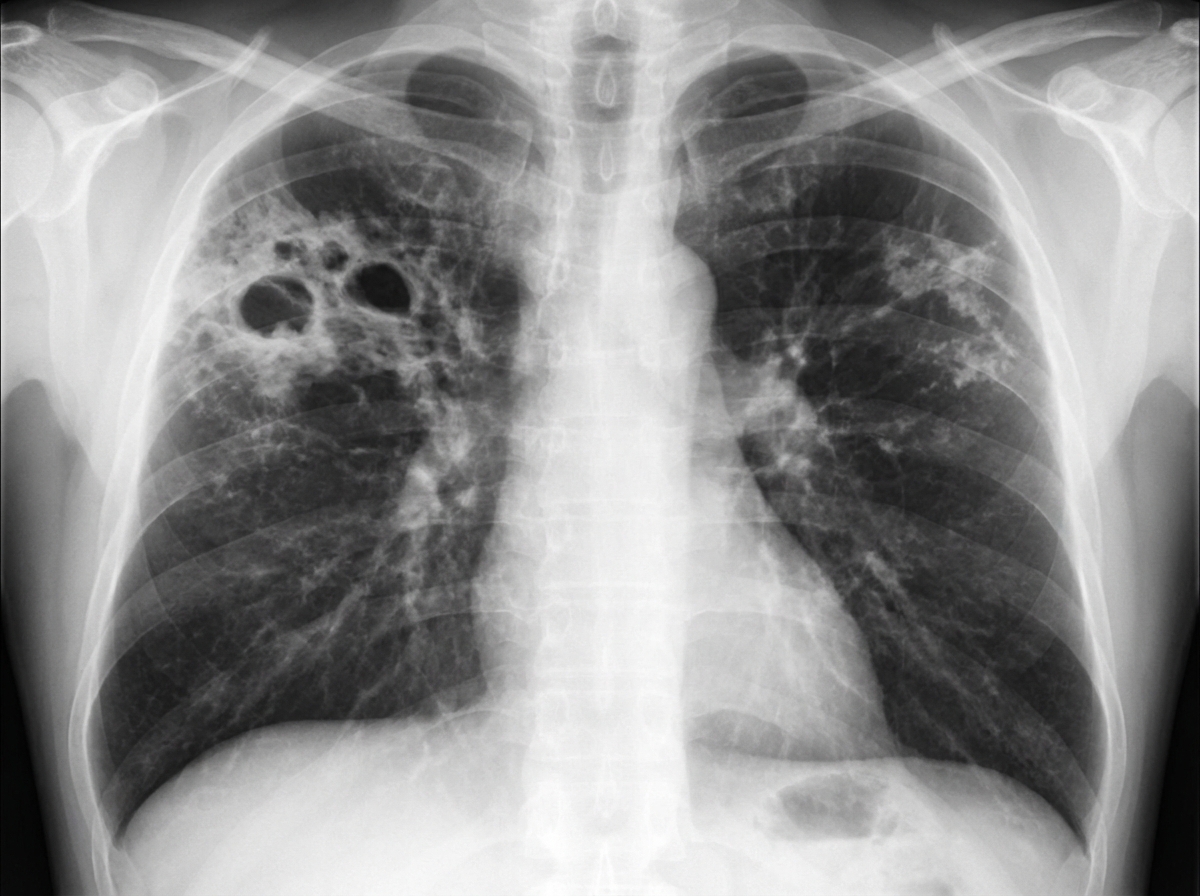
What is the most reliable investigation in the diagnosis of pulmonary embolism?
Which of the following is an obstructive lung disease?
Kallmann syndrome is characterized by which of the following?
Precapillary Pulmonary hypertension is caused by all EXCEPT:
A 29-year-old anxious lady presents with a history of progressive breathlessness and exercise intolerance for four months. Her FVC is 90% and FEV1/FVC is 86%. Oxygen saturation after exercise dropped from 92% to 86%. What is the likely diagnosis?
Which of the following is not found as a presentation of sarcoidosis?
What is the diagnostic test for acute pulmonary embolism?
Regarding Sarcoidosis, which of the following statements are true? 1. The most commonly involved organ is the lung. 2. Lupus pernio is a type of sarcoid skin lesion. 3. 90% of patients will have an abnormal chest X-ray sometime during the course of the disease. 4. Blindness is not a complication of sarcoidosis. 5. Tissue biopsy is not mandatory to establish the diagnosis.
A 60-year-old man, a heavy smoker, presents for advice to stop smoking. He is thin, has a ruddy complexion, a productive cough, and a barrel-shaped chest. He sits leaning forward with pursed lips to facilitate his breathing. A diagnosis of emphysema is made. Which of the following is the most likely histologic finding in the lungs?
All drugs cause interstitial lung disease, except:
Explanation: **Explanation:** The diagnosis of Pulmonary Embolism (PE) relies on a hierarchy of imaging, ranging from screening tools to the definitive "Gold Standard." **1. Why Angiography is Correct:** **Conventional Pulmonary Angiography** is historically and clinically regarded as the **Gold Standard** and the most reliable investigation for diagnosing PE. It is an invasive procedure where contrast is injected directly into the pulmonary arteries. It provides the highest sensitivity and specificity by demonstrating a direct intraluminal filling defect or an abrupt "cutoff" of a vessel. While CT Pulmonary Angiography (CTPA) is now the first-line clinical investigation due to its non-invasive nature, conventional angiography remains the definitive reference standard. **2. Why the other options are incorrect:** * **A. Lung Scan (V/Q Scan):** This measures ventilation and perfusion. While useful in patients with renal failure or contrast allergy, it is often "indeterminate" and lacks the definitive diagnostic accuracy of angiography. * **C. Differential Gas Tension:** Arterial Blood Gas (ABG) typically shows hypoxemia and respiratory alkalosis (due to hyperventilation), but these findings are non-specific and can occur in many other pulmonary conditions. * **D. ECG:** The most common finding is sinus tachycardia. The "classic" **S1Q3T3 pattern** (deep S in lead I, Q wave and inverted T in lead III) is specific but seen in less than 20% of cases. It is used to rule out myocardial infarction rather than diagnose PE. **Clinical Pearls for NEET-PG:** * **Most common symptom:** Dyspnea. * **Most common sign:** Tachypnea. * **Best initial/First-line investigation:** CT Pulmonary Angiography (CTPA). * **Gold Standard investigation:** Pulmonary Angiography. * **Investigation of choice in pregnancy/Renal failure:** V/Q Scan. * **Chest X-ray findings:** Usually normal, but may show **Hampton’s Hump** (wedge-shaped opacity) or **Westermark sign** (focal oligemia).
Explanation: **Explanation:** Obstructive lung diseases are characterized by **increased resistance to airflow** due to partial or complete obstruction at any level of the respiratory tract. The hallmark physiological finding is a **decreased FEV1/FVC ratio (<0.7)** [1]. * **Bronchial Asthma:** Characterized by reversible airway hyperresponsiveness and chronic inflammation, leading to bronchoconstriction and mucus plugging [1]. * **Chronic Bronchitis:** Defined clinically as a productive cough for at least 3 months in 2 consecutive years. It involves hypertrophy of mucus-secreting glands in the large airways, causing luminal narrowing. * **Bronchiectasis:** A condition of permanent, abnormal dilation of the bronchi and bronchioles caused by destruction of muscle and elastic tissue, resulting in impaired clearance of secretions and airway collapse. Since all three conditions involve pathology that impedes the outflow of air, they are all classified as obstructive lung diseases. **High-Yield Clinical Pearls for NEET-PG:** * **The "Big Four" Obstructive Diseases:** Asthma, Chronic Bronchitis, Emphysema, and Bronchiectasis [2]. (Note: Chronic Bronchitis + Emphysema = COPD). * **PFT Pattern:** In obstructive disease, FEV1 is decreased significantly more than FVC, leading to a **decreased FEV1/FVC ratio** [1]. In contrast, restrictive diseases (like ILD) show a normal or increased ratio. * **Flow-Volume Loop:** Look for a **"scooped-out"** appearance on the expiratory limb [1]. * **Reversibility:** A post-bronchodilator increase in FEV1 of **>12% and >200 mL** suggests Asthma over COPD [1].
Explanation: The question refers to **Kartagener Syndrome**, which is a specific subset of **Primary Ciliary Dyskinesia (PCD)**. It is an autosomal recessive disorder characterized by a classic clinical triad: **Situs inversus, Chronic sinusitis, and Bronchiectasis.** 1. **Situs Inversus (Option A):** During embryonic development, normal ciliary beating is required for the proper left-right positioning of internal organs. Defective cilia lead to a 50% chance of random organ orientation, resulting in situs inversus (reversal of organs). 2. **Bronchiectasis and Sinusitis (Option B):** Cilia are essential for the "mucociliary escalator." In PCD, impaired ciliary motility leads to poor clearance of mucus from the respiratory tract, causing recurrent infections, chronic sinusitis, and permanent dilation of the bronchi (bronchiectasis). 3. **Male Infertility (Option C):** The structural defect (most commonly a lack of **dynein arms**) that affects respiratory cilia also affects the flagella of spermatozoa. This results in immotile sperm, leading to infertility. **Note on Nomenclature:** While the prompt mentions "Kallmann syndrome" (which is actually Hypogonadotropic Hypogonadism with Anosmia) [1], the options and the marked correct answer clearly describe **Kartagener Syndrome**. In the context of NEET-PG, this is a common "trap" or typo; always prioritize the clinical triad presented in the options. **High-Yield Clinical Pearls for NEET-PG:** * **Genetic Defect:** Most commonly mutations in *DNAI1* and *DNAH5* genes. * **Diagnostic Test:** Screening with **Nasal Nitric Oxide (nNO)** levels (low in PCD); gold standard is **Electronic Microscopy** of ciliary ultrastructure or genetic testing. * **Dextrocardia:** Often the first clue on a chest X-ray (heart apex on the right). * **Female Fertility:** Can also be reduced due to impaired ciliary action in the fallopian tubes.
Explanation: **Explanation:** Pulmonary Hypertension (PH) is hemodynamically classified into two main types based on the site of resistance: **Pre-capillary** and **Post-capillary**. 1. **Why Mitral Stenosis is the correct answer:** Mitral stenosis is a classic cause of **Post-capillary PH** (WHO Group 2). In this condition, the narrowing of the mitral valve leads to increased pressure in the left atrium, which is transmitted backward into the pulmonary veins and then the pulmonary capillaries. Hemodynamically, this is characterized by an elevated **Pulmonary Capillary Wedge Pressure (PCWP >15 mmHg)**. 2. **Why the other options are incorrect (Pre-capillary causes):** Pre-capillary PH occurs when the pathology is located *before* the pulmonary capillaries (PCWP remains normal, ≤15 mmHg). * **Primary Pulmonary Hypertension (Idiopathic PAH):** Involves intrinsic remodeling of the pulmonary arteries (WHO Group 1). * **Pulmonary Vasculitis:** Causes inflammation and narrowing of the arterial bed (WHO Group 1). * **Thromboembolism:** Leads to Chronic Thromboembolic Pulmonary Hypertension (CTEPH) by physically obstructing the arterial flow (WHO Group 4). **High-Yield Clinical Pearls for NEET-PG:** * **Hemodynamic Definition:** Pre-capillary PH is defined by a Mean Pulmonary Artery Pressure (mPAP) >20 mmHg AND a PCWP ≤15 mmHg. * **WHO Groups:** * **Group 1:** PAH (Idiopathic, Drugs, Connective Tissue Disease). * **Group 2:** Left Heart Disease (Mitral/Aortic valve disease, Heart Failure) — **Most common cause of PH overall.** * **Group 3:** Lung Disease/Hypoxia (COPD, ILD). * **Group 4:** CTEPH. * **Group 5:** Multifactorial. * **Groups 1, 3, and 4 are all Pre-capillary.** Only Group 2 is Post-capillary.
Explanation: The clinical presentation points toward a vascular pathology of the lungs. The key to solving this case lies in the **mismatch between normal spirometry and significant exertional desaturation.** [1] 1. **Why Primary Pulmonary Hypertension (PPH/PAH) is correct:** In PPH, there is progressive narrowing of the pulmonary arterioles. * **Spirometry:** Since the airways and lung parenchyma are initially unaffected, the FVC (90%) and FEV1/FVC ratio (86%) remain within normal limits (Normal FEV1/FVC >70-75%). * **Desaturation:** During exercise, the restricted pulmonary vascular bed cannot accommodate increased cardiac output, leading to a ventilation-perfusion (V/Q) mismatch and a drop in oxygen saturation (92% to 86%). [2] The "anxious" description is a common distracter, as early PPH is often misdiagnosed as anxiety due to vague symptoms [2] of breathlessness. 2. **Why other options are incorrect:** * **Primary Alveolar Hypoventilation:** Characterized by hypercapnia and hypoxia, but typically shows normal lung mechanics. However, it does not usually present with progressive exercise intolerance in a young female without underlying neurological signs. * **Anxiety Disorder:** While it causes breathlessness, it **never** causes objective oxygen desaturation (SpO2 drop) during exercise. * **Interstitial Lung Disease (ILD):** While ILD causes exertional desaturation, it presents with a **Restrictive Pattern** on spirometry (decreased FVC, usually <80%). [3] Here, the FVC is normal (90%). **High-Yield Clinical Pearls for NEET-PG:** * **Classic Triad of PPH:** Progressive dyspnea, normal spirometry, and right heart strain (loud P2 on auscultation). [2] * **Demographics:** Most common in young females (20–40 years). * **Gold Standard Diagnosis:** Right heart catheterization (Mean Pulmonary Artery Pressure ≥20 mmHg at rest). * **DLCO:** In PPH, the DLCO (Diffusion Capacity) is typically **decreased** despite normal spirometry.
Explanation: Explanation: Sarcoidosis is a multisystem, chronic granulomatous disease of unknown etiology characterized by the formation of **non-caseating granulomas**. While it can affect almost any organ, its cardiovascular manifestations are specific. **Why Myocardial Infarction (Option B) is the Correct Answer:** Myocardial Infarction (MI) is typically caused by atherosclerotic plaque rupture or coronary artery occlusion. Sarcoidosis does not directly cause typical MI. While cardiac sarcoidosis involves the infiltration of granulomas into the myocardium, it leads to restrictive cardiomyopathy, heart failure, or conduction defects rather than acute coronary syndrome. **Analysis of Incorrect Options:** * **A. Erythema Nodosum:** This is a classic cutaneous manifestation of sarcoidosis [1]. When seen alongside bilateral hilar lymphadenopathy and arthralgia, it is known as **Löfgren syndrome**, which carries a favorable prognosis [1]. * **C. Arrhythmias:** Cardiac sarcoidosis most commonly involves the basal septum. Granulomatous infiltration and subsequent scarring disrupt the electrical conduction system, leading to heart blocks, ventricular arrhythmias, and sudden cardiac death [1]. * **D. CNS Involvement (Neurosarcoidosis):** Occurs in about 5–10% of patients. The most common presentation is **Cranial Nerve VII (Facial nerve) palsy** [1]. It can also cause meningitis, diabetes insipidus, and hypothalamic dysfunction [1]. **High-Yield Clinical Pearls for NEET-PG:** * **Lungs:** 90% of cases show bilateral hilar lymphadenopathy [1]. * **Eyes:** Anterior uveitis is the most common ocular finding [1]. * **Heerfordt’s Syndrome:** Uveitis, Parotid swelling, and Facial nerve palsy. * **Diagnosis:** Elevated Serum ACE levels (non-specific) and biopsy showing non-caseating granulomas. * **Asteroid bodies** and **Schaumann bodies** are characteristic microscopic findings within the granulomas.
Explanation: **Explanation:** The diagnosis of acute pulmonary embolism (PE) relies on a high index of clinical suspicion followed by a structured diagnostic algorithm [1]. **Why D-dimer is the correct answer:** D-dimer is a fibrin degradation product that rises during active clot formation and lysis. In the context of acute PE, a **D-dimer assay (specifically ELISA)** has a very high **negative predictive value (>95%)**. This makes it the ideal initial "rule-out" test in patients with a low-to-moderate clinical probability (based on Wells’ Criteria). If the D-dimer is negative, PE can be safely excluded without further imaging. **Analysis of Incorrect Options:** * **A. Chest Radiograph:** Usually normal or shows non-specific findings (e.g., atelectasis) [1]. While classic signs like **Hampton’s Hump** (wedge-shaped opacity) or **Westermark sign** (oligemia) exist, they are rare and not diagnostic. * **B. ESR:** This is a non-specific marker of inflammation and has no diagnostic utility for PE. * **C. ECG changes:** The most common ECG finding in PE is **Sinus Tachycardia** [1]. The "classic" **S1Q3T3 pattern** (deep S in lead I, Q wave and inverted T in lead III) is specific for right heart strain but is only seen in about 20% of cases [1]. **High-Yield Clinical Pearls for NEET-PG:** * **Gold Standard (Investigation of Choice):** CT Pulmonary Angiography (CTPA). * **Definitive Gold Standard (Historical):** Conventional Pulmonary Angiography (rarely used now). * **Best Initial Test:** D-dimer (for low/intermediate risk) or CTPA (for high risk). * **Pregnancy/Renal Failure:** Ventilation-Perfusion (V/Q) scan is the preferred alternative to CTPA [1]. * **Treatment of Choice (Hemodynamically Stable):** Low Molecular Weight Heparin (LMWH) or Fondaparinux. * **Treatment of Choice (Hemodynamically Unstable/Massive PE):** Systemic Thrombolysis (e.g., Alteplase).
Explanation: Sarcoidosis is a multisystemic, idiopathic disease characterized by the formation of **non-caseating granulomas**. * **Statement 1 (True):** The **lung** is the most commonly affected organ (>90% of cases), typically presenting with bilateral hilar lymphadenopathy or interstitial infiltrates [1]. * **Statement 2 (True):** **Lupus pernio** is a pathognomonic skin lesion characterized by violaceous, indurated plaques on the nose, cheeks, and ears [1]. It is associated with chronic disease and a poorer prognosis. * **Statement 3 (True):** Over **90% of patients** exhibit an abnormal chest X-ray at some point, classified by the Scadding stages (Stage 0 to IV) [1]. * **Statement 4 (False):** Ocular involvement occurs in about 25% of patients [1]. While anterior uveitis is common, **posterior uveitis** can lead to permanent vision loss and **blindness** if untreated. * **Statement 5 (False):** Diagnosis generally requires three elements: a compatible clinical/radiological picture, the presence of non-caseating granulomas on **tissue biopsy**, and the exclusion of other causes (like TB). The only exception where biopsy may be deferred is **Löfgren’s syndrome** [1]. **Why Option A is correct:** It correctly identifies that the first three statements are clinical hallmarks, while statements 4 and 5 are common misconceptions regarding the severity and diagnostic protocol of the disease. **High-Yield NEET-PG Pearls:** * **Löfgren’s Syndrome:** Triad of Erythema nodosum, bilateral hilar lymphadenopathy, and polyarthritis (Excellent prognosis) [1]. * **Heerfordt’s Syndrome:** Uveitis, parotid swelling, and facial nerve palsy. * **Lab findings:** Elevated Serum ACE levels, hypercalcemia, and hypercalciuria (due to 1-alpha hydroxylase activity in macrophages) [1]. * **Kveim-Siltzbach Test:** Historically used but now largely replaced by biopsy.
Explanation: ### Explanation **Correct Option: C (Dilation of air spaces with destruction of alveolar walls)** The clinical presentation describes a classic **"Pink Puffer"** (Emphysema-dominant COPD) [3]. Emphysema is pathologically defined as the **permanent enlargement of air spaces** distal to the terminal bronchioles, accompanied by the **destruction of alveolar walls** without significant fibrosis [2]. This destruction reduces the surface area for gas exchange and leads to loss of elastic recoil, causing air trapping and the characteristic "barrel chest" [2]. The patient’s "pursed-lip breathing" is a compensatory mechanism to increase airway pressure and prevent early collapse of these weakened alveoli during expiration. **Incorrect Options:** * **A (Bronchial smooth muscle hypertrophy/Eosinophils):** This describes **Bronchial Asthma**, characterized by reversible airway hyperresponsiveness and Type I hypersensitivity. * **B (Diffuse alveolar damage/Protein-rich fluid):** This is the hallmark of **Acute Respiratory Distress Syndrome (ARDS)**, leading to hyaline membrane formation. * **D (Hyperplasia of mucus-secreting glands):** This is the pathologic definition of **Chronic Bronchitis**. While often co-existing with emphysema in COPD, the "Blue Bloater" phenotype (cyanosis, edema) is more characteristic here. The **Reid Index** (ratio of gland thickness to wall thickness) is used to quantify this. **NEET-PG High-Yield Pearls:** * **Centriacinar Emphysema:** Most common type; associated with **smoking**; primarily affects upper lobes [1]. * **Panacinar Emphysema:** Associated with **Alpha-1 Antitrypsin deficiency**; primarily affects lower lobes. * **Paraseptal Emphysema:** Occurs near the pleura; often associated with spontaneous pneumothorax in young adults. * **Protease-Antiprotease Hypothesis:** Emphysema results from an imbalance where excess elastase (from neutrophils/macrophages) destroys elastin, unchecked by protective enzymes like Alpha-1 Antitrypsin.
Explanation: Drug-induced Interstitial Lung Disease (DILD) is a common cause of diffuse parenchymal lung disease [1]. The correct answer is **Alpha-methyl dopa**, as it is primarily associated with drug-induced autoimmune hemolytic anemia and hepatitis, but not typically with interstitial lung disease (ILD). **Why the other options are incorrect:** * **Phenytoin sodium:** This anticonvulsant is a known cause of hypersensitivity pneumonitis and can lead to pulmonary fibrosis or a pseudolymphoma-like syndrome. * **Sulphonamides:** These are associated with Eosinophilic Pneumonia (Loeffler’s syndrome) [1] and hypersensitivity reactions that manifest as interstitial infiltrates. * **Busulphan:** This alkylating agent is a classic cause of "Busulphan Lung." It causes chronic interstitial fibrosis, often occurring months to years after the initiation of therapy. **High-Yield Clinical Pearls for NEET-PG:** To master DILD questions, remember these high-yield categories: 1. **Cytotoxic/Chemo agents:** **Bleomycin** (most common, dose-dependent), Busulphan, Methotrexate (causes hypersensitivity pneumonitis) [1], and Cyclophosphamide. 2. **Anti-arrhythmics:** **Amiodarone** (highly high-yield; causes foamy macrophages in alveoli and "gold-standard" drug-induced fibrosis). 3. **Antibiotics:** **Nitrofurantoin** (causes both acute hypersensitivity and chronic fibrosis) and Sulphonamides. 4. **Others:** Gold salts [1], Penicillamine, and Phenytoin. **Mnemonic for common causes:** "**B**-**A**-**N**-**M**-**E**" (**B**leomycin, **A**miodarone, **N**itrofurantoin, **M**ethotrexate, **E**thyl alcohol/others). Alpha-methyl dopa is a "distractor" often used because it causes many other side effects, but the lung is not its primary target.
Obstructive Airway Diseases (Asthma, COPD)
Practice Questions
Interstitial Lung Diseases
Practice Questions
Pulmonary Infections
Practice Questions
Pulmonary Vascular Diseases
Practice Questions
Pleural Diseases
Practice Questions
Sleep-Disordered Breathing
Practice Questions
Respiratory Failure
Practice Questions
Mediastinal Disorders
Practice Questions
Occupational Lung Diseases
Practice Questions
Pulmonary Function Testing
Practice Questions
Bronchiectasis and Cystic Fibrosis
Practice Questions
Lung Cancer Approach
Practice Questions
Get full access to all questions, explanations, and performance tracking.
Start For Free