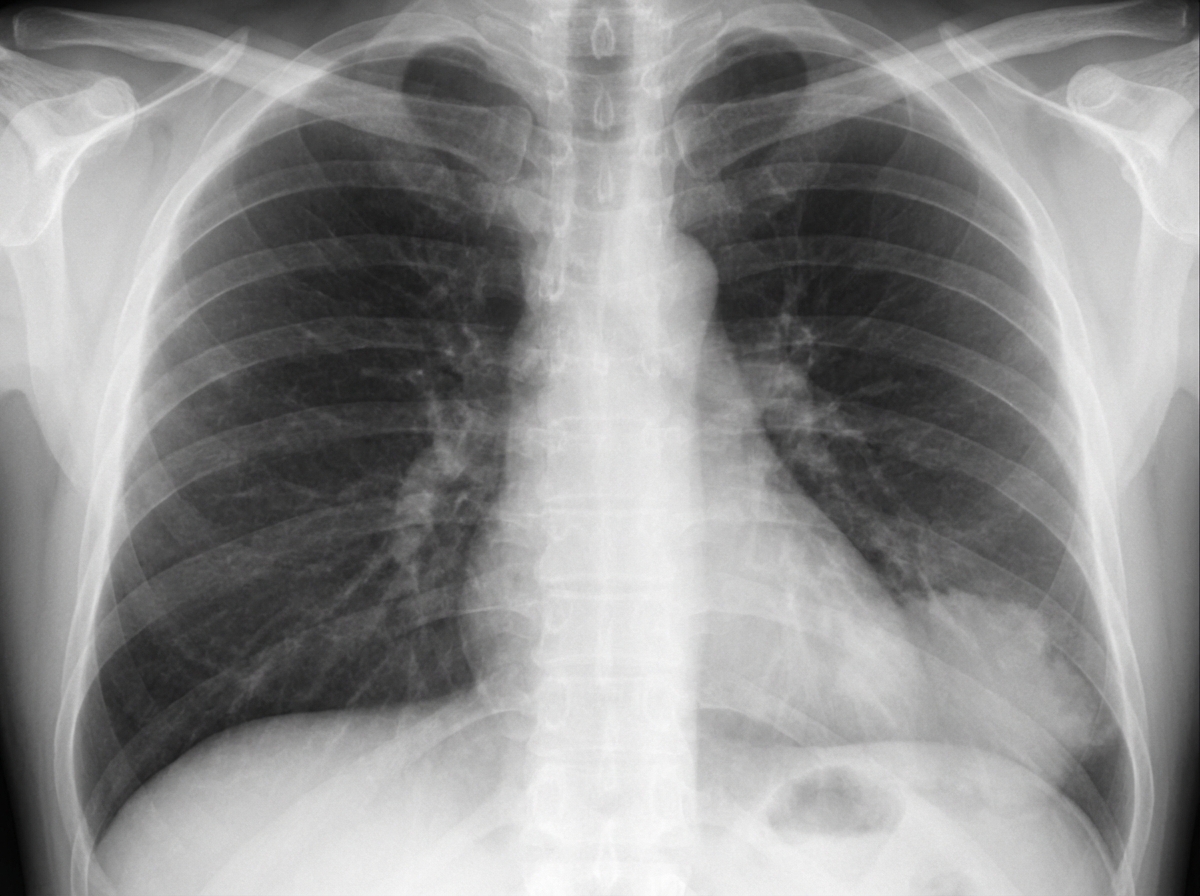
Pulmonary embolism is best diagnosed by:
What is the drug of choice for diffuse panbronchiolitis?
Rasmussen's aneurysm involves which of the following arteries?
Which of the following conditions may lead to exudative pleural effusion?
Pleural glucose less than 60 mg/dl is seen in which of the following conditions?
What is the recommended treatment for cough variant asthma?
Bronchial asthma is characterized by which of the following?
What is the basic genetic abnormality in primary pulmonary hypertension?
Clubbing is commonly seen in all of the following except?
What is the treatment most likely to benefit a patient with massive pulmonary embolism presenting in shock?
Explanation: **Explanation:** The diagnosis of Pulmonary Embolism (PE) involves a tiered approach ranging from screening to definitive confirmation. **Why Angiography is correct:** **Pulmonary Angiography** is considered the **Gold Standard** (definitive) investigation for diagnosing pulmonary embolism. It allows for the direct visualization of an intraluminal filling defect or the abrupt "cutoff" of a pulmonary vessel. While CT Pulmonary Angiography (CTPA) is the modern clinical investigation of choice due to its non-invasive nature [2], conventional catheter-based angiography remains the most accurate reference standard against which other tests are measured. **Why other options are incorrect:** * **ECG:** Non-specific. The most common finding is sinus tachycardia [1]. The "classic" S1Q3T3 pattern is specific but seen in fewer than 20% of patients [1]. It is used to rule out myocardial infarction rather than diagnose PE [1]. * **Perfusion Scan (V/Q Scan):** This is a screening tool. While a "high probability" scan in a patient with high clinical suspicion is suggestive, it is often indeterminate in patients with underlying lung disease [2]. * **Plain X-ray:** Usually normal in PE [1]. Its primary role is to rule out other causes of chest pain (like pneumonia or pneumothorax) [1]. Classic signs like Hampton’s Hump or Westermark sign are rare. **Clinical Pearls for NEET-PG:** * **Investigation of Choice (IOC):** CT Pulmonary Angiography (CTPA) [2]. * **Gold Standard:** Conventional Pulmonary Angiography. * **Best Initial Test:** Chest X-ray (to rule out mimics) or D-dimer (to rule out PE in low-risk patients). * **Most common ECG finding:** Sinus Tachycardia [1]. * **Most common symptom:** Tachypnea/Dyspnea.
Explanation: **Explanation:** **Diffuse Panbronchiolitis (DPB)** is an idiopathic inflammatory airway disease characterized by chronic inflammation of the respiratory bronchioles, commonly associated with chronic sinusitis and a high prevalence in East Asian populations. **1. Why Erythromycin is the Correct Answer:** The cornerstone of DPB management is **long-term, low-dose Macrolide therapy** (specifically Erythromycin). The therapeutic benefit is derived not from its antimicrobial properties, but from its **immunomodulatory and anti-inflammatory effects**. Macrolides inhibit mucus hypersecretion, reduce neutrophil infiltration, and decrease the production of pro-inflammatory cytokines (IL-8, TNF-α). This treatment has revolutionized the prognosis of DPB, increasing the 10-year survival rate from <25% to over 90%. **2. Why Other Options are Incorrect:** * **Tetracyclines:** While they possess some anti-inflammatory properties, they have not shown the specific clinical efficacy required to alter the course of DPB compared to macrolides. * **Prednisolone:** Although DPB is an inflammatory condition, corticosteroids alone are generally ineffective in halting the progression of the disease and are not considered first-line therapy. * **Cyclophosphamide:** This is a potent immunosuppressant used in vasculitis or interstitial lung diseases (like GPA); it has no role in the standard management of DPB. **Clinical Pearls for NEET-PG:** * **Classic Triad:** Chronic sinusitis, bilateral small nodular shadows on CXR/HRCT, and obstructive lung defect. * **HRCT Finding:**
Explanation: **Explanation:** **Rasmussen’s aneurysm** is a pseudoaneurysm of the **pulmonary artery** branch that occurs as a late complication of pulmonary tuberculosis. **1. Why the Pulmonary Artery is Correct:** In patients with chronic cavitary tuberculosis, the inflammatory process leads to the erosion of the vessel wall of a pulmonary artery branch located in the wall of a tuberculous cavity. The weakened wall undergoes aneurysmal dilatation (pseudoaneurysm). If this aneurysm ruptures into the cavity, it leads to life-threatening, massive hemoptysis. **2. Why the Other Options are Incorrect:** * **Bronchial Artery:** While the bronchial arteries are the most common source of massive hemoptysis in general (due to high systemic pressure), they are not the vessels involved in the specific pathological entity known as Rasmussen’s aneurysm. * **Intercostal Artery:** These are systemic arteries supplying the chest wall. They may be involved in hemoptysis related to pleural diseases or chronic infections via transpleural collaterals, but not in Rasmussen’s. * **Aorta:** Aorto-bronchial fistulas can cause catastrophic hemoptysis, but this is usually related to aortic aneurysms or prior surgery, not tuberculous cavitation. **3. High-Yield Clinical Pearls for NEET-PG:** * **Most common cause of massive hemoptysis:** Bronchial artery (85-90% of cases). * **Rasmussen’s Aneurysm:** A rare but classic cause of massive hemoptysis in TB. * **Gold Standard Investigation:** Bronchial Artery Angiography (to identify the bleeding site). * **Management:** Bronchial Artery Embolization (BAE) is the first-line treatment for stabilizing massive hemoptysis. For Rasmussen’s specifically, pulmonary artery embolization may be required.
Explanation: ### Explanation Pleural effusions are classified into **transudates** and **exudates** based on Light’s Criteria. This distinction is crucial for narrowing down the differential diagnosis [1]. **Correct Answer: D. Bronchogenic carcinoma** Bronchogenic carcinoma causes an **exudative** effusion [1]. The underlying mechanism involves direct pleural involvement by the tumor or lymphatic obstruction, which increases capillary permeability and prevents the drainage of proteins and cells from the pleural space [2]. Malignancy is one of the most common causes of exudative effusions, often presenting with hemorrhagic fluid and low glucose levels [1]. **Incorrect Options:** * **A, B, and C (Cirrhosis, Nephrotic Syndrome, Congestive Heart Failure):** These conditions lead to **transudative** effusions. * **CHF** increases pulmonary capillary hydrostatic pressure. * **Cirrhosis and Nephrotic Syndrome** result in hypoalbuminemia, which decreases plasma oncotic pressure. * In these cases, the pleural membranes are intact, but systemic factors alter the balance of fluid filtration and reabsorption. **High-Yield Clinical Pearls for NEET-PG:** * **Light’s Criteria:** An effusion is exudative if it meets at least one of the following: 1. Pleural fluid protein/Serum protein ratio **> 0.5** 2. Pleural fluid LDH/Serum LDH ratio **> 0.6** 3. Pleural fluid LDH **> 2/3rd** the upper limit of normal serum LDH. * **Most common cause of Transudate:** Congestive Heart Failure (usually bilateral). * **Most common cause of Exudate:** Parapneumonic effusion, followed by Malignancy and Tuberculosis [1]. * **Pseudochylothorax:** Seen in chronic Rheumatoid Arthritis or TB effusions (high cholesterol, but no chylomicrons).
Explanation: Normal pleural fluid glucose levels are typically similar to plasma levels. A **low pleural glucose (<60 mg/dL)** indicates increased metabolic activity by bacteria, malignant cells, or inflammatory cells (neutrophils/macrophages) within the pleural space, or impaired glucose transport across the pleura [1]. **Why Tuberculosis is correct:** In **Tuberculous pleurisy**, the low glucose level is attributed to the high metabolic demand of the mycobacteria and the intense inflammatory response (leukocytes) within the pleural space. It is a classic exudative effusion where glucose is often <60 mg/dL, alongside high protein and elevated Adenosine Deaminase (ADA) levels. **Analysis of Incorrect Options:** * **Malignancy:** While malignancy *can* cause low glucose, it is typically seen only in advanced stages with a high tumor burden. In many early malignant effusions, glucose remains >60 mg/dL [1]. TB is a more consistent cause of low glucose in the context of standard medical examinations. * **Fungal infection:** These are rare causes of pleural effusion and do not characteristically present with isolated low glucose as a defining feature compared to TB or Empyema. * **Pancreatitis:** Pleural effusion in pancreatitis is characterized by **very high amylase levels** (often >1000 U/L). The glucose levels in these effusions are typically normal (similar to serum). **High-Yield Clinical Pearls for NEET-PG:** * **Differential Diagnosis for Pleural Glucose <60 mg/dL:** 1. **Rheumatoid Arthritis (RA):** Characteristically very low (<30 mg/dL) [1]. 2. **Empyema/Parapneumonic effusion:** Due to bacterial consumption [2]. 3. **Tuberculosis.** 4. **Malignancy.** 5. **Lupus Pleuritis.** 6. **Esophageal Rupture.** * **ADA (Adenosine Deaminase):** If >40 U/L in pleural fluid, it is highly suggestive of Tuberculosis. * **Amylase in Pleural Fluid:** Elevated in Pancreatitis, Esophageal rupture, and certain Malignancies (e.g., Adenocarcinoma of the lung).
Explanation: ### Explanation **Correct Answer: A. Inhaled corticosteroids (ICS) low dose once a day** **1. Why Option A is Correct:** Cough Variant Asthma (CVA) is a phenotype of asthma where the sole or predominant symptom is a non-productive cough, rather than classic wheezing or dyspnea. Despite the lack of wheezing, the underlying pathophysiology remains **airway inflammation** and bronchial hyperresponsiveness [2]. According to GINA (Global Initiative for Asthma) guidelines, the cornerstone of management for all asthma variants is addressing the underlying inflammation [1]. **Low-dose Inhaled Corticosteroids (ICS)** are the first-line maintenance therapy. They reduce airway inflammation, decrease cough frequency, and prevent progression to "classic" asthma [1]. **2. Why Other Options are Incorrect:** * **Option B (LABA alone):** Long-acting beta-agonists should **never** be used as monotherapy in asthma (including CVA) due to the risk of life-threatening exacerbations [3]. They must always be combined with an ICS. * **Option C (SABA twice daily):** Short-acting beta-agonists are for symptomatic relief (rescue), not maintenance. Regular, scheduled use of SABA alone leads to receptor down-regulation and does not treat the underlying inflammation. * **Option D (Anti-tussives):** These only mask the symptom without treating the cause. In CVA, the cough is a result of bronchial hyperreactivity; therefore, bronchodilators and anti-inflammatories are required, not central cough suppressants. **3. High-Yield Clinical Pearls for NEET-PG:** * **Diagnosis:** CVA is often diagnosed via a **Methacholine Challenge Test** (showing airway hyperresponsiveness) [2] or by observing clinical improvement following a trial of asthma therapy. * **Spirometry:** Patients with CVA often have normal baseline spirometry (FEV1/FVC ratio). * **Progression:** Approximately 30-40% of untreated CVA patients may eventually develop classic wheezing asthma. * **Gold Standard:** ICS is the most effective treatment for resolving the cough in CVA, typically showing improvement within 1-2 weeks.
Explanation: **Explanation:** **Bronchial Asthma** is defined as a chronic inflammatory disorder of the airways characterized by reversible airflow obstruction and **Airway Hyperresponsiveness (AHR)** [1]. **Why Option D is Correct:** Airway Hyperresponsiveness is the physiological hallmark of asthma. It refers to an exaggerated bronchoconstrictor response to stimuli that are otherwise harmless to healthy individuals (e.g., cold air, exercise, or histamine) [2]. This hyper-reactivity leads to the classic symptoms of wheezing, breathlessness, and coughing [3]. While inflammation triggers AHR, the hyperresponsiveness itself is the defining functional characteristic that distinguishes asthma from other chronic lung diseases [2]. **Why Other Options are Incorrect:** * **Option A & B:** While asthma involves inflammation and often has an allergic (atopic) component, these are **pathological mechanisms** rather than the defining physiological characteristic [1]. Not all asthma is allergic (e.g., intrinsic or non-atopic asthma), and many inflammatory lung diseases (like COPD) are not asthma. * **Option C:** This is the opposite of the clinical reality. **Hyporesponsiveness** would imply a lack of reaction to triggers, whereas asthmatic airways are hypersensitive. **NEET-PG High-Yield Pearls:** * **Diagnosis:** The gold standard for demonstrating AHR in clinical practice is the **Methacholine Challenge Test** (a provocative test where a $\text{PC}_{20} < 8 \text{ mg/mL}$ indicates asthma) [2]. * **Pathology:** Look for **Curschmann spirals** (mucus plugs) and **Charcot-Leyden crystals** (eosinophil breakdown products) in sputum. * **Airway Remodeling:** Chronic untreated inflammation leads to subepithelial fibrosis and smooth muscle hypertrophy, making the obstruction irreversible over time.
Explanation: **Explanation:** **Primary Pulmonary Hypertension (now classified as Idiopathic Pulmonary Arterial Hypertension - IPAH)** is characterized by the remodeling of pulmonary arterioles, leading to increased vascular resistance. **1. Why Option A is Correct:** The most significant genetic discovery in IPAH is a mutation in the **Bone Morphogenetic Protein Receptor Type II (BMPR2)** gene, located on chromosome 2q33 [1]. BMPR2 is a member of the TGF-̢ receptor superfamily. Under normal conditions, BMPR2 signaling inhibits the proliferation of vascular smooth muscle cells. A "loss-of-function" mutation [1] leads to uncontrolled proliferation of endothelial and smooth muscle cells, resulting in the characteristic **plexiform lesions** and vascular narrowing. **2. Why Other Options are Incorrect:** * **Option B (Endothelin):** While Endothelin-1 levels are elevated in pulmonary hypertension and contribute to vasoconstriction, it is a **mediator** [2] of the disease process, not the primary genetic abnormality. * **Option C (Homeobox gene):** These genes are involved in anatomical development and pattern formation during embryogenesis, not the pathogenesis of IPAH. * **Option D (PAX-II):** PAX genes are transcription factors involved in organogenesis (specifically renal and eye development); they have no established link to pulmonary hypertension. **Clinical Pearls for NEET-PG:** * **Inheritance:** BMPR2 mutations follow an **Autosomal Dominant** pattern with **incomplete penetrance** (only ~20% of carriers develop the disease). * **Histology:** The pathognomonic finding is the **Plexiform lesion**. * **Demographics:** Most common in young females (Female:Male ratio ≈ 3:1). * **Diagnosis:** Gold standard is **Right Heart Catheterization** (Mean Pulmonary Artery Pressure >20 mmHg at rest).
Explanation: **Explanation:** Digital clubbing is a clinical sign characterized by the focal bulbous enlargement of the terminal phalanges [1]. It is primarily associated with chronic suppurative lung diseases, malignancies, and interstitial lung diseases [2]. **Why Tropical Eosinophilia is the correct answer:** Tropical Pulmonary Eosinophilia (TPE) is a hypersensitivity response to microfilariae (*Wuchereria bancrofti* or *Brugia malayi*). While it presents with severe paroxysmal cough, wheezing, and peripheral eosinophilia, it is an **acute to subacute inflammatory condition** that does not typically lead to the structural changes or chronic hypoxia/vascular endothelial growth factor (VEGF) release required to produce clubbing. **Analysis of Incorrect Options:** * **Mesothelioma (A):** Pleural tumors, both benign (fibrous tumor) and malignant (mesothelioma), are classic causes of hypertrophic osteoarthropathy and clubbing. * **Bronchiectasis (C):** This is a chronic suppurative lung disease. Persistent infection and inflammation lead to permanent airway dilation, making it one of the most common causes of bilateral clubbing [1]. * **Fibrosing Alveolitis (D):** Now commonly referred to as Idiopathic Pulmonary Fibrosis (IPF). Clubbing is a hallmark clinical feature of interstitial lung diseases, seen in approximately 40-70% of patients [2]. **NEET-PG High-Yield Pearls:** * **Mnemonic for Respiratory causes:** "ABCDEF" – **A**bscess (Lung), **B**ronchiectasis, **C**ystic Fibrosis, **D**on't forget Empyema, **E**mpyema, **F**ibrosing Alveolitis/Fibrosis. * **Important Exclusion:** Clubbing is notably **absent** in uncomplicated COPD and Asthma. If clubbing is found in a COPD patient, suspect underlying lung cancer or bronchiectasis [1]. * **Unilateral Clubbing:** Think of axillary artery aneurysm or brachial plexus injury. * **Schamroth’s Sign:** Loss of the normal diamond-shaped window between the nail beds when fingers are opposed (earliest sign of clubbing).
Explanation: ### Explanation **Correct Answer: A. Thrombolytic therapy** **Why it is correct:** A **massive pulmonary embolism (PE)** is defined by the presence of hemodynamic instability (systolic BP <90 mmHg or a drop of ≥40 mmHg for >15 minutes). In this state, the mechanical obstruction of the pulmonary arteries leads to acute right ventricular (RV) failure and a subsequent drop in left ventricular preload, resulting in obstructive shock. **Thrombolytic therapy** (e.g., Alteplase, Streptokinase) is the treatment of choice because it rapidly dissolves the clot, reduces pulmonary artery pressure, improves RV function, and restores systemic perfusion [1]. It is the only medical intervention shown to reduce mortality in hemodynamically unstable patients [1]. **Why the other options are incorrect:** * **B. Inotropic agents:** While dobutamine or norepinephrine may be used as temporary bridges to support blood pressure, they do not address the underlying mechanical obstruction. Over-aggressive use can worsen myocardial ischemia. * **C. Vasodilator therapy:** Pulmonary vasodilators (like inhaled nitric oxide) may be used as adjuncts, but systemic vasodilators are contraindicated as they would further worsen the systemic hypotension and shock. * **D. Diuretic therapy:** Diuretics reduce preload. In massive PE, the patient is "preload dependent" to maintain what little cardiac output remains. Diuretics can lead to a catastrophic drop in blood pressure. **High-Yield Clinical Pearls for NEET-PG:** 1. **Gold Standard Diagnosis:** CT Pulmonary Angiography (CTPA) is the investigation of choice for PE [2]. 2. **ECG Findings:** The most common finding is **Sinus Tachycardia**. The classic **S1Q3T3** pattern is specific but seen in less than 20% of cases. 3. **Absolute Contraindications to Thrombolysis:** Prior intracranial hemorrhage, known structural cerebrovascular lesion, ischemic stroke within 3 months, or active internal bleeding [1]. 4. **Alternative:** If thrombolysis is contraindicated or fails, the next step is **Surgical Embolectomy** or catheter-directed fragmentation [1].
Obstructive Airway Diseases (Asthma, COPD)
Practice Questions
Interstitial Lung Diseases
Practice Questions
Pulmonary Infections
Practice Questions
Pulmonary Vascular Diseases
Practice Questions
Pleural Diseases
Practice Questions
Sleep-Disordered Breathing
Practice Questions
Respiratory Failure
Practice Questions
Mediastinal Disorders
Practice Questions
Occupational Lung Diseases
Practice Questions
Pulmonary Function Testing
Practice Questions
Bronchiectasis and Cystic Fibrosis
Practice Questions
Lung Cancer Approach
Practice Questions
Get full access to all questions, explanations, and performance tracking.
Start For Free