What is the characteristic symptom of asthma?
A 63-year-old man is presenting with facial swelling. What condition is the most likely cause of these findings?

Which condition is associated with bronchopulmonary aspergillosis?
Which of the following is NOT a component of Lofgren syndrome?
Acute severe lung injury is characterized by:
A truck driver presents with a one-month history of chronic cough and fever. Chest X-ray reveals bilateral reticulonodular infiltrates in the mid and lower lung zones. What is the most likely diagnosis?
Which of the following is true about obstructive lung disease?
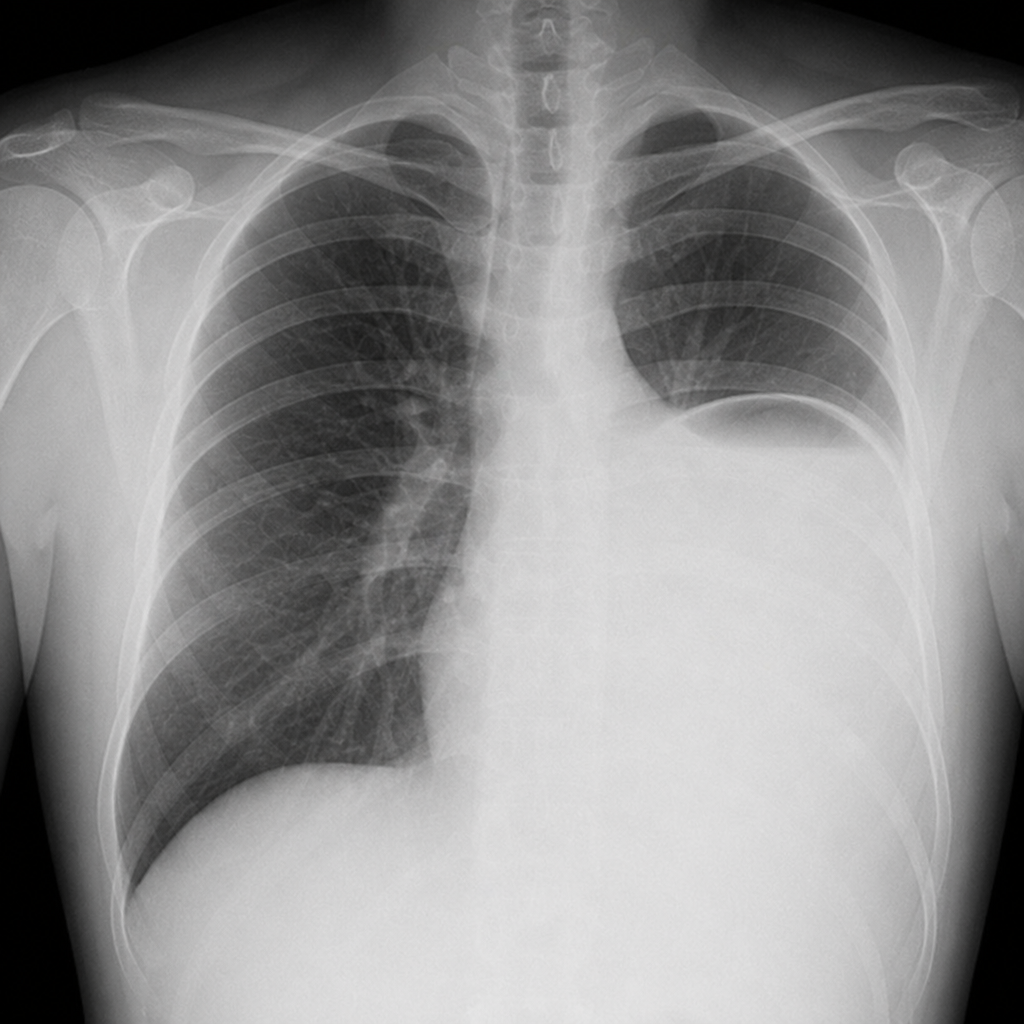
A 50-year-old male with a known case of emphysema presents with a two-week history of shortness of breath. A chest X-ray reveals a 3 cm pneumothorax on the right side. What is the appropriate management approach for this patient?
Which artery is most frequently responsible for bleeding in massive hemoptysis?
Which of the following statements is FALSE regarding interstitial lung disease?
Explanation: **Explanation:** **Asthma** is a chronic inflammatory airway disease characterized by reversible airway obstruction, bronchial hyperresponsiveness, and airway remodeling. [1] **Why Wheezing is the Correct Answer:** Wheezing is a high-pitched, whistling sound produced during expiration (and sometimes inspiration) due to air passing through narrowed or compressed small airways. In asthma, the combination of bronchospasm, mucosal edema, and mucus plugging leads to this narrowing. [1] It is the hallmark clinical sign of an asthma exacerbation. **Analysis of Incorrect Options:** * **A. Clubbing:** This is **not** a feature of asthma. Clubbing in a patient with respiratory symptoms should prompt an investigation for alternative diagnoses like bronchiectasis, lung cancer, interstitial lung disease (ILD), or chronic suppurative lung diseases. [1] * **C. Stridor:** This is a loud, high-pitched sound typically heard on inspiration, indicating **upper airway obstruction** (larynx or trachea), such as in croup, epiglottitis, or foreign body aspiration. [2] Asthma affects the lower airways. * **D. Bradycardia:** Asthma exacerbations typically cause **tachycardia** due to respiratory distress, anxiety, and the use of beta-2 agonist medications (like Salbutamol). Bradycardia is an ominous, late sign indicating impending respiratory failure. **High-Yield Clinical Pearls for NEET-PG:** * **Classic Triad:** Dyspnea, wheezing, and cough (often worse at night or early morning). [1] * **Diagnosis:** Gold standard is Spirometry showing reversibility (increase in FEV1 ≥12% and ≥200 mL after bronchodilator inhalation). The diagnosis is predominantly clinical. [1] * **Silent Chest:** The absence of wheezing during a severe asthma attack is a "danger sign," indicating insufficient airflow to even produce a sound. * **Sputum Findings:** Look for **Curschmann spirals** (mucus plugs) and **Charcot-Leyden crystals** (eosinophil breakdown products).
Explanation: ***Bronchogenic carcinoma*** - **Bronchogenic carcinoma** is the most common cause of **superior vena cava (SVC) syndrome**, presenting with facial swelling, **plethora**, and **distended neck veins**. - **Lung cancer** (especially **small cell lung cancer** and **squamous cell carcinoma**) can compress or invade the SVC, leading to venous congestion and characteristic facial edema. *Histoplasmosis* - **Histoplasmosis** can cause **mediastinal lymphadenopathy** but is a much less common cause of SVC syndrome compared to malignancy. - Typically presents with **pulmonary symptoms** and **systemic manifestations** like fever and weight loss, rather than isolated facial swelling. *Substernal thyroid* - **Substernal thyroid** (retrosternal goiter) can cause **tracheal compression** and **dyspnea** but rarely causes SVC syndrome. - More commonly presents with **respiratory symptoms** and **neck mass**, not isolated facial swelling and plethora. *Thoracic aortic aneurysm* - **Thoracic aortic aneurysm** typically causes **chest pain** and **back pain** rather than facial swelling. - Aneurysms rarely compress the **SVC** due to their anatomical location relative to the superior vena cava.
Explanation: **Explanation:** **Allergic Bronchopulmonary Aspergillosis (ABPA)** is a complex hypersensitivity reaction to *Aspergillus fumigatus* that occurs almost exclusively in patients with pre-existing chronic airway diseases. **1. Why Cystic Fibrosis (CF) is correct:** ABPA is a classic complication of **Cystic Fibrosis** and **Bronchial Asthma**. In CF, thick, viscous mucus provides an ideal environment for *Aspergillus* spores to become trapped and germinate [1]. This triggers a combined Type I (IgE-mediated) and Type III (immune complex-mediated) hypersensitivity reaction, leading to airway inflammation, bronchiectasis, and recurrent pulmonary infiltrates. Approximately 2–15% of CF patients develop ABPA. **2. Analysis of Incorrect Options:** * **A. Kartagener’s Syndrome:** This is a triad of situs inversus, chronic sinusitis, and bronchiectasis due to primary ciliary dyskinesia. While it causes bronchiectasis [1], it is not classically associated with the specific hypersensitivity seen in ABPA. * **C. Goodpasture Syndrome:** This is an autoimmune condition characterized by anti-GBM antibodies affecting the lungs (alveolar hemorrhage) and kidneys (glomerulonephritis). It is not fungal-related. * **D. Silicosis:** A pneumoconiosis caused by silica dust inhalation. It significantly increases the risk of **Tuberculosis** (Silicotuberculosis), not ABPA. **High-Yield Clinical Pearls for NEET-PG:** * **Diagnostic Criteria (Rosenberg-Patterson):** Look for asthma/CF, elevated total serum IgE (>1000 IU/mL), peripheral eosinophilia, and "finger-in-glove" opacities on CXR. * **Radiology:** Central bronchiectasis (inner two-thirds of the lung) is a hallmark of ABPA. * **Treatment:** Oral corticosteroids (to suppress inflammation) and Itraconazole (to reduce fungal burden).
Explanation: **Lofgren syndrome** is a specific, acute clinical presentation of **Sarcoidosis** that typically carries an excellent prognosis [1]. It is characterized by a classic triad of symptoms, making it a high-yield topic for NEET-PG. ### **Explanation of the Correct Answer** **D. Facial palsy** is the correct answer because it is not a component of Lofgren syndrome. Facial nerve palsy (specifically Lower Motor Neuron type) is associated with **Heerfordt syndrome** (Uveoparotid fever), another manifestation of sarcoidosis characterized by the tetrad of parotid enlargement, anterior uveitis, facial palsy, and fever. ### **Analysis of Incorrect Options** * **A. Erythema nodosum:** This is a hallmark of Lofgren syndrome, presenting as painful, red nodules typically on the shins [1]. It is more common in women. * **B. Bilateral hilar enlargement:** Symmetrical bilateral hilar lymphadenopathy (BHL) on chest X-ray is the defining radiological feature of this syndrome [1]. * **C. Joint symptoms:** Migratory polyarthritis or periarthritis, most commonly involving the **ankle joints**, is the third component of the classic triad [1]. ### **NEET-PG Clinical Pearls** * **Prognosis:** Lofgren syndrome has a >90% spontaneous remission rate within 2 years and usually requires only symptomatic treatment (NSAIDs). * **Genetic Association:** Strongly linked with the **HLA-DRB1*03** allele. * **Demographics:** It shows a predilection for females and individuals of Scandinavian or Caucasian descent [1]. * **Diagnosis:** When the full triad is present, the diagnosis of sarcoidosis can often be made clinically without the need for a tissue biopsy.
Explanation: **Explanation:** **Acute Lung Injury (ALI)** and its more severe form, **Acute Respiratory Distress Syndrome (ARDS)**, are characterized by diffuse alveolar damage [1]. This leads to increased capillary permeability, resulting in protein-rich fluid leaking into the alveoli (non-cardiogenic pulmonary edema). **Why Shunting is the Correct Answer:** The hallmark pathophysiologic mechanism in ALI/ARDS is **intrapulmonary shunting** [1]. When alveoli are filled with fluid or collapse (atelectasis), they can no longer participate in gas exchange. However, blood flow (perfusion) to these non-ventilated units continues. This "wasted" blood returns to the left heart without being oxygenated, leading to severe **refractory hypoxemia** (hypoxemia that does not respond well to supplemental oxygen) [2]. **Analysis of Incorrect Options:** * **A. Hypotension:** While sepsis (a common cause of ALI) can cause hypotension, it is not a defining characteristic of the lung injury itself. In fact, patients may initially be hypertensive due to sympathetic surge from respiratory distress. * **C. Cardiac Tamponade:** This is a clinical syndrome caused by pericardial effusion. While it causes obstructive shock, it is not a feature of primary lung parenchymal injury. * **D. Cardiac Irregularities:** Arrhythmias may occur secondary to hypoxia or electrolyte imbalances in critically ill patients, but they are complications rather than a defining characteristic of ALI. **High-Yield Clinical Pearls for NEET-PG:** * **Berlin Definition of ARDS:** Acute onset (within 1 week), bilateral opacities on imaging not fully explained by heart failure, and a **PaO2/FiO2 ratio < 300 mmHg** [1]. * **PCWP:** In ALI/ARDS, the Pulmonary Capillary Wedge Pressure is typically **< 18 mmHg** (ruling out cardiogenic edema). * **Management:** The mainstay is **Low Tidal Volume Ventilation** (6 mL/kg) to prevent volutrauma and the use of **PEEP** to recruit collapsed alveoli and reduce shunting.
Explanation: The correct answer is **Pneumocystis jirovecii pneumonia (PCP)**. The clinical scenario provides two critical clues: the patient’s occupation (truck driver) and the radiological pattern. In the context of NEET-PG, "truck driver" is a classic social descriptor used to hint at a high-risk group for HIV/AIDS [1]. PCP is the most common opportunistic infection in patients with AIDS [1]. **Why PCP is correct:** PCP typically presents subacutely with a dry cough, progressive dyspnea, and low-grade fever [1]. Radiologically, it characteristically shows **bilateral, symmetrical perihilar reticulonodular infiltrates** or "ground-glass" opacities, often sparing the peripheries and the apices (mid and lower zone predominance) [1]. **Why other options are incorrect:** * **Tuberculosis:** While common in HIV, TB typically presents with upper lobe cavitary lesions or miliary patterns [1]. Bilateral lower zone reticulonodular infiltrates are less characteristic. * **Interstitial Lung Disease (ILD):** While ILD presents with reticulonodular patterns, the "one-month history" and presence of "fever" strongly point toward an infectious etiology rather than a chronic inflammatory process [2]. * **Pneumococcal pneumonia:** This usually presents acutely with high-grade fever, productive cough, and **lobar consolidation** on X-ray, rather than diffuse reticulonodular infiltrates. **High-Yield Clinical Pearls for NEET-PG:** * **Risk Factor:** CD4 count < 200 cells/µL [1]. * **Diagnosis:** Silver stain (Grocott-Gomori Methenamine Silver) showing "crushed ping-pong ball" cysts [1]. * **Treatment:** Trimethoprim-Sulfamethoxazole (TMP-SMX) is the drug of choice [1]. * **Steroid Indication:** Add Prednisone if $PaO_2 < 70$ mmHg or A-a gradient $> 35$ mmHg [1]. * **Classic Sign:** Exercise-induced desaturation (exertional hypoxia).
Explanation: **Explanation:** Obstructive lung diseases (e.g., Asthma, COPD, Bronchiectasis) are characterized by **increased airway resistance**, which hinders the ability to exhale air rapidly. 1. **Why Option A is Correct:** In obstructive disease, the **Forced Expiratory Volume in 1 second (FEV1)** decreases significantly because of airway narrowing [1]. While the **Forced Vital Capacity (FVC)** may also decrease (due to air trapping), the decline in FEV1 is much more pronounced. Consequently, the **FEV1/FVC ratio falls below 0.7 (or 70%)**, which is the hallmark diagnostic criterion for obstruction [1]. 2. **Why Other Options are Incorrect:** * **Option B:** A normal or increased FEV1/FVC ratio is characteristic of **Restrictive Lung Disease** (e.g., ILD), where both values decrease proportionately or FVC decreases more than FEV1. * **Options C & D:** In obstructive disease, air becomes "trapped" behind narrowed airways [1], [2]. This leads to **hyperinflation**, resulting in an **increased Residual Volume (RV)** and **increased Total Lung Capacity (TLC)** [2]. Decreased RV and TLC are classic signs of restrictive lung disease. **High-Yield Clinical Pearls for NEET-PG:** * **Flow-Volume Loop:** Obstructive disease shows a characteristic **"scooped-out"** appearance on the expiratory limb [1]. * **Reversibility:** An increase in FEV1 of **>12% and >200 mL** after bronchodilator inhalation suggests Asthma rather than COPD [1]. * **DLCO:** Useful for differentiation; DLCO is **decreased in Emphysema** (due to alveolar destruction) but typically **normal or increased in Asthma**.
Explanation: ### **Explanation** This patient has a **Secondary Spontaneous Pneumothorax (SSP)**, defined as a pneumothorax occurring in the presence of underlying lung disease (in this case, emphysema) [1]. **1. Why Option C is Correct:** According to the British Thoracic Society (BTS) guidelines, the management of SSP depends on the size of the pneumothorax and the patient's symptoms. For a patient >50 years old with a pneumothorax **>2 cm** or if the patient is **short of breath**, the first-line management is the insertion of a **small-bore (Seldinger) intercostal chest drain (10–14 Fr)**. Small-bore catheters are preferred as they are less traumatic and equally effective as large-bore drains for air drainage. **2. Why Other Options are Incorrect:** * **Option A:** While bullae can mimic a pneumothorax, "repeated aspirations" are not the standard of care for SSP >2 cm [2]. Aspiration is usually reserved for primary pneumothorax or small (<2 cm) asymptomatic SSP. * **Option B:** High-flow oxygen can accelerate the pleural air absorption rate, but it is insufficient as a standalone treatment for a 3 cm symptomatic SSP in a patient with compromised lung function. * **Option D:** Large-bore drains (>20 Fr) are generally reserved for traumatic pneumothorax or hemothorax. They are not required for initial management of SSP unless a significant air leak is not controlled by a small-bore drain. ### **Clinical Pearls for NEET-PG** * **Primary Spontaneous Pneumothorax (PSP):** No underlying lung disease; usually tall, thin young males [1]. Management: Aspiration if >2 cm or symptomatic. * **Secondary Spontaneous Pneumothorax (SSP):** Underlying disease (COPD/Emphysema is most common) [1]. Management: Chest drain if >2 cm or symptomatic; Aspiration only if <2 cm and stable. [2] * **Tension Pneumothorax:** Clinical diagnosis (deviated trachea, hypotension) [2]. Management: Immediate needle decompression (5th ICS, mid-axillary line) followed by a chest tube. * **Persistent Air Leak:** If the lung fails to re-expand after 3–5 days of chest drainage, surgical intervention (VATs/Pleurodesis) is indicated.
Explanation: **Explanation:** The correct answer is **A. Bronchial artery.** **Why it is correct:** The lungs have a dual blood supply: the pulmonary circulation (low pressure) and the bronchial circulation (high pressure). The bronchial arteries, which arise directly from the descending thoracic aorta or intercostal arteries, carry blood at **systemic arterial pressure** [2]. In chronic inflammatory conditions (e.g., Bronchiectasis, Tuberculosis, or Aspergilloma), these arteries undergo hypertrophy and neovascularization [1]. Due to the high systemic pressure, rupture of these vessels leads to profuse, life-threatening bleeding. Statistically, **90% of massive hemoptysis cases** originate from the bronchial circulation. **Why the other options are incorrect:** * **B. Pulmonary artery:** Although the pulmonary circulation handles 100% of the cardiac output, it is a **low-pressure system**. It accounts for only about 5% of hemoptysis cases. A classic exception is a *Rasmussen aneurysm* (a pulmonary artery aneurysm in a TB cavity). * **C. Intersegmental artery:** These are branches of the pulmonary artery and are not the primary source of massive bleeding. * **D. Intercostal artery:** While these can occasionally contribute to collateral circulation in chronic lung disease (non-bronchial systemic collaterals), they are not the most frequent source. **NEET-PG High-Yield Pearls:** * **Definition of Massive Hemoptysis:** Usually defined as >300–600 mL of blood within 24 hours. * **Most Common Cause (Worldwide):** Tuberculosis. * **Most Common Cause (Developed Countries):** Bronchiectasis/Cystic Fibrosis [1]. * **Management Gold Standard:** **Bronchial Artery Embolization (BAE)** is the first-line intervention for stabilizing massive hemoptysis after securing the airway. * **Initial Positioning:** Place the patient in the **lateral decubitus position** with the bleeding lung **down** to protect the non-bleeding lung from aspiration.
Explanation: Interstitial Lung Disease (ILD) is the prototypical **Restrictive Lung Disease**. The hallmark of this condition is reduced lung compliance due to inflammation and fibrosis of the alveolar interstitium [1]. **Why Option C is the correct answer (The FALSE statement):** In ILD, the alveolar-capillary membrane is thickened and scarred. This significantly impairs gas exchange, leading to a **decreased Diffusion Capacity of the Lungs for Carbon Monoxide (DLCO)**. A normal DLCO would be inconsistent with a diagnosis of ILD; therefore, the statement "Normal diffusion capacity" is false [1]. **Analysis of other options:** * **Option A (Decreased FVC):** In restrictive diseases, the total lung volume is reduced. A **decreased Forced Vital Capacity (FVC)** is the defining spirometric feature of restriction [1]. * **Option B (Decreased FEV1):** While the FEV1/FVC ratio is typically normal or increased in ILD, the **absolute FEV1 is decreased** because the total volume of air the patient can hold (and thus exhale) is reduced [1]. * **Option D (End-inspiratory crackles):** On auscultation, ILD (specifically Idiopathic Pulmonary Fibrosis) characteristically presents with fine, high-pitched **"Velcro" end-inspiratory crackles** at the lung bases [1]. **High-Yield Clinical Pearls for NEET-PG:** * **Spirometry Pattern:** FEV1 ↓, FVC ↓↓, **FEV1/FVC Ratio Normal or ↑**. * **DLCO:** Always decreased in ILD (helps differentiate from extrapulmonary restriction like obesity or kyphoscoliosis, where DLCO is often normal) [1]. * **Radiology:** Look for "honeycombing" and reticular opacities on HRCT [1]. * **Physical Exam:** Digital clubbing is frequently seen in advanced cases [1].
Obstructive Airway Diseases (Asthma, COPD)
Practice Questions
Interstitial Lung Diseases
Practice Questions
Pulmonary Infections
Practice Questions
Pulmonary Vascular Diseases
Practice Questions
Pleural Diseases
Practice Questions
Sleep-Disordered Breathing
Practice Questions
Respiratory Failure
Practice Questions
Mediastinal Disorders
Practice Questions
Occupational Lung Diseases
Practice Questions
Pulmonary Function Testing
Practice Questions
Bronchiectasis and Cystic Fibrosis
Practice Questions
Lung Cancer Approach
Practice Questions
Get full access to all questions, explanations, and performance tracking.
Start For Free