Acute Respiratory Distress Syndrome (ARDS) is associated with which of the following conditions?
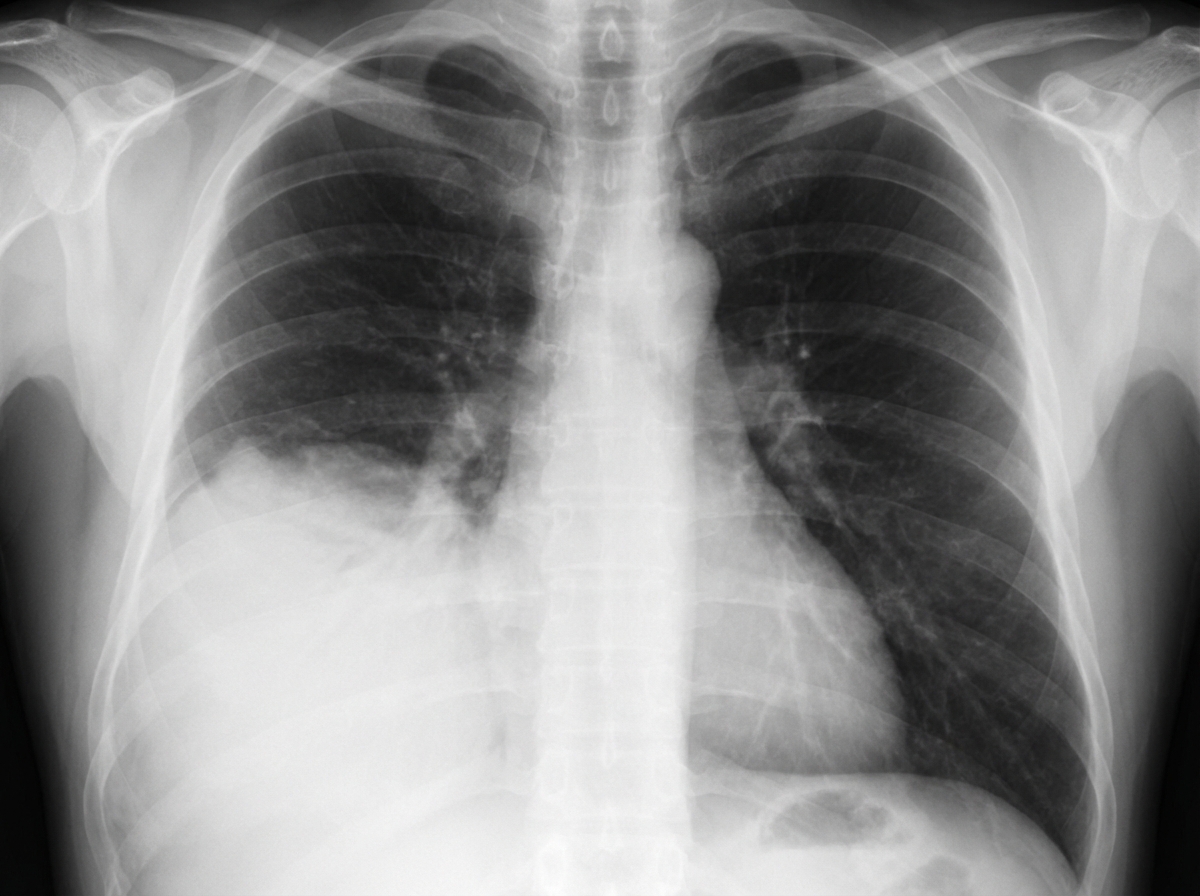
A 50-year-old male presented with complaints of cough with expectoration, fever, and malaise for 3 weeks. The patient is a chronic alcoholic and has had frequent hospitalizations in the past. On examination, he has extremely poor dentition, foul-smelling sputum, and wheezing over the upper zone of the right lung. A chest x-ray and a CT scan were conducted. Which is the most appropriate therapy to be given in the above condition?
All of the following statements about Non-Small Cell Lung Carcinoma (NSCLC) are true, except:
Regarding Allergic Bronchopulmonary Aspergillosis, which of the following is NOT true?
A patient with severe neurological devastation after head trauma has been mechanically ventilated for their entire hospital stay. Which of the following clinical findings is diagnostic of ventilator-associated pneumonia?
A 50-year-old male smoker presents with chronic shortness of breath. Physical examination reveals a pulse of 110 bpm, normal temperature, respirations of 30/min with accessory muscle use and pursed-lip breathing, and blood pressure of 110/78 mm Hg. Cardiac examination shows the apex beat medial to the midclavicular line, and lung examination reveals generalized decreased breath sounds. Arterial blood gases on room air show a pH of 7.38, PCO2 of 47 mm Hg, and PO2 of 67 mm Hg. Pulmonary function tests show FVC 2.80 L (67% of predicted), FEV1 1.56 L (50% of predicted), FEV1/FVC ratio of 56%, TLC 134% of predicted, RV 170% of predicted, and DLCO 43% of predicted. There is no reversibility with bronchodilators. What is the most likely diagnosis?
A patient presents with a pH of 7.2, pO2 of 46, and pCO2 of 80. What condition do these arterial blood gas values indicate?
The majority of cases of community-acquired pneumonia are due to infection with which organism?
Which of the following is NOT a cause of central cyanosis?
All of the following are causes of transudative pleural effusion EXCEPT:
Explanation: **Explanation:** Acute Respiratory Distress Syndrome (ARDS) is a clinical syndrome characterized by acute onset of non-cardiogenic pulmonary edema, severe hypoxemia, and decreased lung compliance [1]. It results from a diffuse inflammatory injury to the alveolar-capillary membrane, triggered by either **direct** lung injury or **indirect** systemic insults. **Analysis of Options:** * **Acute Pancreatitis (Indirect Injury):** This is a classic systemic cause. The release of large amounts of pancreatic enzymes (phospholipase A2) and systemic inflammatory mediators into the circulation leads to systemic inflammatory response syndrome (SIRS), which damages the pulmonary capillary endothelium. * **Trauma (Indirect/Direct Injury):** Major trauma, especially involving long bone fractures (fat embolism), head injury, or massive blood transfusions (TRALI), triggers a massive cytokine storm that leads to ARDS [2]. * **Severe Falciparum Malaria (Indirect Injury):** ARDS is a dreaded complication of severe malaria. It is caused by the sequestration of parasitized RBCs in the pulmonary microvasculature and the subsequent intense host inflammatory response. Since all three conditions are well-documented triggers for the inflammatory cascade leading to ARDS, **Option D** is the correct answer. **High-Yield Clinical Pearls for NEET-PG:** * **Berlin Criteria:** Acute onset (<1 week), bilateral opacities on imaging (not explained by effusions/collapse), and $PaO_2/FiO_2$ ratio $\leq 300$ mmHg with PEEP $\geq 5 \text{ cm } H_2O$ [1]. * **PCWP:** In ARDS, the Pulmonary Capillary Wedge Pressure is typically **$< 18 \text{ mmHg}$** (ruling out cardiogenic edema). * **Management:** The mainstay is **Low Tidal Volume Ventilation** (6 mL/kg of predicted body weight) to prevent volutrauma and barotrauma. * **Most common cause:** Sepsis (overall) and Pneumonia (direct).
Explanation: ### **Explanation** The clinical presentation of a chronic alcoholic with poor dentition, foul-smelling sputum, and a subacute history of cough and fever is classic for a **Lung Abscess** caused by **aspiration pneumonia**. **1. Why Clindamycin is Correct:** Lung abscesses in patients with poor oral hygiene are typically polymicrobial, involving **anaerobes** (found in gingival crevices) and aerobic organisms (like *Staphylococcus aureus* or *Streptococcus*). Presence of poor dental hygiene should prompt consideration of specific anaerobic or atypical organisms [1]. **Clindamycin** is the traditional drug of choice because it provides excellent coverage against both Gram-positive cocci and oral anaerobes (*Bacteroides*, *Fusobacterium*, *Peptostreptococcus*). While Beta-lactam/Beta-lactamase inhibitors (e.g., Piperacillin-Tazobactam) are also used, Clindamycin remains a high-yield correct answer in exams for anaerobic lung infections. Prolonged treatment for 4–6 weeks may be required in some patients with lung abscess [1]. **2. Why Other Options are Incorrect:** * **Penicillin:** Historically used, but now avoided as a monotherapy due to the high prevalence of Beta-lactamase-producing oral anaerobes (e.g., *Bacteroides fragilis*). * **Metronidazole:** While it has excellent anaerobic coverage, it is **ineffective as monotherapy** for lung abscesses because it lacks activity against aerobic microaerophilic streptococci often present in these infections. * **Aztreonam:** This is a monobactam that only covers Gram-negative aerobes (like *Pseudomonas*). It has no activity against Gram-positive organisms or anaerobes. **Clinical Pearls for NEET-PG:** * **Most common site:** The **posterior segment of the right upper lobe** (as seen in this patient) or the superior segment of the lower lobes, due to the gravitational path of aspiration while supine. * **Pathognomonic sign:** Foul-smelling ("putrid") sputum strongly suggests anaerobic infection. * **Predisposing factors:** Altered consciousness (alcoholism, seizures, general anesthesia) and periodontal disease [1]. * **Radiology:** Chest X-ray typically shows a cavity with an **air-fluid level**. * **Management:** Physiotherapy is of great value, especially when suppuration is present in the lower lobes; surgery is contemplated if no improvement occurs despite optimal medical therapy [1].
Explanation: ### Explanation **Why Option D is the "Except" (Correct Answer):** While Gefitinib (an EGFR-TKI) is indeed highly effective in female non-smokers with adenocarcinoma, the question asks for the "Except" statement. In the context of modern oncology and NEET-PG patterns, this statement is considered **incomplete or outdated** compared to the factual accuracy of the others. The effectiveness of Gefitinib is not determined by clinical phenotype alone (gender/smoking status) but specifically by the **presence of sensitizing EGFR mutations** (Exon 19 deletion or L858R). Clinical features are merely surrogates for these mutations. **Analysis of Other Options:** * **Option A:** True. According to the TNM staging, contralateral mediastinal (N3) or supraclavicular nodes represent Stage IIIB disease, which is generally considered **unresectable**. Surgery is typically reserved for Stages I, II, and select IIIA [2]. * **Option B:** True. In elderly patients (>70 years) with advanced NSCLC and a poor performance status, **single-agent chemotherapy** (e.g., Gemcitabine or Vinorelbine) is often preferred over platinum-doublets to minimize toxicity. * **Option C:** True. While Adenocarcinoma is the most common subtype globally, historically and in many Asian epidemiological studies, **Squamous Cell Carcinoma** has shown a high prevalence, particularly among male smokers [1]. (Note: Trends are shifting toward Adenocarcinoma, but this remains a classic teaching point). **High-Yield Clinical Pearls for NEET-PG:** * **Most common NSCLC overall:** Adenocarcinoma (also most common in non-smokers and females) [1]. * **Centrally located tumors:** Squamous cell carcinoma and Small cell carcinoma (The "S" rule: Smoking, Spiculated, Squamous, Small cell, Sentral/Central). * **Paraneoplastic Syndromes:** Squamous cell is associated with **Hypercalcemia** (PTHrP); Small cell is associated with **SIADH** and **ACTH** production. * **EGFR Mutations:** Most common in Asians, females, and non-smokers with adenocarcinoma. * **Pancoast Tumor:** Usually Squamous cell or Adenocarcinoma; causes Horner’s syndrome.
Explanation: **Explanation:** **Allergic Bronchopulmonary Aspergillosis (ABPA)** is a complex hypersensitivity reaction to *Aspergillus fumigatus* that occurs primarily in patients with bronchial asthma or cystic fibrosis [1]. **1. Why "Peripheral Bronchiectasis" is the correct answer (The False Statement):** In ABPA, the characteristic radiological finding is **Central Bronchiectasis** (involving the medial two-thirds of the lung fields), typically affecting the upper and middle lobes. This occurs because the thick, tenacious mucus plugs containing *Aspergillus* hyphae lodge in the large proximal airways, leading to wall destruction and dilation. **Peripheral bronchiectasis** is not a feature of ABPA; in fact, the presence of peripheral sparing while having central dilation is a classic diagnostic clue. **2. Analysis of Other Options:** * **A. Peripheral blood eosinophilia:** This is a hallmark of ABPA (usually >1000 cells/μL). It reflects the systemic inflammatory response to the fungal antigens. * **B. Elevated IgE:** Total serum IgE levels are characteristically very high (often >1000 IU/mL) [1]. It is used both for diagnosis and for monitoring treatment response/relapses. * **D. Type I hypersensitivity reaction:** ABPA is unique because it involves a combination of **Type I** (IgE-mediated mast cell degranulation), **Type III** (Immune-complex mediated), and **Type IV** (cell-mediated) hypersensitivity reactions. Since Type I is a major component, this statement is true [1]. **Clinical Pearls for NEET-PG:** * **Classic Sign:** "Finger-in-glove" appearance on Chest X-ray/CT (due to mucoid impaction). * **Diagnosis:** Rosenberg-Patterson Criteria. * **Treatment:** Oral Corticosteroids (to reduce inflammation) + Itraconazole (to reduce fungal burden). * **High-Yield:** ABPA is a common cause of "refractory asthma" or "difficult-to-treat asthma." Always check IgE levels in such patients.
Explanation: Ventilator-associated pneumonia (VAP) is defined as pneumonia occurring >48 hours after endotracheal intubation [1]. The diagnosis is challenging because clinical signs often overlap with other conditions like atelectasis or ARDS. **Why Option C is Correct:** The definitive diagnosis of VAP relies on a combination of clinical suspicion (new/progressive infiltrate on CXR) and microbiological evidence. Quantitative cultures are used to differentiate colonization from true infection. For **Bronchoalveolar Lavage (BAL)**, the diagnostic threshold is **≥10⁴ (10,000) CFU/mL**. This high specificity helps confirm the lower respiratory tract as the source of infection. **Analysis of Incorrect Options:** * **Option A & D:** Leukocytosis (>12,000/mm³) and purulent secretions are part of the **Clinical Pulmonary Infection Score (CPIS)**. While they suggest inflammation, they are highly non-specific in ICU patients and can occur due to tracheitis, aspiration, or systemic trauma without active pneumonia. * **Option B:** 1,000 (10³) CFU/mL is the diagnostic threshold for a **Protected Specimen Brush (PSB)**, not BAL. Using this lower threshold for BAL would lead to overdiagnosis due to oropharyngeal contamination. **NEET-PG High-Yield Pearls:** * **Diagnostic Thresholds:** * Endotracheal Aspirate (Non-invasive): ≥10⁶ CFU/mL * BAL (Invasive): ≥10⁴ CFU/mL * PSB (Invasive): ≥10³ CFU/mL * **Most Common Organisms:** *Pseudomonas aeruginosa* (most common Gram-negative), *Staphylococcus aureus* (including MRSA), and *Acinetobacter* [2]. * **Prevention:** The "VAP Bundle" includes head-of-bed elevation (30-45°), daily "sedation vacations," subglottic secretion drainage, and oral care with chlorhexidine [2].
Explanation: The clinical presentation and pulmonary function tests (PFTs) point toward **Emphysema**, a subtype of Chronic Obstructive Pulmonary Disease (COPD) [1]. **1. Why Emphysema is correct:** * **Obstructive Pattern:** The FEV1/FVC ratio is <70% (56% here), confirming airflow obstruction [1]. * **Hyperinflation:** The elevated Total Lung Capacity (TLC 134%) and Residual Volume (RV 170%) indicate air trapping due to the loss of alveolar walls leaving small airways unsupported [2], while the "medial apex beat" suggests a narrow, vertical heart due to hyperinflated lungs [3]. * **Diffusion Defect:** The hallmark that distinguishes emphysema from chronic bronchitis or asthma is a **decreased DLCO (43%)**. This occurs due to the destruction of the alveolar-capillary membrane (alveolar septal destruction). * **Clinical Phenotype:** "Pursed-lip breathing" and accessory muscle use are classic for "Pink Puffers" (Emphysema), who are typically thin and breathless [1]. **2. Why other options are incorrect:** * **Bronchial Asthma:** Characterized by significant **reversibility** with bronchodilators (>12% and >200ml improvement in FEV1) and a **normal or high DLCO**. * **Chronic Bronchitis:** While it shares the obstructive FEV1/FVC ratio, the **DLCO is typically normal** because the alveolar architecture remains intact. Patients are often "Blue Bloaters" (cyanotic/edematous) [1]. * **Tuberous Sclerosis:** While it can cause Lymphangioleiomyomatosis (LAM) leading to cystic lung disease, it is a rare systemic neurocutaneous syndrome; the patient's smoking history and classic PFTs make emphysema far more likely. **Clinical Pearls for NEET-PG:** * **DLCO is the key differentiator:** Decreased in Emphysema; Normal in Chronic Bronchitis; Normal/Increased in Asthma. * **PFT in COPD:** FEV1 ↓, FVC (Normal or ↓), FEV1/FVC ↓, TLC ↑, RV ↑. * **Centriacinar Emphysema:** Most common type in smokers (affects upper lobes). * **Panacinar Emphysema:** Associated with Alpha-1 Antitrypsin deficiency (affects lower lobes).
Explanation: ### Explanation The arterial blood gas (ABG) values provided indicate **Respiratory Acidosis** (pH 7.2, pCO2 80) with **Hypoxemia** (pO2 46) [1]. **1. Why Acute Exacerbation of Asthma is correct:** In the early stages of an asthma attack, patients typically hyperventilate, leading to respiratory alkalosis (low pCO2) [1]. However, as the patient fatigues and the airway obstruction becomes severe, they can no longer maintain the high minute ventilation required. This leads to **CO2 retention (hypercapnia)** and a drop in pH [2]. A "normal" or high pCO2 in a patient with acute asthma is an **ominous sign** indicating impending respiratory failure and the need for urgent intervention, potentially requiring assisted ventilation [2]. **2. Why the other options are incorrect:** * **Idiopathic Pulmonary Fibrosis (IPF):** This is a restrictive lung disease. Patients typically present with chronic hypoxemia and compensatory hyperventilation, leading to chronic respiratory alkalosis or normal pCO2, rather than acute severe respiratory acidosis. * **Cystic Fibrosis (CF):** While CF can cause respiratory failure, it is a chronic progressive disease. ABG changes are usually more gradual, allowing for renal compensation (elevated bicarbonate) [3], which is not reflected in this acute pH drop. * **ABPA:** This is a hypersensitivity reaction to *Aspergillus*. While it complicates asthma, the primary presentation is usually productive cough, fever, and fleeting opacities on X-ray, rather than sudden-onset severe hypercapnic respiratory failure. **Clinical Pearls for NEET-PG:** * **The "Normal" pCO2 Trap:** In an acute asthma attack, a pCO2 of 40 mmHg is NOT normal; it is a sign of exhaustion [2]. * **Type II Respiratory Failure:** Defined by $PaCO_2 > 45$ mmHg [1]. The primary mechanism in asthma is increased work of breathing and V/Q mismatch [1]. * **Management:** Silent chest + High pCO2 + Altered sensorium = Immediate ICU transfer and consideration for mechanical ventilation [2].
Explanation: **Explanation:** **Streptococcus pneumoniae** (Pneumococcus) remains the most common cause of community-acquired pneumonia (CAP) worldwide, accounting for approximately 30–50% of cases where an etiology is identified [1]. It is a Gram-positive, lancet-shaped diplococcus [1]. The pathogenesis involves the aspiration of oropharyngeal flora into the lower respiratory tract, leading to classic lobar consolidation. **Analysis of Incorrect Options:** * **Legionella pneumophila:** This is an "atypical" pathogen often associated with contaminated water sources (air conditioning, cooling towers) [1]. While it can cause severe pneumonia with multisystem involvement (hyponatremia, diarrhea, elevated LFTs), it is far less common than *S. pneumoniae*. * **Haemophilus influenzae:** This is the second most common bacterial cause of CAP. It is particularly prevalent in patients with underlying chronic obstructive pulmonary disease (COPD) or smoking history, but it does not surpass Pneumococcus in overall incidence. * **Staphylococcus aureus:** This is a less common cause of CAP but often follows a viral prodrome (e.g., post-influenza pneumonia) [1]. It is associated with necrotizing pneumonia, cavitations, and pneumatoceles. **Clinical Pearls for NEET-PG:** 1. **Classic Presentation:** *S. pneumoniae* typically presents with sudden onset high-grade fever, productive cough with **"rusty-colored" sputum**, and pleuritic chest pain [2]. 2. **Radiology:** Characteristically shows **lobar consolidation**. 3. **Vaccination:** Two types are available—PPSV23 (polysaccharide) and PCV13 (conjugate)—recommended for the elderly and immunocompromised. 4. **Most common cause of CAP in HIV patients:** Still *Streptococcus pneumoniae*, though *Pneumocystis jirovecii* is a significant opportunistic consideration [1].
Explanation: **Explanation:** The fundamental distinction in cyanosis lies in the mechanism of oxygen delivery. **Central cyanosis** occurs due to decreased arterial oxygen saturation ($SaO_2$) or the presence of abnormal hemoglobin, affecting both the skin and mucous membranes (e.g., tongue). **Peripheral cyanosis** occurs due to increased oxygen extraction at the tissue level, often caused by slowed blood flow despite normal arterial oxygenation. **Why Congestive Heart Failure (CHF) is the correct answer:** In CHF, the primary issue is a low cardiac output state. This leads to peripheral vasoconstriction and stagnant hypoxia in the extremities. While the blood leaving the lungs is adequately oxygenated, the slow transit time through the tissues allows for excessive oxygen extraction, resulting in **peripheral cyanosis**. (Note: If CHF leads to pulmonary edema, it can cause central cyanosis, but classically, "heart failure" as a standalone entity is the prototype for peripheral cyanosis). **Analysis of Incorrect Options:** * **Chronic Asthma:** Severe asthma causes a ventilation-perfusion (V/Q) mismatch and impaired gas exchange, leading to arterial hypoxemia and central cyanosis. * **Congenital Pulmonary Stenosis:** Severe stenosis (especially if associated with a right-to-left shunt like in Tetralogy of Fallot) reduces pulmonary blood flow and leads to systemic deoxygenation, causing central cyanosis [1]. * **Alveolar Hypoventilation:** Any condition that reduces the volume of air reaching the alveoli (e.g., neuromuscular disorders, CNS depression) leads to a rise in $PaCO_2$ and a drop in $PaO_2$, resulting in central cyanosis. **High-Yield NEET-PG Pearls:** 1. **The "Tongue" Rule:** Central cyanosis involves the tongue and sublingual tissues; peripheral cyanosis spares them. 2. **Threshold:** Cyanosis becomes clinically apparent when the absolute concentration of reduced hemoglobin exceeds **5 g/dL**. 3. **Differential:** If a patient has cyanosis that improves with warming the limb, it is peripheral. If it improves with oxygen administration, it is likely central (pulmonary origin).
Explanation: **Explanation:** The differentiation between transudative and exudative pleural effusions is a high-yield topic for NEET-PG, typically governed by **Light’s Criteria**. **Why Rheumatoid Arthritis (RA) is the correct answer:** Rheumatoid arthritis causes an **exudative** pleural effusion [1]. The underlying mechanism is local inflammation of the pleura (pleuritis), which increases capillary permeability, allowing proteins and cells to leak into the pleural space [2]. * **High-Yield Fact:** RA pleural fluid is characteristically associated with **very low glucose levels (<30 mg/dL)**, low pH, and high LDH [1]. **Analysis of Incorrect Options (Transudative Causes):** Transudates occur due to systemic factors altering hydrostatic or oncotic pressure, without primary pleural disease. * **Nephrotic Syndrome:** Causes decreased plasma oncotic pressure due to severe hypoalbuminemia, leading to fluid leakage. * **Constrictive Pericarditis:** Increases systemic venous hydrostatic pressure, forcing fluid into the pleural space. * **Myxedema (Hypothyroidism):** While it can occasionally be exudative, it is a classic recognized cause of transudative effusion (often multifactorial, involving increased capillary permeability or decreased lymphatic drainage). **NEET-PG Clinical Pearls:** 1. **Most common cause of Transudate:** Congestive Heart Failure (CHF). 2. **Most common cause of Exudate:** Bacterial pneumonia (Parapneumonic effusion) and Malignancy. 3. **Meigs’ Syndrome:** Triad of benign ovarian tumor (fibroma), ascites, and pleural effusion (usually transudative). 4. **Superior Vena Cava (SVC) Obstruction:** Can cause both transudative and exudative effusions.
Obstructive Airway Diseases (Asthma, COPD)
Practice Questions
Interstitial Lung Diseases
Practice Questions
Pulmonary Infections
Practice Questions
Pulmonary Vascular Diseases
Practice Questions
Pleural Diseases
Practice Questions
Sleep-Disordered Breathing
Practice Questions
Respiratory Failure
Practice Questions
Mediastinal Disorders
Practice Questions
Occupational Lung Diseases
Practice Questions
Pulmonary Function Testing
Practice Questions
Bronchiectasis and Cystic Fibrosis
Practice Questions
Lung Cancer Approach
Practice Questions
Get full access to all questions, explanations, and performance tracking.
Start For Free