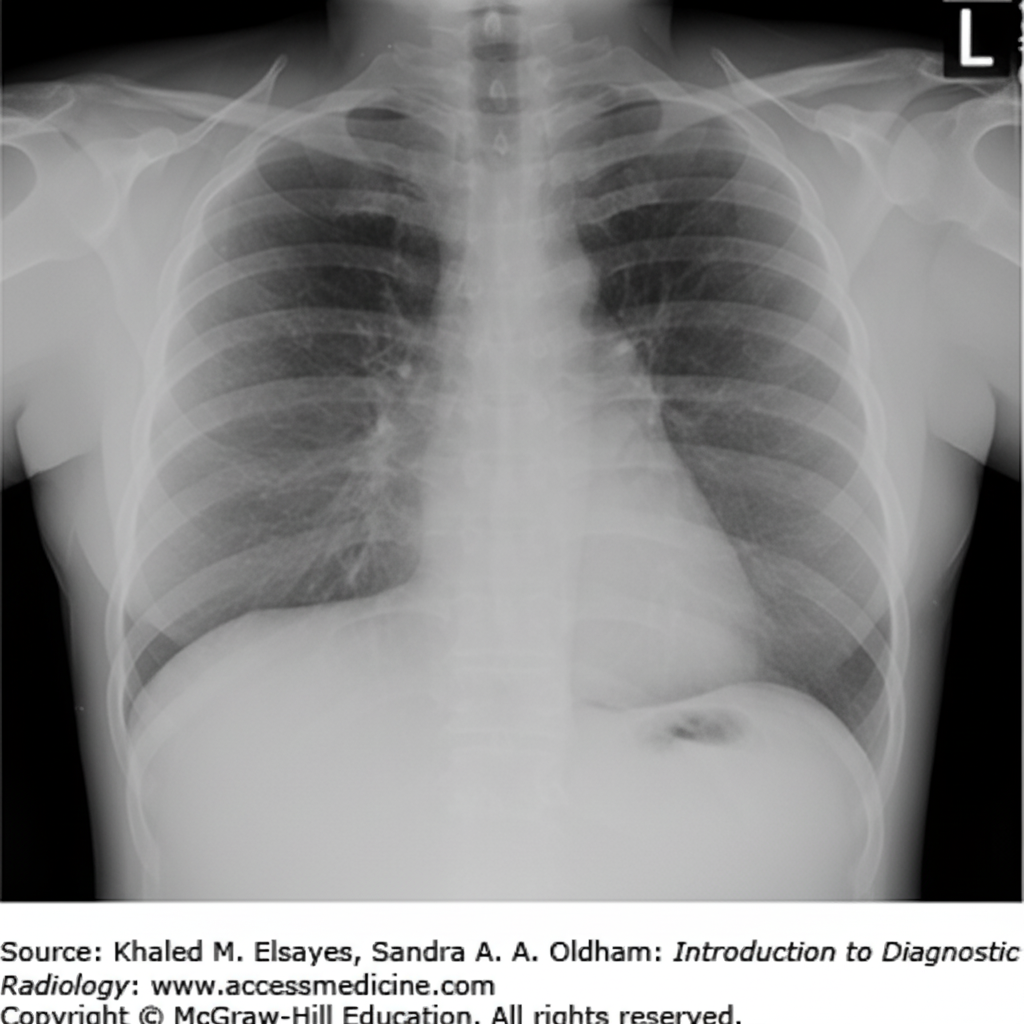
Tubular breathing is heard in which of the following conditions?
All of the following are typically seen in chronic bronchitis except:
A 60-year-old man is suspected of having bronchogenic carcinoma. Tuberculosis has been ruled out. What should be the next investigation?
All of the following interventions are demonstrated to affect the natural history of patients with COPD, except?
What is the typical pulmonary capillary wedge pressure in pulmonary edema?
Allergic bronchopulmonary aspergillosis (ABPA) is usually diagnosed by which of the following?
Which of the following is the most common illness leading to the development of ARDS?
Type 2 Respiratory Failure is seen in which of the following conditions?
Bilateral exudative pleural effusion is seen in which of the following conditions?
What is the investigation of choice for bronchiectasis?
Explanation: Explanation: Tubular breathing is a high-pitched, harsh variety of bronchial breathing with a distinct "blowing" quality. It is characterized by a prolonged expiratory phase and a gap between inspiration and expiration. Why Consolidation is correct: In a normal lung, the air-filled alveoli act as a low-pass filter, muffling the high-pitched sounds generated in the large airways (trachea/bronchi). In consolidation (e.g., lobar pneumonia), the alveoli are filled with fluid or exudate [1]. This solid medium conducts sound from the large airways to the chest wall with minimal attenuation and high velocity. For tubular breathing to occur, the bronchus leading to the consolidated area must remain patent. Analysis of Incorrect Options: * Pleural Effusion: Fluid in the pleural space typically acts as an insulator, leading to diminished or absent breath sounds. However, "Amphoric" or "Eegophony" may be heard at the upper border of an effusion. * Pleurisy: This involves inflammation of the pleura without significant parenchymal change [2]. The classic finding is a pleural rub, not tubular breathing. * TB Cavity: While cavities can produce bronchial breathing, they typically produce Amphoric breathing (a hollow, low-pitched sound like blowing into a glass bottle), provided the cavity is large (>2cm), superficial, and communicates with a bronchus. NEET-PG High-Yield Pearls: 1. Bronchial Breathing Types: * Tubular: Consolidation. * Cavernous: Small, superficial cavities. * Amphoric: Large cavities or Open Pneumothorax. 2. Prerequisite for Tubular Breathing: The underlying bronchus must be patent. If the bronchus is obstructed (e.g., collapse due to a foreign body), breath sounds will be absent. 3. Vocal Resonance: In consolidation, tubular breathing is usually accompanied by increased tactile vocal fremitus and vocal resonance (Bronchophony/Whispering Pectoriloquy).
Explanation: **Explanation:** In the context of Chronic Obstructive Pulmonary Disease (COPD), **Clubbing** is a crucial clinical differentiator. While COPD (Chronic Bronchitis and Emphysema) is a common cause of respiratory distress, it does **not** typically cause digital clubbing [2]. If clubbing is present in a patient with chronic bronchitis, a clinician must immediately investigate for underlying complications or alternative diagnoses such as **Bronchogenic Carcinoma**, **Bronchiectasis**, or **Interstitial Lung Disease** [2], [3]. **Analysis of Options:** * **A. Cough for >3 months:** This is the hallmark of the clinical definition of Chronic Bronchitis—a productive cough for at least 3 months in 2 consecutive years, provided other causes are excluded [1]. * **B. Bronchorrhea:** Chronic bronchitis involves hypertrophy of mucus-secreting glands (increased Reid Index), leading to excessive production of sputum (bronchorrhea) [1]. * **C. Hoover sign:** This refers to the paradoxical inward movement of the lower costal margins during inspiration. It is a sign of hyperinflation (common in COPD) where a flattened diaphragm pulls the ribs inward rather than expanding them. * **D. Clubbing (Correct):** As established, simple chronic bronchitis does not cause clubbing. Its presence suggests a "suppurative" process or malignancy [2]. **High-Yield NEET-PG Pearls:** * **Reid Index:** Ratio of the thickness of the mucous gland layer to the thickness of the wall between the epithelium and cartilage. Normal is <0.4; in Chronic Bronchitis, it is **>0.5**. * **Blue Bloaters:** The classic phenotype for Chronic Bronchitis (hypoxemic, hypercapnic, and edematous) [2]. * **Clubbing in Respiratory Medicine:** Remember the mnemonic **"ABCDE"** for causes: **A**bscess (Lung), **B**ronchiectasis/Bronchogenic Carcinoma, **C**ystic Fibrosis, **D**on't forget Empyema, **E**xtra-pulmonary (e.g., Cyanotic Heart Disease).
Explanation: ### Explanation In a patient suspected of having bronchogenic carcinoma where initial screening (like Chest X-ray) has likely been performed and tuberculosis ruled out, the primary goal is to obtain a **tissue diagnosis** for histological confirmation and staging [1]. **Why Bronchoscopy and Biopsy is the correct answer:** Bronchoscopy is the gold standard initial invasive investigation for central tumors [3]. It allows for direct visualization of the endobronchial tree, assessment of tumor extent (essential for operability), and the collection of tissue via forceps biopsy, brushings, or bronchoalveolar lavage (BAL) [4]. It has a high diagnostic yield and a lower risk profile compared to more invasive surgical procedures. **Analysis of Incorrect Options:** * **CT-guided FNAC:** This is the investigation of choice for **peripheral lung lesions** that are inaccessible by conventional bronchoscopy [2]. However, as a general next step for suspected bronchogenic carcinoma, bronchoscopy is often preferred first to evaluate the central airways. * **Sputum Cytology:** While non-invasive and useful for central squamous cell carcinomas, its sensitivity is low (approx. 40-60%) and highly dependent on the number of samples. It cannot provide the architectural detail required for definitive grading and staging. * **X-ray Chest:** This is usually the **first-line screening tool** used to identify a mass or collapse. Since the question states the patient is already "suspected" of having carcinoma and TB is ruled out, the X-ray has likely already been performed. **NEET-PG High-Yield Pearls:** * **Central Tumors:** Squamous cell carcinoma and Small cell carcinoma (Best investigated by Bronchoscopy). * **Peripheral Tumors:** Adenocarcinoma and Large cell carcinoma (Best investigated by CT-guided FNAC). * **Pancoast Tumor:** Most commonly Adenocarcinoma; presents with Horner’s syndrome. * **Staging:** PET-CT is the most sensitive non-invasive modality for detecting mediastinal lymph node involvement and distant metastasis [3].
Explanation: **Explanation:** In the context of COPD, "affecting the natural history" refers to interventions that either **prolong survival (reduce mortality)** or **slow the progressive decline in lung function** (measured by FEV1). **Why Bronchodilators are the correct answer:** While bronchodilators (Beta-agonists and Anticholinergics) are the cornerstone of symptomatic management, they do **not** alter the long-term decline in FEV1 or improve survival [1]. Their primary role is to improve exercise tolerance, reduce air trapping, and decrease the frequency of exacerbations, thereby improving the quality of life, but they do not change the disease's ultimate prognosis. **Analysis of other options:** * **Smoking Cessation:** This is the most cost-effective and single most important intervention. It is the only measure proven to slow the accelerated decline in FEV1 [1]. * **Oxygen Therapy:** Long-term oxygen therapy (LTOT) for >15 hours/day in patients with chronic resting hypoxemia (PaO2 <55 mmHg or SaO2 <88%) has been definitively shown to improve survival [2]. * **Lung Volume Reduction Surgery (LVRS):** In a specific subset of patients (predominantly upper-lobe emphysema with low post-rehabilitation exercise capacity), LVRS has been shown to improve survival compared to medical therapy alone. **High-Yield Clinical Pearls for NEET-PG:** * **Mortality-reducing interventions in COPD:** 1. Smoking cessation [1], 2. Long-term oxygen therapy [2], 3. Lung Volume Reduction Surgery (in selected patients), and 4. Non-invasive ventilation (NIV) in chronic hypercapnic patients. * **Vaccinations:** Influenza and Pneumococcal vaccines reduce morbidity and mortality from exacerbations. * **Inhaled Corticosteroids (ICS):** Do not reduce mortality or the rate of FEV1 decline; they are primarily used to reduce the frequency of exacerbations in patients with high eosinophil counts.
Explanation: The Pulmonary Capillary Wedge Pressure (PCWP) is a direct reflection of Left Atrial Pressure and an indirect measure of Left Ventricular End-Diastolic Pressure (LVEDP). In **Cardiogenic Pulmonary Edema**, the primary pathology is an increase in hydrostatic pressure within the pulmonary capillaries, which forces fluid into the interstitial and alveolar spaces. * **Why A is correct:** According to the Starling forces, when PCWP exceeds the plasma oncotic pressure (approximately **25–28 mmHg**), the hydrostatic pressure overcomes the osmotic pressure that keeps fluid within the vessels [1]. This leads to frank alveolar flooding (pulmonary edema) [1]. * **Why B is incorrect:** A PCWP <15 mmHg is considered normal or only mildly elevated. While levels between 18–25 mmHg cause interstitial edema (Kerley B lines), they are usually insufficient to cause full-blown alveolar edema. * **Why C and D are incorrect:** These values are within the normal physiological range (normal PCWP is **6–12 mmHg**). Low PCWP is typically seen in hypovolemic shock or Non-Cardiogenic Pulmonary Edema (ARDS). **High-Yield Clinical Pearls for NEET-PG:** 1. **PCWP in ARDS:** In Non-Cardiogenic Pulmonary Edema (ARDS), the PCWP is typically **<18 mmHg**, as the edema is due to increased capillary permeability, not hydrostatic pressure. 2. **Stages of PCWP Elevation:** * 13–18 mmHg: Pulmonary venous congestion. * 18–25 mmHg: Interstitial edema. * >25–28 mmHg: Alveolar edema. 3. **Gold Standard:** The Swan-Ganz catheter (Pulmonary Artery Catheterization) is used to measure PCWP.
Explanation: Allergic Bronchopulmonary Aspergillosis (ABPA) is a complex hypersensitivity reaction to *Aspergillus fumigatus* that occurs primarily in patients with Asthma or Cystic Fibrosis. **Why Option A is correct:** Peripheral blood eosinophilia is a hallmark of ABPA, reflecting the Type I and Type III hypersensitivity nature of the disease. According to the **ISHAM (International Society for Human and Animal Mycology) criteria**, a peripheral eosinophil count **> 0.5 x 10⁹/L (500 cells/μL)** is a major diagnostic requirement. It serves as a key marker of disease activity and is used to monitor treatment response to corticosteroids. **Why other options are incorrect:** * **B. Sputum showing hyphae:** While *Aspergillus* may be seen in sputum, it is non-specific. It can represent simple colonization and is not required for a formal diagnosis of ABPA. * **C. Asthma:** While asthma is a pre-requisite (predisposing condition) for ABPA, it is a common clinical syndrome and not a diagnostic test *for* ABPA itself. * **D. Elevated IgE:** Total Serum IgE is indeed elevated in ABPA (typically >1000 IU/mL). However, in the context of this specific question format, peripheral eosinophilia is often prioritized as a classic laboratory finding for diagnosis in standard medical examinations. (Note: In clinical practice, both are essential). **High-Yield Clinical Pearls for NEET-PG:** * **Radiology:** Look for "Finger-in-glove" appearance (mucoid impaction) and **Central Bronchiectasis** (pathognomonic). * **Serology:** Elevated *Aspergillus*-specific IgE and IgG are the most sensitive markers. * **Treatment:** Oral Corticosteroids (to suppress inflammation) + Itraconazole (to reduce fungal burden). * **Diagnostic Mnemonic:** "ASPER" (Asthma, Serum IgE >1000, Precipitating antibodies, Eosinophilia, Radiological changes).
Explanation: No change to explanation. Content from available references was not sufficiently relevant or was from a non-scientific section of the textbook.
Explanation: The core concept in respiratory failure is distinguishing between **Type 1 (Hypoxemic)** and **Type 2 (Hypercapnic)** failure [1]. **Type 2 Respiratory Failure** is characterized by **Hypoxemia ($PaO_2$ < 60 mmHg)** accompanied by **Hypercapnia ($PaCO_2$ > 45 mmHg)** [3]. It occurs due to **Alveolar Hypoventilation** (a "pump failure") [3]. In **COPD**, chronic airway obstruction, increased work of breathing, and respiratory muscle fatigue lead to the inability to adequately clear $CO_2$, making it the classic example of Type 2 failure [2]. **Analysis of Incorrect Options:** * **Pneumonia & Atelectasis:** These conditions primarily cause **Ventilation-Perfusion (V/Q) mismatch** and shunting [1]. While they cause significant hypoxemia (Type 1), the patient usually compensates by hyperventilating, which keeps $PaCO_2$ normal or low [1]. * **Pulmonary Embolism:** This causes a "dead space" effect. It typically presents as Type 1 respiratory failure due to tachypnea and resultant hypocapnia [3]. **High-Yield Clinical Pearls for NEET-PG:** * **Type 1 (Hypoxemic):** $PaO_2$ ↓, $PaCO_2$ Normal/↓. Mechanism: V/Q Mismatch (most common). Examples: ARDS, Pulmonary Edema, Pneumonia [3]. * **Type 2 (Hypercapnic):** $PaO_2$ ↓, $PaCO_2$ ↑. Mechanism: Hypoventilation. Examples: COPD, Obesity Hypoventilation Syndrome, Myasthenia Gravis, Guillain-Barré Syndrome [2], [3]. * **Golden Rule:** If the $P(A-a)O_2$ gradient is **normal** in the presence of hypercapnia, the cause is purely extrapulmonary (e.g., CNS depression or neuromuscular weakness). In COPD, the gradient is typically **increased**.
Explanation: The core concept in differentiating pleural effusions lies in the **Light’s Criteria**, which distinguishes between transudates (systemic pressure imbalances) and exudates (local inflammation or malignancy) [1]. **1. Why SLE is the Correct Answer:** Systemic Lupus Erythematosus (SLE) is a systemic autoimmune disease characterized by **serositis**. Pleural involvement is the most common pulmonary manifestation of SLE. The inflammation of the pleura leads to increased capillary permeability, resulting in an **exudative** effusion. Notably, SLE is one of the few conditions where exudative effusions are frequently **bilateral** (seen in approx. 50% of cases) [2]. **2. Analysis of Incorrect Options:** * **Congestive Cardiac Failure (CCF):** This is the most common cause of bilateral pleural effusion, but it is a **transudate** caused by increased hydrostatic pressure. * **Nephrotic Syndrome:** This causes a **transudative** effusion due to decreased oncotic pressure (hypoalbuminemia). * **Lymphoma:** While lymphoma causes an exudative effusion (often chylothorax), it is typically **unilateral** or asymmetrical rather than classically bilateral. **3. High-Yield Clinical Pearls for NEET-PG:** * **SLE Pleural Fluid Characteristics:** Low glucose (though not as low as Rheumatoid Arthritis), low complement levels (C3, C4), and the presence of **LE cells** (highly specific) [2]. * **Drug-Induced Lupus:** Procainamide and Hydralazine are common triggers; pleural effusion is very common in these cases. * **Bilateral Transudates:** Think CCF, Nephrotic Syndrome, or Cirrhosis. * **Bilateral Exudates:** Think SLE, Rheumatoid Arthritis, or Malignancy (rarely).
Explanation: **Explanation:** **Bronchiectasis** is a chronic condition characterized by the permanent, abnormal dilation of the bronchi and bronchioles due to a cycle of inflammation and infection. **Why CT is the Investigation of Choice:** **High-Resolution Computed Tomography (HRCT)** is the gold standard and investigation of choice for diagnosing bronchiectasis [2]. It has a sensitivity and specificity of over 95%. The hallmark radiological findings on HRCT include: * **Signet Ring Sign:** The internal diameter of the bronchus is larger than its accompanying pulmonary artery. * **Tram-track Opacities:** Parallel thickened bronchial walls [2]. * **Lack of Bronchial Tapering:** Bronchi maintain their caliber as they extend toward the periphery. **Analysis of Incorrect Options:** * **A. Alpha 1-antitrypsin level:** This is an investigation used to find the *etiology* of bronchiectasis (specifically in patients with lower lobe emphysema), but it is not the primary diagnostic tool for the condition itself [1]. * **B. ANCA:** Anti-neutrophil cytoplasmic antibody is used to diagnose vasculitis (like Granulomatosis with polyangiitis), which can be a rare cause of airway disease, but it is not a diagnostic test for bronchiectasis. * **C. Ds-DNA:** This is highly specific for Systemic Lupus Erythematosus (SLE). While connective tissue diseases can lead to bronchiectasis, this test does not confirm the presence of dilated airways. **High-Yield Clinical Pearls for NEET-PG:** * **Most common cause (Global):** Post-infectious (e.g., Tuberculosis, Measles, Pertussis). * **Most common cause in Cystic Fibrosis:** *Pseudomonas aeruginosa* colonization [2]. * **Kartagener Syndrome Triad:** Situs inversus, chronic sinusitis, and bronchiectasis [1]. * **Reid’s Classification:** Describes three types—Cylindrical (most common), Varicose, and Saccular/Cystic (most severe).
Obstructive Airway Diseases (Asthma, COPD)
Practice Questions
Interstitial Lung Diseases
Practice Questions
Pulmonary Infections
Practice Questions
Pulmonary Vascular Diseases
Practice Questions
Pleural Diseases
Practice Questions
Sleep-Disordered Breathing
Practice Questions
Respiratory Failure
Practice Questions
Mediastinal Disorders
Practice Questions
Occupational Lung Diseases
Practice Questions
Pulmonary Function Testing
Practice Questions
Bronchiectasis and Cystic Fibrosis
Practice Questions
Lung Cancer Approach
Practice Questions
Get full access to all questions, explanations, and performance tracking.
Start For Free