
Symptom Control in Advanced Illness — MCQs

Which of the following will have an organic cause?
A patient after undergoing thoracotomy complains of severe pain. The BEST method of pain control in this patient would be:
A 68-year-old male presents with cough, sputum production, bronchial breath sounds, respiratory rate of 20/min, urea of 44 mg/dl, and BP of 110/70 mmHg. What is the next step in management?
A 78-year-old woman is brought to the clinic by her daughter due to concerns about her mother's mood. The patient's husband of 48 years passed away six months ago after a lengthy illness due to metastatic colon cancer. Since then, she reports having a poor appetite, decreased interest in activities, and frequent thoughts about dying. She is started on nortriptyline to help improve her mood and functional status. Which of the following is a common side effect of nortriptyline?
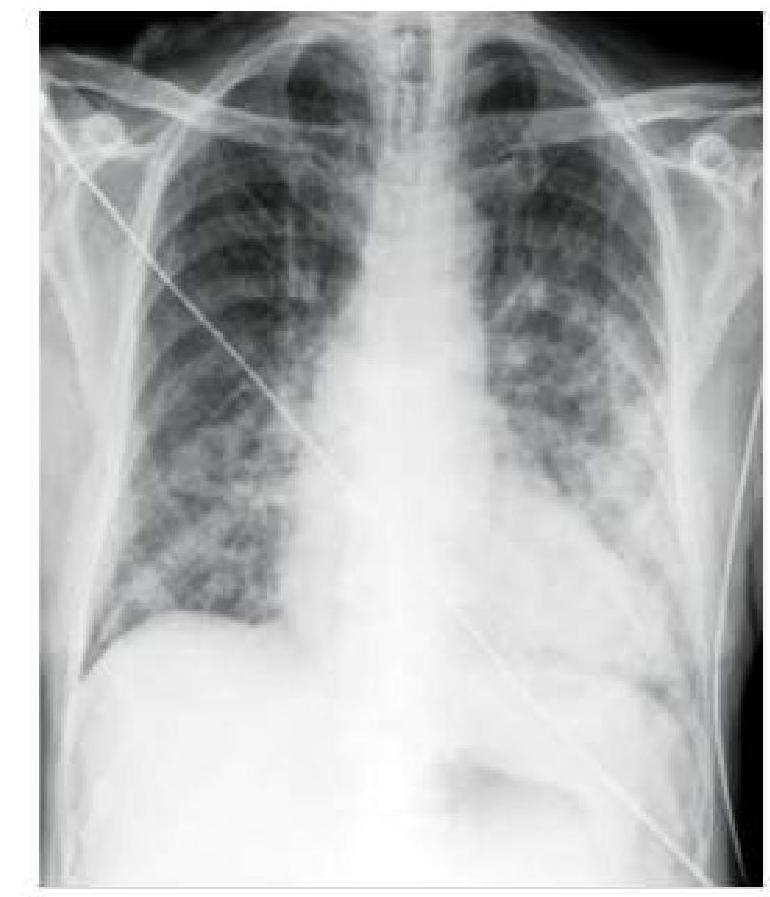
A hypertensive patient who is non-compliant with medication presents to you with sudden onset breathlessness. A chest x-ray was done, which is shown below. How will you manage this patient?
Which of the following is the FIRST-LINE antiemetic drug most commonly used for post-operative nausea and vomiting (PONV) prophylaxis?
All are management of PDPH except-
In acute left ventricular failure with pulmonary edema, which drug can be administered for immediate management?
A 55-year-old woman is undergoing chemotherapy for breast cancer and experiences severe nausea and vomiting. Which antiemetic, recognized for its minimal extrapyramidal side effects, would be appropriate for her condition?
Which thalamic nuclei can produce basal ganglia symptoms?
Want unlimited practice?
Get full access to all questions, explanations, and performance tracking.
Scan to download app