
Paraneoplastic Syndromes — MCQs

Opsoclonus-myoclonus is a phenomenon seen in:
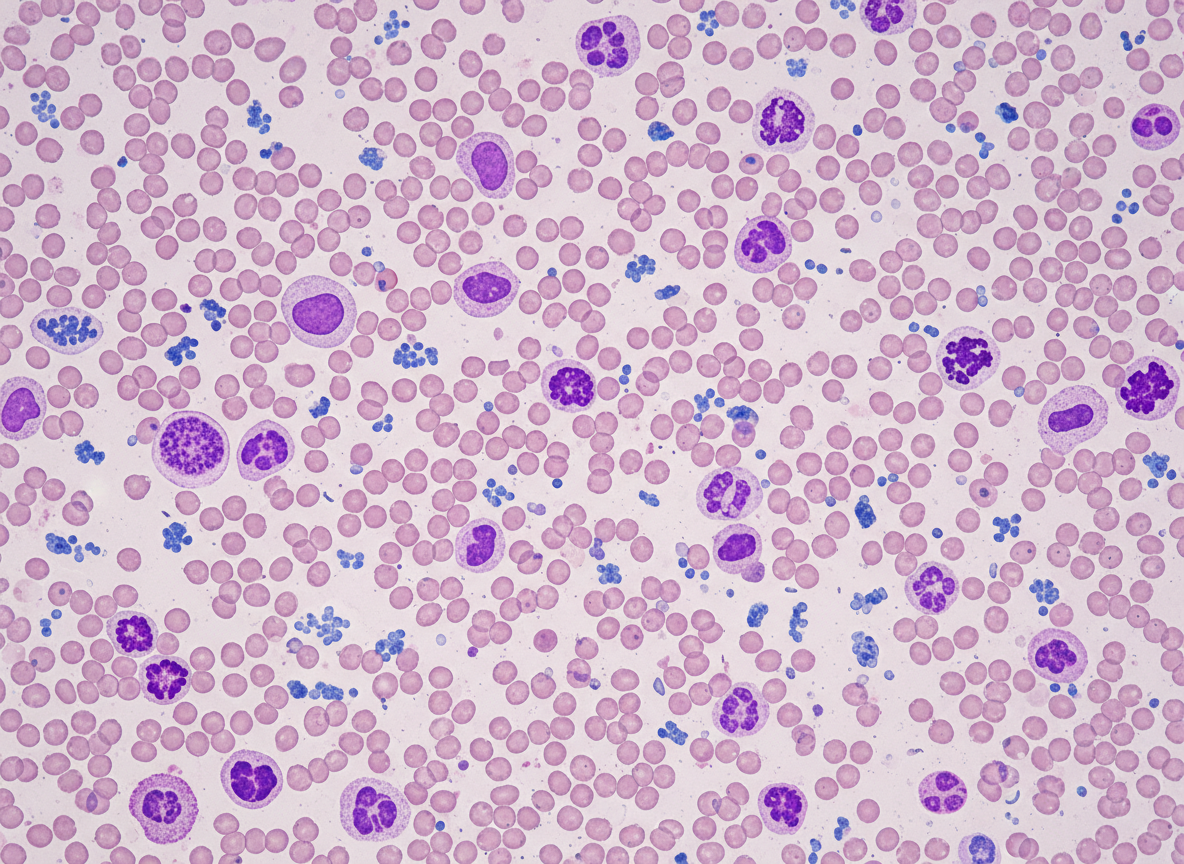
A 64-year-old woman comes to the physician for her routine health maintenance examination. She feels well. She had cervical cancer and received radiotherapy 8 years ago. Her vital signs are within normal limits. On percussion, the spleen size is 15 cm. Otherwise, the physical examination shows no abnormalities. The laboratory test results are as follows: Hemoglobin 10 g/dL Mean corpuscular volume 88 μm3 Leukocyte count 65,000/mm3 Platelet count 500,000/mm3 Two images of the peripheral blood smear are shown on the image. Which of the following is the most appropriate next step in management?
Malignancy-associated hypercalcemia is due to?
Which is not seen in Tumour lysis Syndrome?
What is the most common cause of hypercalcemic crisis?
Anticancer drug causing syndrome of inappropriate antidiuretic hormone secretion (SIADH) as an adverse effect is:
All of the following are paraneoplastic syndromes for renal cell carcinoma except which of the following?
A 7 – year old boy presented with abdominal pain, vomiting, oliguria, and periorbital puffiness following chemotherapy. Investigations reveal hyperuricemia, raised creatinine levels, and hyperkalemia. What is the next best step in the management of this condition ?
Which of the following is the MOST characteristic feature of Eaton-Lambert syndrome?
Opsoclonus is associated with:
Want unlimited practice?
Get full access to all questions, explanations, and performance tracking.
Scan to download app