What is the most common renal manifestation associated with leprosy?
True about Bartter's syndrome are all except?
Most common cause of hypernatremia.
Among the following, which is the most characteristic urinary finding in chronic renal failure (CRF)?
Which of the following primary kidney diseases is NOT typically associated with nephrotic syndrome?
Chronic hemodialysis in ESRD patient is done
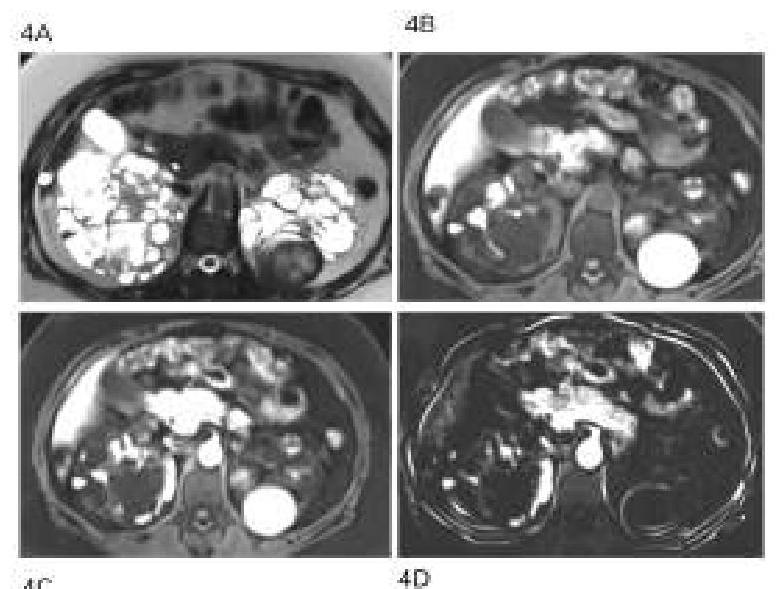
A 40-year-old man with a known case of hypertension presented with multiple episodes of hematuria and loin pain. His elder brother passed away due to a stroke at the age of 40. What is the probable diagnosis based on the clinical presentation?
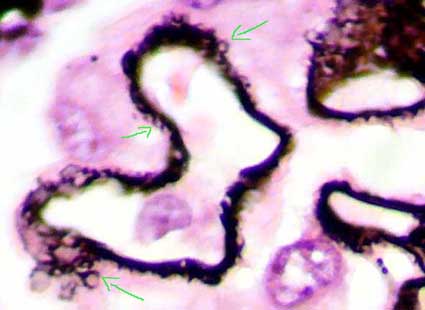
A 48-year-old man presents with complaints of facial puffiness, frothy urine, and hypertension. He gives a history of infection with hepatitis B. Urine examination reveals microscopic hematuria. The histopathological image of the kidney biopsy shows a spike and dome pattern. What is the diagnosis of this condition?
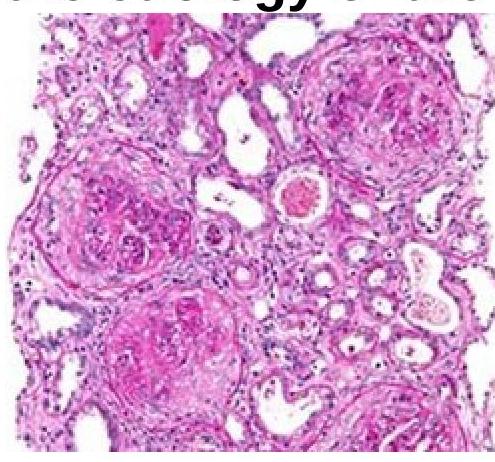
A 51-year-old person came with a complaint of hematuria. On examination, he was normotensive and had pedal edema. Investigations revealed the patient had no glucosuria and had a creatinine value of 9mg%. Renal biopsy is as shown below. Which of the following investigations should be done to identify the etiology of the disease?
What is the most likely cause of metabolic acidosis in a patient with a pH of 7.2, HCO3- levels of 10 or 12, and pCO2 of 35 mmHg?
Explanation: ***Membranous glomerulonephritis*** - **Membranous glomerulonephritis** is the most frequently reported renal lesion in leprosy, often associated with a **lepromatous form** of the disease. [2] - This is due to the deposition of **immune complexes** containing *Mycobacterium leprae* antigens in the glomerular basement membrane. [2] *Acute glomerulonephritis* - While possible in some infections, **acute glomerulonephritis** is not specifically or most commonly linked to leprosy. - It’s often characterized by **abrupt onset** of hematuria, proteinuria, and renal dysfunction. [1] *Membranoproliferative glomerulonephritis* - **Membranoproliferative glomerulonephritis** is a less common renal manifestation in leprosy. - It results from immune complex deposition causing mesangial and endothelial cell proliferation, often associated with other chronic infections but less so with leprosy specifically. [3] *Mesangioproliferative glomerulonephritis* - **Mesangioproliferative glomerulonephritis** involves proliferation of mesangial cells and can be seen in various conditions. - However, it is not the dominant or most common renal finding in patients with leprosy, which primarily involves subepithelial immune complex deposition.
Explanation: Hypokalemic alkalosis - Bartter's syndrome is characterized by **hypokalemia**, not hyperkalemia, due to impaired reabsorption of electrolytes in the loop of Henle. - The disorder typically leads to a **metabolic alkalosis**, but the key electrolyte disturbance is low potassium. *Autosomal recessive inheritance* - This statement is **true**; Bartter's syndrome is inherited in an autosomal recessive pattern. - It results from mutations in genes encoding transporters in the thick ascending limb of the loop of Henle. *Decreased K+ absorption from thick ascending loop of Henle* - This statement is **true**; Bartter's syndrome primarily involves a defect in the **Na+-K+-2Cl- cotransporter (NKCC2)** in the thick ascending limb. [1] - This leads to impaired reabsorption of sodium, potassium, and chloride, causing increased delivery of these ions to the distal nephron and subsequent potassium wasting. *Presents in neonate with ototoxicity have bartin gene mutation* - This statement is **true**; some forms of Bartter's syndrome, particularly type IV, are associated with mutations in the **BSND (barttin) gene**. - This mutation can lead to sensorineural **deafness (ototoxicity)** in addition to the renal manifestations, and often presents in the neonatal period.
Explanation: ***Renal losses*** - **Renal losses** are a very common cause of hypernatremia, particularly when the kidneys cannot adequately reabsorb water, leading to increased free water excretion. [1] - This can be seen in conditions like **diabetes insipidus (central or nephrogenic)**, where there is either a deficiency of ADH or renal unresponsiveness to ADH, resulting in dilute urine and high serum sodium. [1] *Adipsic diabetes insipidus* - **Adipsic diabetes insipidus** is a rare form of central diabetes insipidus characterized by impaired thirst sensation. [2] - While it directly leads to profound hypernatremia, its **rarity** makes it an uncommon overall cause compared to other etiologies. *Carcinoid syndrome* - **Carcinoid syndrome** is caused by tumors that release excessive amounts of vasoactive substances, like serotonin. - It is primarily associated with symptoms like flushing, diarrhea, and bronchospasm, and **does not directly cause hypernatremia**. *Sweating* - **Sweating** causes loss of hypotonic fluid (more water than electrolytes), which can lead to hypernatremia if not adequately replaced. - While a contributing factor, severe hypernatremia specifically due to sweating alone is **less common** than that caused by renal free water losses, especially in the context of impaired thirst or access to water.
Explanation: ***Broad casts in urine*** [3] - **Broad casts** are pathognomonic for **chronic renal failure (CRF)** and signify irreversible nephron loss because they are formed in dilated tubules that have undergone compensatory hypertrophy. - They are composed of cellular debris and Tamm-Horsfall protein and indicate severe and long-standing renal parenchymal damage. *Elevated blood urea* - While elevated blood urea, or **azotemia**, is characteristic of CRF, it is a blood chemistry finding, not a urinary finding [3], [4]. - It reflects impaired glomerular filtration and accumulation of nitrogenous waste products. *Bleeding diathesis* - **Bleeding diathesis** is a common complication of CRF due to uremia-induced platelet dysfunction, but it is a systemic clinical manifestation, not a urinary finding [1]. - It manifests as easy bruising, epistaxis, or prolonged bleeding. *Proteinuria* - **Proteinuria** is a common finding in many forms of kidney disease, including CRF, but it is not the most *characteristic* finding specifically for the **chronicity** and severity of CRF [2]. - Its presence indicates glomerular or tubular injury, but broad casts offer more specific evidence of advanced, irreversible damage.
Explanation: ***IgA nephropathy*** - While it can cause **proteinuria**, it is more commonly associated with **hematuria** than nephrotic syndrome [1]. - It is characterized by **IgA-dominant immune complexes**, not primarily causing the massive protein loss typical in nephrotic syndrome [1]. *Membranous Glomerulopathy* - A leading cause of nephrotic syndrome, it presents with significant **proteinuria** and **edema** [1]. - Associated with the formation of **subepithelial immune complex deposits**, leading to nephrotic features [1]. *Minimal change disease* - The most common cause of nephrotic syndrome in children, leading to **massive proteinuria** [1]. - Characterized by **normal appearing glomeruli** on light microscopy and selective proteinuria [1]. *Focal segmental Glomerulosclerosis* - Also presents with **nephrotic syndrome**, causing significant **proteinuria** and renal impairment [1]. - Associated with focal, segmental sclerosis of the glomeruli seen on microscopy, contributing to nephrotic features [1].
Explanation: ***Thrice per week*** - **Standard chronic hemodialysis** for **end-stage renal disease (ESRD)** patients is typically performed **three times per week** to adequately remove waste products and excess fluid. - This frequency is established to maintain a balance between effective treatment and the patient's quality of life, allowing for sufficient recovery time between sessions. *Once per week* - This frequency is generally **insufficient** for adequate solute and fluid removal in most ESRD patients, leading to **uremic symptoms** and complications. - Would likely result in **poor patient outcomes** due to accumulation of toxins and fluid overload. *Twice per week* - While sometimes considered for patients with **significant residual renal function** or those transitioning to another modality, it is **often inadequate** for long-term maintenance in most ESRD patients. - May lead to **suboptimal dialysis adequacy** and requires close monitoring for signs of under-dialysis. *Daily* - **Daily hemodialysis** (short daily or nocturnal daily) is an optimized regimen that can offer **better clearance** and **blood pressure control** [1] but is **not the standard chronic regimen**. - It imposes a **higher burden** on the patient's time and resources, and is typically reserved for specific clinical situations where standard thrice-weekly treatment is insufficient.
Explanation: ***Autosomal dominant polycystic kidney disease*** - The patient's presentation with **pain**, **hematuria**, and **hypertension** is typical for **ADPKD**. The family history of a brother dying of a **stroke** at a young age suggests a genetic predisposition to vascular abnormalities, common in ADPKD. - **Cerebral aneurysms**, which can lead to stroke, are a known extranal manifestation of ADPKD, and early onset stroke in a sibling strengthens the diagnosis despite it not being the defining feature of ADPKD itself. *Renal cell carcinoma* - While **hematuria**, **loin pain**, and **hypertension** can be symptoms of renal cell carcinoma, the bilateral nature of the cysts seen in the image and the family history of **early stroke** make ADPKD a more probable diagnosis. - Renal cell carcinoma usually presents as a **unilateral** solid mass, not diffuse cystic changes in both kidneys. *Tuberculosis of the kidney* - Renal tuberculosis would present with symptoms like sterile pyuria, dysuria, and flank pain, but less commonly with the dramatic cystic changes and family history of stroke seen here. - The imaging would typically show cavitary lesions or hydronephrosis rather than widespread bilateral cysts. *Autosomal recessive polycystic kidney disease* - **ARPKD** typically presents in **infancy or childhood** with severe renal failure and liver involvement. - The patient's age (40 years) makes ARPKD highly unlikely, as individuals with this condition rarely survive into adulthood without significant medical intervention.
Explanation: ***Membranous nephropathy*** - The **spike and dome pattern** seen in the biopsy is characteristic of membranous nephropathy [1,5], which also explains the patient's **facial puffiness** and frothy urine due to nephrotic syndrome [2,4]. - The association with **hepatitis B** infection further supports this diagnosis, as HBV can lead to a secondary form of membranous nephropathy [4]. *Minimal change disease* - Typically presents with **edema** and **proteinuria**, but does not show a spike and dome pattern on biopsy [3]. - It is often associated with **children** and responds well to steroids, unlike the findings here [3]. *FSGS* - Presents with **nephrotic syndrome** and may show varying degrees of scarring on biopsy, but lacks the characteristic spike and dome appearance [3,5]. - FSGS can also be secondary to other conditions but is not typically linked with hepatitis B. *PSGN-associated disease* - Post-streptococcal glomerulonephritis (PSGN) usually results in **hematuria** and **hypertension** following a streptococcal infection, not hepatitis B [2]. - The histopathological findings would more likely show **proliferative changes** rather than a spike and dome pattern [2]. **References:** [1] Kumar V, Abbas AK, et al.. Robbins and Cotran Pathologic Basis of Disease. 9th ed. The Kidney, p. 921. [2] Kumar V, Abbas AK, et al.. Robbins and Cotran Pathologic Basis of Disease. 9th ed. The Kidney, p. 915. [3] Kumar V, Abbas AK, et al.. Robbins and Cotran Pathologic Basis of Disease. 9th ed. The Kidney, pp. 927-928. [4] Kumar V, Abbas AK, et al.. Robbins and Cotran Pathologic Basis of Disease. 9th ed. The Kidney, pp. 919-921. [5] Cross SS. Underwood's Pathology: A Clinical Approach. 6th ed. Common Clinical Problems From Diseases Of The Urinary And Male Genital Tracts, pp. 531-532.
Explanation: ***ANTI GBM antibodies*** - The presence of hematuria and renal failure suggests a possible **glomerulonephritis**, where **anti-GBM (Glomerular Basement Membrane) antibodies** would help confirm conditions like Goodpasture syndrome [2]. - This test specifically identifies **anti-GBM disease** [1,2], which is crucial in guiding management for this patient with suspected renal pathology [3]. *ANA* - **Antinuclear antibody (ANA)** testing is typically used for autoimmune diseases like **Systemic Lupus Erythematosus** but is less specific for glomerular diseases. - In this context, ANA would not specifically help in identifying the **etiology of renal failure** associated with hematuria. *Urine immunoelectrophoresis* - This test is primarily useful for detecting **light chains** in conditions like **multiple myeloma** and may not be relevant to general hematuria or renal failure. - It is not a direct test for **glomerular disease etiology** related to hematuria and edema. *HIV RNA* - While **HIV** can lead to renal complications, including **HIV-associated nephropathy**, this test is not the first line for etiological determination in this specific presentation. - Negative **HIV serology** doesn't rule out renal disease caused by other factors, making this test less relevant here. **References:** [1] Cross SS. Underwood's Pathology: A Clinical Approach. 6th ed. Common Clinical Problems From Diseases Of The Urinary And Male Genital Tracts, pp. 526-527. [2] Cross SS. Underwood's Pathology: A Clinical Approach. 6th ed. Common Clinical Problems From Diseases Of The Urinary And Male Genital Tracts, pp. 537-538. [3] Kumar V, Abbas AK, et al.. Robbins and Cotran Pathologic Basis of Disease. 9th ed. The Kidney, pp. 918-919.
Explanation: ***Loss of bicarbonate by the kidneys*** - A pH of 7.2 (acidosis) and low **HCO3- (10-12 mEq/L)**, with a near-normal **pCO2 (35 mmHg)**, indicates an uncompensated **metabolic acidosis** [1], [3]. - Renal tubular acidosis (RTA), particularly **Type 2 RTA**, is characterized by impaired bicarbonate reabsorption by the proximal renal tubules, leading to excessive loss of bicarbonate in the urine, resulting in metabolic acidosis [2]. *Increased potassium excretion by the kidneys* - While certain renal conditions can lead to **potassium wasting**, this directly contributes to **hypokalemia**, not primarily to the observed metabolic acidosis. - While some **RTAs (Type 1 and Type 2) are associated with hypokalemia**, the direct cause of acidosis is bicarbonate loss or impaired acid excretion [2]. *Increased hydrogen ion excretion by the kidneys* - **Increased hydrogen ion excretion** would typically help correct acidosis, not cause it. - This process is crucial for acid-base balance, and its effective functioning would lead to **alkalosis** or normalization of pH, not acidosis. *Increased carbon dioxide expiration by the lungs* - **Increased CO2 expiration** would lead to a decrease in **pCO2**, which is a **respiratory alkalosis** or a compensatory mechanism for metabolic acidosis, not the cause of the acidosis itself [1]. - The given pCO2 of 35 mmHg is within or near the normal range, indicating the lungs are either not compensating fully or not the primary cause of the acidosis.
Acute Kidney Injury
Practice Questions
Chronic Kidney Disease
Practice Questions
Glomerular Diseases
Practice Questions
Tubulointerstitial Diseases
Practice Questions
Nephrotic and Nephritic Syndromes
Practice Questions
Urinary Tract Infections
Practice Questions
Renal Replacement Therapy
Practice Questions
Fluid and Electrolyte Disorders
Practice Questions
Acid-Base Disorders
Practice Questions
Kidney in Systemic Diseases
Practice Questions
Kidney Stones and Obstructive Uropathy
Practice Questions
Hypertension in Kidney Disease
Practice Questions
Get full access to all questions, explanations, and performance tracking.
Start For Free