A 60-year-old man presents with symptoms of polyuria and nocturia. Investigations reveal a normal fasting glucose and calcium level. His urine electrolytes suggest a renal transport defect. Which of the following is the most likely cause for his symptoms?
Necrotizing papillitis is seen in which of the following conditions?
Gross hematuria is seen in which of the following conditions?
How can acute and chronic renal failure be differentiated?
All of the following statements about Bartter syndrome and Gitelman syndrome are true, EXCEPT:
Calculate the water deficit in a 50 kg male patient with a serum sodium level of 160 mEq/L.
Which of the following is NOT a uremic manifestation that improves with dialysis?
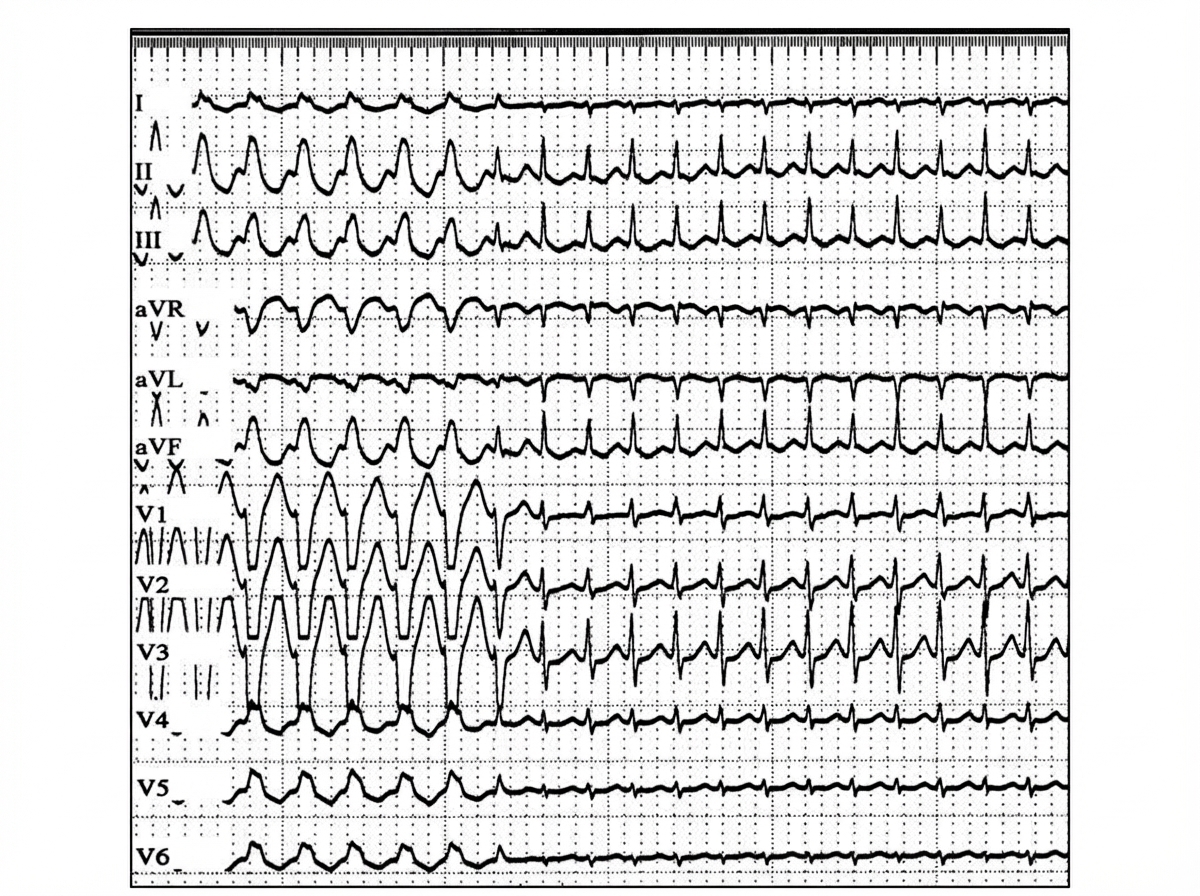
The ECG in hyperkalemia classically shows:
Anaemia in chronic renal failure is primarily due to which of the following?
"Pauci-immune" glomerulonephritis is seen in which of the following conditions?
Explanation: ### Explanation The clinical presentation of **polyuria** (excessive urine production) and **nocturia** in the presence of normal glucose and calcium levels points toward a defect in the kidney's ability to concentrate urine. [1] **1. Why "Renal tubular defects" is correct:** The renal tubules (specifically the Loop of Henle and Collecting Ducts) are responsible for the reabsorption of water and electrolytes. Defects in these segments—such as **Nephrogenic Diabetes Insipidus** or **Fanconi Syndrome**—impair the osmotic gradient or the response to Antidiuretic Hormone (ADH). This leads to the excretion of large volumes of dilute urine (polyuria), regardless of the body's hydration status. [1] The mention of "urine electrolytes suggesting a transport defect" specifically localizes the pathology to the tubular transport proteins (e.g., Na-K-2Cl symporter or aquaporins). [2] **2. Why the other options are incorrect:** * **Acute Nephritis:** Typically presents with the "nephritic triad" of hematuria (coca-cola colored urine), hypertension, and oliguria (decreased urine output), rather than polyuria. [3] * **Acute Renal Failure (ARF/AKI):** Most commonly presents with oliguria or anuria in the initial stages. While a polyuric phase exists during recovery, it is not the primary presentation of a transport defect. [3] * **Nephrolithiasis:** Presents with renal colic (severe flank pain) and hematuria. It does not cause polyuria unless it leads to chronic obstructive uropathy. [4] **Clinical Pearls for NEET-PG:** * **Differential for Polyuria:** Always rule out Diabetes Mellitus (glucose) and Hypercalcemia first. If these are normal, consider Diabetes Insipidus or tubular defects. * **Bartter vs. Gitelman:** Bartter syndrome (Loop of Henle defect) often presents with polyuria and growth retardation, while Gitelman (Distal tubule) presents with hypomagnesemia and tetany. * **Urine Osmolality:** In tubular defects causing polyuria, urine osmolality is typically inappropriately low (<300 mOsm/kg) despite high plasma osmolality. [2]
Explanation: **Explanation:** **Necrotizing Papillitis** (Renal Papillary Necrosis) is a condition characterized by ischemic necrosis of the renal papillae. It occurs due to a compromise in the blood supply of the vasa recta, which provides the primary nourishment to the renal medulla. **Why Salicylate Poisoning is Correct:** Salicylates (Aspirin) and other NSAIDs inhibit the synthesis of **Prostaglandins** (specifically PGE2) by inhibiting the cyclooxygenase (COX) enzyme. Prostaglandins are potent vasodilators of the afferent arterioles and the vasa recta. When their production is blocked, it leads to intense medullary vasoconstriction, resulting in ischemia and subsequent necrosis of the papillae. This is a hallmark of **Analgesic Nephropathy** [1]. **Analysis of Incorrect Options:** * **Glomerulonephritis:** This primarily affects the renal glomeruli through immunological mechanisms (e.g., immune complex deposition) rather than causing ischemic necrosis of the papillae [2]. * **Paroxysmal Nocturnal Hemoglobinuria (PNH):** While PNH can cause chronic kidney disease due to iron deposition (hemosiderosis) and microvascular thrombosis, it is not a classic or primary cause of necrotizing papillitis. * **Diabetes Insipidus:** This involves a deficiency of or resistance to ADH, leading to polyuria. It does not involve ischemic damage to the renal medulla. **High-Yield Clinical Pearls for NEET-PG:** To remember the common causes of Renal Papillary Necrosis, use the mnemonic **POSTCARDS**: * **P** - Pyelonephritis (Acute) * **O** - Obstruction of the urinary tract * **S** - **Sickle Cell Disease/Trait** (Most common cause in children) * **T** - Tuberculosis (Renal) * **C** - Cirrhosis * **A** - **Analgesic abuse/Salicylates** (Most common cause of chronic necrosis) * **R** - Renal vein thrombosis * **D** - **Diabetes Mellitus** (Most common overall cause) * **S** - Systemic Vasculitis
Explanation: **Explanation:** **IgA Nephropathy (Berger’s Disease)** is the most common cause of primary glomerulonephritis worldwide. It characteristically presents as **synpharyngitic hematuria**—episodes of **gross (macroscopic) hematuria** occurring concurrently or within 1–2 days of an upper respiratory tract infection [1]. The underlying pathology involves the deposition of IgA immune complexes in the glomerular mesangium, leading to inflammation and rupture of glomerular capillaries [3]. **Analysis of Incorrect Options:** * **Minimal Change Disease (MCD):** This is the classic cause of **Nephrotic Syndrome** in children [2]. It typically presents with massive proteinuria, edema, and hypoalbuminemia, but **not** gross hematuria. * **Chronic Renal Failure (CRF):** CRF is a state of progressive loss of kidney function. While microscopic hematuria can occur depending on the primary cause, gross hematuria is not a hallmark feature of chronic kidney disease itself. * **Nephritic Syndrome:** While nephritic syndrome (e.g., Post-streptococcal GN) presents with hematuria, it is usually described as **"cola-colored" or "smoky" urine** [4]. While it can be gross, IgA nephropathy is the most classic and frequent association with recurrent, visible gross hematuria in exam scenarios. (Note: If both are options, IgA is the more specific "textbook" answer for recurrent gross hematuria). **High-Yield Clinical Pearls for NEET-PG:** * **Timing is Key:** IgA Nephropathy = **Synpharyngitic** (1-2 days after infection); PSGN = **Post-pharyngitic** (1-3 weeks after infection) [1]. * **Diagnosis:** Definitive diagnosis requires renal biopsy showing **mesangial IgA deposits** on immunofluorescence [3]. * **Prognosis:** The most reliable predictor of poor prognosis in IgA nephropathy is the severity of **proteinuria** and hypertension at presentation.
Explanation: To differentiate between Acute Kidney Injury (AKI) and Chronic Kidney Disease (CKD), clinicians must look for signs of chronicity. While many biochemical markers overlap, certain clinical and radiological findings are specific to long-standing renal impairment [1]. ### **Explanation of the Correct Option** **C. Peripheral Neuropathy:** This is a definitive sign of chronicity. Uremic peripheral neuropathy (typically a symmetric distal sensory-motor neuropathy) takes months to years of persistent azotemia to develop. It is virtually never seen in AKI, making it a reliable clinical differentiator. ### **Explanation of Incorrect Options** * **A. Anemia:** While classic teaching suggests anemia favors CKD (due to decreased Erythropoietin), it is **not** a reliable differentiator [1]. Patients with AKI can develop rapid anemia due to hemodilution, hemolysis, or gastrointestinal bleeding (stress ulcers). Conversely, some CKD patients (e.g., Polycystic Kidney Disease) may maintain normal hemoglobin levels. * **B. Hyperphosphatemia:** This occurs in both AKI and CKD [2]. In AKI, it results from a sudden drop in GFR and decreased excretion; in CKD, it is part of the Mineral Bone Disorder (MBD) spectrum. Therefore, it cannot be used to distinguish between the two. ### **High-Yield Clinical Pearls for NEET-PG** 1. **Kidney Size:** The most reliable radiological differentiator is kidney size on Ultrasound. **Small, shrunken kidneys (<9 cm)** indicate CKD. * *Exceptions (Large kidneys in CKD):* Diabetes Mellitus, Amyloidosis, Polycystic Kidney Disease (PCKD), and HIV-associated nephropathy. 2. **Renal Osteodystrophy:** Radiological evidence of subperiosteal resorption (best seen in hand phalanges) is pathognomonic for CKD. 3. **Broad Casts:** The presence of "Broad Casts" (wider than ordinary granular casts) in urine sediment suggests compensatory hypertrophy of remaining nephrons, indicating CKD.
Explanation: This question tests the ability to differentiate between two major hereditary salt-losing tubulopathies: **Bartter Syndrome** and **Gitelman Syndrome**. ### **Explanation of the Correct Answer (C)** Option C is the incorrect statement (and thus the correct answer) because **Bartter syndrome** involves a defect in the **thick ascending limb (TAL)** of the Loop of Henle, specifically affecting the **Na+-K+-2Cl- (NKCC2) cotransporter**, the ROMK channel, or the ClC-Kb channel. This mimics the action of **loop diuretics** (e.g., Furosemide). In contrast, the **Na+-Cl- cotransporter (NCCT)** defect in the **distal convoluted tubule** is the hallmark of **Gitelman syndrome**, mimicking the action of **thiazide diuretics**. ### **Analysis of Other Options** * **A. Autosomal recessive inheritance:** Both syndromes are typically inherited in an autosomal recessive pattern. * **B. Presentation timing:** Bartter syndrome is generally more severe and presents early (often antenatally with polyhydramnios or in infancy). Gitelman syndrome is milder and often remains asymptomatic until late childhood or adulthood. * **D. Calcium excretion:** This is a key clinical differentiator. Bartter syndrome presents with **hypercalciuria** (leading to nephrocalcinosis), whereas Gitelman syndrome presents with **hypocalciuria** and **hypomagnesemia**. ### **NEET-PG High-Yield Pearls** | Feature | Bartter Syndrome | Gitelman Syndrome | | :--- | :--- | :--- | | **Site of Defect** | Thick Ascending Limb (TAL) | Distal Convoluted Tubule (DCT) | | **Mimics Diuretic** | Loop Diuretics (Furosemide) | Thiazide Diuretics | | **Urinary Calcium** | **High** (Hypercalciuria) | **Low** (Hypocalciuria) | | **Serum Magnesium** | Usually Normal | **Low** (Hypomagnesemia) | | **Common Findings** | Metabolic alkalosis, Hypokalemia, High Renin/Aldosterone | **Mnemonic:** **B**artter = **B**ig (presents early, high calcium). **G**itelman = **G**rown-up (presents later, low calcium).
Explanation: ### Explanation To solve this question, we must first calculate the **Free Water Deficit (FWD)** using the standard formula: **FWD = Total Body Water (TBW) × [(Serum Na / 140) – 1]** 1. **Calculate TBW:** In an adult male, TBW is approximately 60% of body weight [2]. * TBW = 50 kg × 0.6 = **30 L** 2. **Calculate the Deficit:** * FWD = 30 × [(160 / 140) – 1] * FWD = 30 × [1.142 – 1] = 30 × 0.142 = **4.26 L** While the pure water deficit is ~4.3 L, the clinical management of hypernatremia often involves using hypotonic solutions. Among the options provided, **2.9 L of half-normal saline (0.45% NaCl)** is the most appropriate choice because it provides the necessary free water while addressing potential volume depletion [1]. #### Why the other options are incorrect: * **Option A (Hypertonic Saline):** This contains 3% NaCl. Giving more sodium to a patient with a serum sodium of 160 mEq/L would worsen the hypernatremia and is contraindicated. * **Options C & D (1.5 L Dextrose):** While 5% Dextrose (D5W) is technically "free water" [2], the calculated volume (1.5 L) is significantly lower than the required deficit (~4.3 L), making these options inadequate. #### High-Yield Clinical Pearls for NEET-PG: * **Rate of Correction:** Never correct sodium faster than **0.5 mEq/L per hour** (or max 8–10 mEq/L in 24 hours). Rapid correction leads to **Cerebral Edema** due to the sudden shift of water into brain cells. * **TBW Constants:** Use 0.6 for men, 0.5 for women/elderly men, and 0.45 for elderly women. * **Preferred Fluid:** If the patient is hypovolemic and hypernatremic, start with Normal Saline (0.9%) until hemodynamically stable, then switch to hypotonic fluids (0.45% Saline or D5W) [1].
Explanation: ### Explanation In the management of Chronic Kidney Disease (CKD), it is crucial to distinguish between **acute uremic symptoms** (which respond to dialysis) and **chronic metabolic complications** (which do not). **1. Why Osteodystrophy is the Correct Answer:** Renal Osteodystrophy is a complex, chronic metabolic bone disorder resulting from secondary hyperparathyroidism, vitamin D deficiency (failure of 1-alpha hydroxylation), and phosphate retention [1]. Dialysis is inefficient at removing phosphate compared to the natural kidney and does nothing to restore the hormonal function of the kidney (calcitriol production). Therefore, bone changes often persist or even worsen despite regular dialysis; they require specific management with phosphate binders and vitamin D analogs [1]. **2. Why the Other Options are Incorrect:** * **Metabolic Acidosis (A):** Dialysis effectively corrects the anion gap acidosis by removing organic acids and replenishing serum bicarbonate via the dialysate [2]. * **Asterixis (C):** This is a classic sign of uremic encephalopathy. Since it is caused by the accumulation of small, water-soluble nitrogenous toxins, it typically resolves rapidly once dialysis clears these solutes [2]. * **Nausea, Vomiting, and Anorexia (D):** These are the earliest gastrointestinal manifestations of uremia [2]. They are directly related to the level of circulating uremic toxins and show significant improvement after initiating renal replacement therapy. **Clinical Pearls for NEET-PG:** * **Dialysis-Resistant Uremic Features:** Osteodystrophy, anemia (requires EPO), peripheral neuropathy (may stabilize but rarely reverses), and atherosclerosis [1], [3]. * **Dialysis-Responsive Uremic Features:** Pericarditis (absolute indication for dialysis), encephalopathy, fluid overload, and platelet dysfunction (bleeding diathesis). * **High-Yield:** The most common cause of death in patients on chronic dialysis is **Cardiovascular disease**, not uremia itself.
Explanation: ### Explanation Hyperkalemia is a critical electrolyte abnormality that affects the resting membrane potential of cardiac myocytes, leading to delayed depolarization and repolarization [1]. **1. Why "Increased QRS duration" is correct:** As potassium levels rise, the resting membrane potential becomes less negative (partially depolarized). This leads to a decrease in the velocity of the upstroke of the action potential (Phase 0), which slows down intraventricular conduction. On an ECG, this manifests as a **widening of the QRS complex** [1]. If left untreated, the QRS can eventually merge with the T wave, forming a "sine wave" pattern, a precursor to ventricular fibrillation or asystole. **2. Why the other options are incorrect:** * **Shortened PR interval:** In hyperkalemia, the PR interval actually **prolongs** due to delayed conduction through the AV node. Eventually, P waves may disappear entirely (atrial standstill) [1]. * **Prominent U waves:** These are characteristic of **hypokalemia**, not hyperkalemia. Hyperkalemia is associated with tall, "tented" or peaked T waves [1]. * **Increased R wave amplitude:** Hyperkalemia typically causes a **decrease** in R wave amplitude and S wave deepening as conduction slows. **3. High-Yield Clinical Pearls for NEET-PG:** * **Sequential ECG Changes:** Tall peaked T waves (earliest sign) → PR prolongation/P wave flattening → QRS widening → Sine wave pattern → VF/Asystole [1]. * **Treatment Priority:** The first step in management when ECG changes are present is **Intravenous Calcium Gluconate** (to stabilize the cardiac membrane), followed by insulin/dextrose to shift potassium intracellularly. * **Pseudohyperkalemia:** Always rule out hemolysis during blood collection if the ECG is normal despite very high lab values.
Explanation: Anemia in Chronic Kidney Disease (CKD) is typically **normocytic and normochromic**. While it is a multifactorial condition, the primary driver is the kidney's inability to produce sufficient erythropoietin [1]. 1. **Erythropoietin (EPO) Deficiency:** This is the **most important** and primary cause. As the functional renal parenchyma declines, the peritubular interstitial fibroblasts fail to produce adequate EPO [3], leading to reduced stimulation of the bone marrow to produce red blood cells [1]. 2. **Decreased RBC Survival:** The "uremic environment" (accumulation of nitrogenous wastes) exerts a toxic effect on the RBC membrane, leading to premature hemolysis and a shortened lifespan of circulating erythrocytes. 3. **Nutritional Deficiencies:** Patients with CRF often have poor oral intake (anorexia) and lose water-soluble vitamins like **Folate** and B12 during dialysis sessions. Additionally, chronic inflammation in CKD increases **Hepcidin** levels, which traps iron in stores, leading to functional iron deficiency [2]. **Why "All of the Above" is correct:** While EPO deficiency is the hallmark, the clinical presentation of anaemia in a renal patient is almost always a combination of decreased production, increased destruction, and nutritional depletion. **High-Yield Clinical Pearls for NEET-PG:** * **Target Hemoglobin:** In CKD patients on EPO therapy, the target Hb is **10–11.5 g/dL**. Aiming for >13 g/dL increases the risk of stroke and cardiovascular events (CHOIR and CREATE trials). * **Iron Stores:** Always replenish iron stores (Target Ferritin >200 ng/mL) before starting EPO therapy. * **Burr Cells (Echinocytes):** These are characteristic peripheral smear findings in uremic patients. * **Hepcidin:** It is the key mediator of "Anaemia of Chronic Disease" in CKD [2].
Explanation: ### Explanation **Pauci-immune Glomerulonephritis (GN)** is characterized by necrotizing glomerulonephritis with little or no deposition of antibodies or complement on immunofluorescence (IF) microscopy [1]. It is the hallmark of **ANCA-associated vasculitides** [1]. **1. Why Microscopic Polyangiitis (MPA) is correct:** MPA is a small-vessel vasculitis strongly associated with **p-ANCA (anti-MPO)** [1]. In the kidneys, it manifests as a focal segmental necrotizing GN [1]. Because the damage is mediated by activated neutrophils rather than immune-complex deposition, the IF staining is "pauci" (scanty/minimal), making it a classic example of pauci-immune GN. **2. Why the other options are incorrect:** * **Post-transplant GN:** This usually refers to recurrent or de novo GN (like IgA or Membranous), which typically involves significant immune complex or complement deposition. * **Henoch-Schönlein Purpura (IgA Vasculitis):** This is an **immune-complex-mediated** disease. IF shows prominent granular **IgA deposits** in the mesangium [2]. * **Lupus Nephritis:** This is the prototype of **immune-complex-mediated** GN. IF shows a "full-house" pattern (deposits of IgG, IgA, IgM, C3, and C1q) [1]. **High-Yield Clinical Pearls for NEET-PG:** * **The "Pauci-immune Trio":** Granulomatosis with polyangiitis (GPA/Wegener's), Microscopic polyangiitis (MPA), and Eosinophilic granulomatosis with polyangiitis (EGPA/Churg-Strauss). * **Morphology:** On light microscopy, these conditions often present as **Crescentic GN** (Rapidly Progressive GN Type III) [1]. * **ANCA Patterns:** * **c-ANCA (PR3):** Highly specific for GPA. * **p-ANCA (MPO):** Associated with MPA and EGPA. * **Distinction:** Unlike GPA, MPA **lacks** granulomatous inflammation and typically does not involve the upper respiratory tract (no saddle nose deformity).
Acute Kidney Injury
Practice Questions
Chronic Kidney Disease
Practice Questions
Glomerular Diseases
Practice Questions
Tubulointerstitial Diseases
Practice Questions
Nephrotic and Nephritic Syndromes
Practice Questions
Urinary Tract Infections
Practice Questions
Renal Replacement Therapy
Practice Questions
Fluid and Electrolyte Disorders
Practice Questions
Acid-Base Disorders
Practice Questions
Kidney in Systemic Diseases
Practice Questions
Kidney Stones and Obstructive Uropathy
Practice Questions
Hypertension in Kidney Disease
Practice Questions
Get full access to all questions, explanations, and performance tracking.
Start For Free