Which of the following can cause renal vein thrombosis?
Which statement is true regarding post-streptococcal glomerulonephritis?
Which of the following is associated with non-oliguric renal failure?
Dementia in a patient with chronic renal failure undergoing chronic hemodialysis is most commonly due to which of the following?
What is the most common infectious agent associated with chronic pyelonephritis?
Which of the following is FALSE regarding acute tubular necrosis?
Anti-GBM antibody-mediated Rapidly Progressive Glomerulonephritis is seen in which condition?
What are the characteristic electrolyte imbalances associated with Congestive Heart Failure (CHF)?
What has the maximum chance of infection in dialysis?
Which one of the following is not a feature of type I renal tubular acidosis?
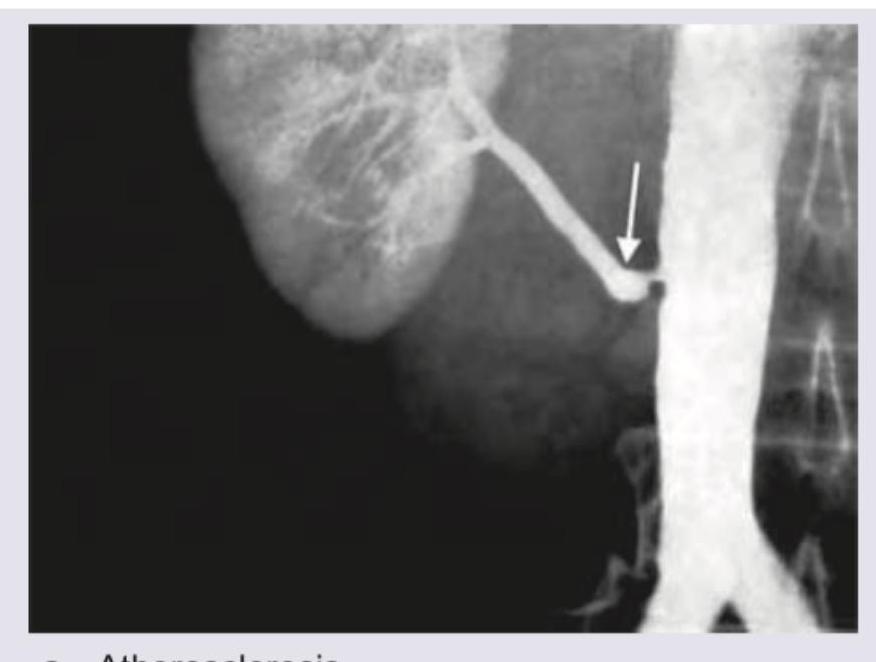
Explanation: Renal Vein Thrombosis (RVT) occurs when a thrombus forms in one or both renal veins, leading to venous congestion and potential renal dysfunction. The correct answer is **All of the above** because RVT results from the classic Virchow’s Triad: hypercoagulability, endothelial injury, and venous stasis. 1. **Nephrotic Syndrome (Option A):** This is the most common medical cause of RVT in adults. The loss of low-molecular-weight anticoagulants (like **Antithrombin III**) and Proteins C and S in the urine, combined with increased hepatic synthesis of pro-coagulants (Fibrinogen), creates a profound **hypercoagulable state**. It is most frequently associated with **Membranous Nephropathy**. 2. **Invasive Renal Cell Carcinoma (Option B):** RCC is notorious for its "angiotropic" nature [1]. The tumor can directly invade the renal vein and propagate into the Inferior Vena Cava (IVC), causing mechanical obstruction and local stasis [1]. 3. **Dehydration (Option C):** Severe volume depletion leads to hemoconcentration and decreased renal blood flow (stasis). This is a particularly common cause of RVT in **neonates** and infants. **Clinical Pearls for NEET-PG:** * **Gold Standard Investigation:** Renal Venography (though CT Angiography/Doppler is usually the first-line clinical choice). * **Classic Presentation:** Flank pain, hematuria, and a sudden decline in GFR (in acute cases). * **High-Yield Association:** Among nephrotic syndromes, **Membranous Nephropathy** has the highest incidence of RVT (up to 30-50% of cases). * **Left-sided RVT:** Can present with a **left-sided varicocele** because the left gonadal vein drains directly into the left renal vein.
Explanation: Post-streptococcal glomerulonephritis (PSGN) is a classic nephritic syndrome following a skin (impetigo) or throat (pharyngitis) infection with Group A Beta-hemolytic Streptococcus [1]. **Why Option A is correct:** PSGN is typically a clinical diagnosis in children with a recent history of infection, hematuria, edema, and hypertension. A renal biopsy is **not** routinely required. However, it becomes mandatory if there is **severe renal dysfunction** (e.g., rapidly rising creatinine suggesting RPGN), atypical features (absence of latent period), or if the clinical course is prolonged (persistent low C3 beyond 8 weeks), to rule out other glomerular diseases like IgA nephropathy or Lupus nephritis [1]. **Why the other options are incorrect:** * **Option B:** While gross hematuria ("cola-colored urine") usually resolves within 1–2 weeks, **microscopic hematuria** can persist for up to **1 to 2 years** post-recovery. * **Option C:** PSGN is characterized by the activation of the alternative complement pathway [1]. Therefore, **Serum C3 levels are characteristically low** (hypocomplementemia) in >90% of patients during the acute phase, typically returning to normal within 6–8 weeks. * **Option D:** Elevated triglycerides are a hallmark of **Nephrotic Syndrome** (due to increased hepatic lipoprotein synthesis). PSGN is a **Nephritic Syndrome**, where lipid profiles are typically normal. **High-Yield Clinical Pearls for NEET-PG:** * **Latent Period:** 1–3 weeks after pharyngitis; 3–6 weeks after pyoderma. * **Light Microscopy:** "Starry sky" appearance or "Lumpy-bumpy" deposits [1]. * **Electron Microscopy:** Pathognomonic **subepithelial humps**. * **Immunofluorescence:** Granular deposits of IgG and C3. * **Prognosis:** Excellent in children (>95% complete recovery); more guarded in adults [1].
Explanation: **Explanation:** Acute Kidney Injury (AKI) is traditionally classified into oliguric (<400 ml/day) and non-oliguric (>400 ml/day) forms [1]. **Aminoglycoside toxicity** (e.g., Gentamicin, Amikacin) is the classic prototype of **non-oliguric renal failure**. **Why Aminoglycosides?** Aminoglycosides accumulate in the proximal tubular epithelial cells, causing Acute Tubular Necrosis (ATN). However, they also induce a state of **acquired nephrogenic diabetes insipidus** by decreasing the sensitivity of the collecting ducts to ADH. This results in a defect in urinary concentrating ability, leading to high urine output despite a declining Glomerular Filtration Rate (GFR). Typically, the rise in serum creatinine is seen 5–7 days after starting therapy. **Analysis of Incorrect Options:** * **Hypovolemia:** This causes pre-renal azotemia. The physiological response to low perfusion is the activation of the RAAS and ADH, leading to maximal water reabsorption and **oliguria** [1]. * **NSAIDs:** These drugs inhibit prostaglandin-mediated vasodilation of the afferent arteriole, leading to reduced renal perfusion and typically presenting as **oliguric** AKI. * **Post-streptococcal glomerulonephritis (PSGN):** This is a classic nephritic syndrome characterized by the triad of **oliguria**, hematuria, and hypertension due to severe glomerular inflammation. **High-Yield Clinical Pearls for NEET-PG:** * **Other causes of non-oliguric AKI:** Cisplatin toxicity, Amphotericin B, Methoxyflurane, and Contrast-induced nephropathy (can be either). Interstitial nephritis is also frequently non-oliguric in early stages [1]. * **Prognosis:** Non-oliguric AKI generally has a **better prognosis**, lower mortality, and fewer complications (like hyperkalemia) compared to oliguric AKI. * **Aminoglycoside monitoring:** To prevent toxicity, once-daily dosing (high dose) is preferred over multiple daily doses due to the "post-antibiotic effect" and reduced renal cortical accumulation.
Explanation: **Explanation:** The correct answer is **Aluminium toxicity**, specifically referring to a clinical syndrome known as **Dialysis Encephalopathy** or **Dialysis Dementia**. **1. Why Aluminium Toxicity is Correct:** Historically, patients on chronic hemodialysis were exposed to high levels of aluminium through two sources: **dialysate fluid** (prepared from untreated tap water) and **phosphate binders** (aluminium hydroxide). Aluminium is normally excreted by the kidneys; in chronic renal failure, it accumulates in the brain, bone, and bone marrow. In the brain, it disrupts neuronal function, leading to a progressive syndrome characterized by speech disturbances (stuttering), seizures, myoclonus, and progressive dementia. While modern water purification (reverse osmosis) has made this rare, it remains the classic "textbook" cause of dementia in this specific patient population [3]. **2. Why Other Options are Incorrect:** * **Uremia:** While uremia causes "Uremic Encephalopathy" (characterized by asterixis, confusion, and coma), it is an acute/subacute metabolic state that typically improves with dialysis, rather than causing a chronic, progressive dementia. [2]. * **Cerebral Amyloid Angiopathy (CAA):** This is a cause of lobar intracerebral hemorrhage in the elderly due to amyloid-β deposition in vessel walls, but it is not specifically linked to the dialysis process. * **Beta-amyloid Deposition:** This is the hallmark of Alzheimer’s disease. While dialysis patients can develop Alzheimer’s, the question asks for the cause most specific to the dialysis process itself [1]. Note: Dialysis-related amyloidosis involves **Beta-2 Microglobulin**, which affects bones and joints (Carpal Tunnel Syndrome), not the brain. **Clinical Pearls for NEET-PG:** * **Diagnosis:** Elevated serum aluminium levels and the **Deferoxamine infusion test**. * **Management:** Use of non-aluminium phosphate binders (e.g., Sevelamer, Lanthanum) and reverse osmosis for dialysate. * **Triad of Aluminium Toxicity:** 1. Dialysis Dementia, 2. Osteomalacia (Vitamin D resistant), 3. Microcytic Anemia (non-iron deficiency).
Explanation: ### Explanation **Correct Answer: D. Escherichia coli** **Medical Concept:** Chronic pyelonephritis is a clinicopathologic entity characterized by chronic tubulointerstitial inflammation and renal scarring, typically resulting from recurrent or persistent urinary tract infections (UTIs) associated with vesicoureteral reflux (V reflux) or chronic obstruction [2]. **Escherichia coli** is the most common causative agent because it is the predominant uropathogen in the fecal flora. It possesses specific virulence factors, such as **P-pili (adhesins)**, which allow it to adhere to the uroepithelium and ascend the urinary tract, even in the presence of anatomical abnormalities. **Analysis of Incorrect Options:** * **A. Proteus vulgaris:** While *Proteus* species are significant in nephrology, they are more specifically associated with **struvite (staghorn) calculi** due to their urease-producing ability, which alkalinizes the urine. * **B. Klebsiella pneumonia:** This is a common cause of hospital-acquired UTIs and can cause pyelonephritis, but its overall prevalence is lower than *E. coli*. * **C. Staphylococcus aureus:** This organism usually reaches the kidney via **hematogenous spread** (seeding from the blood) rather than the ascending route. It is more commonly associated with renal abscesses in the setting of bacteremia. **High-Yield Clinical Pearls for NEET-PG:** * **Pathognomonic Finding:** The presence of **"Thyroidization" of the kidney** (proteinaceous casts in dilated tubules resembling thyroid follicles) is the classic histological hallmark of chronic pyelonephritis. * **Radiology:** Look for **coarse cortical scarring** overlying a blunted/dilated calyx (U-shaped scars), typically at the poles. * **Xanthogranulomatous Pyelonephritis:** A rare variant of chronic pyelonephritis often associated with *Proteus* infections and characterized by "foamy macrophages." [1]
Explanation: ### Explanation Acute Tubular Necrosis (ATN) is an intrinsic renal cause of acute kidney injury (AKI) characterized by damage to the tubular epithelial cells [1]. The key to answering this question lies in distinguishing **Intrinsic AKI (ATN)** from **Prerenal Azotemia** [2]. **1. Why Option A is False (The Correct Answer):** In ATN, the tubular cells are damaged and cannot reabsorb urea effectively. Consequently, urea is excreted, and the **BUN/Creatinine ratio remains low (< 10–15:1)**. A ratio **> 20:1** is a classic hallmark of **Prerenal Azotemia**, where intact tubules increase urea reabsorption in response to hypovolemia (passive reabsorption follows sodium and water). **2. Analysis of Other Options (True for ATN):** * **Option B (Urinary Sodium > 40 mEq/L):** Damaged tubules lose the ability to reabsorb sodium, leading to high urinary sodium concentration. * **Option C (FeNa > 2%):** The Fractional Excretion of Sodium (FeNa) is the most reliable indicator. In ATN, the "leaky" tubules cannot conserve sodium, resulting in a FeNa > 2% (often > 1%). * **Option D (U/P Creatinine Ratio < 40):** Since the tubules cannot reabsorb water effectively, the urine is not concentrated. This leads to a low Urine-to-Plasma Creatinine ratio (typically < 20 or < 40). **Clinical Pearls for NEET-PG:** * **Microscopy:** Look for **"Muddy Brown" granular casts** (pathognomonic for ATN). * **Urine Osmolality:** In ATN, urine is isosthenuric (**< 350 mOsm/kg**), whereas in prerenal states, it is highly concentrated (> 500 mOsm/kg). * **FeNa Exception:** FeNa can be < 1% in certain ATN cases like contrast-induced nephropathy or rhabdomyolysis.
Explanation: **Goodpasture Syndrome** is the correct answer because it is defined by the presence of circulating **anti-glomerular basement membrane (anti-GBM) antibodies**. [1] These antibodies specifically target the non-collagenous domain of the **alpha-3 chain of Type IV collagen**, which is found in the basement membranes of the renal glomeruli and pulmonary alveoli. This leads to a Type II hypersensitivity reaction, manifesting as Rapidly Progressive Glomerulonephritis (RPGN) and alveolar hemorrhage. On immunofluorescence, it characteristically shows **linear IgG deposits**. [1] **Analysis of Incorrect Options:** * **Postinfectious Glomerulonephritis (PIGN):** This is a Type III hypersensitivity reaction caused by immune complex deposition (subepithelial "humps"). It shows a "starry sky" or granular pattern on immunofluorescence, not anti-GBM antibodies. * **IgA Nephropathy (Berger’s Disease):** This involves the deposition of IgA immune complexes in the mesangium. It is the most common glomerulonephritis worldwide but is not mediated by anti-GBM antibodies. [1] * **Lupus Nephritis:** This is caused by the deposition of DNA-anti-DNA immune complexes (Type III hypersensitivity). It typically shows a "full house" pattern on immunofluorescence (IgG, IgM, IgA, C3, and C4). **High-Yield Clinical Pearls for NEET-PG:** * **Classification:** Anti-GBM disease is classified as **RPGN Type I**. * **Immunofluorescence:** The hallmark is **smooth, continuous linear IgG deposition** along the GBM. [1] * **Clinical Presentation:** Hematuria, proteinuria, and hemoptysis (if lungs are involved). * **Treatment:** The mainstay of treatment is **plasmapheresis** (to remove circulating antibodies) combined with corticosteroids and cyclophosphamide. [1] * **HLA Association:** Strongly associated with **HLA-DR2**.
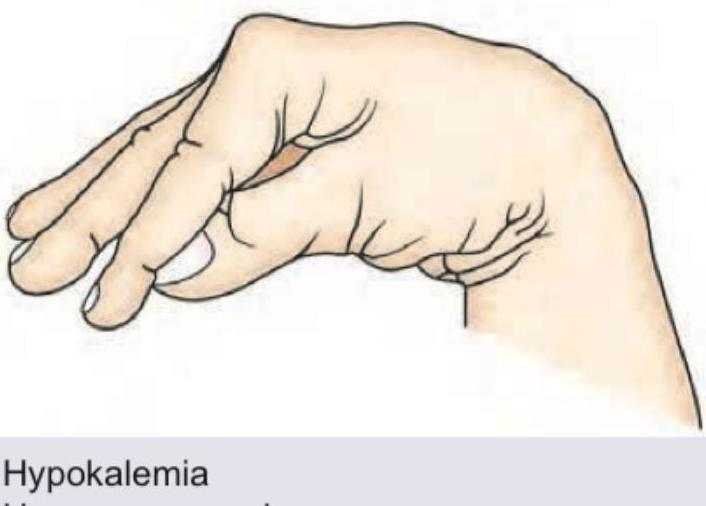
Explanation: ### Explanation **1. Why Option A is Correct (The Pathophysiology):** In Congestive Heart Failure (CHF), the primary driver is a decrease in **Effective Arterial Blood Volume (EABV)** due to poor cardiac output [3]. This triggers two major compensatory mechanisms: * **Activation of RAAS:** Decreased renal perfusion stimulates the Renin-Angiotensin-Aldosterone System. Aldosterone acts on the collecting ducts to reabsorb sodium and water [3]. Consequently, **Urinary Sodium is low (< 20 mEq/L)** as the kidneys attempt to conserve volume [2]. * **Non-osmotic Release of ADH (Vasopressin):** The low EABV overrides osmotic triggers, causing the posterior pituitary to secrete ADH. ADH increases water reabsorption in the collecting ducts through the insertion of aquaporin (AQP-2) channels [1]. Because water retention exceeds sodium retention, a **dilutional hyponatremia** occurs [2]. * **Volume Status:** Despite the low EABV, the total body water and sodium are increased, leading to edema and systemic congestion (**Hypervolemia**) [2]. **2. Why Other Options are Incorrect:** * **Option B:** Hypovolemic hyponatremia occurs with actual fluid loss (e.g., vomiting, diarrhea, or diuretics) [2]. In CHF, patients are clinically fluid-overloaded (JVP raised, edema). * **Option C:** Euvolemic hyponatremia is characteristic of **SIADH**, where there is no clinical evidence of edema or volume depletion [2]. In CHF, the "effective" volume is low, but the "total" volume is high. **3. NEET-PG High-Yield Clinical Pearls:** * **Prognostic Marker:** In CHF, the severity of hyponatremia is a strong independent predictor of **mortality**. * **Urinary Sodium Cut-off:** $UNa < 20 \text{ mEq/L}$ helps differentiate "Pre-renal" states (CHF, Cirrhosis, Nephrotic Syndrome) from "Renal" causes of volume overload (Acute Kidney Injury/CKD) where $UNa$ is typically $> 40 \text{ mEq/L}$. * **Treatment:** Management involves fluid restriction and loop diuretics; in refractory cases, Vasopressin antagonists (Vaptans) may be considered.
Explanation: **Explanation:** In hemodialysis, the risk of infection—specifically Catheter-Related Bloodstream Infections (CRBSI)—is primarily determined by the duration of skin breach and the presence of foreign material. **Why Venous Catheter is the correct answer:** Non-tunneled **Venous Catheters** (temporary femoral or jugular lines) carry the highest risk of infection (up to 30 times higher than an AV fistula) [1]. This is because they provide a direct, open conduit from the skin surface to the central venous circulation. Unlike other options, they lack a subcutaneous tunnel or skin barrier to prevent bacterial migration, and they are often inserted in emergency settings where sterile technique may be compromised [1]. Infection is more common in temporary catheters inserted into the groin (femoral) or jugular vein than those in the subclavian vein [1]. **Analysis of Incorrect Options:** * **AV Fistula (A):** This is the "Gold Standard" for dialysis access. Since it uses the patient’s native vessels and is entirely subcutaneous (no foreign material), it has the **lowest** risk of infection. * **Tunnel Catheter (B):** While still a catheter, the subcutaneous tunnel acts as a physical barrier to bacterial ascent, making it safer than a standard venous catheter but riskier than a fistula [1]. * **AV Graft (C):** These involve prosthetic material (e.g., PTFE). While they have a higher infection risk than native fistulas, the risk is significantly lower than any central venous catheter because the graft is completely internalized under the skin. **High-Yield Clinical Pearls for NEET-PG:** * **Order of Infection Risk (Highest to Lowest):** Venous Catheter > Tunneled Catheter > AV Graft > AV Fistula. * **Most common organism:** *Staphylococcus aureus* is a leading cause of dialysis-associated bacteremia, though coagulase-negative staphylococci are also frequent in catheter infections [1]. * **Preferred Site:** The Right Internal Jugular vein is preferred for catheters to minimize the risk of central venous stenosis. * **Mnemonic:** "Fistula is First" (for safety and longevity).
Explanation: Renal Tubular Acidosis (RTA) is characterized by a **Normal Anion Gap Metabolic Acidosis (NAGMA)**. In NAGMA, the loss of bicarbonate is compensated by a reciprocal increase in serum chloride levels (hyperchloremic acidosis), keeping the anion gap within the normal range (8–12 mEq/L) [1]. Therefore, an **Increased Anion Gap** is not a feature of Type I RTA; it is instead seen in conditions like ketoacidosis, lactic acidosis, or renal failure [1]. **Analysis of Options:** * **Option A (Lower tubule re-absorption of calcium):** In Type I RTA, chronic metabolic acidosis leeches calcium from bones and inhibits distal tubule calcium reabsorption. This leads to hypercalciuria, often resulting in nephrolithiasis and nephrocalcinosis. * **Option B (Defective bicarbonate absorption in distal tubule):** While Type I is primarily a defect in **hydrogen ion (H+) secretion** by the alpha-intercalated cells, this failure to acidify urine prevents the "regeneration" and reclamation of bicarbonate, leading to a systemic deficit. * **Option C (Low serum potassium level):** Hypokalemia is a hallmark of Type I RTA. To compensate for the inability to secrete H+, the distal tubule increases potassium secretion to maintain electrical neutrality. **High-Yield Clinical Pearls for NEET-PG:** * **Type I (Distal) RTA:** Urinary pH is characteristically **> 5.5** (inability to acidify urine despite systemic acidosis) [1]. * **Associations:** Often associated with autoimmune diseases like Sjögren’s syndrome or Amphotericin B toxicity. * **Mnemonic:** Remember **"Distal = Stone"** (Type I is associated with kidney stones, whereas Type II/Proximal is not). * **Anion Gap Rule:** All RTAs (Type I, II, and IV) present with **NAGMA**. If a question mentions an elevated anion gap, look for causes other than RTA.
Acute Kidney Injury
Practice Questions
Chronic Kidney Disease
Practice Questions
Glomerular Diseases
Practice Questions
Tubulointerstitial Diseases
Practice Questions
Nephrotic and Nephritic Syndromes
Practice Questions
Urinary Tract Infections
Practice Questions
Renal Replacement Therapy
Practice Questions
Fluid and Electrolyte Disorders
Practice Questions
Acid-Base Disorders
Practice Questions
Kidney in Systemic Diseases
Practice Questions
Kidney Stones and Obstructive Uropathy
Practice Questions
Hypertension in Kidney Disease
Practice Questions
Get full access to all questions, explanations, and performance tracking.
Start For Free