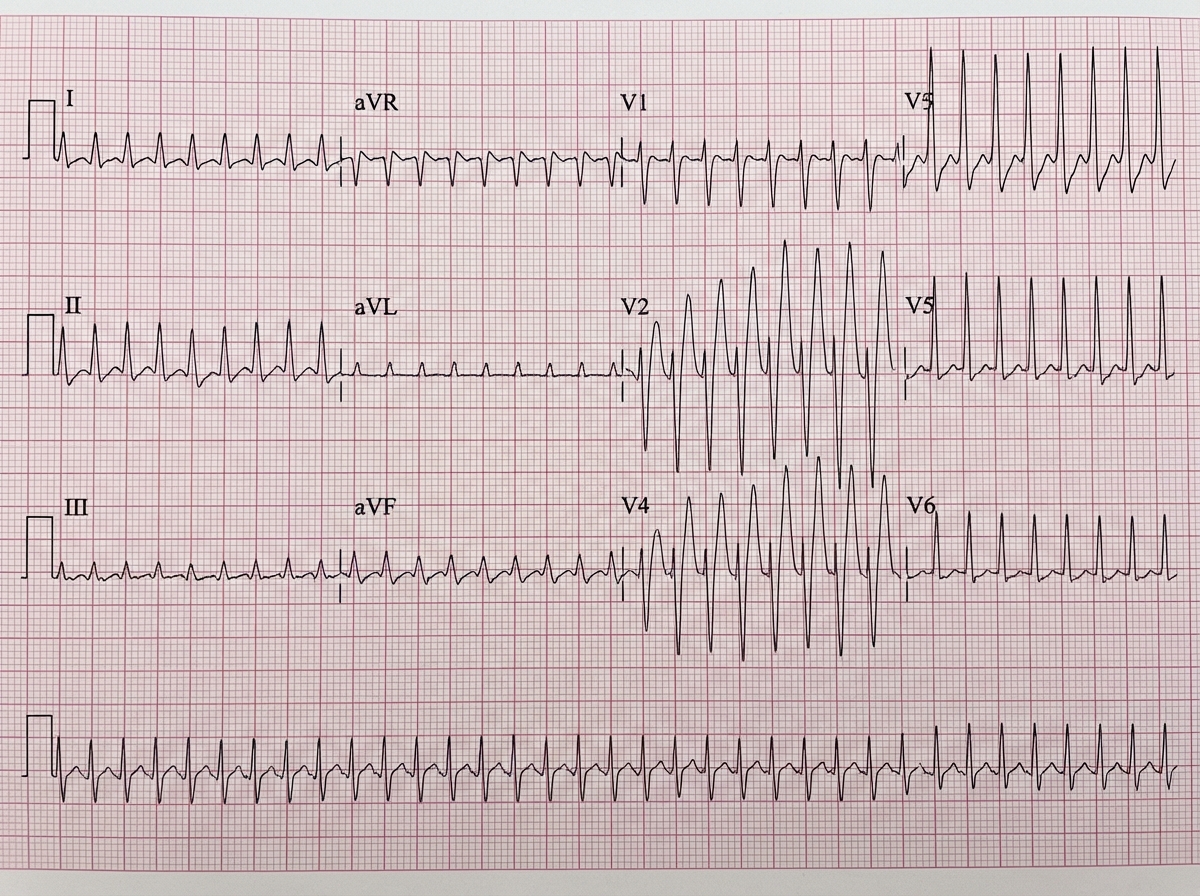
The primary cause of anemia in chronic kidney disease (CKD) is:
Overt symptoms of renal failure become evident when renal function deteriorates by more than what percentage?
What is the most common cause of death in patients with polycystic kidney disease?
A 40-year-old diabetic woman complains of flank pain and fever. Her temperature is 38.7°C, respirations are 25 per minute, and blood pressure is 150/90 mm Hg. Urinalysis reveals pyuria with WBC casts. Which of the following features of diabetes is the most important contributing factor in the development of flank pain and fever in this patient?
A 56-year-old man presents with hypertension and peripheral edema. He is otherwise healthy and takes no medications. Family history reveals that his father and a brother have kidney disease. His father was on hemodialysis before his death at age 68 of a stroke. Physical examination reveals BP 174/96 and AV nicking on funduscopic examination. He has a soft S4 gallop. Bilateral flank masses measuring 16 cm in length are palpable. Urinalysis shows 15 to 20 RBC/hpf and trace protein but is otherwise normal; his serum creatinine is 2.4 mg/dL. Which is the most likely long-term complication of his condition?
Dialysis is not indicated in which of the following conditions?
What is the initial treatment of choice for a patient with chronic kidney disease and hypertension?
Proteinuria caused by tubule-interstitial renal disease is confirmed by excretion of which of the following?
Which organism most commonly causes ascending urinary tract infections?
Renal artery stenosis is associated with which of the following?
Explanation: **Explanation:** The primary cause of anemia in Chronic Kidney Disease (CKD) is **Erythropoietin (EPO) deficiency** [1]. EPO is a glycoprotein hormone produced by the peritubular interstitial cells in the renal cortex [1]. As CKD progresses, the functional renal mass declines, leading to a significant reduction in EPO production [1]. This results in decreased stimulation of the bone marrow, causing a **normochromic, normocytic anemia**. **Analysis of Options:** * **Option A (Chronic inflammation):** While CKD is a pro-inflammatory state that increases **Hepcidin** levels (leading to "anemia of chronic disease") [2], it is considered a secondary contributing factor, not the primary cause. * **Option B (Iron deficiency):** Common in CKD due to poor GI absorption (high hepcidin) [2] or blood loss during hemodialysis, but it is a complicating factor rather than the fundamental underlying mechanism. * **Option D (Diminished RBC survival):** Uremic toxins can shorten the lifespan of red blood cells (from 120 days to ~70-90 days), but the bone marrow could typically compensate for this if EPO levels were normal. **High-Yield Clinical Pearls for NEET-PG:** 1. **Target Hemoglobin:** In CKD patients on Erythropoiesis-Stimulating Agents (ESAs), the target Hb is **10–11.5 g/dL**. Aiming for >13 g/dL increases the risk of stroke and cardiovascular events (CHOIR and CREATE trials). 2. **Iron Stores:** Before starting ESA therapy, ensure adequate iron stores (**Transferrin saturation >30%** and **Ferritin >500 ng/mL**). 3. **Resistance:** The most common cause of resistance to ESA therapy is **iron deficiency**. 4. **Echocardiography:** Anemia in CKD leads to a high-output state, eventually causing **Left Ventricular Hypertrophy (LVH)**.
Explanation: The kidneys possess a remarkable functional reserve, primarily due to the compensatory hyperfiltration of surviving nephrons. According to the stages of Chronic Kidney Disease (CKD), the progression is often clinically silent in the early phases [1]. **Why 70-80% is correct:** Overt clinical symptoms of renal failure (uremic symptoms like fatigue, anorexia, and nocturia) typically do not manifest until the Glomerular Filtration Rate (GFR) falls below **25-30% of normal**. This corresponds to a loss of **70-80% of total renal function** [1]. At this threshold, the compensatory mechanisms of the remaining nephrons are overwhelmed, leading to the accumulation of nitrogenous waste products (azotemia) and disturbances in fluid-electrolyte balance. **Analysis of Incorrect Options:** * **40-50% & 50-60%:** At these levels (Stage 2 to early Stage 3 CKD), patients are usually asymptomatic. While biochemical abnormalities (like mild elevations in PTH) may begin, "overt symptoms" are absent because the renal reserve is still sufficient to maintain homeostasis [1]. * **>90%:** This represents End-Stage Renal Disease (ESRD) or Stage 5 CKD (GFR <15 ml/min). While symptoms are severe here, they actually become "overt" much earlier (at the 70-80% loss mark) [1]. Waiting for >90% loss would mean missing the symptomatic onset of renal failure. **High-Yield Clinical Pearls for NEET-PG:** * **First clinical sign of CKD:** Often **isosthenuria** (inability to concentrate urine) leading to nocturia. * **Azotemia vs. Uremia:** Azotemia is the biochemical increase in BUN/Creatinine; Uremia is the clinical syndrome resulting from that increase [1]. * **Adaptation:** The "Intact Nephron Hypothesis" explains how remaining nephrons hypertrophy to maintain function until the 70-80% loss threshold is crossed.
Explanation: Autosomal Dominant Polycystic Kidney Disease (ADPKD) is the most common hereditary renal disorder [1]. While it eventually leads to End-Stage Renal Disease (ESRD), the primary cause of mortality is not the renal failure itself, but **Cardiovascular Complications**, with **Hypertension** being the most significant driver [2]. 1. **Why Hypertension is Correct:** Hypertension occurs in over 80% of ADPKD patients, often appearing before any decline in GFR. The expansion of cysts causes intrarenal ischemia, which triggers the **Renin-Angiotensin-Aldosterone System (RAAS)**. Chronic hypertension leads to left ventricular hypertrophy (LVH), coronary artery disease, and congestive heart failure. Cardiovascular events (MI and Stroke) are the leading causes of death in these patients. 2. **Why Incorrect Options are Wrong:** * **Uremia and Azotemia:** While patients do progress to renal failure, modern renal replacement therapies (hemodialysis and transplantation) have significantly reduced death rates directly attributable to uremic toxins [2]. * **Atherosclerosis:** While common in ADPKD due to metabolic changes, it is a secondary process. Hypertension is the more direct, systemic hemodynamic driver of mortality. **High-Yield Clinical Pearls for NEET-PG:** * **Extra-renal Manifestations:** The most common is **Liver Cysts** (Polycystic Liver Disease). * **Most Serious Complication:** Subarachnoid Hemorrhage due to **Berry Aneurysms** (occurs in ~5-10% of cases). * **Genetics:** Most cases are due to **PKD1** mutation (Chromosome 16), which has a more severe progression than PKD2 (Chromosome 4) [1]. * **Drug of Choice:** ACE inhibitors or ARBs are the first-line treatment to manage hypertension and slow cyst progression.
Explanation: **Explanation:** The clinical presentation of fever, flank pain, and pyuria with **WBC casts** in a diabetic patient is diagnostic of **Acute Pyelonephritis** [3]. **1. Why Hyperglycemia is the Correct Answer:** Hyperglycemia is the primary driver of increased infection risk in diabetic patients through several mechanisms: * **Immune Dysfunction:** High glucose levels impair neutrophil functions, including chemotaxis, adherence to endothelium, phagocytosis, and intracellular killing. * **Microenvironment:** Glycosuria (glucose in urine) provides a rich culture medium for uropathogens like *E. coli* [1]. * **Neuropathy:** Chronic hyperglycemia leads to autonomic neuropathy, causing a "neurogenic bladder." This results in incomplete emptying (stasis) and vesicoureteral reflux, facilitating the ascent of bacteria to the kidneys. **2. Why Other Options are Incorrect:** * **Anti-insulin antibodies (A):** These are associated with insulin resistance or specific types of Type 1 DM but do not directly predispose a patient to bacterial infections. * **Glycosylation of hemoglobin (B):** While HbA1c is a marker of long-term glycemic control, the process of glycosylation itself is a chemical byproduct and not the direct physiological cause of immune suppression. * **Peripheral insulin resistance (C):** This is the hallmark of Type 2 DM pathophysiology [2]. While it leads to hyperglycemia, it is the resulting high blood sugar, not the resistance itself, that impairs the immune response to pyelonephritis. **3. NEET-PG High-Yield Pearls:** * **WBC Casts:** Pathognomonic for **Upper UTI (Pyelonephritis)**; helps differentiate it from Lower UTI (Cystitis) [3]. * **Emphysematous Pyelonephritis:** A life-threatening necrotizing infection seen almost exclusively in diabetics, characterized by gas in the renal parenchyma on CT. * **Papillary Necrosis:** Diabetics are prone to this complication, presenting as gross hematuria and "ring shadows" on imaging. * **Common Organism:** *E. coli* remains the most common cause, but diabetics have a higher incidence of *Klebsiella* and *Candida* UTIs.
Explanation: **Explanation:** The clinical presentation of hypertension, bilateral palpable flank masses, hematuria, and a strong family history of renal disease and stroke is classic for **Autosomal Dominant Polycystic Kidney Disease (ADPKD)** [1]. **1. Why Option A is Correct:** The most common and significant long-term complication of ADPKD is the progressive decline in renal function leading to **End-Stage Renal Disease (ESRD)** [2]. Approximately 50% of patients with ADPKD require renal replacement therapy (dialysis or transplantation) by age 60 [1]. Risk factors for progression seen in this patient include hypertension, male sex, early onset of symptoms, and elevated serum creatinine. **2. Why Other Options are Incorrect:** * **Option B (Malignancy):** While patients with ESRD have a slightly higher risk of renal cell carcinoma, ADPKD itself is not considered a premalignant condition. * **Option C (Ruptured cerebral aneurysm):** Though subarachnoid hemorrhage (SAH) due to ruptured berry aneurysms is a feared complication (occurring in ~5-10% of patients), it is **not as common** as the progression to ESRD. ESRD is the most frequent cause of morbidity and mortality in these patients [1]. * **Option D (Biliary obstruction):** Polycystic liver disease is the most common extrarenal manifestation of ADPKD, but it rarely causes biliary obstruction or hepatic failure. Pancreatic cysts occur but are usually asymptomatic and rarely lead to obstruction. **Clinical Pearls for NEET-PG:** * **Genetics:** Most commonly due to mutations in **PKD1** (Chromosome 16 - more severe, earlier ESRD) or **PKD2** (Chromosome 4 - milder) [1]. * **Extrarenal Manifestations:** Berry aneurysms (Circle of Willis), Hepatic cysts (most common), Mitral Valve Prolapse (MVP), and Diverticulosis. * **Diagnosis:** Ultrasonography is the initial screening tool of choice. * **Management:** Tolvaptan (V2 receptor antagonist) is used to slow cyst growth and disease progression in high-risk patients.
Explanation: The decision to initiate urgent dialysis is often guided by the mnemonic **AEIOU** (Acidosis, Electrolytes, Ingestion, Overload, Uremia). **Why Digitalis Toxicity is the Correct Answer:** Dialysis is ineffective for **Digitalis (Digoxin) toxicity** because the drug has an exceptionally **large volume of distribution (Vd)** and is highly tissue-bound (primarily to skeletal muscle). For a toxin to be removed via hemodialysis, it must be present in high concentrations within the intravascular compartment. Since Digoxin resides mostly in the tissues rather than the blood, dialysis cannot clear it from the body. The definitive treatment for severe toxicity is **Digoxin-specific antibody fragments (DigiFab).** **Analysis of Incorrect Options:** * **Hyperkalemia (Option A):** This is a classic "E" (Electrolyte) indication. Life-threatening hyperkalemia (K+ >6.5 mEq/L) refractory to medical management is a primary indication for emergent dialysis. * **Hypercalcemia (Option B):** While not as common as hyperkalemia, severe, symptomatic hypercalcemia (Calcium >18 mg/dL) or hypercalcemic crisis that does not respond to hydration and bisphosphonates is an indication for dialysis. * **Aspirin Intoxication (Option C):** This falls under "I" (Ingestion). Salicylates are small, water-soluble molecules with low Vd, making them highly dialyzable [2]. Dialysis is indicated if levels exceed 100 mg/dL or in the presence of severe metabolic acidosis/altered mental status [2]. **NEET-PG High-Yield Pearls:** * **Drugs NOT dialyzable (Large Vd):** Digoxin, Tricyclic Antidepressants (TCAs), Benzodiazepines, Calcium Channel Blockers, and Beta-blockers [1]. * **Drugs that ARE dialyzable (Small Vd):** **M**ethanol, **E**thylene glycol, **L**ithium, **S**alicylates (Mnemonic: **MELS**). * **Note:** While dialysis doesn't remove Digoxin, it may be used to treat the life-threatening **hyperkalemia** that often accompanies acute Digoxin poisoning.
Explanation: The primary goal in managing hypertension in Chronic Kidney Disease (CKD) is not just blood pressure control, but also **renoprotection**. **Why ACE Inhibitors are the Correct Choice:** ACE inhibitors (or ARBs) are the initial treatment of choice because they specifically dilate the **efferent arteriole** of the glomerulus [1]. This reduces intraglomerular capillary pressure, which directly decreases proteinuria—the single most important predictor of CKD progression [1]. By slowing the rate of decline in the Glomerular Filtration Rate (GFR), they provide a survival benefit beyond their antihypertensive effect [1]. **Analysis of Incorrect Options:** * **B. Calcium Channel Blockers (CCBs):** While Dihydropyridine CCBs (like Amlodipine) are potent antihypertensives, they primarily dilate the *afferent* arteriole, which can sometimes increase intraglomerular pressure if used as monotherapy [2]. * **C. Diuretics:** These are essential adjuncts (especially Loop diuretics when GFR <30 ml/min) to manage fluid overload, but they do not possess the same intrinsic renoprotective properties as ACE inhibitors [3]. * **D. Beta-blockers:** These are generally considered third or fourth-line agents in CKD unless there is a specific cardiac indication like heart failure or post-MI status. **High-Yield Clinical Pearls for NEET-PG:** 1. **The "30% Rule":** A rise in serum creatinine up to 30% after starting an ACE inhibitor is acceptable and not an indication to stop the drug [1]. 2. **Hyperkalemia:** This is the most common limiting side effect; monitor potassium levels closely [2]. 3. **Contraindication:** ACE inhibitors/ARBs are strictly contraindicated in **Bilateral Renal Artery Stenosis** and **Pregnancy** [2]. 4. **Choice by GFR:** Use Thiazides if GFR >30; switch to Loop diuretics (Furosemide) if GFR <30 [3].
Explanation: **Explanation:** The correct answer is **Light chains**. In a healthy kidney, the glomerulus acts as a size and charge-selective barrier. Small proteins that manage to pass through this barrier (such as **Low Molecular Weight (LMW) proteins** like β2-microglobulin, retinol-binding protein, and **immunoglobulin light chains**) are almost entirely reabsorbed by the proximal convoluted tubules [1]. In **tubulo-interstitial renal disease**, the glomerular basement membrane remains relatively intact, but the damaged tubules fail to reabsorb these filtered LMW proteins. Consequently, these proteins appear in the urine. This is termed "Tubular Proteinuria." Unlike glomerular disease, the total protein excretion is usually modest (<2g/day). **Analysis of Incorrect Options:** * **A. Albumin:** This is the hallmark of **Glomerular Proteinuria**. Albumin is a larger protein (66 kDa); its presence in high amounts indicates a breakdown of the glomerular filtration barrier (e.g., Nephrotic syndrome) [1]. * **C. Immunoglobulin A:** Large molecular weight proteins like IgA are typically seen in "Non-selective" glomerular proteinuria where the damage is severe. * **D. Tamm-Horsfall protein:** Also known as Uromodulin, this is a glycoprotein secreted normally by the cells of the **thick ascending limb of the Loop of Henle**. It is the matrix of all urinary casts but is not a marker for tubulo-interstitial disease. **High-Yield Clinical Pearls for NEET-PG:** * **Selective Proteinuria:** Primarily Albumin (seen in Minimal Change Disease). * **Bence-Jones Proteins:** These are monoclonal light chains found in Multiple Myeloma, which can cause "Overflow Proteinuria" and lead to tubulo-interstitial damage (Myeloma Kidney) [1]. * **Diagnostic Test:** Routine dipsticks primarily detect Albumin. To detect light chains (tubular or overflow proteinuria), a **Sulfosalicylic Acid (SSA) test** or urine electrophoresis is required [1].
Explanation: ### Explanation **Correct Option: C. Escherichia coli** The most common route for a Urinary Tract Infection (UTI) is the **ascending pathway**, where bacteria from the periurethral area and fecal flora migrate up the urethra into the bladder (cystitis) and potentially the kidneys (pyelonephritis). **Uropathogenic *Escherichia coli* (UPEC)** is responsible for approximately **75–90%** of community-acquired UTIs. Its dominance is due to specific virulence factors, most notably **P-pili (fimbriae)**, which allow the bacteria to adhere to the uroepithelium and resist being flushed out by urine. **Analysis of Incorrect Options:** * **A. Salmonella:** While *Salmonella typhi* can be shed in the urine (chronic carriers), it typically reaches the kidneys via the **hematogenous (bloodborne) route** during systemic infection, rather than ascending from the urethra. * **B. Tuberculosis:** Renal TB is almost exclusively caused by the **hematogenous spread** of *Mycobacterium tuberculosis* from a primary focus (usually the lungs). It does not cause an ascending infection. * **D. All of the above:** This is incorrect because the mechanisms of infection for Salmonella and TB are primarily descending/hematogenous, not ascending. **Clinical Pearls for NEET-PG:** * **Most common cause of UTI (Overall):** *E. coli*. * **Most common cause in sexually active young females:** *Staphylococcus saprophyticus* (second to *E. coli*). * **Most common cause in catheterized/hospitalized patients:** *E. coli*, but higher incidence of *Klebsiella*, *Proteus*, and *Pseudomonas*. * **Proteus mirabilis:** Associated with **Struvite (Triple Phosphate) stones** due to its urease-producing ability, which alkalinizes the urine. * **Hematogenous spread:** Usually involves *Staphylococcus aureus* [1] or *Candida* species in immunocompromised or septicemic patients. Renal infection in acute pyelonephritis is almost always caused by organisms ascending from the bladder [1].
Explanation: **Explanation:** **Renal Artery Stenosis (RAS)** is the most common cause of secondary hypertension [1]. The pathophysiology is rooted in the **Goldblatt phenomenon**. 1. **Why Option A is correct:** Stenosis of the renal artery leads to decreased renal perfusion pressure (ischemia) at the level of the **Juxtaglomerular (JG) apparatus** [2]. This triggers the JG cells to secrete excessive **Renin** [3]. Renin converts Angiotensinogen to Angiotensin I, which is then converted to Angiotensin II by ACE. Angiotensin II causes potent vasoconstriction and stimulates Aldosterone secretion (leading to sodium and water retention) [2]. This sequence results in **High Renin Hypertension** [1]. 2. **Why other options are incorrect:** * **Options B & C:** RAS is the classic prototype of high-renin states [1]. Low-renin hypertension is typically seen in conditions of primary mineralocorticoid excess, such as **Conn’s Syndrome** (Primary Hyperaldosteronism), where high aldosterone levels feedback to suppress renin. * **Option D:** Fibrinoid necrosis is a histological hallmark of **Malignant Hypertension** or certain vasculitides (like Polyarteritis Nodosa), rather than a specific association of the underlying stenosis itself. **High-Yield Clinical Pearls for NEET-PG:** * **Etiology:** Atherosclerosis (older males, involves the ostium) vs. Fibromuscular Dysplasia (younger females, "string of beads" appearance on angiography). * **Clinical Clue:** Presence of an abdominal bruit or unexplained worsening of renal function after starting an **ACE inhibitor** (due to loss of efferent arteriolar vasoconstriction). * **Diagnosis:** Renal Doppler is the initial screening test; **Digital Subtraction Angiography (DSA)** remains the gold standard [1]. * **Treatment:** Medical management is preferred for atherosclerotic RAS; angioplasty is highly effective for Fibromuscular Dysplasia.
Acute Kidney Injury
Practice Questions
Chronic Kidney Disease
Practice Questions
Glomerular Diseases
Practice Questions
Tubulointerstitial Diseases
Practice Questions
Nephrotic and Nephritic Syndromes
Practice Questions
Urinary Tract Infections
Practice Questions
Renal Replacement Therapy
Practice Questions
Fluid and Electrolyte Disorders
Practice Questions
Acid-Base Disorders
Practice Questions
Kidney in Systemic Diseases
Practice Questions
Kidney Stones and Obstructive Uropathy
Practice Questions
Hypertension in Kidney Disease
Practice Questions
Get full access to all questions, explanations, and performance tracking.
Start For Free