
Artificial Intelligence in Healthcare — MCQs

Which of the following screening methods is primarily used under the National Tuberculosis Elimination Program (NTEP)?
Which of the following statements about the DOTS treatment for tuberculosis is correct?
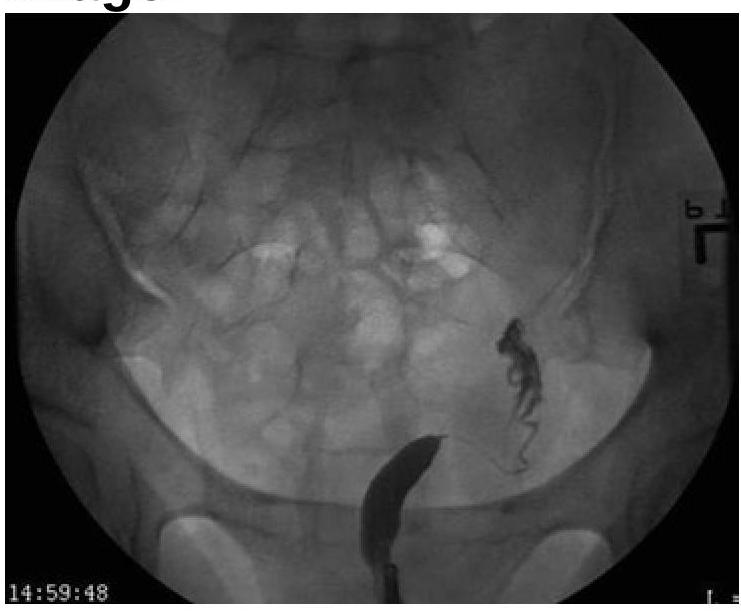
Based on the provided image, which of the following is the correct diagnosis?
A doctor is not held guilty of negligence if
After IV drug administration, elimination of a drug depends on:
A hospital implements blockchain technology for maintaining electronic health records. Compared to traditional centralized database systems, what is the primary advantage that justifies this innovation from a healthcare quality perspective?
A biotech company proposes using induced pluripotent stem cells (iPSCs) derived from patient fibroblasts to generate personalized cardiomyocytes for myocardial infarction treatment. What is the most significant ethical and technical challenge that must be addressed before clinical application?
An AI algorithm trained on chest X-rays from a single tertiary care center shows 95% accuracy in detecting tuberculosis. When deployed in a rural primary health center, accuracy drops to 68%. Which factor most likely explains this discrepancy?
What is the underlying principle of CRISPR-Cas9 gene editing technology in treating inherited disorders?
How does artificial intelligence-based clinical decision support system differ from traditional rule-based systems in predicting sepsis?
Want unlimited practice?
Get full access to all questions, explanations, and performance tracking.
Scan to download app