
Inpatient Management of Common Conditions — MCQs

A 2 years old child presents to PHC with fever and cough. He has chest in-drawing and respiratory rate of 38 per minute, weight 11 kg. The next step in management according to IMNCI is:
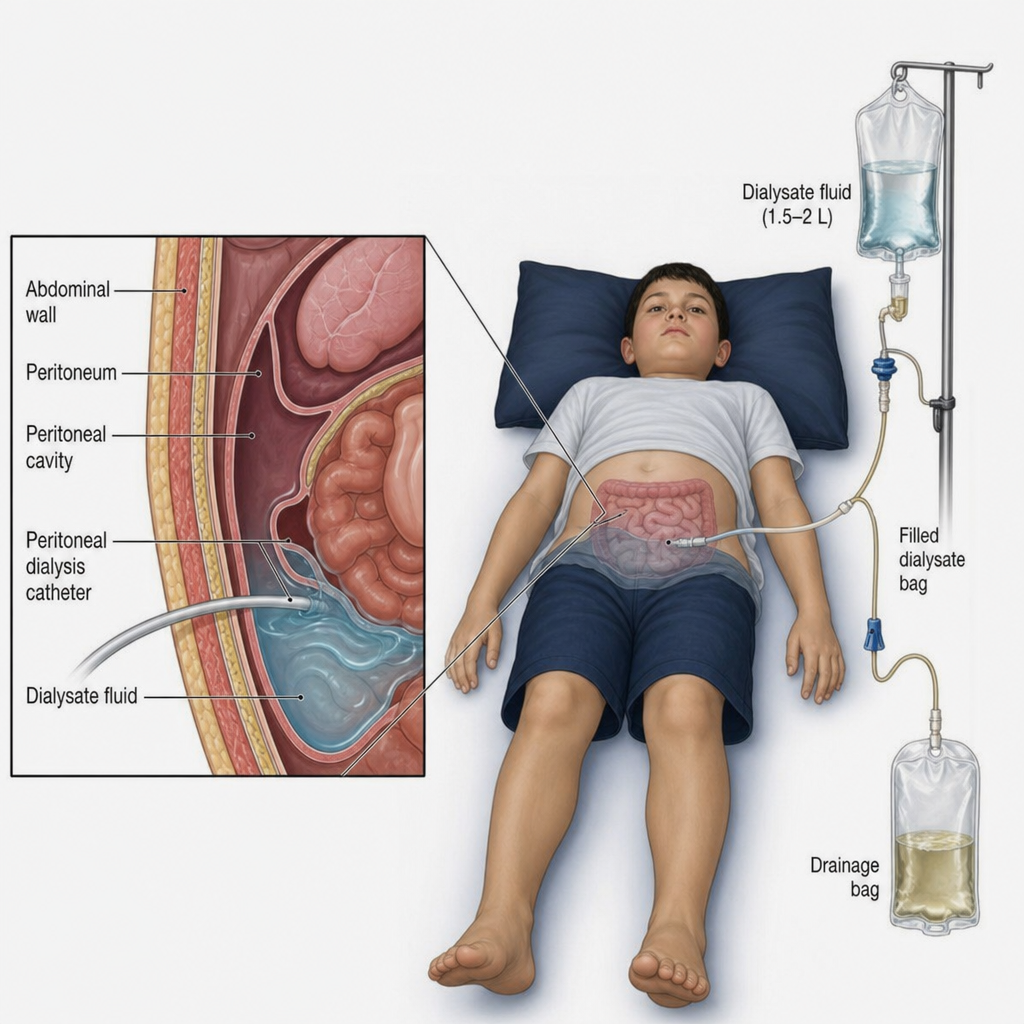
An 8-year-old child presented with a history of respiratory distress, altered sensorium & not passing urine for the last 15 hours. What is the procedure shown below that can be done as a part of emergency management of this child? [IMAGE MISSING - REQUIRES UPLOAD]
A 45-year-old female presents with dyspnea, orthopnea, and bilateral leg edema. Echo shows EF 35%. BNP 850 pg/mL. Which drug class has shown mortality benefit in this condition?
A **hemodynamically stable** patient involved in a Road Traffic Accident (RTA) presents with: - Absent air entry on the left side of the chest. - Tenderness in the left lower chest wall. What is the next step in the Emergency Medicine Room (EMR) management?
A 45-year-old male presents with progressive dyspnea, orthopnea, and paroxysmal nocturnal dyspnea. His echocardiogram shows reduced ejection fraction and pulmonary congestion. What is the most appropriate management?
What is the correct sequence of management in a patient who presents to the casualty with an RTA? 1. Cervical spine stabilization 2. Intubation 3. IV cannulation 4. CECT
What is the main goal of fluid resuscitation in a child with septic shock?
A patient develops recurrent hyperparathyroidism 2 years after initial parathyroidectomy and has experienced cardiovascular complications due to persistent hypercalcemia. What is the most appropriate management?
Warm periphery is noticed in which type of shock:
A 64-year-old woman presents to the emergency room with flank pain and fever, accompanied by dysuria for the past three days. Blood and urine cultures are obtained, and she is started on intravenous ciprofloxacin. Six hours after admission, she becomes tachycardic and her blood pressure drops. Her intravenous fluid is normal saline at a rate of 100 mL/h. Her current vital signs are blood pressure of 79/43 mm Hg, heart rate of 128 beats per minute, respiratory rate of 26 breaths per minute, and a temperature of 39.2°C (102.5°F). She appears drowsy yet uncomfortable. Her extremities are warm with trace edema. What is the best next course of action?
Want unlimited practice?
Get full access to all questions, explanations, and performance tracking.
Scan to download app