Which of the following statements is not true regarding hemophilia A?
Platelet function defect is seen in which of the following conditions?
A 19-year-old college student develops a severe sore throat, cervical lymphadenopathy, and atypical lymphocytes on blood film. A heterophil antibody test is positive. For the above patient with a hematologic abnormality, select the most likely diagnosis.
What is the recommended daily amount of elemental iron required for iron replacement therapy?
While managing a febrile neutropenic patient, all of the following are essential EXCEPT:
Which of the following statements is true regarding oral therapy for iron deficiency anemia?
All of the following statements about hereditary hemochromatosis are true EXCEPT?
Aplastic anemia is characterized by which of the following findings?
Which of the following is a major criterion for the diagnosis of polycythemia vera?
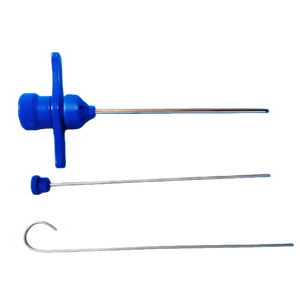
For which procedure is the following instrument used?
Explanation: **Explanation:** **1. Why Option D is the Correct Answer (The False Statement):** In Hemophilia A, the severity of bleeding is directly proportional to the plasma level of Factor VIII. Spontaneous hemorrhage (bleeding into joints or muscles without trauma) typically occurs only in **severe hemophilia**, defined as Factor VIII levels **less than 1%**. [1] * **Mild Hemophilia (5–40% levels):** Bleeding occurs only after major trauma or surgery. * **Moderate Hemophilia (1–5% levels):** Bleeding occurs after minor trauma. * **Severe Hemophilia (<1% levels):** Characterized by frequent spontaneous hemarthrosis. [1] A level of 50% is considered the lower limit of normal; therefore, spontaneous hemorrhage does not occur at this level. **2. Analysis of Incorrect Options (True Statements):** * **Option A:** Hemophilia A is indeed caused by a deficiency or functional defect of **Factor VIII** (Anti-hemophilic factor). [1] * **Option B:** It is an **X-linked recessive** disorder. [1] Since females have two X chromosomes, they are typically asymptomatic carriers, while the disease predominantly affects males. * **Option C:** **Desmopressin (dDAVP)** stimulates the release of endogenous Factor VIII and von Willebrand factor from endothelial Weibel-Palade bodies. It is a mainstay treatment for **mild** Hemophilia A. [1] **3. NEET-PG High-Yield Pearls:** * **Most common site of bleeding:** Knee joint (Hemarthrosis). [1] * **Lab findings:** Prolonged **aPTT**, normal PT, normal bleeding time, and normal platelet count. * **Mixing Study:** aPTT will **correct** when patient plasma is mixed with normal plasma (distinguishes deficiency from inhibitors). * **Cryoprecipitate:** Contains Factor VIII, vWF, Fibrinogen, and Factor XIII (used if specific concentrates are unavailable).
Explanation: **Explanation:** The correct answer is **B. Bernard-Soulier syndrome (BSS)**. Platelet function defects are categorized into disorders of **adhesion, aggregation, or secretion**. BSS is a classic disorder of **platelet adhesion** caused by a deficiency or dysfunction of the **GP Ib-IX-V receptor complex** [1]. This receptor is essential for platelets to bind to Von Willebrand Factor (vWF) on the subendothelial matrix. **Why Option B is correct:** In BSS, the primary defect lies within the platelet itself (the receptor). A hallmark diagnostic feature is that platelets **fail to aggregate with Ristocetin**, and unlike Von Willebrand Disease, this defect is **not corrected** by adding normal plasma [1]. **Analysis of Incorrect Options:** * **A. Glanzmann Thrombasthenia:** This is a defect of **platelet aggregation** due to a deficiency of **GP IIb/IIIa** [1]. While it is a functional defect, BSS is often the preferred answer in specific competitive contexts focusing on adhesion/large platelets. (Note: Both A and B are technically functional defects; however, BSS is classically associated with "Giant Platelets"). * **C. Wiskott-Aldrich Syndrome:** This is primarily a **quantitative defect** (micro-thrombocytopenia) and an immunodeficiency, rather than a primary qualitative functional receptor defect [2]. * **D. Von Willebrand Disease (vWD):** This is the most common bleeding disorder, but it is a **plasma protein defect** (deficiency of vWF), not an intrinsic platelet function defect [1]. **High-Yield Clinical Pearls for NEET-PG:** * **BSS Triad:** Thrombocytopenia, **Giant Platelets** (often as large as RBCs), and prolonged bleeding time. * **Ristocetin Test:** Aggregation is absent in both vWD and BSS [3]. * **The "Correction" Rule:** If Ristocetin aggregation improves with normal plasma = **vWD**. If it does NOT improve = **BSS**. * **Peripheral Smear:** Always look for "Giant Platelets" in the clinical stem to identify Bernard-Soulier Syndrome.
Explanation: The clinical presentation of a young adult with a triad of **fever, sore throat (pharyngitis), and cervical lymphadenopathy**, combined with the presence of **atypical lymphocytes** (Downey cells) and a **positive heterophil antibody test** (Monospot test), is pathognomonic for **Infectious Mononucleosis (IM)** [1]. 1. **Why Infectious Mononucleosis is Correct:** IM is most commonly caused by the **Epstein-Barr Virus (EBV)** [2]. It characteristically infects B-lymphocytes via the CD21 receptor. The "atypical lymphocytes" seen on the peripheral smear are actually **activated T-cells (CD8+)** responding to the infected B-cells [1]. The heterophil antibody test detects IgM antibodies that agglutinate sheep or horse red blood cells, which is a highly specific marker for EBV-induced IM. 2. **Why Other Options are Incorrect:** * **Hyperthyroidism:** Typically presents with tachycardia, weight loss, and heat intolerance; it does not cause pharyngitis or heterophil antibodies. * **Rectal Cancer:** Presents with hematochezia or altered bowel habits, usually in older patients, and lacks acute infectious symptoms. * **Renal Cell Carcinoma:** Associated with the triad of flank pain, hematuria, and a palpable mass. While it can cause paraneoplastic hematologic changes (like erythrocytosis), it does not present with atypical lymphocytosis or sore throat. **NEET-PG High-Yield Pearls:** * **Atypical Lymphocytes:** Large cells with abundant cytoplasm that "skirt" or indent around neighboring RBCs [1]. * **Ampicillin Rash:** If a patient with IM is mistakenly treated with Ampicillin or Amoxicillin for a sore throat, they often develop a characteristic **maculopapular rash**. * **Complication:** Splenic enlargement is common; patients must avoid contact sports for 3–4 weeks to prevent **splenic rupture**. * **Differential:** If the Monospot test is negative but the clinical picture fits IM, consider **CMV infection** (the most common cause of heterophil-negative mononucleosis).
Explanation: **Explanation:** The goal of oral iron replacement therapy in Iron Deficiency Anemia (IDA) is not just to correct the hemoglobin levels but also to replenish depleted iron stores [1]. **Why Option C is correct:** According to standard medical textbooks (Harrison’s Principles of Internal Medicine), the recommended dose for treating IDA in adults is approximately **200–300 mg of elemental iron per day**. At this dosage, the rate of hemoglobin synthesis is maximized (about 0.1–0.2 g/dL per day). Since only about 10–20% of oral iron is absorbed, a high dose is necessary to ensure that 40–60 mg of iron reaches the erythroid marrow daily. **Why other options are incorrect:** * **Option A (60 mg):** This is closer to the prophylactic dose (e.g., in pregnancy) or the dose used in "low-dose" regimens to minimize GI side effects [1], but it is insufficient for rapid replacement in established deficiency. * **Option B (160 mg):** While some modern guidelines suggest 100–200 mg to improve tolerability, 300 mg remains the classic "textbook" target for maximal marrow response in exam-based scenarios. * **Option D (360 mg):** This exceeds the therapeutic window and significantly increases the risk of gastrointestinal toxicity (nausea, constipation, abdominal pain) without providing a proportional increase in iron absorption [2] due to the "hepcidin effect." **NEET-PG High-Yield Pearls:** 1. **Elemental Iron Content:** Always remember the percentage of elemental iron in common salts: **Ferrous Sulfate (20%)**, Ferrous Fumarate (33%), and Ferrous Gluconate (12%). 2. **Absorption:** Iron is best absorbed in the **ferrous (Fe2+) state** in the **duodenum** [2] and proximal jejunum. 3. **Enhancers/Inhibitors:** Vitamin C (ascorbic acid) enhances absorption, while tea, antacids, and phytates inhibit it [2]. 4. **Response Marker:** The earliest sign of response to iron therapy is a **Reticulocyte count** increase (peaking at 7–10 days). Hemoglobin typically normalizes within 2 months.
Explanation: **Explanation:** The management of febrile neutropenia (Absolute Neutrophil Count <500 cells/µL + fever >38.3°C) focuses on preventing and treating life-threatening infections. **Why White Cell Infusion is the Correct Answer:** Granulocyte (white cell) infusions are **not** a standard or essential part of managing febrile neutropenia. While they may be considered in rare, refractory cases of life-threatening fungal or bacterial infections that do not respond to antibiotics, their routine use is limited by a very short half-life of neutrophils, difficulty in collecting sufficient cells, and significant risks like transfusion-related acute lung injury (TRALI) and alloimmunization. **Analysis of Other Options:** * **Repeated Hand Washing (A):** This is the **most important** measure to prevent nosocomial transmission of pathogens [1]. Most infections in neutropenic patients arise from the patient's endogenous flora or the hands of healthcare workers. * **Prophylactic/Empiric Antibiotics (C):** Essential. Since neutropenic patients lack an inflammatory response, fever may be the only sign of sepsis [3]. Immediate administration of broad-spectrum antibiotics (e.g., Piperacillin-Tazobactam or Cefepime) is mandatory [2]. * **Colony-Stimulating Factors (D):** G-CSF (Filgrastim) or GM-CSF (Sargramostim) are used to shorten the duration of neutropenia and reduce the risk of infection-related complications, especially in high-risk patients. **Clinical Pearls for NEET-PG:** * **MASCC Score:** Used to identify low-risk patients who can be managed with oral antibiotics (Ciprofloxacin + Amoxicillin-Clavulanate). * **Initial Empiric Choice:** Must cover *Pseudomonas aeruginosa*. * **Vancomycin:** Not routinely included unless there is suspicion of catheter-related infection, skin/soft tissue infection, or hemodynamic instability. * **Persistent Fever:** If fever persists after 4–7 days of antibiotics, consider adding antifungal therapy (e.g., Amphotericin B or Voriconazole).
Explanation: The correct answer is **D: Absorption of iron decreases as symptoms improve.** **1. Why Option D is Correct:** Iron absorption is a tightly regulated physiological process. In iron deficiency anemia (IDA), the body’s iron stores are depleted, leading to a downregulation of **hepcidin** (the master regulator of iron). Low hepcidin levels allow for maximal absorption of iron through the ferroportin channels in the duodenum [1]. As oral therapy progresses and hemoglobin levels/iron stores normalize, hepcidin levels rise, which subsequently inhibits ferroportin and **decreases the efficiency of iron absorption** [3]. **2. Why the Other Options are Incorrect:** * **Option A:** In a state of iron deficiency, only about **10–20% (approx. 30–60 mg)** of a 300 mg dose of elemental iron is absorbed. The body cannot absorb 100 mg from a single dose due to the mucosal block and limited transport capacity [2]. * **Option B:** Reticulocytosis begins within 3–5 days, but it **peaks much earlier**, typically between **7 to 10 days**. It does not take 3–4 weeks to peak. * **Option C:** A response to therapy (indicated by a rise in hemoglobin) is seen much sooner. Hemoglobin typically begins to rise within **1 to 2 weeks**, and a significant increase (usually >2 g/dL) is expected by 3–4 weeks. **3. NEET-PG High-Yield Pearls:** * **Best Absorption:** Iron is best absorbed in the **ferrous (Fe2+) state** in an acidic environment (often prescribed with Vitamin C/Orange juice) [2]. * **Dose:** The standard therapeutic dose for IDA is **100–200 mg of elemental iron** daily. * **Duration:** Therapy must continue for **3–6 months** after hemoglobin normalizes to replenish bone marrow iron stores (monitored via Serum Ferritin). * **Side Effects:** Gastrointestinal upset (nausea, constipation, metallic taste) is the most common reason for non-compliance.
Explanation: **Explanation:** Hereditary Hemochromatosis (HH) is an autosomal recessive disorder characterized by excessive iron absorption leading to systemic iron overload [2]. **Why Option C is the correct answer (The False Statement):** The treatment of choice for Hereditary Hemochromatosis is **Therapeutic Phlebotomy**, not chelation [1]. Phlebotomy is more effective, less toxic, and cheaper than chelation. One unit of blood (500 mL) removes approximately 200–250 mg of iron [1]. **Desferroxamine** (iron chelation) is reserved for patients with secondary iron overload (e.g., Thalassemia major) or those with HH who have contraindications to phlebotomy, such as severe anemia or congestive heart failure. **Analysis of Incorrect Options (True Statements):** * **Option A:** Arthropathy is a classic feature, typically involving the **2nd and 3rd metacarpophalangeal (MCP) joints**. It often presents with "hook-like" osteophytes on X-ray and may persist even after iron depletion. * **Option B:** Skin pigmentation (hyperpigmentation) is a hallmark sign, often described as a **"bronze" or metallic gray** appearance due to increased melanin and iron deposition [2]. * **Option D:** Hypogonadism is the most common endocrinopathy in HH. It is usually **hypogonadotropic hypogonadism** caused by iron deposition in the anterior pituitary, leading to decreased libido and impotence [2]. **High-Yield Clinical Pearls for NEET-PG:** * **Classic Triad:** Bronze skin, Diabetes mellitus ("Bronze Diabetes"), and Cirrhosis [2]. * **Genetics:** Most commonly due to a mutation in the **HFE gene (C282Y)** on Chromosome 6 [1], [2]. * **Screening:** The most sensitive initial test is **Transferrin Saturation** (>45% is suggestive). * **Diagnosis:** Gold standard is MRI (T2*) or Liver Biopsy (Perls' Prussian blue stain) [1]. * **Cardiac:** Can cause restrictive or dilated cardiomyopathy. * **Infection Risk:** Increased susceptibility to *Vibrio vulnificus*, *Listeria*, and *Yersinia enterocolitica*.
Explanation: **Explanation:** **Aplastic Anemia (AA)** is a bone marrow failure syndrome characterized by **pancytopenia** (reduction in all three cell lines: RBCs, WBCs, and platelets) and a **hypocellular bone marrow** where hematopoietic tissue is replaced by fat. 1. **Why Option A is correct:** In Aplastic Anemia, the primary defect is a reduction in the number of hematopoietic stem cells. Since the cells that *are* produced are typically structurally normal, the red blood cells usually maintain a **normocytic (normal size) and normochromic (normal hemoglobin content)** appearance. Thrombocytopenia is a hallmark finding due to the failure of megakaryopoiesis. 2. **Why other options are incorrect:** * **Option B (Megaloblasts):** These are seen in Megaloblastic Anemias (Vitamin B12 or Folate deficiency) due to impaired DNA synthesis. While AA can sometimes show mild macrocytosis, true megaloblasts are absent. * **Option C (Hypochromic microcytic):** This is characteristic of impaired hemoglobin synthesis, most commonly seen in **Iron Deficiency Anemia** or Thalassemia. * **Option D (Hyperchromic macrocytic):** "Hyperchromic" is a misnomer as RBCs cannot be over-saturated with hemoglobin. Macrocytic changes are seen in B12 deficiency or MDS, but not typically as a defining feature of AA. **High-Yield Clinical Pearls for NEET-PG:** * **Gold Standard Diagnosis:** Bone marrow aspiration and **trephine biopsy** (shows "dry tap" and fatty replacement). * **Key Finding:** Reticulocytopenia (low corrected reticulocyte count) indicating lack of RBC production. * **Modified Camitta Criteria:** Used to define "Severe Aplastic Anemia" (Marrow cellularity <25% plus two of: Neutrophils <500/µL, Platelets <20,000/µL, or Reticulocytes <1%). * **Treatment of Choice:** Allogeneic Stem Cell Transplant (in young patients) or Immunosuppressive Therapy (Antithymocyte globulin + Cyclosporine).
Explanation: Polycythemia Vera (PV) is a chronic myeloproliferative neoplasm characterized by the autonomous overproduction of red blood cells. The diagnosis is based on the **WHO 2016/Revised 4th Edition criteria**, which divides findings into Major and Minor categories. **1. Why Option A is Correct:** The **presence of a JAK2 mutation** (specifically *JAK2V617F* in ~95% of cases or *JAK2* exon 12 mutation in ~5%) is a **Major Criterion** [1]. This mutation leads to constitutive activation of the JAK-STAT signaling pathway, making erythroid progenitors hypersensitive to erythropoietin (EPO) and driving erythropoiesis independent of physiological control. **2. Analysis of Incorrect Options:** * **Option B (Low EPO levels):** While characteristic of PV, a subnormal serum EPO level is classified as a **Minor Criterion**, not a major one. It helps differentiate primary polycythemia (low EPO) from secondary causes like hypoxia (high EPO). * **Option C (High LAP score):** An elevated LAP score is often seen in PV, but it is a non-specific finding and is **not part of the formal WHO diagnostic criteria**. * **Option D (Thrombocytosis):** While PV is a panmyelosis (increase in all cell lines), thrombocytosis is a common clinical feature but **not a diagnostic criterion**. **3. NEET-PG High-Yield Pearls:** * **WHO Major Criteria for PV:** 1. Hemoglobin >16.5 g/dL (men) / >16.0 g/dL (women) OR Hematocrit >49% (men) / >48% (women) [1]. 2. Bone marrow biopsy showing hypercellularity for age with trilineage growth (panmyelosis) [1]. 3. Presence of *JAK2V617F* or *JAK2* exon 12 mutation [1]. * **Clinical Presentation:** Patients often present with **aquagenic pruritus** (itching after a hot bath), facial plethora, and splenomegaly [1]. * **Complications:** Increased risk of thrombotic events (Budd-Chiari syndrome) and transformation to myelofibrosis or AML [1].
Explanation: ***Bone marrow examination*** - The instrument shown is a **Jamshidi needle** (bone marrow biopsy needle) with characteristic **trocar tip**, **outer cannula with stylet**, and **T-shaped handle** for optimal grip and control. - Specifically designed for **bone marrow aspiration** and **core biopsy** from sites like **posterior iliac crest**, allowing collection of both liquid marrow and solid tissue samples. *Liver biopsy* - Liver biopsies use **Menghini needles** or **Tru-cut needles** which are thinner, shorter, and lack the robust construction needed for penetrating bone. - These needles have **different tip designs** (cutting or suction) optimized for soft tissue sampling, not the thick cortical bone overlying marrow. *Pleural biopsy* - Pleural biopsies utilize **Abrams needles** or **Cope needles** which have **hooked or notched tips** specifically designed to scrape pleural tissue. - These instruments are **smaller gauge** and designed for accessing the **pleural space**, not for penetrating dense bone tissue. *Lumbar puncture* - Lumbar puncture uses **Quincke spinal needles** or **Whitacre needles** which are much **thinner (22-25 gauge)** and **longer** for reaching the subarachnoid space. - These needles have **pencil-point or cutting tips** designed for **CSF aspiration** only, without the robust construction needed for bone penetration.
Anemia Evaluation and Management
Practice Questions
Hemoglobinopathies
Practice Questions
Thalassemias
Practice Questions
Platelet Disorders
Practice Questions
Coagulation Disorders
Practice Questions
Thrombotic Disorders
Practice Questions
Leukemias
Practice Questions
Lymphomas
Practice Questions
Multiple Myeloma and Plasma Cell Disorders
Practice Questions
Myeloproliferative Neoplasms
Practice Questions
Transfusion Medicine
Practice Questions
Hematopoietic Stem Cell Transplantation
Practice Questions
Get full access to all questions, explanations, and performance tracking.
Start For Free