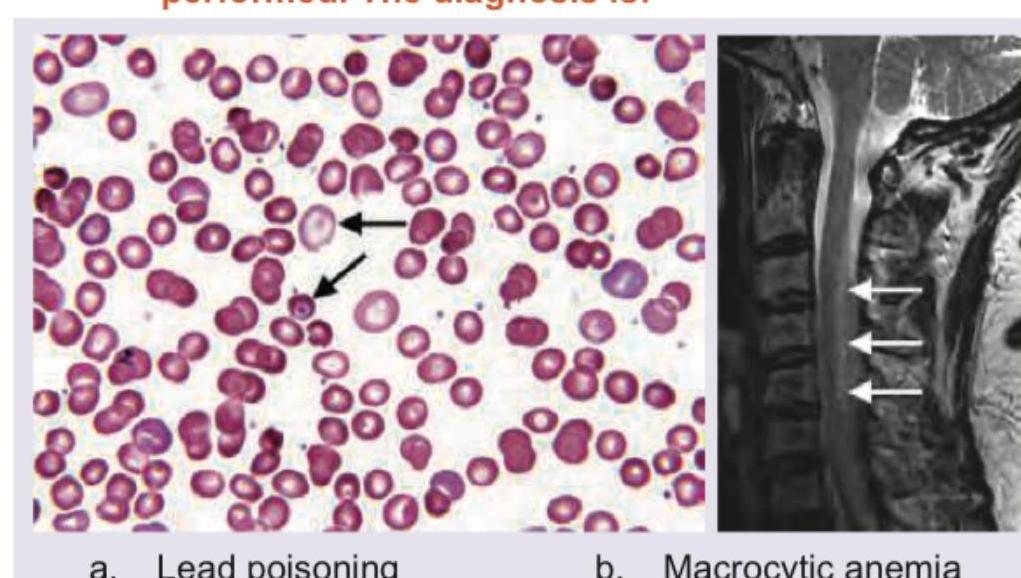
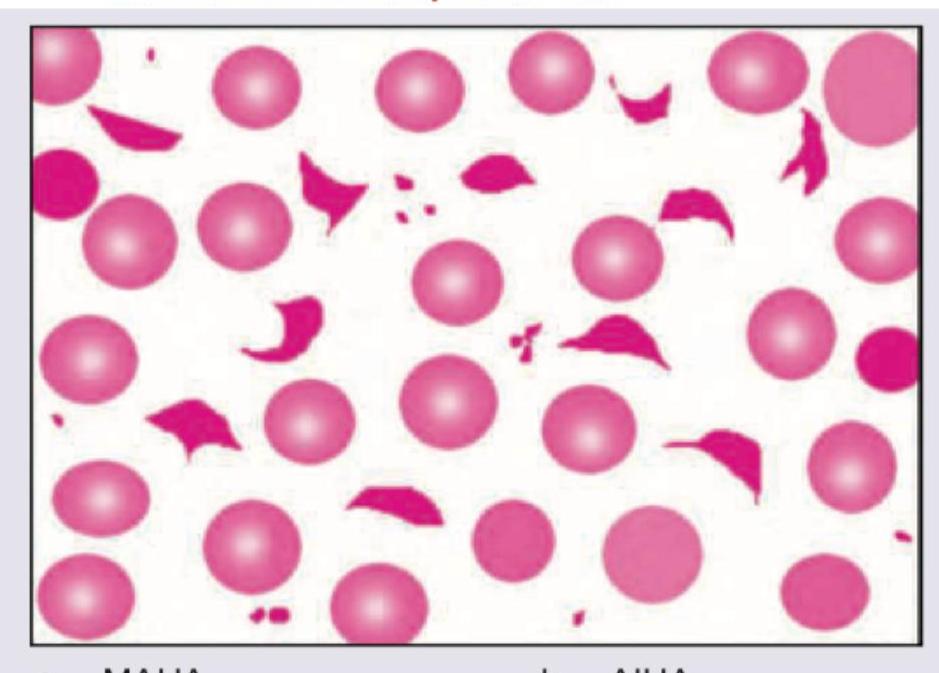
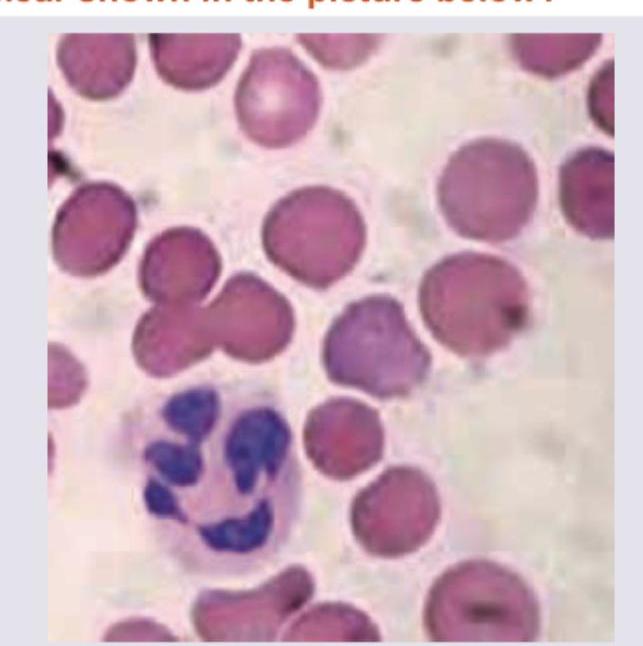
Which condition characteristically shows bone infarcts?
Which of the following is NOT a diagnostic feature of Hemophilia A?
Aplastic anemia is characterized by all EXCEPT?
Iron absorption is increased in which of the following conditions?
What is the standard treatment for the chronic phase of chronic myeloid leukemia (CML)?
Which of the following factors affects sickling in sickle cell anemia?
Which of the following conditions is NOT associated with microcytic hypochromic red blood cells on a peripheral smear?
A 25-year-old female with a known history of sickle cell anemia presents with bony pain, dyspnea, fever, and cough. On examination, her heart rate is 110/min, blood pressure is 140/88 mmHg, and SaO2 is 85%. Chest X-ray shows bilateral diffuse alveolar infiltrates. Her mother reports four similar episodes in the past year. Which of the following statements regarding her condition is false?
What is true about smoldering multiple myeloma?
The presence of the Philadelphia chromosome is associated with a worse prognosis in patients with which of the following diseases?
Explanation: **Sickle Cell Anemia (SCA)** is the correct answer because the hallmark of its pathophysiology is **vaso-occlusion**. Under conditions of low oxygen tension, acidosis, or dehydration, the abnormal Hemoglobin S (HbS) polymerizes [1], causing RBCs to assume a "sickle" shape. These rigid cells obstruct microvasculature, leading to tissue ischemia and infarction. Bone is a frequent site for these events [1]; acute infarcts manifest as **Vaso-occlusive Crises (VOC)**, while chronic ischemia leads to **Avascular Necrosis (AVN)**, particularly of the femoral and humeral heads. [1] **Analysis of Incorrect Options:** * **Iron Deficiency Anemia:** This is a microcytic hypochromic anemia caused by lack of iron. It affects hemoglobin synthesis but does not involve abnormal hemoglobin polymerization or vascular occlusion. * **Thalassemia:** While this involves a quantitative defect in globin chain synthesis leading to ineffective erythropoiesis and hemolysis [1], it does not typically cause vaso-occlusion or bone infarcts. Its skeletal hallmark is "crew-cut" appearance on X-ray due to extramedullary hematopoiesis. * **Hereditary Spherocytosis:** This is a red cell membrane defect (e.g., ankyrin or spectrin deficiency) leading to extravascular hemolysis in the spleen. It does not cause sickling or vascular obstruction. **High-Yield Clinical Pearls for NEET-PG:** * **Hand-Foot Syndrome (Dactylitis):** Often the first presentation of SCA in infants, caused by infarcts of small bones in hands and feet. * **Salmonella Osteomyelitis:** Patients with SCA are uniquely predisposed to *Salmonella* osteomyelitis, often occurring at the site of prior bone infarcts. * **H-shaped vertebrae (Codfish vertebrae):** Seen on X-ray in SCA due to central vertebral body infarction. * **Autosplenectomy:** Repeated splenic infarcts lead to a shrunken, fibrotic spleen by adulthood. [1]
Explanation: **Explanation:** Hemophilia A is an X-linked recessive bleeding disorder caused by a deficiency of **Factor VIII**. To understand the diagnostic profile, one must look at the coagulation cascade: 1. **Why "Increased PT" is the correct answer (The Odd One Out):** Prothrombin Time (PT) measures the **Extrinsic** and Common pathways (Factors VII, X, V, II, and Fibrinogen) [1]. Since Factor VIII is exclusively part of the **Intrinsic pathway**, a deficiency does not affect the PT. Therefore, an increased PT is *not* a feature of Hemophilia A. 2. **Analysis of Incorrect Options:** * **Decreased Factor VIII level:** This is the definitive diagnostic hallmark of Hemophilia A [3]. * **Increased PTT:** Activated Partial Thoplastin Time (aPTT) measures the **Intrinsic** and Common pathways [1]. Because Factor VIII is a key component of the intrinsic pathway, its deficiency leads to a prolonged (increased) PTT. * **Normal Bleeding Time (BT):** Bleeding time is a measure of **platelet function** and primary hemostasis. In Hemophilia, platelets are normal in number and function; the defect lies in secondary hemostasis (clotting factors), so the BT remains normal [2]. **NEET-PG High-Yield Pearls:** * **Mixing Study:** If PTT is prolonged, a mixing study is performed. In Hemophilia, the PTT **corrects** when the patient's plasma is mixed with normal plasma (indicating a deficiency) [1]. If it doesn't correct, an inhibitor is present. * **Hemophilia B:** Also known as Christmas Disease; caused by **Factor IX** deficiency. It is clinically indistinguishable from Hemophilia A and also presents with increased PTT and normal PT/BT. * **von Willebrand Disease (vWD):** Unlike Hemophilia, vWD often presents with an **increased Bleeding Time** because vWF is essential for platelet adhesion.
Explanation: In Aplastic Anemia, the primary pathology is the **immune-mediated destruction of hematopoietic stem cells**, leading to bone marrow failure. ### Why "Moderate size spleen enlargement" is the Correct Answer: The hallmark of Aplastic Anemia is the **absence of splenomegaly**. Because the bone marrow is "empty" (hypocellular) and there is no abnormal infiltration or excessive peripheral destruction of cells, the spleen does not enlarge. If a patient presents with pancytopenia and an enlarged spleen, clinicians must look for alternative diagnoses such as leukemia, myelofibrosis, or portal hypertension. ### Analysis of Incorrect Options: * **Pancytopenia (Option A):** This is the clinical definition of aplastic anemia. It refers to a simultaneous decrease in all three peripheral blood cell lines (RBCs, WBCs, and Platelets). * **Hypocellular bone marrow (Option C):** This is the definitive diagnostic feature. On biopsy, hematopoietic elements are replaced by **fat cells**. To diagnose aplastic anemia, the marrow cellularity must be <25%. * **Thrombocytopenia (Option D):** As part of pancytopenia, a low platelet count is always present, leading to clinical features like petechiae, ecchymosis, and mucosal bleeding. ### NEET-PG High-Yield Pearls: * **Most common cause:** Idiopathic (Autoimmune T-cell mediated). * **Drug-induced:** Chloramphenicol is the most notorious; Gold salts and NSAIDs are others. * **Viral association:** Most commonly **Parvovirus B19** (in patients with pre-existing hemolytic anemia) [1] and Non-A, Non-B, Non-C Hepatitis. * **Diagnosis:** Bone marrow biopsy is the gold standard (shows "dry tap" and fatty replacement). * **Treatment of choice:** Allogeneic Bone Marrow Transplant (for young patients) or Immunosuppressive therapy (ATG + Cyclosporine).
Explanation: **Explanation:** Iron absorption is a tightly regulated process primarily controlled by the hormone **Hepcidin**, which is synthesized in the liver. Hepcidin acts by binding to and degrading **Ferroportin**, the only known cellular iron exporter [2]. **1. Why Iron Deficiency Anemia (IDA) is correct:** In IDA, the body’s iron stores are depleted. Low iron levels and increased erythropoietic activity signal the liver to **decrease Hepcidin production** [4]. Low hepcidin levels allow Ferroportin to remain active on the basolateral membrane of enterocytes, significantly increasing the absorption of dietary iron into the bloodstream [3]. **2. Analysis of Incorrect Options:** * **Pregnancy:** While iron *demand* increases significantly during pregnancy, the physiological state itself does not automatically increase absorption efficiency as much as a diagnosed deficiency state does [1]. However, if a pregnant woman develops IDA, absorption increases via the hepcidin mechanism. * **All types of anemia:** This is incorrect because **Anemia of Chronic Disease (ACD)** is characterized by *decreased* iron absorption. In ACD, inflammatory cytokines (like IL-6) increase hepcidin, which traps iron inside macrophages and enterocytes [3]. * **Malignancy:** Similar to chronic inflammation, malignancy often leads to an increase in hepcidin, causing "iron locking" and reduced intestinal absorption [1]. **NEET-PG High-Yield Pearls:** * **Site of absorption:** Primarily the **Duodenum** and upper Jejunum. * **Form of absorption:** Iron must be in the **Ferrous (Fe²⁺)** state to be absorbed via the DMT-1 transporter. Vitamin C (Ascorbic acid) aids this by reducing Ferric (Fe³⁺) to Ferrous. * **Hepcidin Regulation:** It is an **acute-phase reactant**. It increases in inflammation (decreasing absorption) and decreases in hypoxia or ineffective erythropoiesis (increasing absorption) [4].
Explanation: **Explanation:** **1. Why Imatinib is the Correct Answer:** Chronic Myeloid Leukemia (CML) is characterized by the **Philadelphia chromosome [t(9;22)]**, which creates the **BCR-ABL1** fusion gene. This gene encodes a constitutively active **Tyrosine Kinase** protein that drives uncontrolled myeloid proliferation. **Imatinib** is a first-generation Tyrosine Kinase Inhibitor (TKI) that competitively binds to the ATP-binding site of the BCR-ABL enzyme, effectively "turning off" the oncogenic signal [1], [2]. It is the gold standard first-line therapy for the chronic phase of CML, offering high rates of complete cytogenetic and molecular remission [1]. **2. Why Other Options are Incorrect:** * **B. Hydroxyurea:** This is a cell-cycle specific agent used for **cytoreduction** (rapidly lowering high WBC counts) to prevent leukostasis. It does not target the underlying genetic defect and cannot induce cytogenetic remission [1]. * **C. Interferon-alpha:** This was the treatment of choice before the advent of TKIs. While it can induce remission, it is associated with significant toxicity and inferior survival rates compared to Imatinib [1]. * **D. Cytarabine:** This is a pyrimidine analog primarily used in the induction therapy of Acute Myeloid Leukemia (AML) or during the blast crisis phase of CML, but not as standard therapy for the chronic phase. **3. High-Yield Clinical Pearls for NEET-PG:** * **Monitoring:** Treatment response is monitored via **Quantitative RT-PCR** for BCR-ABL1 transcripts [1]. * **Side Effects of Imatinib:** Periorbital edema, fluid retention, muscle cramps, and GI upset. * **Resistance:** If resistance to Imatinib occurs (often due to the **T315I mutation**), second-generation TKIs like **Dasatinib** or **Nilotinib** are used [1]. Note: Ponatinib is specifically used for the T315I mutation. * **Diagnosis:** Look for "low Leukocyte Alkaline Phosphatase (LAP) score" and "presence of all stages of myeloid maturation" in peripheral smears.
Explanation: **Explanation:** Sickle cell anemia (SCA) is caused by a point mutation in the $\beta$-globin gene, leading to the substitution of valine for glutamic acid. The hallmark of the disease is the polymerization of deoxygenated HbS, which distorts the RBC into a sickle shape. **Why HbS concentration is the primary factor:** The most critical determinant of sickling is the **intracellular concentration of HbS (MCHC)**. The "delay time" (the period before polymerization begins) is inversely proportional to the **10th to 15th power** of the HbS concentration. Even a slight increase in HbS concentration (e.g., due to cell dehydration) exponentially increases the rate of sickling. **Analysis of Options:** * **HbS Concentration (Correct):** As explained, this is the most potent kinetic factor influencing the rate and extent of polymerization. * **HbA (Incorrect):** HbA actually *inhibits* sickling. It does not co-polymerize with HbS as effectively as HbF or HbS itself. However, in true Sickle Cell Anemia (HbSS), HbA is absent. * **pH (Incorrect):** While acidosis (low pH) promotes sickling by reducing hemoglobin's affinity for oxygen (Bohr effect), it is considered a secondary physiological trigger rather than the primary kinetic factor governing the polymerization process itself. * **Oxygenation (Incorrect):** While deoxygenation is the *trigger* for sickling, the question asks for the factor that "affects" or dictates the severity/kinetics of the process. In the context of NEET-PG, the concentration of the abnormal hemoglobin is the definitive answer regarding the physical chemistry of the disease. **NEET-PG High-Yield Pearls:** 1. **HbF (Fetal Hemoglobin):** The most potent inhibitor of sickling. This is why Hydroxyurea (which increases HbF) is the mainstay of treatment. 2. **Dehydration:** Increases MCHC, thereby drastically increasing sickling risk. 3. **Transit Time:** Sickling occurs mainly in microvascular beds where blood flow is slow (spleen, bone marrow), allowing enough "delay time" for polymerization.
Explanation: The correct answer is **Sickle Cell Anemia (SCA)**. **1. Why Sickle Cell Anemia is the correct answer:** Sickle Cell Anemia is a qualitative hemoglobinopathy caused by a point mutation in the $\beta$-globin chain [1]. It is typically classified as a **normocytic normochromic anemia**. On a peripheral smear, the hallmark findings are sickle-shaped cells (drepanocytes), target cells, and Howell-Jolly bodies (due to autosplenectomy) [3]. It does not cause microcytosis unless it co-exists with another condition like $\alpha$ or $\beta$-thalassemia [2]. **2. Analysis of Incorrect Options (Causes of Microcytic Hypochromic Anemia):** Microcytic hypochromic anemia occurs due to defective hemoglobin synthesis, which can be remembered by the mnemonic **TAILS**: * **Iron Deficiency Anemia (A):** The most common cause worldwide. Low iron leads to decreased heme synthesis [2]. * **Lead Poisoning (B):** Lead inhibits enzymes (ferrochelatase and ALA dehydratase) in the heme synthesis pathway, leading to microcytosis and characteristic **basophilic stippling**. * **Sideroblastic Anemia (C):** Characterized by the body's inability to incorporate iron into hemoglobin despite having sufficient iron. It results in **ringed sideroblasts** in the bone marrow. * *(Note: **T**halassemia and Anemia of **C**hronic Disease are the other major causes [2]).* **3. NEET-PG High-Yield Pearls:** * **Mentzer Index:** (MCV/RBC count) helps differentiate Iron Deficiency Anemia (>13) from Thalassemia (<13). * **RDW (Red Cell Distribution Width):** Is typically **increased** in Iron Deficiency Anemia but **normal** in Thalassemia trait. * **Gold Standard for IDA:** Bone marrow aspiration showing absent iron stores (Prussian blue stain), though Serum Ferritin is the best initial non-invasive test.
Explanation: The clinical presentation of bony pain, fever, dyspnea, and hypoxia (SaO2 85%) with new pulmonary infiltrates on chest X-ray in a patient with sickle cell disease (SCD) is diagnostic of **Acute Chest Syndrome (ACS)**. [1] **Why Option C is the Correct (False) Statement:** While pulmonary hypertension is a common complication of SCD, the **Walk-PHaSST trial** demonstrated that **Sildenafil** (a PDE-5 inhibitor) is associated with an **increased frequency of vaso-occlusive crises** (painful crises) in SCD patients. Therefore, it is not recommended as standard daily therapy for SCD-related pulmonary complications and is the false statement in this context. **Analysis of Other Options:** * **Option A (True):** Hydroxyurea increases fetal hemoglobin (HbF) levels, which inhibits the polymerization of HbS. [2] It is the standard of care for patients with recurrent ACS (≥2 episodes) or frequent painful crises to reduce the frequency of these events. * **Option B (True):** The patient meets the diagnostic criteria for ACS: a new pulmonary infiltrate involving at least one complete lung segment, plus systemic symptoms (fever, chest pain, or respiratory distress). * **Option D (True):** Management of ACS involves judicious fluid administration and blood transfusions (simple or exchange) to improve oxygenation. [2] The goal is to maintain a Hematocrit >30% and reduce HbS levels to <30% in severe cases. **High-Yield Clinical Pearls for NEET-PG:** * **ACS Triggers:** Often precipitated by pulmonary infarction (fat embolism from bone marrow) [1] or infections (*Chlamydia, Mycoplasma*). * **Treatment Triad for ACS:** Antibiotics (including a Macrolide), Oxygen, and Transfusion. * **Hydroxyurea Side Effect:** Myelosuppression (monitor CBC regularly). It is also teratogenic. * **Most common cause of death** in adult SCD patients is Acute Chest Syndrome.
Explanation: Smoldering Multiple Myeloma (SMM) is an intermediate clinical stage between Monoclonal Gammopathy of Undetermined Significance (MGUS) and symptomatic Multiple Myeloma. **Why Option A is Correct:** By definition, SMM requires the presence of a **monoclonal (M) protein** (serum IgG or IgA ≥30 g/L) or urinary monoclonal protein (≥500 mg/24 h) [1]. Therefore, the presence of monoclonal gammopathy is a fundamental diagnostic requirement. **Why the Other Options are Incorrect:** * **Options B & C:** The hallmark of SMM is the **absence of end-organ damage**, commonly remembered by the acronym **CRAB** (Calcium elevation, Renal insufficiency, Anemia, and Bone lesions). If lytic bone lesions or hypercalcemia are present, the diagnosis upgrades to active Multiple Myeloma [1]. * **Option D:** While SMM does require bone marrow plasma cells (BMPC) to be between **10% and 60%**, this option is technically incomplete/vague compared to the definitive presence of monoclonal gammopathy. Note: If BMPC >60%, it is now classified as active Multiple Myeloma even without CRAB features (SLiM-CRAB criteria) [1]. **High-Yield Clinical Pearls for NEET-PG:** * **Diagnostic Criteria for SMM:** Serum M-protein ≥30 g/L OR BMPC 10–60% AND absence of myeloma-defining events (CRAB features) [1]. * **Risk of Progression:** SMM has a progression rate to overt myeloma of approximately 10% per year for the first five years. * **SLiM Criteria (Biomarkers of Malignancy):** Even without CRAB, it is Multiple Myeloma if: 1. **S**ixty percent (60%) or more BMPC. 2. **Li**ght chain ratio (involved:uninvolved) ≥100. 3. **M**RI showing >1 focal bone lesion.
Explanation: **Explanation:** The **Philadelphia chromosome (Ph+)**, resulting from the reciprocal translocation **t(9;22)(q34;q11)**, creates the **BCR-ABL1** fusion gene. This gene encodes a constitutively active tyrosine kinase that drives uncontrolled cellular proliferation. **1. Why Acute Lymphoblastic Leukemia (ALL) is the correct answer:** In ALL, the Philadelphia chromosome is found in approximately 25-30% of adults and 3-5% of children. Historically, Ph+ ALL was associated with a **very poor prognosis**, characterized by low remission rates and high relapse risk [1]. While the introduction of Tyrosine Kinase Inhibitors (TKIs) like Imatinib has improved outcomes, it remains a high-risk feature that often necessitates intensive chemotherapy followed by Allogeneic Stem Cell Transplant. **2. Analysis of Incorrect Options:** * **B. Acute Myelogenous Leukemia (AML):** Ph+ AML is rare (<1%). While it indicates a poor prognosis, it is not the classic association tested in the context of prognostic stratification compared to ALL. * **C. Chronic Lymphocytic Leukemia (CLL):** The Philadelphia chromosome is not a feature of CLL. Common cytogenetic markers in CLL include del(13q), del(11q), and del(17p). * **D. Chronic Myelogenous Leukemia (CML):** The Philadelphia chromosome is the **hallmark** of CML (present in >95% of cases) and is essential for its diagnosis. It defines the disease rather than indicating a "worse prognosis" relative to other CML cases. **High-Yield Clinical Pearls for NEET-PG:** * **Molecular Weight:** In CML, the BCR-ABL protein is typically **p210**, whereas in Ph+ ALL, it is more commonly **p190**. * **Treatment:** The standard of care for Ph+ leukemias involves **TKIs** (Imatinib, Dasatinib, Nilotinib). * **Most Common Translocation in Childhood ALL:** t(12;21) (ETV6-RUNX1), which carries a **favorable** prognosis.
Anemia Evaluation and Management
Practice Questions
Hemoglobinopathies
Practice Questions
Thalassemias
Practice Questions
Platelet Disorders
Practice Questions
Coagulation Disorders
Practice Questions
Thrombotic Disorders
Practice Questions
Leukemias
Practice Questions
Lymphomas
Practice Questions
Multiple Myeloma and Plasma Cell Disorders
Practice Questions
Myeloproliferative Neoplasms
Practice Questions
Transfusion Medicine
Practice Questions
Hematopoietic Stem Cell Transplantation
Practice Questions
Get full access to all questions, explanations, and performance tracking.
Start For Free