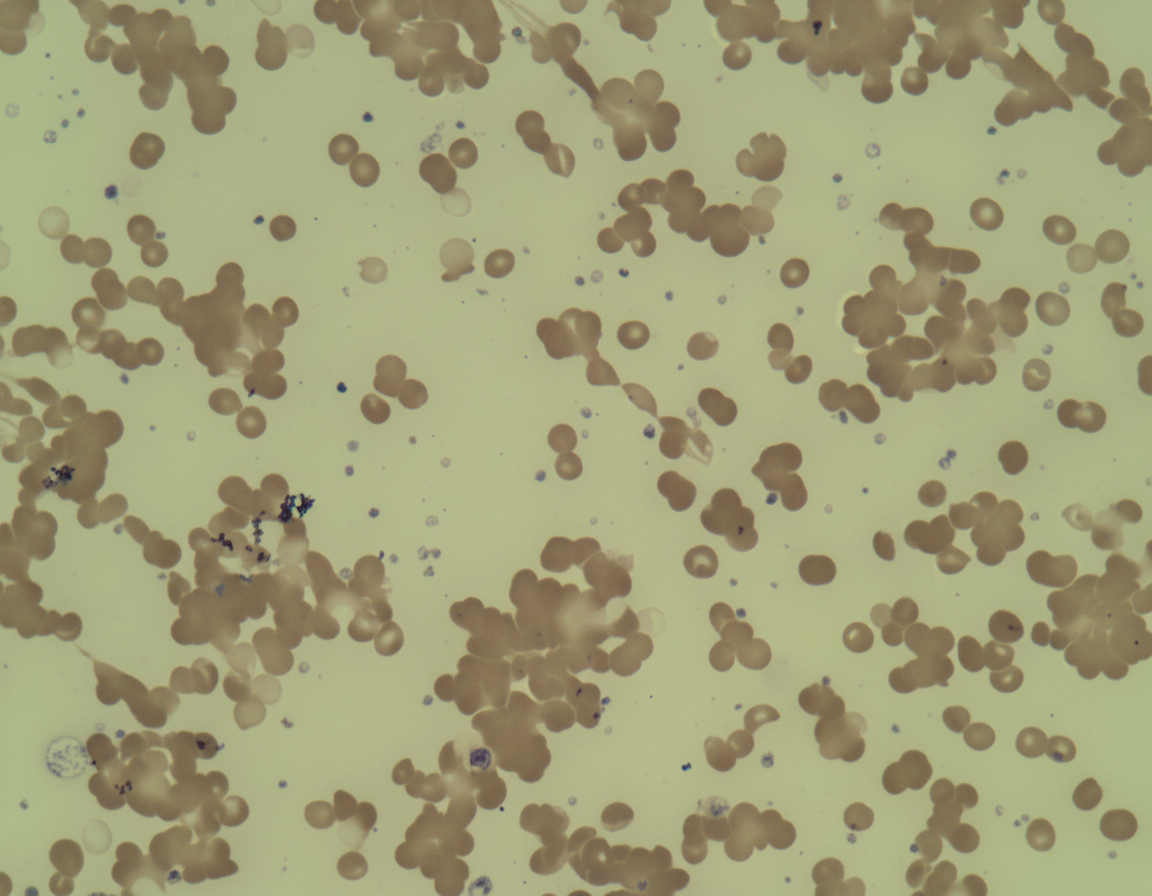
Which of the following conditions is not transmitted familially?
Autoimmune destruction of platelets is seen in which of the following conditions?
An 18-year-old man of Italian descent presents with a hypochromic microcytic anemia of 10 g/dL, characterized by anisocytosis, poikilocytosis, and target cells on peripheral blood smear. His WBC count is 9500/mL, platelet count is 240,000/mL, and reticulocyte count is 7%. The spleen is palpable 5 cm below the left costal margin. What is the most likely diagnosis?
Which of the following is NOT a Vitamin K-dependent clotting factor?
A 20-year-old female presents with a 2-year history of anemia and mild jaundice. Her peripheral smear shows spherocytes. What is the most appropriate investigation?
Bernard Soulier syndrome is due to a defect in which of the following?
Which of the following can be an approach in diagnosing polycythemia vera?
Anemia is typically more severe in which of the following endocrine conditions?
Low serum iron and low serum ferritin is seen in which of the following conditions?
In a patient with thrombotic thrombocytopenic purpura, all of the following are seen EXCEPT?
Explanation: **Explanation:** The correct answer is **Factor V Leiden mutation**. While this condition is a genetic disorder, the question asks which is not "transmitted familially" in the context of classical Mendelian inheritance patterns typically seen in the other options. 1. **Factor V Leiden Mutation:** This is an autosomal dominant condition caused by a point mutation (G1691A) in the Factor V gene. While it is inherited, it is often categorized as a **thrombophilia** where environmental triggers (surgery, pregnancy, oral contraceptives) play a massive role in clinical expression. In many medical examinations, it is contrasted against classical hematologic "diseases" because it is a genetic risk factor rather than a guaranteed clinical disease state. *Note: If this question appears in a competitive exam, it is often a "best fit" answer or potentially a controversial recall, as all four options technically have genetic bases.* 2. **Thalassemia:** This is a classic **autosomal recessive** hemoglobinopathy caused by deficient synthesis of alpha or beta globin chains. It follows strict familial transmission patterns [1]. 3. **Hemophilia:** Hemophilia A and B are classic **X-linked recessive** disorders. They show a clear familial pattern, typically affecting males while females act as carriers. 4. **Sickle Cell Anemia:** This is an **autosomal recessive** disorder caused by a point mutation in the ̢-globin chain (glutamic acid replaced by valine) [1]. It is strictly transmitted from parents to offspring. **Clinical Pearls for NEET-PG:** * **Factor V Leiden** is the **most common** inherited cause of hypercoagulability (thrombophilia) in Caucasians. * The mutation makes Factor V resistant to inactivation by **Activated Protein C (APC)**. * **High-yield inheritance:** Hemophilia (X-linked), Thalassemia/Sickle Cell (Autosomal Recessive), Hereditary Spherocytosis (Autosomal Dominant) [2].
Explanation: **Explanation:** The underlying medical concept in this question is **Secondary Immune Thrombocytopenic Purpura (ITP)**. While primary ITP is idiopathic, secondary ITP occurs when an underlying systemic disease triggers the production of autoantibodies (usually IgG) against platelet surface glycoproteins (like GPIIb/IIIa), leading to their destruction by splenic macrophages [2]. * **Systemic Lupus Erythematosus (SLE):** Hematologic abnormalities are a hallmark of SLE [1]. Autoantibodies against platelets are common, and thrombocytopenia is one of the diagnostic criteria for SLE [2]. * **Chronic Lymphocytic Leukemia (CLL):** This is the most common leukemia associated with autoimmune cytopenias. In CLL, the malignant B-cells can dysregulate the immune system, leading to the production of autoantibodies against platelets (ITP) or red cells (AIHA/Evans Syndrome) [2]. * **Human Immunodeficiency Virus (HIV):** HIV causes thrombocytopenia through multiple mechanisms, but a primary cause is the production of cross-reactive antibodies and immune complexes that lead to accelerated platelet clearance, mimicking classic ITP [2]. **Conclusion:** Since all three conditions are well-established causes of immune-mediated platelet destruction, **Option D** is the correct answer. **High-Yield Clinical Pearls for NEET-PG:** * **Evans Syndrome:** The clinical combination of Autoimmune Hemolytic Anemia (AIHA) and Immune Thrombocytopenia (ITP). * **Drug-induced ITP:** Always rule out drugs like Quinine, Heparin (HIT), and Sulfa drugs in patients presenting with sudden low platelet counts [2]. * **First-line Treatment:** For most secondary ITP cases, treating the underlying primary condition is key, alongside standard ITP therapies like Corticosteroids or IVIG.
Explanation: **Explanation:** The clinical presentation points towards **Thalassemia Minor (Beta-Thalassemia Trait)**. The patient exhibits a classic triad: Mediterranean (Italian) descent, mild microcytic hypochromic anemia (Hb 10 g/dL), and significant splenomegaly. **Why Thalassemia Minor is correct:** 1. **Peripheral Smear:** The presence of **target cells**, anisocytosis, and poikilocytosis is hallmark. 2. **Reticulocytosis:** A reticulocyte count of 7% indicates a compensatory marrow response to chronic hemolysis or ineffective erythropoiesis. 3. **Splenomegaly:** Chronic extravascular hemolysis leads to palpable splenomegaly, which is common in Thalassemia but rare in simple Iron Deficiency Anemia. 4. **Mentzer Index (High-Yield):** Though not explicitly calculated here, Thalassemia typically presents with a very low MCV relative to the RBC count (Mentzer Index <13). **Why other options are incorrect:** * **Sickle cell trait:** Usually asymptomatic with a normal peripheral smear (no sickling or target cells) and no splenomegaly [1]. * **HbS-C disease:** While it shows target cells and splenomegaly, it typically presents with more significant vaso-occlusive symptoms and specific "HbC crystals" on the smear. * **Sideroblastic anemia:** Characterized by dimorphic RBC populations and ringed sideroblasts in the bone marrow; it does not specifically correlate with Italian descent or the degree of splenomegaly seen here. **NEET-PG High-Yield Pearls:** * **Confirmatory Test:** Hb Electrophoresis showing **increased HbA2 (>3.5%)** is diagnostic for Beta-Thalassemia minor. * **Target Cells (Codocytes):** Seen in "HALT" (HbC disease, Asplenia, Liver disease, Thalassemia). * **Differentiating from IDA:** Thalassemia has a **normal to high RBC count** despite low Hb; Iron Deficiency has a low RBC count.
Explanation: **Explanation:** The synthesis of certain coagulation factors in the liver requires **Vitamin K** as a cofactor for the enzyme **gamma-glutamyl carboxylase**. This enzyme adds a carboxyl group to glutamate residues on these proteins, allowing them to bind calcium ions and anchor to phospholipid surfaces, which is essential for their activation [1]. **Why Factor VIII is the correct answer:** Factor VIII (Anti-hemophilic factor) is **not** Vitamin K-dependent. Unlike most other clotting factors synthesized in the liver hepatocytes, Factor VIII is primarily produced in the **sinusoidal endothelial cells** of the liver and extrahepatic endothelial cells. It circulates in the plasma bound to von Willebrand Factor (vWF). **Analysis of incorrect options:** * **Factor II (Prothrombin):** A key Vitamin K-dependent serine protease that is converted to thrombin [1], [2]. * **Factor IX (Christmas Factor):** A Vitamin K-dependent factor involved in the intrinsic pathway [1]. * **Factor X (Stuart-Prower Factor):** A Vitamin K-dependent factor that marks the beginning of the common pathway [1]. **High-Yield Clinical Pearls for NEET-PG:** * **Mnemonic:** Remember the Vitamin K-dependent factors as **"1972"** (Factors **10, 9, 7, and 2**) plus **Protein C and Protein S** (anticoagulants). * **Warfarin Mechanism:** Warfarin inhibits **Vitamin K Epoxide Reductase (VKORC1)**, preventing the recycling of Vitamin K and thus inhibiting the synthesis of these specific factors. * **Factor VII** has the shortest half-life among these factors, which is why the Prothrombin Time (PT/INR) is the first to rise during Vitamin K deficiency or early Warfarin therapy [1]. * **Factor VIII** levels are notably **normal or elevated** in liver disease (since it is made in endothelium), helping clinicians differentiate liver failure from Vitamin K deficiency.
Explanation: ### Explanation The presence of **spherocytes** on a peripheral smear in a patient with anemia and jaundice indicates **extravascular hemolysis** [1]. The two primary differential diagnoses for spherocytosis are **Hereditary Spherocytosis (HS)** and **Autoimmune Hemolytic Anemia (AIHA)**. **1. Why Coombs Test is the Correct Answer:** In clinical practice, the first and most crucial step in evaluating spherocytosis is to differentiate between an inherited membrane defect (HS) and an acquired immune-mediated process (AIHA) [1]. The **Direct Coombs Test (Direct Antiglobulin Test)** is the gold standard for this [1]. * **AIHA:** Coombs test is **Positive** [1]. * **Hereditary Spherocytosis:** Coombs test is **Negative**. Given the presentation, ruling out an immune cause is the immediate priority before proceeding to specialized membrane fragility tests. **2. Analysis of Incorrect Options:** * **A. Reticulocyte count:** While this will be elevated in any hemolytic anemia, it is a non-specific marker of marrow response and does not help in diagnosing the specific cause of spherocytosis. * **B. Osmotic fragility test:** Historically used for HS, it is now largely replaced by the **EMA Binding test** (Flow cytometry). More importantly, osmotic fragility is increased in *both* HS and AIHA, making it less specific than the Coombs test for initial differentiation. * **D. Bone marrow aspiration:** This is generally not indicated in the workup of hemolytic anemias unless there is a suspicion of marrow failure or malignancy. **Clinical Pearls for NEET-PG:** * **Most common cause of Spherocytosis:** Hereditary Spherocytosis (Autosomal Dominant; defect in **Ankyrin** > Spectrin) [1]. * **Confirmatory test for HS:** EMA (Eosin-5-maleimide) binding test. * **Mnemonic:** Spherocytes + Positive Coombs = AIHA; Spherocytes + Negative Coombs + Family History = HS. * **Splenomegaly** is common in both, but **gallstones** (pigment stones) are a classic complication of HS.
Explanation: **Explanation:** **Bernard-Soulier Syndrome (BSS)** is an autosomal recessive bleeding disorder characterized by a defect in the **Glycoprotein (GP) Ib/IX/V complex [1]**. This complex serves as the primary receptor for **von Willebrand Factor (vWF)**, which mediates platelet adhesion to the subendothelial collagen at sites of vascular injury [1]. Without this functional receptor, platelets cannot adhere to the vessel wall, leading to a prolonged bleeding time. **Analysis of Options:** * **Option A (Correct):** The GP Ib/IX/V complex is the specific molecular defect in BSS [1]. * **Option B (Incorrect):** A defect in the **GP IIb/IIIa complex** (the receptor for fibrinogen) leads to **Glanzmann Thrombasthenia**, which impairs platelet aggregation rather than adhesion [1]. * **Option C (Incorrect):** Fibrinogen deficiency (Afibrinogenemia) affects the final common pathway of coagulation and platelet aggregation, but is not the primary defect in BSS. * **Option D (Incorrect):** **von Willebrand Disease** is caused by a deficiency or dysfunction of the vWF protein itself, not the platelet receptor [1]. **High-Yield Clinical Pearls for NEET-PG:** 1. **The "Giant Platelet" Clue:** BSS is classically associated with **thrombocytopenia** and **large (giant) platelets** on a peripheral smear (often as large as red blood cells). 2. **Ristocetin Test:** In BSS, platelet aggregation is **absent** with Ristocetin but **normal** with other agonists (ADP, Epinephrine, Collagen). 3. **Differentiation:** Unlike von Willebrand Disease, the Ristocetin-induced aggregation in BSS **cannot** be corrected by adding normal plasma (cryoprecipitate), as the defect lies in the platelet receptor, not the plasma factor.
Explanation: To diagnose Polycythemia Vera (PV), a clinician must differentiate between **Absolute Polycythemia** (true increase in red cell mass) and **Relative Polycythemia** (decreased plasma volume), and further distinguish **Primary** from **Secondary** causes. [1] **Explanation of Options:** * **Red Cell Mass (RCM):** This is the gold standard for confirming **Absolute Polycythemia**. In PV, the RCM is significantly elevated (>25% above mean predicted). This helps rule out "Stress Polycythemia" (Gaisbock syndrome), where RCM is normal but hematocrit is high due to low plasma volume. [1] * **Serum Erythropoietin (EPO) Levels:** This is the most important initial biochemical test. In PV (a primary process), EPO levels are **suppressed/low** because the bone marrow produces RBCs autonomously. In secondary polycythemia (e.g., high altitude, smoking, or tumors), EPO levels are elevated. * **Arterial Oxygen Saturation ($SaO_2$):** This is used to rule out **Secondary Polycythemia** caused by chronic hypoxia (e.g., COPD or cyanotic heart disease). If $SaO_2$ is <92%, the polycythemia is likely a compensatory response to hypoxia rather than PV. [1] **High-Yield Clinical Pearls for NEET-PG:** * **WHO Criteria (2016/2022):** Major criteria include elevated Hemoglobin (>16.5 g/dL in men, >16.0 g/dL in women), bone marrow hypercellularity, and the presence of the **JAK2V617F** mutation (found in >95% of cases). [1] * **Pruritus:** Characteristically occurs after a hot bath (aquagenic pruritus) due to mast cell degranulation. [1] * **Complication:** Increased risk of both arterial/venous thrombosis and transformation into myelofibrosis or AML. [1] * **Treatment of Choice:** Therapeutic phlebotomy (target Hct <45%) and low-dose aspirin.
Explanation: The correct answer is **Addison’s Disease (Adrenocortical insufficiency)** [1]. **1. Why Addison’s Disease is Correct:** In Addison’s disease, anemia is a characteristic finding due to the lack of **glucocorticoids (cortisol)** [2]. Cortisol plays a vital role in hematopoiesis by stimulating the bone marrow and enhancing the effects of erythropoietin. Its deficiency leads to a **normocytic normochromic anemia**. Notably, the anemia in Addison’s often appears less severe than it actually is upon initial presentation because the concomitant volume depletion (due to mineralocorticoid deficiency) causes **hemoconcentration**, masking the true extent of the low red cell mass. Once the patient is rehydrated, the severity of the anemia becomes clinically evident. **2. Analysis of Incorrect Options:** * **Hypothyroidism:** While common, the anemia is usually mild to moderate. It occurs due to a decreased metabolic rate and reduced tissue oxygen demand, leading to a physiological down-regulation of erythropoietin. * **Castration:** Loss of androgens leads to a slight decrease in hemoglobin (approx. 1–2 g/dL) because testosterone normally stimulates erythropoiesis. However, this rarely results in "severe" anemia. * **Hyperparathyroidism:** Anemia here is typically associated with secondary hyperparathyroidism in chronic kidney disease (due to marrow fibrosis/osteitis fibrosa cystica), rather than primary hyperparathyroidism itself. **Clinical Pearls for NEET-PG:** * **Addisonian Anemia vs. Pernicious Anemia:** Do not confuse the two. Addison’s disease is adrenal insufficiency, while Pernicious anemia (often associated with other autoimmune endocrine disorders) is a megaloblastic anemia due to Vitamin B12 deficiency [2]. * **Key Lab Finding:** In Addison’s, look for the triad of **Hyponatremia, Hyperkalemia, and Eosinophilia** alongside normocytic anemia. * **Treatment:** Anemia in these endocrine conditions typically corrects only after hormone replacement therapy.
Explanation: The correct answer is **Iron deficiency anemia (IDA)**. This condition is characterized by a depletion of total body iron stores [2]. **1. Why Iron Deficiency Anemia is correct:** In IDA, the body’s iron stores are exhausted. **Serum Ferritin** is the most sensitive and specific initial marker for IDA as it directly reflects total body iron stores. When stores are depleted, ferritin levels drop (<15–30 ng/mL). Consequently, **Serum Iron** also decreases because there is insufficient iron to be released into the circulation for erythropoiesis. **2. Why the other options are incorrect:** * **Chronic Kidney Disease (Anemia of Chronic Disease):** Characterized by high **Hepcidin** levels which trap iron inside macrophages [4]. This leads to **low serum iron** [1] but **normal or high serum ferritin** (as it is an acute-phase reactant and stores are not actually empty). * **Sideroblastic Anemia:** This is a defect in heme synthesis leading to iron overload. It typically shows **high serum iron** and **high serum ferritin**, with characteristic ring sideroblasts in the bone marrow. * **Fanconi Anemia:** This is an inherited bone marrow failure syndrome (aplastic anemia). It involves a stem cell defect, not an iron metabolism issue. Iron studies are usually normal unless the patient has received multiple blood transfusions (leading to iron overload). **High-Yield Clinical Pearls for NEET-PG:** * **Best initial test for IDA:** Serum Ferritin (Low). * **Gold Standard test for IDA:** Bone marrow aspiration (Prussian blue staining showing absent iron stores). * **TIBC (Total Iron Binding Capacity):** This is the only parameter that **increases** in IDA; it decreases in Anemia of Chronic Disease [3]. * **Transferrin Saturation:** Decreased in both IDA and Anemia of Chronic Disease.
Explanation: **Explanation:** Thrombotic Thrombocytopenic Purpura (TTP) is a microangiopathic hemolytic anemia (MAHA) characterized by the formation of small-vessel thrombi due to a deficiency in the **ADAMTS13** enzyme. This deficiency leads to uncleaved large von Willebrand factor (vWF) multimers, causing platelet aggregation. **1. Why "Coombs positive" is the correct answer (the "EXCEPT"):** The hemolysis in TTP is **mechanical**, not immune-mediated [1]. As RBCs pass through fibrin/platelet meshes in small vessels, they are physically sheared, forming **schistocytes** [1]. Since there are no antibodies directed against the RBC surface, the Direct Antiglobulin Test (Coombs test) is **negative**. A positive Coombs test would instead suggest Autoimmune Hemolytic Anemia (AIHA) or Evans Syndrome. **2. Why the other options are seen in TTP:** * **Anemia:** This is a hallmark feature. It is a microangiopathic hemolytic anemia (MAHA) characterized by low hemoglobin, high LDH, and schistocytes on peripheral smear [1]. * **Thrombocytopenia:** Extensive platelet consumption occurs during the formation of microthrombi, leading to low platelet counts (usually <50,000/µL) [2]. * **Neurologic features:** These occur due to microvascular occlusion in the CNS, manifesting as headaches, confusion, seizures, or focal deficits. **High-Yield Clinical Pearls for NEET-PG:** * **The Classic Pentad (FAT RN):** **F**ever, **A**nemia (MAHA), **T**hrombocytopenia, **R**enal failure, and **N**eurologic symptoms [1]. (Note: The full pentad is seen in <25% of patients; Anemia and Thrombocytopenia are the most consistent). * **Diagnosis:** Decreased **ADAMTS13** activity (<10%). * **Treatment:** **Plasmapheresis (Plasma Exchange)** is the gold standard. It removes the autoantibodies and replaces the ADAMTS13 enzyme. * **Contraindication:** Platelet transfusion is generally avoided as it may "fuel the fire" of thrombus formation.
Anemia Evaluation and Management
Practice Questions
Hemoglobinopathies
Practice Questions
Thalassemias
Practice Questions
Platelet Disorders
Practice Questions
Coagulation Disorders
Practice Questions
Thrombotic Disorders
Practice Questions
Leukemias
Practice Questions
Lymphomas
Practice Questions
Multiple Myeloma and Plasma Cell Disorders
Practice Questions
Myeloproliferative Neoplasms
Practice Questions
Transfusion Medicine
Practice Questions
Hematopoietic Stem Cell Transplantation
Practice Questions
Get full access to all questions, explanations, and performance tracking.
Start For Free