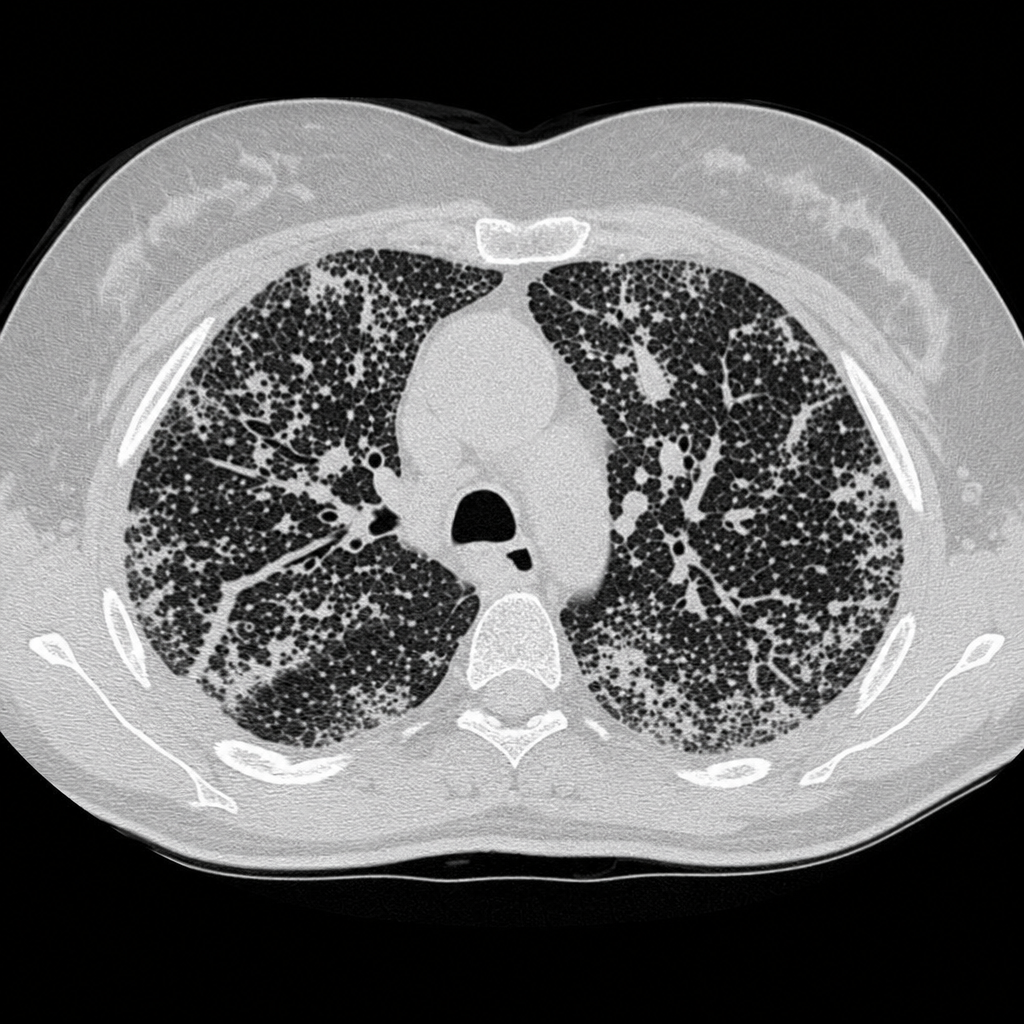
Diabetic mellitus is characterized by:
Which of the following is true about Nelson syndrome?
Primary hyperparathyroidism is most commonly caused by?
What is the most common cause of Conn's syndrome?
All of the following can be seen in this patient except?

Episodic hypertension is a classical feature of which condition?
Impotency may be seen in:
Which is the first hormone secretion affected in a pituitary lesion?
A 45-year-old obese woman presents to the emergency department in a semi-comatose state. Laboratory investigations reveal K+ (5.8 mmol/L), Na+ (136 mmol/L), blood pH (7.1), HCO3 (12 mmol/L), and ketone bodies (350 mg/dl). What is the expected level of blood glucose for this patient?
Which of the following is most commonly associated with Conn's syndrome?
Explanation: Diabetes Mellitus (DM) is a metabolic disorder characterized by chronic **hyperglycemia** resulting from defects in insulin secretion, insulin action, or both [1]. The pathophysiology of the "classic triad" of symptoms is interlinked: 1. **Hyperglycemia (Option C):** This is the biochemical hallmark of DM. It occurs due to the body's inability to transport glucose from the blood into the cells (due to insulin deficiency or resistance) and increased hepatic glucose production [1]. 2. **Polyuria (Option B):** When blood glucose levels exceed the renal threshold (approximately **180 mg/dL**), the excess glucose is excreted in the urine (**glucosuria**). Glucose acts as an osmotic diuretic, pulling water with it, leading to increased urine volume [2]. 3. **Polydipsia (Option A):** The excessive loss of fluid via polyuria leads to intracellular dehydration and increased serum osmolality [3]. This stimulates the thirst center in the hypothalamus, causing the patient to drink large amounts of water [2]. Since all three features are cardinal clinical manifestations of Diabetes Mellitus, **Option D (All of the above)** is the correct answer.
Explanation: **Nelson Syndrome** is a clinical condition characterized by the rapid enlargement of a pre-existing ACTH-secreting pituitary adenoma following **bilateral adrenalectomy**, typically performed to treat Cushing’s disease. ### **Explanation of Options:** * **A. Occurs after adrenalectomy:** This is the primary trigger. In Cushing’s disease, the pituitary tumor is suppressed by high cortisol levels (negative feedback). Once the adrenals are removed, the "braking" effect of cortisol is lost. This leads to the aggressive growth of the pituitary adenoma. * **B. Pituitary hormones are decreased:** As the ACTH-secreting adenoma expands rapidly (macroadenoma), it compresses the surrounding normal pituitary tissue. This mass effect leads to **panhypopituitarism**, causing a deficiency in other hormones like TSH, LH, FSH, and GH. * **C. Hyperpigmentation:** The tumor secretes massive amounts of **ACTH** and its precursor, **POMC** (Pro-opiomelanocortin). POMC is cleaved into **Melanocyte-Stimulating Hormone (MSH)**, which stimulates melanocytes, leading to characteristic diffuse hyperpigmentation. ### **High-Yield Clinical Pearls for NEET-PG:** 1. **Clinical Presentation:** Hyperpigmentation, visual field defects (bitemporal hemianopia due to optic chiasm compression), and headaches. 2. **Diagnosis:** Elevated plasma ACTH levels (often >1000 pg/mL) and MRI evidence of a pituitary macroadenoma [1]. 3. **Prevention:** The incidence has decreased significantly due to the use of pituitary surgery (Transsphenoidal Resection) as the first-line treatment for Cushing’s disease, rather than bilateral adrenalectomy. 4. **Treatment:** Surgical resection of the pituitary tumor or radiotherapy.
Explanation: PHPT is characterized by the autonomous overproduction of parathyroid hormone (PTH), leading to hypercalcemia [3]. While a solitary adenoma is the most common cause of sporadic PHPT, Multiple Endocrine Neoplasia type 1 (MEN 1) is the most common hereditary cause [2]. MEN 1 (Wermer Syndrome) follows the "3 Ps" rule: Parathyroid (95% of patients), Pancreas, and Pituitary. This involves all four glands and accounts for only about 10–15% of sporadic cases. It is, however, the typical presentation within MEN 1 and MEN 2A syndromes. While severe hyperthyroidism can cause increased bone turnover and mild hypercalcemia, it does not cause primary hyperparathyroidism; in fact, PTH is usually suppressed in thyrotoxicosis-induced hypercalcemia [2]. Sestamibi scan is the gold standard for localizing an adenoma before surgery [1].
Explanation: **Explanation:** **Conn’s Syndrome** refers specifically to **Primary Hyperaldosteronism** caused by an aldosterone-secreting tumor. 1. **Why Adrenal Adenoma is correct:** By definition, Conn’s syndrome is caused by a solitary, aldosterone-secreting **adrenal adenoma** (usually located in the zona glomerulosa). While "Primary Hyperaldosteronism" as a broad category is now most frequently caused by bilateral adrenal hyperplasia (BAH) in clinical practice, the specific eponym **"Conn’s Syndrome"** is classically reserved for the adenoma subtype, which accounts for approximately 30–40% of primary hyperaldosteronism cases [1]. 2. **Why other options are incorrect:** * **Adrenal hyperplasia:** Specifically, Bilateral Micronodular Hyperplasia is the most common cause of *Primary Hyperaldosteronism* overall (approx. 60%), but it is not termed "Conn’s Syndrome." * **Adrenal carcinoma:** This is a very rare cause of hyperaldosteronism and usually presents with mixed hormone excess (e.g., cortisol and androgens) [1]. * **Pituitary ACTH hypersecretion:** This describes Cushing’s Disease. While ACTH can minimally stimulate aldosterone, it does not cause Conn’s syndrome; primary hyperaldosteronism is independent of the Renin-Angiotensin-Aldosterone System (RAAS) and ACTH. **High-Yield Clinical Pearls for NEET-PG:** * **Classic Triad:** Hypertension, Hypokalemia, and Metabolic Alkalosis. * **Screening Test:** Plasma Aldosterone Concentration (PAC) to Plasma Renin Activity (PRA) ratio. A ratio **>20–30** is highly suggestive. * **Confirmatory Test:** Saline infusion test (failure to suppress aldosterone) or Oral Salt Loading test. * **Gold Standard for Localization:** Adrenal Venous Sampling (AVS) to differentiate between unilateral adenoma and bilateral hyperplasia [1]. * **Management:** Surgical resection for Adenoma (Conn’s); Medical management with **Spironolactone** or Eplerenone for Hyperplasia [1].
Explanation: ***Constipation*** - **Constipation** is a feature of **hypothyroidism**, not hyperthyroidism (Graves' disease), as decreased thyroid hormones slow gastrointestinal motility. - In **hyperthyroidism**, patients typically experience **diarrhea** or increased bowel frequency due to enhanced gastrointestinal motility. *Myxedema* - **Pretibial myxedema** is a specific manifestation of **Graves' disease**, presenting as thickened, waxy skin typically over the shins. - This is distinct from generalized myxedema seen in hypothyroidism and occurs due to **glycosaminoglycan** deposition in the dermis. *Dalrymple sign* - **Dalrymple sign** refers to **upper eyelid retraction** causing a wide-eyed stare appearance, commonly seen in **thyrotoxicosis**. - This occurs due to **sympathetic overstimulation** of the levator palpebrae superioris muscle in hyperthyroid states. *Moist warm hands* - **Moist, warm hands** are classic signs of **hyperthyroidism** due to increased metabolic rate and **peripheral vasodilation**. - This contrasts with the **cold, dry skin** typically seen in **hypothyroidism** due to decreased circulation and metabolism.
Explanation: **Explanation:** **Pheochromocytoma** is the correct answer because it is a catecholamine-secreting tumor (usually arising from the adrenal medulla) [1]. The hallmark of this condition is the **episodic release** of adrenaline and noradrenaline. This leads to the classic triad of symptoms: **episodic headache, sweating (diaphoresis), and palpitations**, occurring alongside paroxysmal (episodic) hypertension. While some patients have sustained hypertension, the "paroxysmal" nature is a high-yield diagnostic clue. **Why the other options are incorrect:** * **Adrenal Carcinoma:** These are rare, aggressive tumors that usually present with signs of hormone excess (like Cushing’s) or a large abdominal mass. While they can cause hypertension, it is typically not episodic. * **Conn’s Syndrome (Primary Hyperaldosteronism):** This is characterized by autonomous aldosterone secretion leading to sodium retention and potassium depletion. It causes **sustained hypertension** and hypokalemia, not episodic spikes. * **Cushing’s Disease:** Caused by an ACTH-secreting pituitary adenoma, it leads to excess cortisol. Hypertension in Cushing’s is usually **chronic and sustained** due to increased mineralocorticoid activity and vascular reactivity. **Clinical Pearls for NEET-PG:** * **Rule of 10s:** 10% are bilateral, 10% are malignant, 10% are extra-adrenal (Paragangliomas), and 10% occur in children. * **Diagnosis:** Best initial screening test is **24-hour urinary fractionated metanephrines** or plasma free metanephrines. * **Management:** Always give **Alpha-blockers first** (e.g., Phenoxybenzamine) before Beta-blockers to avoid an unopposed alpha-mediated hypertensive crisis. * **Associated Syndromes:** MEN 2A, MEN 2B, von Hippel-Lindau (VHL), and Neurofibromatosis type 1 (NF1).
Explanation: **Explanation:** Impotency (Erectile Dysfunction) is a multifactorial condition that can result from primary testicular failure, secondary hypogonadism, or systemic illness [1], [2]. * **Testosterone Deficiency (Option B):** This is the most direct cause. Testosterone is essential for maintaining libido and the nitric oxide-mediated mechanisms required for achieving an erection [3]. Deficiency leads to decreased sexual desire and erectile failure. * **Prolactinoma (Option C):** Hyperprolactinemia causes impotency via two mechanisms: it directly inhibits the pulsatile release of GnRH (leading to secondary hypogonadism/low testosterone) and has a direct inhibitory effect on sexual behavior in the brain [1], [2]. * **Mumps Orchitis (Option A):** This is a classic cause of **primary testicular failure**. While it more commonly affects fertility (sperm production), severe bilateral involvement can lead to atrophy of the Leydig cells, resulting in profound testosterone deficiency and subsequent impotency [1], [2]. Since all three conditions disrupt the hypothalamic-pituitary-testicular axis or the end-organ (testes) itself, **Option D** is the correct answer. **High-Yield Clinical Pearls for NEET-PG:** * **Screening:** The first step in evaluating hormonal impotency is measuring **Early Morning Serum Testosterone** [3]. * **Prolactin Link:** In any male patient with low libido and low testosterone, always check **Serum Prolactin** to rule out a pituitary adenoma [2]. * **Mumps Fact:** Orchitis occurs in approximately 20-30% of post-pubertal males with Mumps; however, total sterility and absolute impotency are rare unless the infection is bilateral and severe. * **Drug-induced ED:** Remember that **Spironolactone, Ketoconazole, and SSRIs** are common pharmacological causes of sexual dysfunction frequently tested in exams [2].
Explanation: **Explanation:** The sequence of hormonal loss in pituitary compression or destruction (such as in pituitary adenomas, Sheehan syndrome, or lymphocytic hypophysitis) follows a predictable chronological order [1]. **Why GH is the correct answer:** Growth Hormone (GH) is the first hormone to be affected in most cases of pituitary lesions [1]. This is attributed to the fact that somatotrophs (GH-secreting cells) are the most numerous cell type in the anterior pituitary and are highly sensitive to mechanical pressure and ischemia. In clinical practice, while GH deficiency is the earliest to occur, it often remains clinically silent in adults, unlike deficiencies of other axes. **Analysis of Incorrect Options:** * **FSH and LH (Option A):** Gonadotropins are typically the **second** hormones to be affected after GH [1]. This manifests clinically as loss of libido, amenorrhea, or erectile dysfunction. * **TSH (Option C):** Thyrotropin secretion is generally more resilient and is lost later in the progression of pituitary damage. * **ACTH (Option D):** Adrenocorticotropic hormone is usually the **last** to be affected [1]. This is a protective physiological mechanism, as ACTH is vital for life-sustaining cortisol production. **NEET-PG High-Yield Pearls:** * **Mnemonic for sequence of loss:** **"Go Look For The Adenoma"** (GH > LH > FSH > TSH > ACTH). * In cases of **Pituitary Apoplexy** (acute hemorrhage), the loss can be sudden and global, but ACTH deficiency is the most life-threatening acute component. * **Hyperprolactinemia** in pituitary lesions is often due to "Stalk Effect" (loss of dopaminergic inhibition) rather than overproduction, unless it is a Prolactinoma.
Explanation: ### Explanation The patient presents with the classic triad of **Diabetic Ketoacidosis (DKA)**: hyperglycemia, metabolic acidosis, and ketonemia [1]. **1. Why the correct answer is right:** The laboratory findings—**low pH (7.1)**, **low bicarbonate (12 mmol/L)**, and **elevated ketone bodies (350 mg/dl)**—point directly to DKA. In DKA, insulin deficiency and counter-regulatory hormone excess lead to lipolysis and ketone production. By definition, DKA is characterized by a blood glucose level **greater than 250 mg/dl** (though some guidelines suggest >200 mg/dl) [2]. Therefore, the only plausible option is **Greater than 180 mg/dl**. The hyperkalemia (5.8 mmol/L) is also typical, resulting from the extracellular shift of potassium in exchange for hydrogen ions during acidosis [3]. **2. Why the incorrect options are wrong:** * **Options A, B, and D:** These values represent hypoglycemia or normoglycemia. While "Euglycemic DKA" can occur (glucose <200 mg/dl), it is rare and usually associated with SGLT-2 inhibitors or pregnancy. Even in euglycemic DKA, the glucose is typically near the upper limit of normal, not as low as 45, 75, or 120 mg/dl. A glucose level below 120 mg/dl would not provide the osmotic drive or reflect the metabolic derangement seen in a semi-comatose DKA patient. **3. Clinical Pearls for NEET-PG:** * **DKA Diagnostic Criteria:** Glucose >250 mg/dl, pH <7.3, Bicarbonate <18 mEq/L, and positive ketones [2]. * **Potassium Paradox:** Total body potassium is always **depleted** in DKA due to osmotic diuresis, even if serum levels appear high (due to acidotic shift) [3]. * **Management Priority:** The first step in management is always **aggressive fluid resuscitation** (Normal Saline), followed by insulin infusion and potassium replacement [1]. * **Anion Gap:** DKA is a classic cause of **High Anion Gap Metabolic Acidosis (HAGMA)**.
Explanation: **Explanation:** **Conn’s Syndrome** (Primary Hyperaldosteronism) is characterized by the autonomous overproduction of aldosterone, leading to the classic triad of hypertension, hypokalemia, and metabolic alkalosis. **Why Option D is correct:** Historically, a unilateral aldosterone-producing adenoma (APA) was considered the most common cause. However, contemporary diagnostic techniques (CT imaging and Adrenal Venous Sampling) have shown that **Bilateral Idiopathic Adrenal Hyperplasia (IAH)**—often manifesting as bilateral micronodular or macronodular changes—is the most frequent cause, accounting for approximately **60-70%** of cases. **Why the other options are incorrect:** * **Option A (Cortical Carcinoma):** Adrenocortical carcinomas are rare. While they can secrete multiple hormones (usually cortisol and androgens), they are an extremely rare cause of isolated hyperaldosteronism [1]. * **Option B (Pheochromocytoma):** This is a tumor of the adrenal medulla (chromaffin cells) secreting catecholamines. It causes hypertension but is not related to the mineralocorticoid excess seen in Conn’s syndrome. * **Option C (Cortical Adenoma):** Also known as a "Conn’s tumor," this was previously thought to be the most common cause. It now ranks second (approx. 30-35% of cases). It is important to distinguish this from hyperplasia because adenomas are treated surgically, whereas hyperplasia is managed medically [1]. **High-Yield Clinical Pearls for NEET-PG:** * **Screening Test:** Plasma Aldosterone Concentration (PAC) to Plasma Renin Activity (PRA) ratio. A ratio **>20-30** is highly suggestive. * **Confirmatory Test:** Saline infusion test or Oral salt loading test (failure to suppress aldosterone). * **Treatment:** * Unilateral Adenoma: Laparoscopic Adrenalectomy. * Bilateral Hyperplasia: Medical management with Mineralocorticoid Receptor Antagonists (e.g., **Spironolactone** or Eplerenone) [1]. * **Spironolactone Side Effect:** Gynecomastia (due to non-specific binding to androgen receptors).
Diabetes Mellitus
Practice Questions
Thyroid Disorders
Practice Questions
Adrenal Gland Disorders
Practice Questions
Pituitary Disorders
Practice Questions
Calcium and Bone Metabolism
Practice Questions
Reproductive Endocrinology
Practice Questions
Lipid Disorders
Practice Questions
Endocrine Hypertension
Practice Questions
Multiple Endocrine Neoplasia
Practice Questions
Obesity and Metabolic Syndrome
Practice Questions
Neuroendocrine Tumors
Practice Questions
Endocrine Emergencies
Practice Questions
Get full access to all questions, explanations, and performance tracking.
Start For Free