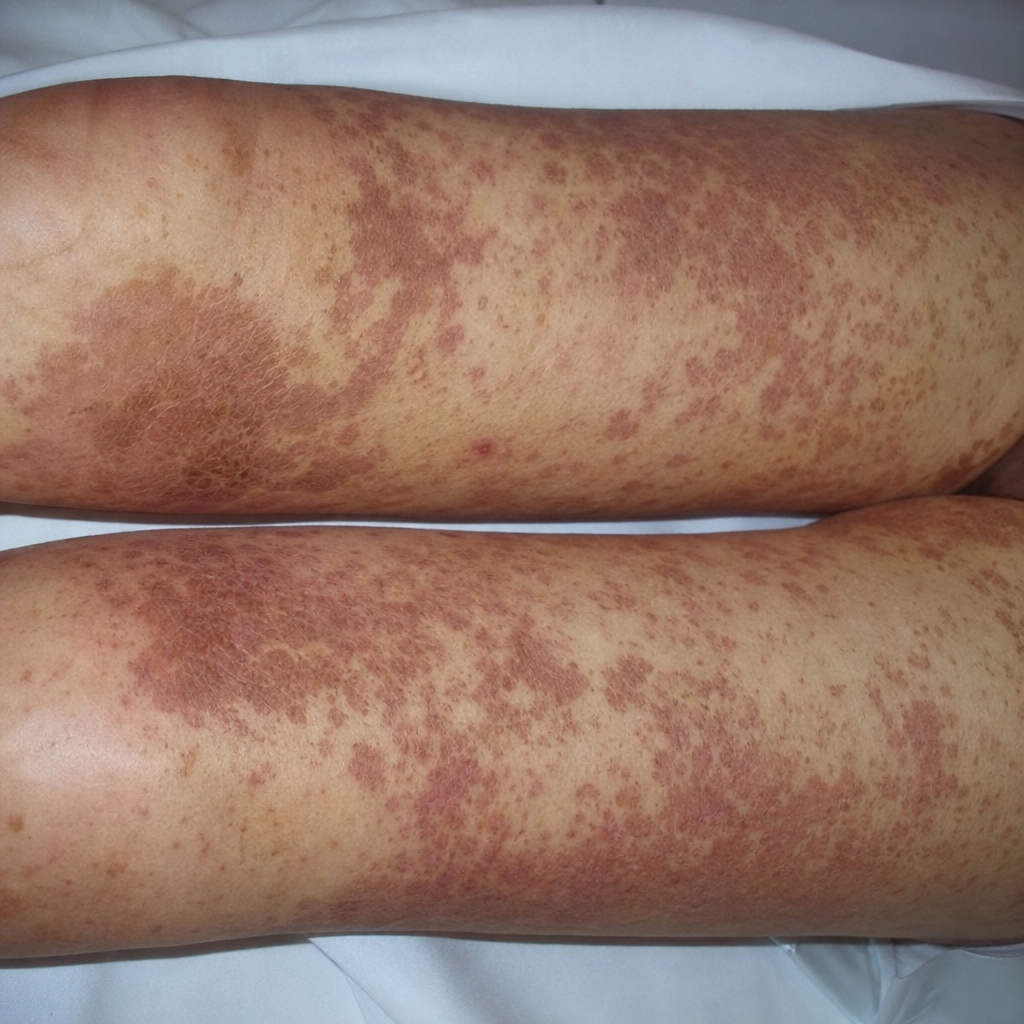
A patient underwent bilateral adrenalectomy for bilateral pheochromocytoma. One day later, the patient developed lethargy, fatigue, and low blood pressure with a normal pulse. There were no signs of volume deficit. What is the most likely diagnosis?
What is the most reliable marker for hypothyroidism?
A 52-year-old woman with a sustained cardiac apical impulse is placed on a low sodium diet and experiences no symptoms. What is the most likely diagnosis for this patient?
What is the most common presentation of organ damage in Diabetes mellitus?
In patients with Atherosclerosis, how does the risk of a specific complication compare between a diabetic patient and a non-diabetic patient? Specifically, what is the risk increase in the diabetic patient compared to the non-diabetic patient?
Addisonian disease is associated with:
Which of the following is a positive screening test for Diabetes Mellitus?
Which of the following is NOT a clinical feature of Addison's disease?
Which of the following is a treatment for osteoporosis?
In which of the following, intensive management of diabetes is NOT needed?
Explanation: ### Explanation **Correct Answer: A. Addisonian Crisis** **Why it is correct:** Bilateral adrenalectomy results in the immediate loss of both glucocorticoids (cortisol) and mineralocorticoids (aldosterone). This leads to **Acute Adrenal Insufficiency (Addisonian Crisis)**. * **Pathophysiology:** Cortisol is essential for maintaining vascular tone and responsiveness to catecholamines. Its absence leads to profound hypotension [1]. Aldosterone deficiency leads to sodium loss and potassium retention [2]. * **Clinical Presentation:** The patient presents post-operatively with lethargy, fatigue, and hypotension. A classic sign of adrenal crisis is **hypotension refractory to fluids and vasopressors** but responsive to steroids [1]. The "normal pulse" in the presence of low BP can sometimes be seen in adrenal crisis due to the lack of permissive action of cortisol on the heart, though tachycardia is more common. **Why the other options are incorrect:** * **B. SIADH:** While SIADH causes hyponatremia and lethargy, it typically presents with **euvolemia and normal blood pressure**, not hypotension. * **C. Diabetes Insipidus (DI):** DI involves a deficiency of ADH, leading to polyuria and dehydration. The primary feature would be signs of **volume deficit** and hypernatremia, which are absent here. * **D. Cerebral Salt Wasting (CSW):** CSW involves renal sodium wasting usually following intracranial pathology. While it causes hypotension, it is characterized by **severe volume depletion** (dehydration), which the question explicitly rules out. **High-Yield Clinical Pearls for NEET-PG:** * **Management:** The immediate treatment for a suspected Addisonian crisis is **IV Hydrocortisone (100mg bolus)** and aggressive fluid resuscitation with Normal Saline [1]. * **Biochemical Triad:** Look for Hyponatremia, Hyperkalemia, and Hypoglycemia in adrenal crisis [1]. * **Pheochromocytoma Rule:** In patients undergoing surgery for pheochromocytoma, always ensure adequate alpha-blockade followed by beta-blockade pre-operatively to prevent intraoperative hypertensive crisis. Post-bilateral adrenalectomy, lifelong steroid replacement is mandatory [3].
Explanation: **Explanation:** The diagnosis of hypothyroidism primarily relies on the hypothalamic-pituitary-thyroid axis. **TSH (Thyroid Stimulating Hormone)** is the most sensitive and reliable marker for detecting primary hypothyroidism. This is because of the **log-linear relationship** between TSH and Free T4; even a minor decrease in circulating thyroid hormone levels triggers a disproportionately large increase in TSH secretion from the anterior pituitary. Consequently, TSH levels rise well before T4 levels fall below the normal reference range (a state known as subclinical hypothyroidism). **Analysis of Incorrect Options:** * **T3 (Triiodothyronine):** This is the least reliable marker. In early hypothyroidism, TSH-induced stimulation of the failing thyroid gland can maintain T3 levels within the normal range via increased peripheral conversion of T4 to T3. * **T4 (Thyroxine):** While low Free T4 confirms overt hypothyroidism, it is less sensitive than TSH. TSH will become elevated while T4 is still "low-normal." * **Thyroxine-binding globulin (TBG):** This is a transport protein, not a measure of thyroid function. Levels of TBG change due to pregnancy, oral contraceptives, or liver disease, affecting total T4 levels but not the thyroid status of the patient. **Clinical Pearls for NEET-PG:** * **Best Screening Test:** TSH is the best initial and screening test for thyroid dysfunction. * **Exception:** In **Secondary (Central) Hypothyroidism**, TSH is unreliable (it may be low, normal, or slightly elevated but biologically inactive). In these cases, **Free T4** is the marker of choice for diagnosis and monitoring. * **Monitoring Treatment:** TSH is used to titrate the dose of Levothyroxine in primary hypothyroidism (target range usually 0.5–2.5 mIU/L).
Explanation: ### Explanation **Correct Option: C. Hypertension** The clinical presentation of a **sustained cardiac apical impulse** is a classic sign of **Left Ventricular Hypertrophy (LVH)**. In hypertension, the left ventricle must pump against increased systemic vascular resistance (afterload). Over time, this leads to compensatory concentric hypertrophy. A "sustained" impulse (lasting more than 50% of systole) differs from a "displaced" impulse (seen in dilated cardiomyopathy). [1] The fact that the patient is placed on a **low sodium diet** and remains asymptomatic further supports this diagnosis. Sodium restriction is a primary non-pharmacological intervention for managing essential hypertension by reducing intravascular volume and blood pressure. [1], [2] **Why other options are incorrect:** * **A. Diabetes:** While diabetes is a cardiovascular risk factor, it does not typically present with a sustained apical impulse unless complicated by diabetic cardiomyopathy or co-existing hypertension. * **B. Obesity:** Obesity can make the apical impulse difficult to palpate due to chest wall thickness, but it is not a direct cause of a sustained impulse. [1] * **D. Irritable Bowel Syndrome (IBS):** IBS is a functional gastrointestinal disorder and has no physiological link to cardiac impulse characteristics or sodium-restricted management. **High-Yield Clinical Pearls for NEET-PG:** * **Apical Impulse Characteristics:** * *Sustained:* Pressure overload (Hypertension, Aortic Stenosis). * *Displaced & Hyperdynamic:* Volume overload (Mitral Regurgitation, Aortic Regurgitation). * *Double Impulse:* Hypertrophic Obstructive Cardiomyopathy (HOCM). * **DASH Diet:** The "Dietary Approaches to Stop Hypertension" emphasizes low sodium, high potassium, and high calcium intake. * **LVH Diagnosis:** On ECG, look for the **Sokolow-Lyon criteria** (S in V1 + R in V5/V6 > 35 mm).
Explanation: **Explanation:** The most common presentation of organ damage in Diabetes Mellitus is **Diabetic Retinopathy (Retinal changes)** [1]. Epidemiological studies and clinical data consistently show that nearly all patients with Type 1 Diabetes and over 60% of patients with Type 2 Diabetes develop some degree of retinopathy after 20 years of disease duration. It is often the earliest detectable microvascular complication. **Analysis of Options:** * **A. Retinal changes (Correct):** Diabetic retinopathy is the leading cause of new-onset blindness in adults [1]. Its prevalence is higher than clinically detectable nephropathy or symptomatic neuropathy in the general diabetic population. * **B. Microalbuminuria:** While microalbuminuria is the earliest clinical sign of **diabetic nephropathy**, it occurs in approximately 30-40% of patients. It is less frequent than retinal changes. * **C. Autonomic neuropathy:** This is a common complication (e.g., gastroparesis, resting tachycardia) but usually manifests later or is less frequently diagnosed in early screenings compared to retinopathy [2]. * **D. Coronary artery disease:** This is a **macrovascular** complication [1]. While it is the leading cause of *mortality* in diabetic patients, it is not the most common presentation of organ damage compared to microvascular changes. **High-Yield Clinical Pearls for NEET-PG:** * **Earliest sign of Diabetic Retinopathy:** Microaneurysms (seen on fundoscopy) [1]. * **Earliest sign of Diabetic Nephropathy:** Microalbuminuria (30-300 mg/day). * **Most common cause of death in DM:** Myocardial Infarction (Macrovascular) [1]. * **Screening:** Type 1 DM patients should be screened 5 years after diagnosis; Type 2 DM patients must be screened **at the time of diagnosis**.
Explanation: **Explanation:** Diabetes Mellitus (DM) is a major risk factor for macrovascular complications [1], but the **relative risk increase** is most profound for **Lower Limb Ischemia (Peripheral Arterial Disease - PAD)**. 1. **Why Lower Limb Ischemia is correct:** While diabetes increases the risk of all atherosclerotic diseases, the risk of developing PAD/Lower Limb Ischemia is **15 to 40 times higher** in diabetic patients compared to non-diabetics. This is due to the unique distribution of atherosclerosis in DM, which tends to be more **distal** (involving the infra-popliteal, tibial, and peroneal arteries) and **multisegmental** [2]. Additionally, the presence of Mönckeberg medial calcific sclerosis further complicates vascular compliance in diabetics. 2. **Why other options are incorrect:** * **Myocardial Infarction (MI):** Diabetes is considered a "Coronary Artery Disease (CAD) equivalent." However, the risk of MI in a diabetic patient is typically **2 to 4 times** higher than in a non-diabetic [1], which is significantly lower than the relative risk increase seen in PAD. * **Stroke:** The risk of cerebrovascular accidents (CVA) is increased approximately **2 to 3 times** in diabetic patients [1]. * **Vertebrobasilar Insufficiency:** While diabetes contributes to small vessel disease, it is not the primary driver for VBI compared to its massive impact on the peripheral vasculature of the lower limbs. **High-Yield Clinical Pearls for NEET-PG:** * **Distribution:** Atherosclerosis in non-diabetics is usually proximal (Aorto-iliac); in diabetics, it is **distal (Infra-popliteal)** [2]. * **The "Rule of 15":** Diabetic foot ulcers have a 15% lifetime risk, 15% lead to osteomyelitis, and 15% lead to amputation. * **Silent MI:** Diabetics often present with atypical or "silent" MI due to **autonomic neuropathy**. * **Most common cause of death in DM:** Cardiovascular disease (specifically MI) [1].
Explanation: **Explanation:** Addison’s disease (Primary Adrenocortical Insufficiency) results from the destruction of the adrenal cortex, leading to a deficiency of cortisol and aldosterone [1]. **Why Option A is correct:** 1. **Low Blood Pressure:** Aldosterone deficiency leads to renal sodium wasting and water loss, resulting in chronic dehydration, hypovolemia, and hypotension (often postural) [1]. 2. **Oral Pigmentation:** In primary adrenal insufficiency, low cortisol triggers a compensatory increase in **ACTH** (Adrenocorticotropic Hormone) from the pituitary [2]. ACTH is derived from the precursor molecule **POMC** (Proopiomelanocortin), which also produces **MSH** (Melanocyte Stimulating Hormone). High levels of ACTH/MSH stimulate melanocytes, causing hyperpigmentation, classically seen in the buccal mucosa (oral pigmentation), skin creases, and scars [2]. **Why other options are incorrect:** * **B. Oral sores:** These are not a feature of Addison’s. While autoimmune conditions (like Crohn’s) can cause aphthous ulcers, Addison’s specifically presents with pigmentation, not ulceration. * **C. Thyrotoxicosis:** Addison’s is associated with **hypothyroidism** (as part of Schmidt Syndrome/APS Type 2), not thyrotoxicosis [3]. * **D. Keratosis:** Keratosis refers to skin thickening (e.g., actinic or seborrheic), which is unrelated to the hormonal profile of adrenal failure. **High-Yield Clinical Pearls for NEET-PG:** * **Electrolyte Triad:** Hyponatremia, Hyperkalemia, and Metabolic Acidosis. * **Diagnosis:** The gold standard is the **ACTH Stimulation Test** (Cosyntropin test). A subnormal cortisol response confirms the diagnosis [2]. * **Most Common Cause:** Autoimmune adrenalitis (Western world); Tuberculosis (developing countries like India) [3]. * **Acute Crisis:** Presents as shock non-responsive to vasopressors; treatment requires immediate IV Hydrocortisone and saline resuscitation [2].
Explanation: **Explanation:** The diagnosis of Diabetes Mellitus (DM) is based on specific glycemic thresholds. However, the distinction between a **screening test** and a **diagnostic test** is crucial for NEET-PG. **1. Why Option A is Correct:** According to the American Diabetes Association (ADA) guidelines, a **Random Blood Sugar (RBS) ≥ 200 mg/dl** in a patient with classic symptoms of hyperglycemia (polyuria, polydipsia, unexplained weight loss) or a hyperglycemic crisis is sufficient for a diagnosis. In clinical practice and screening scenarios, an RBS > 200 mg/dl is a highly specific indicator that the patient has diabetes, requiring no further confirmatory testing if symptoms are present. **2. Why the Other Options are Incorrect:** * **Options B, C, and D:** While GTT ≥ 200 mg/dl, HbA1c ≥ 6.5%, and FBS ≥ 126 mg/dl are indeed diagnostic criteria for Diabetes Mellitus, they typically require **two abnormal test results** (either from the same sample or two separate samples) to confirm the diagnosis in asymptomatic patients. In the context of a single screening encounter, the RBS > 200 mg/dl with symptoms is the most definitive "positive" finding. **3. Clinical Pearls for NEET-PG:** * **Prediabetes Criteria:** FBS: 100–125 mg/dl; 2-hr OGTT: 140–199 mg/dl; HbA1c: 5.7–6.4%. * **Gold Standard:** The Oral Glucose Tolerance Test (OGTT) remains the gold standard for diagnosis, though HbA1c is more convenient. * **HbA1c Limitations:** It can be falsely low in conditions with high red cell turnover (e.g., hemolytic anemia, pregnancy) and falsely high in iron deficiency anemia. * **Screening:** In asymptomatic adults, screening should start at age 35 (revised from 45) or in any adult with a BMI > 25 kg/m² plus one risk factor.
Explanation: Addison’s disease (Primary Adrenocortical Insufficiency) results from the destruction of the adrenal cortex, leading to a deficiency of both **cortisol** and **aldosterone** [1]. **Why Hypocalcemia is the correct answer:** In Addison’s disease, patients actually tend to develop **Hypercalcemia**, not hypocalcemia [2]. This occurs due to decreased renal calcium excretion and increased bone resorption in the absence of glucocorticoids (which normally antagonize Vitamin D action and promote renal calcium clearance). Therefore, hypocalcemia is not a feature of this condition. **Analysis of Incorrect Options:** * **Hypoglycemia:** Cortisol is a counter-regulatory hormone that promotes gluconeogenesis. Its deficiency leads to impaired glucose production and increased insulin sensitivity, resulting in low blood sugar. * **Hyponatremia:** This is the most common electrolyte abnormality. It occurs due to **aldosterone deficiency** (leading to renal sodium wasting) and increased ADH secretion (triggered by cortisol deficiency), causing water retention [2]. * **Hyperkalemia:** Aldosterone normally facilitates potassium excretion in the distal tubule. Its absence leads to potassium retention and metabolic acidosis [1]. **NEET-PG High-Yield Pearls:** * **Hyperpigmentation:** Seen only in *Primary* adrenal insufficiency (due to high ACTH/MSH levels); absent in secondary (pituitary) insufficiency [2]. * **The "Addisonian Triad":** Hyponatremia, Hyperkalemia, and Azotemia. * **Diagnosis:** The gold standard is the **ACTH Stimulation Test** (Cosyntropin test). A subnormal rise in cortisol confirms the diagnosis [2]. * **Treatment:** Glucocorticoid (Hydrocortisone) and Mineralocorticoid (Fludrocortisone) replacement [3].
Explanation: **Explanation:** **Correct Answer: A. Conjugated equine estrogens** The prevention and treatment of postmenopausal osteoporosis involve agents that inhibit bone resorption. **Conjugated equine estrogens (CEE)** are FDA-approved for the prevention of osteoporosis in postmenopausal women [1]. Estrogen deficiency leads to increased osteoclast activity; CEE works by binding to estrogen receptors, decreasing bone turnover, and increasing bone mineral density (BMD), thereby reducing the risk of vertebral and hip fractures [1][2]. **Why other options are incorrect:** * **B. Estradiol valerate:** While an estrogen, it is primarily used for hormone replacement therapy (HRT) to manage vasomotor symptoms (hot flashes) and vulvovaginal atrophy. It is not the standard preparation specifically indicated or most commonly cited in guidelines for osteoporosis management compared to CEE. * **C. Raloxifene:** This is a Selective Estrogen Receptor Modulator (SERM). While it is used for osteoporosis, it is primarily effective in reducing **vertebral fractures** but has not been proven to reduce the risk of non-vertebral or hip fractures [1]. * **D. Bisphosphonates:** While these are the **first-line** treatment for osteoporosis (e.g., Alendronate, Zoledronic acid), in the context of specific exam questions focusing on hormonal interventions or specific clinical trials (like the WHI study), CEE is a classic established answer for estrogen-based therapy [1]. **High-Yield Clinical Pearls for NEET-PG:** * **First-line therapy:** Bisphosphonates (Alendronate) are the drug of choice for most patients [1]. * **Mechanism of Bisphosphonates:** They inhibit **farnesyl pyrophosphate synthase**, leading to osteoclast apoptosis. * **Teriparatide:** A recombinant PTH analogue; it is the only **anabolic agent** (builds bone) rather than just inhibiting resorption. * **Denosumab:** A monoclonal antibody against **RANKL**, mimicking the action of osteoprotegerin. * **Side Effect Note:** Estrogen therapy increases the risk of DVT and endometrial hyperplasia (if used without progestogen in women with a uterus) [1].
Explanation: The goal of intensive glycemic control is to prevent long-term microvascular complications. However, in certain acute or high-risk clinical scenarios, aggressive glucose lowering can be dangerous due to the risk of **hypoglycemia** [1]. **Why Option D is Correct:** In **Acute Myocardial Infarction (AMI)**, the primary concern is cardiac stability. Intensive insulin therapy increases the risk of hypoglycemia, which triggers a massive sympathetic (adrenergic) surge. This surge increases myocardial oxygen demand, promotes arrhythmias, and can worsen ischemia or lead to sudden cardiac death. Current guidelines (based on trials like DIGAMI-2 and NICE-SUGAR) recommend moderate glycemic targets (typically 140–180 mg/dL) rather than intensive control (<110 mg/dL) in the acute phase of MI. Landmark trials like ACCORD have shown increased mortality in high-risk patients with cardiovascular disease when aggressively treated to lower targets [1]. **Analysis of Incorrect Options:** * **A. Autonomic Neuropathy:** While hypoglycemia unawareness is a concern, intensive management is generally pursued to prevent the progression of further nerve damage, provided it is done cautiously. * **B. Pregnancy:** This is the most critical indication for intensive management. Strict euglycemia is mandatory to prevent congenital malformations, macrosomia, and pre-eclampsia [2]. * **C. Post-Kidney Transplant:** Intensive control is vital here to protect the new graft from "recurrent" diabetic nephropathy and to manage steroid-induced hyperglycemia. **High-Yield Clinical Pearls for NEET-PG:** * **Hypoglycemia Risk:** The brain and the heart are the organs most vulnerable to the adverse effects of intensive therapy. * **ACCORD Trial:** This landmark study showed that intensive glucose control (HbA1c <6.0%) actually *increased* mortality in high-risk Type 2 Diabetics compared to standard care [1]. * **Target HbA1c:** While <7% is standard, a more relaxed target (7.5–8.0%) is preferred for patients with a limited life expectancy, advanced complications, or extensive comorbidities [1].
Diabetes Mellitus
Practice Questions
Thyroid Disorders
Practice Questions
Adrenal Gland Disorders
Practice Questions
Pituitary Disorders
Practice Questions
Calcium and Bone Metabolism
Practice Questions
Reproductive Endocrinology
Practice Questions
Lipid Disorders
Practice Questions
Endocrine Hypertension
Practice Questions
Multiple Endocrine Neoplasia
Practice Questions
Obesity and Metabolic Syndrome
Practice Questions
Neuroendocrine Tumors
Practice Questions
Endocrine Emergencies
Practice Questions
Get full access to all questions, explanations, and performance tracking.
Start For Free