Which one of the following features may not be seen in hypothyroidism?
All of the following are true about Cushing's syndrome except?
According to the American Diabetes Association, what is the target HbA1c level for diabetes patients under good control?
All are features of Bartter syndrome, EXCEPT:
Hypercalcemia is seen in all of the following conditions EXCEPT?
What are the diagnostic criteria for diabetes mellitus?
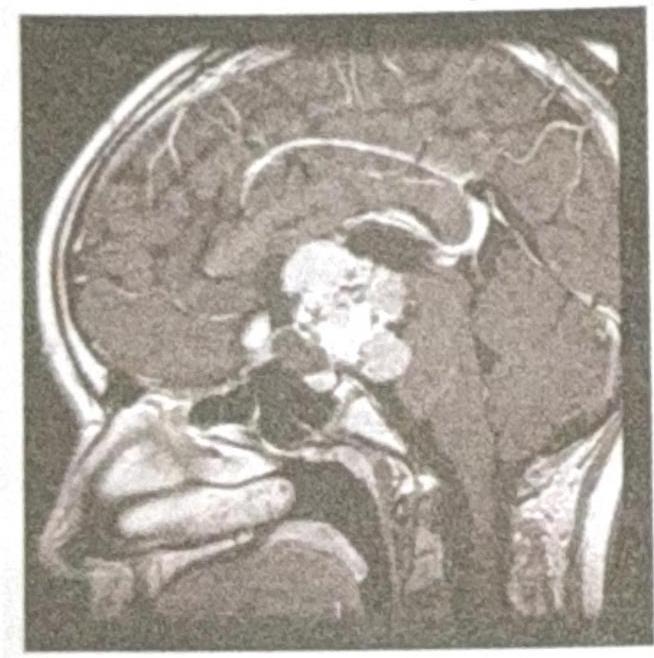
What is a characteristic physical finding of prolactinoma, besides galactorrhea?
A large toxic retrosternal goiter is best treated by?
Which of the following is NOT a sign of thyrotoxicosis?
A 31-year-old female presents with complaints of weight loss and palpitations. On examination, she has exophthalmos, tremors, a smooth goiter with a bruit, and an irregularly irregular pulse. What would the thyroid function tests likely reveal?
Explanation: Explanation: The correct answer is **Pretibial myxedema**. This is a classic "trap" question in NEET-PG, as it tests the distinction between hypothyroidism and Graves' disease. **Why Pretibial Myxedema is the correct answer:** Pretibial myxedema (localized dermopathy) is a characteristic feature of **Graves' disease (Hyperthyroidism)**, not hypothyroidism [1]. It occurs due to the deposition of glycosaminoglycans in the dermis, triggered by the same autoimmune process (TSH-receptor antibodies) that causes Graves' ophthalmopathy. While "myxedema" is a term used to describe the generalized non-pitting edema of severe hypothyroidism, the specific *pretibial* distribution is unique to Graves' disease [1]. **Analysis of incorrect options:** * **Cold intolerance:** A hallmark of hypothyroidism. Low levels of thyroid hormone decrease the basal metabolic rate (BMR) and thermogenesis, making patients sensitive to cold. * **Deafness:** Sensorineural or conductive hearing loss can occur in hypothyroidism. It is notably seen in **Pendred syndrome** (congenital hypothyroidism with goiter and deafness). * **Pericardial effusion:** Hypothyroidism causes increased capillary permeability and decreased lymphatic drainage, leading to protein-rich fluid accumulation in serous cavities (pleural, pericardial, or peritoneal). It is usually asymptomatic as it accumulates slowly. **High-Yield Clinical Pearls for NEET-PG:** * **Wolff-Chaikoff Effect:** Inhibition of thyroid hormone synthesis by high iodine levels (can lead to hypothyroidism). * **Most common cause:** Hashimoto’s thyroiditis (in iodine-sufficient areas). * **ECG in Hypothyroidism:** Low voltage complexes, sinus bradycardia, and flattened T-waves. * **Myxedema Coma:** The most severe form of hypothyroidism, characterized by hypothermia, bradycardia, and altered mental status.
Explanation: **Explanation:** The correct answer is **C (Hyperkalemia)** because Cushing’s syndrome is characterized by **Hypokalemia**, not hyperkalemia. **Medical Concept:** In Cushing’s syndrome, excess cortisol exerts a "mineralocorticoid effect" when present in high concentrations. Cortisol binds to mineralocorticoid receptors in the renal distal tubules, acting like aldosterone [3]. This leads to increased sodium reabsorption and increased secretion of potassium ($K^+$) and hydrogen ions ($H^+$) into the urine [3]. Consequently, patients develop **hypokalemia** and **metabolic alkalosis**. **Analysis of Options:** * **A. Hyperpigmentation:** This occurs specifically in **ACTH-dependent** Cushing’s (like Cushing’s Disease or Ectopic ACTH syndrome). * **B. Purplish striae:** A classic sign caused by cortisol-induced inhibition of fibroblasts, leading to loss of collagen and thinning of the dermis [1]. These are typically >1 cm wide and reddish-purple. * **D. Metabolic alkalosis:** As explained above, the mineralocorticoid effect of excess cortisol causes the kidneys to excrete $H^+$ ions, resulting in a systemic alkalotic state [3]. **High-Yield Clinical Pearls for NEET-PG:** 1. **Most common cause of Cushing’s syndrome:** Exogenous steroid use. 2. **Most common endogenous cause:** Cushing’s Disease (Pituitary adenoma) [1]. 3. **Severe Hypokalemia:** If a patient has Cushing’s features with profound hypokalemia, suspect **Ectopic ACTH secretion** (e.g., Small Cell Carcinoma of the Lung). 4. **Screening Tests:** 24-hour urinary free cortisol, Low-dose dexamethasone suppression test (LDDST), or late-night salivary cortisol [2].
Explanation: The **American Diabetes Association (ADA)** recommends a glycemic target of **HbA1c <7%** for most non-pregnant adults with diabetes. This target is based on landmark trials like the **UKPDS** and **DCCT**, which demonstrated that maintaining an HbA1c below 7% significantly reduces the risk of microvascular complications (retinopathy, nephropathy, and neuropathy) [1]. HbA1c reflects the average blood glucose over the preceding 2-3 months (the lifespan of an erythrocyte). **Analysis of Options:** * **Option A (4-6%):** This is the normal physiological range for non-diabetic individuals. While ideal, targeting this range in diabetics often increases the risk of life-threatening hypoglycemia. * **Option B (<7%):** The standard goal for most stable, non-pregnant adults to balance complication prevention with patient safety. * **Option C & D (8% or >8%):** These levels indicate suboptimal control. However, a less stringent goal (e.g., <8%) may be appropriate for patients with a history of severe hypoglycemia, limited life expectancy, or advanced macrovascular complications [1]. **High-Yield Clinical Pearls for NEET-PG:** * **Individualization:** The ADA emphasizes "individualized" targets. Tight control (<6.5%) may be sought in young patients with short disease duration, while relaxed targets (<8%) are for the elderly or comorbid [1]. * **Diagnosis:** HbA1c **≥6.5%** is diagnostic for Diabetes Mellitus; **5.7-6.4%** is diagnostic for Pre-diabetes. * **Falsely Low HbA1c:** Seen in conditions with high red cell turnover (e.g., Hemolytic anemia, pregnancy, recent blood transfusion). * **Falsely High HbA1c:** Seen in Iron deficiency anemia (due to increased erythrocyte lifespan).
Explanation: **Explanation:** **Bartter syndrome** is a group of autosomal recessive disorders caused by mutations in the ion transporters of the **Thick Ascending Limb (TAL)** of the Loop of Henle. It mimics the chronic use of loop diuretics (like Furosemide) [2]. **1. Why Hypertension is the Correct Answer:** The hallmark of Bartter syndrome is **normotension or hypotension**. The defect in NaCl reabsorption leads to salt wasting and volume depletion. This activates the Renin-Angiotensin-Aldosterone System (RAAS), leading to **Secondary Hyperaldosteronism** [1]. Despite high renin and aldosterone levels, patients remain non-hypertensive because the primary defect is salt loss, and there is often a resistance to the pressor effects of Angiotensin II [1]. **2. Why other options are incorrect:** * **Polyuria (A):** The defect in the TAL impairs the medullary osmotic gradient, leading to a loss of concentrating ability (nephrogenic diabetes insipidus-like effect), resulting in polyuria and polydipsia [2]. * **Metabolic Alkalosis (B):** Increased distal delivery of sodium and high aldosterone levels promote the secretion of H+ and K+ in the collecting duct, leading to hypokalemic metabolic alkalosis [1]. * **Periodic Paralysis (C):** Severe hypokalemia (due to renal potassium wasting) can manifest clinically as muscle weakness or even hypokalemic periodic paralysis [1]. **Clinical Pearls for NEET-PG:** * **Bartter vs. Gitelman:** Bartter syndrome usually presents in infancy/childhood with **Hypercalciuria** (stones), whereas Gitelman syndrome presents in adolescence/adulthood with **Hypocalciuria** and hypomagnesemia. * **Mnemonic:** **B**artter = **B**oop (Loop diuretics/TAL); **G**itelman = **G**reen (Thiazide diuretics/DCT). * Both syndromes present with **Low/Normal BP**, distinguishing them from Liddle Syndrome (High BP).
Explanation: **Explanation:** The correct answer is **Pseudohypoparathyroidism (PHP)** because it is characterized by **hypocalcemia**, not hypercalcemia [1]. **1. Why Pseudohypoparathyroidism is the correct answer:** PHP is a genetic disorder caused by **end-organ resistance to Parathyroid Hormone (PTH)** [2]. Although PTH levels are high, the kidneys and bones fail to respond to it. This leads to the biochemical triad of **hypocalcemia**, hyperphosphatemia, and elevated PTH [1]. Type 1A (Albright’s Hereditary Osteodystrophy) also presents with physical features like short stature and shortened 4th/5th metacarpals [2]. **2. Why the other options are incorrect:** * **Bone Metastasis:** This is a common cause of hypercalcemia of malignancy [1]. It occurs via direct osteolysis by tumor cells or the release of local cytokines (e.g., RANKL) that activate osteoclasts. * **Sarcoidosis:** Granulomatous diseases cause hypercalcemia because macrophages within the granulomas contain the enzyme **1-alpha-hydroxylase** [1]. This leads to uncontrolled conversion of Vitamin D to its active form (1,25-dihydroxyvitamin D), increasing intestinal calcium absorption. * **Hyperparathyroidism:** Primary hyperparathyroidism (usually due to a parathyroid adenoma) involves autonomous secretion of PTH, which directly increases bone resorption and renal calcium reabsorption, leading to hypercalcemia [3]. **High-Yield Clinical Pearls for NEET-PG:** * **Most common cause of hypercalcemia:** Outpatients = Primary Hyperparathyroidism; Inpatients = Malignancy [1]. * **PTHrP (PTH-related protein):** The most common cause of hypercalcemia in non-metastatic solid tumors (e.g., Squamous cell carcinoma of the lung). * **Pseudopseudohypoparathyroidism (PPHP):** Has the physical features of Albright’s but **normal** calcium and PTH levels (due to paternal imprinting) [2]. * **ECG in Hypercalcemia:** Look for a **shortened QT interval**.
Explanation: The diagnosis of Diabetes Mellitus (DM) is based on specific glycemic thresholds established by the ADA (American Diabetes Association) and WHO. [1] ### **Explanation of the Correct Answer** **Option D (HbA1c ≥ 6.5%)** is a primary diagnostic criterion. HbA1c reflects the average blood glucose over the preceding 2–3 months by measuring the glycation of hemoglobin. A value of **≥ 6.5%** is diagnostic of diabetes. This test is advantageous as it does not require fasting and has low day-to-day variability. ### **Analysis of Incorrect Options** * **Option A & B:** These values fall into the **Pre-diabetes** or normal range. For a diagnosis of DM, the Fasting Plasma Glucose (FPG) must be **≥ 126 mg/dL** [1] and the 2-hour Plasma Glucose during an Oral Glucose Tolerance Test (OGTT) must be **≥ 200 mg/dL**. Option B (125/199 mg/dL) specifically describes the upper limit of Impaired Fasting Glucose and Impaired Glucose Tolerance. [1] * **Option C:** Insulin levels are not used to diagnose diabetes. While Type 2 DM often features initial hyperinsulinemia (insulin resistance) and Type 1 DM features hypoinsulinemia, these levels vary significantly and do not define the disease clinically. [1] ### **High-Yield NEET-PG Pearls** * **Diagnostic Criteria Summary:** 1. **HbA1c ≥ 6.5%** 2. **Fasting Plasma Glucose (FPG) ≥ 126 mg/dL** (Fasting = no caloric intake for ≥ 8 hours) [1] 3. **2-hour Post-load Glucose ≥ 200 mg/dL** (during 75g OGTT) 4. **Random Plasma Glucose ≥ 200 mg/dL** in a patient with classic symptoms of hyperglycemia (polyuria, polydipsia, weight loss). [1] * **Pre-diabetes Ranges:** HbA1c: 5.7–6.4%; FPG: 100–125 mg/dL; 2-hr OGTT: 140–199 mg/dL. [1] * **Note:** Unless there is clear clinical exhaustion (symptoms + random glucose > 200), a diagnosis requires **two abnormal test results** from the same sample or two separate test samples.
Explanation: ### Explanation **Correct Option: A. Bitemporal hemianopia** **Medical Concept:** The pituitary gland sits in the **sella turcica**, located directly beneath the **optic chiasm**. Prolactinomas, particularly **macroadenomas** (size >10 mm), can expand superiorly out of the sella [1]. This upward extension causes mechanical compression of the decussating nasal fibers of the optic nerves at the optic chiasm [2]. Since these fibers carry visual information from the temporal fields, the classic physical finding is **bitemporal hemianopia** (loss of the outer half of the visual field in both eyes) [1]. **Why the other options are incorrect:** * **B, C, and D (Anovulatory cycles, Amenorrhea, Infertility):** While these are classic clinical manifestations of hyperprolactinemia in females, they are **symptoms** (subjective complaints) rather than **physical findings** (objective signs detected by a clinician during an examination). High prolactin inhibits the pulsatile release of GnRH, leading to low LH/FSH and subsequent hypogonadism. **High-Yield Clinical Pearls for NEET-PG:** * **Most Common:** Prolactinoma is the most common secretory tumor of the anterior pituitary. * **Size vs. Gender:** Microadenomas (<10 mm) are more common in females (presenting early with menstrual irregularities); Macroadenomas (>10 mm) are more common in males (presenting late with mass effect symptoms like headache and visual field defects) [1]. * **Hook Effect:** In extremely high prolactin levels, lab assays may show falsely low levels; serial dilution is required for accurate diagnosis. * **Drug of Choice:** **Cabergoline** (a dopamine agonist) is the first-line treatment for both micro and macroadenomas, unlike most other pituitary tumors which require surgery [2].
Explanation: The definitive treatment for a **large toxic retrosternal goiter** is **Surgical Resection (Total Thyroidectomy)**. [1] **Why Surgery is the Correct Choice:** 1. **Mechanical Relief:** Retrosternal goiters often cause compressive symptoms (dyspnea, dysphagia, or superior vena cava syndrome). Surgery is the only modality that immediately removes the physical mass and relieves compression. [1] 2. **Size and Toxicity:** Large goiters respond poorly to medical therapy alone. Surgery provides a definitive cure for the hyperthyroidism (toxic component) while simultaneously addressing the anatomical extension. [1] 3. **Low Risk of Malignancy:** Approximately 5-10% of retrosternal goiters may harbor occult malignancy, which surgery can identify and treat. [1] **Why Other Options are Incorrect:** * **Antithyroid Drugs (ATDs):** These are used to achieve a euthyroid state *before* surgery but are not a definitive cure for large goiters, as recurrence rates are high once stopped and they do not reduce the size of the mass. [2] * **Radioiodine (RAI) Therapy:** This is generally **contraindicated** in large retrosternal goiters. RAI can cause radiation-induced thyroiditis, leading to acute swelling of the gland, which may worsen airway obstruction in a confined retrosternal space. [1] * **Lugol’s Iodine:** This is used pre-operatively for 7-10 days to decrease the vascularity of the gland (Plummer’s effect) but is never a primary or long-term treatment. **Clinical Pearls for NEET-PG:** * **Surgical Approach:** Most retrosternal goiters (95%) can be removed via a **standard cervical incision**; a sternotomy is rarely required. * **Pemberton’s Sign:** Facial flushing and inspiratory stridor upon raising both arms; a classic clinical indicator of a retrosternal goiter causing thoracic inlet obstruction. * **Pre-op Prep:** In toxic goiters, patients must be rendered euthyroid with ATDs and Beta-blockers before surgery to prevent **Thyroid Storm**. [2]
Explanation: **Explanation:** The correct answer is **D. Stridor on gently pressing the lobes of the thyroid.** This clinical finding is known as **Pemberton’s Sign**, which indicates superior vena cava syndrome or thoracic inlet obstruction, typically caused by a large retrosternal goiter. It is a mechanical complication of an enlarged thyroid gland rather than a physiological sign of thyrotoxicosis (excess thyroid hormone). **Analysis of Options:** * **A. Infrequent blinking (Stellwag’s Sign):** This is a classic ocular sign of thyrotoxicosis caused by sympathetic overactivity of the superior tarsal (Müller’s) muscle, leading to a "staring" appearance. * **B. Inability to converge the eyeballs (Moebius Sign):** This occurs due to weakness of the medial rectus muscles, a common finding in Graves' ophthalmopathy associated with thyrotoxicosis [2]. * **C. Visible upper sclera on looking straight (Dalrymple’s Sign):** This refers to widened palpebral fissures due to lid retraction [2]. In a normal individual, the upper eyelid covers the superior limbus; in thyrotoxicosis, the sclera above the iris becomes visible. **NEET-PG High-Yield Pearls:** * **Graves’ Specificity:** While lid retraction (Dalrymple’s) can occur in any cause of thyrotoxicosis due to sympathetic overactivity, **exophthalmos** (proptosis) and **extraocular muscle palsy** are specific to Graves' Disease (autoimmune mediated) [1], [2]. * **Lid Lag:** Known as **von Graefe’s Sign**, it is the failure of the upper eyelid to move downward smoothly with the eyeball on downward gaze [2]. * **Joffroy’s Sign:** Absence of forehead wrinkling on upward gaze. * **Pemberton’s Sign:** Positive if facial flushing, cyanosis, or respiratory distress (stridor) occurs when the patient raises both arms above the head (clogging the thoracic inlet).
Explanation: ### **Explanation** **Correct Answer: C. Increased T4, increased T3, and decreased TSH** **1. Why Option C is Correct:** The clinical presentation—weight loss, palpitations, tremors, and an irregularly irregular pulse (suggestive of **Atrial Fibrillation**) point toward **Hyperthyroidism** [1]. The presence of **exophthalmos** and a **goiter with a bruit** are pathognomonic for **Graves' Disease** [2]. In Graves' Disease, Thyroid Stimulating Immunoglobulins (TSI) bind to and activate the TSH receptors on the thyroid gland. This leads to the autonomous overproduction of **T3 and T4**. These elevated hormones exert negative feedback on the anterior pituitary, resulting in a **suppressed (decreased) TSH** [2]. **2. Why Other Options are Incorrect:** * **Option A:** This pattern (Low T3, T4, TSH) represents **Central Hypothyroidism** (pituitary/hypothalamic failure), which would present with weight gain and bradycardia [3]. * **Option B:** While TSH is low, T3 is almost always elevated alongside T4 in Graves'. In some cases, T3 rises disproportionately higher than T4 (T3 toxicosis). * **Option D:** This pattern (High T3, T4, TSH) indicates a **TSH-secreting pituitary adenoma** or Thyroid Hormone Resistance [3]. These are rare and would not typically present with Graves'-specific signs like exophthalmos. **3. High-Yield Clinical Pearls for NEET-PG:** * **Graves' Disease Triad:** Hyperthyroidism + Diffuse Goiter + Ophthalmopathy (Exophthalmos) [2]. * **Thyroid Bruit:** A specific sign of Graves' due to increased vascularity; it is absent in toxic multinodular goiter. * **Cardiac Complication:** Atrial Fibrillation is the most common arrhythmia in hyperthyroidism, especially in elderly patients [1]. * **Diagnosis:** The most sensitive initial test is **TSH**; the most specific test for Graves' is **TSH receptor antibodies (TRAb/TSI)**. * **Radioactive Iodine Uptake (RAIU):** Shows **diffuse, increased uptake** in Graves' disease.
Diabetes Mellitus
Practice Questions
Thyroid Disorders
Practice Questions
Adrenal Gland Disorders
Practice Questions
Pituitary Disorders
Practice Questions
Calcium and Bone Metabolism
Practice Questions
Reproductive Endocrinology
Practice Questions
Lipid Disorders
Practice Questions
Endocrine Hypertension
Practice Questions
Multiple Endocrine Neoplasia
Practice Questions
Obesity and Metabolic Syndrome
Practice Questions
Neuroendocrine Tumors
Practice Questions
Endocrine Emergencies
Practice Questions
Get full access to all questions, explanations, and performance tracking.
Start For Free