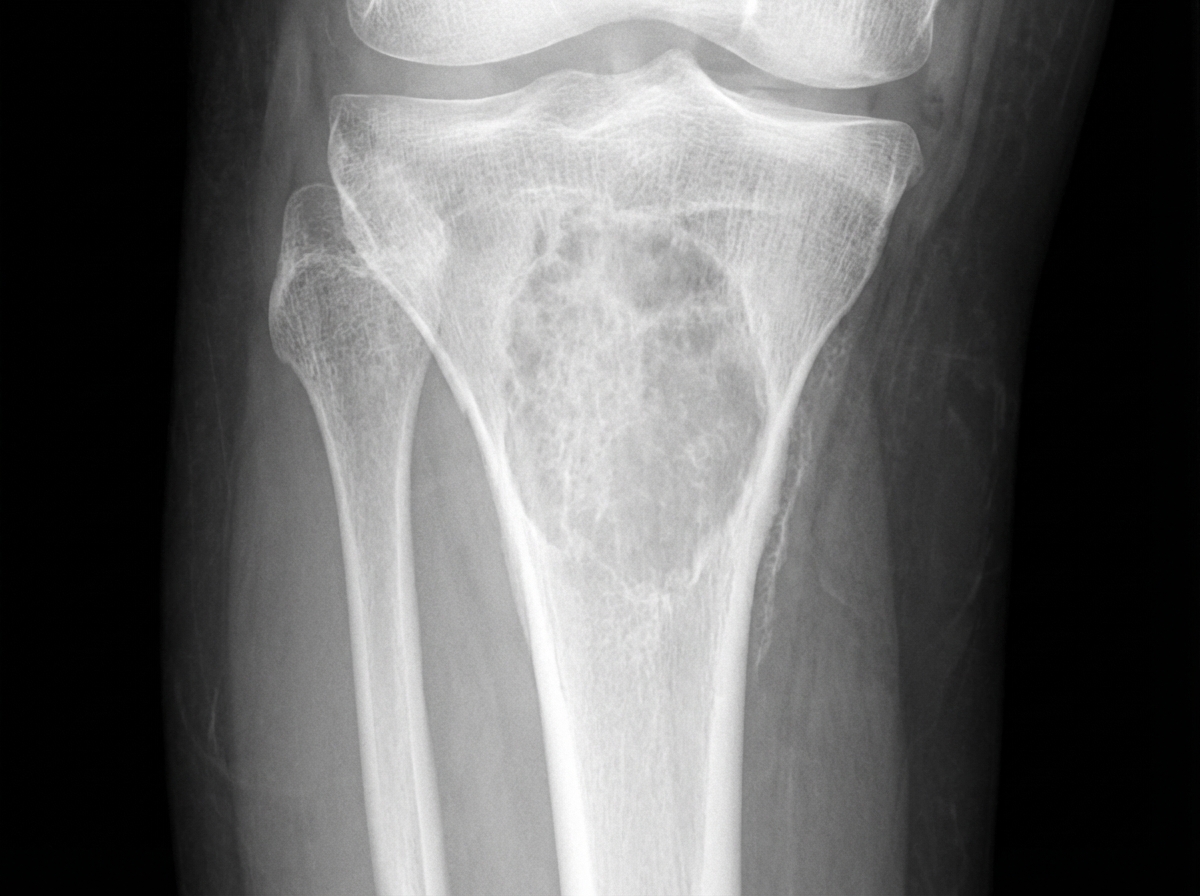
Which one of the following biochemical measures would be most likely to be elevated in this patient?

Graves' disease is the most common cause of-
Which of the following is NOT a cardiovascular finding in an elderly patient with thyrotoxicosis?
Hypokalemic hypertension is a feature of which condition?
All of the following clinical features are seen in acute intermittent porphyria, EXCEPT?
What is the best initial advice to be given to a patient newly diagnosed with type 2 Diabetes Mellitus?
A 30-year-old nurse is evaluated for recurrent hypoglycemia. She feels shaky, anxious, and sweaty; her plasma glucose is 50 mg/dl during an attack at work. She then drinks coffee and feels better. These episodes have not happened outside the work environment. She takes no medications and is otherwise healthy. Which is the most appropriate diagnostic test in this patient?
Complications of therapy with radioactive iodine include:
Sexual ambiguity may be seen in which of the following conditions?
All of the following are true regarding primary hyperparathyroidism except?
Explanation: ***Alkaline phosphatase*** - In **Paget's disease**, there is **excessive osteoblastic activity** leading to dramatically elevated **alkaline phosphatase (ALP)** levels, often 10-25 times normal values. - ALP is a **bone formation marker** released by hyperactive osteoblasts during the abnormal bone remodeling process characteristic of Paget's disease. *Calcium* - Serum **calcium levels remain normal** in Paget's disease despite increased bone turnover due to effective **parathyroid hormone regulation**. - Hypercalcemia may only occur during **periods of immobilization** or in cases with extensive disease affecting large portions of the skeleton. *Ferritin* - **Ferritin is an iron storage protein** and is not directly involved in bone metabolism or Paget's disease pathophysiology. - Elevated ferritin would suggest **iron overload**, **inflammation**, or **liver disease**, none of which are primary features of Paget's disease. *Phosphorus* - Serum **phosphorus levels typically remain normal** in Paget's disease as the increased bone resorption and formation are balanced. - Phosphorus abnormalities are more commonly seen in **primary hyperparathyroidism** or **chronic kidney disease**, not in Paget's disease.
Explanation: **Explanation:** **Graves’ disease** is an autoimmune disorder characterized by the production of **Thyroid Stimulating Immunoglobulins (TSI)** [1]. These autoantibodies act as agonists to the TSH receptors on the thyroid gland, leading to unregulated synthesis and release of thyroid hormones ($T_3$ and $T_4$) [1]. This results in **Hyperthyroidism**, making Graves' disease the most common cause of thyrotoxicosis worldwide (accounting for 60-80% of cases) [2]. **Analysis of Options:** * **Option A (Hypothyroidism):** This is incorrect. The most common cause of hypothyroidism in iodine-sufficient areas is **Hashimoto’s Thyroiditis**, where antibodies (Anti-TPO) lead to glandular destruction rather than stimulation. * **Option C (Thyroiditis):** While Graves' is an autoimmune process, "thyroiditis" usually refers to inflammation leading to the leakage of stored hormones (e.g., De Quervain’s or Subacute thyroiditis). Graves' involves active overproduction, not just leakage. **High-Yield Clinical Pearls for NEET-PG:** * **The Classic Triad:** Hyperthyroidism (Goiter), Ophthalmopathy (Exophthalmos), and Dermopathy (Pretibial Myxedema) [1], [2]. * **Diagnosis:** Characterized by Low TSH, High Free $T_4$, and **diffuse increased uptake** on Radioactive Iodine Uptake (RAIU) scan [2]. * **Specific Marker:** TSH Receptor Antibodies (TRAb/TSI) are highly specific for Graves' [1]. * **Histology:** Look for "scalloping" of the colloid at the edges of follicular cells, indicating active hormone resorption.
Explanation: In thyrotoxicosis, the cardiovascular system is in a **hyperdynamic state** due to increased sensitivity to catecholamines and direct effects of thyroid hormone on the myocardium. **Explanation of the Correct Answer:** * **Option A (Early diastolic murmur):** This is the correct answer because an early diastolic murmur is typically associated with **Aortic Regurgitation** [4]. Thyrotoxicosis causes high-output states and peripheral vasodilation (decreased systemic vascular resistance), which does not produce diastolic murmurs [2]. Diastolic murmurs are always pathological and indicate structural valvular disease, not a functional hyperdynamic state. **Explanation of Incorrect Options:** * **Option B (Systolic ejection murmur):** This is a common finding. The increased stroke volume and rapid ejection of blood into the aorta create a functional flow murmur, usually heard best at the left sternal border. * **Option C (Scratch in the left 2nd intercostal space):** This refers to the **Means-Lerman scratch**. It is a systolic scratchy sound heard at the end of expiration in the second left intercostal space. It is thought to be caused by the rubbing of the hyperdynamic heart against the pleura or pericardium. * **Option D (Irregularly irregular pulse):** This indicates **Atrial Fibrillation (AF)**. AF is the most common arrhythmia in thyrotoxicosis, occurring in up to 10-15% of patients, particularly in the elderly [1]. **High-Yield Clinical Pearls for NEET-PG:** * **Apathetic Hyperthyroidism:** Elderly patients may not show classic signs like tremors or exophthalmos; instead, they present with "apathetic" features like depression, weight loss, and **new-onset Atrial Fibrillation** [1]. * **Pulse Pressure:** Thyrotoxicosis typically causes a **wide pulse pressure** (high systolic due to increased stroke volume, low diastolic due to vasodilation). * **Treatment:** Beta-blockers (Propranolol) are the first-line symptomatic treatment to control tachycardia and tremors [3].
Explanation: **Explanation:** The combination of **hypokalemia and hypertension** is a classic indicator of mineralocorticoid excess (or a state that mimics it). **1. Why Liddle Syndrome is Correct:** Liddle syndrome is an autosomal dominant disorder characterized by a "gain-of-function" mutation in the genes encoding the **ENaC (Epithelial Sodium Channel)** in the distal nephron. This leads to constitutive activation of the channels, causing excessive sodium reabsorption and potassium excretion [1]. Clinically, it mimics primary hyperaldosteronism (hypertension, hypokalemia, metabolic alkalosis) but is unique because **renin and aldosterone levels are both low** (pseudohyperaldosteronism) [1]. **2. Why the Other Options are Incorrect:** * **Bartter and Gitelman Syndromes:** These are "salt-wasting" nephropathies. While they both present with hypokalemia and metabolic alkalosis, they are characterized by **normotension or hypotension** due to chronic volume depletion and secondary hyperaldosteronism. * **Graves' Disease:** This is a form of hyperthyroidism. While it can cause systolic hypertension (due to increased cardiac output) and occasionally hypokalemic periodic paralysis, it is not a primary cause of chronic hypokalemic hypertension. **3. NEET-PG Clinical Pearls:** * **Treatment of Liddle Syndrome:** Unlike primary aldosteronism, it does **not** respond to Spironolactone. It is treated with ENaC blockers like **Amiloride or Triamterene**. * **Differential Diagnosis of Hypokalemic Hypertension:** * *High Aldosterone, Low Renin:* Conn’s Syndrome (Primary Aldosteronism) [1]. * *Low Aldosterone, Low Renin:* Liddle Syndrome, Cushing Syndrome, or Licorice ingestion [1]. * *High Aldosterone, High Renin:* Renal Artery Stenosis or Reninoma.
Explanation: Explanation: Acute Intermittent Porphyria (AIP) is an autosomal dominant metabolic disorder caused by a deficiency of the enzyme **Porphobilinogen (PBG) deaminase**. This deficiency leads to the accumulation of porphyrin precursors, specifically **delta-aminolevulinic acid (ALA)** and **porphobilinogen (PBG)**. **Why Photosensitivity is the Correct Answer:** Photosensitivity is **absent** in AIP [2]. Cutaneous manifestations (blisters, scarring) occur in porphyrias where there is an accumulation of *porphyrins* (which are photo-excitable). In AIP, the metabolic block occurs early in the heme synthesis pathway, leading to the accumulation of *porphyrin precursors* (ALA and PBG), which are neurotoxic but not photosensitizing. **Analysis of Incorrect Options:** * **Abdominal Pain:** The most common presenting symptom (90% of cases). It is typically severe, poorly localized, and out of proportion to physical findings (neurogenic pain) [1]. * **Seizures:** A common neurological manifestation caused by either direct neurotoxicity of ALA or secondary to hyponatremia (often due to SIADH) [1]. * **Constipation:** A result of autonomic neuropathy affecting the enteric nervous system [1]. Other autonomic features include tachycardia and hypertension. **High-Yield Clinical Pearls for NEET-PG:** * **The "5 Ps" of AIP:** **P**ain (Abdomen), **P**olyneuropathy, **P**sychiatric disturbances, **P**ort-wine colored urine, and **P**recipitated by drugs (e.g., Barbiturates, Sulfonamides) [1]. * **Diagnosis:** Elevated urinary PBG levels during an attack [1]. Urine turns dark/reddish upon standing (oxidation of PBG to porphobilin). * **Management:** Intravenous **Hematin/Heme arginate** (suppresses ALA synthase) and high-dose **Glucose** (carbohydrate loading).
Explanation: **Explanation:** The management of newly diagnosed Type 2 Diabetes Mellitus (T2DM) focuses on lifestyle modification as the cornerstone of therapy. **Why "Engage in regular exercise" is correct:** Physical activity is the most critical initial intervention because it directly addresses the primary pathophysiology of T2DM: **Insulin Resistance**. Exercise increases glucose uptake in skeletal muscles via insulin-independent mechanisms (translocation of **GLUT-4 receptors**) and improves systemic insulin sensitivity [2]. The ADA recommends at least 150 minutes of moderate-intensity aerobic activity per week, spread over at least 3 days, with no more than 2 consecutive days without activity. **Analysis of Incorrect Options:** * **Option A:** While reducing saturated fat is part of a heart-healthy diet, the specific recommendation is usually to keep it to **<7% of total calories** (not 10% of total fat intake). This is a secondary goal compared to improving glycemic control through activity. * **Option B:** Consistency in calorie intake is helpful for weight management, but the *quality* of nutrients and the *timing* of meals in relation to medication/activity are more clinically significant for glycemic stability. * **Option C:** Restricting carbohydrates is no longer the primary recommendation. Current guidelines emphasize the **Glycemic Index (GI)** and fiber content rather than total restriction [1]. Carbohydrates should still constitute 45-60% of the total daily caloric intake. **High-Yield Clinical Pearls for NEET-PG:** * **First-line Drug:** Metformin (Biguanide) is the drug of choice if lifestyle changes fail. * **Diagnosis:** HbA1c ≥ 6.5%, Fasting Plasma Glucose ≥ 126 mg/dL, or 2-hour OGTT ≥ 200 mg/dL. * **Screening:** In asymptomatic adults, screening should begin at age 35 (ADA 2022 update). * **Exercise Benefit:** Resistance training should be added to aerobic exercise for maximal benefit in T2DM [2].
Explanation: ### Explanation The clinical presentation describes **Whipple’s Triad**: symptoms of hypoglycemia, a low plasma glucose level (≤55 mg/dL), and relief of symptoms upon glucose administration. In a healthy young adult, especially a healthcare professional with access to medications, the differential diagnosis for spontaneous hypoglycemia includes an **Insulinoma** versus **Factitious Hypoglycemia** (surreptitious use of insulin or sulfonylureas). **Why Option D is Correct:** The gold standard for diagnosing the cause of hypoglycemia is evaluating the biochemical profile **during a symptomatic episode** (either spontaneous or during a supervised 72-hour fast) [1]. To differentiate between endogenous hyperinsulinism (Insulinoma) and exogenous insulin injection, we must measure: 1. **Insulin:** Elevated in both. 2. **C-peptide:** Elevated in Insulinoma (as it is co-secreted with endogenous insulin) but **suppressed** in exogenous insulin use (since pharmaceutical insulin lacks C-peptide) [1]. 3. **Proinsulin:** Elevated in Insulinoma. 4. **Oral Hypoglycemic Agent Screen:** To rule out sulfonylurea abuse [1]. **Analysis of Incorrect Options:** * **Option A:** IGF-1 is used to screen for Acromegaly; it is not a primary diagnostic tool for hypoglycemia. * **Option B & C:** "Fasting" levels without symptoms are often inconclusive. Many patients with insulinomas have normal insulin levels when they are euglycemic. The diagnostic value lies in demonstrating inappropriately high insulin/C-peptide levels **at the time of hypoglycemia** [1]. **NEET-PG High-Yield Pearls:** * **Factitious Hypoglycemia:** Highly common in healthcare workers. Look for high insulin with low C-peptide [1]. * **Insulinoma:** Most common islet cell tumor. Look for the "10% rule" (10% malignant, 10% multiple, 10% associated with MEN-1). * **Biochemical Cut-offs during hypoglycemia:** Insulin ≥3 μU/mL, C-peptide ≥0.6 ng/mL, and Proinsulin ≥5.0 pmol/L suggest endogenous overproduction.
Explanation: **Explanation:** Radioactive Iodine (RAI), specifically **I-131**, is a definitive treatment for hyperthyroidism (Graves' disease and toxic multinodular goiter). It works by emitting beta particles that cause local tissue destruction of the thyroid follicular cells [1]. **1. Why Hypothyroidism is the Correct Answer:** Hypothyroidism is the **most common and expected long-term complication** of RAI therapy. Because the goal of treatment is to ablate overactive thyroid tissue, the destruction often progresses to a point where the remaining gland cannot produce sufficient hormones. The incidence is approximately 10-20% in the first year and continues at a rate of 3-5% annually thereafter. Almost all patients eventually require lifelong levothyroxine replacement. **2. Why Other Options are Incorrect:** * **Thyroid Malignancy & Leukemia:** Extensive long-term epidemiological studies (such as the Cooperative Thyrotoxicosis Therapy Follow-up Study) have shown **no significant increase** in the risk of thyroid cancer, leukemia, or other visceral malignancies in adults treated with standard doses of I-131 for hyperthyroidism. The thyroid cells that take up the iodine are destroyed rather than mutated. **Clinical Pearls for NEET-PG:** * **Contraindications:** RAI is strictly contraindicated in **pregnancy** (crosses the placenta and destroys the fetal thyroid) and **breastfeeding** [3]. * **Ophthalmopathy:** RAI can worsen **Graves' ophthalmopathy**; prophylactic steroids (prednisone) are often administered in patients with pre-existing eye disease [1]. * **Pre-treatment:** In elderly patients or those with cardiac disease, it is vital to achieve euthyroidism with anti-thyroid drugs (PTU/Methimazole) *before* RAI to prevent a thyroid storm caused by the release of stored hormones during gland destruction [2]. * **Pregnancy Planning:** Women should avoid pregnancy for at least **6 months** following RAI therapy.
Explanation: **Explanation:** **Mixed Gonadal Dysgenesis (MGD)** is the correct answer because it is one of the most common causes of ambiguous genitalia [2]. It typically results from a **45,X/46,XY mosaicism** [2]. In this condition, there is asymmetrical gonadal development (usually a streak gonad on one side and a dysgenetic testis on the other) [2]. The inadequate production of testosterone and Anti-Müllerian Hormone (AMH) by the dysgenetic testis leads to incomplete virilization of the external genitalia and the persistence of Müllerian structures (uterus/fallopian tubes), resulting in **sexual ambiguity** [2]. **Why the other options are incorrect:** * **Androgen Insensitivity Syndrome (AIS):** In the complete form, individuals have a 46,XY karyotype but a total lack of androgen receptor response [3]. This results in a **phenotypically normal female** appearance at birth, not ambiguous genitalia. * **Pure Gonadal Dysgenesis (46,XX):** These individuals have bilateral streak gonads [1]. Since no androgens or AMH are produced, they develop as **phenotypic females** with normal internal and external female anatomy, though they fail to undergo puberty [1]. * **Swyer Syndrome (46,XY Pure Gonadal Dysgenesis):** Despite the XY karyotype, the SRY gene or its downstream targets fail [4]. The gonads remain as streaks, producing no hormones [1]. Consequently, these patients develop as **phenotypic females** with a uterus and vagina. Ambiguity is absent. **Clinical Pearls for NEET-PG:** * **MGD Karyotype:** Most commonly 45,X/46,XY [2]. * **Management:** Due to the high risk of **Gonadoblastoma** in dysgenetic gonads containing Y-chromosomal material, prophylactic gonadectomy is often indicated. * **Rule of Thumb:** Ambiguity occurs when there is "partial" androgen action or "asymmetrical" testicular function [2]. "Pure" dysgenesis or "Complete" resistance usually results in a clear (though often female) phenotype [1].
Explanation: **Explanation:** Primary Hyperparathyroidism (PHPT) is characterized by the autonomous overproduction of Parathyroid Hormone (PTH), usually due to a single parathyroid adenoma [1]. **Why Option A is the Correct Answer (The "Except"):** In PHPT, the hallmark biochemical finding is **Hypercalcemia**, not hypocalcemia [2]. PTH increases serum calcium through three mechanisms [1]: 1. Increasing bone resorption (osteoclast activity). 2. Increasing renal tubular reabsorption of calcium. 3. Stimulating the synthesis of 1,25-dihydroxyvitamin D in the kidneys, which increases intestinal calcium absorption. **Analysis of Other Options:** * **Option B (Hypophosphatemia):** PTH inhibits the reabsorption of phosphate in the proximal convoluted tubule (phosphaturic effect), leading to low serum phosphate levels [1]. * **Option C (Asymptomatic Presentation):** In the modern era, **more than 50-80% of patients** are asymptomatic at the time of diagnosis, often discovered incidentally via routine biochemical screening [2]. * **Option D (Parathyroid Adenoma):** A solitary **parathyroid adenoma** is the most common cause (80-85%), followed by four-gland hyperplasia (10-15%) and parathyroid carcinoma (<1%) [3]. **NEET-PG High-Yield Pearls:** * **Classic Triad:** Hypercalcemia, elevated/inappropriately normal PTH, and hypophosphatemia [2]. * **Clinical Mnemonic:** "Stones (renal calculi), Bones (osteitis fibrosa cystica), Groans (abdominal pain/peptic ulcers), and Psychic Moans (depression/confusion)" [3]. * **Radiological Sign:** Subperiosteal bone resorption, most classically seen on the radial side of the middle phalanges. * **Treatment:** Surgical parathyroidectomy is the only curative treatment [3].
Diabetes Mellitus
Practice Questions
Thyroid Disorders
Practice Questions
Adrenal Gland Disorders
Practice Questions
Pituitary Disorders
Practice Questions
Calcium and Bone Metabolism
Practice Questions
Reproductive Endocrinology
Practice Questions
Lipid Disorders
Practice Questions
Endocrine Hypertension
Practice Questions
Multiple Endocrine Neoplasia
Practice Questions
Obesity and Metabolic Syndrome
Practice Questions
Neuroendocrine Tumors
Practice Questions
Endocrine Emergencies
Practice Questions
Get full access to all questions, explanations, and performance tracking.
Start For Free