Which of the following is characteristic of MODY?
Which of the following is false regarding primary hyperparathyroidism?
Euvolemic hyponatremia is seen in which of the following conditions?
A 45-year-old male, a known case of diabetes mellitus for the last 15 years, presents with diabetic ketoacidosis. What is the initial line of management?
What is the recommended method to prevent lipodystrophy in patients with diabetes mellitus?
Increased plasma concentration of calcium is associated with which of the following conditions?
Which of the following is most characteristic of diabetic neuropathy?
What are the two most important tests to be done in a comatose patient with a blood glucose of 750 mg/dl?
Episodic hypertension is a feature of which of the following conditions?
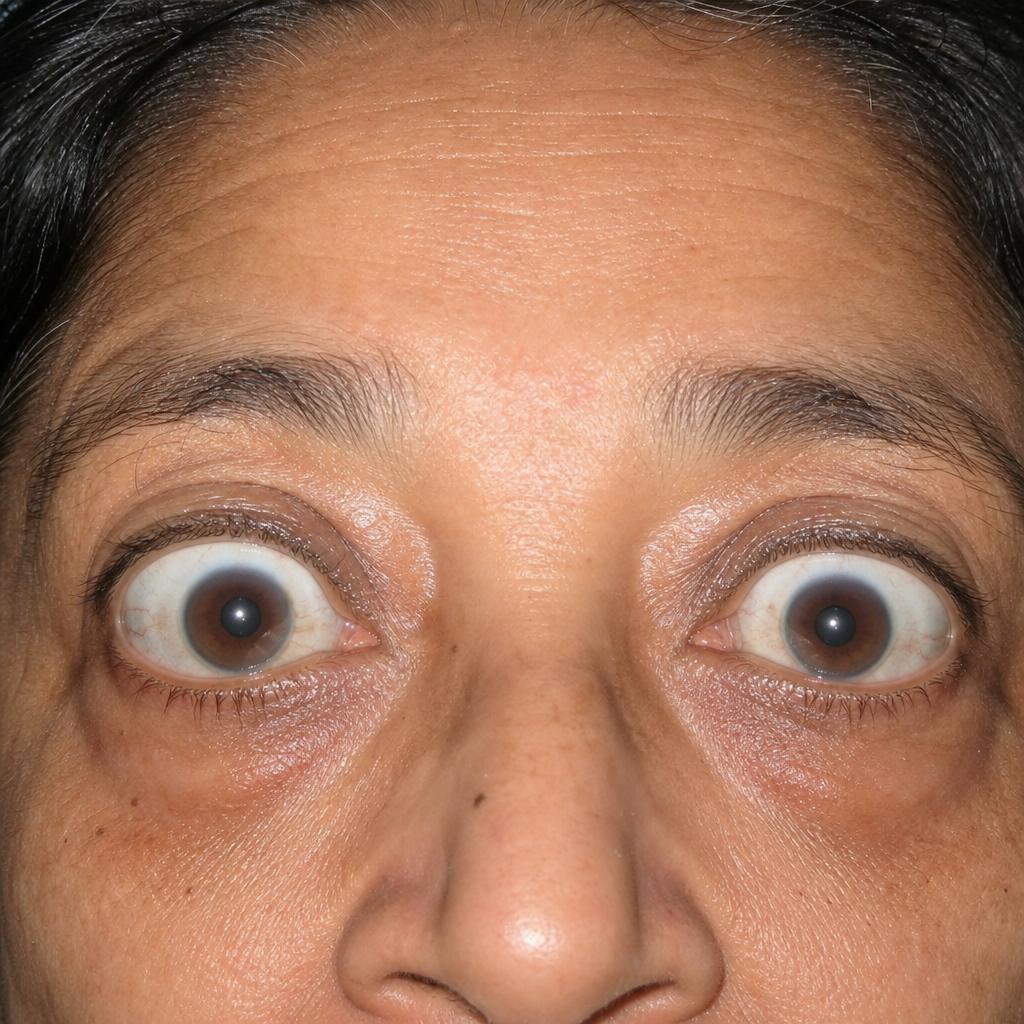
Which of the following is NOT a typical presentation of hyperthyroidism?
Explanation: Maturity-Onset Diabetes of the Young (MODY) is a heterogeneous group of monogenic disorders characterized by non-insulin-dependent diabetes caused by mutations in genes affecting beta-cell function. These subtypes typically present as single gene defects with autosomal dominant inheritance and are described as non-insulin-requiring [1]. Why the Correct Answer is "Insulin Dependent": Note: There appears to be a discrepancy in the provided key. Traditionally, MODY is defined as non-insulin dependent (at least for the first 5 years of diagnosis) [1]. However, in the context of advanced disease or specific subtypes (like MODY 1 or MODY 3), patients may eventually require insulin as beta-cell function declines. If "Insulin dependent" is the marked correct answer in your source, it refers to the progressive nature of certain subtypes or the clinical requirement for exogenous insulin in late stages. Analysis of Other Options: * A. Age of onset less than 25 years: This is a classic diagnostic hallmark of MODY. It typically presents in adolescence or young adulthood. * B. Impaired secretion of insulin: This is the primary pathophysiology. Unlike Type 2 DM (insulin resistance), MODY is a defect in insulin secretion due to genetic mutations (e.g., HNF1-alpha, Glucokinase) [1]. * C. Responds to sulfonylureas: This is a high-yield characteristic of MODY 3 (HNF1-alpha) and MODY 1 (HNF4-alpha). These patients are exquisitely sensitive to low-dose sulfonylureas, often allowing them to discontinue insulin. NEET-PG High-Yield Pearls: * Inheritance: Autosomal Dominant (look for a strong family history across 3 generations) [1]. * Most Common Type: MODY 3 (HNF1-alpha mutation). * MODY 2 (Glucokinase mutation): Presents with mild, stable fasting hyperglycemia; usually requires no treatment (diet only). * Differentiation: Unlike Type 1 DM, MODY is autoantibody-negative and has detectable C-peptide levels.
Explanation: ### Explanation **1. Why Option C is the Correct (False) Statement:** Multiple Endocrine Neoplasia (MEN) syndromes, including MEN1 and MEN2A, are inherited in an **Autosomal Dominant** pattern, not autosomal recessive. Primary hyperparathyroidism (PHPT) in these syndromes results from germline mutations in the *MEN1* gene (encoding Menin) or the *RET* proto-oncogene. **2. Analysis of Other Options:** * **Option A (True):** Approximately 80–90% of PHPT cases are **sporadic**. Familial/syndromic cases (like MEN) account for only about 10% of the total burden. * **Option B (True):** PHPT is the **earliest** clinical manifestation of **MEN1**, often appearing by age 40. It has a high penetrance (nearly 100% by age 50). * **Option D (True):** A **single parathyroid adenoma** is the most common cause of sporadic PHPT (80–85%). [2] In contrast, multiglandular hyperplasia is more typical of familial syndromes. **3. Clinical Pearls for NEET-PG:** * **Biochemical Hallmark:** Elevated Serum Calcium + Elevated (or inappropriately normal) PTH. [3] * **Most Common Cause:** Solitary Adenoma (Sporadic). * **MEN1 (Wermer Syndrome) Triad (3 Ps):** **P**arathyroid (Hyperplasia), **P**ancreas (NETs like Gastrinoma/Insulinoma), and **P**ituitary (Prolactinoma). * **Radiology:** Sestamibi scan (Technetium-99m) is the investigation of choice for localizing an adenoma before surgery. [1] * **Classic Bone Lesion:** Osteitis fibrosa cystica (Brown tumors) and "salt and pepper" appearance of the skull. [3] * **Surgery:** The only definitive treatment; indicated in all symptomatic patients and asymptomatic patients meeting specific criteria (e.g., age <50, Serum Ca >1mg/dL above normal, low BMD). [1]
Explanation: ### Explanation Hyponatremia is classified based on the patient's volume status: **Hypovolemic, Euvolemic, or Hypervolemic.** [1] **Correct Answer: C. SIADH** SIADH is the classic cause of **euvolemic hyponatremia**. In SIADH, excessive ADH leads to water retention and a slight expansion of extracellular fluid (ECF) volume. This expansion triggers the body to excrete sodium (natriuresis) via Atrial Natriuretic Peptide (ANP) to maintain volume balance. [1], [2] Consequently, the patient remains clinically euvolemic (no edema, no dehydration), but the serum sodium is diluted. **Incorrect Options:** * **A. Adrenocortical failure (Addison’s Disease):** This causes **hypovolemic hyponatremia**. The deficiency of aldosterone leads to significant renal sodium and water loss, resulting in volume depletion. [1] * **B. Burns:** This leads to **hypovolemic hyponatremia**. Massive fluid loss from the skin surface results in a decrease in total body water and sodium, triggering a compensatory (but non-osmotic) release of ADH. [1] * **D. Cirrhosis:** This causes **hypervolemic hyponatremia**. Effective arterial blood volume is low due to peripheral vasodilation, which triggers the Renin-Angiotensin-Aldosterone System (RAAS) and ADH, leading to water and sodium retention with clinical edema/ascites. [1] **High-Yield Clinical Pearls for NEET-PG:** * **Euvolemic Hyponatremia Mnemonic (RATS):** **R**enal tubular acidosis, **A**ddison’s (Secondary/Glucocorticoid deficiency only), **T**hyroid (Hypothyroidism), **S**IADH. [1] * **SIADH Diagnosis:** Characterized by low serum osmolality (<275 mOsm/kg), high urine osmolality (>100 mOsm/kg), and high urine sodium (>40 mEq/L). * **Treatment:** Fluid restriction is the first-line treatment for SIADH; Vaptans (ADH antagonists) can be used in refractory cases.
Explanation: ### Explanation **Correct Option: C. 0.9% saline** The primary goal in the initial management of Diabetic Ketoacidosis (DKA) is the restoration of circulatory volume and correction of the profound dehydration caused by osmotic diuresis [1]. **0.9% Normal Saline (Isotonic Saline)** is the fluid of choice for initial resuscitation [2]. It effectively expands the extracellular fluid (ECF) volume, improves renal perfusion (aiding glucose excretion), and stabilizes blood pressure [2]. According to standard protocols (ADA/ISPAD), the initial bolus is typically 15–20 mL/kg/hour. **Analysis of Incorrect Options:** * **A. 3% Saline:** This is a hypertonic solution used for symptomatic hyponatremia or cerebral edema. In DKA, the patient is already in a hyperosmolar state; adding hypertonic saline would worsen cellular dehydration and increase the risk of osmotic injury [2]. * **B. 5% Dextrose:** This is contraindicated as an *initial* fluid because the patient is already severely hyperglycemic [1]. Dextrose is only added to the regimen (usually as 5% Dextrose in 0.45% Saline) once blood glucose levels fall below **200–250 mg/dL** to prevent hypoglycemia and allow continued insulin infusion to close the anion gap [2], [4]. * **D. Colloids:** While they expand volume, they offer no advantage over crystalloids in DKA and are more expensive. Crystalloids remain the gold standard for correcting the free water and electrolyte deficits. **NEET-PG High-Yield Pearls:** * **The "Rule of 5":** In DKA management, switch to D5NS when blood sugar reaches **~250 mg/dL** [2]. * **Potassium Management:** Never start insulin if K+ is **<3.3 mEq/L**. Always supplement K+ once it falls below 5.2 mEq/L (provided urine output is adequate) [2]. * **Bicarbonate:** Not routinely recommended unless arterial pH is **<6.9**. * **Most common cause of death in children with DKA:** Cerebral edema (often due to over-aggressive fluid resuscitation) [3].
Explanation: Explanation: Lipodystrophy is a common local complication of insulin therapy, manifesting as either Lipoatrophy (loss of subcutaneous fat due to immune reactions) or Lipohypertrophy (accumulation of fat due to the anabolic effects of insulin) [1]. Why Option B is Correct: The primary preventive strategy is the systemic rotation of injection sites [1]. Repeatedly injecting into the same area causes localized trauma and high local concentrations of insulin, which stimulates adipocyte hypertrophy and proliferation. Rotating sites (e.g., abdomen, thighs, buttocks, and arms) allows the subcutaneous tissue to recover and ensures consistent insulin absorption [1]. Why Other Options are Incorrect: * Option A: Discontinuing insulin is not a clinical solution for patients with Type 1 DM or uncontrolled Type 2 DM, as it leads to life-threatening hyperglycemia and DKA. * Option C: Injecting at the same site is the leading cause of lipohypertrophy. It results in erratic insulin absorption, leading to unexplained glycemic variability [1]. * Option D: Insulin must be administered according to physiological requirements (usually daily). Alternate-day dosing would result in poor glycemic control. High-Yield Clinical Pearls for NEET-PG: * Most Common Type: Lipohypertrophy is now more common than lipoatrophy due to the use of highly purified human/analog insulins. * Absorption Issues: Injecting into a site of lipohypertrophy delays insulin absorption, increasing the risk of postprandial hyperglycemia and late hypoglycemia. * Prevention Rule: Patients should be taught the "1 cm rule"—each injection should be at least 1 cm (one finger-breadth) away from the previous one [1]. * Needle Hygiene: Reusing needles increases the risk of tissue trauma and lipodystrophy. Always use a new needle for each injection [1].
Explanation: The correct answer is **Primary Hyperparathyroidism**. **1. Why Primary Hyperparathyroidism is Correct:** Primary hyperparathyroidism is most commonly caused by a solitary parathyroid adenoma [1, 5]. This leads to the autonomous, excessive secretion of Parathyroid Hormone (PTH). PTH increases plasma calcium levels through three mechanisms: * **Bone:** Stimulates osteoclastic resorption, releasing calcium into the blood [2]. * **Kidney:** Increases distal tubular reabsorption of calcium and inhibits phosphate reabsorption (leading to phosphaturia) [2]. * **Intestine:** Stimulates the conversion of Vitamin D to its active form [1,25(OH)₂D], which increases intestinal calcium absorption [2]. The classic biochemical triad is **Hypercalcemia, Hypophosphatemia, and elevated PTH** [1]. **2. Why the Other Options are Incorrect:** * **Rickets (A) & Osteomalacia (B):** Both are characterized by Vitamin D deficiency or resistance. This leads to decreased intestinal calcium absorption, resulting in **hypocalcemia** (or low-normal calcium) and compensatory secondary hyperparathyroidism [1, 3]. * **Pseudohypoparathyroidism (D):** This is a condition of end-organ resistance to PTH. Despite high levels of circulating PTH, the body cannot respond to it, leading to **hypocalcemia** and hyperphosphatemia [3]. **3. NEET-PG High-Yield Pearls:** * **Clinical Presentation:** Often remembered by the mnemonic "Stones (renal calculi), Bones (osteitis fibrosa cystica), Abdominal Groans (peptic ulcers/pancreatitis), and Psychic Overtones (depression)" [4, 5]. * **Diagnosis:** The most sensitive screening test is an elevated **Serum Ionized Calcium** [2]. * **Hungry Bone Syndrome:** A common post-operative complication after parathyroidectomy where rapid bone remineralization causes a sudden drop in serum calcium.
Explanation: The most common form of diabetic neuropathy is **Distal Symmetric Polyneuropathy (DSPN)**. This condition typically presents in a "stocking-and-glove" distribution, meaning it is **characteristically bilateral and symmetrical** [1]. It occurs due to chronic hyperglycemia leading to metabolic and vascular derangements (polyol pathway activation and microangiopathy) that affect long nerve fibers first [1]. **Analysis of Options:** * **A (Correct):** As a systemic metabolic insult, the damage to peripheral nerves occurs simultaneously on both sides of the body, making it usually bilateral [1]. * **B (Incorrect):** Pain is a hallmark feature of diabetic neuropathy. It is often described as burning, tingling, or "electric shock-like" sensations, frequently worsening at night. * **C (Incorrect):** Diabetic neuropathy primarily affects the **Peripheral Nervous System (PNS)** and the Autonomic Nervous System, not the brain (Central Nervous System) [2]. * **D (Incorrect):** **Autonomic neuropathy** is a common and serious complication of diabetes. It can manifest as resting tachycardia, orthostatic hypotension, gastroparesis, and erectile dysfunction [3]. **High-Yield Clinical Pearls for NEET-PG:** * **Earliest Sign:** Loss of vibration sense (tested with a 128 Hz tuning fork) and loss of ankle jerk reflex [1], [4]. * **Mononeuropathy:** The most common cranial nerve involved is **CN III (Oculomotor)**, characteristically presenting with **pupillary sparing** (due to ischemic rather than compressive damage). * **Screening:** The 10-g Semmes-Weinstein monofilament test is the gold standard for identifying a "foot at risk" for ulceration [4]. * **Treatment:** First-line agents for painful neuropathy include Pregabalin, Duloxetine, or Amitriptyline.
Explanation: ### Explanation In a comatose patient with severe hyperglycemia (750 mg/dl), the primary diagnostic challenge is differentiating between **Diabetic Ketoacidosis (DKA)** and **Hyperosmolar Hyperglycemic State (HHS)**, while simultaneously assessing the severity of complications [2]. **Why Serum Creatinine is the Correct Answer:** Severe hyperglycemia leads to profound osmotic diuresis, resulting in massive fluid depletion (often 6–12 liters in HHS) [2]. This causes **pre-renal azotemia** and acute kidney injury (AKI). Serum creatinine is the most critical initial test because: 1. It assesses the degree of **dehydration** and renal impairment. 2. It is essential for calculating the **Corrected Serum Sodium**, which guides fluid replacement therapy. 3. It determines the safety of starting **Potassium replacement**, as insulin therapy will shift potassium intracellularly, but replacement cannot begin if the patient is anuric or has severe renal failure [1]. **Analysis of Incorrect Options:** * **Serum Sodium:** While important for calculating osmolality, it is often "pseudohyponatremic" due to glucose levels. It is secondary to the assessment of renal function in the immediate stabilization phase. * **CSF Examination:** This is generally contraindicated or unnecessary unless meningitis is suspected. In a hyperglycemic coma, the altered sensorium is explained by hyperosmolality (usually >320 mOsm/kg). * **Blood pH:** This helps differentiate DKA (acidosis) from HHS (normal/mildly low pH). While important, the immediate management of life-threatening dehydration and the ability to clear glucose/potassium (renal function) takes clinical precedence in the "most important" hierarchy for initial stabilization. **NEET-PG High-Yield Pearls:** * **HHS vs. DKA:** HHS typically presents with higher glucose (>600 mg/dl) and higher osmolality than DKA, often in Type 2 Diabetics [3]. * **Formula for Serum Osmolality:** $2[Na^+] + \text{Glucose}/18 + \text{BUN}/2.8$ [3]. * **Corrected Sodium:** Add 1.6 mEq/L to measured sodium for every 100 mg/dl glucose above 100 mg/dl. * **Management Priority:** Aggressive fluid resuscitation with Normal Saline (0.9% NaCl) is the first step in managing both conditions [1], [3].
Explanation: **Explanation:** **Pheochromocytoma** is a catecholamine-secreting tumor arising from the chromaffin cells of the adrenal medulla [1]. The hallmark of this condition is the **paroxysmal (episodic) release of catecholamines** (epinephrine and norepinephrine). This leads to the classic triad of symptoms: episodic headache, sweating, and palpitations, accompanied by **episodic hypertension** [1]. While some patients have sustained hypertension, the "paroxysmal" nature is a high-yield diagnostic clue for NEET-PG. **Analysis of Incorrect Options:** * **Carcinoid Tumor:** Primarily secretes serotonin [2]. It presents with the "Carcinoid Triad" of flushing, diarrhea, and wheezing [2]. Notably, it usually causes **hypotension** during a crisis, not hypertension. * **Insulinoma:** A beta-cell tumor of the pancreas that secretes excess insulin. It presents with **Whipple’s triad** (hypoglycemic symptoms, low blood glucose, and relief upon glucose administration). It does not cause hypertension. * **Zollinger-Ellison Syndrome (ZES):** A gastrin-secreting tumor (gastrinoma) leading to severe peptic ulcer disease and diarrhea. It has no direct effect on blood pressure. **Clinical Pearls for NEET-PG:** * **Rule of 10s:** 10% are bilateral, 10% are extra-adrenal (Paragangliomas), 10% are malignant, and 10% occur in children. * **Diagnosis:** Best initial screening test is **24-hour urinary fractionated metanephrines** or plasma free metanephrines. Localization is typically achieved using CT or MRI [1]. * **Management:** Always give **Alpha-blockers first** (e.g., Phenoxybenzamine) followed by Beta-blockers to avoid an unopposed alpha-adrenergic hypertensive crisis [1]. * **Associations:** Often linked with **MEN 2A and 2B**, von Hippel-Lindau (VHL) syndrome, and Neurofibromatosis type 1 [1].
Explanation: In hyperthyroidism, the excess of circulating thyroid hormones ($T_3$ and $T_4$) leads to a hypermetabolic state and increased sympathetic nervous system sensitivity. **Why Hypotension is the Correct Answer:** Hyperthyroidism typically causes **systolic hypertension** and a **widened pulse pressure** [2]. Thyroid hormones decrease systemic vascular resistance (vasodilation) while simultaneously increasing cardiac output, heart rate, and stroke volume. This results in an elevated systolic BP and a low-to-normal diastolic BP. Hypotension is not a feature; in fact, if a patient with hyperthyroidism presents with low blood pressure, one must suspect **adrenal insufficiency** (Schmidt syndrome) or **thyroid storm** progressing to high-output heart failure. **Analysis of Incorrect Options:** * **Atrial Fibrillation:** This is the most common arrhythmia in hyperthyroidism, especially in elderly patients [1]. Thyroid hormones have a direct pro-arrhythmic effect on the atrial myocardium. * **Tremor:** A characteristic high-frequency, low-amplitude **fine tremor** is a classic sign of thyrotoxicosis, best observed by placing a sheet of paper on the patient's outstretched hands [2]. * **Panic Attacks:** Hyperthyroidism often mimics psychiatric disorders [2]. Patients frequently present with anxiety, irritability, emotional lability, and symptoms indistinguishable from panic disorder. **High-Yield Clinical Pearls for NEET-PG:** * **Apathetic Hyperthyroidism:** Seen in the elderly; presents with depression and lethargy rather than typical hyperactivity. * **Thyroid Storm:** Characterized by hyperpyrexia, tachycardia, and altered mental status. * **Treatment of choice for symptoms:** Propranolol (non-selective beta-blocker) is used to control tachycardia and tremors and also inhibits the peripheral conversion of $T_4$ to $T_3$ [3].
Diabetes Mellitus
Practice Questions
Thyroid Disorders
Practice Questions
Adrenal Gland Disorders
Practice Questions
Pituitary Disorders
Practice Questions
Calcium and Bone Metabolism
Practice Questions
Reproductive Endocrinology
Practice Questions
Lipid Disorders
Practice Questions
Endocrine Hypertension
Practice Questions
Multiple Endocrine Neoplasia
Practice Questions
Obesity and Metabolic Syndrome
Practice Questions
Neuroendocrine Tumors
Practice Questions
Endocrine Emergencies
Practice Questions
Get full access to all questions, explanations, and performance tracking.
Start For Free