
Cardiac Arrhythmias — MCQs

Identify the ECG given below?
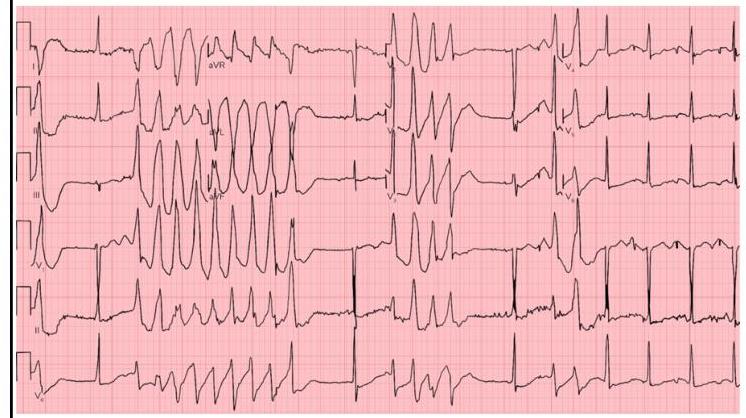
A 54-year-old man presents after a syncopal episode with no recollection of the event, and bystanders report that he regained consciousness approximately 45 seconds after falling. He has a history of bipolar disorder managed with quetiapine, and recently experienced prostatitis treated with ciprofloxacin. His other medications include lisinopril and hydrochlorothiazide for hypertension, and cyclobenzaprine and a hydrocodone/acetaminophen combination pill for low back pain. On examination, the patient is alert and oriented, with a nonfocal neurological examination and an unremarkable cardiac examination. Electrocardiogram shows nonspecific ST and T wave changes and a prolonged QT interval (QTc of 540 milliseconds). What is the best initial management approach?
Which of the following is true about torsades de pointes?
Preferred drug for the treatment of ventricular tachycardia is
In ACLS, which antiarrhythmic drug can be given following ventricular fibrillation after cardiac arrest other than epinephrine?
Refer to the provided ECG image. It demonstrates which of the following?
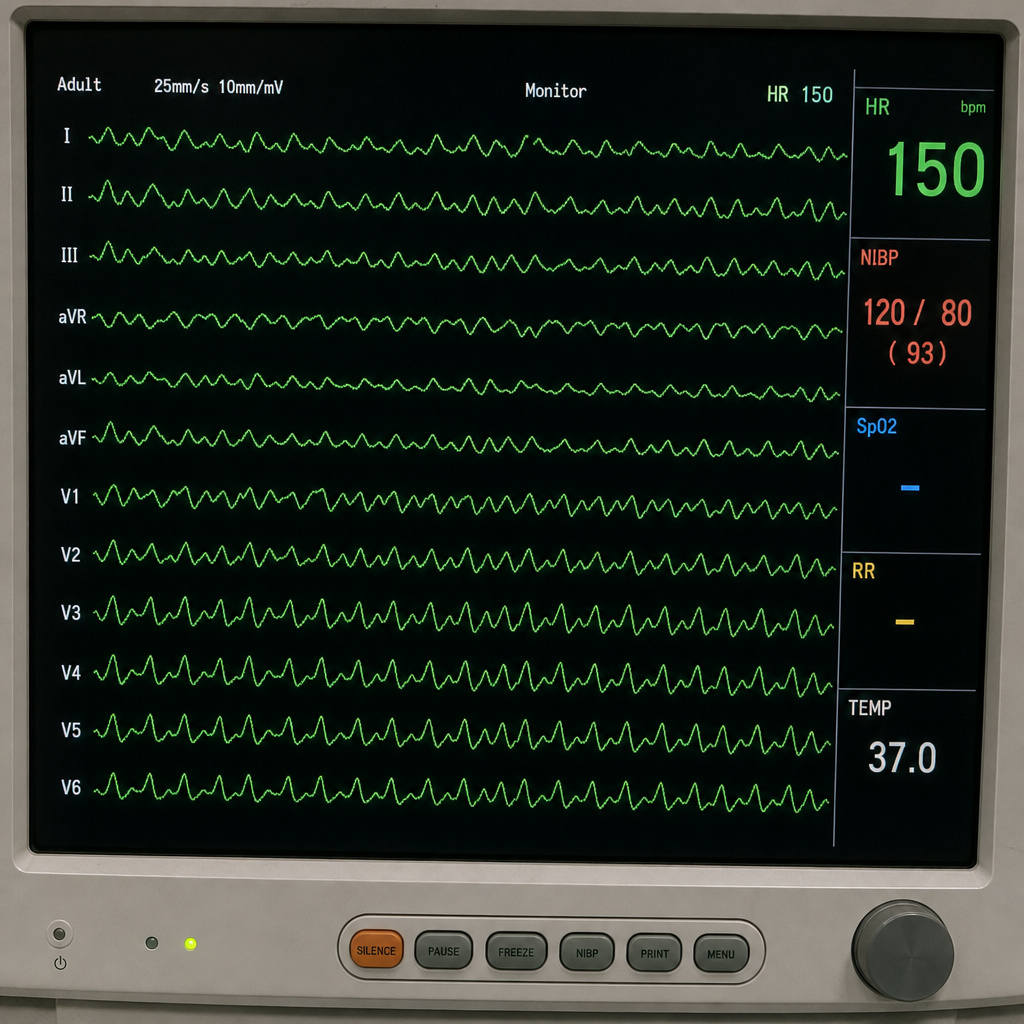
25-year-old female presented to emergency with palpitations and dizziness. ECG was done and was diagnosed supraventricular tachycardia. Her blood pressure was 60/40 mm Hg. First line of management for this patient is ?
Which of the following is not a complication of hypokalemia?
A patient presents to you with an irregularly irregular pulse of 120/minutes and a pulse deficit of 20. Which of the following would be the jugular venous pressure (JVP) finding?
Sine wave in ECG is seen in?
Want unlimited practice?
Get full access to all questions, explanations, and performance tracking.
Scan to download app