What is the defining characteristic of a pedophile in relation to their sexual acts?
Which is not a method of local violence for procuring criminal abortion?
Which section of the Indian Penal Code (IPC) deals with causing abortion without a woman's consent?
According to Section 375 of the Indian Penal Code, all of the following are considered as rape, EXCEPT:
What is the generally accepted gestational age for fetal viability?
What is sexual masochism?
Stillbirth is defined as a fetus born dead at or after what gestational age?
Impotence is not a feature of which of the following conditions?
Sodomy is punishable under which section of the Indian Penal Code?
What is the definition of buggery?
Explanation: **Explanation:** **Pedophilia** is a type of **paraphilia** (sexual deviation) characterized by intense, recurrent sexual urges, fantasies, or behaviors involving prepubescent children (generally aged 13 years or younger). According to the DSM-5, the individual must be at least 16 years old and at least 5 years older than the child to meet the diagnostic criteria. This condition is categorized under sexual offenses in Forensic Medicine, as it involves non-consensual acts due to the victim's legal inability to consent. **Analysis of Options:** * **Option B (Correct):** Pedophilia specifically refers to a sexual preference for children. The term is derived from the Greek words *pais* (child) and *philia* (love/attraction). * **Option A:** Sexual attraction to older individuals is sometimes referred to as **Gerontophilia**. * **Option C:** Sexual acts between consenting adults of the same sex are categorized as **Homosexuality**, which is no longer considered a psychiatric disorder or a criminal offense (decriminalized in India via the Navtej Singh Johar vs. Union of India judgment). * **Option D:** Sexual acts with hijras (transgender individuals) do not fall under a specific paraphilic classification; they are simply variations of human sexuality. **Clinical Pearls for NEET-PG:** * **Pederasty:** A specific form of pedophilia involving anal intercourse between a man and a young boy. * **Incest:** Sexual intercourse between individuals who are too closely related to marry (e.g., father-daughter, brother-sister). * **POCSO Act (2012):** In India, all sexual offenses against children are governed by the *Protection of Children from Sexual Offences Act*, which mandates stringent punishments and defines a child as any person below **18 years** of age. * **Examination:** In cases of suspected child abuse, look for the **"Reflex Anal Dilatation"** (widening of the anus upon spreading buttocks), which is a significant forensic finding.
Explanation: **Explanation:** Criminal abortion involves the illegal termination of pregnancy using various methods, categorized into systemic poisons and local mechanical violence. **Why Cupping is the Correct Answer:** Cupping is a traditional therapeutic practice involving suction on the skin to increase blood flow. While it has been historically used for various ailments, it is **not** a recognized method of local violence for procuring abortion. It does not involve any direct mechanical interference with the pelvic organs or the uterine cavity. **Analysis of Incorrect Options (Methods of Local Violence):** * **Abortion Stick (A):** This is the most common method used by "dais." A wooden stick (often from *Calotropis* or *Plumbago*) is wrapped with an irritant-soaked rag and inserted into the cervical canal to rupture membranes or cause uterine contractions. * **Electricity (B):** The application of a strong electric current to the lower abdomen or directly to the cervix can be used to induce uterine contractions and fetal death. * **Syringing (C):** This involves injecting fluids (like soapy water, potassium permanganate, or antiseptics) into the space between the uterine wall and membranes using a Higginson’s syringe. This causes separation of the placenta or air embolism. **High-Yield NEET-PG Pearls:** * **Most common cause of death** in criminal abortion via syringing is **Air Embolism**. * **Abortion Stick** acts by both mechanical irritation and chemical action (if coated with irritants). * **Vaginal/Cervical douching** with hot water or chemicals is a common form of local violence. * **Legal Aspect:** In India, abortion is governed by the **MTP Act (1971)**, recently amended in 2021 to allow termination up to 24 weeks for specific categories of women. Any abortion performed outside these provisions is "Criminal Abortion" under **Sections 312-316 of the IPC**.
Explanation: **Explanation:** In Forensic Medicine, the legal aspects of abortion are governed by **Sections 312 to 316 of the Indian Penal Code (IPC)**. These sections categorize the act based on consent and the outcome for the mother. **Correct Option: B (Section 313 IPC)** Section 313 IPC specifically deals with causing a miscarriage **without the woman's consent**. This is a non-bailable, cognizable offence punishable by life imprisonment or imprisonment up to 10 years, reflecting the gravity of performing the procedure against a woman's will. **Analysis of Incorrect Options:** * **Section 312 IPC:** Deals with causing miscarriage **with the woman's consent**. If the woman is "quick with child" (perception of fetal movements), the punishment is more severe. * **Section 314 IPC:** Pertains to **death caused by an act done with intent to cause miscarriage**. It covers scenarios both with and without the woman's consent. * **Section 315 IPC:** Relates to an act done with the **intent to prevent a child being born alive** or to cause it to die after birth. **High-Yield Clinical Pearls for NEET-PG:** * **MTP Act (1971/2021):** While the IPC criminalizes abortion, the Medical Termination of Pregnancy (MTP) Act provides legal immunity to Registered Medical Practitioners (RMPs) if the abortion is performed under specific legal conditions. * **Consent:** Under the MTP Act, only the **woman’s consent** is required (if >18 years and of sound mind). Husband’s consent is not legally mandatory. * **Punishment:** Causing miscarriage without consent (313 IPC) is one of the few sections where the punishment can extend to **life imprisonment**.
Explanation: **Explanation:** Section 375 of the Indian Penal Code (IPC) defines the acts that constitute rape. Understanding the legal nuances and recent judicial amendments is crucial for Forensic Medicine. **Why Option D is the Correct Answer:** Under Section 375 IPC, there is a specific legal immunity known as the **"Marital Exception."** It states that sexual intercourse by a man with his own wife (provided she is not under 18 years of age) is not rape, even if it is against her will or without her consent. While ethically debated, legally, "marital rape" is currently not recognized as an offense under Section 375. **Analysis of Incorrect Options:** * **Option A:** Sexual intercourse with another man’s wife without her consent is rape. (Note: Adultery, previously under Section 497, has been decriminalized, but non-consensual acts remain rape). * **Option B & C:** These involve the **"Age of Consent."** According to the IPC (read with the Protection of Children from Sexual Offences - POCSO Act), any sexual act with a girl below **18 years** is considered rape, regardless of consent. While the IPC text mentions 15 years in the exception, the Supreme Court (Independent Thought vs. Union of India) has effectively raised this to 18 years to align with POCSO. Therefore, intercourse with a wife below 15 (or 18) is legally rape. **High-Yield Clinical Pearls for NEET-PG:** * **Section 375:** Defines Rape (7 clauses). * **Section 376:** Prescribes punishment for Rape. * **Section 376A:** Punishment for causing death or persistent vegetative state of the victim. * **Medical Examination:** Consent for the medical examination of a rape victim is taken under **Section 164A CrPC**. * **Two-Finger Test:** Strictly prohibited and considered a violation of the victim's right to privacy.
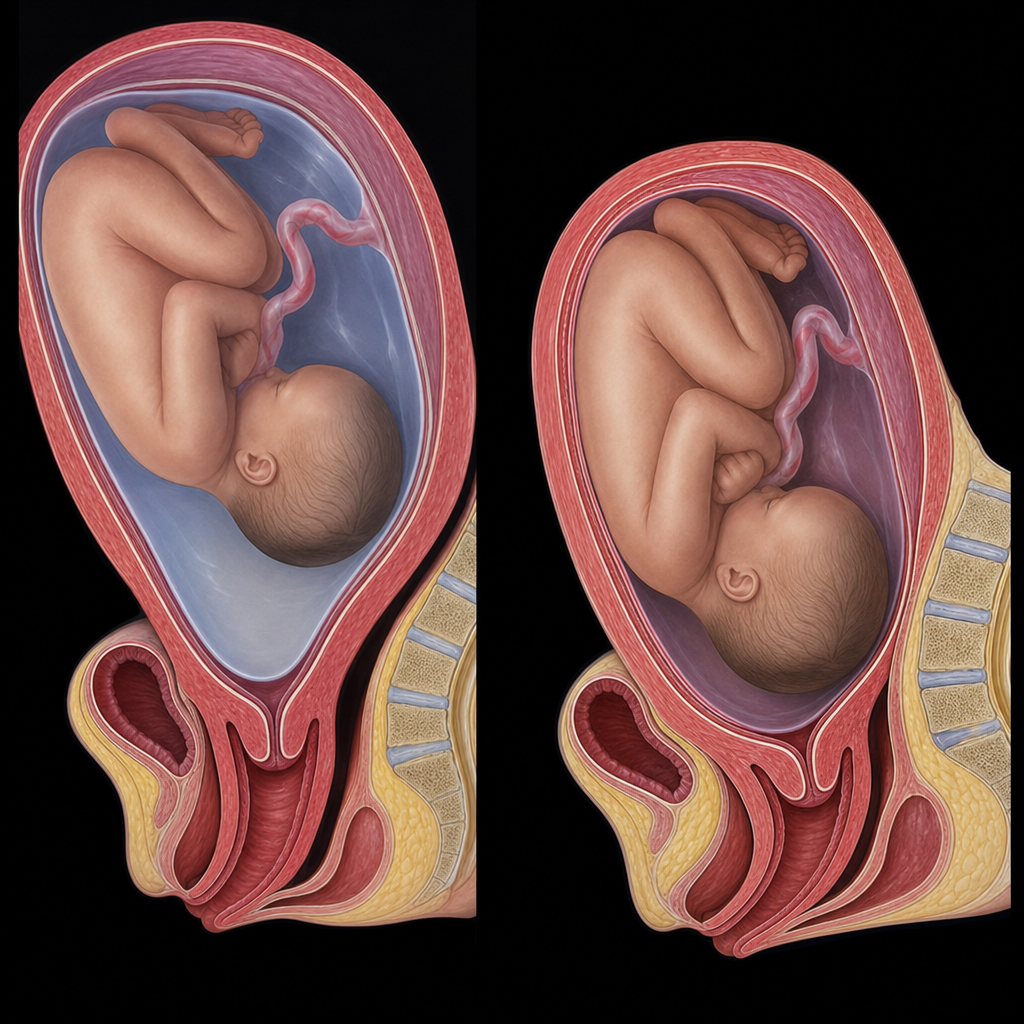
Explanation: **Explanation:** **Viability** refers to the stage of fetal development at which the fetus is capable of maintaining an independent extra-uterine existence. In the context of Forensic Medicine and the Indian legal system, **28 weeks (7 lunar months)** is the generally accepted gestational age for fetal viability. * **Why Option B is Correct:** At 28 weeks, the fetus typically weighs approximately 1000–1100 grams and measures about 35 cm. At this stage, the lungs have developed surfactant and the pulmonary vascular bed is sufficiently mature to allow for gas exchange, making survival outside the womb possible with standard medical care. * **Why Options A, C, and D are Incorrect:** * **25 weeks:** While modern Neonatal Intensive Care Units (NICU) can sometimes support life at 24–25 weeks, this is considered "extreme prematurity" and is not the standard legal or forensic benchmark for general viability in India. * **30 and 32 weeks:** These represent advanced stages of prematurity where the prognosis is significantly better, but they occur well after the initial threshold of viability has been crossed. **High-Yield NEET-PG Pearls:** 1. **MTP Act (India):** The Medical Termination of Pregnancy (Amendment) Act, 2021, allows for abortion up to **24 weeks** for specific categories of women, but there is no upper age limit in cases of substantial fetal abnormalities (decided by a Medical Board). 2. **Hess’s Rule:** Used to calculate the age of the fetus. For the first 5 months: $\text{Length (cm)} = \sqrt{\text{Age in months}}$. For the last 5 months: $\text{Length (cm)} = \text{Age in months} \times 5$. 3. **Legal Significance:** A viable fetus is considered a "person" in certain legal contexts; causing the death of a quickened/viable fetus can attract charges under Section 312-316 of the IPC.
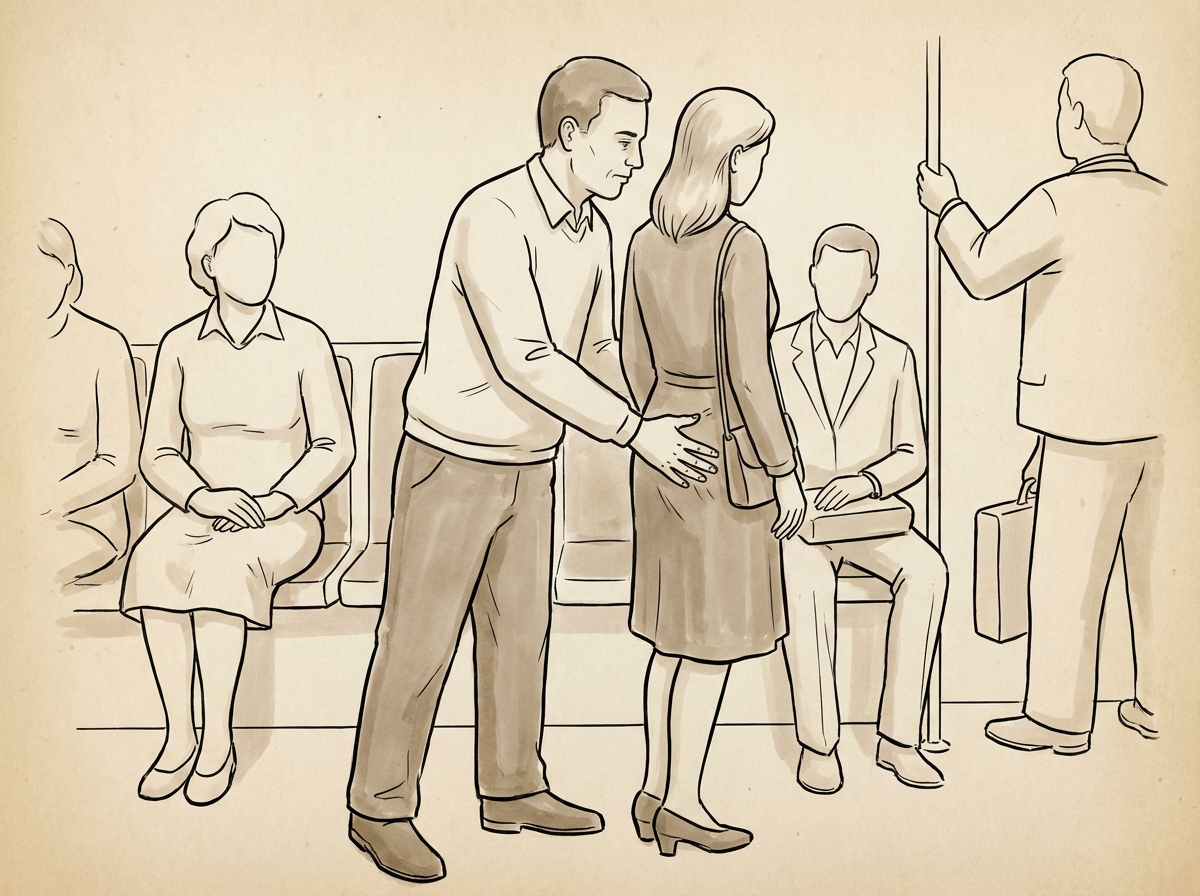
Explanation: ### Explanation **Sexual Masochism** is a paraphilic disorder where sexual arousal and gratification are derived from the experience of being humiliated, beaten, bound, or otherwise made to suffer physical or psychological pain. The term originates from **Leopold von Sacher-Masoch**, an Austrian writer who described these practices in his literature. #### Analysis of Options: * **Option A (Correct):** Masochism involves the **reception** of pain. The individual assumes a submissive role to achieve sexual climax. * **Option B (Incorrect):** This describes **Sexual Sadism**, where gratification is obtained by **inflicting** pain or humiliation on others. (Named after Marquis de Sade). * **Option C (Incorrect):** This describes **Exhibitionism**, a disorder characterized by the urge to expose one's genitals to unsuspecting strangers. * **Option D (Incorrect):** This describes **Frotteurism**, which involves obtaining sexual pleasure by rubbing or touching one's genitals against a non-consenting person, usually in crowded places. #### High-Yield Clinical Pearls for NEET-PG: * **Sadomasochism:** When an individual oscillates between both roles (inflicting and receiving pain). * **Bondage:** A common subset of masochism involving being tied or restrained. * **Auto-erotic Hypoxia (Masochistic practice):** A dangerous form of masochism where the individual induces self-strangulation to enhance orgasm via cerebral hypoxia; this is a frequent cause of accidental "sexual asphyxia" deaths. * **Legal Significance:** In forensic psychiatry, these are classified under **Paraphilic Disorders** (DSM-5). Consent is not a legal defense if grievous hurt is caused during these acts.
Explanation: **Explanation:** In Forensic Medicine and Obstetrics, **Stillbirth** is defined as the birth of a fetus that shows no signs of life (no breathing, heartbeat, or voluntary muscle movement) at or after **28 weeks of gestation**. **1. Why 28 weeks is correct:** Under the Registration of Births and Deaths Act and standard forensic practice in India, 28 weeks is the legal threshold for stillbirth. This coincides with the traditional age of **viability**—the point at which a fetus is capable of independent existence outside the womb. If a fetus is born dead before this period, it is medically classified as an **abortion (miscarriage)**. **2. Analysis of Incorrect Options:** * **A (16 weeks) & B (18 weeks):** These are far below the age of viability. Fetuses born at this stage are classified as spontaneous abortions. * **C (24 weeks):** While the WHO and many developed countries have lowered the definition of stillbirth/viability to 24 weeks (or 500g birth weight) due to advanced neonatal care, **Indian Law and the MTP Act** historically adhere to the 28-week limit for forensic and statistical purposes. **3. High-Yield Clinical Pearls for NEET-PG:** * **MTP Act Amendment (2021):** Note that for legal termination of pregnancy (MTP), the upper limit has been increased to **24 weeks** for specific categories of women, but the definition of stillbirth remains 28 weeks. * **Signs of Stillbirth:** Presence of **Maceration** (aseptic autolysis) is a definitive sign that the fetus died in utero at least 12–24 hours before delivery. * **Hydrostatic Test:** This test is used to differentiate a stillbirth from a live birth. A negative test (lungs sink in water) suggests stillbirth, provided decomposition hasn't occurred. * **Spalding’s Sign:** Radiological evidence of overlapping skull bones, indicating fetal death (usually occurs 4–7 days after death).
Explanation: **Explanation:** The core concept in this question lies in distinguishing between **impotence** (the inability to perform the sexual act) and **sterility** (the inability to procreate). **Why Option B is Correct:** Bilateral castration performed **after puberty** results in **sterility**, but not necessarily immediate **impotence**. Once a male has reached puberty, the secondary sexual characteristics and the psychological "libido" are already established. The accessory sex glands (prostate and seminal vesicles) can still function for a period, and the psychic desire remains. While sexual desire may eventually wane due to the lack of testosterone, many individuals remain capable of erection and coitus for years. Therefore, it is not a definitive cause of impotence. **Analysis of Incorrect Options:** * **Diphallia (Double penis):** This is a rare congenital anomaly. While it involves a duplication of the organ, it is often associated with structural deformities, chordee, or bifid scrotum that can mechanically interfere with penetration, leading to impotence. * **Hypospadias:** If severe (perineal or scrotal types), the associated **chordee** (ventral curvature of the penis) makes erection painful or mechanically impossible for vaginal penetration, thus causing impotence. * **Penile Amputation:** This is a clear organic cause of impotence. The absence of the primary organ of copulation makes the physical act of intercourse impossible. **High-Yield Clinical Pearls for NEET-PG:** * **Castration before puberty (Eunuchism):** Results in both sterility and impotence. * **Sterility vs. Impotence:** In legal medicine, a man can be sterile but potent (e.g., vasectomy) or fertile but impotent (e.g., erectile dysfunction). * **Adultery & Impotence:** Impotence is a valid ground for divorce or nullity of marriage under various personal laws. * **True Impotence:** Can be functional (psychogenic) or organic (structural/neurological).
Explanation: **Explanation:** **Section 377 of the Indian Penal Code (IPC)** defines "Unnatural Offences." It states that whoever voluntarily has carnal intercourse against the order of nature with any man, woman, or animal shall be punished. In forensic medicine, **Sodomy** (anal intercourse between two males or a male and a female) falls under this section. *Note on Legal Status:* While the Supreme Court of India (Navtej Singh Johar vs. Union of India, 2018) decriminalized consensual homosexual acts between adults, Section 377 remains on the statute books to punish non-consensual acts and bestiality. **Analysis of Incorrect Options:** * **Section 354 IPC:** Deals with assault or criminal force to a woman with the intent to **outrage her modesty**. * **Section 375 IPC:** Defines **Rape**. It specifically outlines the criteria for sexual assault against a woman. * **Section 378 IPC:** Pertains to **Theft**, which is a property-related offence and entirely unrelated to sexual offences. **Clinical Pearls for NEET-PG:** * **Active Agent vs. Passive Agent:** In sodomy, the active agent is the "Pederast" and the passive agent is the "Catamite." * **Signs of Chronic Sodomy:** Look for the **"Funnel-shaped anus"** (due to loss of perianal fat), patulous anus, loss of sphincter tone, and "reflex anal dilatation" (Geoghegan's sign). * **Acute Findings:** Fissures, abrasions, and the presence of spermatozoa/acid phosphatase in anal swabs. * **Tribadism:** Also known as "Lesbianism," it is not punishable under Section 377 as it does not involve "penetration."
Explanation: ### Explanation **Buggery** is a legal and forensic term traditionally used to describe **anal intercourse**. In medical jurisprudence, it specifically refers to the act of penetration of the anus of a human being (male or female) or the vagina of an animal by the penis. #### 1. Why Option A is Correct Under the historical legal framework (and frequently tested in forensic medicine), buggery is synonymous with **sodomy**. It includes anal intercourse between a man and a woman or between two men. Since Option A describes anal intercourse between a man and a woman, it fits the definition of buggery. #### 2. Analysis of Incorrect Options * **Option B (Anal intercourse between a man and an animal):** This is specifically termed **Bestiality**. While buggery is an umbrella term that can include bestiality in some legal contexts, in the context of human-to-human acts, Option A is the more standard forensic definition for "buggery" vs "bestiality." * **Option C (Sexual intercourse between two women):** This is termed **Tribadism** or Lesbianism. It does not involve penile penetration and therefore does not fall under the definition of buggery. * **Option D (The passive victim of anal intercourse):** The passive agent in the act of sodomy/buggery is known as a **Catamite** (if a boy) or a **Pathic**. Buggery refers to the *act* itself, not the person. #### 3. High-Yield NEET-PG Pearls * **Section 377 IPC:** Historically dealt with "unnatural offences" including buggery. Note that the Supreme Court of India (Navtej Singh Johar case, 2018) decriminalized consensual acts between adults, though non-consensual acts and bestiality remain criminal. * **Signs of Habitual Sodomy:** Look for a "funnel-shaped anus," loss of sphincter tone (patulous anus), and effacement of anal rugae. * **Active vs. Passive:** The active agent is the **Sodomist**; the passive agent is the **Pathic**. * **Locard’s Principle:** In acute cases, look for seminal stains, fecal matter on the penis, and anal fissures/triangular tears (usually at the 6 o'clock or 12 o'clock position).
Sexual Assault Examination
Practice Questions
Rape Investigation
Practice Questions
Child Sexual Abuse
Practice Questions
Collection of Biological Evidence
Practice Questions
DNA Testing in Sexual Offences
Practice Questions
False Allegations
Practice Questions
Medical Termination of Pregnancy
Practice Questions
Criminal Abortion
Practice Questions
Complications of Abortion
Practice Questions
Sexual Perversions
Practice Questions
Legal Aspects of Sexual Offences
Practice Questions
Victim Support and Rehabilitation
Practice Questions
Get full access to all questions, explanations, and performance tracking.
Start For Free