
Pattern Injuries and Their Recognition — MCQs

Which of the following is a characteristic feature specifically seen in contact gunshot wounds?
A 42-year-old man is found hanging from a ceiling beam with a rope around his neck. At autopsy, which of the following findings would be most consistent with suicidal hanging rather than homicidal strangulation?
Identify the injury pattern given in the image.
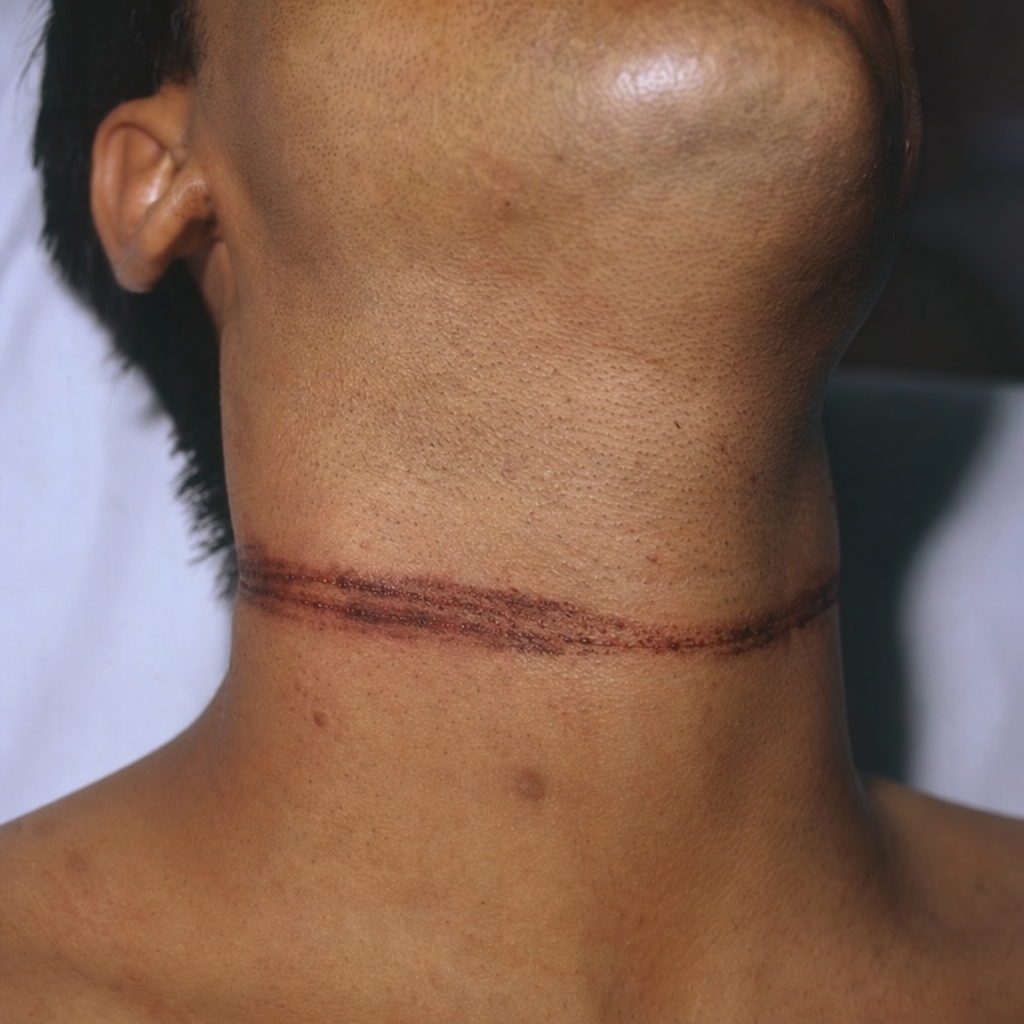
If a fracture gives the pattern of the striking surface of the weapon it is called
How can homicidal gunshot wounds be differentiated from suicidal gunshot wounds?
Post-mortem examination of a patient reveals the following. What is this finding known as?
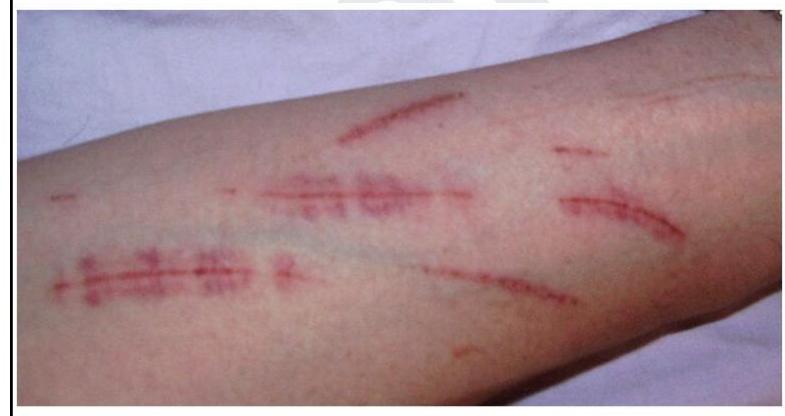
Statement 1 - A 59-year-old patient presents with flaccid bullae. Histopathology shows a suprabasal acantholytic split. Statement 2 - The row of tombstones appearance is diagnostic of Pemphigus vulgaris.
Which of the following factors is NOT used to differentiate between antemortem and postmortem wounds?
What is the term for the death of a person due to compression of the neck by another person?
Tattooing in the entry wound of a firearm injury is due to:
Want unlimited practice?
Get full access to all questions, explanations, and performance tracking.
Scan to download app