What is the effective range of a shotgun?
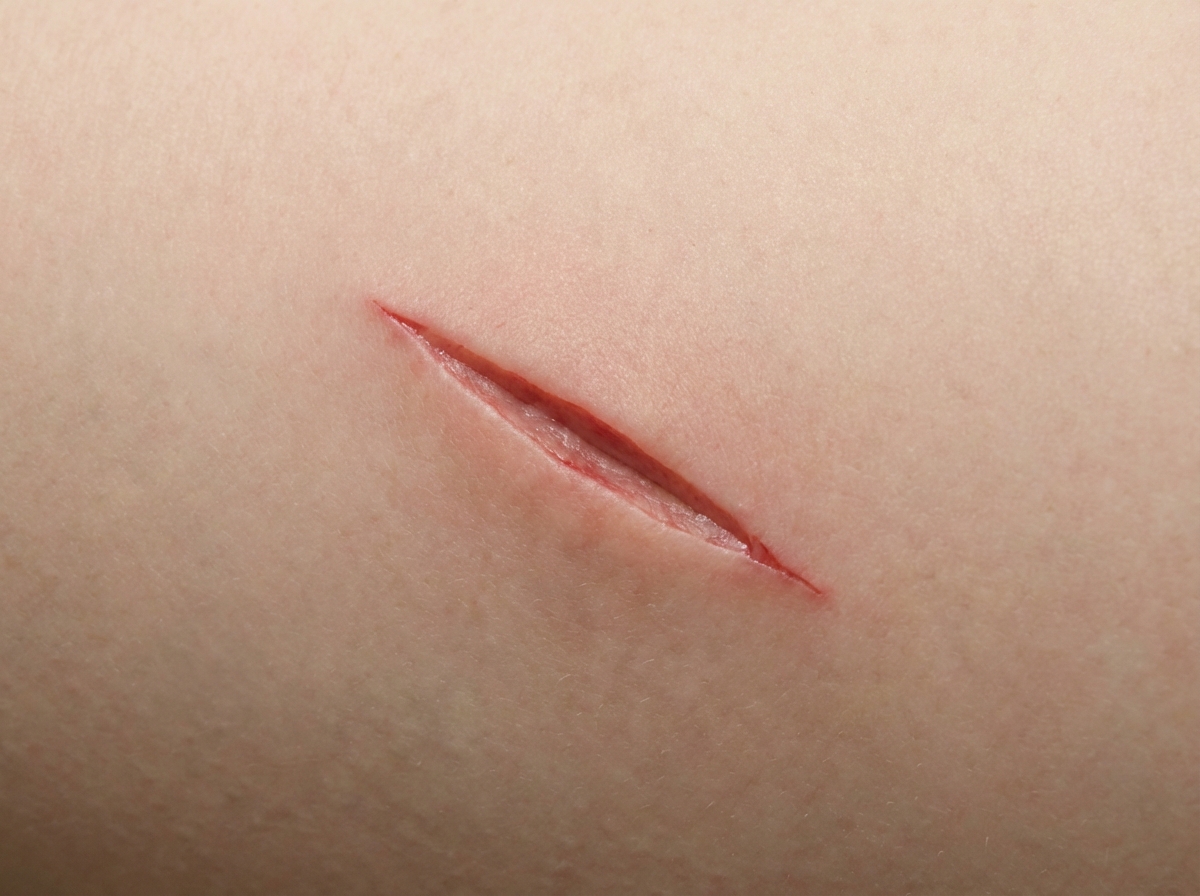
In a lacerated wound, what happens to the hair bulb?
What is the term for an injury caused by a pedestrian being struck by a vehicle and hitting an object on the road?
What is a grease collar formed by?
Homicidal gunshot wound is suggested by the presence of which of the following findings?
Electrocution is rare below what voltage?
A 14-year-old girl is pronounced dead on arrival after receiving a gunshot wound to the head. If this child died due to an immediate "blast effect" of the penetrating wound, the autopsy would likely show herniation of the tonsils of the cerebellum into which anatomic space?
Which of the following is NOT a criterion for grievous hurt?
What is the term for a burn caused by moist heat?
Punishment for voluntarily causing grievous hurt comes under which section of the Indian Penal Code (IPC)?
Explanation: ### Explanation **1. Why Option C is Correct:** The "effective range" of a shotgun refers to the maximum distance at which the weapon can reliably hit and kill a target. For a standard 12-bore shotgun, this is traditionally cited as **30 to 40 yards** (approx. 27–36 meters). Beyond this distance, the pellet pattern becomes too dispersed (scattered) and the individual pellets lose significant kinetic energy, making them insufficient to ensure a lethal hit. **2. Analysis of Incorrect Options:** * **Option A (10 to 15 yards):** At this range, the pellet spread is very narrow (roughly 10–15 inches). While extremely lethal, it does not represent the *maximum* effective limit of the weapon. * **Option B (20 to 30 yards):** This is a highly lethal range, but the weapon remains effective and predictable up to the 40-yard mark. * **Option D (60 to 80 yards):** At this distance, the pellets have lost most of their velocity and the pattern is so wide that most pellets will miss a human-sized target entirely. This is well beyond the effective range for smoothbore shotguns. **3. High-Yield Clinical Pearls for NEET-PG:** * **The Rule of Thumb (Spread):** The diameter of the pellet spread in inches is roughly equal to the distance from the target in yards (e.g., at 20 yards, the spread is approx. 20 inches). * **Choking:** This refers to the partial constriction of the muzzle to reduce pellet spread, thereby increasing the effective range. * **Wadding:** The presence of a "wad" in the wound indicates a range of less than **5–10 feet**. * **Satellite Pellets:** Individual pellet holes around a central mass (dispersion) typically begin to appear at distances greater than **1 to 2 yards**.
Explanation: **Explanation:** The correct answer is **B. Crushed**. **Medical Concept:** A laceration is a mechanical injury caused by the application of blunt force, which results in the tearing or splitting of tissues. Because the mechanism involves **blunt impact** (compression and stretching) rather than a sharp edge, the underlying structures—such as hair bulbs, nerves, and blood vessels—are subjected to crushing force against the underlying bone. In a lacerated wound, the hair bulbs are found to be crushed or intact but never cleanly sliced. **Analysis of Options:** * **A. Cut:** This is characteristic of an **incised wound** (caused by a sharp object). In incised wounds, hair bulbs and shafts are cleanly transected. * **C. Both cut and crushed:** This is incorrect because the mechanism of injury for a laceration (blunt force) does not possess the shearing capability to "cut" the bulb cleanly. * **D. Lacerated:** While the wound itself is a laceration, the specific pathological finding for the hair bulb is described as "crushing" due to the compressive nature of the impact. **High-Yield Clinical Pearls for NEET-PG:** * **Hair Bulb Test:** This is a vital medicolegal distinction. If hair bulbs are **crushed**, the injury is a **laceration** (blunt force). If they are **cut**, it is an **incised wound** (sharp force). * **Tissue Bridges:** Lacerations are characterized by the presence of tissue bridges (nerves, vessels, and fibers crossing the gap), which are absent in incised wounds. * **Margins:** Lacerations have ragged, irregular, and bruised margins, whereas incised wounds have clean-cut, everted edges. * **Foreign Bodies:** Lacerations often contain foreign matter (dirt, gravel), unlike clean incised wounds.
Explanation: In pedestrian-vehicle accidents, injuries are classified based on the sequence of events and the forces involved. ### **Explanation of the Correct Answer** **B. Secondary Injury** is the correct term. These injuries occur when the pedestrian, after being struck by the vehicle, is thrown to the ground or hits a stationary object (like a lamp post or the road surface). * **Mechanism:** The kinetic energy transferred from the vehicle propels the victim. * **Common Findings:** These typically include abrasions (grazes), lacerations, and fractures of the skull or ribs. They are often more severe than primary injuries because the impact with the hard road surface involves a large surface area. ### **Analysis of Incorrect Options** * **A. Primary Injury:** These are caused by the **first impact** between the vehicle and the pedestrian. In adults, this is usually at the level of the bumper (Bumper Fracture) or the radiator grille. * **C & D. Acceleration/Deceleration Injuries:** These terms refer to the physics of brain movement within the skull. **Acceleration** occurs when a stationary head is struck by a moving object; **Deceleration** occurs when a moving head hits a stationary object (common in secondary impacts). While these describe the *mechanism* of internal trauma, they are not the categorical term for the impact with the road. ### **High-Yield Clinical Pearls for NEET-PG** 1. **Primary Impact:** Usually on the lower legs (Bumper Fracture). In children, it may be on the head or chest due to their height. 2. **Secondary Impact:** The impact of the body against the vehicle itself (e.g., hitting the hood or windshield) after the primary impact. 3. **Secondary Injury:** The impact of the body against the **ground/road**. 4. **Tertiary Injury:** Occurs when the vehicle runs over the victim after they have fallen. 5. **Bumper Fracture:** Typically a triangular fracture of the tibia/fibula; the apex of the triangle points in the direction of the vehicle's travel.
Explanation: ### Explanation **Correct Answer: D. Bullet Entry Wound** A **grease collar** (also known as a dirt collar or lubricant collar) is a characteristic feature of a **firearm entry wound**. As a bullet passes through the barrel of a gun, it picks up oil, grease, lubricant, lead, and carbon deposits. When the spinning projectile strikes the skin, these substances are wiped off onto the margins of the entry wound. The presence of a grease collar is a definitive sign of an entry wound and helps differentiate it from an exit wound. It is usually found internal to the **abrasion collar** (the ring of denuded epithelium caused by the bullet’s friction). **Why the other options are incorrect:** * **A. Railway injury:** These are characterized by traumatic amputations, "crush syndrome," and "grease staining" of the body/clothes from the tracks, but they do not form a circumscribed "collar" as seen in ballistics. * **B. Gutter fracture:** This refers to a specific type of skull fracture where a bullet grazes the bone, creating a furrow or "gutter." While related to firearms, it describes bone pathology rather than the soft tissue margin of the wound. * **C. Bullet exit wound:** Exit wounds are typically larger, irregular, and everted. Crucially, they **lack** both an abrasion collar and a grease collar because the bullet is traveling from the inside out and has already been "cleaned" by the initial entry and internal tissues. **NEET-PG High-Yield Pearls:** * **Abrasion Collar + Grease Collar = Entry Wound.** * The grease collar is particularly useful in identifying entry wounds from **jacketed bullets**, though it may be less prominent in long-range shots. * If a bullet passes through clothing first, the grease collar may be found on the **fabric** rather than the skin (the "wipe-off" effect). * **Muzzle Impression:** A feature of contact wounds, not to be confused with collars.
Explanation: **Explanation:** In forensic ballistics, differentiating between suicidal, homicidal, and accidental gunshot wounds (GSW) is crucial. **Why Option A is Correct:** **Multiple gunshot wounds of entry** are a strong indicator of homicide. While a person can theoretically shoot themselves more than once (if the first shot was not immediately incapacitating), multiple wounds—especially those located in different anatomical regions or inaccessible areas (like the back)—highly suggest homicidal intent. In contrast, suicide typically involves a single, well-placed shot to a "site of election" (temple, mouth, or precordium). **Analysis of Incorrect Options:** * **B. Presence of gunpowder on hand:** This is a classic feature of **suicide**. When a person fires a weapon, "backblast" or discharge residue (antimony, barium, lead) is deposited on the thumb web and back of the firing hand. Its presence suggests the deceased fired the weapon themselves. * **C. No sign of struggle:** The absence of a struggle is more common in **suicide** or cases where the victim was surprised/incapacitated. Homicides often (though not always) show signs of a struggle, such as defensive wounds, disordered surroundings, or torn clothing. **High-Yield NEET-PG Pearls:** * **Site of Election:** Suicidal GSWs are usually contact wounds to the temple (right side in right-handed individuals). * **Cadaveric Spasm:** If a weapon is found firmly gripped in the hand due to instantaneous rigor, it is a pathognomonic sign of **suicide**. * **Distance:** Homicidal shots are often fired from a distance (lacking tattooing/scorching), whereas suicidal shots are almost always contact or near-contact wounds. * **Entrance vs. Exit:** Entrance wounds are typically smaller, circular, and show an **abrasion collar**; exit wounds are larger, irregular, and everted.
Explanation: **Explanation** The severity of an electrical injury is determined by Ohm’s Law ($I = V/R$), where current ($I$) is the primary factor causing physiological damage. However, for a current to flow through the body, the voltage must be sufficient to overcome the resistance of the skin. 1. **Why 100 Volts is Correct:** In forensic medicine, **100 volts** is considered the threshold for "low-voltage" fatalities. Below 100V, the electrical pressure is generally insufficient to penetrate dry, intact skin and deliver a lethal current to vital organs (like the heart). Most domestic fatalities occur between 200V and 240V, but the physiological risk significantly drops below the 100V mark. 2. **Analysis of Incorrect Options:** * **150 Volts & 200 Volts:** These are well above the safety threshold. Fatalities are common at these levels, especially in industrial settings or damp environments. * **240 Volts:** This is the standard household AC voltage in India and the UK. It is a very common cause of domestic electrocution and is far above the "rare" threshold. **High-Yield Clinical Pearls for NEET-PG:** * **Most Common Cause of Death:** In low-voltage electrocution (domestic), death is usually due to **Ventricular Fibrillation**. In high-voltage (>1000V), death is typically due to **Respiratory Center Paralysis**. * **Joule Burn (Electric Entry Mark):** Characterized by a central depression, charred floor, and a ridge of elevated skin (blistering). It is pathognomonic of contact. * **Resistance:** Dry skin has high resistance ($100,000+$ ohms), while wet skin reduces resistance significantly ($1,000$ ohms), making even low voltages potentially lethal. * **AC vs. DC:** Alternating Current (AC) is **3–5 times more dangerous** than Direct Current (DC) because it causes tetanic muscle contractions, preventing the victim from letting go.
Explanation: ### Explanation **Concept: The Blast Effect and Intracranial Pressure** When a high-velocity projectile (like a bullet) enters the skull, it creates a **"blast effect"** or cavitation. Because the skull is a rigid, non-expandable container filled with incompressible brain tissue and fluid, the sudden kinetic energy transfer causes a massive, instantaneous rise in intracranial pressure (ICP). This pressure must be relieved through the only available large opening at the base of the skull: the **foramen magnum**. This results in the downward displacement and herniation of the cerebellar tonsils through the foramen magnum, leading to fatal compression of the medulla oblongata (respiratory and cardiac centers). **Analysis of Options:** * **Foramen Magnum (Correct):** This is the largest opening in the occipital bone. In cases of acute intracranial hypertension, the cerebellar tonsils are pushed downward into this space, a phenomenon known as **tonsillar herniation** or "coning." * **Aqueduct of Sylvius:** This is a narrow canal within the midbrain connecting the third and fourth ventricles. While it can be obstructed, it is not a space into which brain tissue herniates during a blast effect. * **Central Spinal Canal:** This is a microscopic canal within the spinal cord. It is anatomically impossible for the bulky cerebellar tonsils to herniate into this tiny space. * **Foramen of Magendie:** This is a small opening in the roof of the fourth ventricle that allows CSF to enter the subarachnoid space. It is too small to accommodate herniating brain tissue. **NEET-PG High-Yield Pearls:** * **Kroenlein’s Shot:** A specific type of gunshot wound where the entire brain is eviscerated due to the extreme hydraulic pressure (blast effect). * **Cushing’s Triad:** A clinical sign of increased ICP—Bradycardia, Hypertension, and Irregular Respiration. * **Tonsillar Herniation:** The most common cause of sudden death in space-occupying lesions or head trauma due to medullary compression.
Explanation: This question tests your knowledge of **Section 320 of the Indian Penal Code (IPC)**, which defines "Grievous Hurt." Understanding the specific legal criteria is essential for forensic reporting. ### **Explanation of the Correct Answer** **Option D** is correct because it does not meet the legal threshold for time-based grievous hurt. According to the 8th clause of IPC Section 320, an injury is considered grievous only if it causes the victim **severe bodily pain** or renders them **unable to follow their ordinary pursuits** for a period of **at least 20 days**. An injury requiring 19 days of hospitalization or disability falls under "Simple Hurt." ### **Analysis of Incorrect Options** * **Option A (Endangerment to life):** This is the 8th clause of IPC 320. Any hurt that endangers life (even without permanent damage) is classified as grievous. * **Option B (Permanent privation of sight):** This is the 1st clause. Permanent loss of sight in one or both eyes is a classic criterion for grievous hurt. * **Option C (Permanent disfiguration of the face):** This is the 6th clause. Any permanent scarring or alteration that affects the appearance of the head or face is considered grievous. ### **High-Yield Clinical Pearls for NEET-PG** * **The "Rule of 8":** IPC Section 320 lists **eight** specific categories of grievous hurt: 1. Emasculation. 2. Permanent privation of sight (either eye). 3. Permanent privation of hearing (either ear). 4. Privation of any member or joint. 5. Destruction/permanent impairing of powers of any member or joint. 6. Permanent disfiguration of the head or face. 7. Fracture or dislocation of a bone or tooth. 8. Any hurt which endangers life OR causes the sufferer to be in severe bodily pain/unable to follow ordinary pursuits for **20 days**. * **Fractures:** Note that *any* fracture or dislocation (even a small tooth) is automatically grievous hurt, regardless of the healing time. * **Punishment:** Voluntarily causing grievous hurt is punishable under **IPC Section 325**.
Explanation: ### Explanation **Correct Answer: C. Scalds** **Medical Concept:** Scalds are injuries caused by the application of **moist heat** to the body. This typically involves hot liquids (water, oil, tea, or molten metal) or gaseous substances like steam. Unlike dry heat, moist heat has a higher heat capacity and can penetrate deeper into the tissues, though it usually does not cause singeing of hair or carbonization of skin. **Analysis of Incorrect Options:** * **A. Ordinary burn:** This is a non-specific term. In forensic medicine, "burns" generally refer to injuries caused by **dry heat** (flame, radiant heat, or contact with a hot solid object). * **B. Scar burn:** This is not a standard classification of a burn. A scar is the end result of the healing process of a deep burn (cicatrix), not the mechanism of the injury itself. * **D. Hot burn:** This is a redundant term. All burns are caused by heat (thermal energy); this is not a recognized medical classification. **High-Yield Clinical Pearls for NEET-PG:** * **Temperature Threshold:** Scalds usually occur when the liquid temperature exceeds **60°C**. * **Appearance:** Scalds are characterized by erythema and **vesication (blistering)**. A key diagnostic feature is the **"Splash Pattern"** or **"Trickle Marks,"** where the liquid runs down the body due to gravity, creating a tapering effect. * **Absence of Carbonization:** Unlike flame burns, scalds **never** cause singeing of hair, soot deposition, or charring/carbonization of the skin. * **Steam Burns:** Steam is particularly dangerous as it can cause extensive internal injuries to the respiratory tract (inhalation injury) due to its high latent heat. * **Rule of Nines:** Used to estimate the Total Body Surface Area (TBSA) involved in both burns and scalds to guide fluid resuscitation (Parkland Formula).
Explanation: **Explanation:** In Forensic Medicine and Jurisprudence, it is crucial to distinguish between the **definition** of an offense and the **punishment** prescribed for it. * **Why Option D is Correct:** **Section 325 IPC** specifically prescribes the punishment for voluntarily causing grievous hurt. It states that whoever voluntarily causes grievous hurt (except in cases provided for by Section 335) shall be punished with imprisonment of either description for a term which may extend to seven years, and shall also be liable to fine. **Analysis of Incorrect Options:** * **Section 322 IPC:** This section provides the **definition** of "Voluntarily causing grievous hurt." It explains the intent and knowledge required to classify an act as such, but it does not list the punishment. * **Section 323 IPC:** This prescribes the punishment for voluntarily causing **simple hurt** (imprisonment up to 1 year or fine up to 1,000 rupees). * **Section 324 IPC:** This deals with voluntarily causing hurt by **dangerous weapons** or means. **High-Yield Clinical Pearls for NEET-PG:** * **Grievous Hurt Definition:** Defined under **Section 320 IPC**. It includes 8 specific clauses: (1) Emasculation, (2) Permanent privation of sight of either eye, (3) Permanent privation of hearing of either ear, (4) Privation of any member or joint, (5) Destruction/permanent impairing of powers of any member or joint, (6) Permanent disfiguration of head or face, (7) Fracture or dislocation of a bone or tooth, (8) Any hurt which endangers life or causes the sufferer to be in severe bodily pain or unable to follow ordinary pursuits for **20 days**. * **Simple Hurt Definition:** Defined under **Section 319 IPC**. * **Memory Aid:** 320 (Definition of Grievous) $\rightarrow$ 322 (Voluntarily causing it) $\rightarrow$ 325 (Punishment).
Mechanical Injuries
Practice Questions
Transportation Injuries
Practice Questions
Fall from Height
Practice Questions
Blunt Force Trauma
Practice Questions
Sharp Force Trauma
Practice Questions
Ballistic Injuries
Practice Questions
Burn Injuries
Practice Questions
Drowning
Practice Questions
Electrocution
Practice Questions
Lightning Injuries
Practice Questions
Explosion Injuries
Practice Questions
Pattern Injuries and Their Recognition
Practice Questions
Get full access to all questions, explanations, and performance tracking.
Start For Free