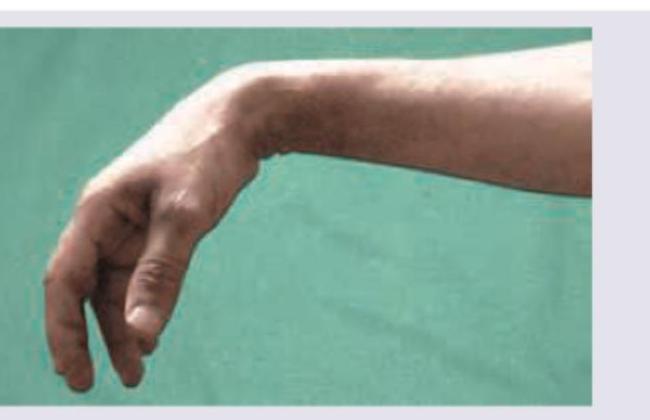
Mercury poisoning is characterized by all of the following EXCEPT:
Treatment of opium poisoning includes all of the following except?
What is the primary cause of death in organophosphorous poisoning?
Pinpoint pupils are seen in:
Which of the following poisons retards putrefaction?
Ingestion of arsenic causes:
What is a Molotov cocktail?
Cyanide poisoning acts by:
Cyanide poisoning causes which type of anoxia?
What is the fatal dose of Potassium Cyanide (KCN)?
Explanation: **Explanation:** The correct answer is **B. Kayser-Fleischer (KF) ring**, as this clinical sign is pathognomonic for **Wilson’s disease** (chronic Copper toxicity), not Mercury poisoning. KF rings are golden-brown or greenish deposits of copper in the Descemet’s membrane of the cornea. **Analysis of Options:** * **Tremors (Option A):** This is a hallmark of chronic mercury poisoning. It typically begins as "intention tremors" in the hands (Danbury tremors) and can progress to involve the tongue and eyelids. When associated with behavioral changes (Erethism), it is known as the "Hatter’s shakes." * **PCT Necrosis (Option C):** Inorganic mercury is highly nephrotoxic. It primarily targets the **Proximal Convoluted Tubule (PCT)**, leading to acute tubular necrosis and subsequent renal failure. * **Salivation (Option D):** Excessive salivation (ptyalism) with a metallic taste and inflamed gums (gingivitis) is a classic feature of chronic mercury poisoning. **High-Yield Clinical Pearls for Mercury Poisoning:** 1. **Erethism Mercurialis:** A triad of psychological changes (shyness, irritability, and loss of memory). 2. **Minamata Disease:** Caused by organic mercury (Methylmercury) consumption via contaminated fish, leading to ataxia and tunnel vision. 3. **Acrodynia (Pink Disease):** An idiosyncratic hypersensitivity reaction in children characterized by pinkish discoloration of hands and feet. 4. **Mercuria Lentis:** Brownish discoloration of the anterior capsule of the lens due to mercury deposition. 5. **Antidote:** BAL (British Anti-Lewisite) is used for inorganic mercury; however, it is contraindicated in organic mercury poisoning (where DMSA is preferred).
Explanation: **Explanation:** The management of Opium (Opioid) poisoning focuses on preventing further absorption, maintaining the airway, and using specific pharmacological antagonists. **Why Digitalis is the Correct Answer (The "Except"):** Digitalis is a cardiac glycoside used to increase myocardial contractility in heart failure or to control ventricular rate in atrial fibrillation. It has **no role** in the treatment of opium poisoning. In fact, opium poisoning typically causes respiratory depression and bradycardia; administering digitalis could potentially worsen certain cardiac arrhythmias or provide no therapeutic benefit to the primary pathology of respiratory failure. **Analysis of Other Options:** * **Stomach Wash (Gastric Lavage):** This is a mainstay of treatment. Even if the drug was taken hours ago, gastric lavage is performed using **Potassium Permanganate (1:5000)** because opioids undergo **entero-gastric circulation** (they are secreted back into the stomach from the blood). * **Purgatives:** Sodium sulfate or magnesium sulfate is administered to hasten the excretion of the drug from the gastrointestinal tract and prevent further systemic absorption. * **Naloxone:** This is the **specific antidote** of choice. It is a pure opioid antagonist that reverses respiratory depression, sedation, and hypotension by competing for mu, kappa, and delta receptors. **High-Yield Clinical Pearls for NEET-PG:** * **Triad of Opioid Poisoning:** Pinpoint pupils (miosis), respiratory depression, and coma. * **Antidote Dosage:** Naloxone is usually given as 0.4 mg to 2 mg IV, repeated every 2-3 minutes if no response occurs. * **Exception to Miosis:** Pethidine (Meperidine) poisoning causes **mydriasis** (dilated pupils) due to its atropine-like action. * **Potassium Permanganate:** Acts by oxidizing the alkaloids in the stomach, rendering them inactive.
Explanation: **Explanation:** In organophosphorous (OP) poisoning, the primary cause of death is **Respiratory Failure**. This occurs due to the irreversible inhibition of the enzyme acetylcholinesterase, leading to an accumulation of acetylcholine at the neuromuscular junctions and synapses. Respiratory failure in OP poisoning is multifactorial, involving: 1. **Central effect:** Depression of the respiratory center in the medulla. 2. **Muscarinic effect:** Excessive bronchial secretions (bronchorrhea) and bronchospasm ("wet lungs"). 3. **Nicotinic effect:** Paralysis of the diaphragm and intercostal muscles (Type II paralysis/Intermediate syndrome). **Analysis of Incorrect Options:** * **A. Cardiac failure:** While OP poisoning can cause arrhythmias (prolonged QT, heart block) due to autonomic instability, it is rarely the primary cause of immediate mortality compared to respiratory collapse. * **B & C. Hepatic and Renal failure:** These are not characteristic features of acute OP poisoning. While multi-organ dysfunction can occur in prolonged ICU stays, they do not represent the primary mechanism of death. **High-Yield Clinical Pearls for NEET-PG:** * **Antidote of Choice:** Atropine (to counter muscarinic effects) and Pralidoxime/PAM (to reactivate the enzyme before "aging" occurs). * **Atropinization Goal:** The end-point is the clearing of bronchial secretions and a heart rate >80 bpm, **not** pupillary dilation. * **Intermediate Syndrome:** Occurs 24–96 hours after exposure; characterized by proximal muscle weakness and respiratory muscle paralysis. * **Garlic-like Odor:** A classic forensic sign found in the breath and stomach contents of the deceased.
Explanation: **Explanation:** **1. Correct Answer: A. Opium Poisoning** Pinpoint pupils (miosis) are a hallmark clinical sign of opioid toxicity. This occurs due to the stimulation of the **Edinger-Westphal nucleus** of the oculomotor nerve (CN III), which increases parasympathetic outflow to the pupillary sphincter muscle. In severe cases, the pupils become "pinpoint" and non-reactive to light. **2. Analysis of Incorrect Options:** * **B. Acute Alcohol Poisoning:** Typically presents with **dilated pupils** (mydriasis) due to central nervous system depression and sympathetic overactivity during the excitement phase, or mid-dilated pupils in the coma stage. * **C. Barbiturate Poisoning:** Usually presents with **dilated or mid-position pupils**. While pupils may be constricted in early stages, they typically dilate as hypoxia sets in (a terminal sign). * **D. Epileptic Coma:** Pupils are generally **dilated and sluggishly reactive** to light during and immediately after a generalized tonic-clonic seizure due to massive sympathetic discharge. **3. High-Yield Clinical Pearls for NEET-PG:** * **The "Opioid Triad":** Pinpoint pupils, respiratory depression, and altered mental status (coma). * **Differential Diagnosis of Pinpoint Pupils (Mnemonic: P-O-N-S):** * **P**ontine hemorrhage * **O**pium/Organophosphates * **N**eurosyphilis (Argyll Robertson pupil) * **S**edatives (certain ones like Chloral hydrate) * **Exception in Opioids:** **Pethidine (Meperidine)** poisoning causes **dilated pupils** (due to its atropine-like action), which is a frequent "trap" question in exams. * **Reversal:** Naloxone is the specific antidote for opioid-induced miosis and respiratory depression.
Explanation: **Explanation:** **1. Why Carbolic Acid is Correct:** Carbolic acid (Phenol) is a powerful antiseptic and disinfectant. It acts as a **protoplasmic poison** by denaturing and precipitating cellular proteins. Because it effectively kills the bacteria and microorganisms responsible for decomposition (saprophytic bacteria), it significantly **retards the process of putrefaction**. This property is why phenol derivatives are historically used in embalming fluids to preserve bodies. **2. Analysis of Incorrect Options:** * **Organophosphorus (OPC):** These are anticholinesterase compounds. They do not have significant antimicrobial properties and do not retard putrefaction; in some cases of acute poisoning, the onset of putrefaction may even be slightly accelerated due to increased body temperature or moisture. * **Oxalic Acid:** This is a corrosive organic acid that causes hypocalcemia and renal failure. While it is a strong acid, it does not possess the specific protein-fixing or long-term antimicrobial properties required to delay decomposition significantly. * **Hydrogen Chloride (HCl):** As a strong mineral acid, it causes local tissue destruction (corrosion). While it creates an acidic environment that might temporarily slow bacterial growth locally, it does not preserve the body as a whole like phenol. **3. NEET-PG Clinical Pearls:** * **Poisons that Retard Putrefaction:** Carbolic acid, Arsenic, Antimony, Zinc Chloride, and Strychnine. (Mnemonic: **"A-A-S-C-Z"**) * **Poisons that Accelerate Putrefaction:** Alcohol, Coal gas, and Hydrogen Sulphide. * **Carbolic Acid Sign:** Look for **Ochronosis** (pigmentation of cartilage) and **Carboluria** (urine turns green/black on standing) in chronic poisoning cases. * **Smell:** Carbolic acid has a characteristic "phenolic" or "hospital-like" odor.
Explanation: **Explanation:** Arsenic is a potent metalloid toxin that primarily affects the vascular endothelium and the liver. Chronic arsenic poisoning (Arsenicosis) leads to a specific type of hepatotoxicity characterized by **Non-Cirrhotic Portal Fibrosis (NCPF)**. 1. **Why Option C is Correct:** Chronic ingestion of arsenic (often through contaminated groundwater) causes direct damage to the sinusoidal endothelial cells and small portal vein branches. This leads to portal hypertension and periportal fibrosis without the regenerative nodules characteristic of true cirrhosis. In India, arsenic-induced NCPF is a well-documented clinical entity, especially in the West Bengal region. 2. **Why Other Options are Incorrect:** * **Hepatic Carcinoma (A):** While chronic arsenic exposure is strongly linked to **Angiosarcoma** (a rare vascular tumor) and Hepatocellular Carcinoma (HCC), NCPF is the more specific and classic pathological finding associated with non-malignant chronic ingestion. * **Hepatic Adenoma (B):** This is typically associated with oral contraceptive use or anabolic steroids, not heavy metal poisoning. * **Hepatic Cirrhosis (D):** Arsenic causes portal hypertension through fibrosis of the portal tracts, but it does not typically progress to full-blown cirrhosis (which requires diffuse architectural distortion and nodule formation). **High-Yield Clinical Pearls for NEET-PG:** * **Skin Findings:** "Raindrop" pigmentation (hypopigmentation) and hyperkeratosis of palms and soles. * **Nails:** **Aldrich-Mees lines** (transverse white bands). * **Garlic odor:** Breath and stools may smell of garlic. * **Antidote:** BAL (British Anti-Lewisite/Dimercaprol) for acute poisoning; DMSA (Succimer) for chronic cases. * **Blackfoot Disease:** A peripheral vascular disease (gangrene) caused by chronic arsenicism.
Explanation: **Explanation:** A **Molotov cocktail**, also known as a petrol bomb or bottle bomb, is a generic name for a variety of improvised **incendiary weapons**. It typically consists of a glass bottle containing a flammable substance (such as gasoline, petrol, or alcohol) and a source of ignition, like a fuel-soaked rag wick. When thrown, the glass shatters on impact, releasing the fuel which is then ignited by the wick, creating a fireball and spreading flames. **Analysis of Options:** * **Option D (Correct):** It is classified as an **incendiary bomb** because its primary purpose is to cause damage through fire (incendiary effect) rather than a high-pressure shockwave (explosive effect). * **Option A:** It is not a time-bound bomb. It is an "impact-delivered" device that functions immediately upon breaking. * **Option B:** While it may contain alcohol as a fuel source, it is not a "mixture of alcohol" in a beverage or chemical sense; it is a weaponized device. * **Option C:** It has no relation to pharmacology or medicinal drug compositions. **High-Yield Pearls for NEET-PG:** 1. **Mechanism of Injury:** Injuries from Molotov cocktails are primarily **thermal burns** and inhalation of toxic fumes, rather than blast injuries. 2. **Forensic Significance:** In forensic pathology, deaths associated with these devices are often classified under **homicidal burns** or deaths due to arson. 3. **Rule of Nines:** Always remember the "Rule of Nines" to calculate the Total Body Surface Area (TBSA) affected by burns in victims of such incendiary attacks. 4. **Pugilistic Attitude:** In cases of fatal burns from such devices, the body may show a "pugilistic attitude" (flexed limbs) due to heat-induced coagulation of muscle proteins, which should not be confused with rigor mortis or ante-mortem struggle.
Explanation: **Explanation:** **Mechanism of Action (Why C is correct):** Cyanide is a potent cytotoxic toxin that causes **histotoxic hypoxia**. It acts by binding to the ferric ($Fe^{3+}$) iron of the **Cytochrome oxidase enzyme (Complex IV)** in the mitochondrial electron transport chain. This binding inhibits the final step of oxidative phosphorylation, preventing the cell from utilizing oxygen to produce ATP. Consequently, the cell shifts to anaerobic metabolism, leading to lactic acidosis and rapid cellular death, particularly in oxygen-sensitive organs like the brain and heart. **Analysis of Incorrect Options:** * **A & B:** Cyanide acts instantaneously at the mitochondrial level. Inhibiting DNA or protein synthesis (like certain antibiotics or toxins like Ricin) would take hours or days to manifest clinical symptoms, whereas cyanide causes death within minutes. * **D:** Protein breakdown inhibition is not a mechanism associated with acute lethal toxins like cyanide. **NEET-PG High-Yield Pearls:** * **Clinical Sign:** The skin and mucous membranes often appear **"Cherry Red"** because the tissues cannot utilize oxygen, leaving the venous blood highly oxygenated. * **Odor:** Classically described as having a **"Bitter Almond"** odor (detectable by only ~60% of the population due to genetics). * **Post-mortem:** Gastric mucosa may show a "brick red" appearance. * **Antidote:** The standard treatment is the **Cyanide Antidote Kit**, which includes: 1. **Amyl/Sodium Nitrite:** Creates methemoglobin, which has a higher affinity for cyanide than cytochrome oxidase. 2. **Sodium Thiosulfate:** Converts cyanide to non-toxic thiocyanate. 3. **Hydroxocobalamin (Cyanokit):** Binds cyanide to form Vitamin B12 (Cyanocobalamin).
Explanation: ### Explanation **Correct Answer: A. Histotoxic anoxia** **Mechanism of Action:** Cyanide poisoning is the classic example of **histotoxic anoxia**. In this condition, the oxygen supply to the tissues is normal, and the blood is fully oxygenated. However, the tissues are unable to utilize this oxygen because cyanide binds to the ferric ($Fe^{3+}$) iron of the **Cytochrome oxidase enzyme** ($aa_3$ complex) in the mitochondrial electron transport chain. This inhibits cellular respiration, leading to "internal suffocation" at the cellular level. **Why other options are incorrect:** * **Anoxic anoxia:** Occurs when there is a failure of oxygen to reach the blood (e.g., high altitude, drowning, or strangulation). * **Anemic anoxia:** Occurs when the blood's capacity to carry oxygen is reduced, though the arterial $PO_2$ is normal (e.g., severe anemia or Carbon Monoxide poisoning). * **Stagnant anoxia:** Occurs when blood flow to the tissues is slowed or stopped, despite normal oxygen saturation (e.g., heart failure or shock). **High-Yield Clinical Pearls for NEET-PG:** * **Cherry Red Discoloration:** Because tissues cannot utilize oxygen, the venous blood remains highly oxygenated, leading to a characteristic **cherry-red** appearance of the skin and post-mortem lividity (similar to CO poisoning). * **Odour:** A characteristic **bitter almond smell** is often noted in the breath or during autopsy. * **Antidote:** The standard treatment is the **Cyanide Antidote Kit** (Amyl nitrite, Sodium nitrite, and Sodium thiosulfate) or **Hydroxocobalamin** (Cyanokit), which converts cyanide to non-toxic Vitamin $B_{12}$. * **Ideal Suicidal Poison:** Cyanide is often preferred by chemists and goldsmiths due to its rapid action.
Explanation: **Explanation:** The correct answer is **D. 280-300 mg**. **Understanding the Concept:** Cyanide is a potent cellular toxin that inhibits **Cytochrome Oxidase (aa3)** in the electron transport chain, leading to histotoxic hypoxia. The fatal dose varies depending on the form of cyanide. For **Potassium Cyanide (KCN)** and **Sodium Cyanide (NaCN)**, the fatal dose is typically cited as **250–300 mg** (roughly 5 mg/kg). In contrast, the fatal dose for pure **Hydrocyanic acid (HCN)** is much lower, approximately **50–60 mg**. Since the question specifically asks for KCN, 280-300 mg is the most accurate range. **Analysis of Options:** * **Option A (50-60 mg):** This is the fatal dose for **Hydrocyanic acid (HCN)**, not the salt form (KCN). * **Options B & C (120-130 mg / 180-190 mg):** These values are sub-lethal for KCN. While they can cause severe toxicity, they do not represent the standard established fatal dose in forensic literature. **High-Yield Clinical Pearls for NEET-PG:** * **Fatal Period:** Extremely rapid; death usually occurs within 2 to 10 minutes. * **Odor:** Characteristically described as **"Bitter Almonds"** (though 20-40% of the population cannot smell it due to genetics). * **Post-mortem Finding:** The skin and viscera show a **Brick-red/Cherry-red** discoloration due to the presence of excess oxyhemoglobin (as tissues cannot utilize oxygen). * **Antidote:** The traditional "Cyanide Antidote Kit" includes **Amyl Nitrite, Sodium Nitrite, and Sodium Thiosulfate**. The modern preferred antidote is **Hydroxocobalamin** (Cyanokit).
General Principles of Toxicology
Practice Questions
Corrosive Poisons
Practice Questions
Metallic Poisons
Practice Questions
Non-Metallic Poisons
Practice Questions
Organic Irritant Poisons
Practice Questions
Neurotic Poisons
Practice Questions
Cardiac Poisons
Practice Questions
Asphyxiant Poisons
Practice Questions
Food Poisoning
Practice Questions
Drug Abuse and Dependence
Practice Questions
Analytical Toxicology Methods
Practice Questions
Interpretation of Toxicology Results
Practice Questions
Get full access to all questions, explanations, and performance tracking.
Start For Free