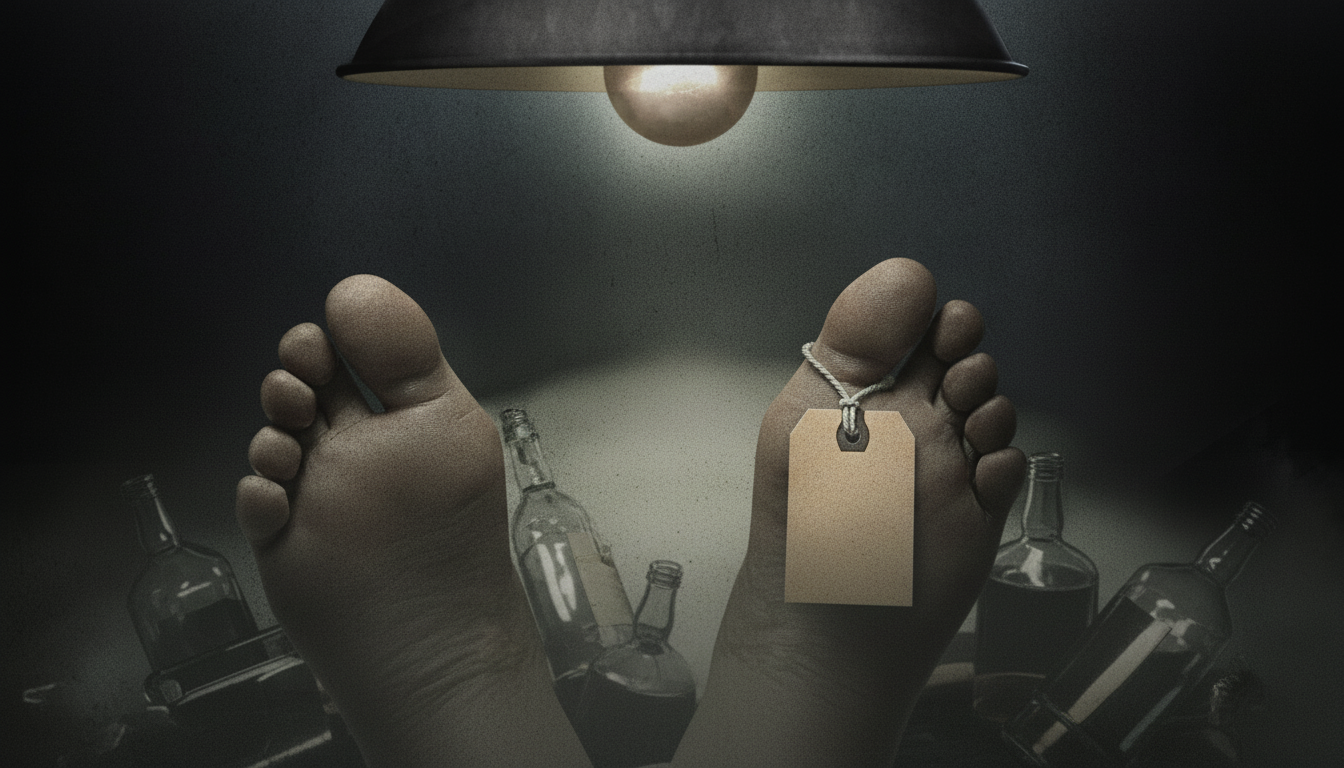
A sample of spinal cord is preserved in which of the following?
Cherry red coloration of mucous membranes is a characteristic finding in poisoning by which of the following agents?
Which of the following statements is FALSE regarding Endrin?
Which of the following central nervous system depressants is most commonly used for suicidal purposes?
Who is considered the Father of Toxicology?
Which condition affects the anterior horn cells?
What is the antidote for belladonna poisoning?
What is the active principle of Abrus precatorius?
Black tongue and black teeth are seen in abuse of which substance?
Which poison resembles a viper snake bite?
Explanation: In forensic toxicology, the standard protocol for preserving viscera includes the stomach, intestines, liver, spleen, and kidneys. However, certain poisons have a specific affinity for particular tissues, necessitating the preservation of additional samples to confirm the diagnosis. ### **Explanation of the Correct Answer** **C. Strychnine poisoning:** Strychnine is a spinal poison derived from *Strychnos nux-vomica*. It acts by competitively inhibiting **glycine**, an inhibitory neurotransmitter, at the postsynaptic receptor sites in the **anterior horn cells of the spinal cord**. This leads to unchecked sensory stimulation and severe tetanic convulsions. Because the spinal cord is the primary site of action and concentration for this toxin, it must be preserved (usually in saturated saline) for chemical analysis. ### **Analysis of Incorrect Options** * **A. Oleander poisoning:** This is a cardiac poison. In such cases, the **heart** (specifically the apex and conducting system) is preserved in addition to routine viscera. * **B. War gases:** These are primarily inhalation toxins (e.g., Phosgene, Mustard gas). The **lungs** and sometimes blood samples are the critical specimens for analysis. * **C. Arsenic poisoning:** Arsenic is a heavy metal that deposits in keratin-rich tissues. In chronic cases, **hair, nails, and a piece of long bone (femur)** are preserved. ### **High-Yield Clinical Pearls for NEET-PG** * **Strychnine Convulsions:** Characterized by *Opisthotonus* (back arching), *Risus sardonicus* (facial grimacing), and *Pleurothotonus* (lateral arching). * **Differential Diagnosis:** Strychnine poisoning mimics **Tetanus**. A key difference is that in strychnine poisoning, muscles relax completely between convulsions, whereas in tetanus, muscle rigidity is persistent. * **Preservative of Choice:** For most viscera, **Saturated Saline** is used. However, for blood (Alcohol/CO poisoning), **Sodium Fluoride** is preferred. For suspected acid poisoning, **Rectified Spirit** is used (except in alcohol poisoning).
Explanation: **Explanation:** **1. Why Carbon Monoxide (CO) is correct:** The characteristic cherry-red coloration in CO poisoning is due to the formation of **Carboxyhemoglobin (COHb)**. Carbon monoxide has an affinity for hemoglobin that is 200–250 times greater than that of oxygen. When CO binds to hemoglobin, it forms a stable, bright-red complex (COHb) that does not easily dissociate. This imparts a distinct cherry-red hue to the skin, mucous membranes, nail beds, and internal viscera (especially the brain and muscles). **2. Why the other options are incorrect:** * **Carbon dioxide:** High levels lead to hypercapnia and respiratory acidosis, typically causing **cyanosis** (bluish discoloration) due to increased deoxygenated hemoglobin. * **Hydrogen sulfide (H₂S):** Known for its "rotten egg" odor, H₂S poisoning often results in a **bluish-green** or slate-grey discoloration of the skin and viscera due to the formation of sulfhemoglobin. * **Chlorine:** This is an irritant gas that causes pulmonary edema and asphyxia; it does not produce a specific diagnostic skin color like CO. **3. High-Yield Clinical Pearls for NEET-PG:** * **Differential Diagnosis for Red Discoloration:** * **Cherry Red:** Carbon Monoxide. * **Bright Pink/Brick Red:** Cyanide (due to high oxyhemoglobin levels as tissues cannot utilize oxygen). * **Chocolate Brown:** Nitrites, Aniline, or Nitrobenzene (due to Methemoglobinemia). * **Post-mortem finding:** In CO poisoning, the cherry-red color of **hypostasis (livor mortis)** is a classic autopsy finding. * **Treatment of choice:** 100% Oxygen (reduces COHb half-life) or Hyperbaric Oxygen (HBO) in severe cases.
Explanation: ### Explanation **Endrin** is a highly potent organochlorine insecticide belonging to the cyclodiene group. Understanding its toxicological profile is crucial for NEET-PG, as it is frequently tested due to its high toxicity. **1. Why Option A is the Correct (False) Statement:** Endrin is actually the **most toxic** organochlorine compound, not the least. It is significantly more lethal than DDT or BHC. Due to its extreme toxicity and environmental persistence, its use has been banned or severely restricted in many countries. The "least toxic" organochlorine is generally considered to be Methoxychlor. **2. Analysis of Other Options:** * **Option B (Plant Penicillin):** This is a common synonym for Endrin. It earned this nickname because of its broad-spectrum effectiveness in protecting various crops from pests, similar to how penicillin treats various bacterial infections. * **Option C (Kerosene-like smell):** Commercial formulations of Endrin are often dissolved in hydrocarbon solvents like kerosene. Therefore, gastric lavage or the body of a poisoned victim typically emits a characteristic kerosene-like odor. * **Option D (Resists putrefaction):** Like most organochlorines, Endrin is highly stable and lipophilic. It resists degradation by environmental factors and biological putrefaction, making it detectable in the viscera long after death. **Clinical Pearls for NEET-PG:** * **Mechanism:** It acts as a GABA antagonist, leading to CNS overstimulation and severe convulsions. * **Fatal Dose:** Approximately 1 gram (very low compared to other organochlorines). * **Key Feature:** It is a potent **neurotoxin**; death usually occurs due to respiratory failure during status epilepticus. * **Treatment:** No specific antidote exists. Management is symptomatic, focusing on controlling seizures with Diazepam or Barbiturates. Avoid adrenaline as it may induce ventricular fibrillation in a sensitized myocardium.
Explanation: **Explanation:** **1. Why Opium is the Correct Answer:** Opium and its derivatives (opiates) are potent **Central Nervous System (CNS) depressants**. In the context of forensic toxicology in India, opium remains one of the most commonly used substances for suicide due to its easy availability (especially in rural areas), high toxicity in overdose, and the painless nature of death it induces. It causes death primarily through **respiratory depression** by acting on the mu-receptors in the brainstem. **2. Why the Other Options are Incorrect:** * **Cocaine (Option B):** Cocaine is a potent **CNS stimulant**, not a depressant. It is more commonly associated with accidental overdose or recreational toxicity rather than planned suicidal attempts. * **LSD (Option C):** Lysergic acid diethylamide is a **hallucinogen (psychotomimetic)**. While it can cause severe "bad trips" or psychotic episodes, it has a very high safety margin regarding physical lethality and is rarely used as a primary means of suicide. * **Cannabis (Option D):** Cannabis acts as a **hallucinogen/depressant** depending on the dose, but it is considered to have exceptionally low toxicity. Fatal overdose from cannabis alone is virtually unknown, making it ineffective for suicidal purposes. **3. Clinical Pearls & High-Yield Facts for NEET-PG:** * **Triad of Opioid Poisoning:** Pinpoint pupils (miosis), respiratory depression, and coma. * **Exception to Miosis:** Pethidine (Meperidine) and Morphine (in terminal stages/asphyxia) may cause mydriasis. * **Antidote:** **Naloxone** is the specific competitive antagonist. * **Post-mortem finding:** "Froth at the mouth and nostrils" and "Oedema of the lungs" are characteristic findings in opioid deaths. * **Legal Status:** Opium is regulated under the **NDPS Act (1985)**.
Explanation: **Explanation:** **Paracelsus (Philippus Aureolus Theophrastus Bombastus von Hohenheim)** is recognized as the **Father of Toxicology**. His contribution is centered on the fundamental pharmacological principle: *"All things are poison and nothing is without poison; only the dose makes a thing not a poison."* This concept established the **dose-response relationship**, which is the cornerstone of modern toxicology and pharmacology. He shifted the field from a descriptive discipline to a scientific one based on chemical properties and quantification. **Analysis of Incorrect Options:** * **Galen:** A Greek physician whose work dominated Western medical science for centuries. He is known for his theories on the four humors and anatomy, but not specifically for toxicology. * **Galton (Sir Francis Galton):** Known as the **Father of Eugenics** and a pioneer in fingerprinting (Dactylography), specifically for classifying ridge patterns (Galton’s details). * **Gustafson:** Famous for **Gustafson’s Method**, which is used in Forensic Odontology for age estimation based on six dental changes (e.g., attrition, secondary dentin, cementum apposition). **High-Yield Clinical Pearls for NEET-PG:** * **Father of Modern Toxicology:** Mathieu Orfila (often confused with Paracelsus; Orfila refined the chemical analysis of poisons in legal contexts). * **Father of Forensic Medicine in India:** Dr. Chandra Kanth Kasinath (C.K.) Parikh. * **Toxicology Landmark:** The first successful application of chemical testing in a trial was the **Marsh Test** (1836) for arsenic detection.
Explanation: ### Explanation **Strychnine poisoning** (derived from *Strychnos nux-vomica*) is the correct answer because its primary mechanism of action involves the **spinal cord**. Strychnine acts as a potent, competitive antagonist of **glycine**, which is the main inhibitory neurotransmitter at the **anterior horn cells** of the spinal cord. By blocking glycine, it removes post-synaptic inhibition, leading to unchecked sensory stimulation and powerful, symmetrical muscle spasms (convulsions). **Analysis of Options:** * **Strychnine (Correct):** It specifically targets the Renshaw cell-mediated inhibition at the anterior horn, leading to "spinal convulsions." * **Dhatura poisoning:** This is a deliriant poison that acts centrally and peripherally as an **anti-cholinergic** agent (blocking muscarinic receptors). It does not affect the anterior horn cells; its classic symptoms include dilated pupils, dry mouth, and "muttering delirium." * **Botulism:** This is caused by *Clostridium botulinum* toxin, which acts at the **neuromuscular junction (NMJ)**. It prevents the release of acetylcholine from the pre-synaptic nerve terminal, leading to flaccid paralysis, not spinal cord irritation. **High-Yield Clinical Pearls for NEET-PG:** * **Opisthotonus:** The characteristic backward arching of the back seen in Strychnine poisoning due to the dominance of powerful extensor muscles. * **Risus Sardonicus:** A fixed, grinning expression caused by spasms of the facial muscles (also seen in Tetanus). * **Differential Diagnosis:** Strychnine poisoning mimics **Tetanus**. However, in Strychnine, the onset is sudden, and muscles relax completely between convulsions, whereas in Tetanus, muscle rigidity is persistent. * **Post-mortem finding:** Rigor mortis appears and disappears very early due to the exhaustion of ATP from severe convulsions.
Explanation: **Explanation:** Belladonna poisoning (caused by *Atropa belladonna* or Datura) results from an overdose of alkaloids like **atropine, hyoscyamine, and scopolamine**. These are competitive antagonists at muscarinic acetylcholine receptors, leading to a "central anticholinergic syndrome." **1. Why Physostigmine is the Correct Answer:** Physostigmine is a tertiary amine and a reversible acetylcholinesterase inhibitor. Unlike other carbamates, it is **lipid-soluble**, allowing it to **cross the blood-brain barrier**. This is crucial because belladonna poisoning involves both peripheral (tachycardia, dry skin) and central (hallucinations, delirium) symptoms. By increasing acetylcholine levels at the synapse, it overcomes the muscarinic blockade in both the CNS and the periphery. **2. Why Incorrect Options are Wrong:** * **Neostigmine:** While also an acetylcholinesterase inhibitor, it is a quaternary ammonium compound. It is polar and **cannot cross the blood-brain barrier**, making it ineffective for the central manifestations of belladonna poisoning. * **Antihistamines:** Many first-generation antihistamines (e.g., diphenhydramine) have significant anticholinergic properties themselves and would worsen the toxicity. * **Atropine:** This is the primary toxin in belladonna; administering it would be fatal. **3. High-Yield Clinical Pearls for NEET-PG:** * **Classic Mnemonic:** "Mad as a hatter (delirium), Red as a beet (flushing), Dry as a bone (anhidrosis), Blind as a bat (mydriasis), and Hot as a hare (hyperpyrexia)." * **Physostigmine Indication:** Reserved for severe cases with refractory seizures, severe hypertension, or extreme agitation. * **Contraindication:** Do not use physostigmine in TCA (Tricyclic Antidepressant) overdose as it may cause cardiac arrest. * **Diagnostic Test:** A "Pilocaripine test" (instilling 1% pilocarpine in the eye) can confirm diagnosis; if the pupil does not constrict, it confirms atropine-like poisoning.
Explanation: **Explanation:** **Abrus precatorius** (commonly known as Jequirity, Ratti, or Gunchi) contains two primary active principles: **Abrin** and **Abrine**. * **Abrin:** A highly potent toxalbumin (phytotoxin) that acts as a potent protein synthesis inhibitor by inactivating the 60S ribosomal subunit. It is structurally similar to ricin but significantly more toxic. * **Abrine:** An amino acid (N-methyltryptophan) found in the seeds. **Analysis of Incorrect Options:** * **Option B (Calotoxin and Calotropin):** These are cardiac glycosides found in **Calotropis** (*Madar*). They act as gastrointestinal irritants and cardiac poisons. * **Option C (Ricin and Ricinoleic acid):** These are the active principles of **Ricinus communis** (Castor bean). While Ricin is also a toxalbumin, it is less potent than Abrin. * **Option D (Semicarpol and Bhilawanol):** These are the phenolic compounds found in **Semecarpus anacardium** (Marking Nut), which act as semicauterizing organic irritants. **High-Yield Clinical Pearls for NEET-PG:** 1. **The "Sui" Poisoning:** In India, Abrus seeds are often used for cattle poisoning. The seeds are decorticated, made into a paste, and shaped into small needles called **"Suis"** which are dried and poked into the animal's hide. 2. **Clinical Presentation:** Localized edema, necrosis, and painful swelling at the site of injection (mimicking a viper bite, but without the clotting defect). 3. **Fatal Dose:** Approximately 1–2 seeds (if chewed) or 0.1 to 1 mg of Abrin if injected. 4. **Heat Lability:** Abrin is thermolabile; cooking destroys its toxicity.
Explanation: **Explanation:** The correct answer is **Cocaine**. The characteristic finding of a **"black tongue"** (melanoglossia) and **"black teeth"** in cocaine abusers is primarily attributed to the method of consumption. When cocaine is smoked (especially in the form of "crack"), the smoke contains carbonaceous particles and impurities that deposit on the dorsal surface of the tongue and the dental enamel. Additionally, cocaine is a potent vasoconstrictor; chronic use leads to decreased salivary flow (xerostomia) and localized tissue ischemia, which promotes the accumulation of dark debris and predisposes the user to rapid dental decay and staining. **Analysis of Incorrect Options:** * **Cannabis:** Chronic use typically presents with "red eyes" (conjunctival injection) and dry mouth, but it does not cause specific black pigmentation of the tongue or teeth. * **LSD (Lysergic Acid Diethylamide):** As a hallucinogen, its physical signs are mainly sympathomimetic (mydriasis, tachycardia). It has no direct staining effect on the oral cavity. * **Heroin:** Opioid abuse typically presents with "pinpoint pupils" (miosis). While poor oral hygiene is common in addicts, the specific "black tongue" sign is not a diagnostic feature of heroin. **High-Yield Clinical Pearls for NEET-PG:** * **Magnan’s Symptom:** A tactile hallucination where the patient feels as if insects are crawling under the skin (formication); pathognomonic for cocaine. * **Cocaine Snorting:** Can lead to **perforation of the nasal septum** due to chronic ischemic necrosis. * **Body Packers/Stuffers:** Individuals who swallow packets of cocaine for smuggling; rupture can lead to fatal toxicity. * **Adulterants:** Cocaine is often cut with **Levamisole**, which can cause skin necrosis and agranulocytosis.
Explanation: **Explanation:** **Abrin** is the correct answer because it is the toxalbumin derived from the seeds of *Abrus precatorius* (Jequirity or Ratti seeds). When these seeds are crushed and injected into the skin (often via "Sui" or needles used for cattle poisoning), the clinical presentation mimics a **Viperine snake bite**. Both conditions present with intense local inflammation, painful edema, ecchymosis, and necrosis at the site of injury. Systemically, both can lead to high fever, prostration, and fatal collapse. **Analysis of Incorrect Options:** * **Ricin:** Derived from *Ricinus communis* (Castor seeds). While it is a potent toxalbumin like abrin, its primary clinical feature is severe gastrointestinal irritation (hemorrhagic gastroenteritis) if ingested, or multi-organ failure if injected, but it does not classically mimic the local features of a viper bite. * **Crotin:** Derived from *Croton tiglium*. It is a powerful purgative and skin irritant causing vesication, but it is not the standard answer for mimicking viper envenomation. * **Bhilawanol (Bhi):** Derived from *Semecarpus anacardium* (Marking nut). It acts as a contact irritant causing blisters containing acrid serum, often used to simulate bruises in fabricated injuries, but does not resemble a snake bite. **High-Yield Clinical Pearls for NEET-PG:** * **The "Sui" Technique:** Small needles (Sui) are prepared by mixing Abrus powder with water/opium and are used for cattle poisoning or homicidal purposes. * **Diagnostic Clue:** To differentiate Abrin poisoning from a Viper bite, look for the presence of **fang marks**. Fang marks are present in snake bites but absent in Abrin poisoning (where a small puncture or the "Sui" itself may be found). * **Mechanism:** Abrin inhibits protein synthesis by inactivating the 60S ribosomal subunit (Type II Ribosome-Inactivating Protein).
General Principles of Toxicology
Practice Questions
Corrosive Poisons
Practice Questions
Metallic Poisons
Practice Questions
Non-Metallic Poisons
Practice Questions
Organic Irritant Poisons
Practice Questions
Neurotic Poisons
Practice Questions
Cardiac Poisons
Practice Questions
Asphyxiant Poisons
Practice Questions
Food Poisoning
Practice Questions
Drug Abuse and Dependence
Practice Questions
Analytical Toxicology Methods
Practice Questions
Interpretation of Toxicology Results
Practice Questions
Get full access to all questions, explanations, and performance tracking.
Start For Free